

Henri Brochet (1898–1952) Saint Francis Of Assisi And The Wolf Of Gubbio
Henri-Eugène BROCHET
(Paris 1898 – Auxerre 1952)
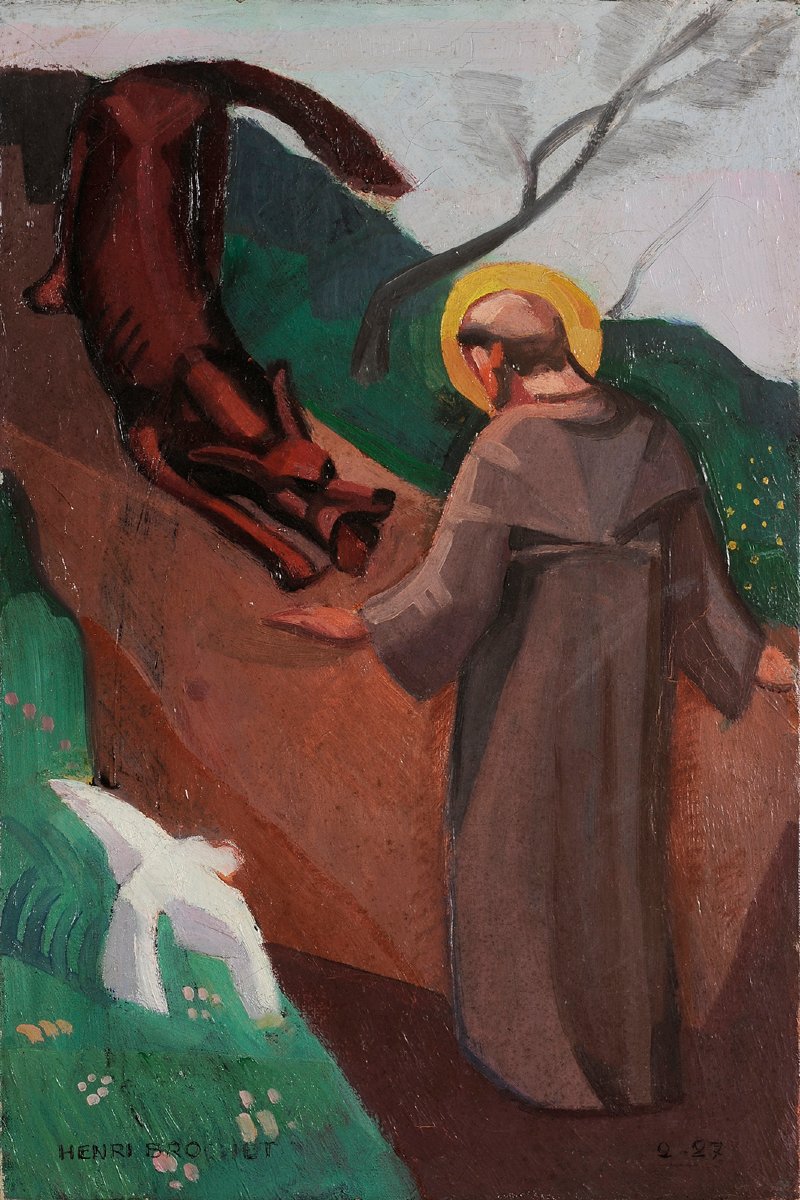
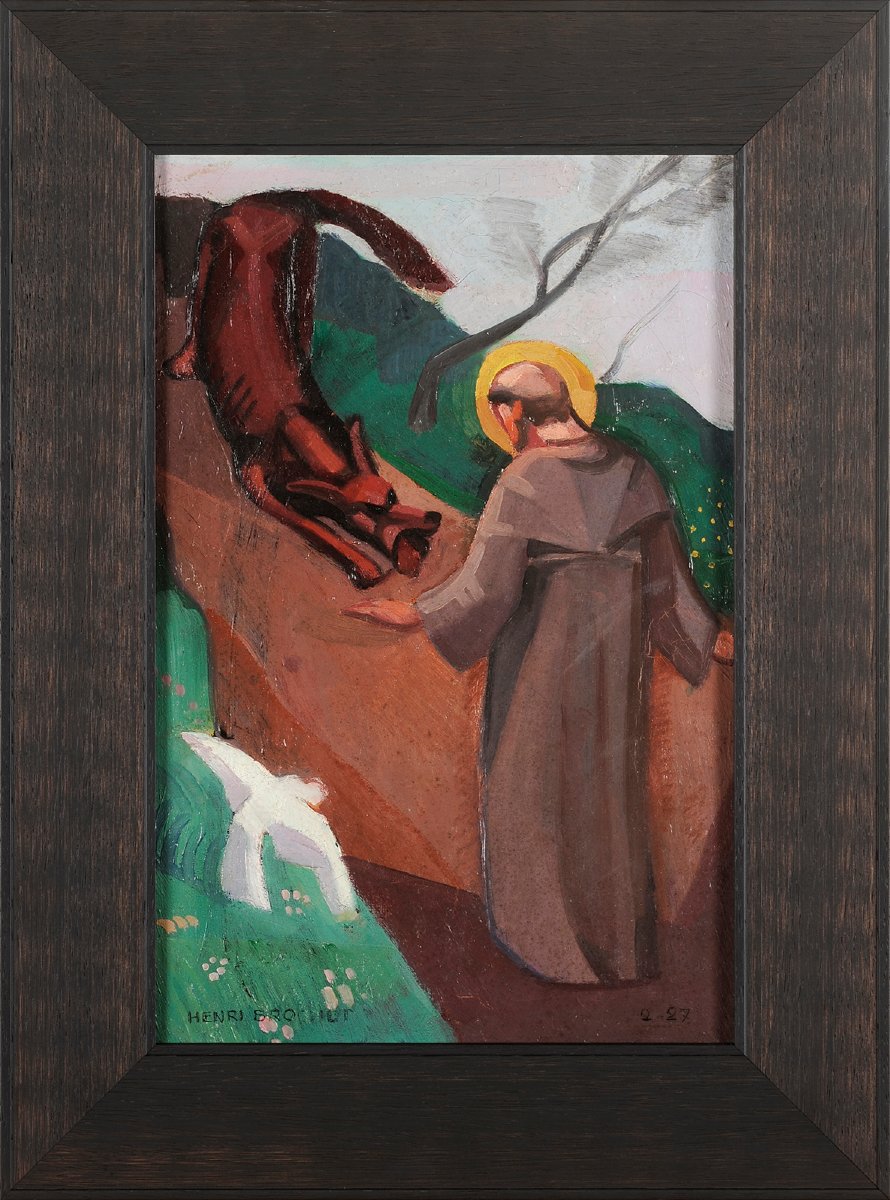
Saint Francis of Assisi and the Wolf of Gubbio
Oil on canvas
H. 41 cm; W. 27 cm
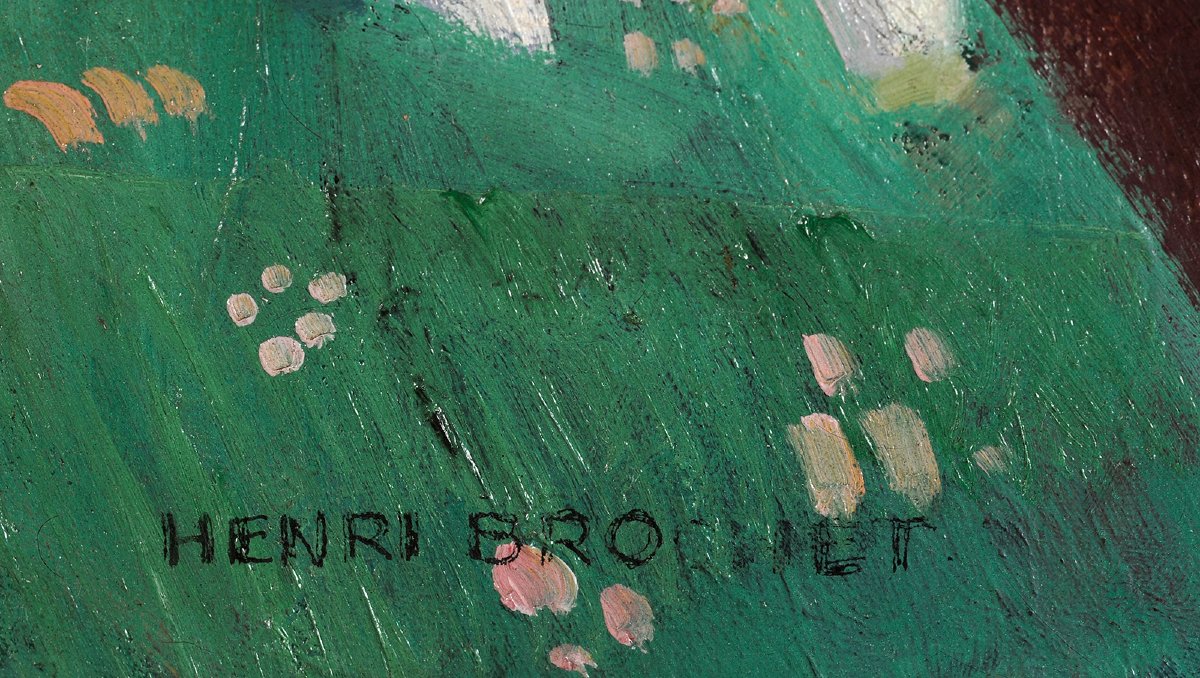
Signed lower left. Dated lower right “02.27”
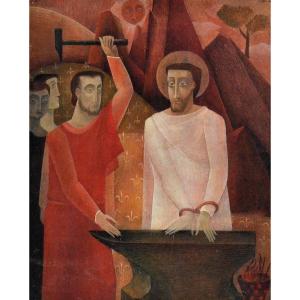
From a very young age, Henri-Eugène Brochet showed precocious artistic talent. Recognizing this calling, his father enrolled him in 1909 at the Municipal School of Drawing on the Place des Vosges, where he studied until his father’s death in 1916. His mother died the following year.
As a student of Victor Dupont (1875–1942), Brochet discovered, through him, the work of Cézanne, which would have a lasting influence on his art. In 1917, he was drafted as an auxiliary during World War I, where he was assigned as a painter. Sent to Belgium, then to the rear in Champagne during the July 1918 offensive, he produced numerous portraits of his superiors and comrades there.
Around 1920, he joined the L’Arche group, which was working to revitalize Catholic art in the wake of the world war. In collaboration with Éditions d’art Rouart, he organized an exhibition of the “Ateliers d’art sacré” in Auxerre in June 1921, alongside Maurice Denis and Georges Desvallières. He then became close to leading figures such as the sculptor Fernand Py, the organist Paul Berthier, and the poet Marie Noël.
In 1922, he married and moved to Paris, settling into a studio at 25 Boulevard du Montparnasse, where he would live until 1933. A member of the Salons d’Automne and the Salons des Indépendants, he enjoyed growing recognition.
Beginning in 1933, he settled permanently in Auxerre in a spacious house at the foot of the cathedral, where he continued his work as a painter and taught drawing in collaboration with Jean Burkhalter, who directed the municipal art school.
Alongside his work as a painter and illustrator, Henri Brochet developed a passion for theater. He wrote more than 150 plays, designed sets, and directed productions. A significant collection of documents related to the magazine *Jeux, Tréteaux et Personnages*, as well as numerous drawings and gouaches, is preserved at the Auxerre library.
“Art for art’s sake is foolish, especially when it comes to religious subjects. Art has a purpose; art is a form of teaching. A painting or a panel should force you to reflect. A religious painting is a subject for meditation, far more so than a subject for admiration.”
His son François Brochet (1925–2001), a student of Fernand Py, carried on the family tradition by becoming a major artist, recognized as a painter, printmaker, and above all, a sculptor.
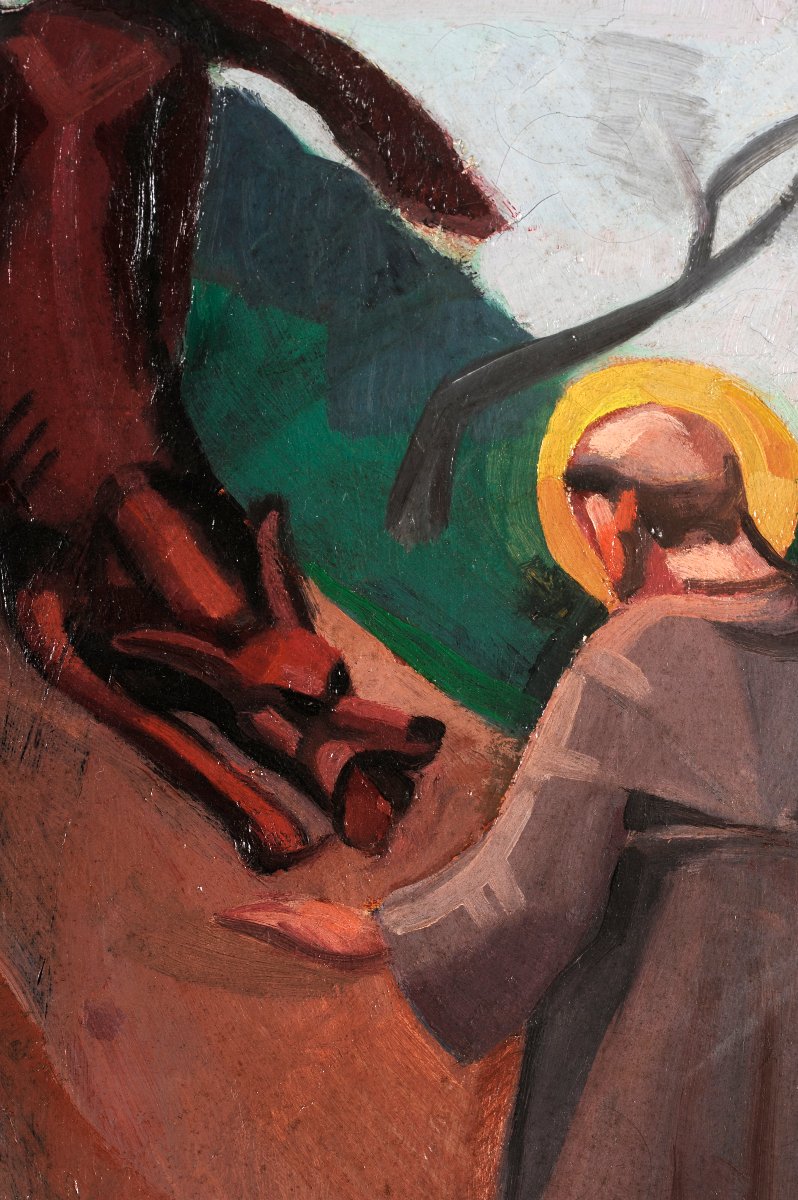
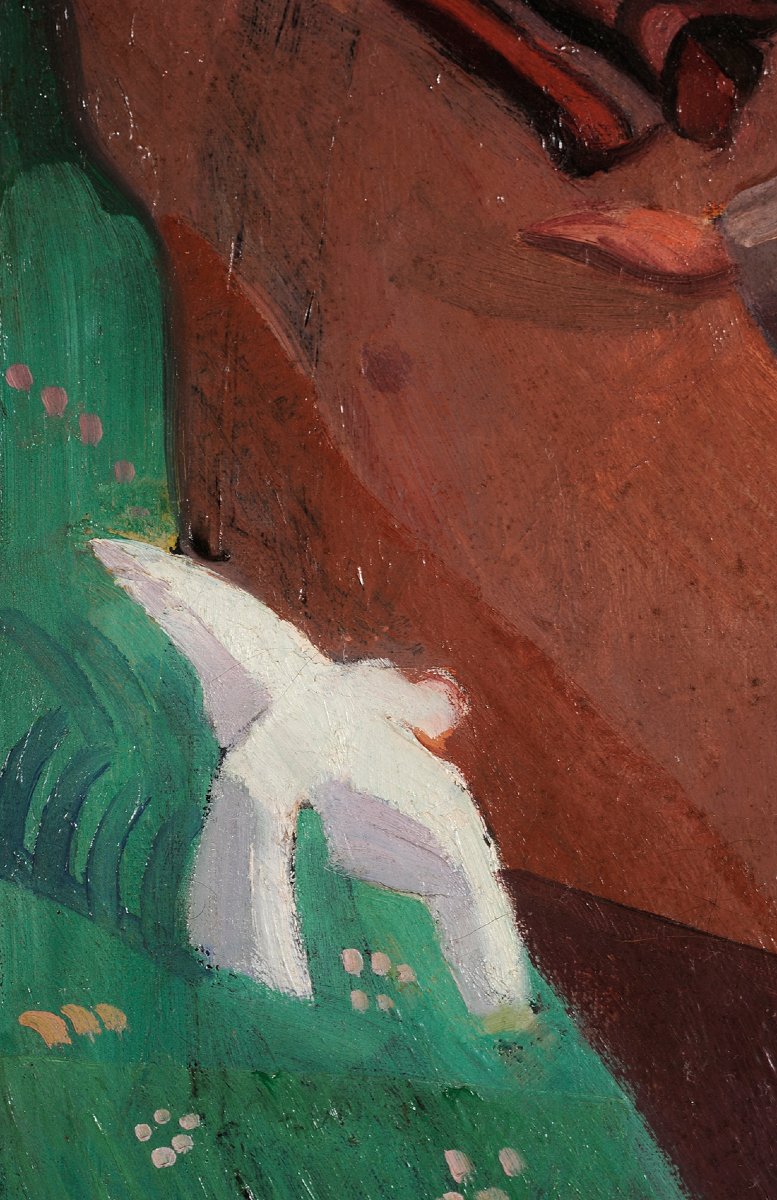
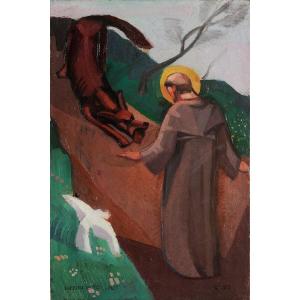
Our painting, created in February 1927, depicts the legend of the Wolf of Gubbio. The story tells of a ferocious wolf that was terrorizing the Italian town of the same name. Saint Francis of Assisi, known for his love of animals, went to meet the wolf. Rather than confronting it with violence, he spoke to the wolf gently and compassionately. The wolf, calmed, became docile. Francis made a pact: in exchange for food provided by the townspeople, the wolf would cease its attacks. The animal kept its word until its death. This story illustrates the message of peace and reconciliation that Saint Francis advocated. This peace is also symbolized here by the presence of the dove.
Period: 20th century
Style: Art Deco
Condition: Perfect condition
Material: Oil painting
Length: 41 cm hors cadre
Width: 27 cm hors cadre
Reference (ID): 1786713
Availability: In stock