

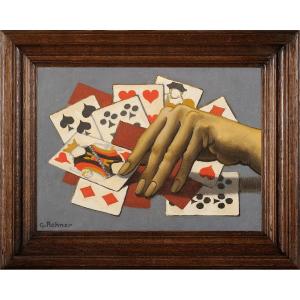


Georges Rohner (1913-2000) The Card Game
Artist: Georges Rohner
Georges ROHNER
(Paris, 1913 – Lannion, 2000)
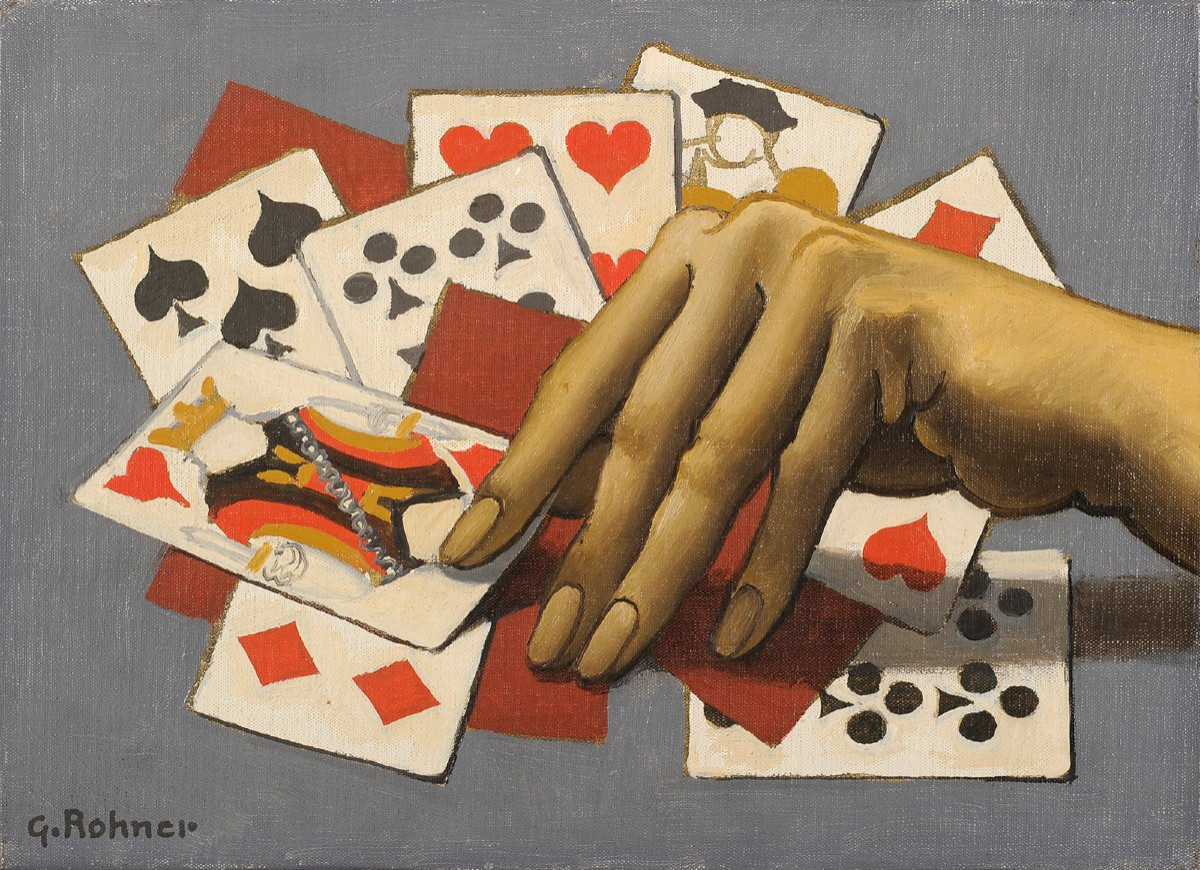
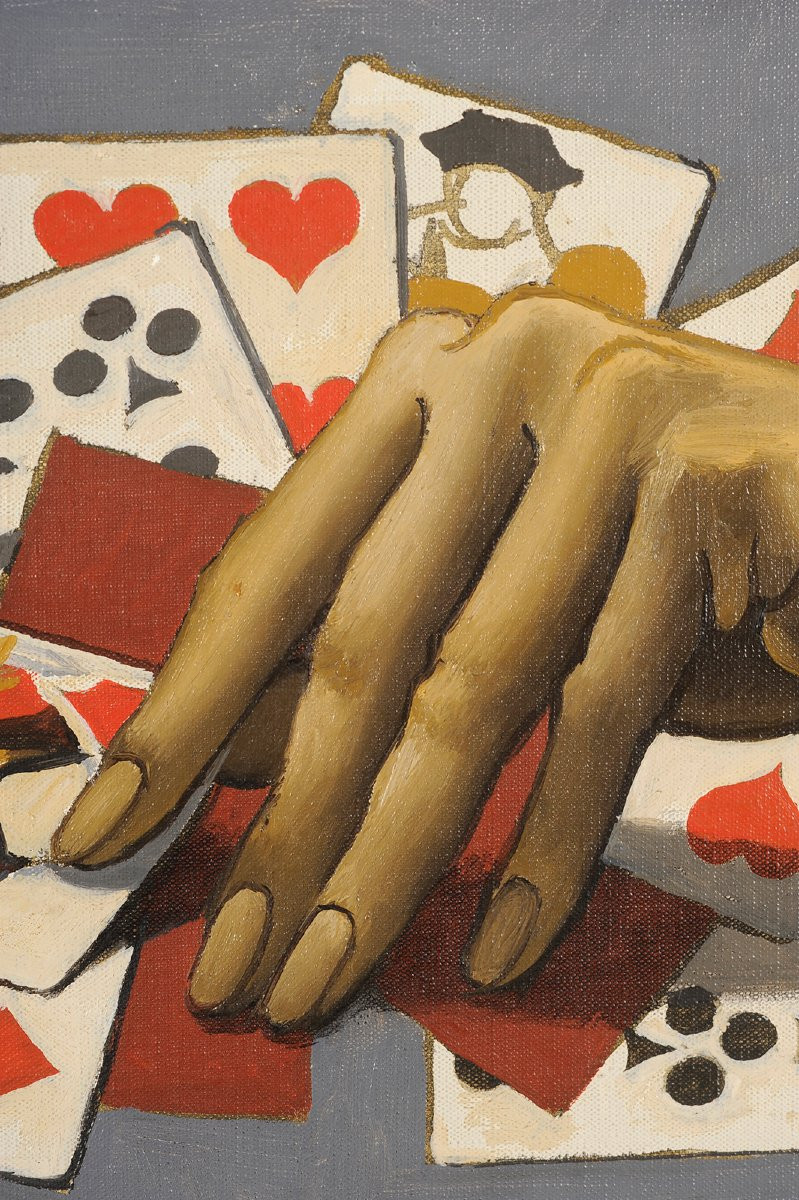
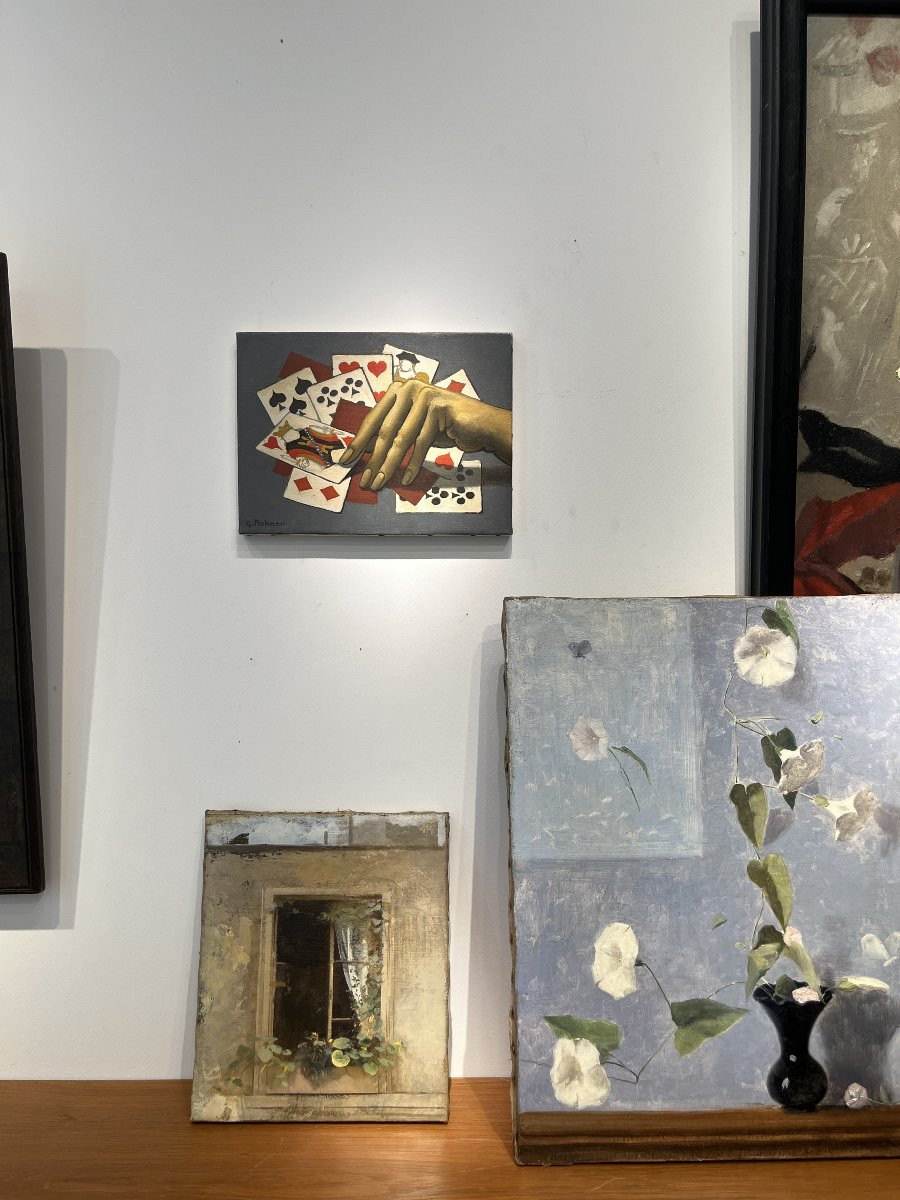
The Card Game
Oil on canvas
H. 24 cm; W. 33 cm
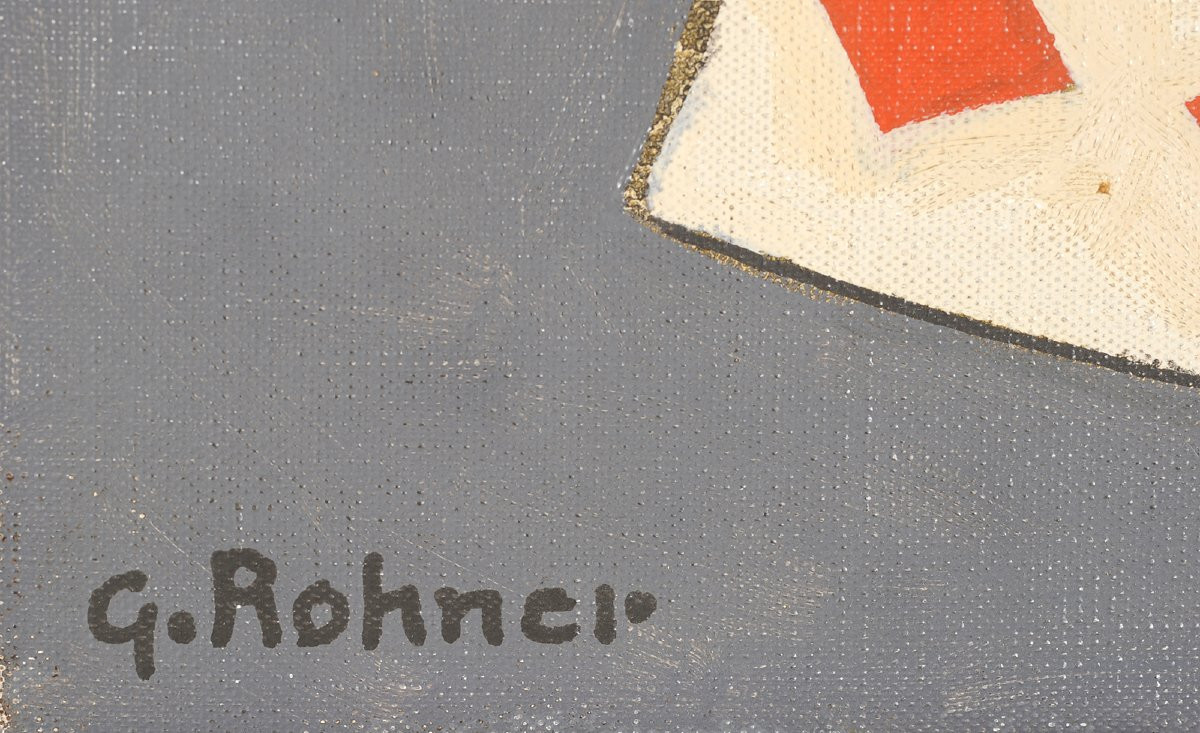
Signed lower left
Georges Rohner was born in Paris in July 1913, at a time when painting was already oscillating between tradition and modernity. Introduced to art at a very young age by his uncle Georges Stugocki, a drawing teacher, he turned to painting in his adolescence. In 1929, he entered the École des Beaux-Arts in Paris and joined Lucien Simon's studio the following year. There, he developed a solid technical foundation alongside young artists such as Robert Humblot and Pierre Tal-Coat. In the 1930s, while the avant-garde dominated the art scene, Rohner joined the Forces Nouvelles group, which advocated a return to figuration and the rigor of drawing. True to this approach, he gradually developed a demanding figurative style, attentive to the presence of reality without succumbing to academicism. His early career was marked by several trips to Europe and a stay in Guadeloupe, where he completed his military service and created a fresco for the Basse-Terre town hall. The Second World War interrupted this momentum: taken prisoner in Trier, he painted Christ with the Prisoners in the Stalag chapel, a work marked by faith and inner resistance. From the 1950s onward, his work developed with great coherence. Rohner explored nature, the human body, and everyday objects. His still lifes, nudes, and landscapes bear witness to a meditative attention to light, time, and matter. At the same time, he shared his knowledge: lecturer at the École des Beaux-Arts in Paris in 1959, then professor at the École Nationale Supérieure des Arts Décoratifs from 1962. His institutional recognition also grew: elected to the Académie des Beaux-Arts in 1968, to the seat formerly held by Ingres, he was made an Officer of the Legion of Honour. Throughout his career, he exhibited in France and abroad, notably in Paris, New York, Venice, and Brussels. In 1987, a major retrospective at the Musée des Beaux-Arts in Quimper celebrated the significance of his work. Georges Rohner left behind a rich body of work comprising nearly 3,000 oil paintings, watercolors, and drawings, now held in numerous public collections. He died in 2000 in Lannion and is buried in Locquirec, overlooking the Breton sea he loved to contemplate. His work, both discreet and profound, remains an invitation to look at the world with patience and truth. Our canvas, certainly a preparatory work for the large-format piece entitled "The Card Game," offers a slightly different perspective. We see the hand in its position, choosing the king of hearts… Undoubtedly a choice made by the artist, symbolizing this woman's hand choosing her man.
(Paris, 1913 – Lannion, 2000)
The Card Game
Oil on canvas
H. 24 cm; W. 33 cm
Signed lower left
Georges Rohner was born in Paris in July 1913, at a time when painting was already oscillating between tradition and modernity. Introduced to art at a very young age by his uncle Georges Stugocki, a drawing teacher, he turned to painting in his adolescence. In 1929, he entered the École des Beaux-Arts in Paris and joined Lucien Simon's studio the following year. There, he developed a solid technical foundation alongside young artists such as Robert Humblot and Pierre Tal-Coat. In the 1930s, while the avant-garde dominated the art scene, Rohner joined the Forces Nouvelles group, which advocated a return to figuration and the rigor of drawing. True to this approach, he gradually developed a demanding figurative style, attentive to the presence of reality without succumbing to academicism. His early career was marked by several trips to Europe and a stay in Guadeloupe, where he completed his military service and created a fresco for the Basse-Terre town hall. The Second World War interrupted this momentum: taken prisoner in Trier, he painted Christ with the Prisoners in the Stalag chapel, a work marked by faith and inner resistance. From the 1950s onward, his work developed with great coherence. Rohner explored nature, the human body, and everyday objects. His still lifes, nudes, and landscapes bear witness to a meditative attention to light, time, and matter. At the same time, he shared his knowledge: lecturer at the École des Beaux-Arts in Paris in 1959, then professor at the École Nationale Supérieure des Arts Décoratifs from 1962. His institutional recognition also grew: elected to the Académie des Beaux-Arts in 1968, to the seat formerly held by Ingres, he was made an Officer of the Legion of Honour. Throughout his career, he exhibited in France and abroad, notably in Paris, New York, Venice, and Brussels. In 1987, a major retrospective at the Musée des Beaux-Arts in Quimper celebrated the significance of his work. Georges Rohner left behind a rich body of work comprising nearly 3,000 oil paintings, watercolors, and drawings, now held in numerous public collections. He died in 2000 in Lannion and is buried in Locquirec, overlooking the Breton sea he loved to contemplate. His work, both discreet and profound, remains an invitation to look at the world with patience and truth. Our canvas, certainly a preparatory work for the large-format piece entitled "The Card Game," offers a slightly different perspective. We see the hand in its position, choosing the king of hearts… Undoubtedly a choice made by the artist, symbolizing this woman's hand choosing her man.
2 600 €
Period: 19th century
Style: Modern Art
Condition: Perfect condition
Material: Oil painting
Length: 24 cm hors cadre
Width: 33 cm hors cadre
Reference (ID): 1724329
Availability: In stock
Print