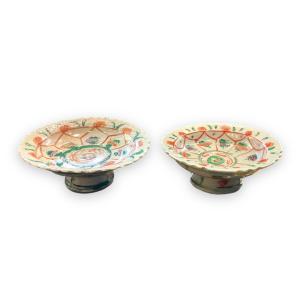
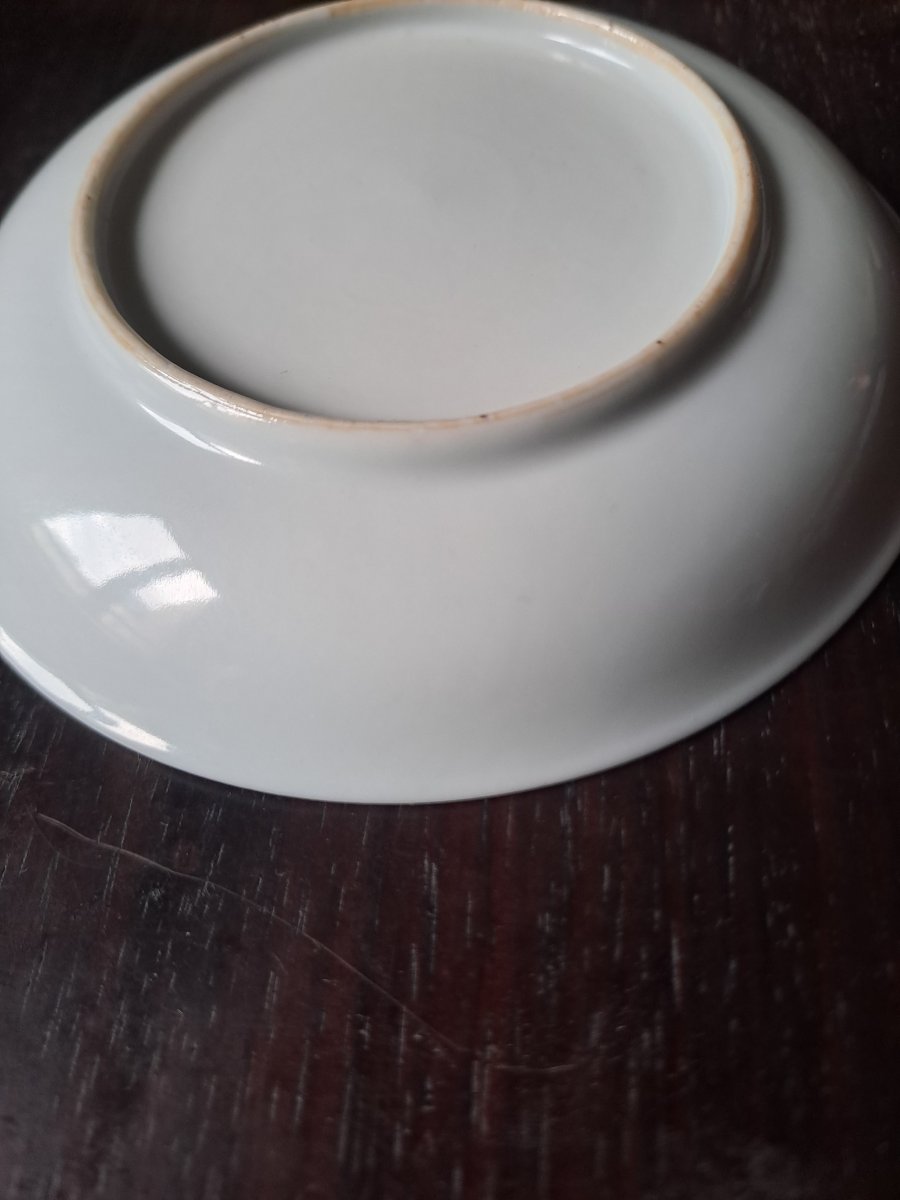


China, Porcelain Saucer From The Famille Rose, Yongzheng Period, Marked Baiyun Shanren
Artist: Baiyun Shanren
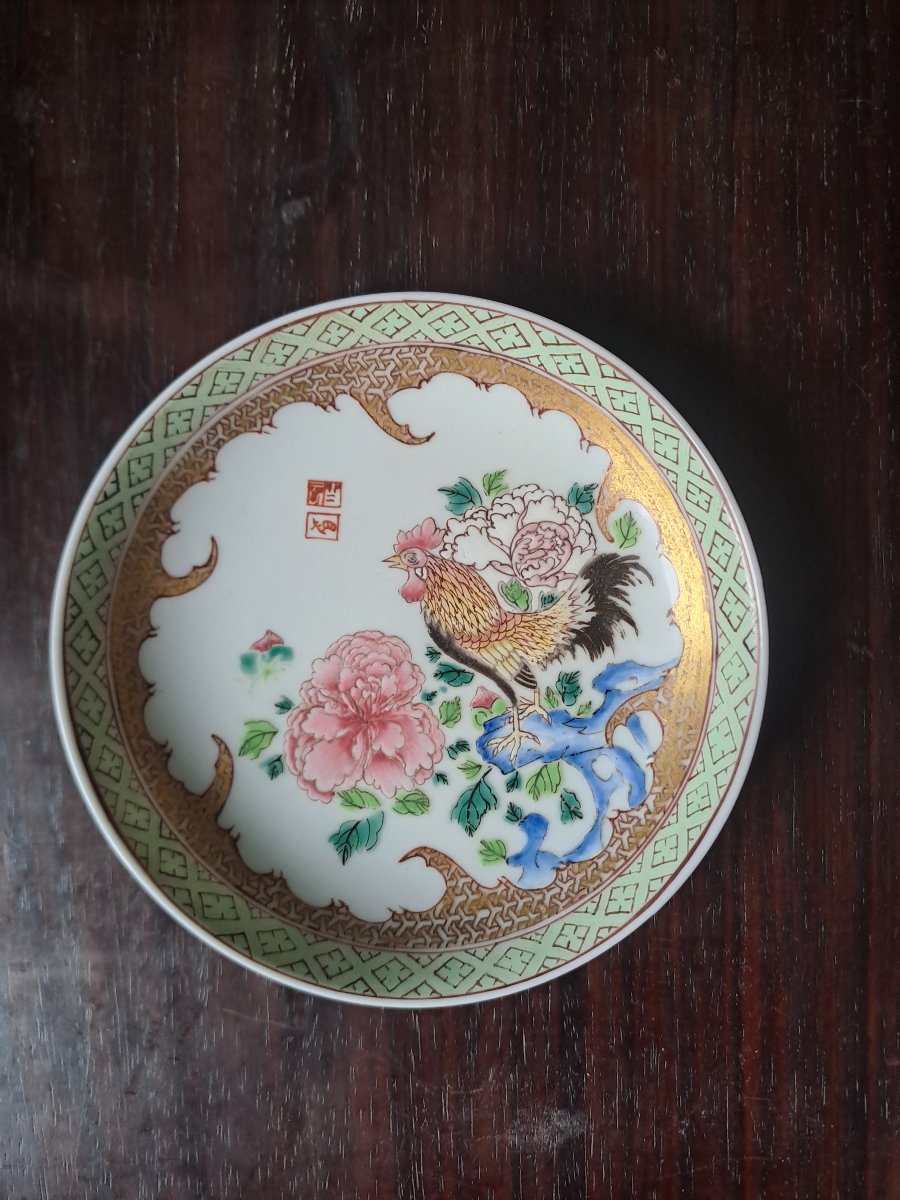
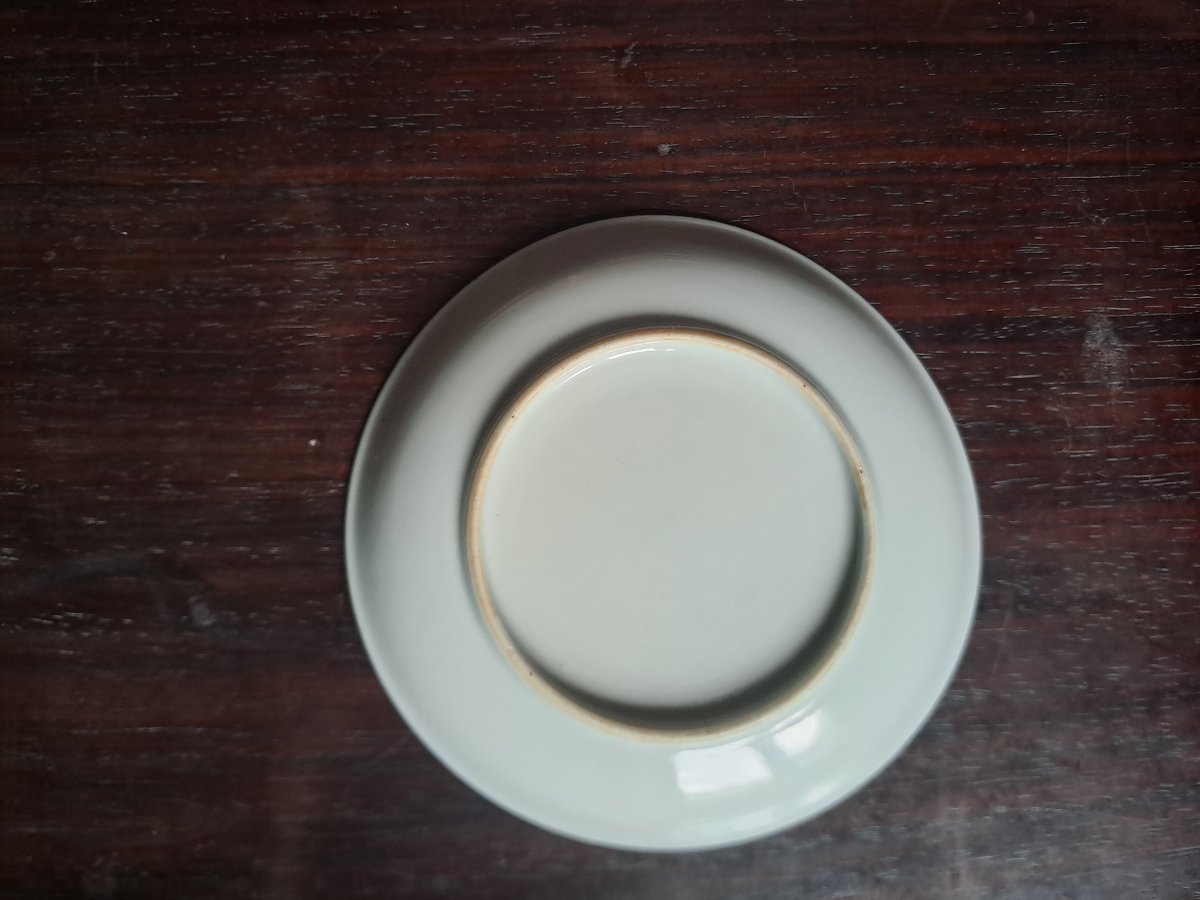
A YONZHENG period, FAMILLE ROSE saucer combining a rooster and a peony symbolizes wealth and success. The first character of the Chinese word for rooster (*gong ji*) is a homophone of the first character in *gong ming* (official position), while the peony has been associated with nobility since the Tang Dynasty.
References:
- British Museum, inv. no. PDF A.835, for a set of twelve teacups and saucers featuring the same design, dimensions, and marks; piece currently on display.
- Victoria & Albert Museum, inventory nos. C.1071 & A-1917
However, the artist’s name “Baiyun Shanren " (Hermit of White Cloud Mountain) has been confused by both museums with "Baishi Shanren" (Hermit of White Stone Mountain). Although the pseudonyms “Baishi” and “Baiyun Jushi” are both associated with Tang Jintang (active in the first half of the 18th century), one of the earliest Cantonese enamelers, these pieces may also have come from Tang Jintang’s workshop. For more information on Tang Jintang’s career and style, see Gao Yang: “A Pair of Canton Enamel Porcelain Masterpieces in the Rijksmuseum,” in *Aziatische Kunst*, October 2018, vol. 48, no. 2, pp. 54–59.
- A. Varela Santos, *Uma Coleção Particular, Yongzheng, A Private Collection*, Estoril, Portugal, 2005, pp. 16–17, no. 2, for a piece that belonged to the W. Martin-Hurst collection.
- Honey, *A Guide to the Pottery and Porcelain of the Far East*, Oxford, 1924, p. 90, fig. 128; the book illustrates a ruby-backed saucer decorated with a basket of flowers and fruit, also held by the British Museum. The work is signed by the same artist and bears the inscription “a Canton picture,” indicating that he was indeed working in Guangzhou (Canton).
References:
- British Museum, inv. no. PDF A.835, for a set of twelve teacups and saucers featuring the same design, dimensions, and marks; piece currently on display.
- Victoria & Albert Museum, inventory nos. C.1071 & A-1917
However, the artist’s name “Baiyun Shanren " (Hermit of White Cloud Mountain) has been confused by both museums with "Baishi Shanren" (Hermit of White Stone Mountain). Although the pseudonyms “Baishi” and “Baiyun Jushi” are both associated with Tang Jintang (active in the first half of the 18th century), one of the earliest Cantonese enamelers, these pieces may also have come from Tang Jintang’s workshop. For more information on Tang Jintang’s career and style, see Gao Yang: “A Pair of Canton Enamel Porcelain Masterpieces in the Rijksmuseum,” in *Aziatische Kunst*, October 2018, vol. 48, no. 2, pp. 54–59.
- A. Varela Santos, *Uma Coleção Particular, Yongzheng, A Private Collection*, Estoril, Portugal, 2005, pp. 16–17, no. 2, for a piece that belonged to the W. Martin-Hurst collection.
- Honey, *A Guide to the Pottery and Porcelain of the Far East*, Oxford, 1924, p. 90, fig. 128; the book illustrates a ruby-backed saucer decorated with a basket of flowers and fruit, also held by the British Museum. The work is signed by the same artist and bears the inscription “a Canton picture,” indicating that he was indeed working in Guangzhou (Canton).
3 500 €
Period: 18th century
Style: Asian art
Condition: Perfect condition
Material: Porcelain
Diameter: 11.5cm
Reference (ID): 1786243
Availability: In stock
Print