THIS OBJECT WAS SOLD
France (southwest) - 3rd Quarter Of The 12th Century - Sandstone Column Statue Depicting Charlemagne
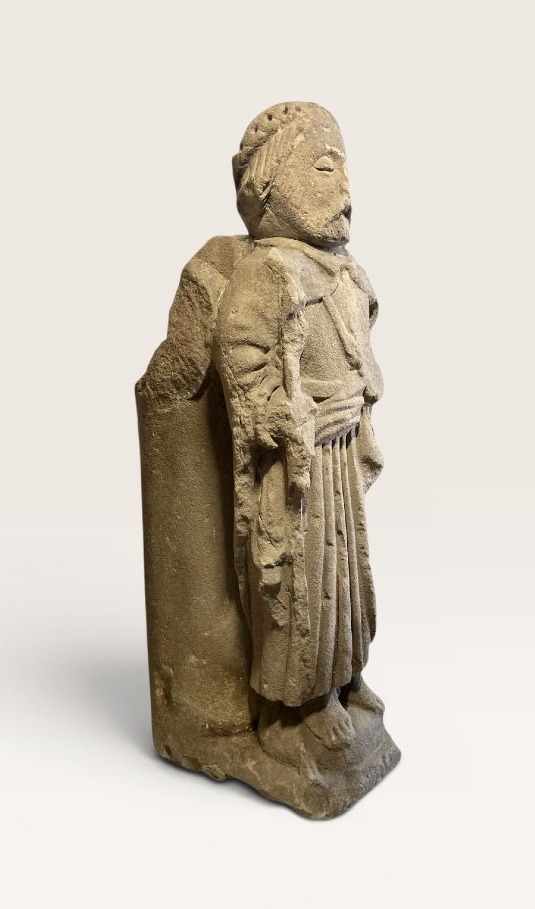
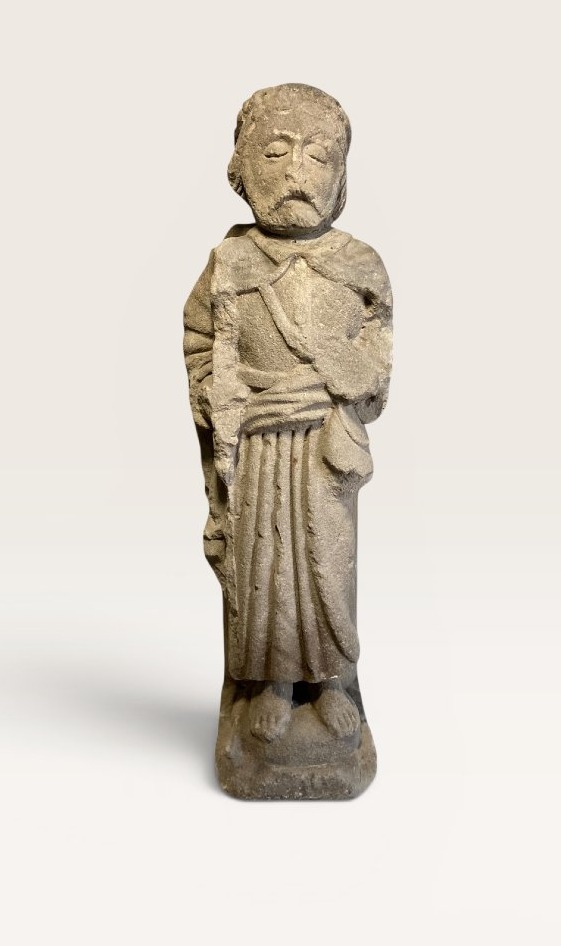
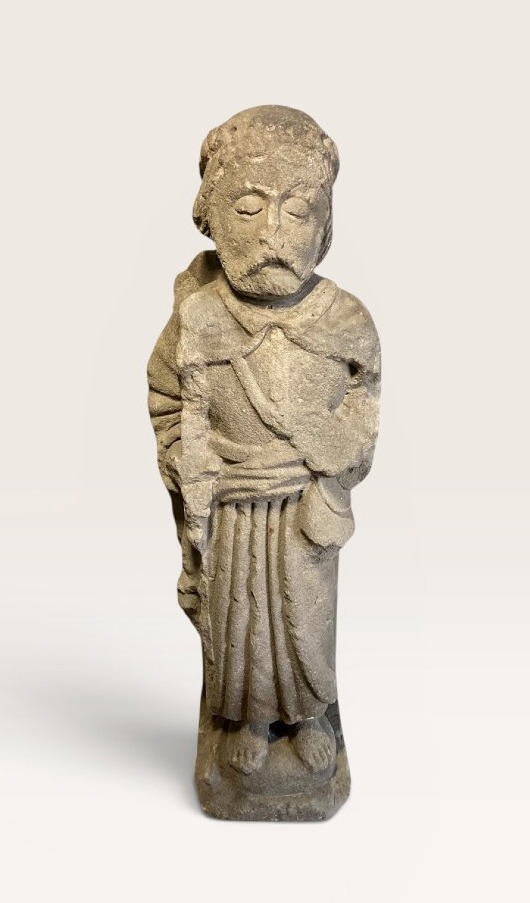
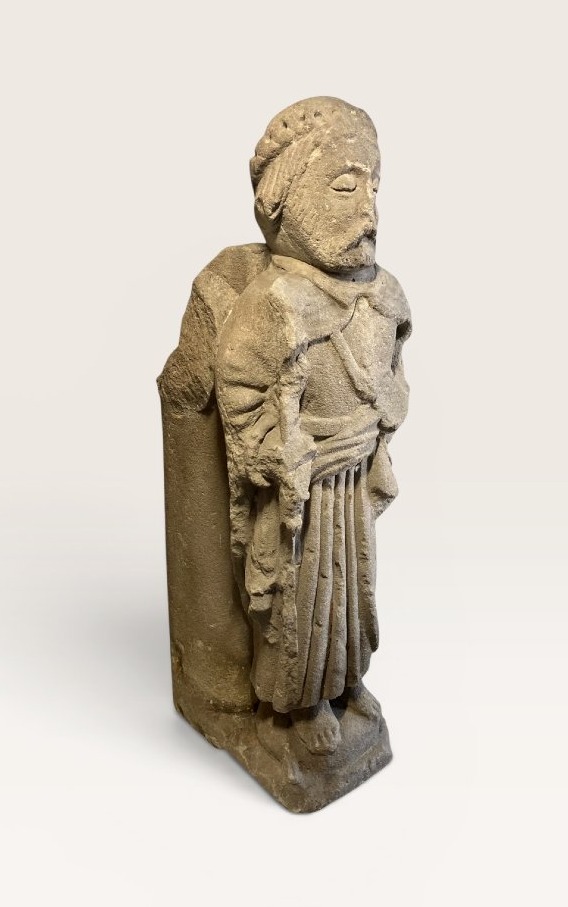
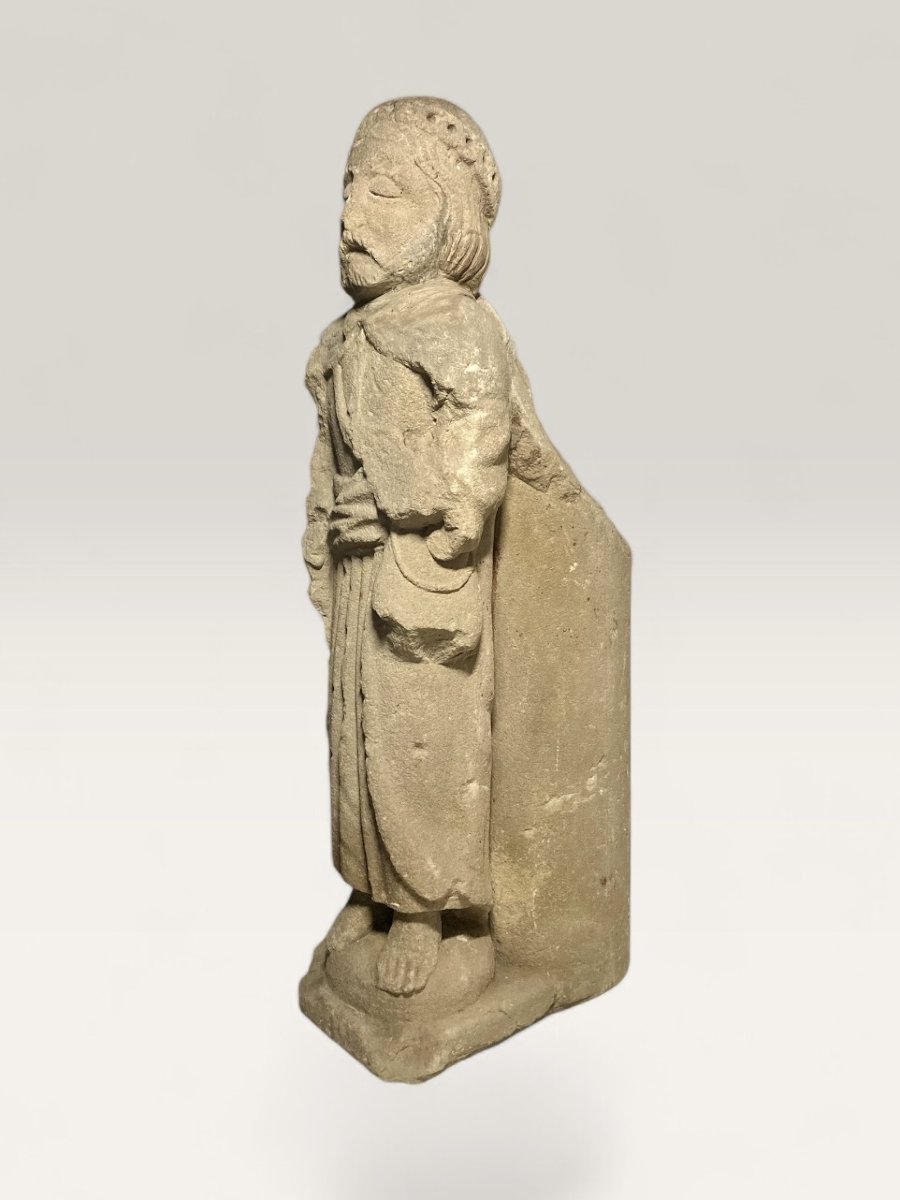
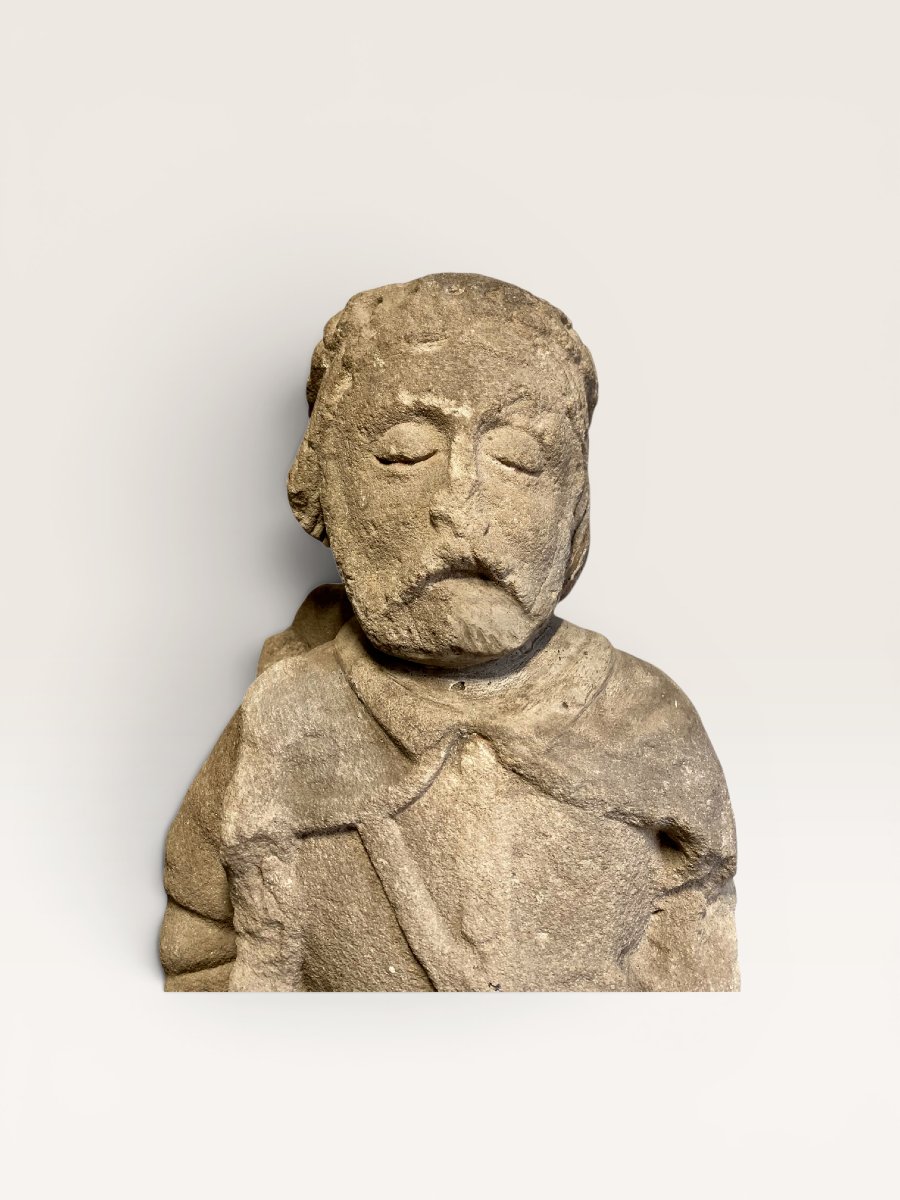
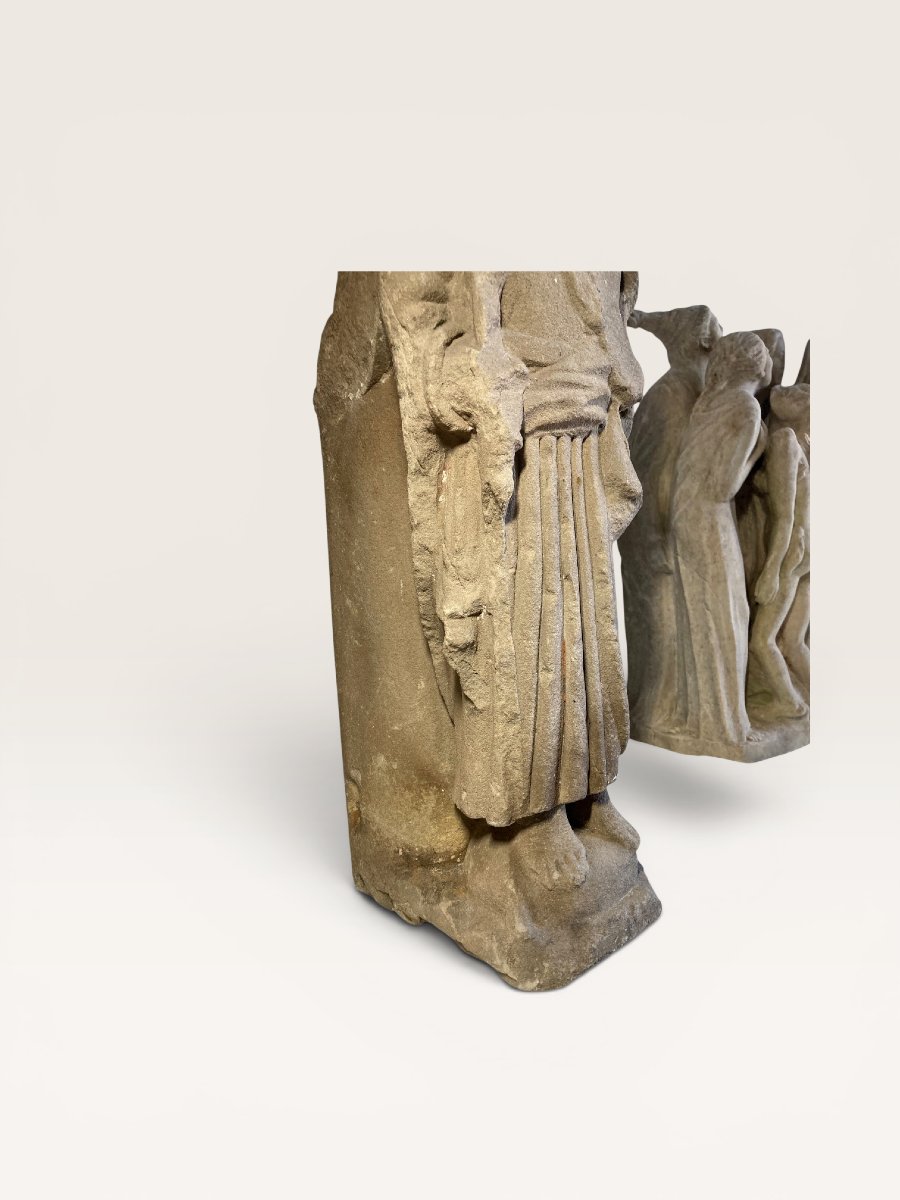
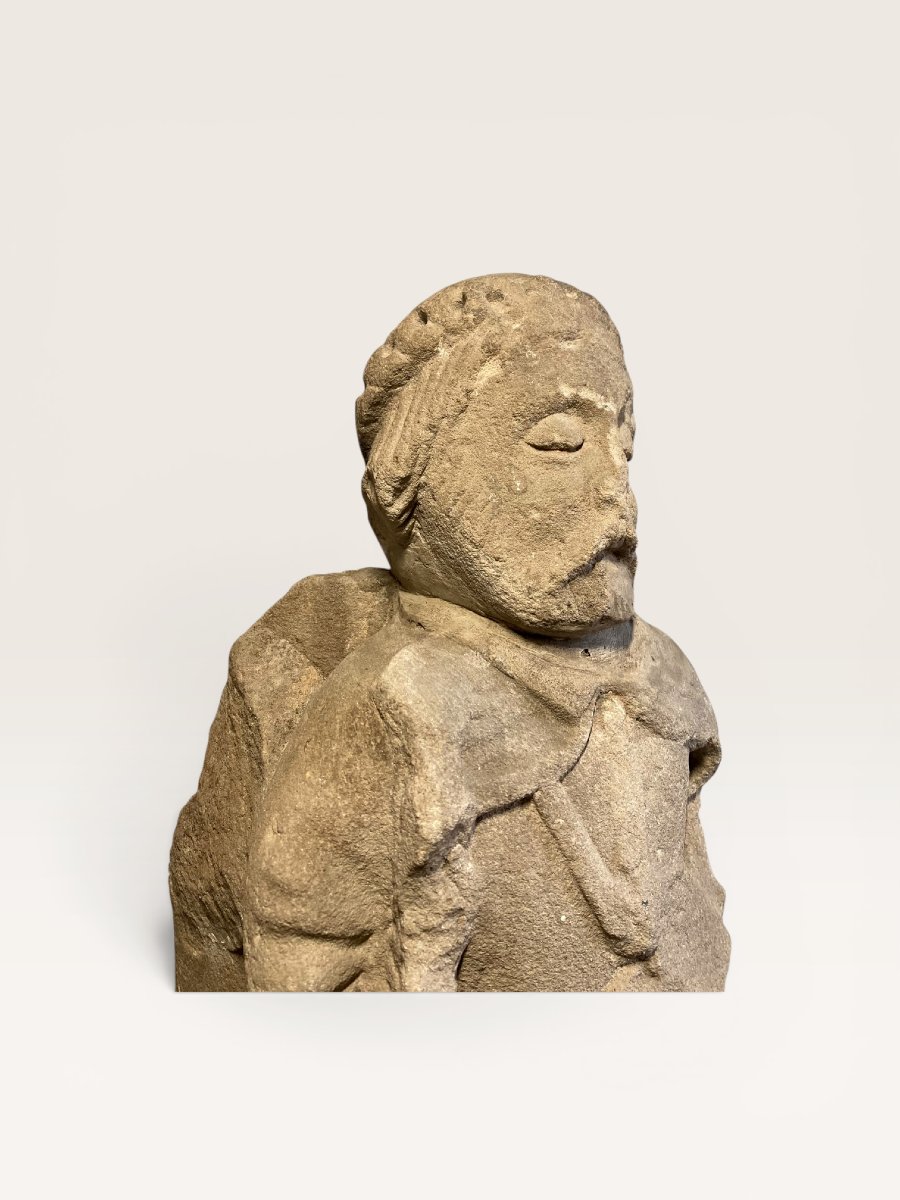
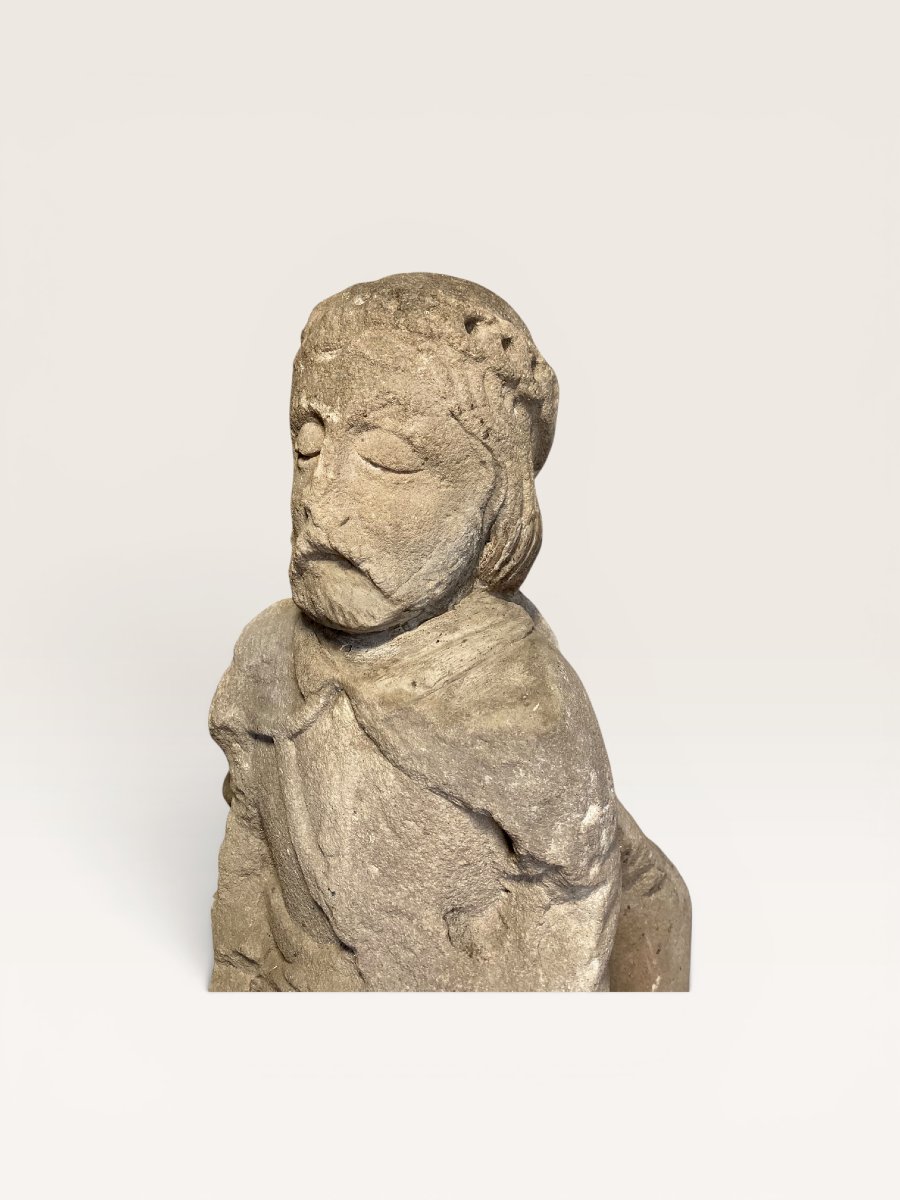
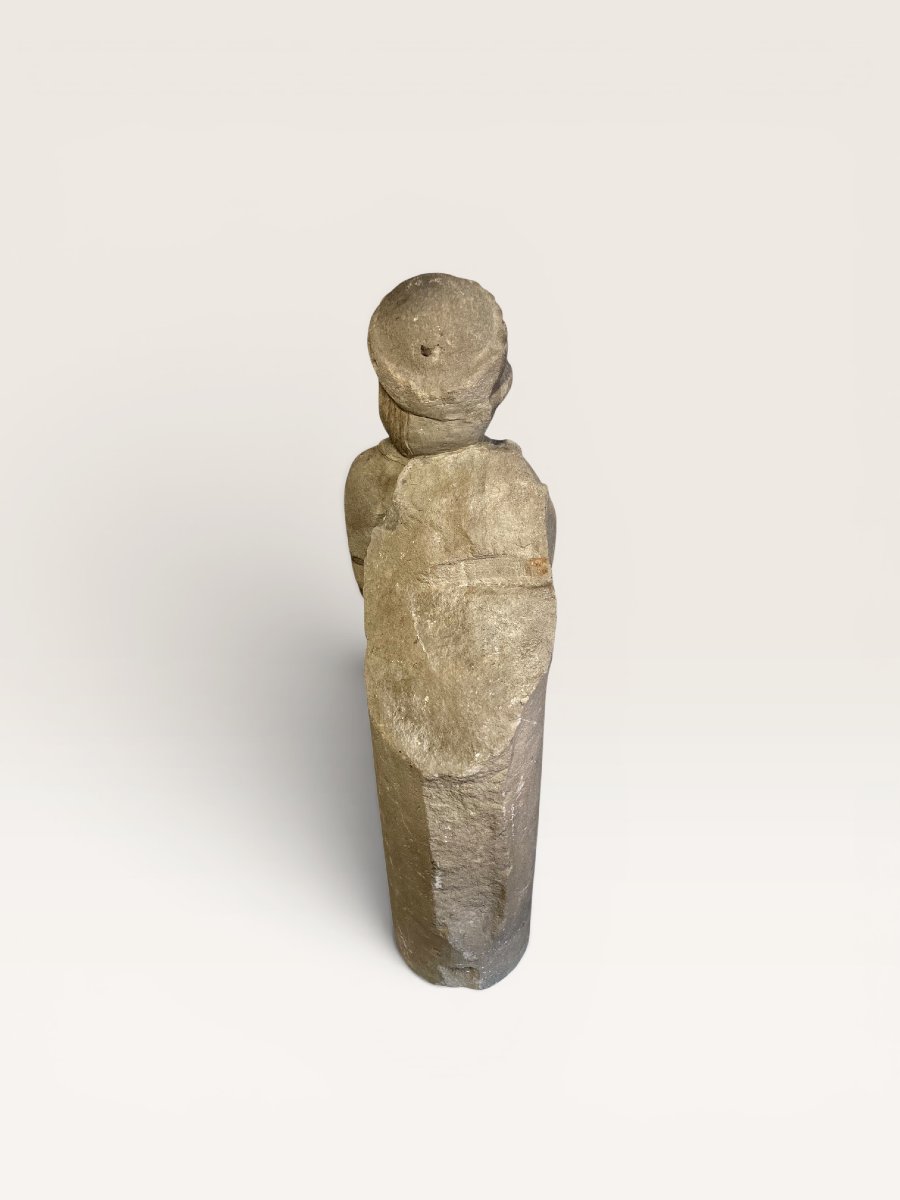
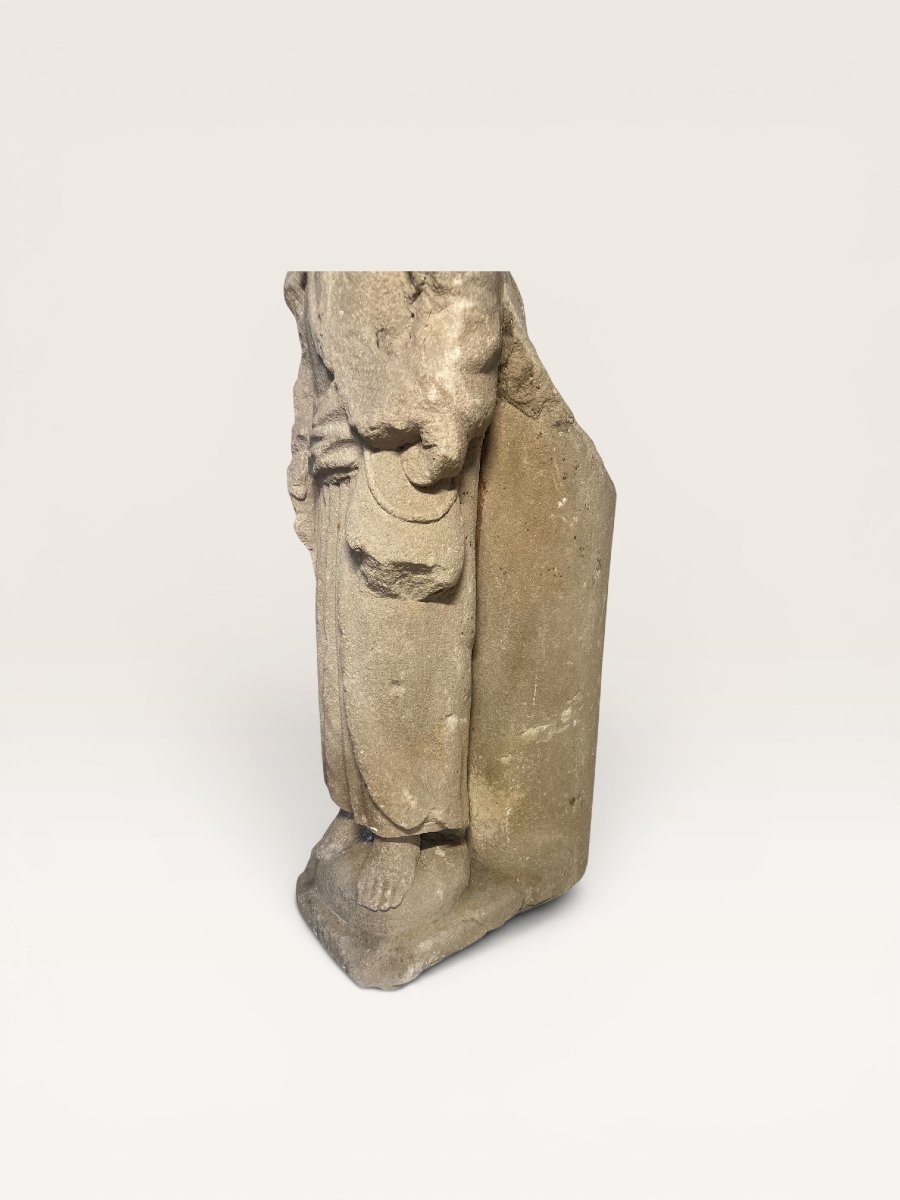
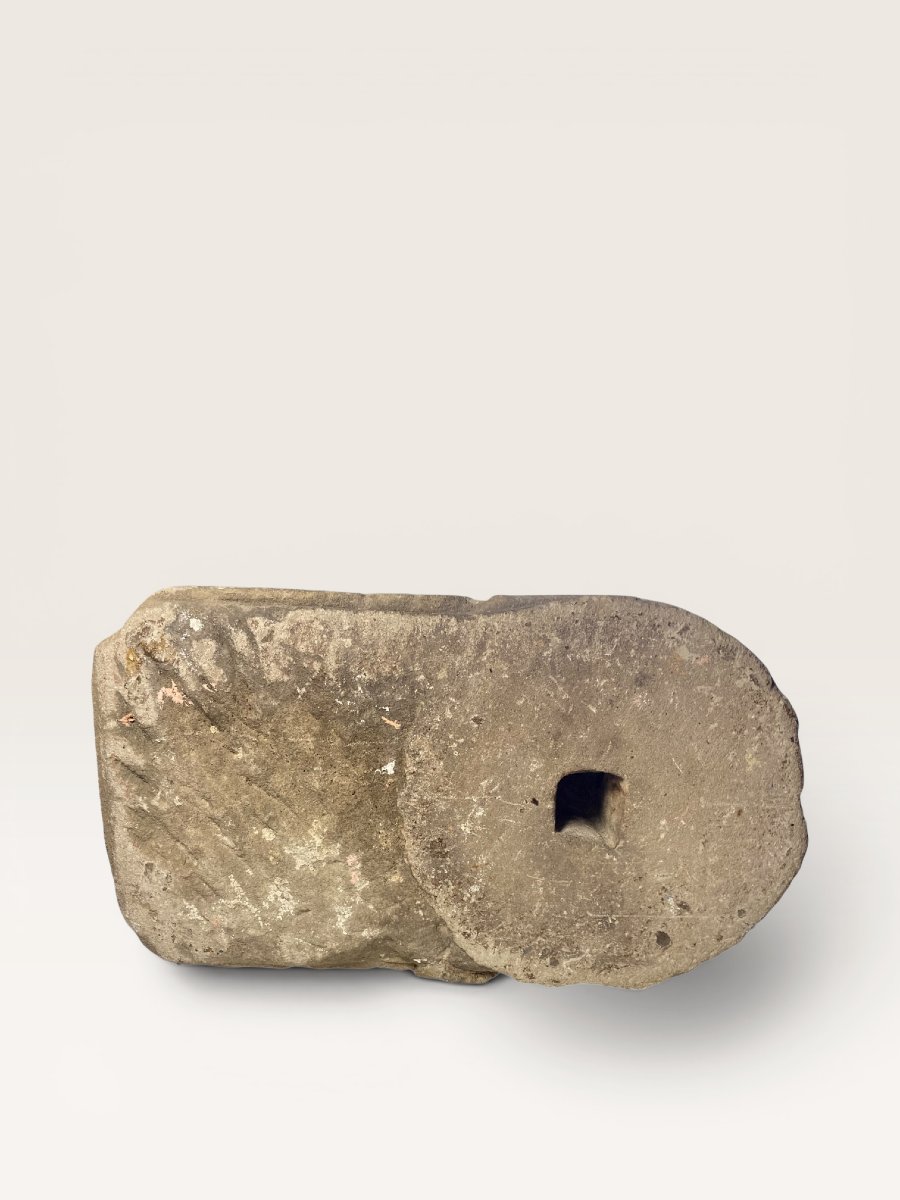
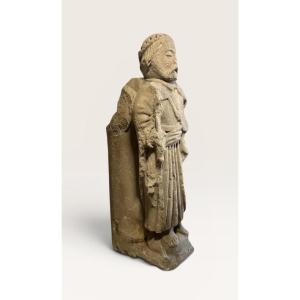


An extraordinary lower fragment of a column-statue, which fully preserves the sculpture that once decorated its base.
If we examine the figure’s iconography, we can see the large, deep-set eyes, beard, mustache, and hair, which immediately transport us to 12th-century southwestern France.
The crown, created using a drill to create openwork, indicates that our subject is a king.
The long tunic with a cloak draped over the shoulders, the belt at the waist to which a pouch is attached, the bare feet, and the right hand holding a fragment of what appears to have been a pilgrim’s staff complete the iconography of a pilgrim.
At this point, the comparison leads us to the tympanum of the Church of Sainte-Foy in Conques, where, to the right of Christ, in a procession led by Mary and St. Peter, Charlemagne appears alongside other figures—crowned and dressed as a pilgrim.
Iconographically, the resemblance is striking. Moreover, following Frederick Barbarossa’s proposal to canonize Charlemagne, his cult experienced a resurgence, even though he was already an extremely important and venerated figure.
In fact, it is not uncommon to find his figure used to legitimize and sanctify a sacred space, especially in his role as a pilgrim-king. Like a biblical king, he was a forerunner and the harbinger of the birth or rebirth of a cult.Furthermore, according to the Codex Calixtinus, Charlemagne liberated Galicia from the Moors to clear the pilgrimage route to Santiago. This made him the patron of pilgrims traveling to Santiago.
Therefore, especially in places where churches were used primarily by pilgrims—such as in southern France, where there was a significant flow of pilgrims along both the Via Francigena and the Camino de Santiago—it would have been natural for the figure of Charlemagne to be included among a series of biblical kings.
It should be noted that, based on its influences and style, we are discussing a piece that must have been located in the southwestern part of France associated with the Camino de Santiago.
From a typological perspective, to imagine how and where our fragment might have been placed, we can look to Chartres Cathedral, where a series of biblical kings—stylistically quite different from ours—rest on corbels from which they rise, attached to circular columns.
The condition is good: despite superficial wear on the sandstone, the only notable issues are the absence of the hands (which has led to the loss of two potential attributes, such as the book and the scepter) and the reassembly of the head. Considering its 850 years of age and outdoor exposure, these can be described as mild signs of aging.
Dimensions: 17.5 x 26 x 60H cm
Explore similar pieces and discover your ideal find:
Marble & Stone Sculptures