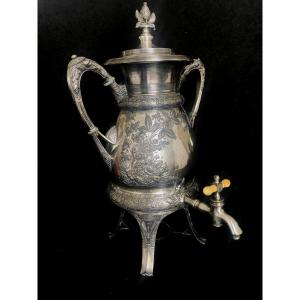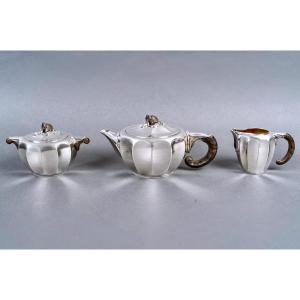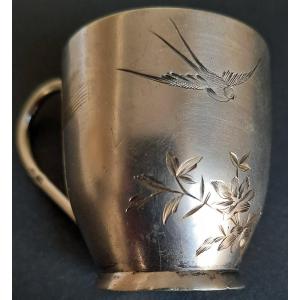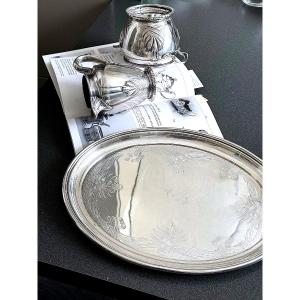
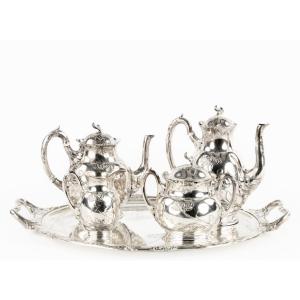


Christofle Gallia, Art Nouveau, Silver-plated Metal, Coffee Set
Gallia-Christofle Silver-Plated Tea and Coffee Service, Art Nouveau Period
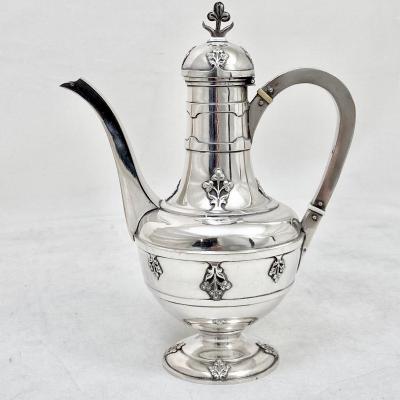
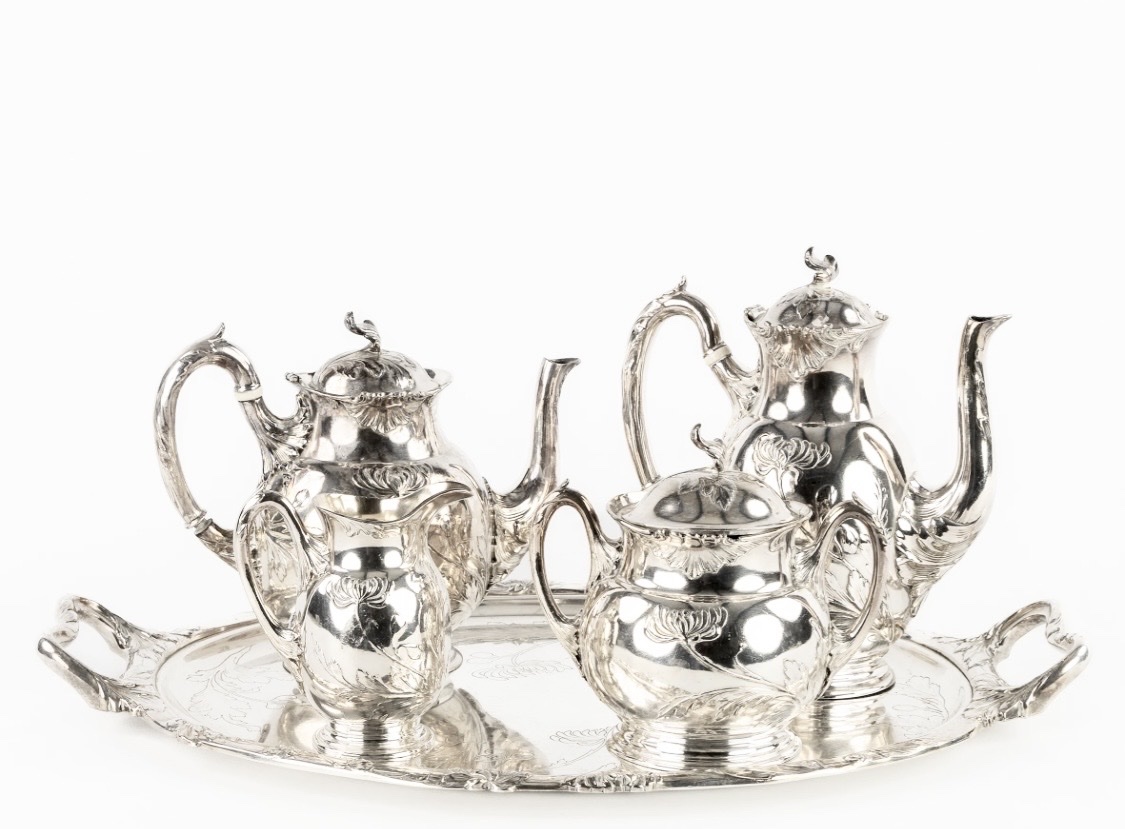
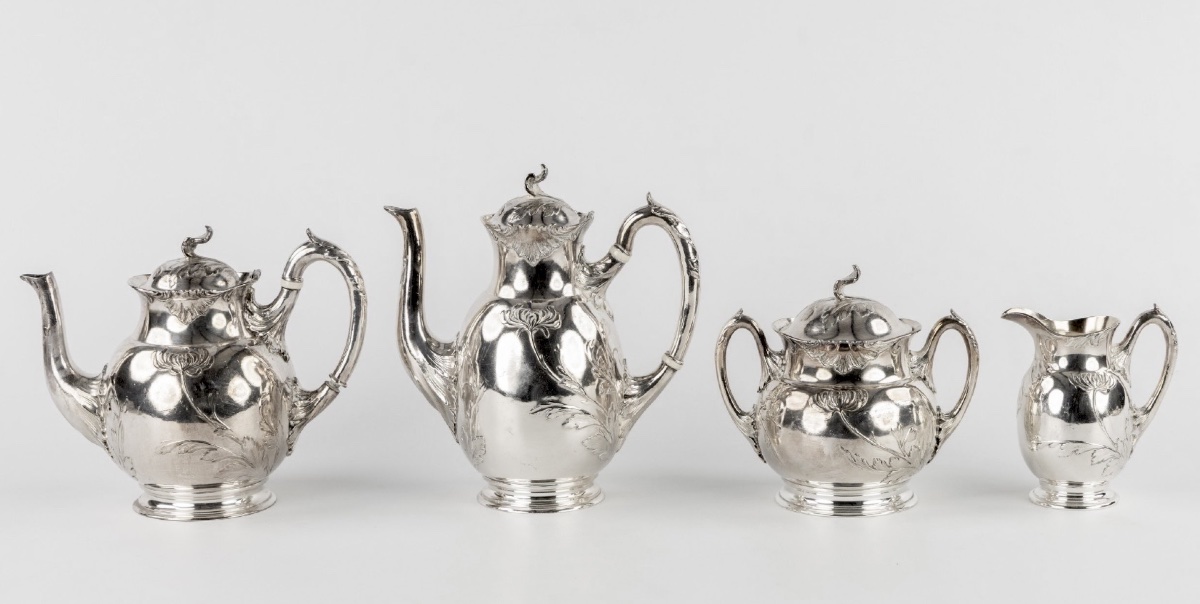
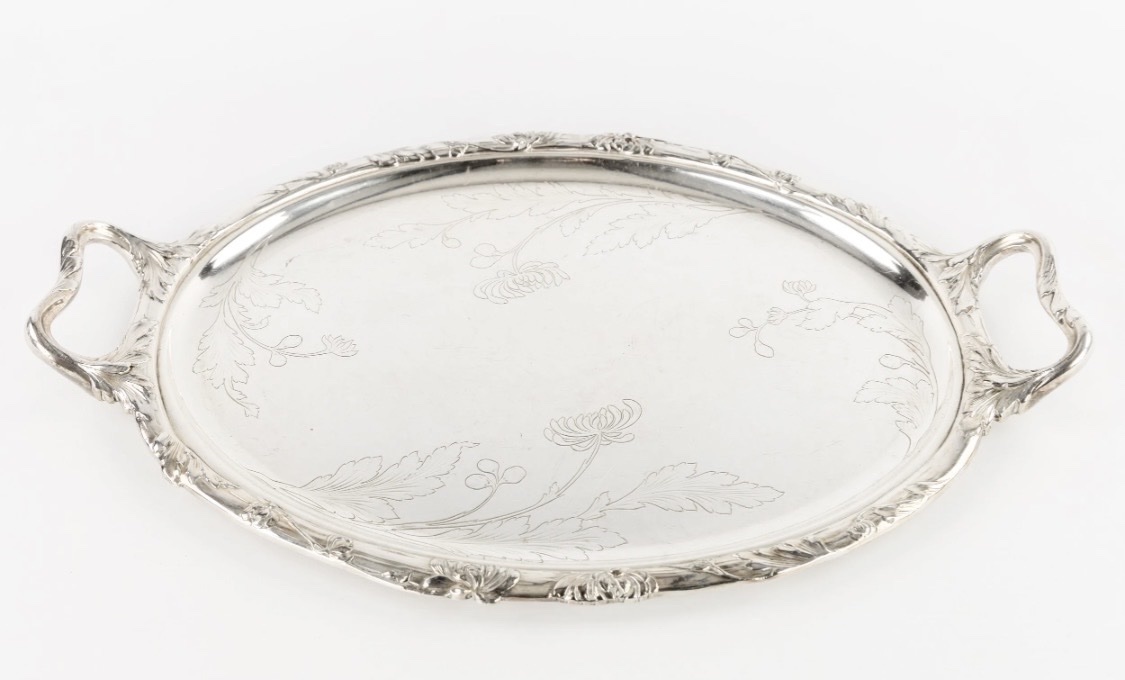
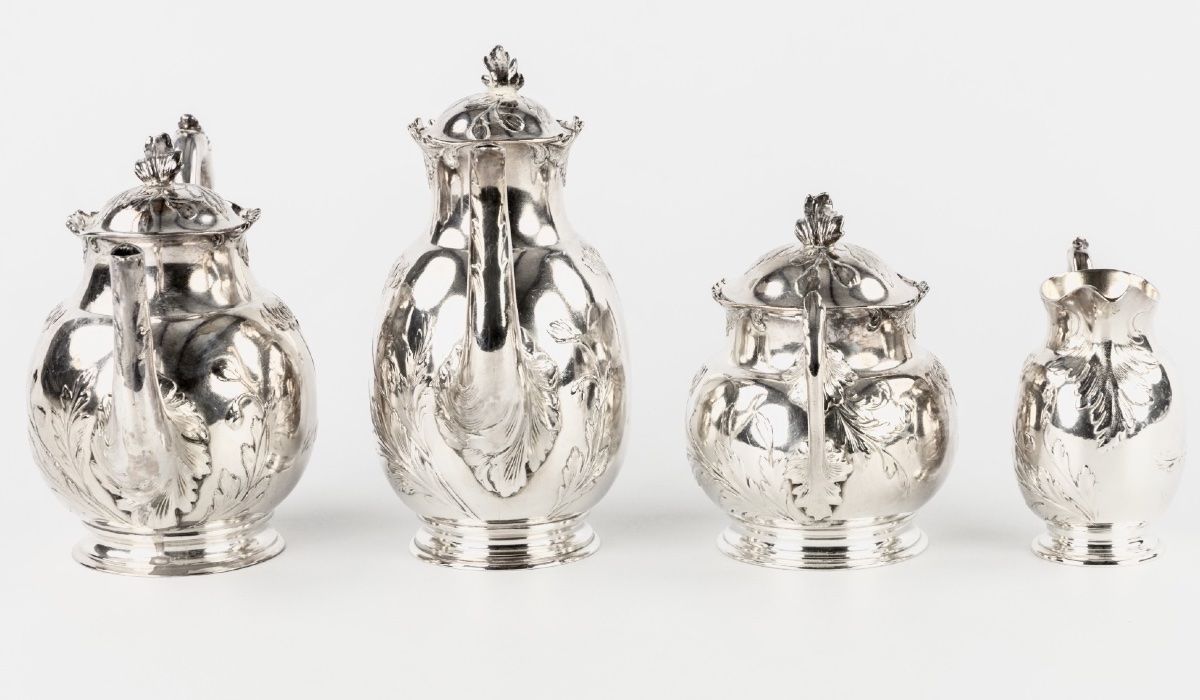
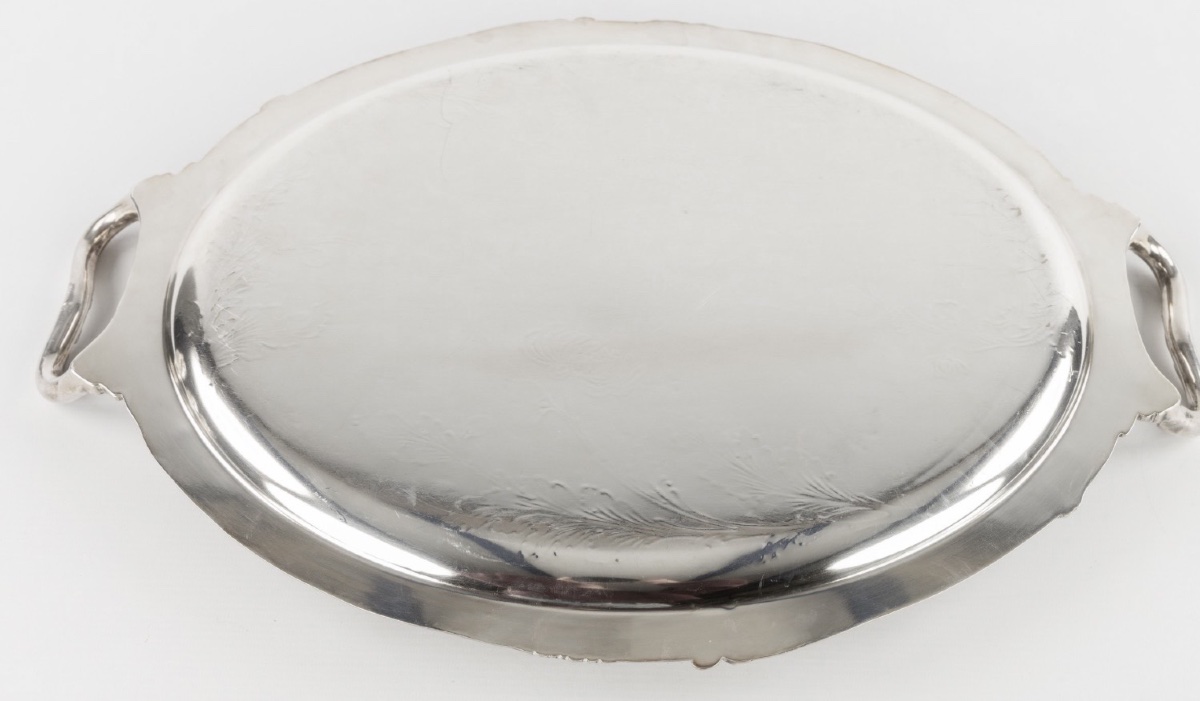
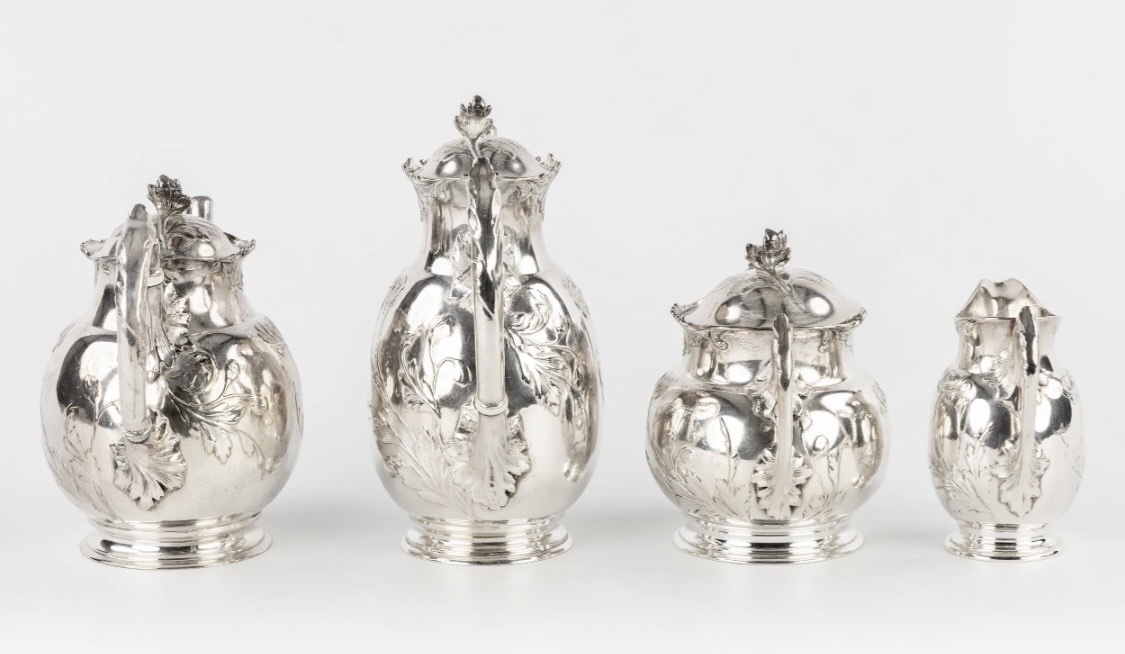
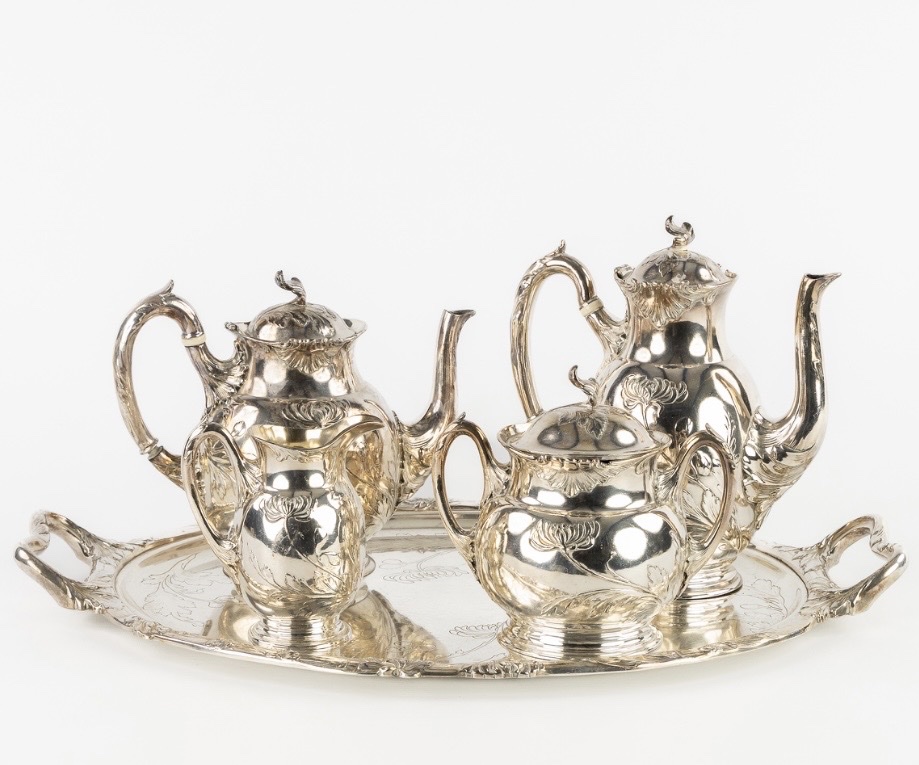
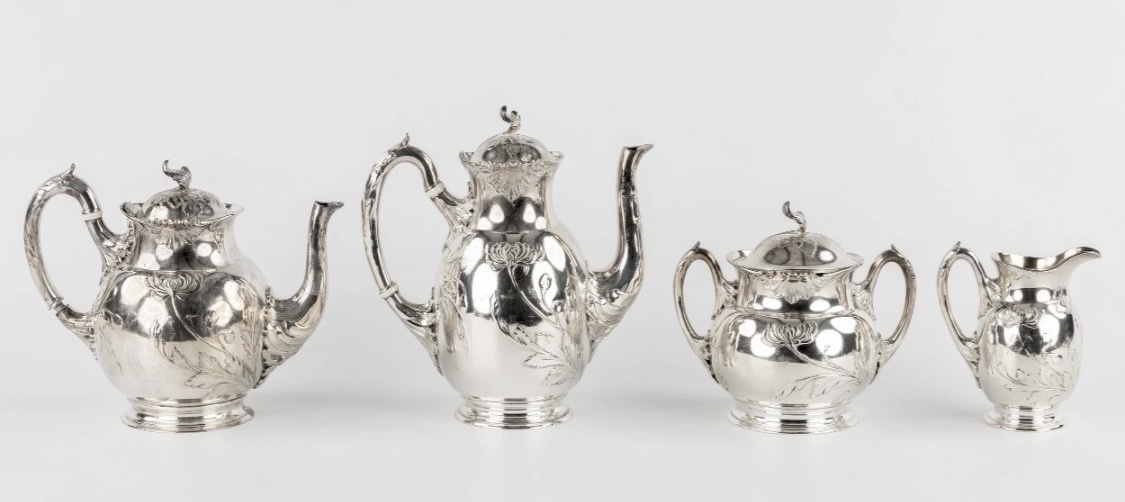
An elegant testament to the French art of living around 1900, this tea and coffee service comprises two pots, a cream jug and a covered sugar bowl, all presented on their large original tray. The ensemble is distinguished by its harmonious forms, richly worked decoration and the warm brilliance of its silver-plated surface.
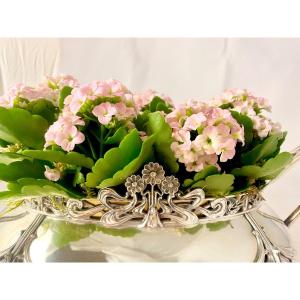
Each piece has a generous, flowing silhouette characteristic of the Art Nouveau taste. The sinuous handles, slender spouts and plant-inspired lid finials give the service a sense of lightness and movement. The bodies are decorated with stylised floral motifs in relief, while the scalloped borders and finely chased details create subtle reflections across the polished metal. The tray, with handles that appear to grow naturally from its decoration, forms a fitting setting for the entire service.
Gallia, Christofle’s Creative Laboratory
The name Gallia, spelled with two “l”s, should be distinguished from the occasionally seen but incorrect spelling “Galia.” Gallia was a brand and collection closely associated with the Christofle company, founded in Paris in 1830 by Charles Christofle. He played a decisive role in the development of silver-plated metalwork in France after acquiring, in 1842, the rights to use electrolytic silver-plating and gilding processes.
At the end of the nineteenth century, Christofle became closely associated with the Manufacture de l’Alfénide, a company specialising in alloys used for metalwork and tableware. From this industrial history emerged the Gallia line around 1900. The name referred both to a particularly durable metal alloy and to a range of objects recognisable by its emblem, the Gallic cockerel. Christofle itself presents Gallia as a collection born at the beginning of the twentieth century, in the context of the 1900 Paris Universal Exhibition.
Once shaped, Gallia metal could be silver-plated, giving it the luminous appearance of precious silverware. Harder and easier to cast than some of the metals traditionally used in the decorative arts, it made it possible to produce objects with complex relief decoration while retaining considerable strength. This technical innovation was particularly well suited to the new forms sought by designers at the time.
Gallia was therefore not merely a secondary brand intended to offer less expensive objects. Above all, it became a genuine laboratory for new forms and ideas within the Christofle company. While part of the French silverware industry continued to reproduce the historical styles of the eighteenth and nineteenth centuries, Gallia was able to experiment with freer lines inspired by flowers, nature and the flowing curves associated with Art Nouveau.
This creative freedom continued during the following decades. After Art Nouveau, the Gallia workshops embraced the aesthetic renewal of the 1920s and the rise of Art Deco. Designs became more geometric, streamlined and resolutely modern. Gallia thus retained a distinctive identity within the Christofle world while benefiting from the technical and industrial expertise of the larger company.
The Saint-Denis Workshops
Gallia’s history is also connected with Christofle’s vast manufacturing site at Saint-Denis. Opened from 1875 onwards, the factory gradually brought together metalworking, cutlery production and the various specialist crafts associated with silversmithing.
At the beginning of the twentieth century, Gallia production had its own organisation and, for a time, retained genuine artistic and commercial independence within Christofle. This explains why objects may bear the marks “Gallia” or “Orfèvrerie Gallia” rather than the Christofle name alone.
From the 1930s onwards, Christofle’s French activities were progressively consolidated at Saint-Denis, and the different ranges became more fully integrated into the company as a whole. Nevertheless, the Gallia name continued to be used long after this reorganisation.
Dating the Service to Around 1900
With its abundant plant decoration, flowing lines and nature-inspired lid finials, this service belongs fully to the Art Nouveau aesthetic. It may reasonably be dated to around 1900 or the first years of the twentieth century, rather than being attributed with certainty to the late nineteenth century.
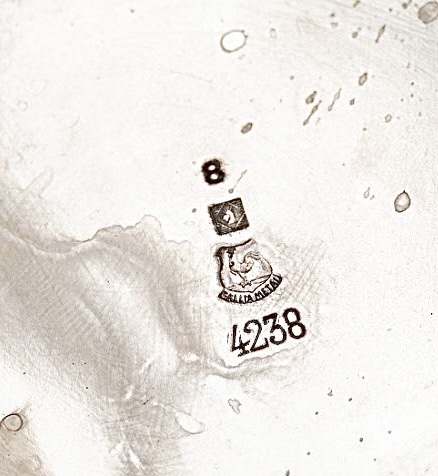
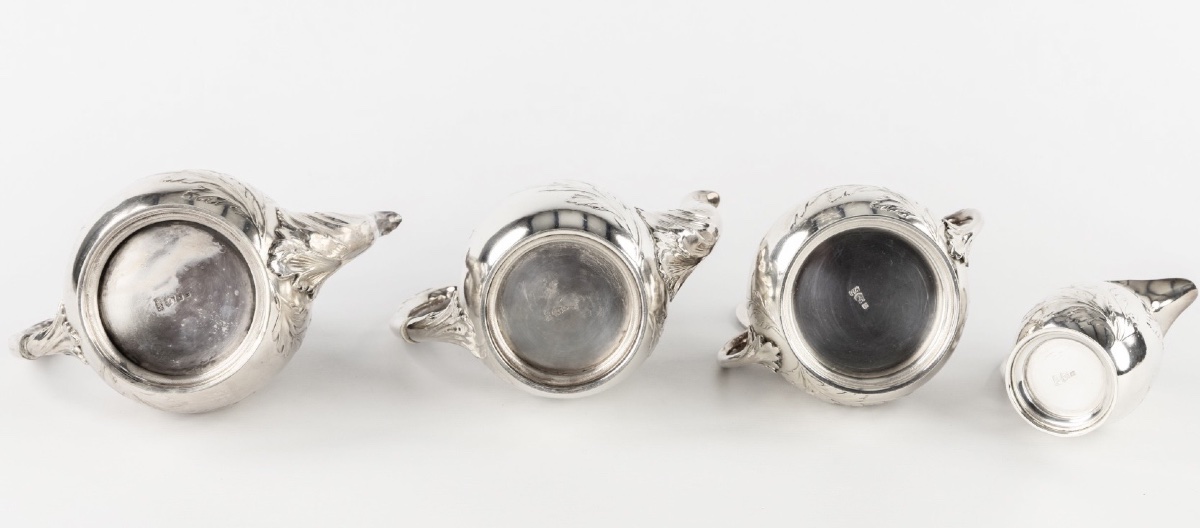
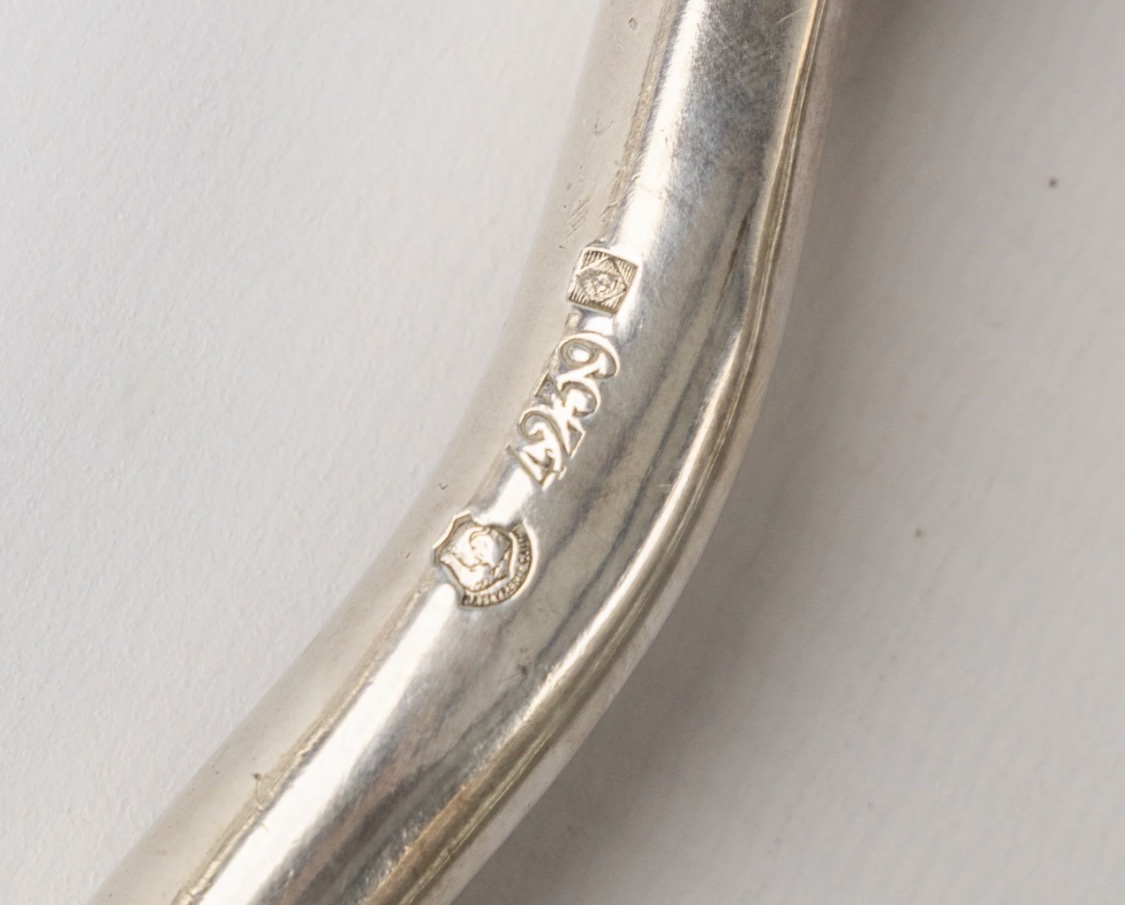
A more precise date would require a close examination of the hallmarks, model numbers and inscriptions found beneath each piece.
The historic Gallia mark generally depicts a cockerel inside a shield, sometimes accompanied, depending on the period, by the words “Gallia Métal,” “Orfèvrerie Gallia” or simply “Gallia.” These variations can provide valuable clues when establishing the date of manufacture.
A Complete, Decorative and Usable Ensemble
Preserved in very fine condition, this service forms a particularly harmonious ensemble. The presence of both pots, the cream jug, the covered sugar bowl and, above all, the large original tray is a significant advantage. Over time, many such services have been separated, with their individual pieces sold independently.
Despite its age, the ensemble remains ready to serve its original purpose, subject to the usual care recommended for antique silver-plated metalware. It may also be displayed as a decorative object, as its mirror-like finish and floral ornamentation give it a remarkable presence in an interior.
Gallia services in the Art Nouveau style are now encountered less frequently than the brand’s later Art Deco productions. Finding such a complete, coherent and well-preserved ensemble therefore represents a valuable opportunity to acquire an object that is at once functional, decorative and an important witness to the remarkable spirit of innovation associated with Gallia-Christofle.
Period: 19th century
Style: Art Nouveau
Condition: Excellent condition
Material: Silver metal
Reference (ID): 1783088
Availability: In stock