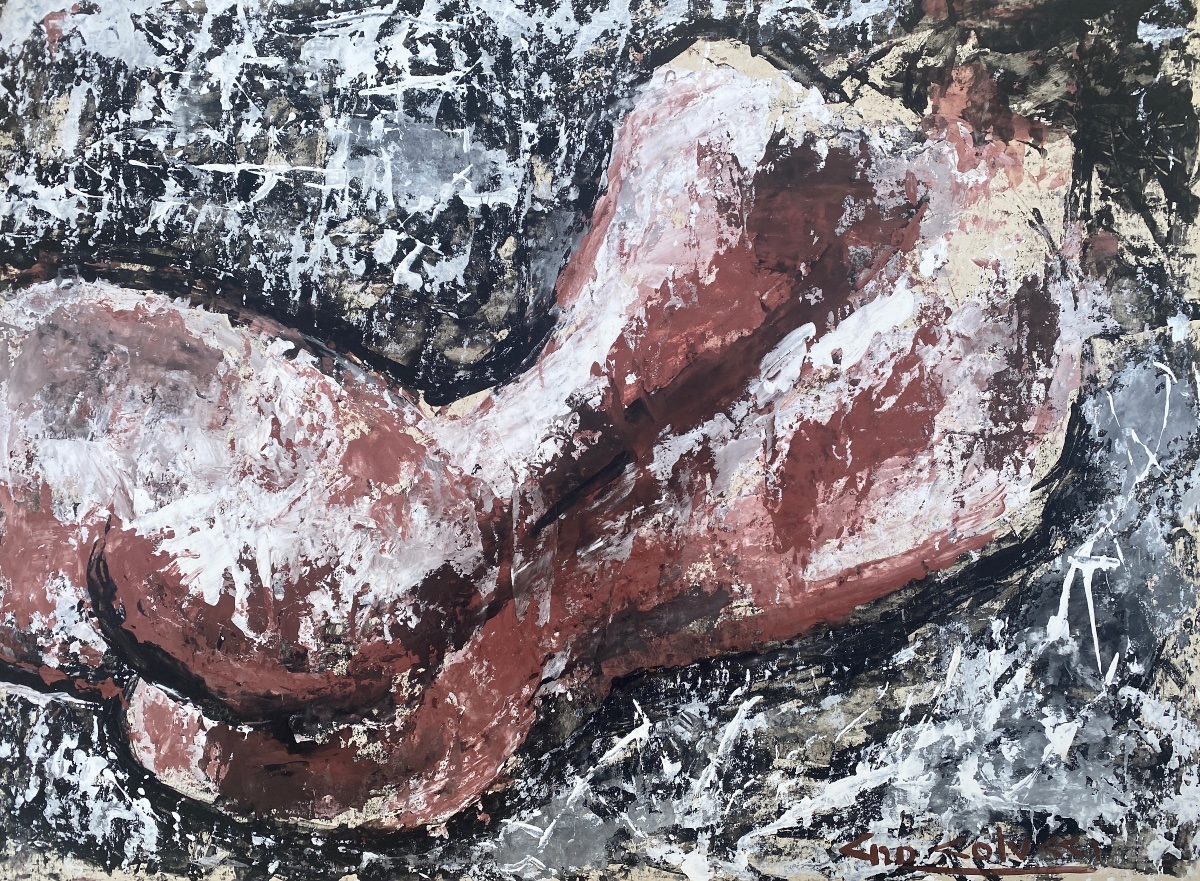

Reclining Female Nude, View From Behind - Gio Colucci
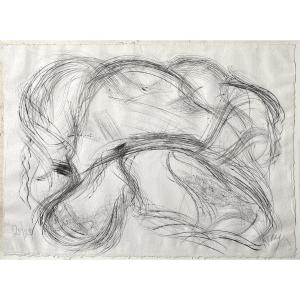
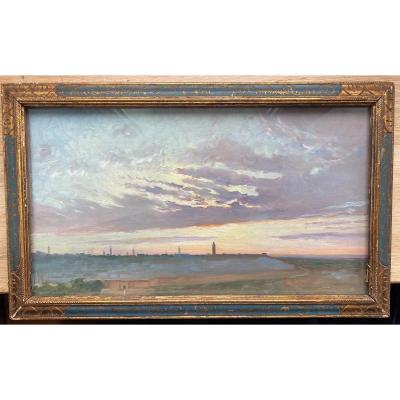
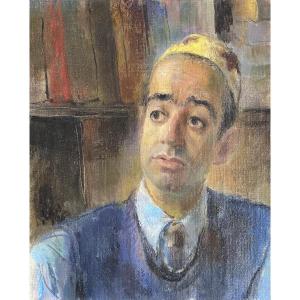
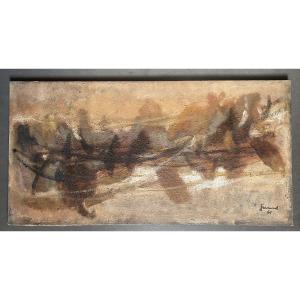
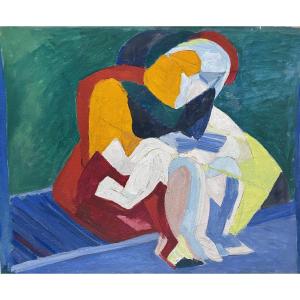
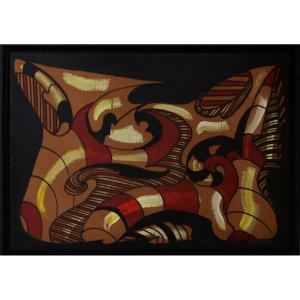
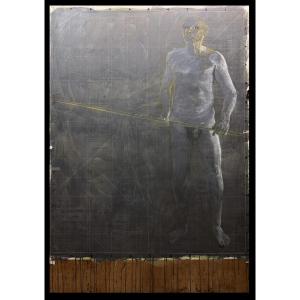
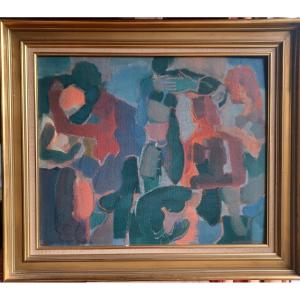
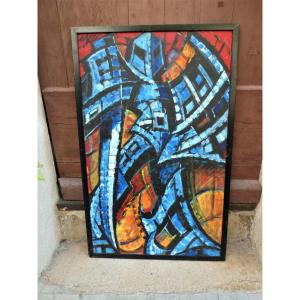
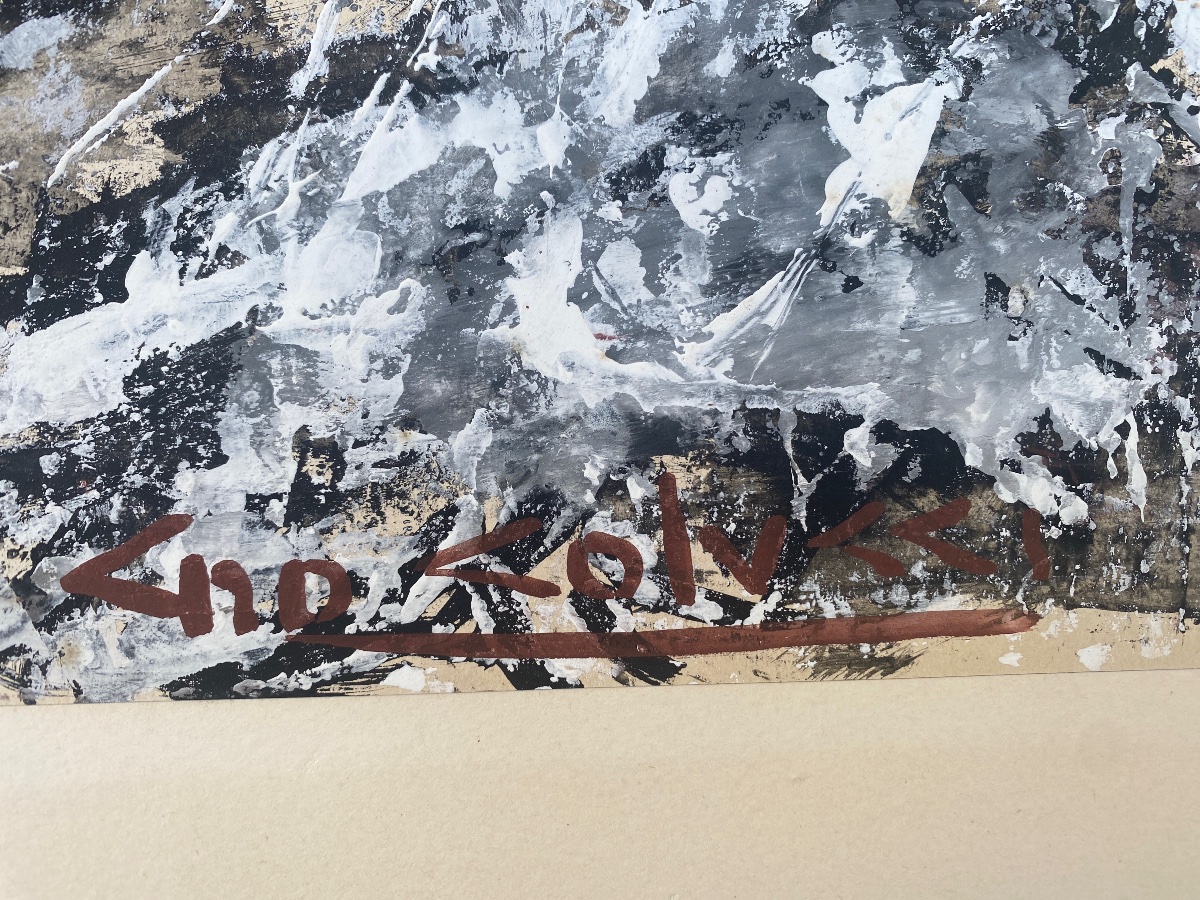
Gouache on heavy paper, signed "Gio Colucci" in the lower right corner, depicting a female nude lying on her back. Dimensions: 57.5 x 42.5 cm.
Gio (or Géo) Colucci was a 19th-century Italian painter, illustrator, and architect. Born in Cairo, he was admitted to the École des Beaux-Arts in Paris and then returned to Africa during World War I, where he worked as an architect. Upon his return to France, he first made a name for himself through his engravings. He produced numerous illustrations for his brother, the writer and publisher Guido Colucci, as well as for other publishers. He then began producing paintings and engravings within the Expressionist movement, which were exhibited at several art shows, notably the Salon d’Automne and the Salon des Surindépendants. An artist constantly reinventing himself, he turned to ceramics in the early 1920s and produced numerous pieces. He collaborated notably with the Christofle Gallery in Paris and enjoyed significant success. His works are now part of major private and museum collections.
Biography
Gio Colucci, born on May 30, 1892, in Cairo and died on October 5, 1974, in Paris, was a multifaceted artist: painter, printmaker, illustrator, ceramicist, and sculptor of Italian origin. A student at the École des Beaux-Arts in Paris, he initially pursued architecture in Egypt, then returned to France in 1918, after World War I, where he developed a free and experimental visual art practice.
Coming from an intellectual background—his brother Guido Colucci was a writer and calligrapher—he collaborated with him on several bibliophile editions. In the 1920s, his Expressionist engravings were exhibited in the most prestigious Parisian salons (Salon d’Automne, Salon des Surindépendants) alongside those of Gleizes, Herbin, and Delaunay. He collaborated with numerous art publishers, illustrating texts by Barbey d’Aurevilly, Maupassant, Octave Mirbeau, Dante, and Villon.
In 1929, he turned to ceramics and set up his studio in Aubagne. Influenced by Provençal traditions and Etruscan aesthetics, he created unique pieces with powerful forms and rich glazes, blending functional art with expressive sculpture. During World War II, he enlisted in the Foreign Legion, was taken prisoner, and later escaped before returning to his work as a potter.
After the war, he exhibited notably at the Christofle Gallery in Paris. In 1956, he founded the École d’art italien with Gino Severini, where he taught ceramics. In 1959, his work was exhibited at the Rome Quadriennale and in New York. He died in Paris in 1974. His studio collection was sold at auction in 1994 and 1995.
His works are held in numerous institutions: the Musée des Arts Décoratifs in Paris, the Musée Rodin, the Musée Paul-Valéry, the Corning Museum of Glass (New York), the Cairo Museum of Modern Art, the National Gallery of Victoria in Melbourne, and several museums in the Netherlands and Indonesia.
Style and Influences
Gio Colucci developed a deeply personal style, at the crossroads of Expressionism, abstraction, and decorative art. He is renowned for his masterful handling of materials, whether in his etchings, woodcuts, luxury illustrations, or ceramic pieces.
His highly contrasting visual world oscillates between dramatic tension and formal lyricism. His illustrations for Loti’s La mort de Philae and Mirbeau’s Jardin des supplices are emblematic of this aesthetic. His series of illuminated manuscripts, created in collaboration with his brother (notably Villon’s Grand Testament), is a work of fine craftsmanship that bridges painting and calligraphy.
In the field of ceramics, he blends tradition and exuberance, reinterpreting classical forms (Louis XV soup tureens, fluted serving dishes) with glazes that run in baroque streaks. He champions an organic, almost sculptural approach to the material. His work with glass in the 1950s, sometimes compared to that of Picasso, illustrates his ability to renew his artistic language.
Colucci was also an innovator of form, sometimes incorporating metal, wood, or glass into his objects, and anticipating the multidisciplinary approach that would come to define contemporary art.
Period: 20th century
Style: Modern Art
Condition: Excellent condition
Material: Gouache
Width: 57,5 cm
Height: 42,5 cm
Reference (ID): 1781813
Availability: In stock