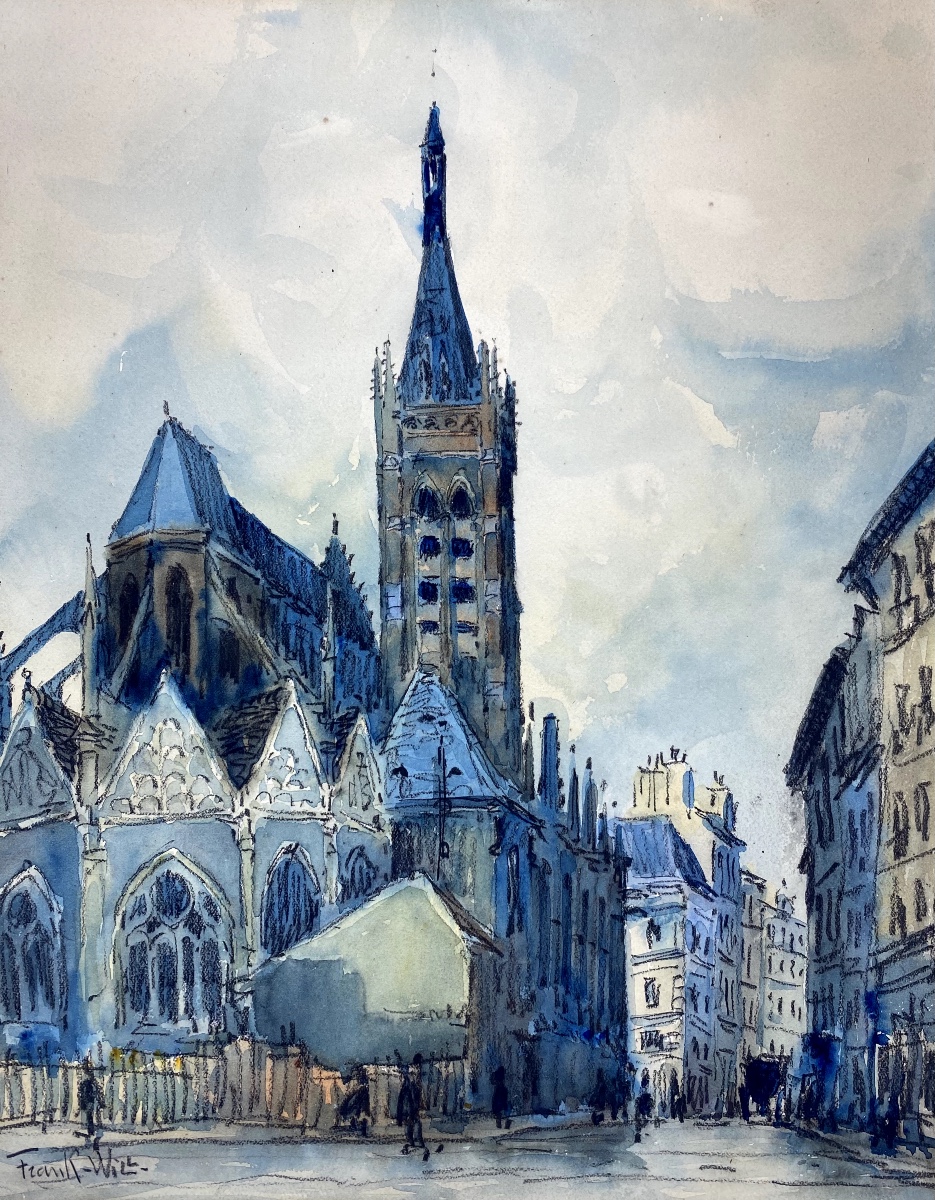


Watercolor Of The Saint-séverin Church (paris 5th Arrondissement) Signed Frank Will
Artist: Frank Will (1900-1950)
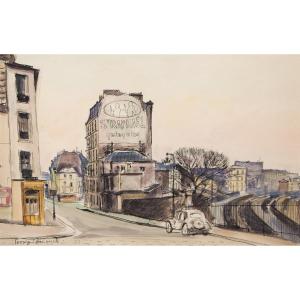
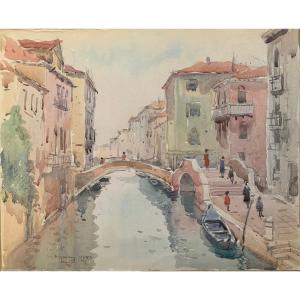
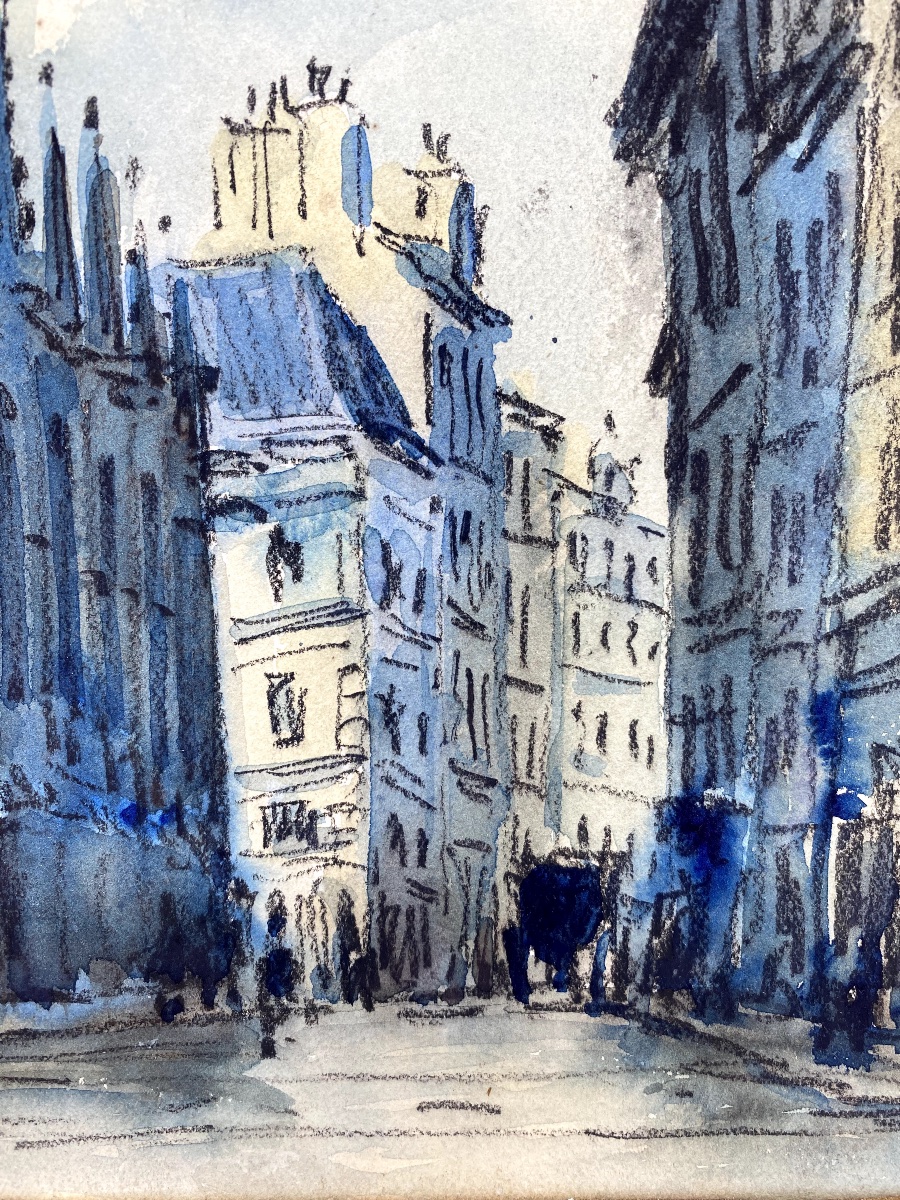
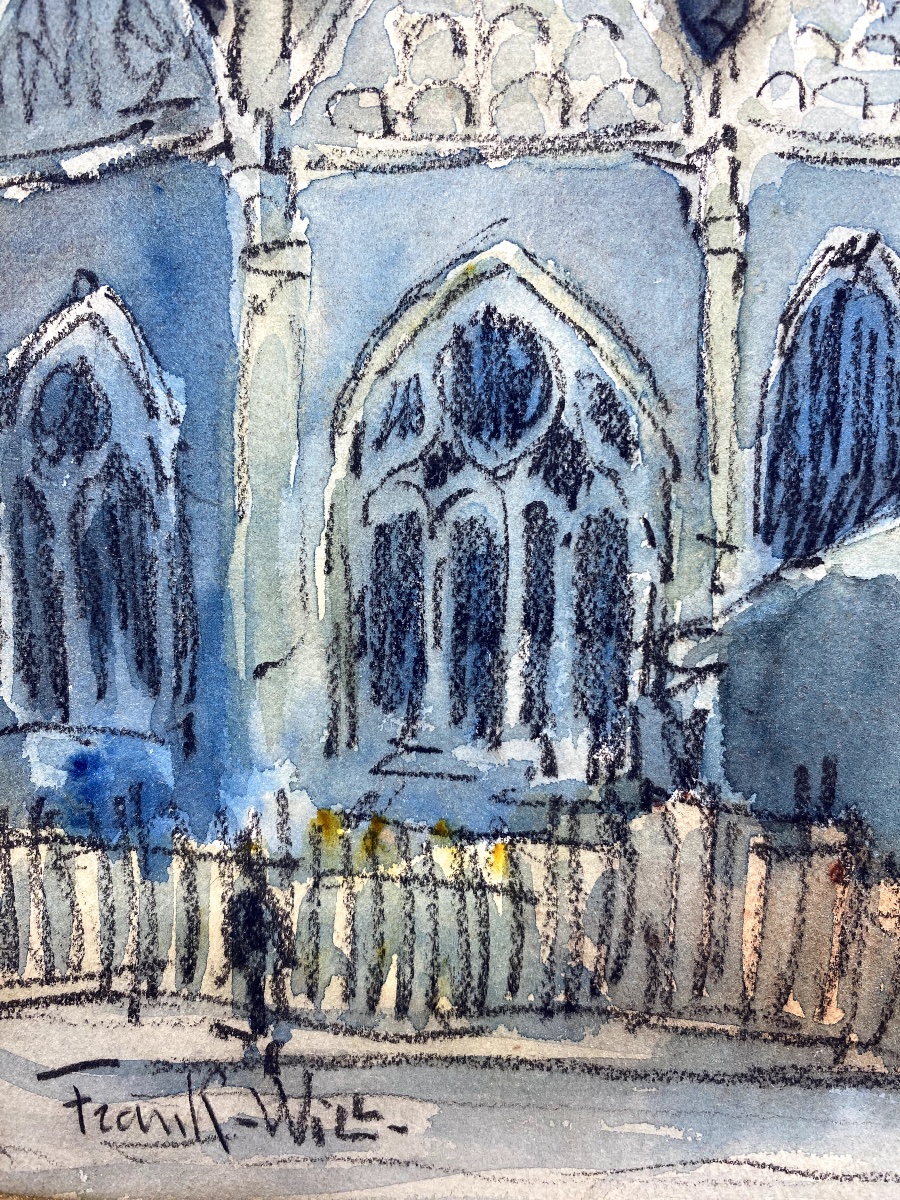
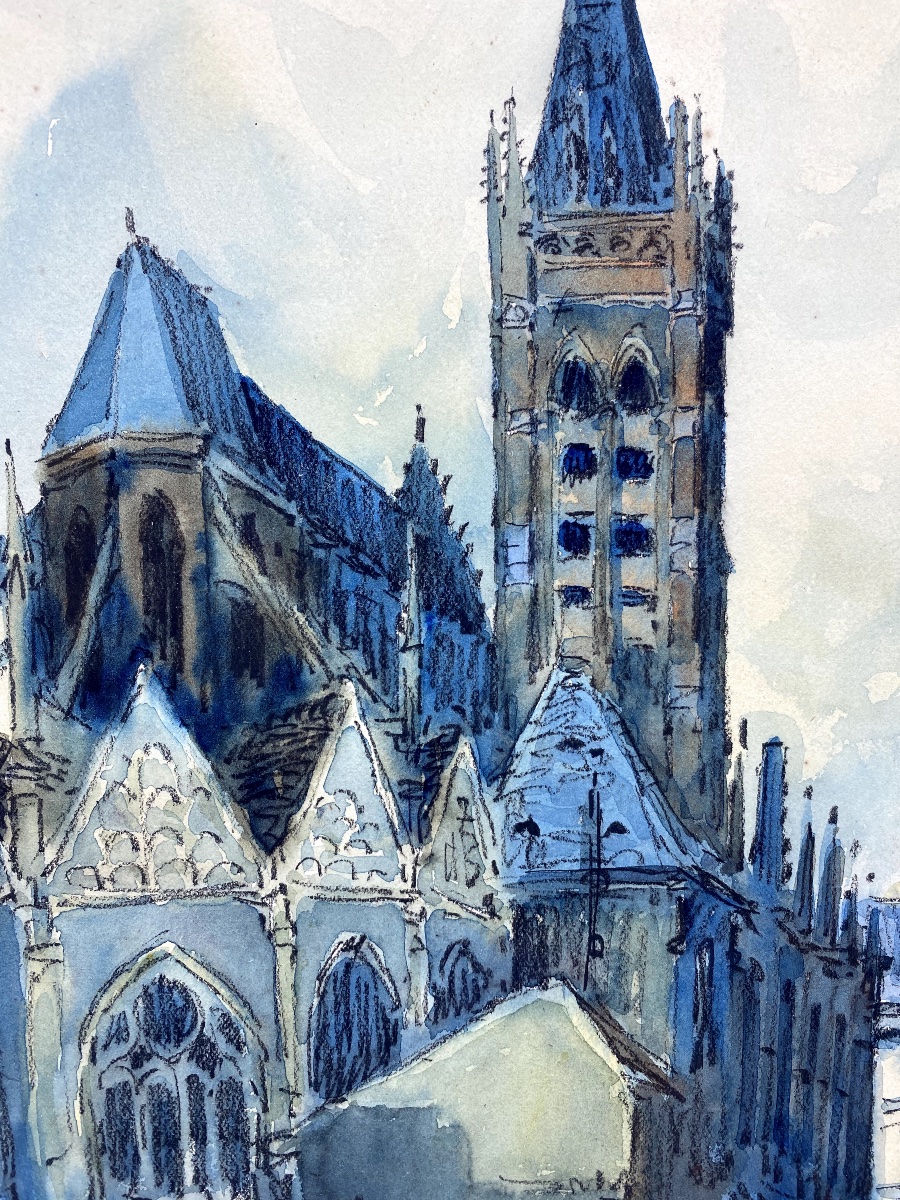
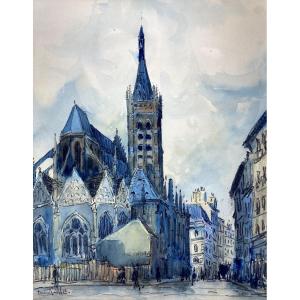
A very pretty watercolor depicting the Church of Saint-Séverin, located on Rue des Prêtres-Saint-Séverin in the Latin Quarter (5th arrondissement of Paris), near the Seine. Signed Frank Will in the lower left corner.
Dimensions: 29 x 37 cm (sight size). Frank William Boggs, known as Frank-Will, was a French painter and watercolorist born in Nanterre on March 13, 1900, and died in Clichy on December 29, 1950. It was on his return journey from a trip to North Africa that the already renowned painter Frank Myers Boggs (born in Springfield, Ohio, in 1855) committed the romantic abduction of Josephine (born in Urrugne in 1871), daughter of the farmer Isidore and Felipa Gaintza, in Urrugne (Pyrénées-Atlantiques). The couple—they would not marry until 1917—had four children: Jane, in 1895, then a son who lived only a few months, Mary, in 1898. The birth of Frank William in 1900 made their apartment at 2 rue Gambetta in Nanterre too small and led to the family moving to "a pretty house in Autouillet, a charming little village in Seine-et-Oise." From the age of 10, Frank showed himself to be a painter at heart. Although he was in constant visual contact with his father's works, in the studio on rue de Clignancourt which Frank Boggs occupied from 1910 to 1913 and then at 1, boulevard de Clichy where the family remained during the First World War, the didactic master-student relationship between father and son, as stated by Édouard-Joseph, is contested by Éric Mercier for whom "Frank learns alone, most often left to his own devices, the father refusing to give him the slightest advice during his furtive appearances"[3]. The first recorded paintings by the teenager, landscapes of the area around Autouillet, date from 1916. He began architectural studies which he abandoned to devote himself entirely to painting and, already looking for an artist's name that would free him from any homonymous confusion with his father, he signed "Franque", then "Frank" in 1917, "William Frank" in 1918, "Franck-Will" in 1919, and finally "Frank-Will" in 1921. From 1925 onwards, he would sometimes sign "Belliot" (views of Diélette, or the area around Chartres) to escape his dealer a little, and, later, between 1936 and 1939, in order to differentiate certain subjects which he considered repetitive (on Le Tréport in particular), he signed works with the pseudonym "Naudin". Young Frank's passion at the time was the hunting horn, which he played regularly. He was the oldest known friend of the painter Gen Paul, whom he met in 1917 and introduced to music. Together, they busked, playing in the courtyards of Belleville and Ménilmontant, and they also painted views of Paris together. A painting by them, "Figure in the Street in the Snow," is even known, a playful collaboration painted in 1926 and signed Gen-Will and Frank Paul. Views of Paris naturally became Frank-Will's first favorite subject. After 1925, the Barré and Dayez publishing house popularized his Sacré-Cœur Basilica, his Opéra Garnier, his Gare du Nord, his Vendôme Column, and other works on postcards. His holidays in the 1920s and 1930s are known to us and allow us to date some of his works: Normandy (including Rouen and Honfleur) in 1922, La Rochelle in 1926, Amiens in 1929, and Barfleur in 1930. It was there that he became attached to the theme of tall ships, those galleons he so admired, which would remain one of his recurring themes, sometimes even appearing in compositions of imaginary naval battles. Later, with a friend he met at the Henri Bureau gallery, Marcel Leprin (1891-1932), he visited Moret-sur-Loing, Auxerre, and Avallon. On August 13, 1936, Frank-Will married Victoire Royer (born in 1884) at the town hall of the 7th arrondissement of Paris. They settled at 31 rue Rousselet, then later at 44 rue Castor in Mantes-la-Jolie. In the summer, the couple traveled to Le Tréport, where they ran a tiny gallery on the Quai François-Ier and sold watercolors. But, unable to give up Montmartre and his bohemian lifestyle, Frank-Will separated (without divorcing) from Victoire, who remained in Mantes, while he moved back to Paris, first to 37 rue Pigalle, then, reoccupying his father's old studio, once again to 1 boulevard de Clichy, where another woman—Yvonne David, known as "Mimiche"—entered his life. Meanwhile, he spent lavishly, squandering his inheritance and other resources on rounds of drinks in cafés and cabarets. Still a musician, he played in jazz orchestras, then in the brass band La Chignole with Gen Paul, Jean d'Esparbès, Pere Créixams, Tony Agostini, and Marcel Aymé, becoming one of the prominent Montmartre figures evoked by Francis Carco, all the while accumulating debt and ruining his health with drunken revelry. In 1948, Frank-Will made a brief trip to Morocco. There he contracted amoebae, and in 1950 in Paris, he was hit by a bus in the Place de l'Opéra.In 1948, Frank-Will took a brief trip to Morocco. There he contracted amoebae, and in 1950 in Paris, he was hit by a bus in the Place de l'Opéra. Weakened by alcohol and neglecting medical care, he underwent surgery on December 29, 1950, for a partial removal of his right lung; the operation went badly, and he died the same day. He rests beside Frank and Josephine Boggs in the family vault in Paris's Père-Lachaise Cemetery (44th division), where he was buried on January 4, 1951. His name was never engraved there.
Dimensions: 29 x 37 cm (sight size). Frank William Boggs, known as Frank-Will, was a French painter and watercolorist born in Nanterre on March 13, 1900, and died in Clichy on December 29, 1950. It was on his return journey from a trip to North Africa that the already renowned painter Frank Myers Boggs (born in Springfield, Ohio, in 1855) committed the romantic abduction of Josephine (born in Urrugne in 1871), daughter of the farmer Isidore and Felipa Gaintza, in Urrugne (Pyrénées-Atlantiques). The couple—they would not marry until 1917—had four children: Jane, in 1895, then a son who lived only a few months, Mary, in 1898. The birth of Frank William in 1900 made their apartment at 2 rue Gambetta in Nanterre too small and led to the family moving to "a pretty house in Autouillet, a charming little village in Seine-et-Oise." From the age of 10, Frank showed himself to be a painter at heart. Although he was in constant visual contact with his father's works, in the studio on rue de Clignancourt which Frank Boggs occupied from 1910 to 1913 and then at 1, boulevard de Clichy where the family remained during the First World War, the didactic master-student relationship between father and son, as stated by Édouard-Joseph, is contested by Éric Mercier for whom "Frank learns alone, most often left to his own devices, the father refusing to give him the slightest advice during his furtive appearances"[3]. The first recorded paintings by the teenager, landscapes of the area around Autouillet, date from 1916. He began architectural studies which he abandoned to devote himself entirely to painting and, already looking for an artist's name that would free him from any homonymous confusion with his father, he signed "Franque", then "Frank" in 1917, "William Frank" in 1918, "Franck-Will" in 1919, and finally "Frank-Will" in 1921. From 1925 onwards, he would sometimes sign "Belliot" (views of Diélette, or the area around Chartres) to escape his dealer a little, and, later, between 1936 and 1939, in order to differentiate certain subjects which he considered repetitive (on Le Tréport in particular), he signed works with the pseudonym "Naudin". Young Frank's passion at the time was the hunting horn, which he played regularly. He was the oldest known friend of the painter Gen Paul, whom he met in 1917 and introduced to music. Together, they busked, playing in the courtyards of Belleville and Ménilmontant, and they also painted views of Paris together. A painting by them, "Figure in the Street in the Snow," is even known, a playful collaboration painted in 1926 and signed Gen-Will and Frank Paul. Views of Paris naturally became Frank-Will's first favorite subject. After 1925, the Barré and Dayez publishing house popularized his Sacré-Cœur Basilica, his Opéra Garnier, his Gare du Nord, his Vendôme Column, and other works on postcards. His holidays in the 1920s and 1930s are known to us and allow us to date some of his works: Normandy (including Rouen and Honfleur) in 1922, La Rochelle in 1926, Amiens in 1929, and Barfleur in 1930. It was there that he became attached to the theme of tall ships, those galleons he so admired, which would remain one of his recurring themes, sometimes even appearing in compositions of imaginary naval battles. Later, with a friend he met at the Henri Bureau gallery, Marcel Leprin (1891-1932), he visited Moret-sur-Loing, Auxerre, and Avallon. On August 13, 1936, Frank-Will married Victoire Royer (born in 1884) at the town hall of the 7th arrondissement of Paris. They settled at 31 rue Rousselet, then later at 44 rue Castor in Mantes-la-Jolie. In the summer, the couple traveled to Le Tréport, where they ran a tiny gallery on the Quai François-Ier and sold watercolors. But, unable to give up Montmartre and his bohemian lifestyle, Frank-Will separated (without divorcing) from Victoire, who remained in Mantes, while he moved back to Paris, first to 37 rue Pigalle, then, reoccupying his father's old studio, once again to 1 boulevard de Clichy, where another woman—Yvonne David, known as "Mimiche"—entered his life. Meanwhile, he spent lavishly, squandering his inheritance and other resources on rounds of drinks in cafés and cabarets. Still a musician, he played in jazz orchestras, then in the brass band La Chignole with Gen Paul, Jean d'Esparbès, Pere Créixams, Tony Agostini, and Marcel Aymé, becoming one of the prominent Montmartre figures evoked by Francis Carco, all the while accumulating debt and ruining his health with drunken revelry. In 1948, Frank-Will made a brief trip to Morocco. There he contracted amoebae, and in 1950 in Paris, he was hit by a bus in the Place de l'Opéra.In 1948, Frank-Will took a brief trip to Morocco. There he contracted amoebae, and in 1950 in Paris, he was hit by a bus in the Place de l'Opéra. Weakened by alcohol and neglecting medical care, he underwent surgery on December 29, 1950, for a partial removal of his right lung; the operation went badly, and he died the same day. He rests beside Frank and Josephine Boggs in the family vault in Paris's Père-Lachaise Cemetery (44th division), where he was buried on January 4, 1951. His name was never engraved there.
390 €
Period: 20th century
Style: Modern Art
Condition: Good condition
Material: Water color
Width: 29 cm
Height: 37 cm
Reference (ID): 1723715
Availability: In stock
Print