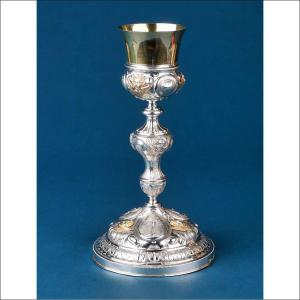


Antique White And Gilt Silver Chalice By Josep Casas. Barcelona, Spain, 19th C.
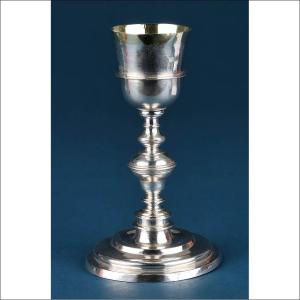
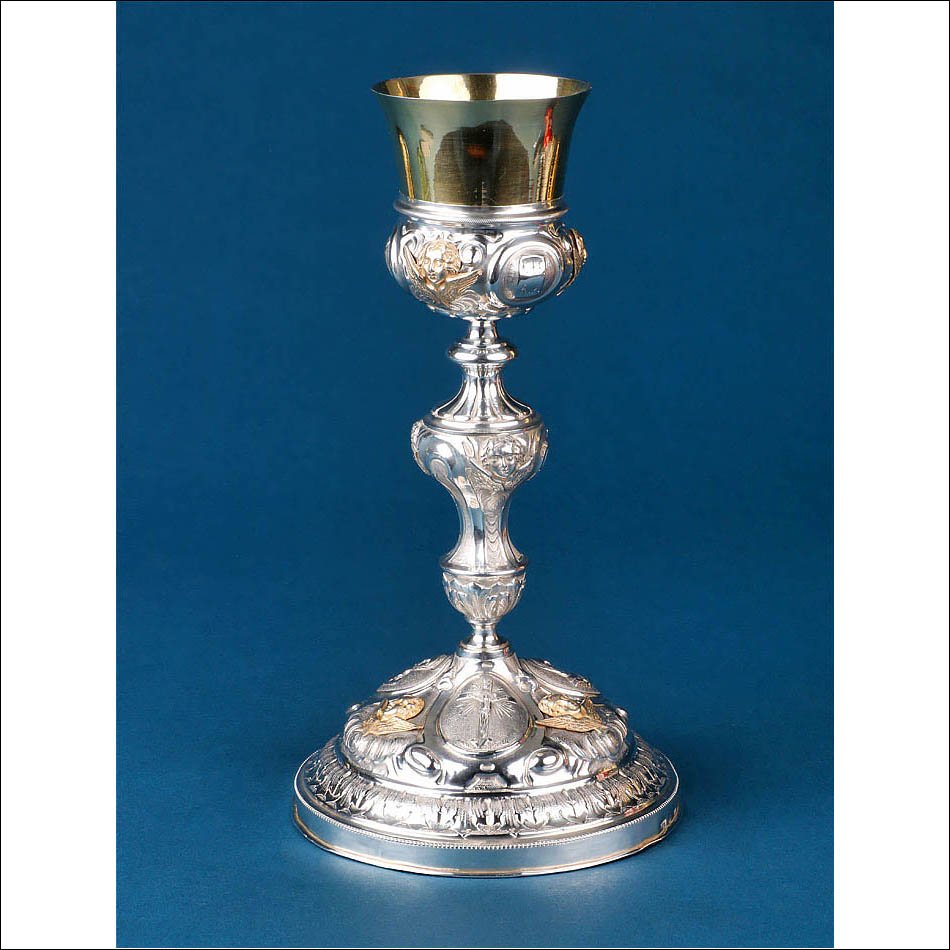
Spectacular antique silver chalice, made in white silver and gilt silver, crafted in Barcelona at the end of the 19th century by the silversmith Josep Casas. This is an exceptional chalice, a true masterpiece of Barcelona religious silversmithing, with extraordinary richness of volume, contrast and ornamental work. The decoration extends across the base, knop and lower cup, combining devotional reliefs and gilt cherubs that give it a truly uncommon liturgical presence. It is a piece created to stand out for its solemnity, for the quality of its workmanship and for the visual strength of its iconographic programme.
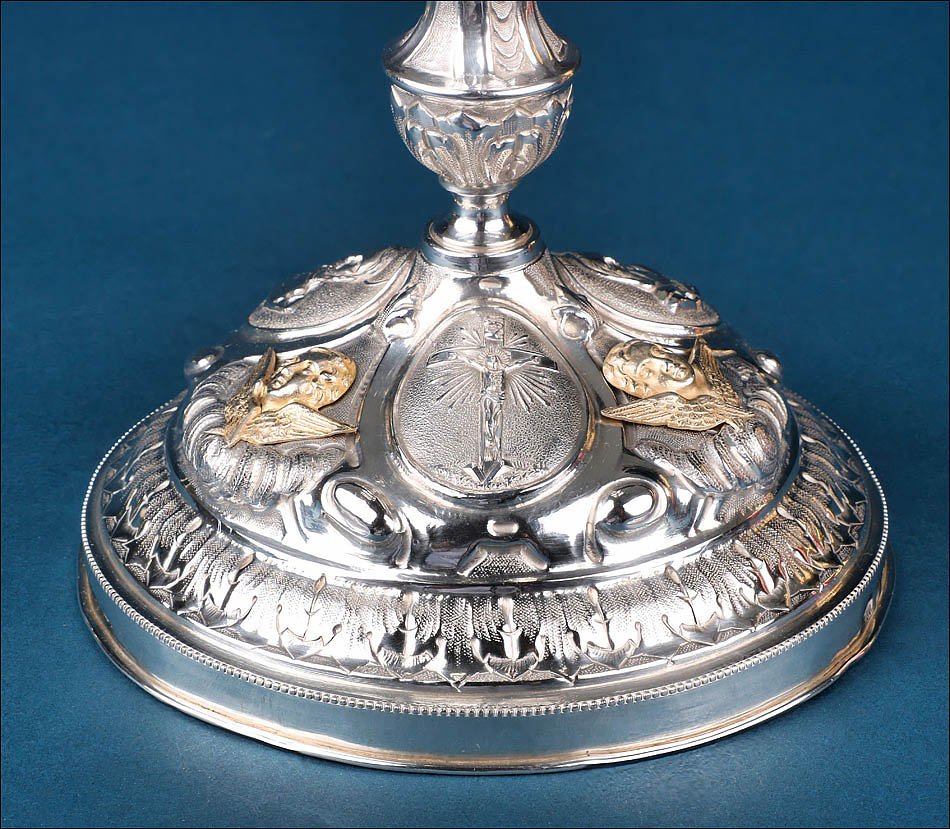
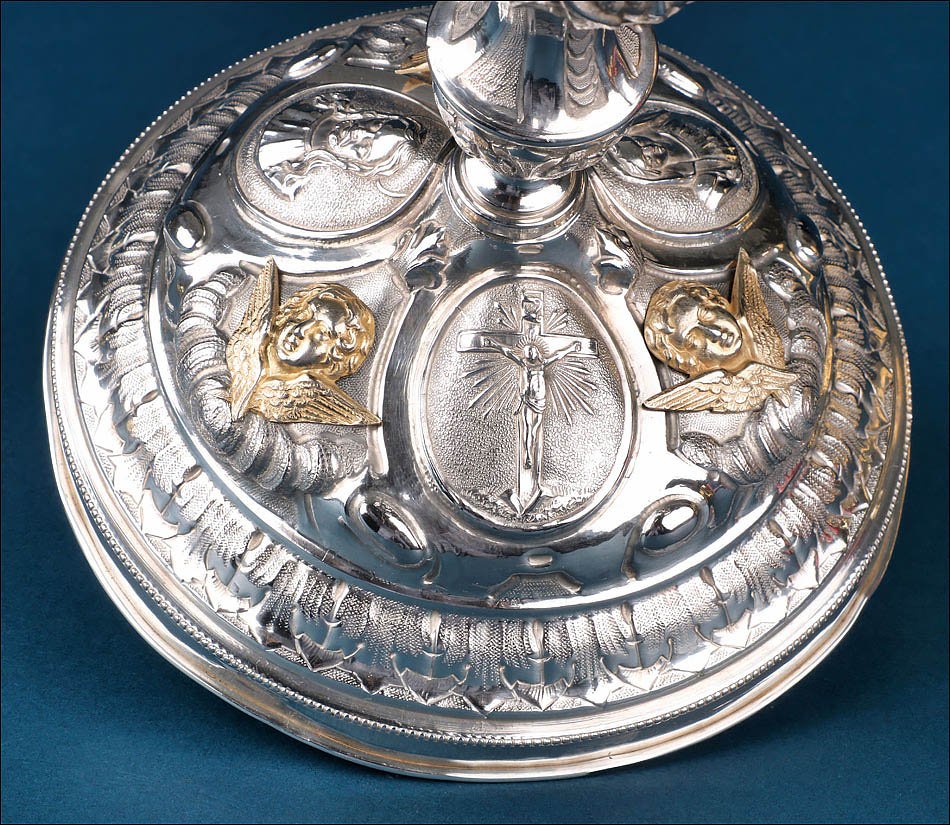
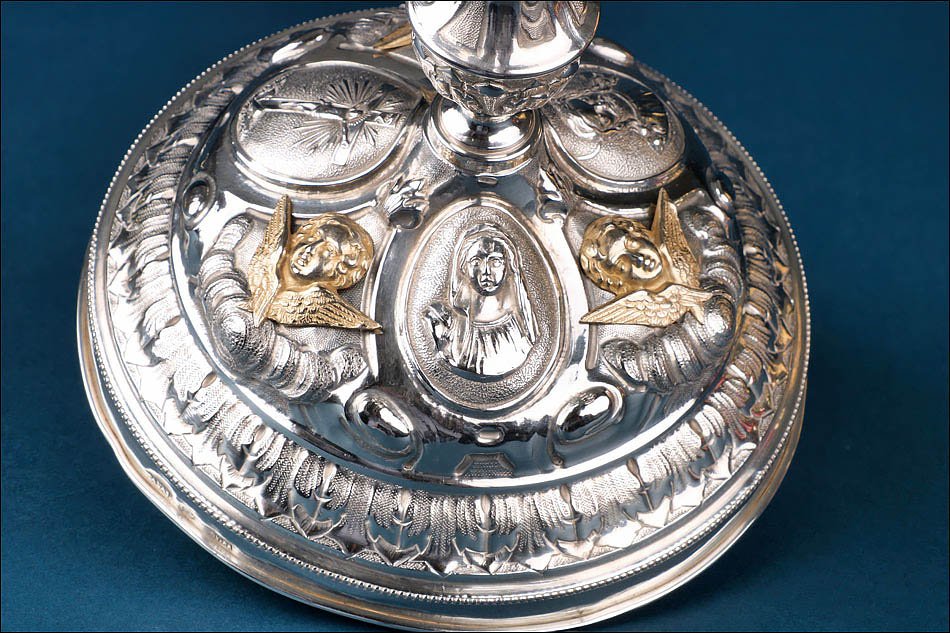
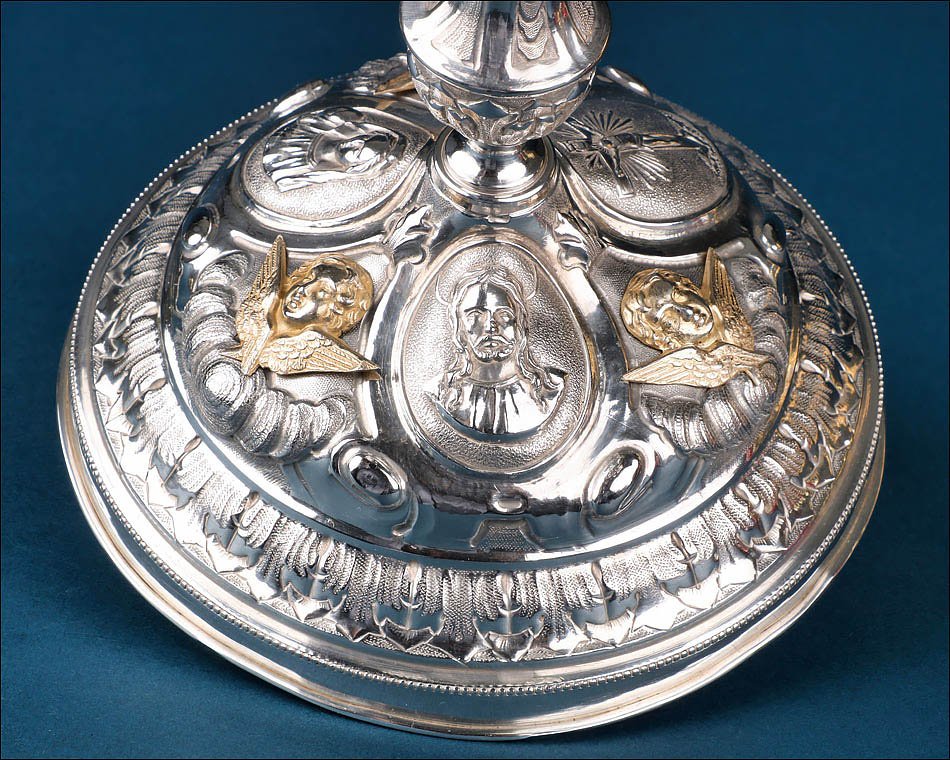
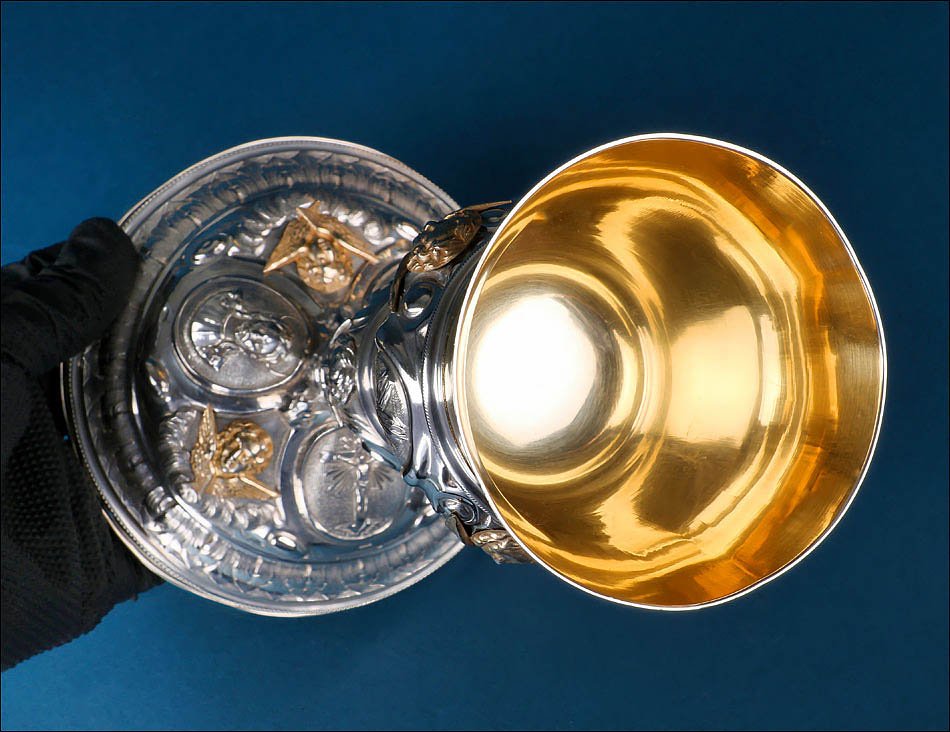
The circular base is wide, solid and extraordinarily worked, with a very rich visual presence. It presents three oval medallions in relief, dedicated to Christ crucified with radiance, the Virgin Mary and the bust of Christ. Each of these medallions is elegantly framed and integrated into a surface full of movement, where the white silver alternates polished areas with textured backgrounds that increase the depth of the work. The medallions are separated by winged cherubs in gilt silver, arranged among clouds and scrolls, creating a beautiful contrast between the bright shine of the silver and the warmth of the gilding.
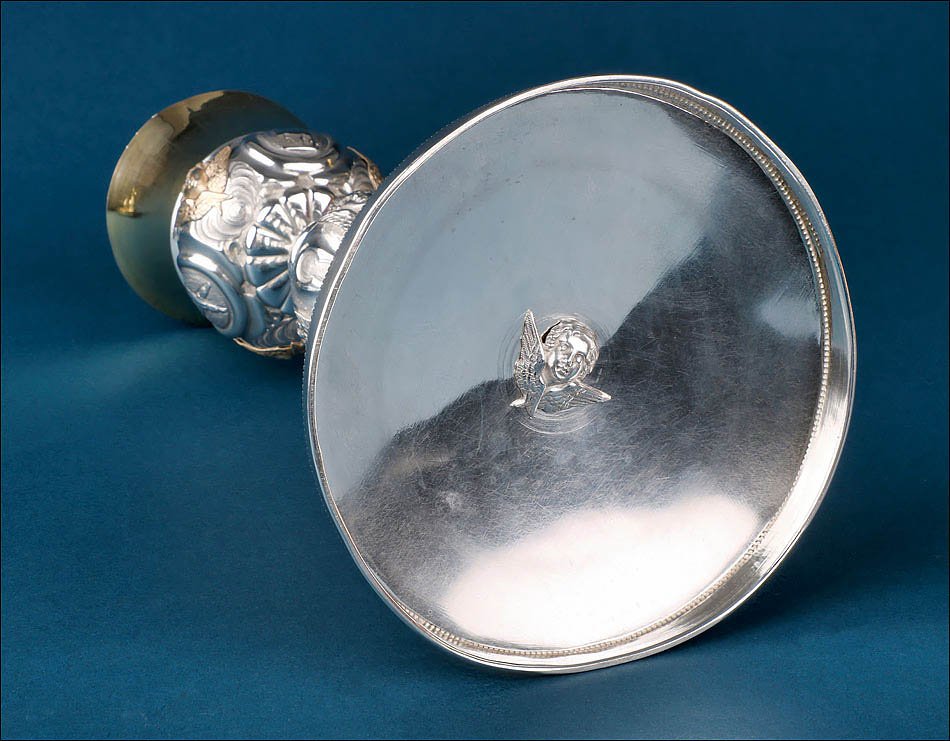
The outer edge of the base is decorated with a rich border of leaves, worked with great ornamental sense and very well integrated into the whole. This border provides an elegant finish and reinforces the feeling of an important piece, cared for down to the last detail. The lower part preserves a silver counterweight, secured by a screw whose head also takes the form of a cherub, a particularly attractive detail because it shows that even a barely visible area was resolved with artistic intention.
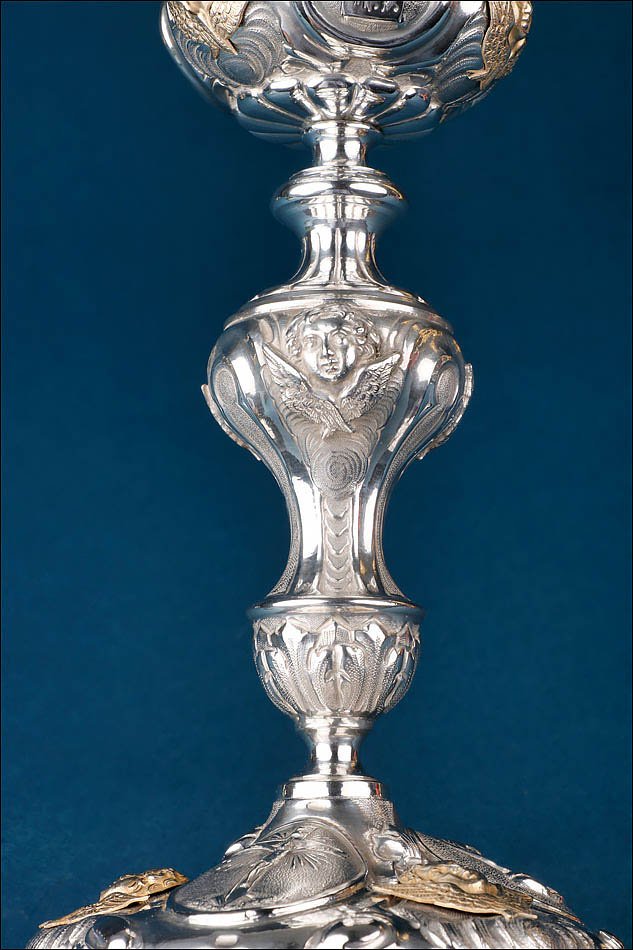
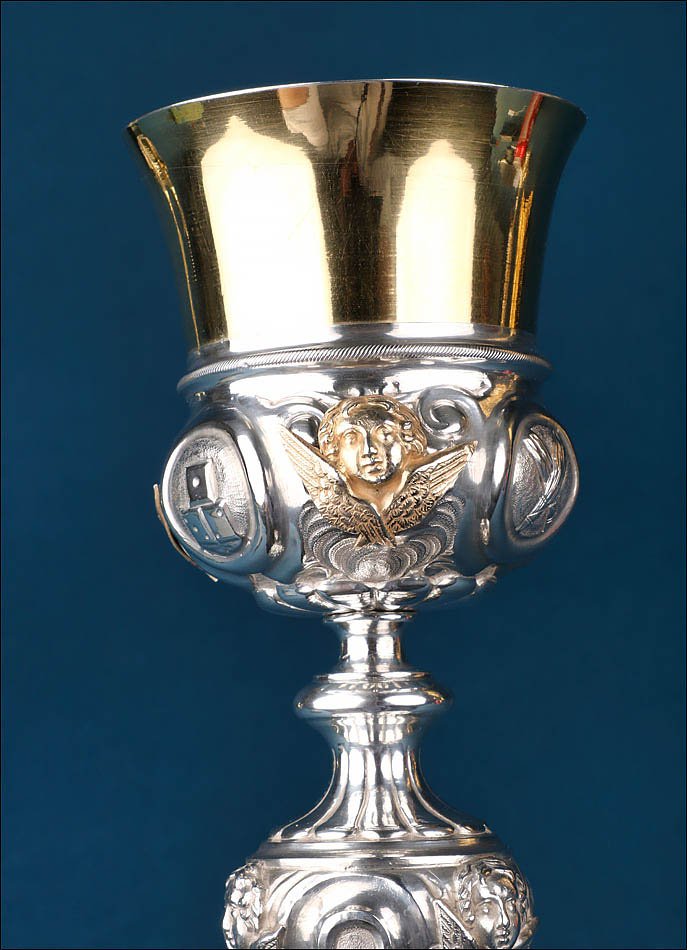
The central knop continues the same decorative language. It has a rounded and stylised form, with three cherubs in relief distributed around the body. Between them appear vegetal motifs, matted areas and polished surfaces that reinforce the contrast of the silver. It is a very ornamental and perfectly proportioned knop, which brings visual balance to the whole and links the sculptural richness of the base with the solemnity of the cup.
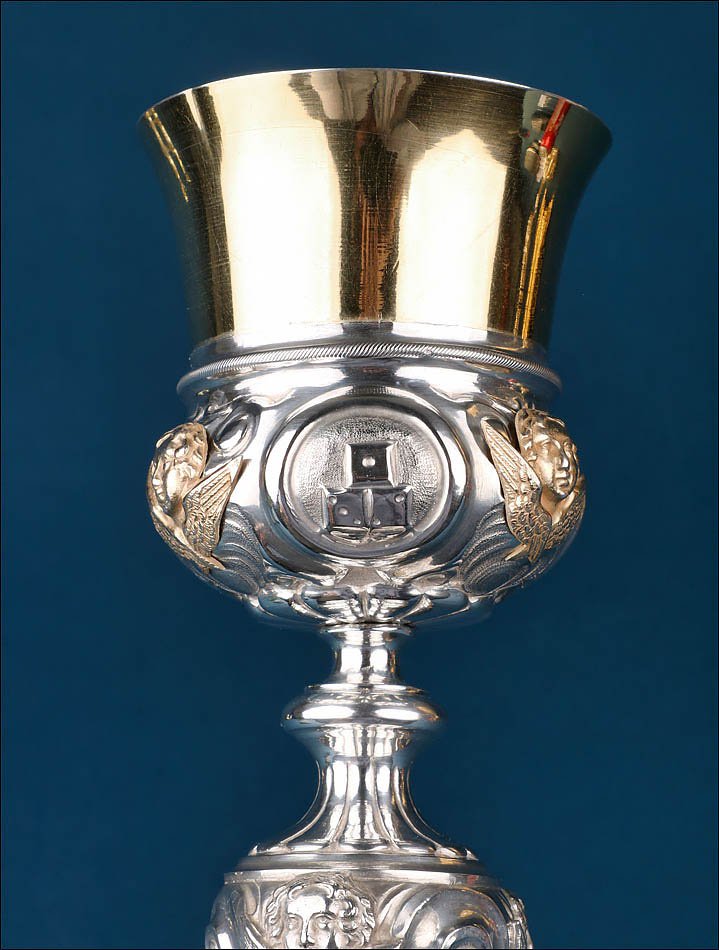
The lower cup is decorated with three medallions dedicated to the Passion of Christ, carefully arranged around the piece. They show the dice with which the soldiers cast lots for Christ's tunic, the whips of the Flagellation and the INRI plaque, three very recognisable symbols of great devotional strength. Each medallion is integrated into the structure of the lower cup with relief decoration, worked backgrounds and well-defined outlines.
Between these symbols appear further winged cherubs in gilt silver, visually linking with the cherubs on the base and central knop. The upper part of the cup is smooth and gilt, in elegant contrast with the sculptural richness of the lower cup. The cup also stands out for its gilt interior, also preserved in excellent condition. This interior gilding gives it an especially noble liturgical presence and reinforces the sacred character of the piece.
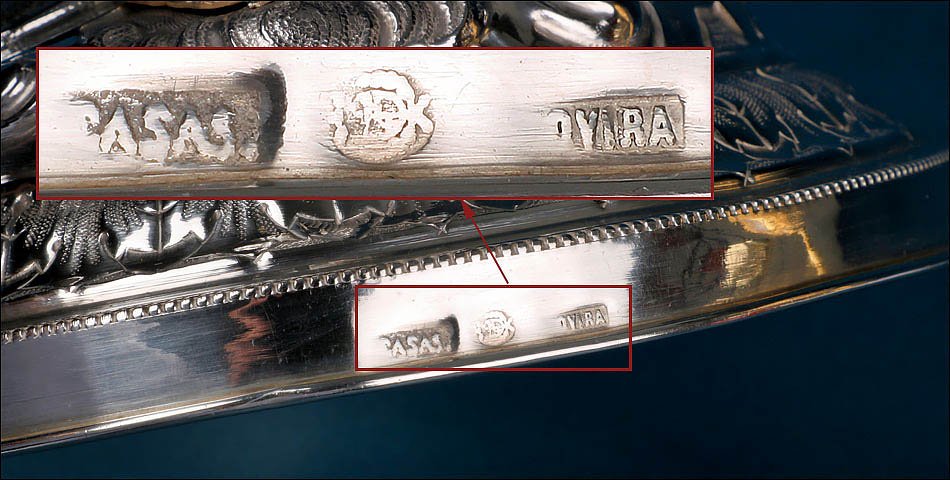
On the edge of the base there are three hallmarks: the CASAS mark, corresponding to the silversmith José or Josep Casas; the coat of arms of the city of Barcelona, used as a silver hallmark at the end of the 19th century; and the ROVIRA mark, corresponding to Joaquín Cabot i Rovira, official silver assayer in Barcelona. The assayer was the independent authority responsible for verifying and guaranteeing the standard of the metal, certifying that the chalice was indeed made of sterling silver, in this case 925 silver. These hallmarks confirm the identification of the work as a Spanish chalice, made in Barcelona in the last quarter of the 19th century by the distinguished Barcelona silversmith Josep Casas.
The chalice is in excellent condition, especially considering that it is around 140 years old. The white silver retains a clean and attractive shine, the gilt appliqués preserve a magnificent presence and the interior gilding of the cup is frankly very well preserved. It is clear that, over almost a century and a half, it has been preserved with respect and awareness of its importance. It is one of those pieces that immediately conveys that it has not only survived the passage of time, but has been preserved as something truly valuable. In its current condition, it is a chalice with many years ahead of it, ideal for someone who knows how to appreciate it and wishes to return it once again to liturgical use.
For around 140 years it will have passed through the hands of several priests, stood on different altars and accompanied countless celebrations of the Eucharist. If it could speak, it would surely tell stories of parishes, of solemn and humble Masses, of consecrated hands that raised it with respect, of communities gathered around the central mystery of the faith. Its state of conservation conveys precisely that: the care received by a piece that has been treated with love, respect and awareness of what it represented over the decades.
It is an exceptional chalice for a priest, for a deacon close to ordination or for a community wishing to return to the altar a masterpiece of Spanish religious silversmithing. It was not created simply to be admired in a display case, but to serve God and the Church in the celebration of the Eucharist. Only a hand guided by a deep love for worship could have created such a piece, caring for every cherub, every medallion and every detail. And the most beautiful thing is that this chalice still has many years ahead of it, many Masses to accompany and many opportunities to continue fulfilling the purpose for which it was created: to serve with beauty, dignity and love on the altar of God.
An exceptional piece and opportunity for someone who knows how to appreciate what this chalice represents and wishes to accompany it in the next stage of its history and give it new life on the altar, in the service of the Eucharist, of God and of the Church.
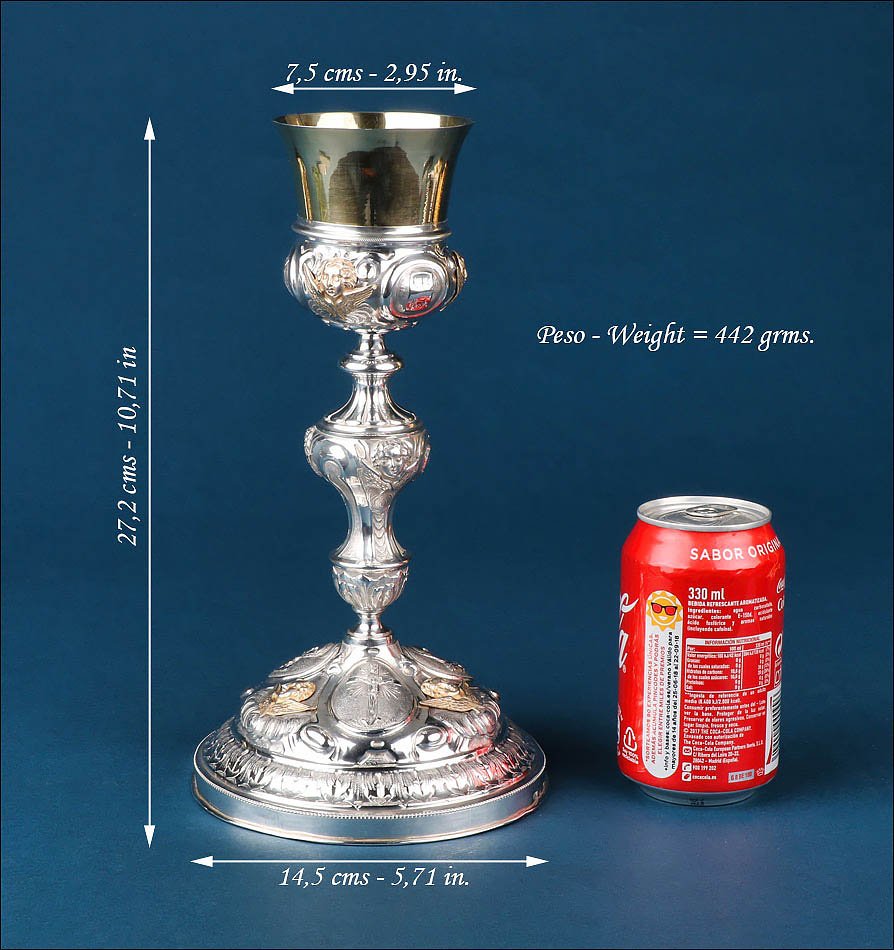
Measurements: Height: 27.2 cm (10.71 in). Base diameter: 14.5 cm (5.71 in). Cup diameter: 7.5 cm (2.95 in). Weight: 442 g (15.59 oz).
The circular base is wide, solid and extraordinarily worked, with a very rich visual presence. It presents three oval medallions in relief, dedicated to Christ crucified with radiance, the Virgin Mary and the bust of Christ. Each of these medallions is elegantly framed and integrated into a surface full of movement, where the white silver alternates polished areas with textured backgrounds that increase the depth of the work. The medallions are separated by winged cherubs in gilt silver, arranged among clouds and scrolls, creating a beautiful contrast between the bright shine of the silver and the warmth of the gilding.
The outer edge of the base is decorated with a rich border of leaves, worked with great ornamental sense and very well integrated into the whole. This border provides an elegant finish and reinforces the feeling of an important piece, cared for down to the last detail. The lower part preserves a silver counterweight, secured by a screw whose head also takes the form of a cherub, a particularly attractive detail because it shows that even a barely visible area was resolved with artistic intention.
The central knop continues the same decorative language. It has a rounded and stylised form, with three cherubs in relief distributed around the body. Between them appear vegetal motifs, matted areas and polished surfaces that reinforce the contrast of the silver. It is a very ornamental and perfectly proportioned knop, which brings visual balance to the whole and links the sculptural richness of the base with the solemnity of the cup.
The lower cup is decorated with three medallions dedicated to the Passion of Christ, carefully arranged around the piece. They show the dice with which the soldiers cast lots for Christ's tunic, the whips of the Flagellation and the INRI plaque, three very recognisable symbols of great devotional strength. Each medallion is integrated into the structure of the lower cup with relief decoration, worked backgrounds and well-defined outlines.
Between these symbols appear further winged cherubs in gilt silver, visually linking with the cherubs on the base and central knop. The upper part of the cup is smooth and gilt, in elegant contrast with the sculptural richness of the lower cup. The cup also stands out for its gilt interior, also preserved in excellent condition. This interior gilding gives it an especially noble liturgical presence and reinforces the sacred character of the piece.
On the edge of the base there are three hallmarks: the CASAS mark, corresponding to the silversmith José or Josep Casas; the coat of arms of the city of Barcelona, used as a silver hallmark at the end of the 19th century; and the ROVIRA mark, corresponding to Joaquín Cabot i Rovira, official silver assayer in Barcelona. The assayer was the independent authority responsible for verifying and guaranteeing the standard of the metal, certifying that the chalice was indeed made of sterling silver, in this case 925 silver. These hallmarks confirm the identification of the work as a Spanish chalice, made in Barcelona in the last quarter of the 19th century by the distinguished Barcelona silversmith Josep Casas.
The chalice is in excellent condition, especially considering that it is around 140 years old. The white silver retains a clean and attractive shine, the gilt appliqués preserve a magnificent presence and the interior gilding of the cup is frankly very well preserved. It is clear that, over almost a century and a half, it has been preserved with respect and awareness of its importance. It is one of those pieces that immediately conveys that it has not only survived the passage of time, but has been preserved as something truly valuable. In its current condition, it is a chalice with many years ahead of it, ideal for someone who knows how to appreciate it and wishes to return it once again to liturgical use.
For around 140 years it will have passed through the hands of several priests, stood on different altars and accompanied countless celebrations of the Eucharist. If it could speak, it would surely tell stories of parishes, of solemn and humble Masses, of consecrated hands that raised it with respect, of communities gathered around the central mystery of the faith. Its state of conservation conveys precisely that: the care received by a piece that has been treated with love, respect and awareness of what it represented over the decades.
It is an exceptional chalice for a priest, for a deacon close to ordination or for a community wishing to return to the altar a masterpiece of Spanish religious silversmithing. It was not created simply to be admired in a display case, but to serve God and the Church in the celebration of the Eucharist. Only a hand guided by a deep love for worship could have created such a piece, caring for every cherub, every medallion and every detail. And the most beautiful thing is that this chalice still has many years ahead of it, many Masses to accompany and many opportunities to continue fulfilling the purpose for which it was created: to serve with beauty, dignity and love on the altar of God.
An exceptional piece and opportunity for someone who knows how to appreciate what this chalice represents and wishes to accompany it in the next stage of its history and give it new life on the altar, in the service of the Eucharist, of God and of the Church.
Measurements: Height: 27.2 cm (10.71 in). Base diameter: 14.5 cm (5.71 in). Cup diameter: 7.5 cm (2.95 in). Weight: 442 g (15.59 oz).
5 400 €
Period: 19th century
Style: Other Style
Condition: Good condition
Material: Sterling silver
Reference (ID): 1780417
Availability: In stock
Print