

Monumental Antique Silver Ciborium. 42 Cm - 16.5 In. Belgium, Circa 1900
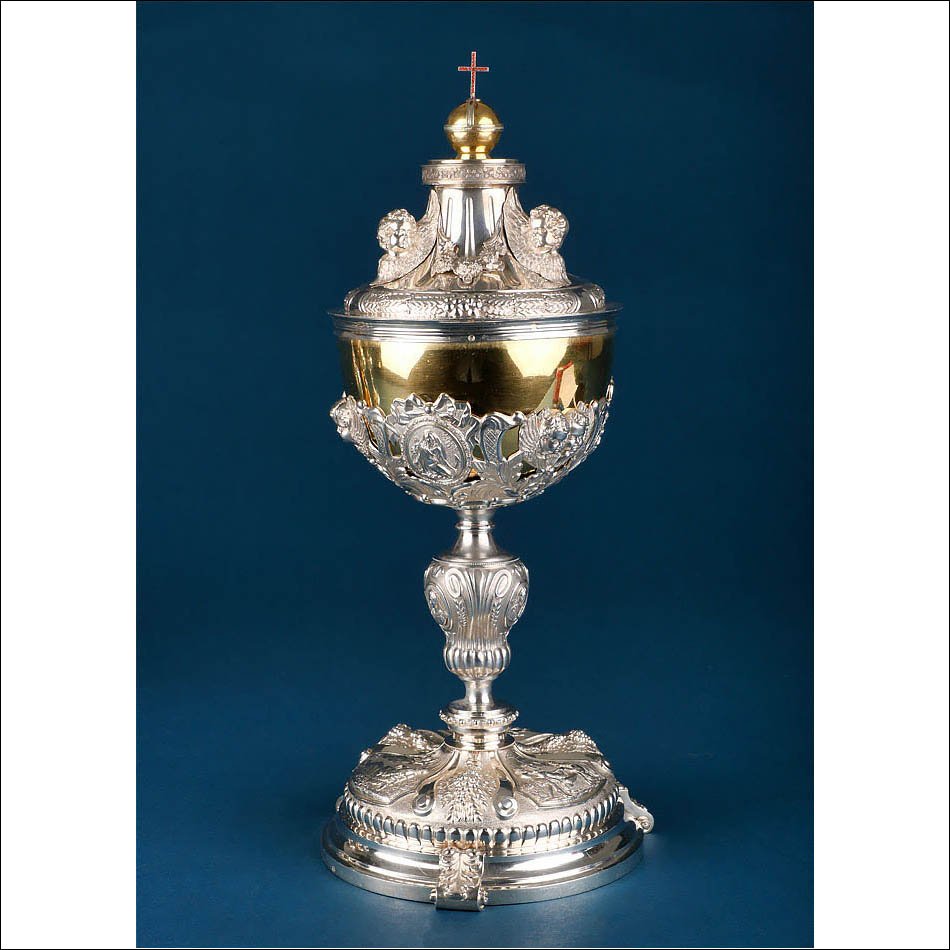
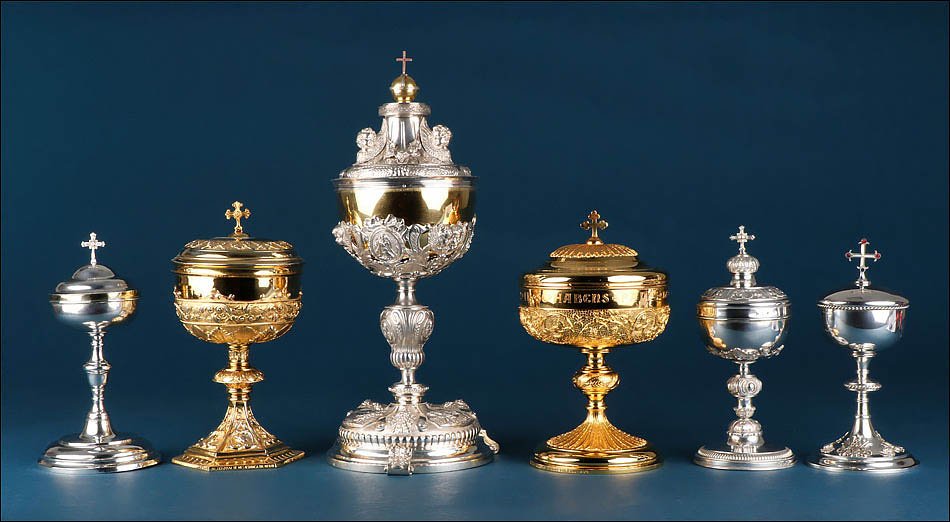
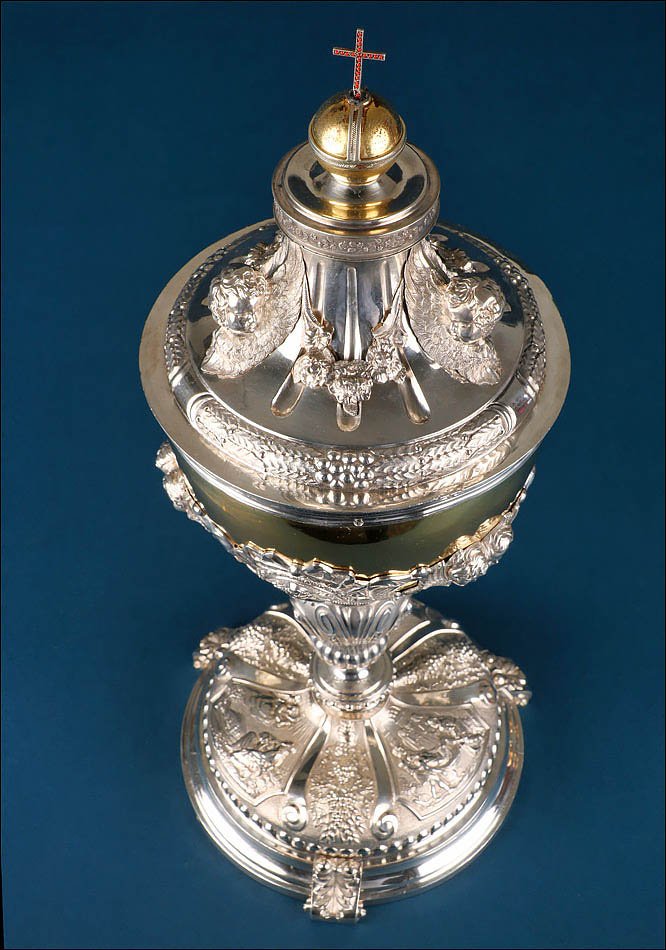
Impressive antique liturgical ciborium made in Belgium circa 1900, crafted in silver with gilt vermeil interior and an unusual monumental presence. It is a large-sized piece, clearly conceived for important ecclesiastical use, probably in a major church or cathedral. Its height of 42 cm, its weight of 1,660 g and the richness of its reliefs make it stand out immediately as a first-class work of religious silversmithing.
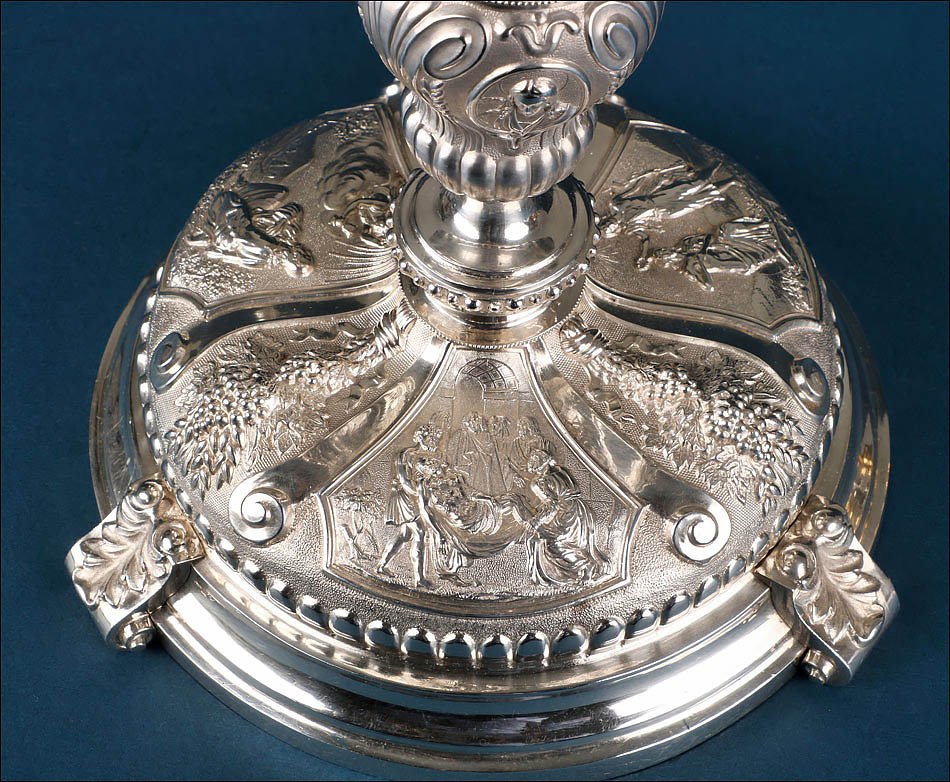
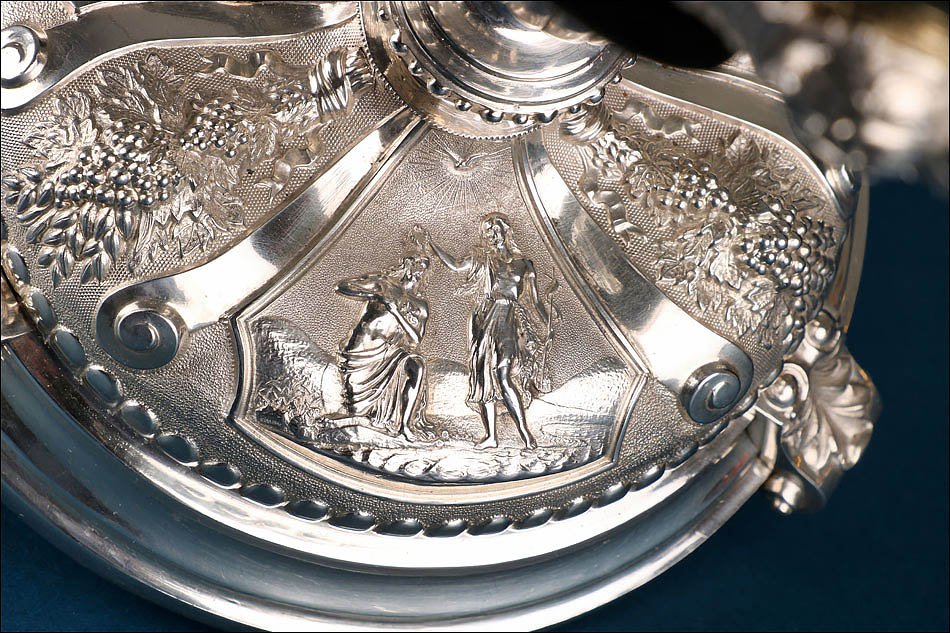
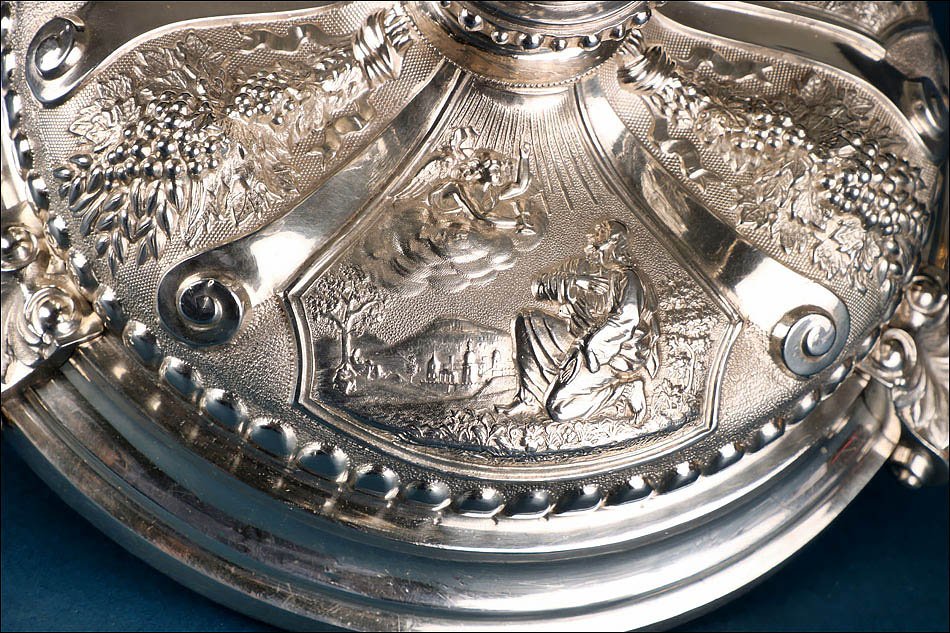
The base is, without doubt, one of the most impressive and elaborate areas of this monumental ciborium. It is conceived as an authentic iconographic programme in repoussé silver, organized into large relief cartouches separated by elegant volutes and surrounded by clusters of grapes and vine leaves of magnificent modelling. The depth of the workmanship is extraordinary: the figures project powerfully from the stippled backgrounds, creating a play of light and reflections that gives tremendous life to the surface. The visual effect changes constantly depending on how the light strikes the silver, making the scenes appear almost like miniature sculptures integrated into the structure of the ciborium.
The religious scenes represented depict fundamental episodes from the Life and Passion of Christ. One of the most beautiful corresponds to the Baptism of Jesus by Saint John the Baptist, rendered with a very elegant and balanced composition. Christ appears kneeling while Saint John baptizes Jesus beneath the dove of the Holy Spirit surrounded by heavenly rays. Another scene represents the Agony in the Garden, with Christ kneeling in prayer while an angel emerges from the clouds holding the chalice. The scene conveys a very theatrical and devotional feeling, reinforced by the richness of the engraving and the depth of the textures.
Particularly striking is also the scene of Christ being carried to the tomb after the Crucifixion. The figures display truly expressive movement and emotion. The body of Christ appears supported by several figures in a composition full of drama, with architecture in the background adding depth to the scene. The entire ensemble is surrounded by exuberant Eucharistic motifs: clusters of grapes full of volume, vine leaves and finely chased vegetal ornamentation symbolically linking the sacrifice of Christ with the consecrated wine of the Eucharist. The combination of religious iconography and naturalistic decoration is executed with a truly exceptional level of quality.
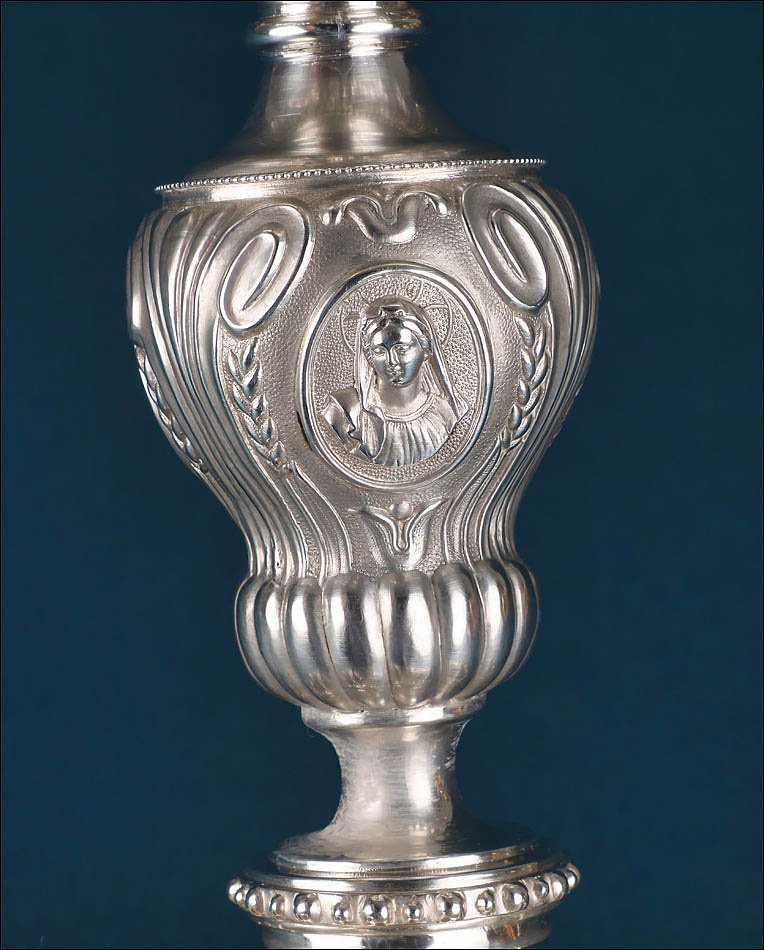
The central knop possesses magnificent volume and a very sculptural presence, acting as the true visual axis between the base and the cup. The surface is worked with fine vertical relief lines and oval medallions carefully integrated into the structure. Within them are represented the Virgin Mary, Christ Jesus and Saint John the Evangelist, identifiable by the eagle, one of the most traditional symbols of this evangelist. In addition to its decorative richness, the knop gives a great sense of quality and solidity to the ensemble. Its size and ornamental development help visually balance the enormous proportions of the ciborium, creating a very harmonious transition between the monumental base and the wide gilt cup.
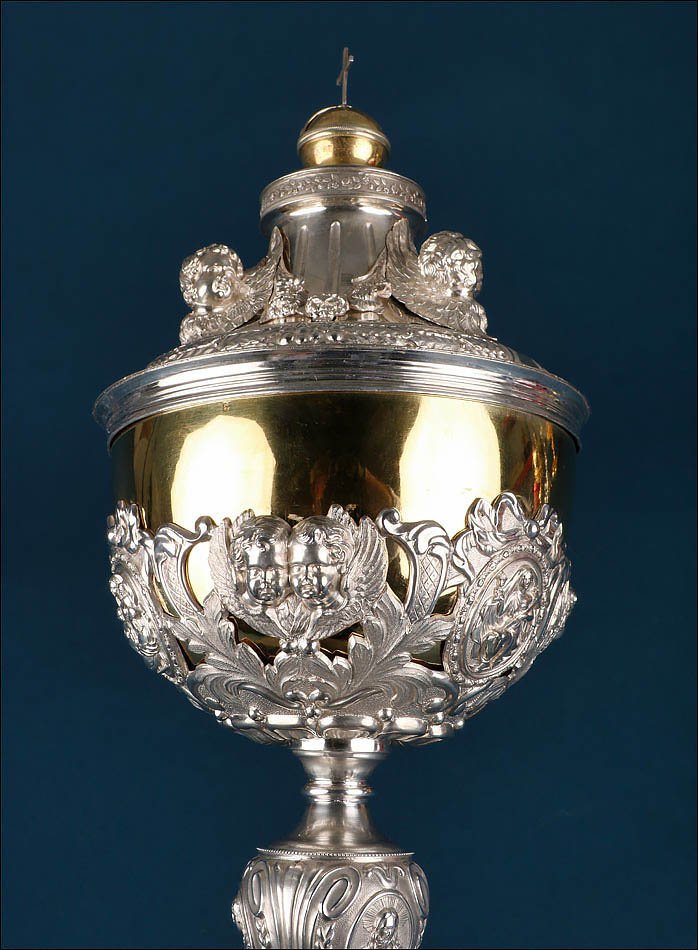
The cup possesses truly monumental proportions and conveys a feeling of extraordinary visual richness. The contrast between the wide smooth gilt body and the exuberant silver decoration of the sub-cup creates a very elegant and solemn effect. The interior preserves a beautiful gilt vermeil finish of warm and deep tone, highly brilliant and in excellent condition, intended to visually enhance the sacred character of the ciborium. Its large dimensions provide enormous capacity and a truly cathedral-like presence, difficult to find even in important religious pieces.
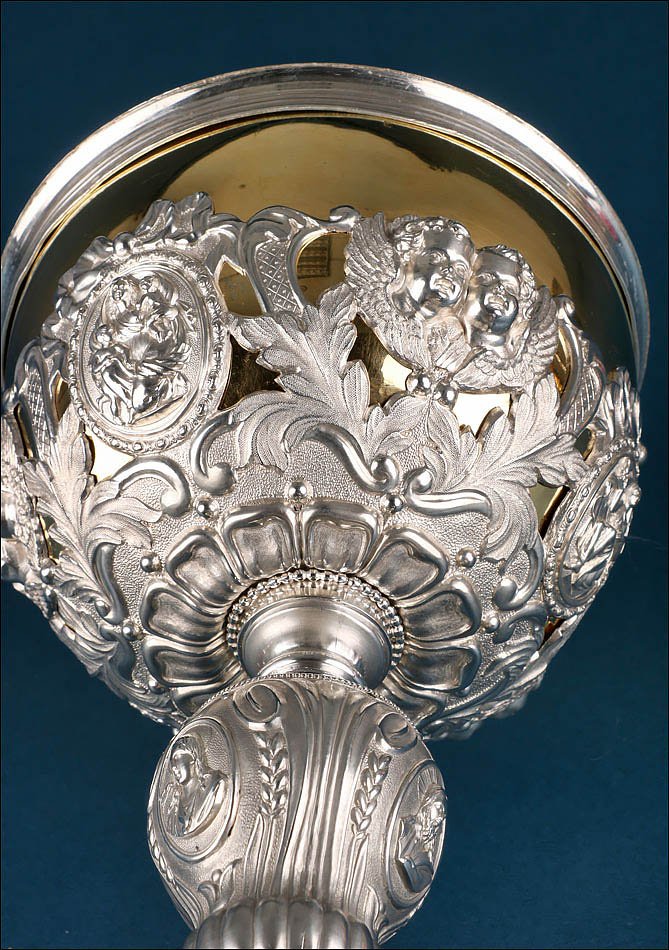
The sub-cup is a true work of sculptural silversmithing. It is conceived as a large pierced floral structure formed by acanthus leaves, scrolls and vegetal elements executed in relief of enormous depth. Among this decoration appear magnificent winged cherub heads of strong volume and very delicate expression, harmoniously integrated into the whole. The contrasts between the satin-finished surfaces, stippled backgrounds and polished areas multiply the reflections of the silver and provide tremendous visual richness. The decoration also possesses a pronounced symbolic and Eucharistic meaning, reinforced by the continuous presence of vegetal motifs and grape clusters.
One of the most outstanding elements of the sub-cup are the three oval relief medallions representing the Theological Virtues: Faith, Hope and Charity. The figures are executed with surprising quality, showing elegant poses, very well-defined drapery and an unusual delicacy for large liturgical pieces. Faith appears with the cross, Hope with the anchor and Charity represented together with children, following classical Christian iconography. These medallions give the ciborium a particularly cultured and refined character, elevating it beyond a purely ornamental piece.
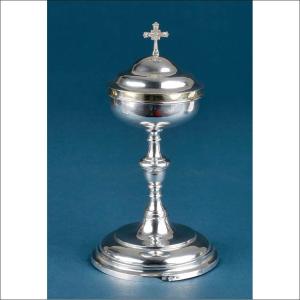
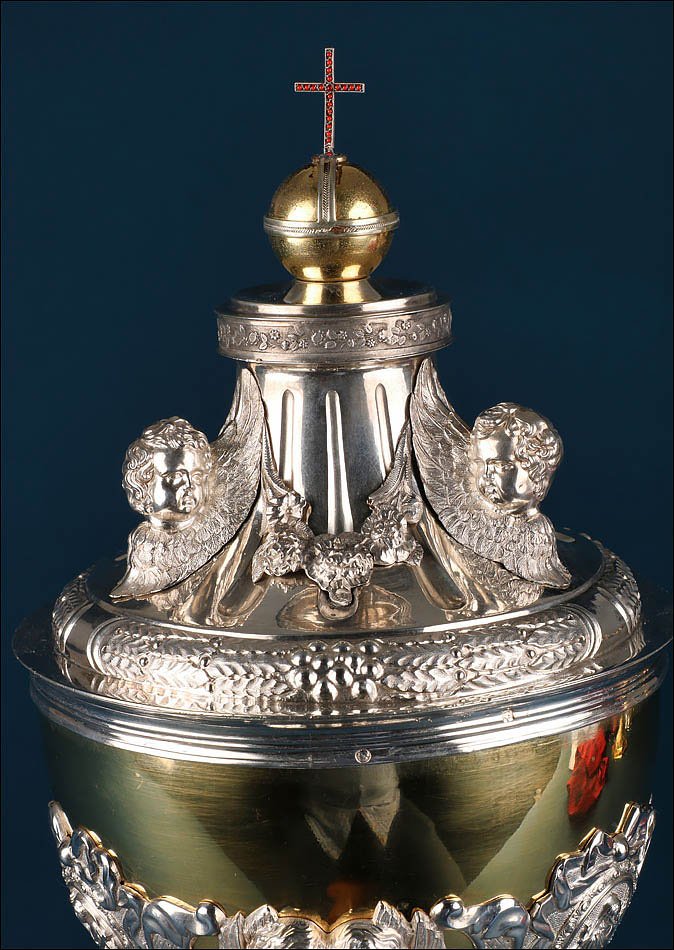
The lid continues the same monumental and richly worked decorative language that characterizes the rest of the ciborium. Its ascending structure provides great verticality and elegantly completes the general silhouette of the piece. In the lower part appear further vegetal reliefs and grape clusters, while the upper area is decorated with impressive winged cherub heads of great sculptural strength, joined by garlands and floral elements. The combination of bright silver and gilt details creates a particularly attractive chromatic effect when light reflects upon the curved surfaces and reliefs.
The final finial is truly exceptional. Above the lid rises a gilt sphere crowned by a silver cross decorated with small beads of natural red coral, a very unusual detail. The delicacy of this finial contrasts with the overall monumentality of the ciborium and gives the ensemble a very special note of richness and exclusivity. The entire lid displays silversmithing work of the highest level, both for the technical quality of the reliefs and for the harmony of its proportions and the elegance of its decorative composition. The cup retains the gilt interior in very good condition, clean, brilliant and of great capacity.
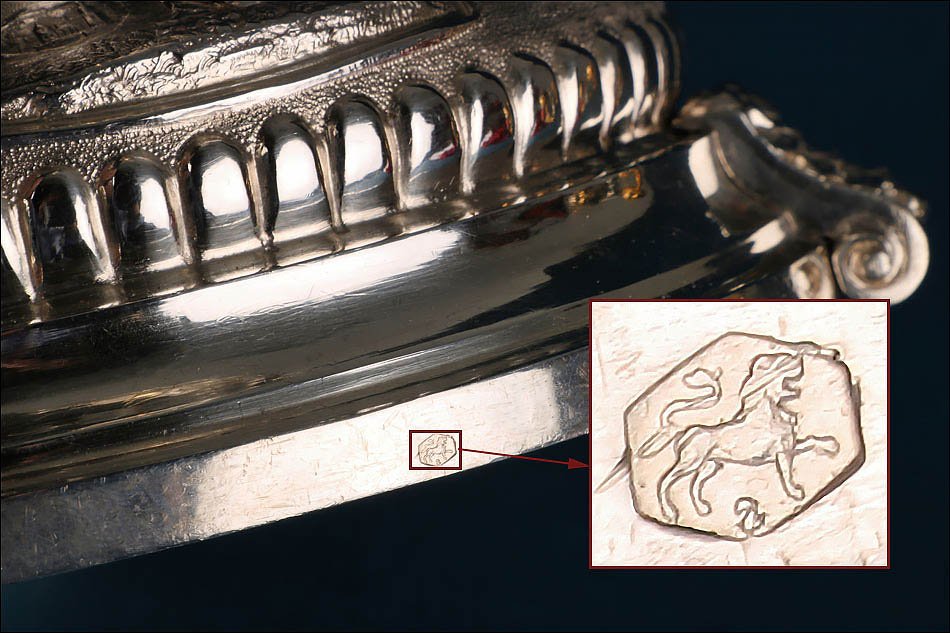
The ciborium preserves Belgian hallmarks in different areas, visible on the base, lid, cup and counterweight. The ensemble remains in very good state of preservation, with slight normal signs of age, without affecting its presence or its decorative and liturgical value. The lower counterweight is also made of silver.
Due to its monumental dimensions, the richness of its iconography and the extraordinary quality of its silver workmanship, this ciborium clearly belongs to the great European liturgical silversmithing of the late 19th century. It is not just another antique religious piece: it was conceived to stand out upon an important altar and to convey solemnity, visual richness and ceremonial presence. Its size, weight and decorative complexity make it a very uncommon example within antique sacred art.
The quality of the workshop can be appreciated in every detail: the reliefs on the base possess almost sculptural depth, the cherubs are magnificently modelled and the medallions of the Theological Virtues display fine and very carefully executed work. The contrast between the bright silver and the gilt vermeil interior also creates a spectacular visual effect under light, further reinforcing its solemn and monumental character.
For a collector specialized in sacred art, it is a piece of the highest level, capable of becoming the centrepiece of an important collection. And for a church, basilica or cathedral, this large ciborium is a piece absolutely worthy of returning to the altar and being reintegrated into the Church. Its monumental presence, its brilliant gilt interior and the symbolic richness of all its decoration mean that it fully preserves the solemnity for which it was created more than a century ago.
It is the type of work that not only fulfils a liturgical function, but also visually and spiritually elevates the celebration, bringing to the altar the nobility and grandeur characteristic of ancient European ecclesiastical silversmithing. Its excellent state of preservation and such refined details as the cross with natural coral make this ciborium a truly exceptional piece, capable of moving both a great collector and a priest with a special sensitivity for the beauty of traditional worship.
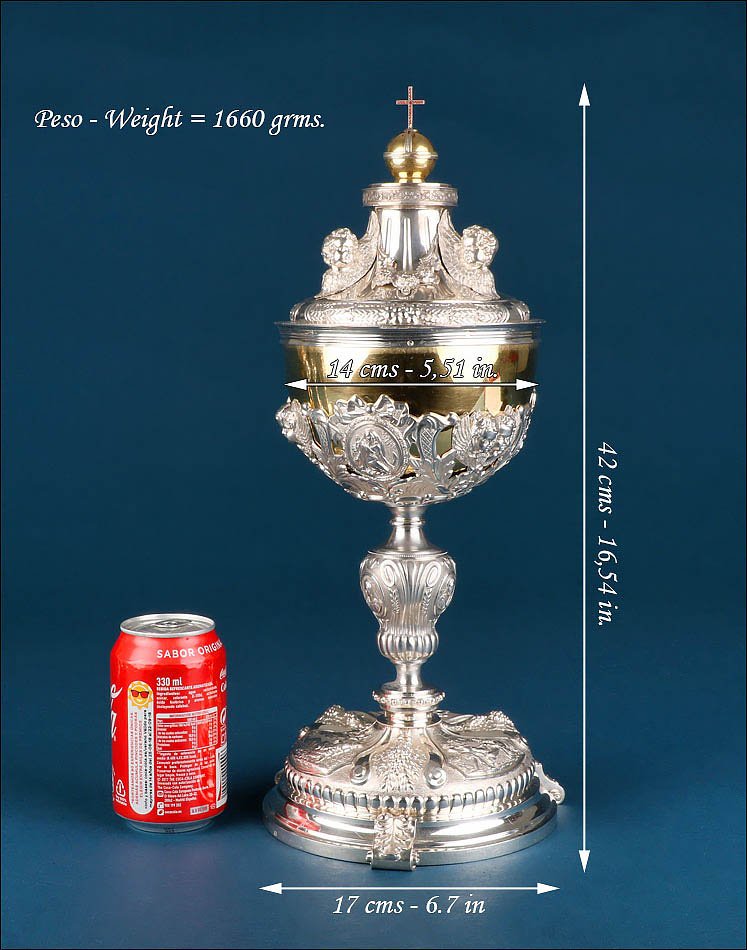
Measurements: height 42 cm (16.54 in), cup diameter 14 cm (5.51 in), base diameter 17 cm (6.7 in). Weight: 1660 g. (58.55 oz.)
The base is, without doubt, one of the most impressive and elaborate areas of this monumental ciborium. It is conceived as an authentic iconographic programme in repoussé silver, organized into large relief cartouches separated by elegant volutes and surrounded by clusters of grapes and vine leaves of magnificent modelling. The depth of the workmanship is extraordinary: the figures project powerfully from the stippled backgrounds, creating a play of light and reflections that gives tremendous life to the surface. The visual effect changes constantly depending on how the light strikes the silver, making the scenes appear almost like miniature sculptures integrated into the structure of the ciborium.
The religious scenes represented depict fundamental episodes from the Life and Passion of Christ. One of the most beautiful corresponds to the Baptism of Jesus by Saint John the Baptist, rendered with a very elegant and balanced composition. Christ appears kneeling while Saint John baptizes Jesus beneath the dove of the Holy Spirit surrounded by heavenly rays. Another scene represents the Agony in the Garden, with Christ kneeling in prayer while an angel emerges from the clouds holding the chalice. The scene conveys a very theatrical and devotional feeling, reinforced by the richness of the engraving and the depth of the textures.
Particularly striking is also the scene of Christ being carried to the tomb after the Crucifixion. The figures display truly expressive movement and emotion. The body of Christ appears supported by several figures in a composition full of drama, with architecture in the background adding depth to the scene. The entire ensemble is surrounded by exuberant Eucharistic motifs: clusters of grapes full of volume, vine leaves and finely chased vegetal ornamentation symbolically linking the sacrifice of Christ with the consecrated wine of the Eucharist. The combination of religious iconography and naturalistic decoration is executed with a truly exceptional level of quality.
The central knop possesses magnificent volume and a very sculptural presence, acting as the true visual axis between the base and the cup. The surface is worked with fine vertical relief lines and oval medallions carefully integrated into the structure. Within them are represented the Virgin Mary, Christ Jesus and Saint John the Evangelist, identifiable by the eagle, one of the most traditional symbols of this evangelist. In addition to its decorative richness, the knop gives a great sense of quality and solidity to the ensemble. Its size and ornamental development help visually balance the enormous proportions of the ciborium, creating a very harmonious transition between the monumental base and the wide gilt cup.
The cup possesses truly monumental proportions and conveys a feeling of extraordinary visual richness. The contrast between the wide smooth gilt body and the exuberant silver decoration of the sub-cup creates a very elegant and solemn effect. The interior preserves a beautiful gilt vermeil finish of warm and deep tone, highly brilliant and in excellent condition, intended to visually enhance the sacred character of the ciborium. Its large dimensions provide enormous capacity and a truly cathedral-like presence, difficult to find even in important religious pieces.
The sub-cup is a true work of sculptural silversmithing. It is conceived as a large pierced floral structure formed by acanthus leaves, scrolls and vegetal elements executed in relief of enormous depth. Among this decoration appear magnificent winged cherub heads of strong volume and very delicate expression, harmoniously integrated into the whole. The contrasts between the satin-finished surfaces, stippled backgrounds and polished areas multiply the reflections of the silver and provide tremendous visual richness. The decoration also possesses a pronounced symbolic and Eucharistic meaning, reinforced by the continuous presence of vegetal motifs and grape clusters.
One of the most outstanding elements of the sub-cup are the three oval relief medallions representing the Theological Virtues: Faith, Hope and Charity. The figures are executed with surprising quality, showing elegant poses, very well-defined drapery and an unusual delicacy for large liturgical pieces. Faith appears with the cross, Hope with the anchor and Charity represented together with children, following classical Christian iconography. These medallions give the ciborium a particularly cultured and refined character, elevating it beyond a purely ornamental piece.
The lid continues the same monumental and richly worked decorative language that characterizes the rest of the ciborium. Its ascending structure provides great verticality and elegantly completes the general silhouette of the piece. In the lower part appear further vegetal reliefs and grape clusters, while the upper area is decorated with impressive winged cherub heads of great sculptural strength, joined by garlands and floral elements. The combination of bright silver and gilt details creates a particularly attractive chromatic effect when light reflects upon the curved surfaces and reliefs.
The final finial is truly exceptional. Above the lid rises a gilt sphere crowned by a silver cross decorated with small beads of natural red coral, a very unusual detail. The delicacy of this finial contrasts with the overall monumentality of the ciborium and gives the ensemble a very special note of richness and exclusivity. The entire lid displays silversmithing work of the highest level, both for the technical quality of the reliefs and for the harmony of its proportions and the elegance of its decorative composition. The cup retains the gilt interior in very good condition, clean, brilliant and of great capacity.
The ciborium preserves Belgian hallmarks in different areas, visible on the base, lid, cup and counterweight. The ensemble remains in very good state of preservation, with slight normal signs of age, without affecting its presence or its decorative and liturgical value. The lower counterweight is also made of silver.
Due to its monumental dimensions, the richness of its iconography and the extraordinary quality of its silver workmanship, this ciborium clearly belongs to the great European liturgical silversmithing of the late 19th century. It is not just another antique religious piece: it was conceived to stand out upon an important altar and to convey solemnity, visual richness and ceremonial presence. Its size, weight and decorative complexity make it a very uncommon example within antique sacred art.
The quality of the workshop can be appreciated in every detail: the reliefs on the base possess almost sculptural depth, the cherubs are magnificently modelled and the medallions of the Theological Virtues display fine and very carefully executed work. The contrast between the bright silver and the gilt vermeil interior also creates a spectacular visual effect under light, further reinforcing its solemn and monumental character.
For a collector specialized in sacred art, it is a piece of the highest level, capable of becoming the centrepiece of an important collection. And for a church, basilica or cathedral, this large ciborium is a piece absolutely worthy of returning to the altar and being reintegrated into the Church. Its monumental presence, its brilliant gilt interior and the symbolic richness of all its decoration mean that it fully preserves the solemnity for which it was created more than a century ago.
It is the type of work that not only fulfils a liturgical function, but also visually and spiritually elevates the celebration, bringing to the altar the nobility and grandeur characteristic of ancient European ecclesiastical silversmithing. Its excellent state of preservation and such refined details as the cross with natural coral make this ciborium a truly exceptional piece, capable of moving both a great collector and a priest with a special sensitivity for the beauty of traditional worship.
Measurements: height 42 cm (16.54 in), cup diameter 14 cm (5.51 in), base diameter 17 cm (6.7 in). Weight: 1660 g. (58.55 oz.)
13 900 €
Period: 20th century
Style: Other Style
Condition: Good condition
Reference (ID): 1779623
Availability: In stock
Print