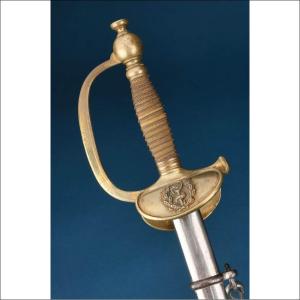


France. Antique Junior Medical Officer Sword. Model 1872
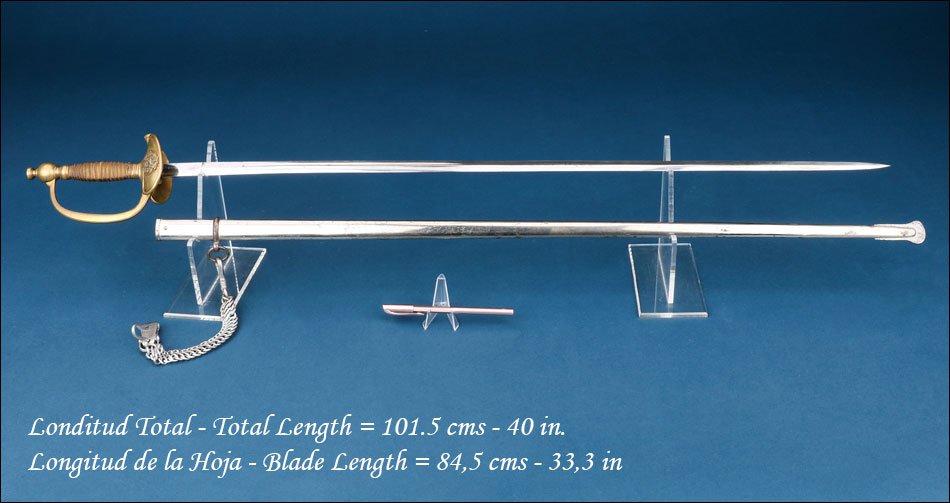
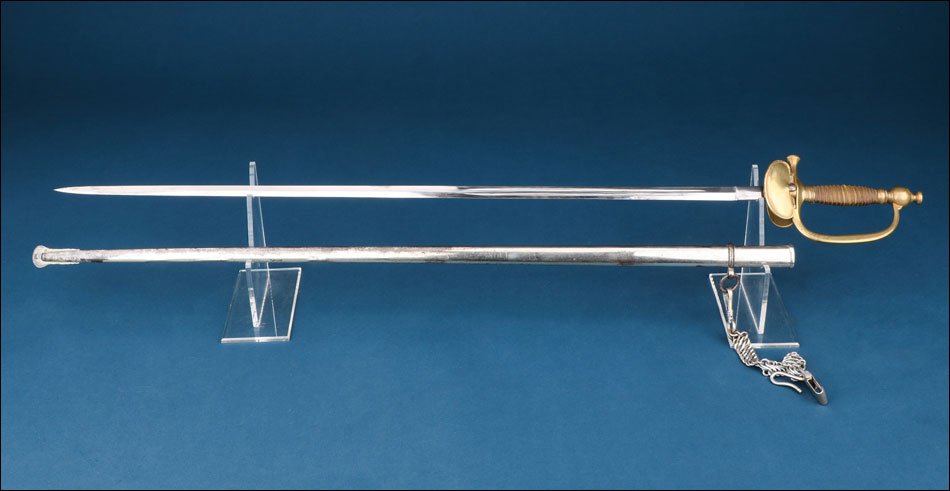
Antique French sword for a Junior Medical Officer, corresponding to the Model 1872, a regulation piece of elegant and functional appearance, clearly representative of officer weaponry from the second half of the nineteenth century. It is a dress sword conceived for service and representation, with a slender, balanced and highly characteristic silhouette of French officer swords from this period.
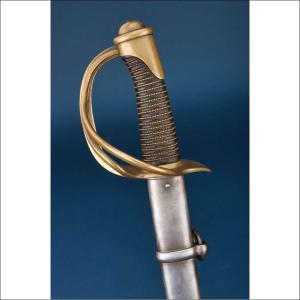
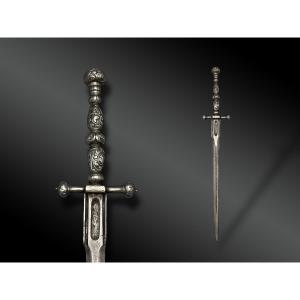
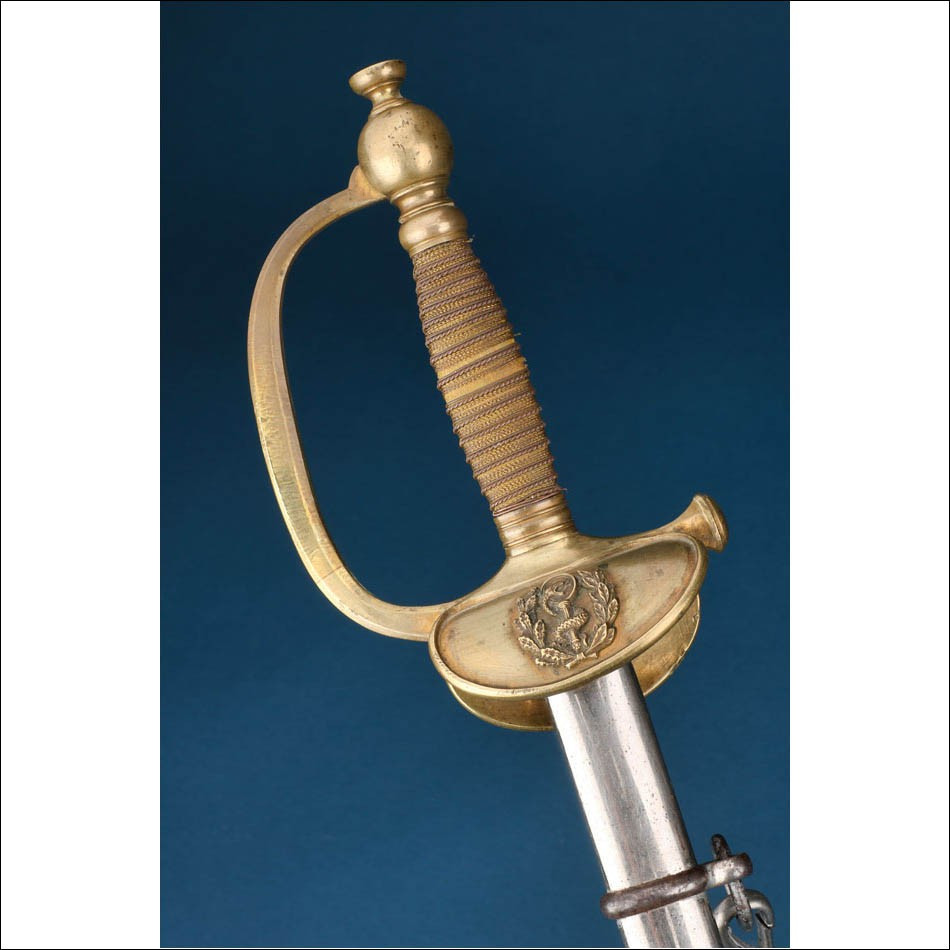
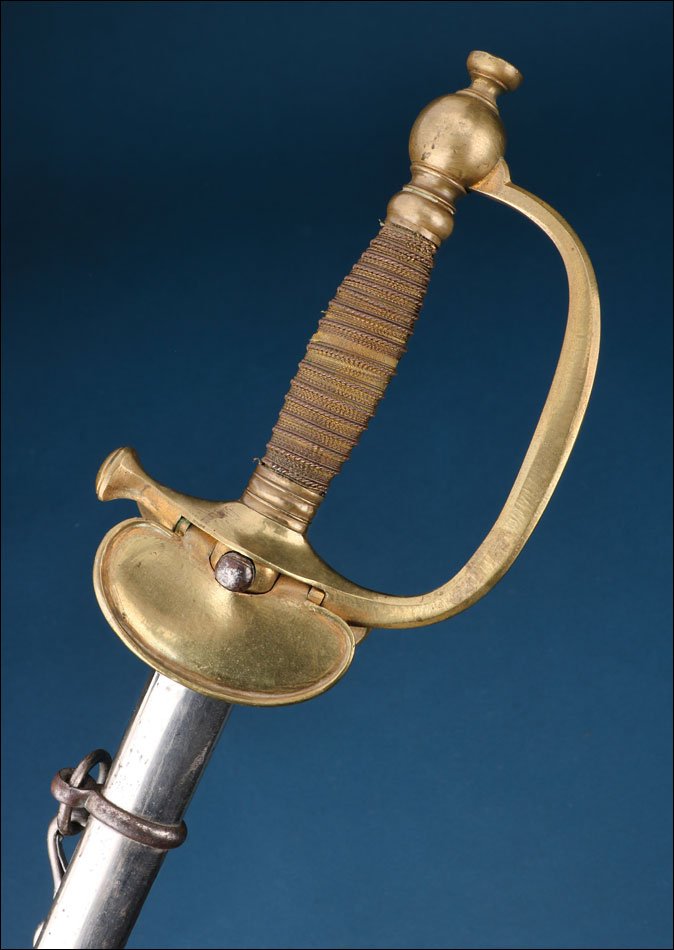
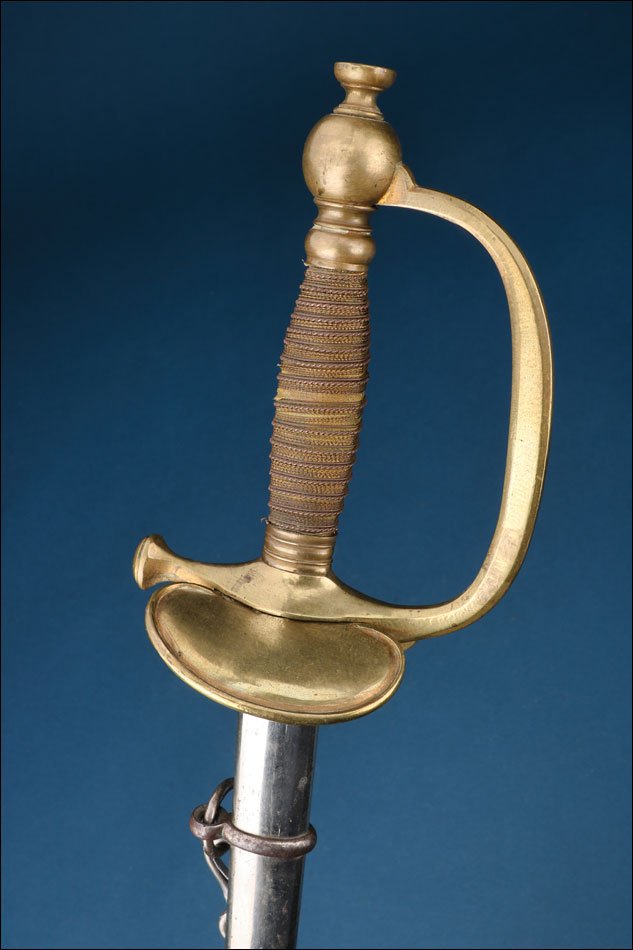
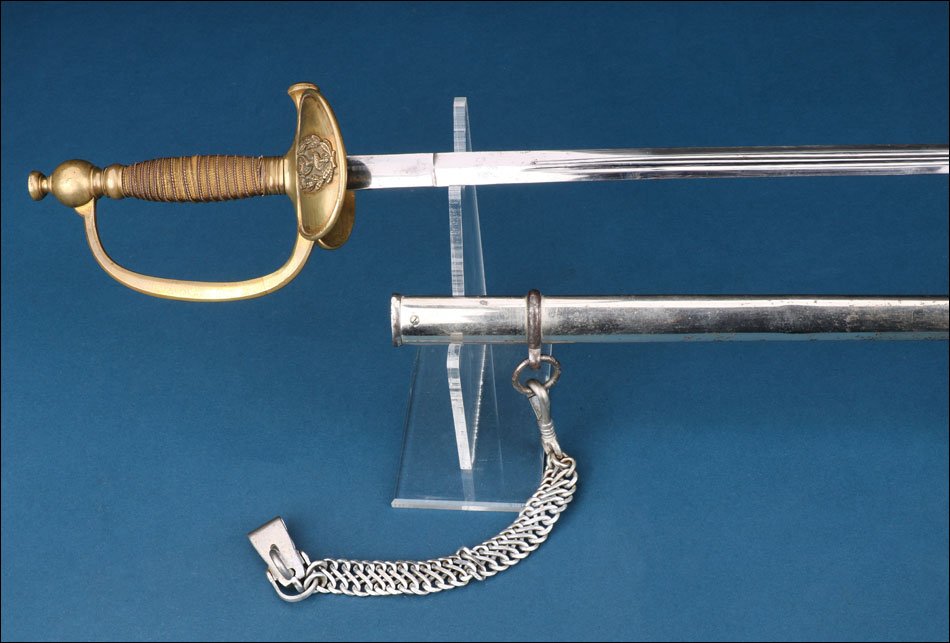
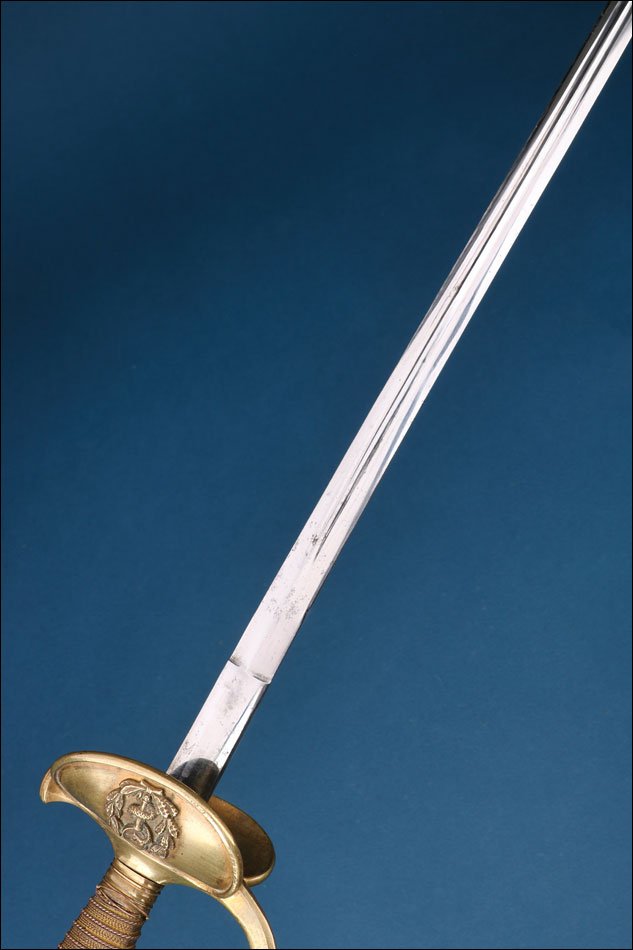
The hilt is made of brass and presents a sober and harmonious configuration, with a single branch guard of clean and flowing profile, globular pommel and double oval shell guard. The grip retains its metal wire binding, although in some areas the wood of the core is slightly visible, a minor detail that does not detract from the appeal of the piece and is entirely logical in an item of this age. The hilt remains very well defined and preserves its original character well.
Especially interesting is the central motif on the shell guard, where a serpent appears surrounded by a wreath of oak and laurel leaves. This emblem, with its clear medical significance, strongly reinforces the attribution of the sword to the Medical Corps. It is an important detail, both from an iconographic and a collecting point of view, since it allows the piece to be linked to a specific military corps and not merely to French officership in a broad sense.
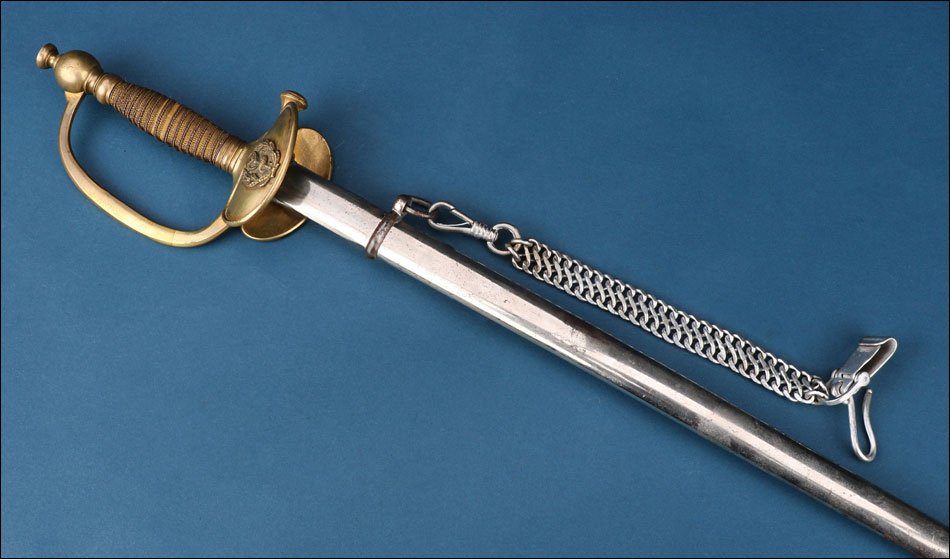
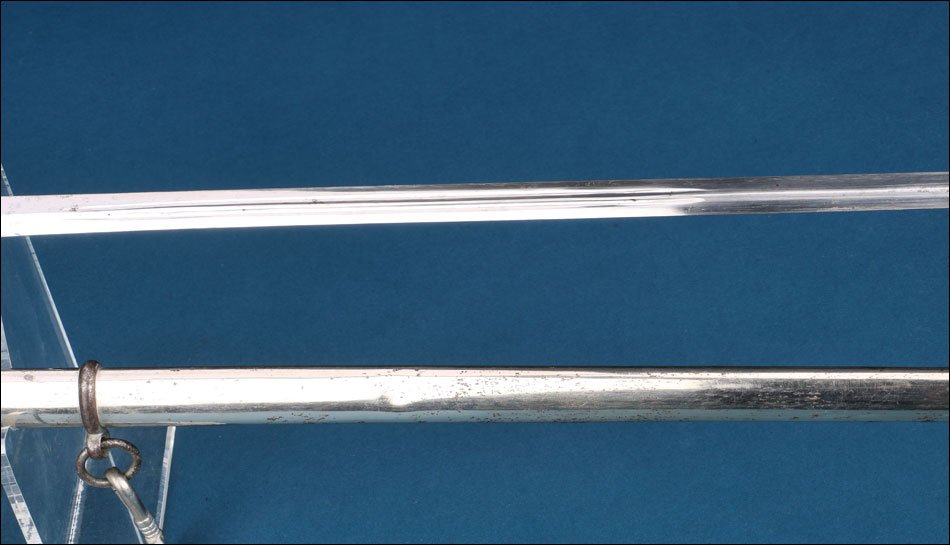
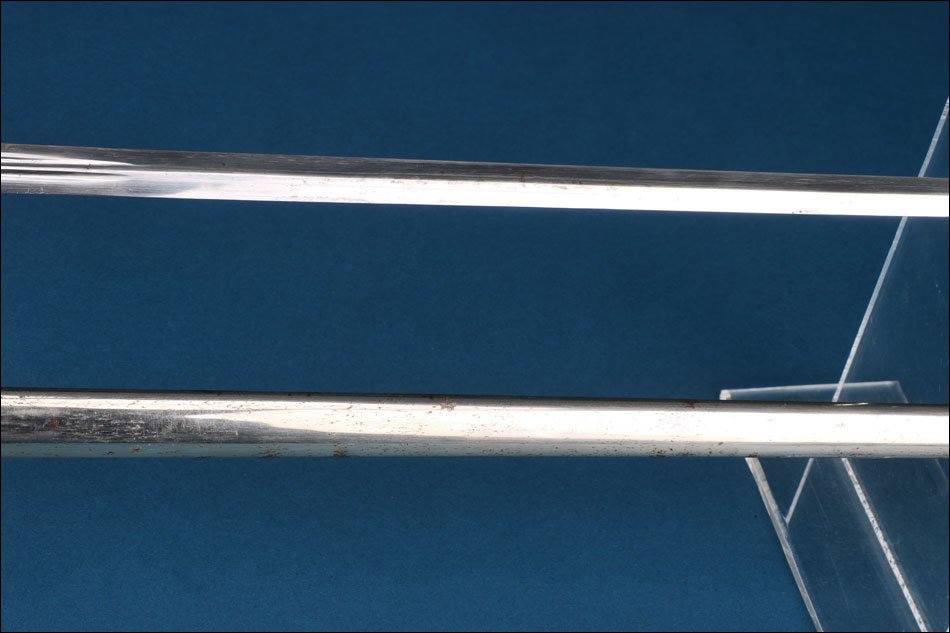
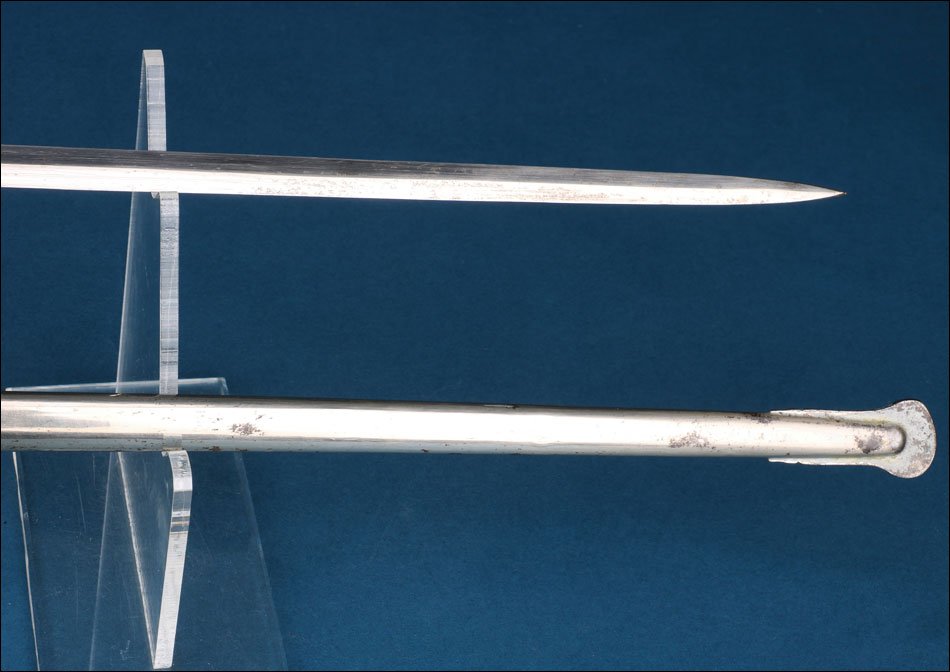
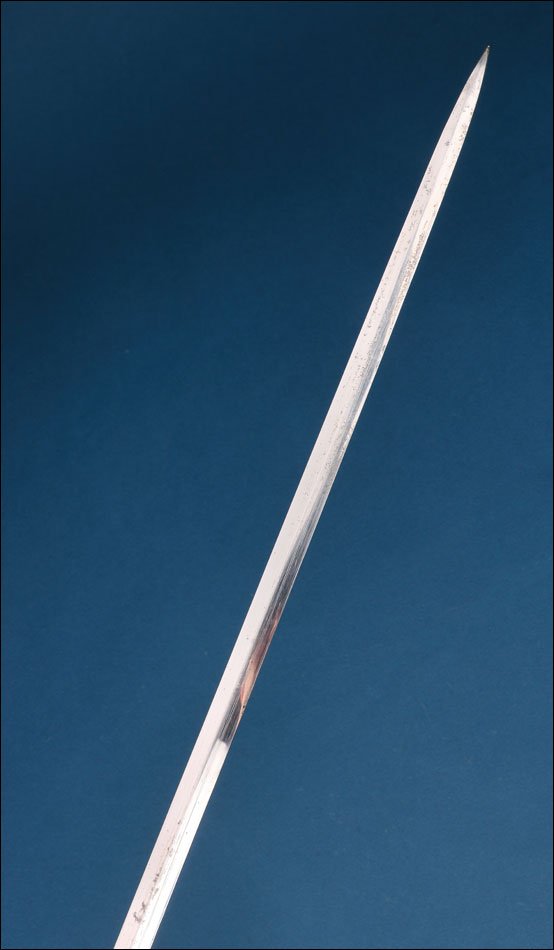
The blade is straight, long and narrow, clearly conceived for thrusting. It has a fine, light and penetrating typology, very typical of French regulation officer swords of this period. Its state of preservation is excellent, something especially noteworthy in this type of weapon. It retains a very good visual presence, good overall brightness, a clean profile and a well preserved tip, with only light surface signs compatible with age and with respectful old preservation.
It also retains its metal scabbard, accompanied by a suspension chain for carrying it on the belt, a detail that completes the ensemble very well and reinforces its interest as a uniform piece. The scabbard shows wear and some normal superficial marks from use and storage, but it still offers a good aesthetic and functional reading. The ensemble is harmonious, complete and visually very attractive.
The overall condition is very good. The hilt retains its shape well, the grip keeps its wire binding, the blade stands out for its excellent preservation and the scabbard accompanies the weapon correctly. It is a particularly interesting sword because of its attribution to the Medical Corps, the visual quality of the ensemble and its dignified and balanced presentation.
In short, this is a French Junior Medical Officer sword, Model 1872, of great elegance and clear personality, with an excellent blade, specific corps iconography and a highly decorative and collectible ensemble. It is a very attractive piece both for collectors of French militaria and for those seeking historical officer swords with clear typology, good preservation and strong symbolic character.
Measurements: Total length of the sword: 101.5 cm (39.96 in). Blade length: 84.5 cm (33.27 in).
History of the Model 1872
The Model 1872 sword forms part of the process of reorganisation of French regulation weaponry in the second half of the nineteenth century, in a context in which the French army sought to rationalise and modernise much of its equipment after the major political and military changes of the period. Within that framework, different corps and officer ranks used dress swords with typologies close to one another, though distinguished by details of emblems, hilts and specific attributes.
In the French army, a junior officer was an officer of lower rank within the hierarchy, that is, a serviceman who already fully belonged to the officer corps, but who did not yet form part of the higher command levels. In general terms, this category included ranks equivalent to second lieutenant or lieutenant, depending on the period and the corps. These were therefore young officers or officers of initial rank, entrusted with real responsibilities within the military structure, both in daily service and in technical, administrative or field duties.
In the case of the Medical Corps, these junior officers were not line combatants in the classic sense of infantry or cavalry, but they were nevertheless an integral part of the army and carried out an essential role in the care of the wounded, the sick and convalescents. Their role was especially important in military hospitals, field ambulances, evacuations and the organisation of medical services on the ground. Therefore, although their main function was medical or sanitary, they fully retained the status of officers and carried the regulation weapons corresponding to their rank and corps.
These swords clearly combined the representative value proper to uniform dress with a true condition as edged weapons. Their straight, long blade, with a section suited to thrusting, does not respond merely to an ornamental criterion, but to a practical, light and effective conception, very characteristic of European officership of the time. They were elegant weapons, but at the same time fully functional if circumstances required their use.
The presence of medical symbols on this type of sword made it possible to identify visually the officer’s membership of the Medical Corps, while at the same time reinforcing the institutional identity of this service within the French army as a whole. The serpent that appears on the shell guard of this example, surrounded by a wreath of oak and laurel leaves, is precisely a very appropriate emblem in that context. The serpent has long been one of the great symbols associated with medicine, while the vegetal wreath provides a language of dignity, honour and service.
By its typology, its emblem and its preservation, this sword represents very well that balance between symbol of rank, officer’s weapon and historical object linked to a specific corps of the French army. For that reason, it is a particularly attractive piece within the collecting field of European regulation swords.
The hilt is made of brass and presents a sober and harmonious configuration, with a single branch guard of clean and flowing profile, globular pommel and double oval shell guard. The grip retains its metal wire binding, although in some areas the wood of the core is slightly visible, a minor detail that does not detract from the appeal of the piece and is entirely logical in an item of this age. The hilt remains very well defined and preserves its original character well.
Especially interesting is the central motif on the shell guard, where a serpent appears surrounded by a wreath of oak and laurel leaves. This emblem, with its clear medical significance, strongly reinforces the attribution of the sword to the Medical Corps. It is an important detail, both from an iconographic and a collecting point of view, since it allows the piece to be linked to a specific military corps and not merely to French officership in a broad sense.
The blade is straight, long and narrow, clearly conceived for thrusting. It has a fine, light and penetrating typology, very typical of French regulation officer swords of this period. Its state of preservation is excellent, something especially noteworthy in this type of weapon. It retains a very good visual presence, good overall brightness, a clean profile and a well preserved tip, with only light surface signs compatible with age and with respectful old preservation.
It also retains its metal scabbard, accompanied by a suspension chain for carrying it on the belt, a detail that completes the ensemble very well and reinforces its interest as a uniform piece. The scabbard shows wear and some normal superficial marks from use and storage, but it still offers a good aesthetic and functional reading. The ensemble is harmonious, complete and visually very attractive.
The overall condition is very good. The hilt retains its shape well, the grip keeps its wire binding, the blade stands out for its excellent preservation and the scabbard accompanies the weapon correctly. It is a particularly interesting sword because of its attribution to the Medical Corps, the visual quality of the ensemble and its dignified and balanced presentation.
In short, this is a French Junior Medical Officer sword, Model 1872, of great elegance and clear personality, with an excellent blade, specific corps iconography and a highly decorative and collectible ensemble. It is a very attractive piece both for collectors of French militaria and for those seeking historical officer swords with clear typology, good preservation and strong symbolic character.
Measurements: Total length of the sword: 101.5 cm (39.96 in). Blade length: 84.5 cm (33.27 in).
History of the Model 1872
The Model 1872 sword forms part of the process of reorganisation of French regulation weaponry in the second half of the nineteenth century, in a context in which the French army sought to rationalise and modernise much of its equipment after the major political and military changes of the period. Within that framework, different corps and officer ranks used dress swords with typologies close to one another, though distinguished by details of emblems, hilts and specific attributes.
In the French army, a junior officer was an officer of lower rank within the hierarchy, that is, a serviceman who already fully belonged to the officer corps, but who did not yet form part of the higher command levels. In general terms, this category included ranks equivalent to second lieutenant or lieutenant, depending on the period and the corps. These were therefore young officers or officers of initial rank, entrusted with real responsibilities within the military structure, both in daily service and in technical, administrative or field duties.
In the case of the Medical Corps, these junior officers were not line combatants in the classic sense of infantry or cavalry, but they were nevertheless an integral part of the army and carried out an essential role in the care of the wounded, the sick and convalescents. Their role was especially important in military hospitals, field ambulances, evacuations and the organisation of medical services on the ground. Therefore, although their main function was medical or sanitary, they fully retained the status of officers and carried the regulation weapons corresponding to their rank and corps.
These swords clearly combined the representative value proper to uniform dress with a true condition as edged weapons. Their straight, long blade, with a section suited to thrusting, does not respond merely to an ornamental criterion, but to a practical, light and effective conception, very characteristic of European officership of the time. They were elegant weapons, but at the same time fully functional if circumstances required their use.
The presence of medical symbols on this type of sword made it possible to identify visually the officer’s membership of the Medical Corps, while at the same time reinforcing the institutional identity of this service within the French army as a whole. The serpent that appears on the shell guard of this example, surrounded by a wreath of oak and laurel leaves, is precisely a very appropriate emblem in that context. The serpent has long been one of the great symbols associated with medicine, while the vegetal wreath provides a language of dignity, honour and service.
By its typology, its emblem and its preservation, this sword represents very well that balance between symbol of rank, officer’s weapon and historical object linked to a specific corps of the French army. For that reason, it is a particularly attractive piece within the collecting field of European regulation swords.
395 €
Period: 19th century
Style: Other Style
Condition: Good condition
Length: 101,5 cm (39.96 in)
Reference (ID): 1738059
Availability: In stock
Print