

France. Antique Junior Officer’s Medical Service Sword. Model 1872, Circa 1880
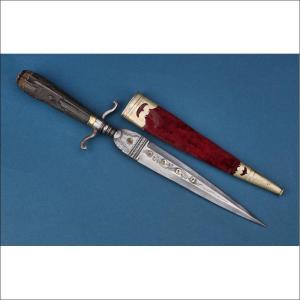
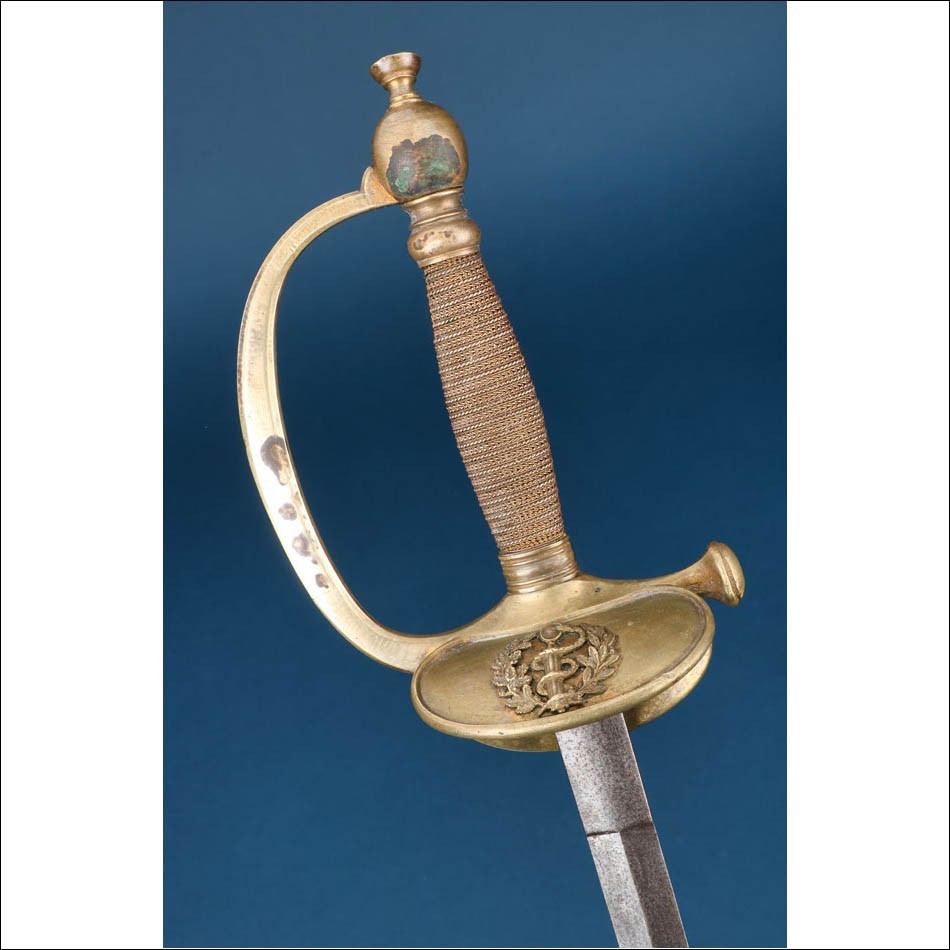
Antique French regulation sword corresponding to the 1872 model, datable to circa 1880 and attributable to use by junior officers of the medical service corps. It is a dress sword with sober lines and slender proportions, designed both as a mark of rank and for possible practical use. Its appearance is balanced and highly representative of French officer weaponry in the second half of the 19th century, with a clear and easily recognizable typology within the group of period regulation swords.
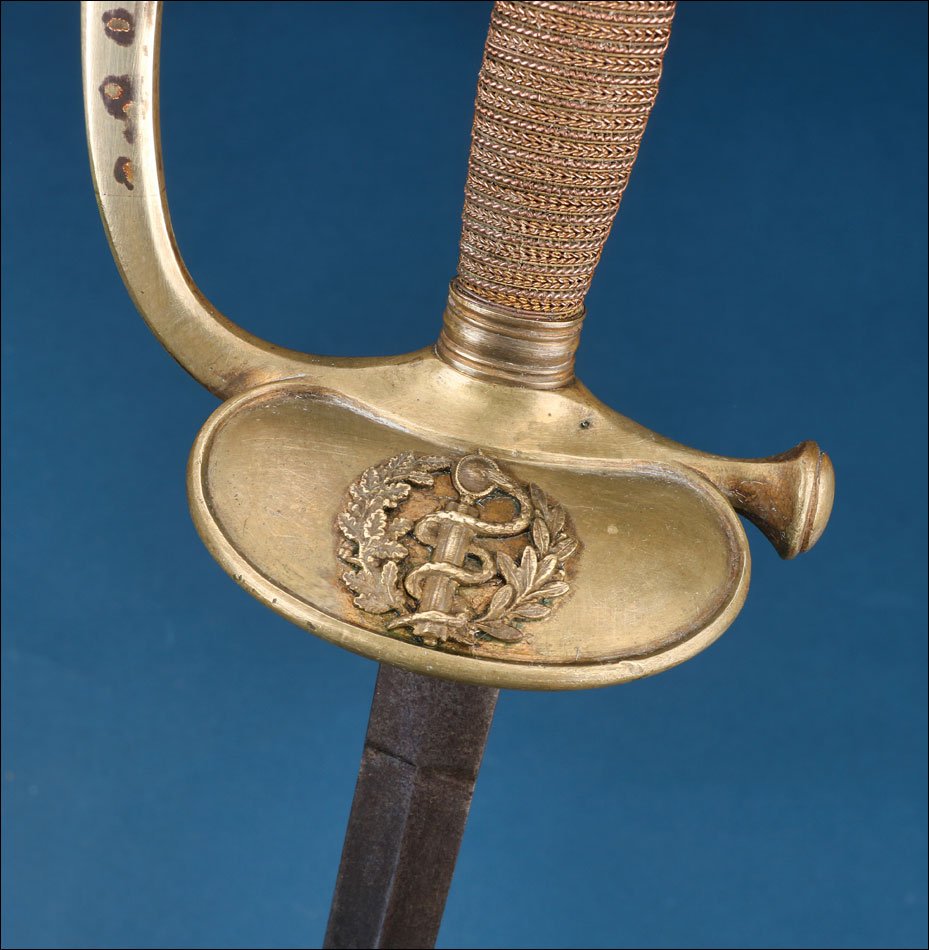
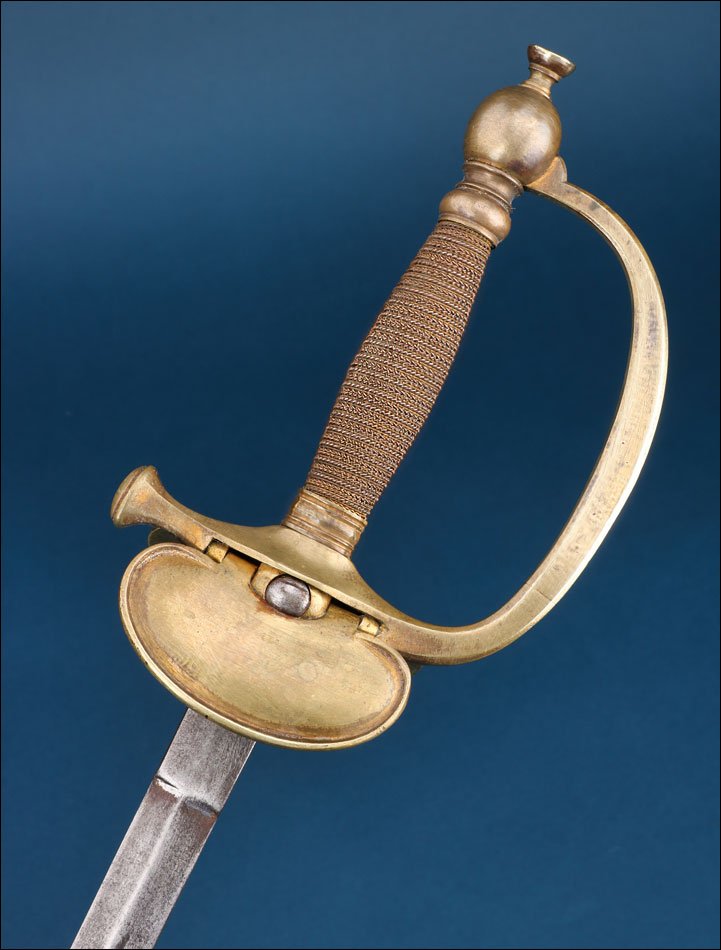
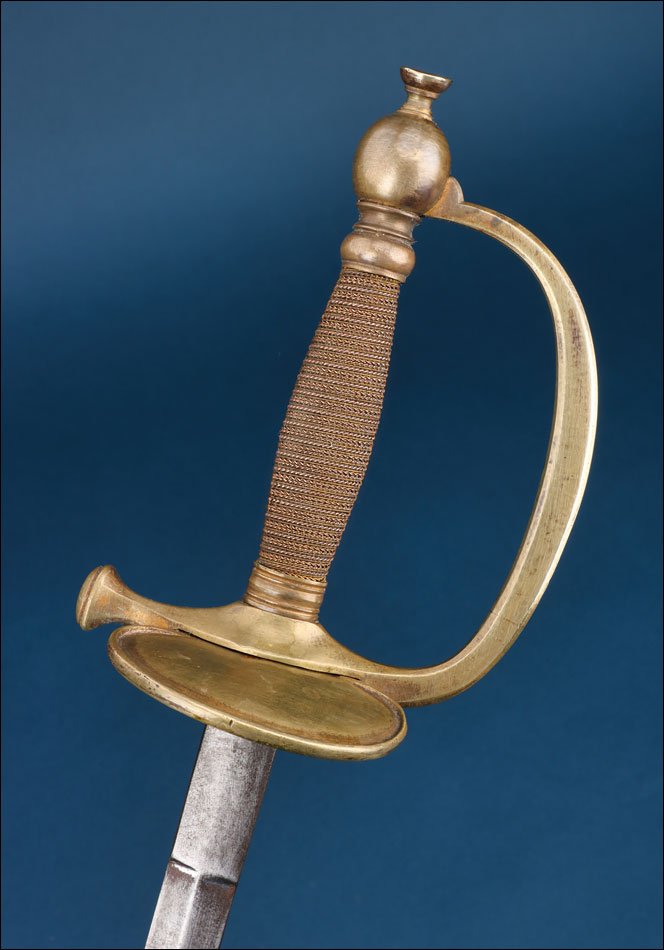
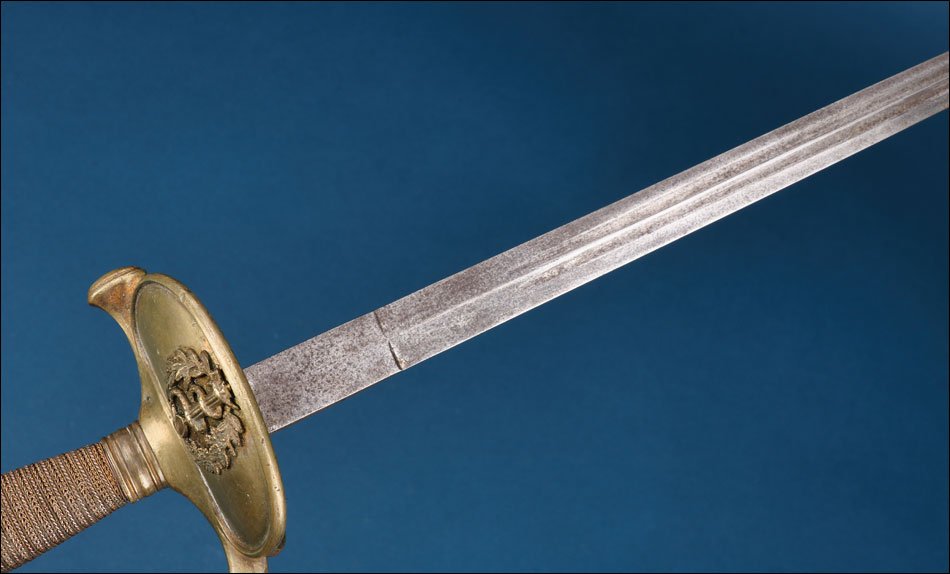
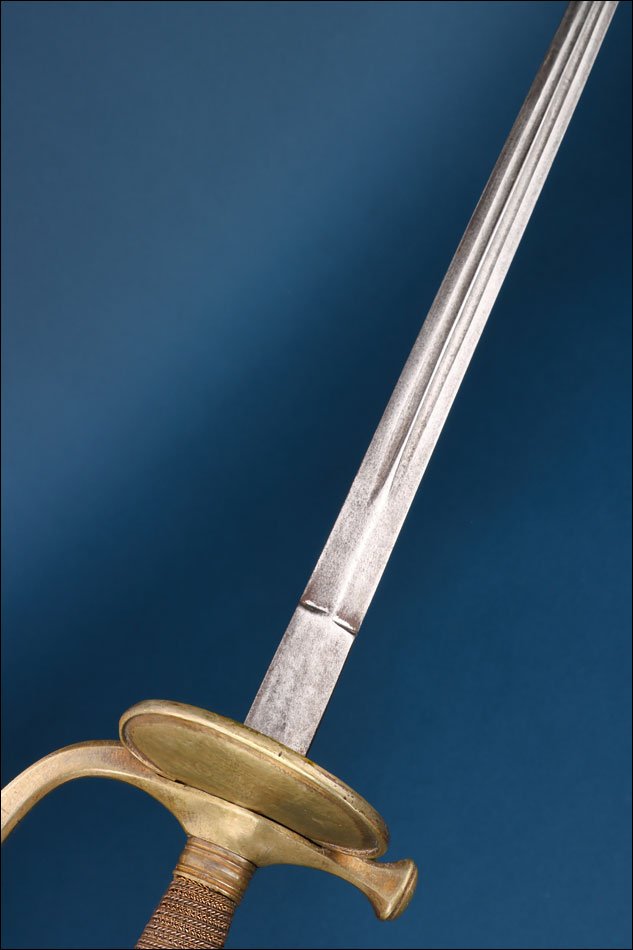
The hilt is made of brass and features a single curved guard branch that begins at the pommel area and descends to the quillon block. The pommel is globular in shape and finished with a visible top button, a common feature on French swords of this model. The rear langet is folding. The grip retains its original metal wire binding or twisted wire wrap, arranged regularly and firmly over the inner core. The oval shell guard shows relief decoration with a medical emblem formed by a staff with a serpent surrounded by vegetal branches, a distinctive symbol confirming its link to the military medical service.
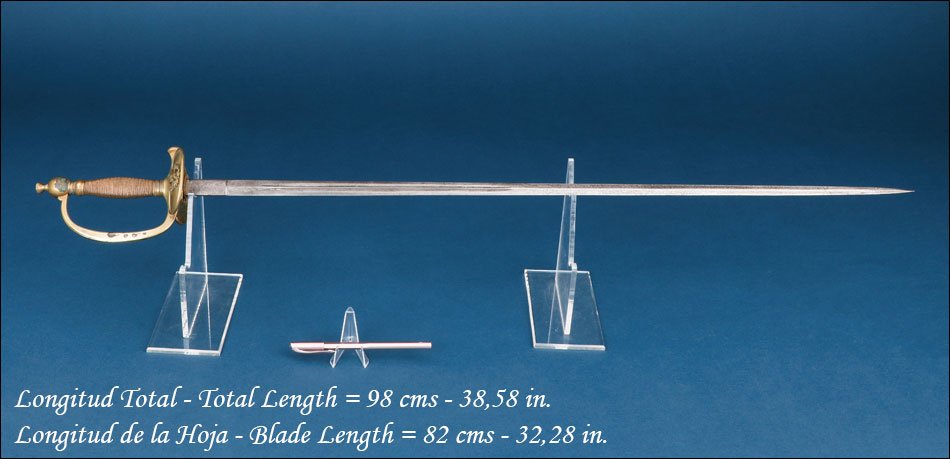
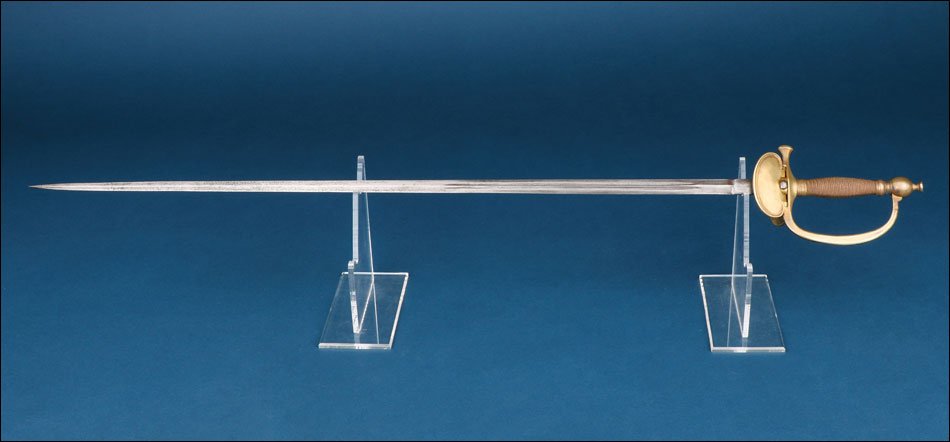
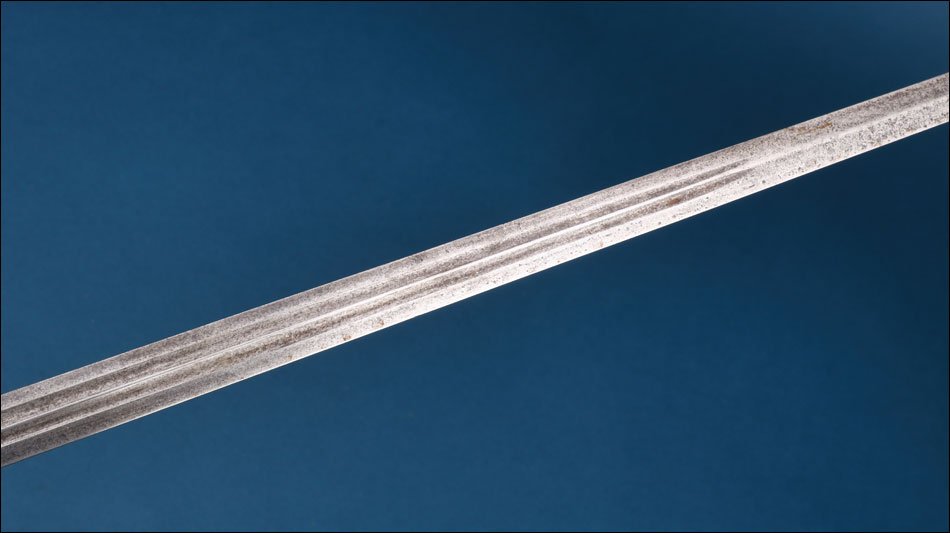
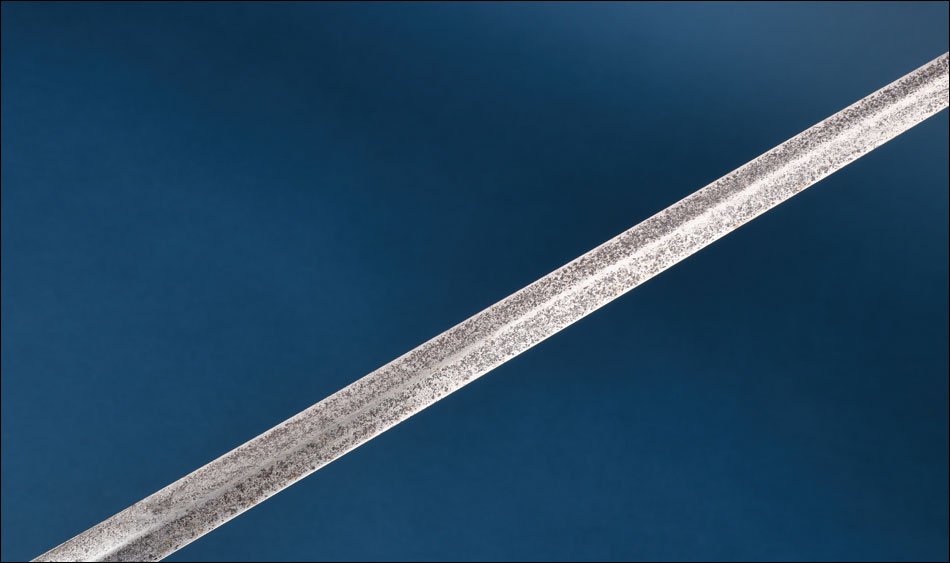
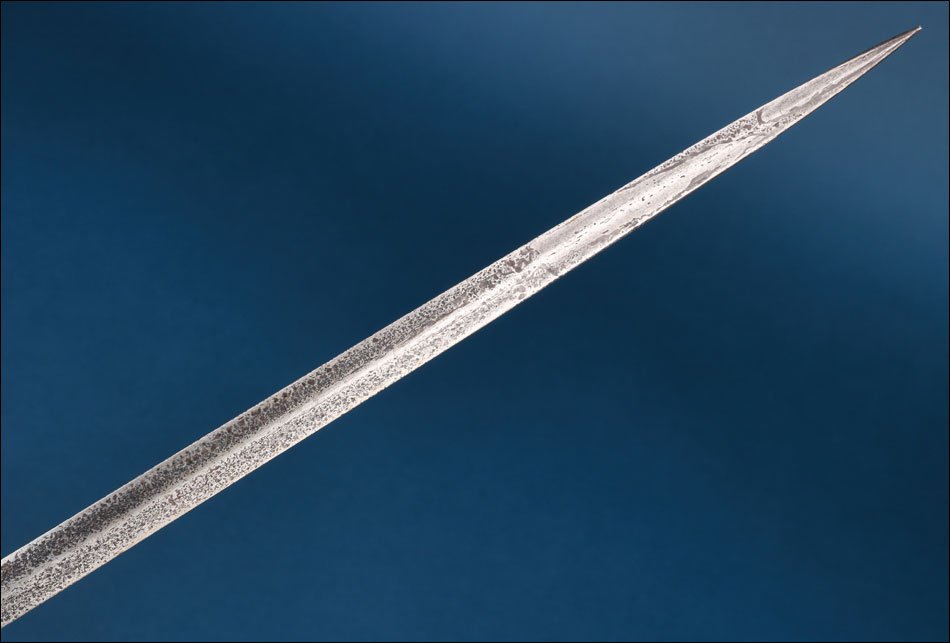
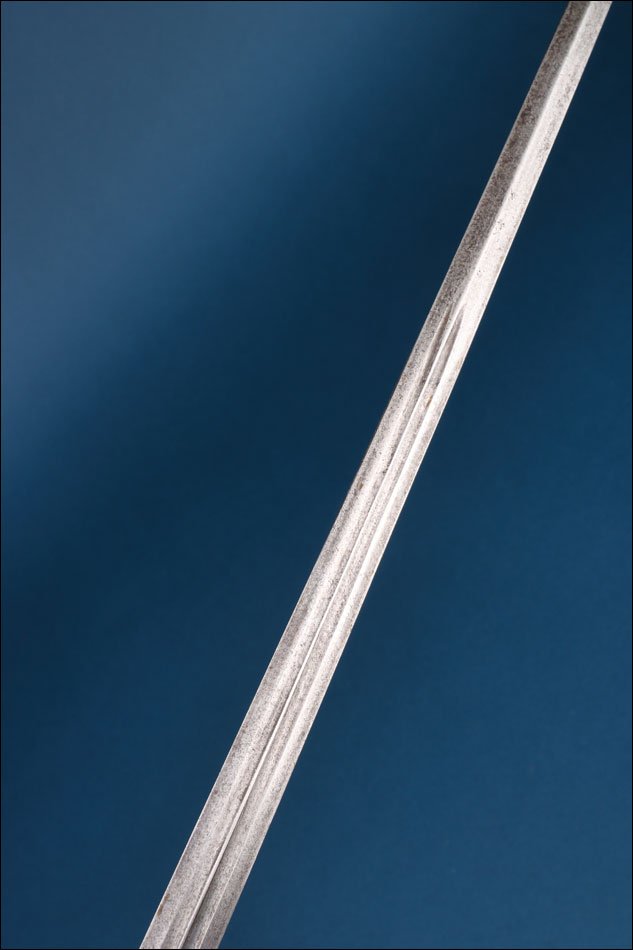
The blade is straight, long and narrow, made of steel and intended primarily for thrusting. It features well defined fullers running along much of its surface, helping to lighten the weapon without compromising rigidity. The silhouette is slender and penetrating, ending in a fine and sharp point. The state of preservation is consistent with its age. The hilt shows surface wear, small traces of use, and areas with spotting on the brass. The blade shows superficial oxidation, dark stains, and general wear, although it retains its complete shape. The scabbard is not preserved.
Pieces like this do not appear every day. This is a French sword clearly linked to the military medical service, with a very defined typology and an excellent visual presence. Its shell guard with medical emblem, the fine silhouette of the blade, and the brass hilt give it a distinctive personality that makes it stand out immediately in any serious collection of 19th century militaria.
Beyond its historical interest, this is a sword that is visually compelling. It has elegance, identity, and that authentic character collectors look for when they want to add a different piece, with a clear reading and no need for forced explanations. Ideal for those who appreciate French regulation edged weapons and want a less commonly seen piece than the usual models.
Measurements: Total length: 98 cm (38.58 in). Blade length: 82 cm (32.28 in).
History of the junior officer’s medical service sword
This sword belongs to the context of Third Republic France, a period marked by the reorganization of the army after the Franco Prussian War of 1870 to 1871. During these decades, the technical and service corps acquired greater structural definition within the military organization. The medical service played an essential role in providing medical care to troops, managing hospitals, and offering health support both in garrison and in the field.
The junior officers of this corps formed part of a specialized officer class which, although not serving as front line combatants, retained the traditional symbols of military status. Among these, the sword was a distinctive element of rank and institutional belonging. The 1872 model reflects the tendency toward standardization adopted by the French army during the last third of the 19th century, when clear patterns were established for each corps and grade.
Today, pieces of this kind are relevant material testimonies for understanding the evolution of military symbolism and the specialization of technical corps in late 19th century Europe.
The hilt is made of brass and features a single curved guard branch that begins at the pommel area and descends to the quillon block. The pommel is globular in shape and finished with a visible top button, a common feature on French swords of this model. The rear langet is folding. The grip retains its original metal wire binding or twisted wire wrap, arranged regularly and firmly over the inner core. The oval shell guard shows relief decoration with a medical emblem formed by a staff with a serpent surrounded by vegetal branches, a distinctive symbol confirming its link to the military medical service.
The blade is straight, long and narrow, made of steel and intended primarily for thrusting. It features well defined fullers running along much of its surface, helping to lighten the weapon without compromising rigidity. The silhouette is slender and penetrating, ending in a fine and sharp point. The state of preservation is consistent with its age. The hilt shows surface wear, small traces of use, and areas with spotting on the brass. The blade shows superficial oxidation, dark stains, and general wear, although it retains its complete shape. The scabbard is not preserved.
Pieces like this do not appear every day. This is a French sword clearly linked to the military medical service, with a very defined typology and an excellent visual presence. Its shell guard with medical emblem, the fine silhouette of the blade, and the brass hilt give it a distinctive personality that makes it stand out immediately in any serious collection of 19th century militaria.
Beyond its historical interest, this is a sword that is visually compelling. It has elegance, identity, and that authentic character collectors look for when they want to add a different piece, with a clear reading and no need for forced explanations. Ideal for those who appreciate French regulation edged weapons and want a less commonly seen piece than the usual models.
Measurements: Total length: 98 cm (38.58 in). Blade length: 82 cm (32.28 in).
History of the junior officer’s medical service sword
This sword belongs to the context of Third Republic France, a period marked by the reorganization of the army after the Franco Prussian War of 1870 to 1871. During these decades, the technical and service corps acquired greater structural definition within the military organization. The medical service played an essential role in providing medical care to troops, managing hospitals, and offering health support both in garrison and in the field.
The junior officers of this corps formed part of a specialized officer class which, although not serving as front line combatants, retained the traditional symbols of military status. Among these, the sword was a distinctive element of rank and institutional belonging. The 1872 model reflects the tendency toward standardization adopted by the French army during the last third of the 19th century, when clear patterns were established for each corps and grade.
Today, pieces of this kind are relevant material testimonies for understanding the evolution of military symbolism and the specialization of technical corps in late 19th century Europe.
220 €
Period: 19th century
Style: Other Style
Condition: Good condition
Length: 98 cm (38.58 in)
Reference (ID): 1738053
Availability: In stock
Print