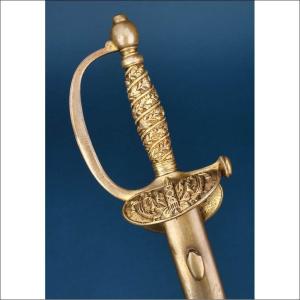


France. Antique Military Justice Nco Sword M. 1853 Ca. 1870
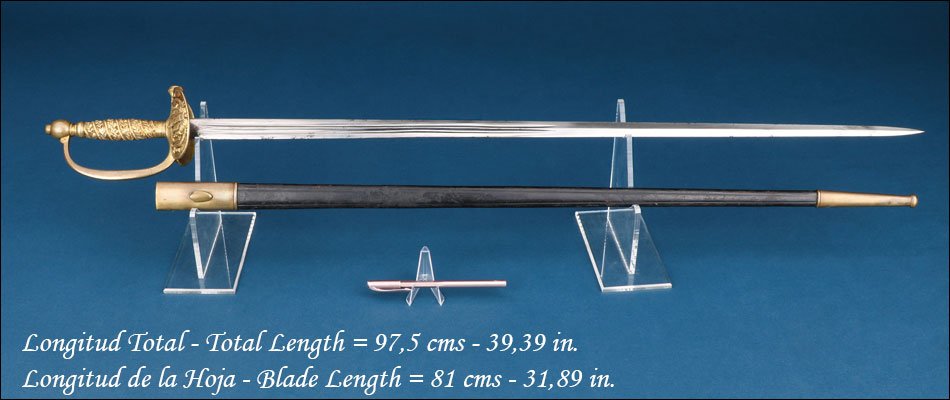
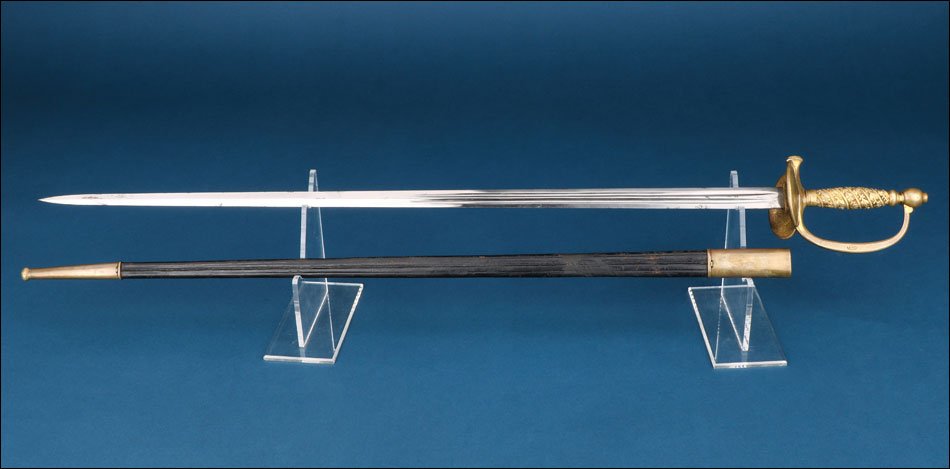
French regulation sword corresponding to the model adopted in 1853 for non-commissioned officers attached to Military Justice corps, datable to circa 1870. It is an institutional sword within the French military structure of the nineteenth century, with a design combining functional sobriety and symbolic ornamentation.
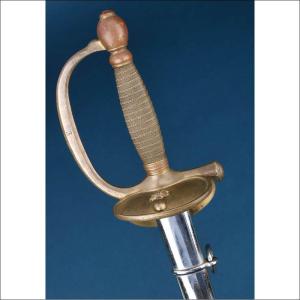
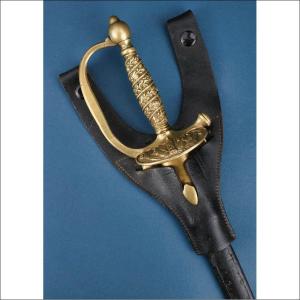
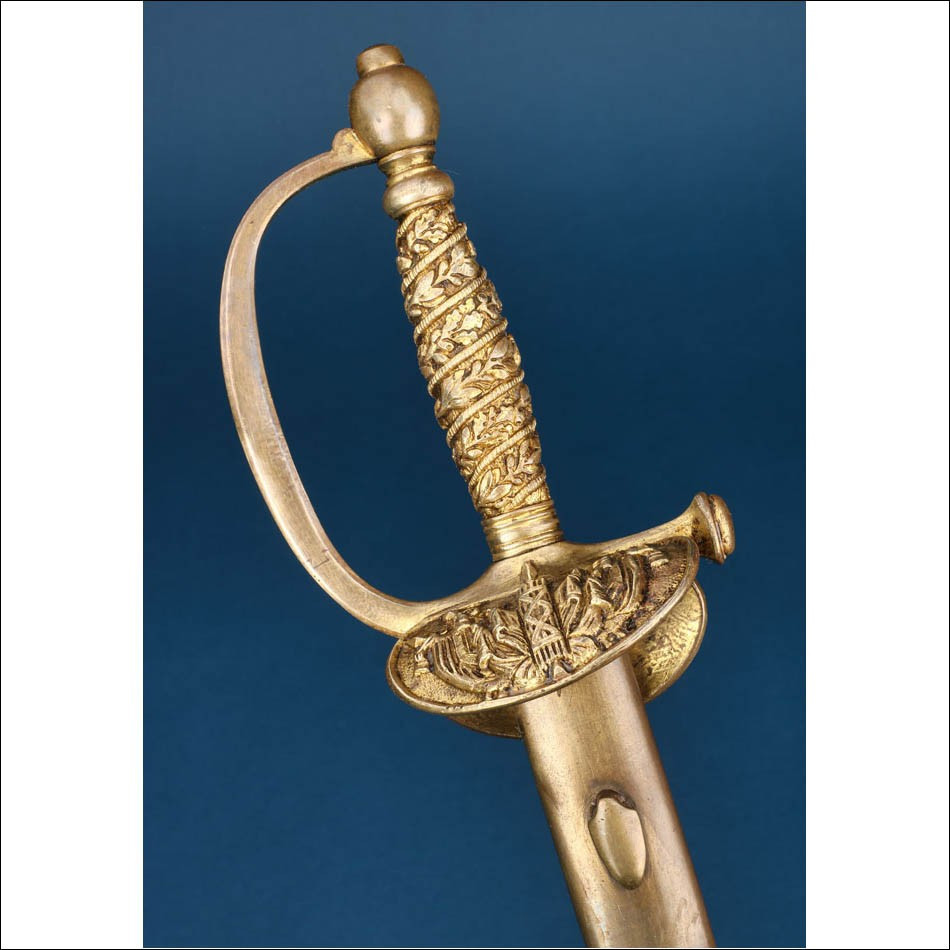
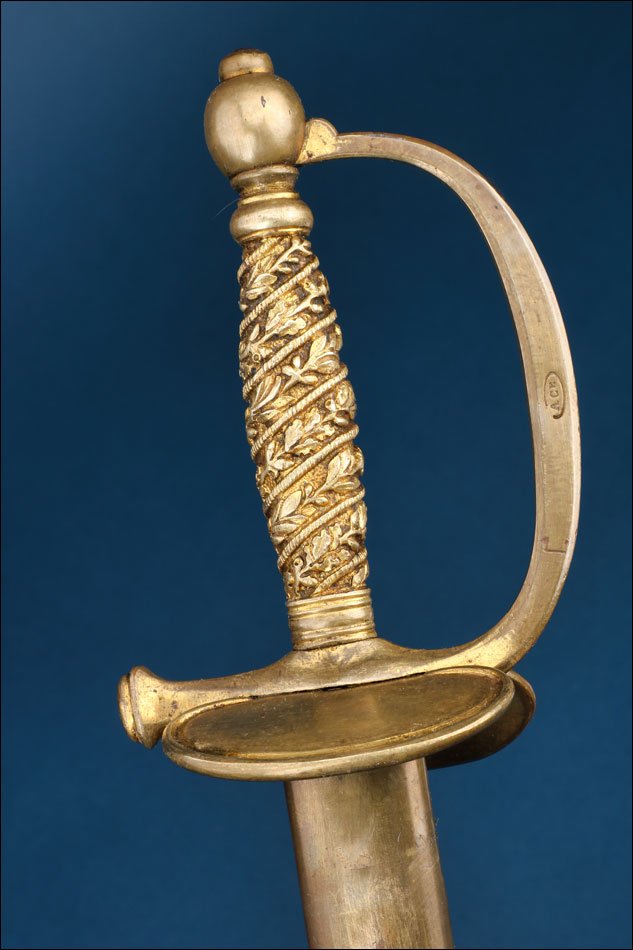
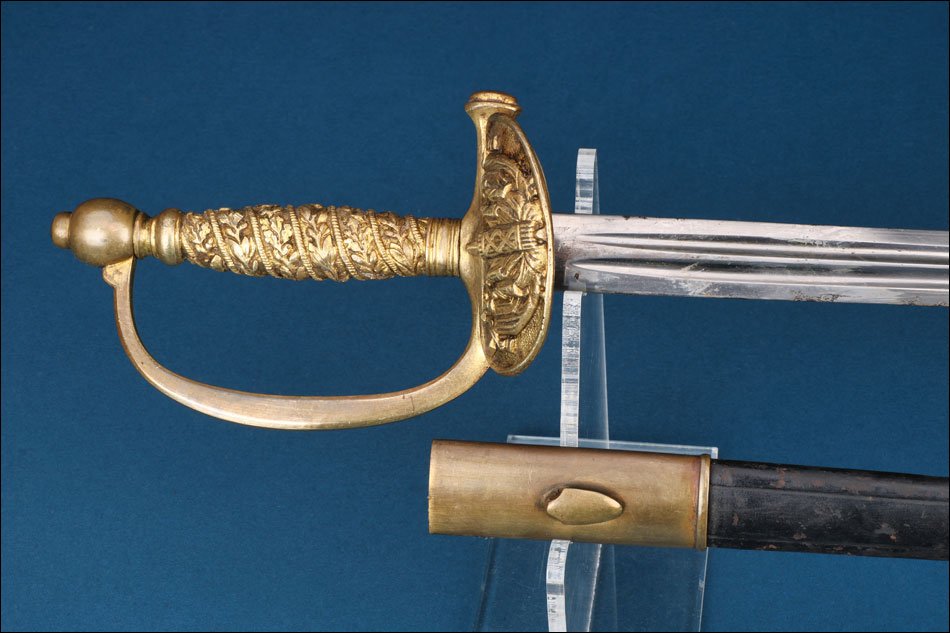
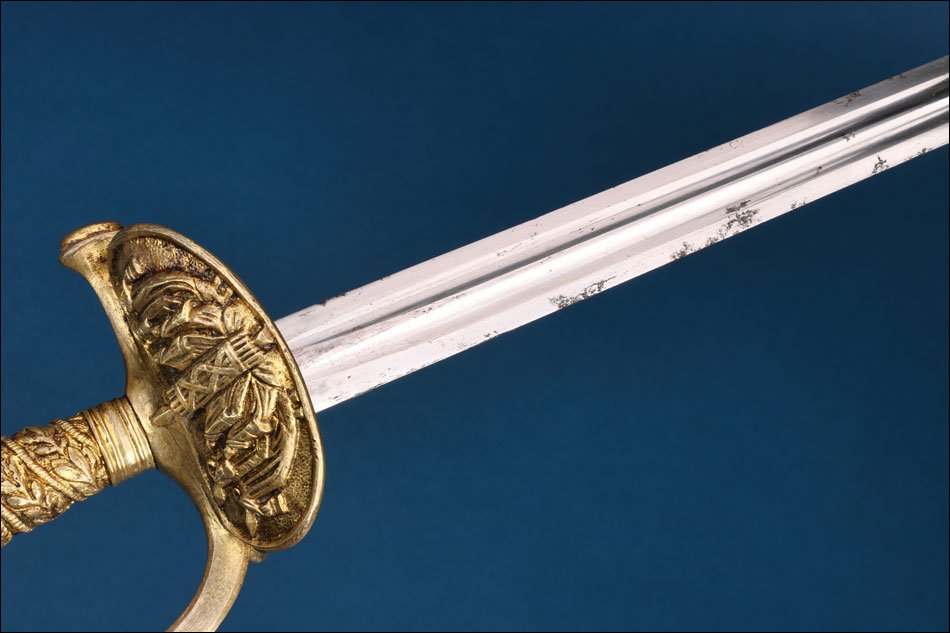
The hilt is made of gilt metal, with robust construction and balanced lines. The pommel has a softly moulded olive shape, flowing naturally into the grip. The latter is decorated in relief with continuous vegetal motifs, creating a textured surface that improves grip and adds visual richness without excessive formal elaboration. The knuckle guard consists of a single curved branch that protects the hand in a simple and effective way, maintaining the clean silhouette characteristic of French regulation models.
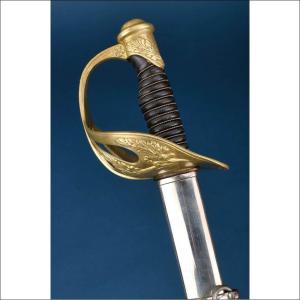
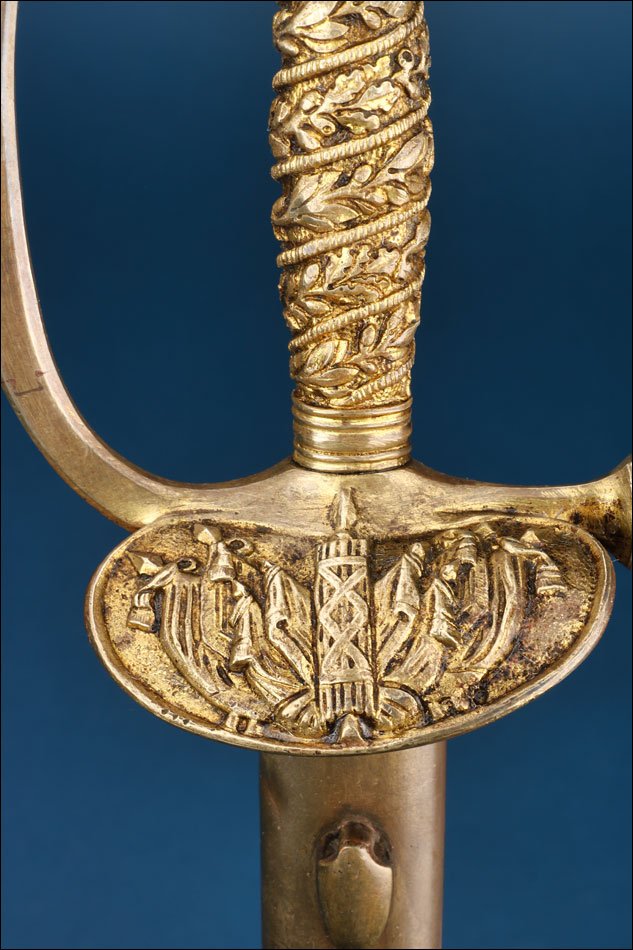
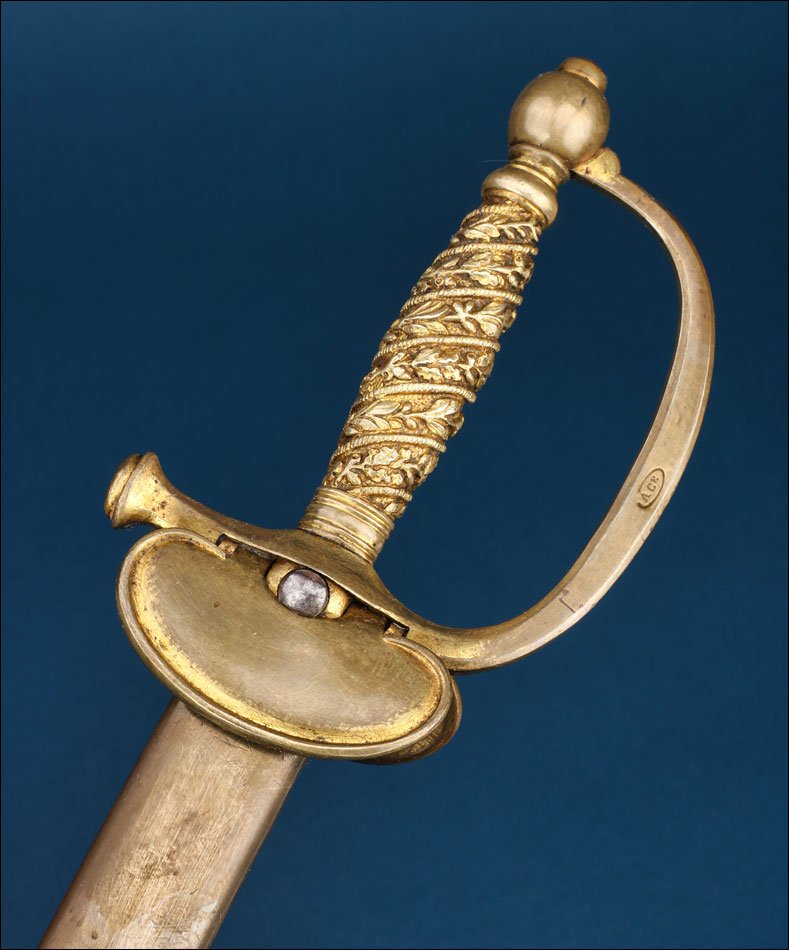
The shell guard, or clavier, of oval profile, shows relief decoration with stylised military trophies, including bundles of arms and symbolic elements linked to the exercise of authority. On the reverse is preserved the regulation folding inner flap, a functional system typical of many French swords of the period, allowing the weapon to be secured to the belt or uniform. On the branch of the knuckle guard appears the punch “ACE”, probably corresponding to a supplier or workshop, a relevant detail from a typological point of view.
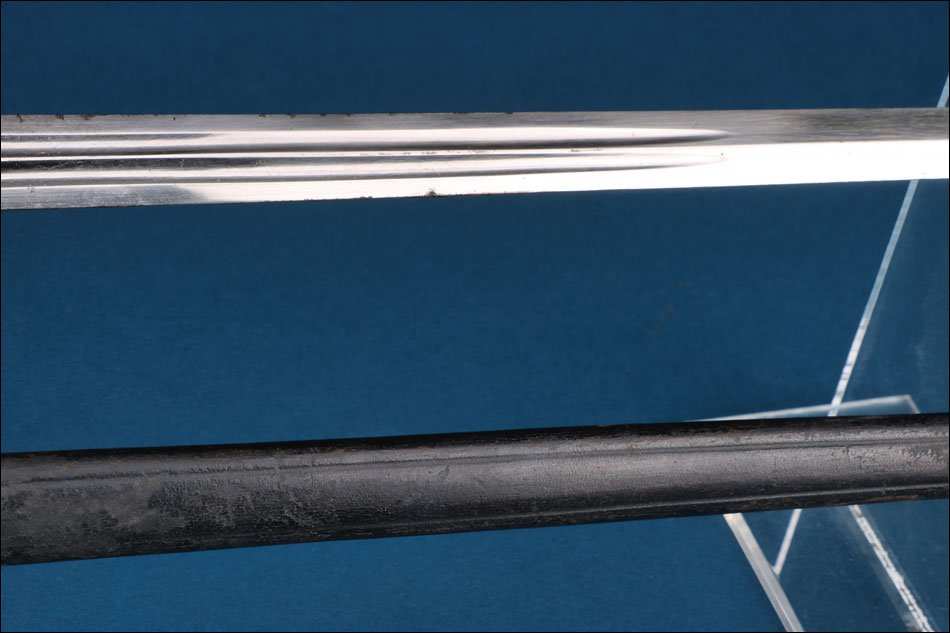
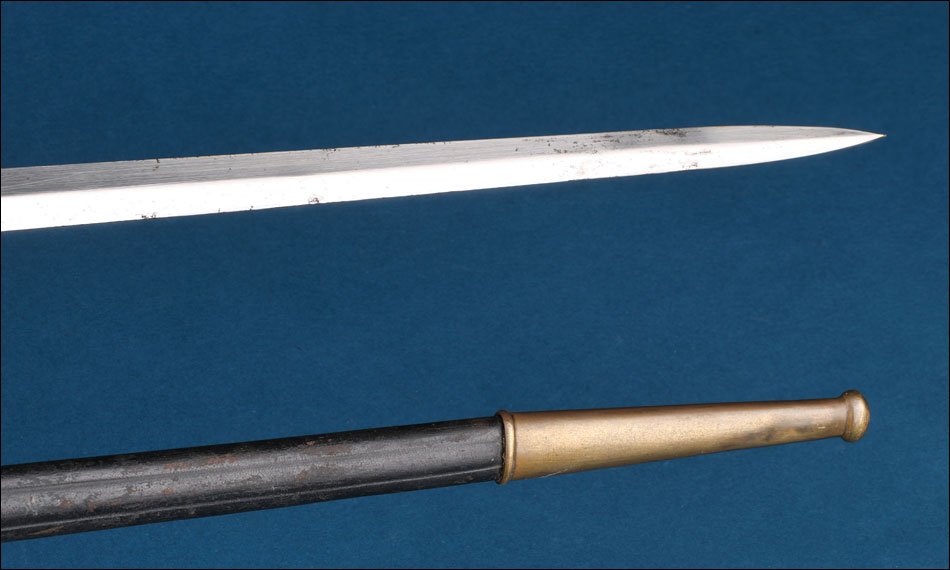
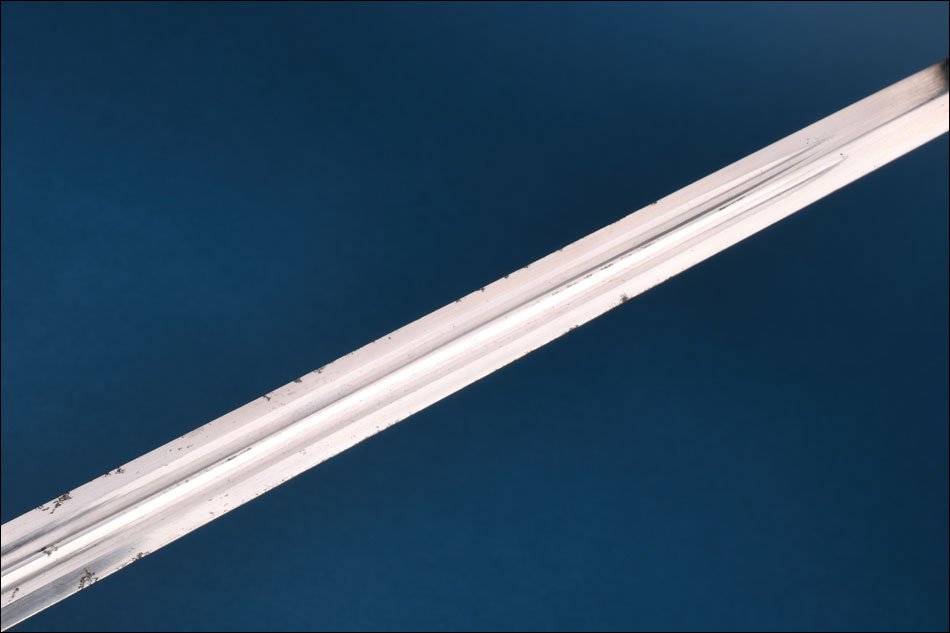
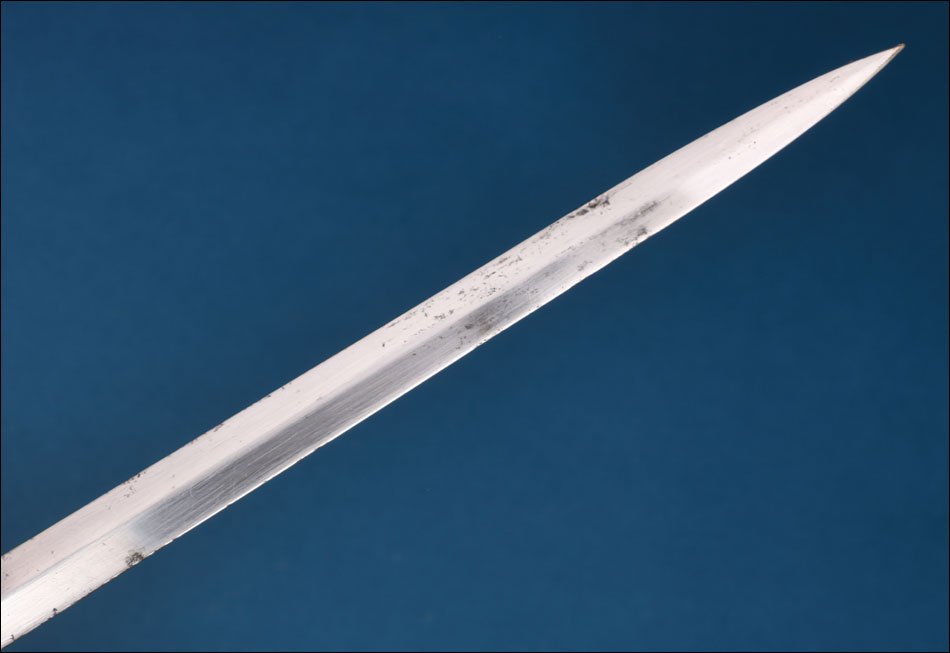
The blade is straight, of steel, with a narrow and elongated section, and with well-defined fullers in its first section. It corresponds to a light typology intended primarily for institutional use rather than direct combat. It remains in original condition, without recent cleaning or polishing, showing stains, small areas of surface oxidation, and even wear consistent with its age. The alignment is correct and the point remains well defined.
The sword retains its original black leather scabbard, with metal mounts at the throat and at the lower end or chape. The leather shows external wear and patina from use, while maintaining good structural integrity. The general condition is good within its age, with normal signs of use and no modern interventions.
Measurements: Total length 97.5 cm (39.39 in). Blade length 81 cm (31.89 in).
History of the Model 1853 Military Justice NCO Sword
The model 1853 sword was adopted in France as part of the regulation equipment of non-commissioned officers attached to judicial, disciplinary, and administrative functions within the army and the gendarmerie. This type of edged weapon responded to an institutional need more than to a strictly combative one, acting as a symbol of authority and as a functional element in certain operational situations.
Its design is characterised by a straight and relatively light blade, accompanied by ornamented mounts of simple structure, which facilitated daily wear. The inclusion of systems such as the folding inner flap reflects the concern for practical functionality within regulation uniform. These models were widely distributed during the Second Empire and continued in use during the early years of the Third Republic.
The production of these swords was entrusted to different workshops and manufactories under state control, which explains the variety of punches and small constructional variations. Although their direct use in combat was limited, they retained full operational capability. Today they constitute material testimony to the French military disciplinary apparatus and to the symbolism of authority within the nineteenth-century military structure.
The hilt is made of gilt metal, with robust construction and balanced lines. The pommel has a softly moulded olive shape, flowing naturally into the grip. The latter is decorated in relief with continuous vegetal motifs, creating a textured surface that improves grip and adds visual richness without excessive formal elaboration. The knuckle guard consists of a single curved branch that protects the hand in a simple and effective way, maintaining the clean silhouette characteristic of French regulation models.
The shell guard, or clavier, of oval profile, shows relief decoration with stylised military trophies, including bundles of arms and symbolic elements linked to the exercise of authority. On the reverse is preserved the regulation folding inner flap, a functional system typical of many French swords of the period, allowing the weapon to be secured to the belt or uniform. On the branch of the knuckle guard appears the punch “ACE”, probably corresponding to a supplier or workshop, a relevant detail from a typological point of view.
The blade is straight, of steel, with a narrow and elongated section, and with well-defined fullers in its first section. It corresponds to a light typology intended primarily for institutional use rather than direct combat. It remains in original condition, without recent cleaning or polishing, showing stains, small areas of surface oxidation, and even wear consistent with its age. The alignment is correct and the point remains well defined.
The sword retains its original black leather scabbard, with metal mounts at the throat and at the lower end or chape. The leather shows external wear and patina from use, while maintaining good structural integrity. The general condition is good within its age, with normal signs of use and no modern interventions.
Measurements: Total length 97.5 cm (39.39 in). Blade length 81 cm (31.89 in).
History of the Model 1853 Military Justice NCO Sword
The model 1853 sword was adopted in France as part of the regulation equipment of non-commissioned officers attached to judicial, disciplinary, and administrative functions within the army and the gendarmerie. This type of edged weapon responded to an institutional need more than to a strictly combative one, acting as a symbol of authority and as a functional element in certain operational situations.
Its design is characterised by a straight and relatively light blade, accompanied by ornamented mounts of simple structure, which facilitated daily wear. The inclusion of systems such as the folding inner flap reflects the concern for practical functionality within regulation uniform. These models were widely distributed during the Second Empire and continued in use during the early years of the Third Republic.
The production of these swords was entrusted to different workshops and manufactories under state control, which explains the variety of punches and small constructional variations. Although their direct use in combat was limited, they retained full operational capability. Today they constitute material testimony to the French military disciplinary apparatus and to the symbolism of authority within the nineteenth-century military structure.
490 €
Period: 19th century
Style: Other Style
Condition: Good condition
Length: 97,5 cm (39,39 in)
Reference (ID): 1738045
Availability: In stock
Print