THIS OBJECT WAS SOLD
Germany. Antique Nazi Heer Officer’s Sword. Third Reich. Circa 1935 To 1945
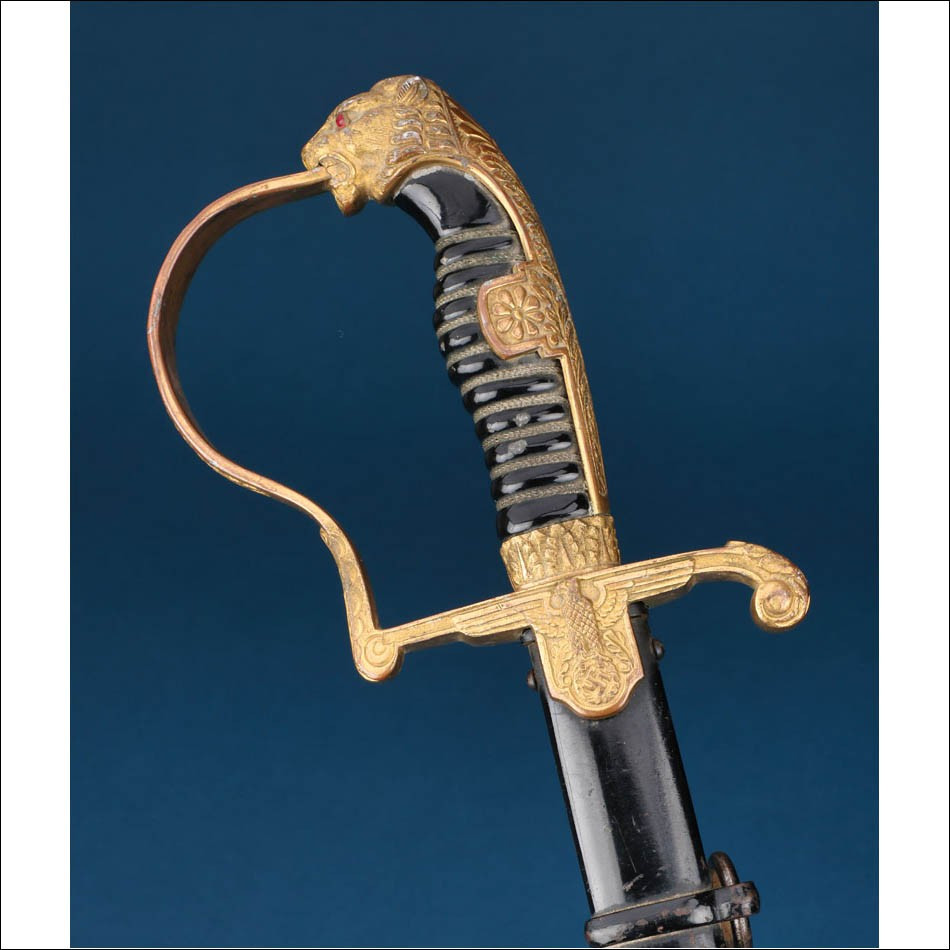
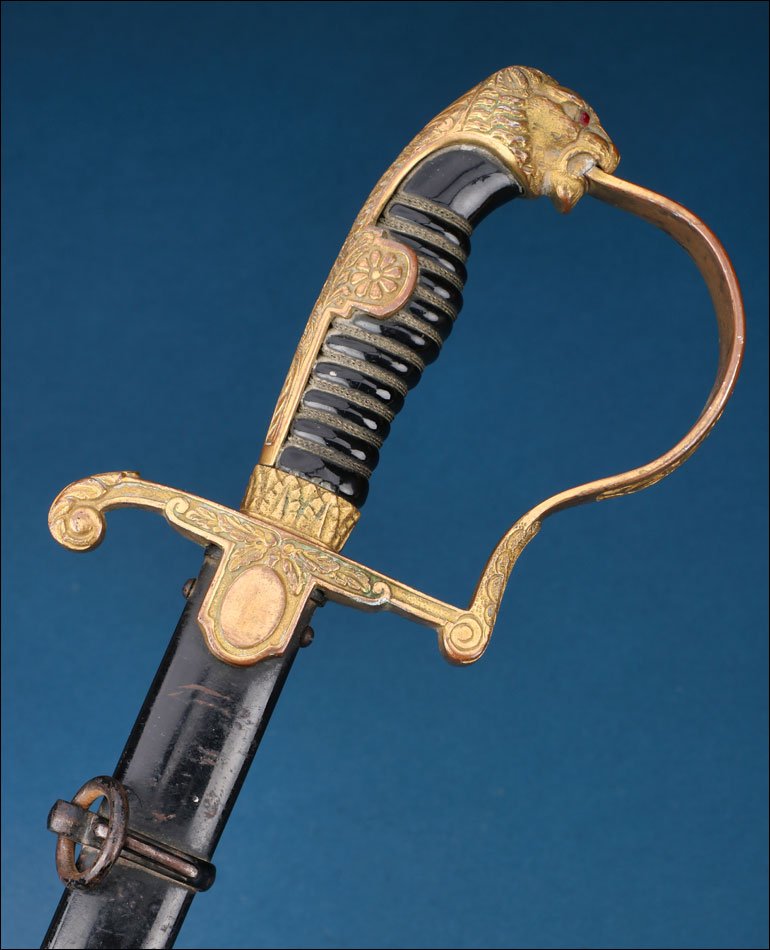
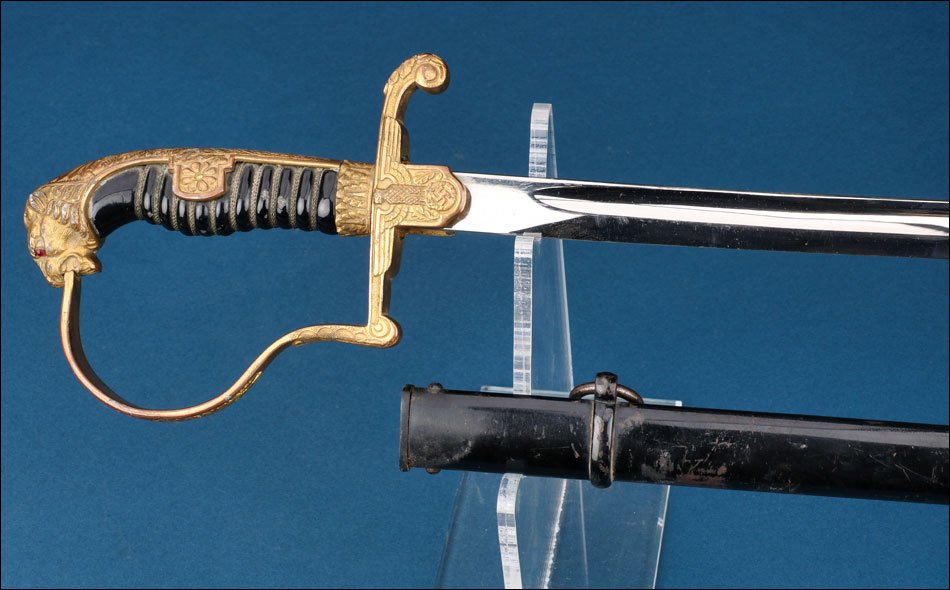
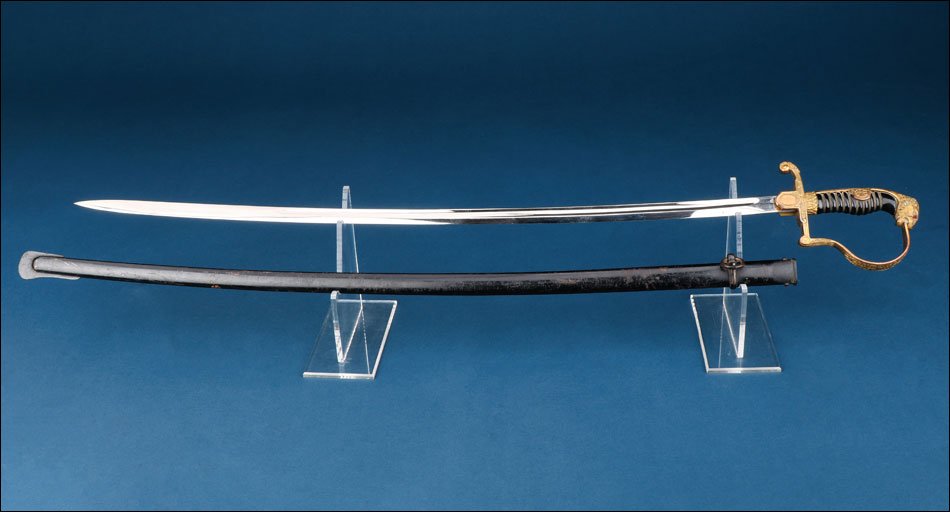
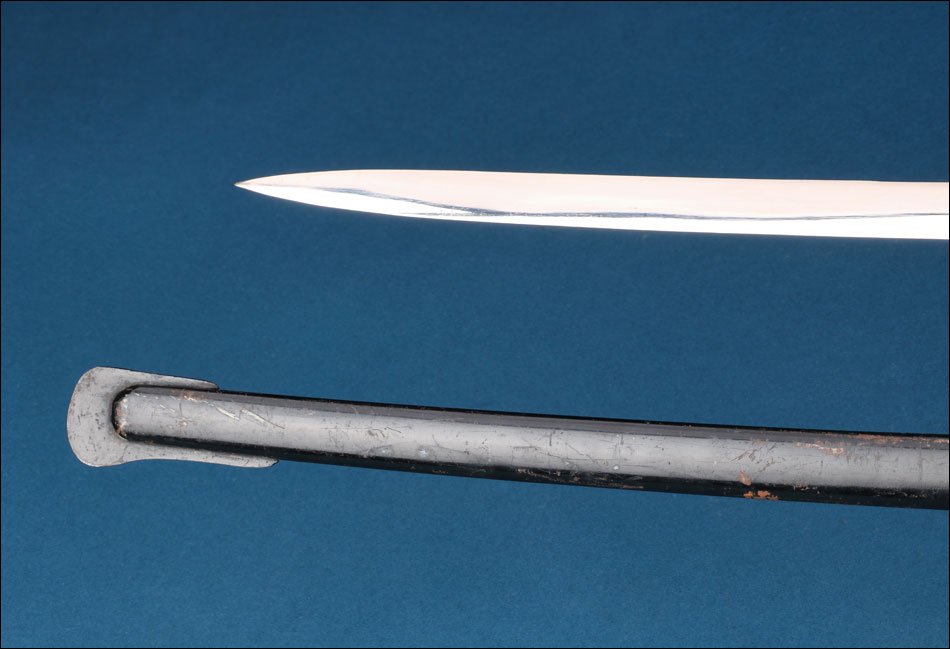
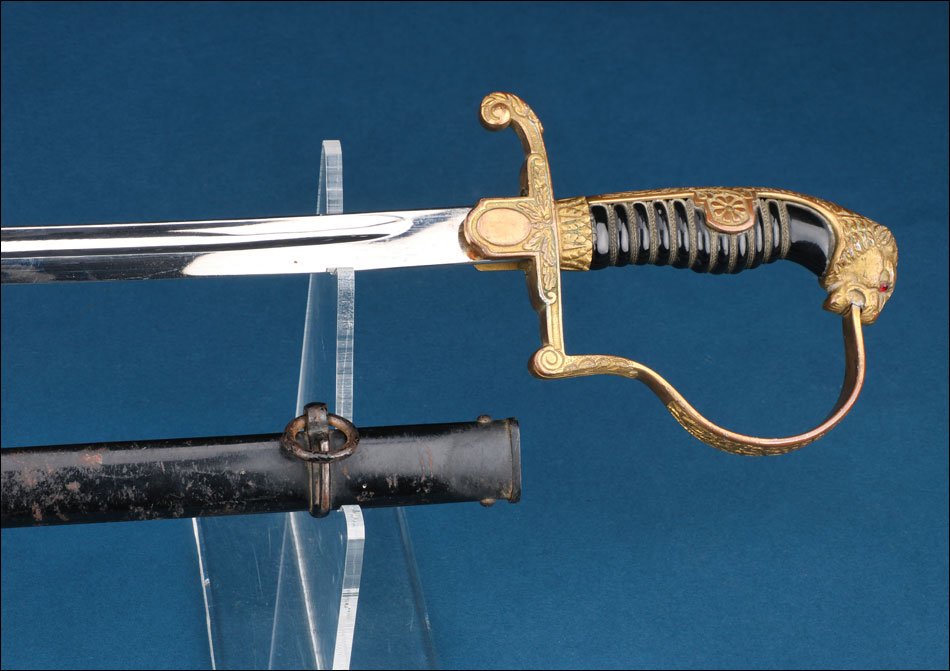


Antique German Heer officer’s saber, corresponding to the Third Reich period and dating to circa 1935-1945. This is an original uniform piece, clearly representative of German Army officer corps weapons in the years before and during the Second World War. Although the blade shows no visible maker’s marks, the saber is original to the period, since some of these privately purchased officer’s weapons were marketed without markings. In this case, moreover, the attribution to Ernst Pack & Söhne of Solingen is especially convincing because of the clear typological similarity to marked examples by this firm, which display the same lion head with red faceted eyes, the same P shaped guard, and the same overall decorative language of the hilt, including the lateral rosette.
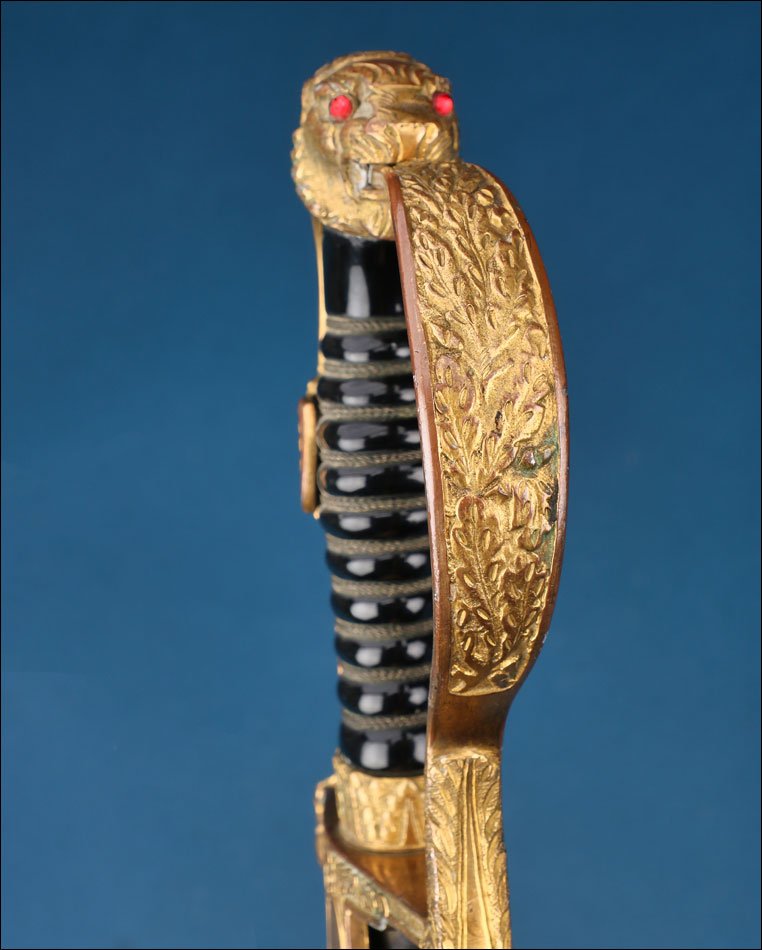
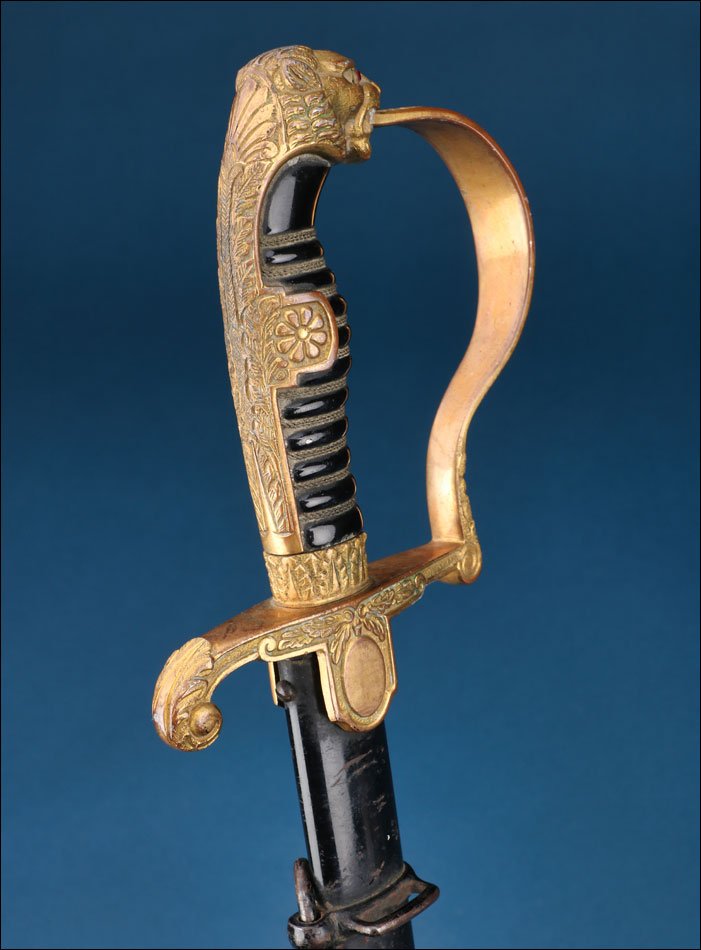
The hilt is made of gilded metal and has a configuration that is very characteristic of this type of German officer’s saber. The pommel takes the form of a lion’s head with red glass eyes, a particularly striking detail that gives the piece strong visual presence. The main knuckle bow has a broad curve and retains engraved vegetal decoration, in harmony with the rest of the hilt. The lower quillons, with rolled ends, complete an elegant and well balanced silhouette, very typical of this officer’s model.
On the front langet appears the Heer eagle with swastika, an unmistakable emblem of the Third Reich period, integrated into a composition of great visual clarity. The reverse side has a plain oval cartouche. The backstrap of the hilt retains a decorative floral rosette, and the side tabs show the same type of eight petaled flower seen on marked examples by Ernst Pack & Söhne, a very relevant detail in support of the attribution.
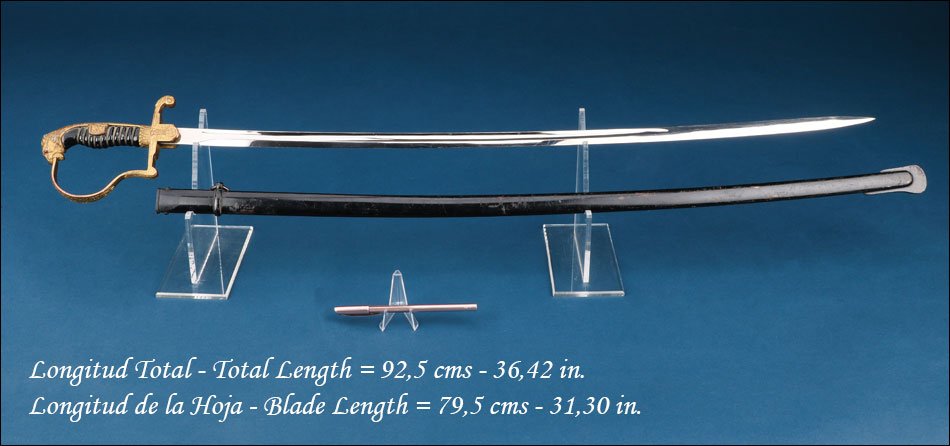
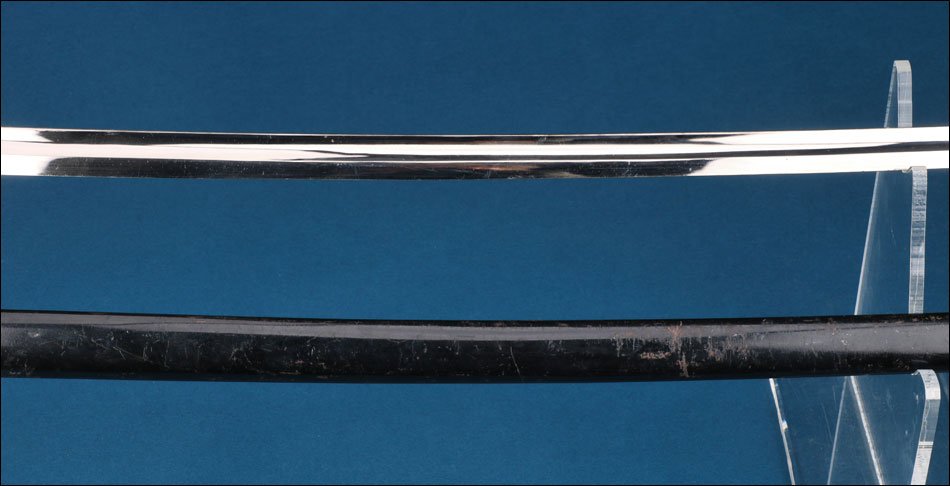
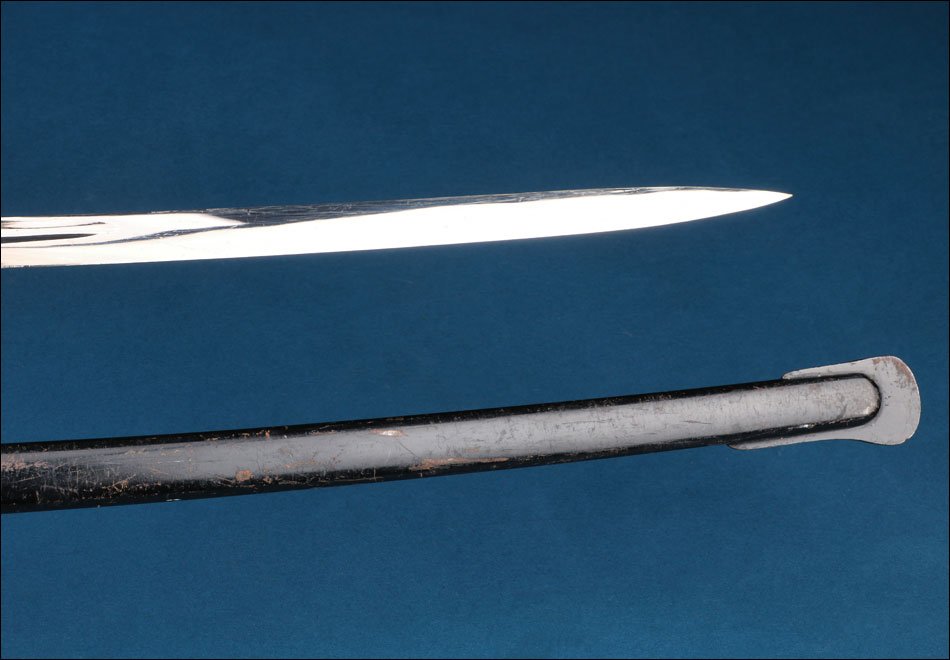
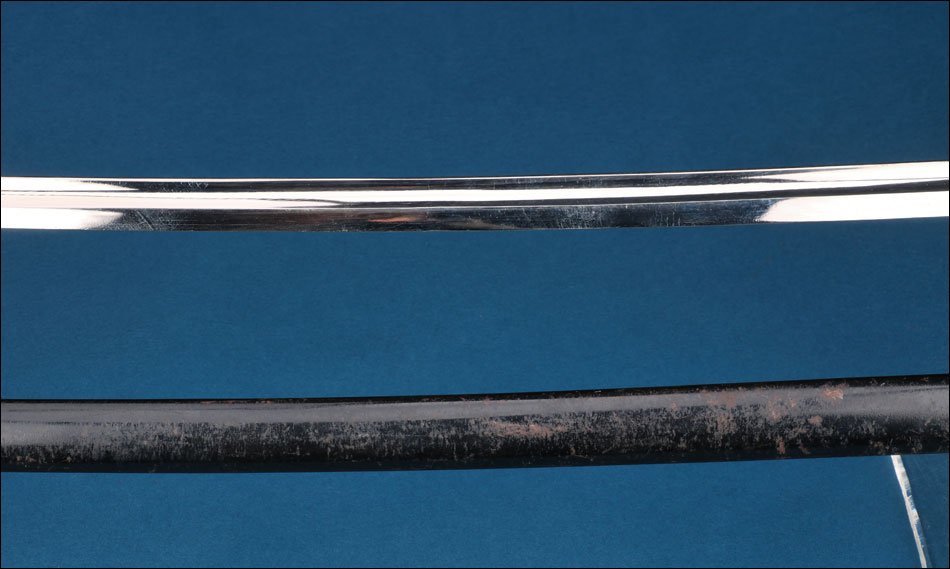
The grip retains its original black covering over a wooden core, with metal wire wrap or twist wire. It shows visible wear in certain areas of that covering, which is entirely logical in a piece of this chronology, but it preserves its overall structure well and still offers a very good appearance. The blade is curved, long, and well proportioned, with a broad fuller and a typology fully consistent with German Heer officer’s sabers of this period. Its state of preservation is excellent, something especially noteworthy. It presents a very clean visual appearance, with very good brightness, a correct profile, and a well preserved tip. It also retains excellent structural readability and an overall image far above the average usually found in pieces of this kind.
The scabbard is metal and retains its original black finish. It shows superficial wear, scuffs, and losses to the finish in various areas, consistent with use and the passage of time, but it preserves its general shape well and completes the saber as a whole.
The overall condition is very good considering its age. The hilt preserves its form well and much of its gilded presence, the grip maintains its structure correctly although with wear to the covering, the blade stands out for its excellent state of preservation, and the scabbard continues to fulfil its aesthetic and structural role well despite the superficial wear and losses to the finish caused by use. It is therefore a particularly attractive example because of its good appearance, the clarity of its iconography, and the visual quality of the blade.
In short, this is an antique German Heer officer’s saber from the Third Reich period, original, of classic typology, with a blade in excellent condition, a hilt of strong decorative force, and a very plausible attribution to Ernst Pack & Söhne of Solingen, based on its close similarity to marked examples by this firm. It is a very interesting piece for collectors of German militaria, 20th century edged weapons, and uniform items with strong visual personality and undeniable historical weight.
Pieces like this are of particular interest today because they bring together several levels of interpretation in a single object. They are authentic edged weapons, uniform items, material testimonies of a specific period, and pieces of strong visual impact. This Heer officer’s saber preserves precisely that balance between formal beauty, historical significance, and military presence that makes German sabers of the Third Reich period especially appealing.
Measurements: Total length of the saber: 92.5 cm (36.42 in). Blade length: 79.5 cm (31.30 in).
History of the German Heer officer’s saber
During the Third Reich period, the German military uniform gave extraordinary importance to symbols, visual presentation, and continuity with certain military traditions inherited from the 19th century. Within that military language, officers’ sabers retained an important role as objects of representation, rank, and prestige. Although their practical function in modern combat was already very limited, they remained edged weapons charged with meaning within ceremony, uniform, and the image of the officer.
In the case of the Heer, that is, the German Army between 1935 and 1945, this type of saber formed part of a highly developed visual culture in which every element of the uniform was intended to convey discipline, authority, and belonging to the military structure of the regime. The presence of the eagle with swastika on the hilt made these pieces fully identifiable with the political and military context of National Socialist Germany, uniting the tradition of the officer’s saber with the iconography of the state of the time.
The general form of these sabers clearly echoes earlier models of German officer weaponry, especially in the lion head, the enveloping guard, and the curved blade of elegant appearance. However, their decorative language and emblem place them unmistakably in the second quarter of the 20th century. They are therefore uniform weapons that combine formal inheritance, military identity, and propaganda in a single piece.
The curved blade with broad fuller responds to a tradition of dress and presentation sabers, in which the weapon had to retain a martial and distinguished appearance. Although it was no longer a central weapon of the modern battlefield, it still remained an attribute of the officer corps, suitable for parades, official acts, and ceremonial contexts. This survival of the saber within the German uniform shows the extent to which the army of the period continued to value the visual force of edged weapons as part of its institutional identity.
In this context, not all officer’s sabers retain a visible mark on the blade. Many of these weapons were privately purchased pieces, acquired by officers through merchants, distributors, or specialized houses, and they could be marketed with a full mark, with very discreet markings, or even with no apparent mark at all. In other cases, use, cleaning, or simply the passage of time may have weakened or erased very fine signs. For that reason, the absence of a mark should not be interpreted as an anomaly when the piece presents a fully correct typology, a homogeneous construction, and an overall coherence as clear as in this example.
Manufacturers such as Ernst Pack & Söhne, commonly known as E. Pack, played an important role in the production of sabers, daggers, and uniform weapons intended for officers and other corps. Marked examples by this firm repeat very specific features, such as the acanthus decoration on the backstrap and the eight petaled flowers on the side tabs. All those features also appear on this saber, so the attribution to this firm is especially well supported even though there is no visible mark on the blade.
The hilt is made of gilded metal and has a configuration that is very characteristic of this type of German officer’s saber. The pommel takes the form of a lion’s head with red glass eyes, a particularly striking detail that gives the piece strong visual presence. The main knuckle bow has a broad curve and retains engraved vegetal decoration, in harmony with the rest of the hilt. The lower quillons, with rolled ends, complete an elegant and well balanced silhouette, very typical of this officer’s model.
On the front langet appears the Heer eagle with swastika, an unmistakable emblem of the Third Reich period, integrated into a composition of great visual clarity. The reverse side has a plain oval cartouche. The backstrap of the hilt retains a decorative floral rosette, and the side tabs show the same type of eight petaled flower seen on marked examples by Ernst Pack & Söhne, a very relevant detail in support of the attribution.
The grip retains its original black covering over a wooden core, with metal wire wrap or twist wire. It shows visible wear in certain areas of that covering, which is entirely logical in a piece of this chronology, but it preserves its overall structure well and still offers a very good appearance. The blade is curved, long, and well proportioned, with a broad fuller and a typology fully consistent with German Heer officer’s sabers of this period. Its state of preservation is excellent, something especially noteworthy. It presents a very clean visual appearance, with very good brightness, a correct profile, and a well preserved tip. It also retains excellent structural readability and an overall image far above the average usually found in pieces of this kind.
The scabbard is metal and retains its original black finish. It shows superficial wear, scuffs, and losses to the finish in various areas, consistent with use and the passage of time, but it preserves its general shape well and completes the saber as a whole.
The overall condition is very good considering its age. The hilt preserves its form well and much of its gilded presence, the grip maintains its structure correctly although with wear to the covering, the blade stands out for its excellent state of preservation, and the scabbard continues to fulfil its aesthetic and structural role well despite the superficial wear and losses to the finish caused by use. It is therefore a particularly attractive example because of its good appearance, the clarity of its iconography, and the visual quality of the blade.
In short, this is an antique German Heer officer’s saber from the Third Reich period, original, of classic typology, with a blade in excellent condition, a hilt of strong decorative force, and a very plausible attribution to Ernst Pack & Söhne of Solingen, based on its close similarity to marked examples by this firm. It is a very interesting piece for collectors of German militaria, 20th century edged weapons, and uniform items with strong visual personality and undeniable historical weight.
Pieces like this are of particular interest today because they bring together several levels of interpretation in a single object. They are authentic edged weapons, uniform items, material testimonies of a specific period, and pieces of strong visual impact. This Heer officer’s saber preserves precisely that balance between formal beauty, historical significance, and military presence that makes German sabers of the Third Reich period especially appealing.
Measurements: Total length of the saber: 92.5 cm (36.42 in). Blade length: 79.5 cm (31.30 in).
History of the German Heer officer’s saber
During the Third Reich period, the German military uniform gave extraordinary importance to symbols, visual presentation, and continuity with certain military traditions inherited from the 19th century. Within that military language, officers’ sabers retained an important role as objects of representation, rank, and prestige. Although their practical function in modern combat was already very limited, they remained edged weapons charged with meaning within ceremony, uniform, and the image of the officer.
In the case of the Heer, that is, the German Army between 1935 and 1945, this type of saber formed part of a highly developed visual culture in which every element of the uniform was intended to convey discipline, authority, and belonging to the military structure of the regime. The presence of the eagle with swastika on the hilt made these pieces fully identifiable with the political and military context of National Socialist Germany, uniting the tradition of the officer’s saber with the iconography of the state of the time.
The general form of these sabers clearly echoes earlier models of German officer weaponry, especially in the lion head, the enveloping guard, and the curved blade of elegant appearance. However, their decorative language and emblem place them unmistakably in the second quarter of the 20th century. They are therefore uniform weapons that combine formal inheritance, military identity, and propaganda in a single piece.
The curved blade with broad fuller responds to a tradition of dress and presentation sabers, in which the weapon had to retain a martial and distinguished appearance. Although it was no longer a central weapon of the modern battlefield, it still remained an attribute of the officer corps, suitable for parades, official acts, and ceremonial contexts. This survival of the saber within the German uniform shows the extent to which the army of the period continued to value the visual force of edged weapons as part of its institutional identity.
In this context, not all officer’s sabers retain a visible mark on the blade. Many of these weapons were privately purchased pieces, acquired by officers through merchants, distributors, or specialized houses, and they could be marketed with a full mark, with very discreet markings, or even with no apparent mark at all. In other cases, use, cleaning, or simply the passage of time may have weakened or erased very fine signs. For that reason, the absence of a mark should not be interpreted as an anomaly when the piece presents a fully correct typology, a homogeneous construction, and an overall coherence as clear as in this example.
Manufacturers such as Ernst Pack & Söhne, commonly known as E. Pack, played an important role in the production of sabers, daggers, and uniform weapons intended for officers and other corps. Marked examples by this firm repeat very specific features, such as the acanthus decoration on the backstrap and the eight petaled flowers on the side tabs. All those features also appear on this saber, so the attribution to this firm is especially well supported even though there is no visible mark on the blade.
Explore similar pieces and discover your ideal find:
Edged Weapons