Antique 6x9 Folding Plate Camera. Good Condition. Circa 1900
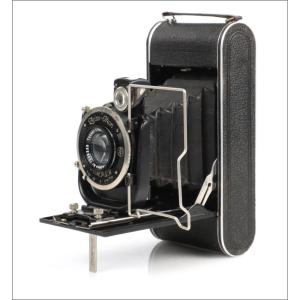
This elegant 6x9 folding plate camera, manufactured approximately around 1900, is an unidentified model that brings together all the characteristics of the first European and American cameras of the transition period between the nineteenth century and the beginning of portable photography in the twentieth century. Its overall appearance, its varnished wooden base, the textured black front, the pop-up frame-style viewfinder and its beautiful burgundy bellows place it in a period when the photographic industry was consolidating small-format cameras for domestic use while still maintaining handcrafted design and robust construction. The absence of a visible brand contributes to its appeal as a rare piece with an enigmatic character that is highly appreciated among collectors who enjoy lesser-documented models.
The burgundy bellows is one of the most striking elements. It preserves a magnificent appearance, with its original texture and without signs of openings or leaks, something especially notable in a camera more than a century old. Its deep color adds a beautiful contrast to the black body and the wooden base, creating a set that is visually very seductive. Regarding the mechanics, the shutter functions correctly, which adds value to the example and demonstrates that the camera has been carefully preserved over time. The front shows the diaphragm wheel with the classic values of the period, and the metal arms that support the bellows extend and fold smoothly, maintaining the structure firm and properly aligned.
Aesthetically, the overall condition is truly good. The exterior preserves its textured covering without significant areas of wear, showing only minimal marks typical of such an old piece. The wooden base looks warm and elegant, with no signs of moisture, warping or damage, something difficult to find in cameras from this period. The folding viewfinder is complete and allows one to check the framing in a historical and charming way. The interior of the camera, designed for 6×9 cm plates, is clean, with no rust or deformation, showing admirable preservation.
As a decorative piece it stands out for the vibrant tone of the bellows, the solidity of its body and the combination of wood, metal and leather, which evoke an era when photography was moving toward more compact formats without losing artisanal refinement. On a shelf, furniture or display case it brings a historical touch that is perfect for any lover of antique photography. And as a collector’s piece it is even more special, since unidentified models from the 1895–1905 period tend to attract collectors who look for distinctive and rare items that can add variety and uniqueness to a broader collection.
Measurements: 8.8 cm (3,46 in) x 11.5 cm (4,53 in).
History of folding plate cameras
Folding plate cameras emerged at the end of the nineteenth century as an intermediate solution between bulky studio cameras and the portable models that began to gain popularity in the early decades of the twentieth century. Their origins lie in advances in more compact optics, lighter bellows and mechanisms that allowed the camera to fold for easier transport. Unlike roll-film cameras that would later dominate the market, these early folding models worked with individual glass plates or, in some cases, flexible plates, which allowed the production of images of great quality and sharpness.
The combination of varnished wood, vulcanized leather and nickel-plated metal was common at the time and represented a balance between strength and elegance. Many of these cameras were made by small workshops or regional manufacturers, which explains the existence of unidentified models such as this one, which share common features but lack visible markings or precise documentation. During the period between 1895 and 1905 numerous experimental designs were produced, aimed at adapting the camera to the pocket without losing the optical quality of larger equipment.
This type of camera played a fundamental role in the transition toward personal photography. They allowed amateurs and travelers to carry relatively lightweight equipment, opening the door to new creative possibilities. Over time, these models were replaced by simpler roll-film cameras, but today they are appreciated as historical pieces that show the path toward modern photography. We are professional antique dealers. To see more photos of this item, Please click on this link:
https://www.antiguedades.es/en/antique-cameras/5371-antique-6x9-folding-plate-camera-good-condition-circa-1900.html
The burgundy bellows is one of the most striking elements. It preserves a magnificent appearance, with its original texture and without signs of openings or leaks, something especially notable in a camera more than a century old. Its deep color adds a beautiful contrast to the black body and the wooden base, creating a set that is visually very seductive. Regarding the mechanics, the shutter functions correctly, which adds value to the example and demonstrates that the camera has been carefully preserved over time. The front shows the diaphragm wheel with the classic values of the period, and the metal arms that support the bellows extend and fold smoothly, maintaining the structure firm and properly aligned.
Aesthetically, the overall condition is truly good. The exterior preserves its textured covering without significant areas of wear, showing only minimal marks typical of such an old piece. The wooden base looks warm and elegant, with no signs of moisture, warping or damage, something difficult to find in cameras from this period. The folding viewfinder is complete and allows one to check the framing in a historical and charming way. The interior of the camera, designed for 6×9 cm plates, is clean, with no rust or deformation, showing admirable preservation.
As a decorative piece it stands out for the vibrant tone of the bellows, the solidity of its body and the combination of wood, metal and leather, which evoke an era when photography was moving toward more compact formats without losing artisanal refinement. On a shelf, furniture or display case it brings a historical touch that is perfect for any lover of antique photography. And as a collector’s piece it is even more special, since unidentified models from the 1895–1905 period tend to attract collectors who look for distinctive and rare items that can add variety and uniqueness to a broader collection.
Measurements: 8.8 cm (3,46 in) x 11.5 cm (4,53 in).
History of folding plate cameras
Folding plate cameras emerged at the end of the nineteenth century as an intermediate solution between bulky studio cameras and the portable models that began to gain popularity in the early decades of the twentieth century. Their origins lie in advances in more compact optics, lighter bellows and mechanisms that allowed the camera to fold for easier transport. Unlike roll-film cameras that would later dominate the market, these early folding models worked with individual glass plates or, in some cases, flexible plates, which allowed the production of images of great quality and sharpness.
The combination of varnished wood, vulcanized leather and nickel-plated metal was common at the time and represented a balance between strength and elegance. Many of these cameras were made by small workshops or regional manufacturers, which explains the existence of unidentified models such as this one, which share common features but lack visible markings or precise documentation. During the period between 1895 and 1905 numerous experimental designs were produced, aimed at adapting the camera to the pocket without losing the optical quality of larger equipment.
This type of camera played a fundamental role in the transition toward personal photography. They allowed amateurs and travelers to carry relatively lightweight equipment, opening the door to new creative possibilities. Over time, these models were replaced by simpler roll-film cameras, but today they are appreciated as historical pieces that show the path toward modern photography. We are professional antique dealers. To see more photos of this item, Please click on this link:
https://www.antiguedades.es/en/antique-cameras/5371-antique-6x9-folding-plate-camera-good-condition-circa-1900.html
150 €
Period: 20th century
Style: Other Style
Condition: Good condition
Length: 8,8 cm (3,46 in)
Height: 11,5 cm (4,53 in).
Reference (ID): 1657480
Availability: In stock
Print