

France. Antique Sword Of The French Polytechnic School, Model 1872
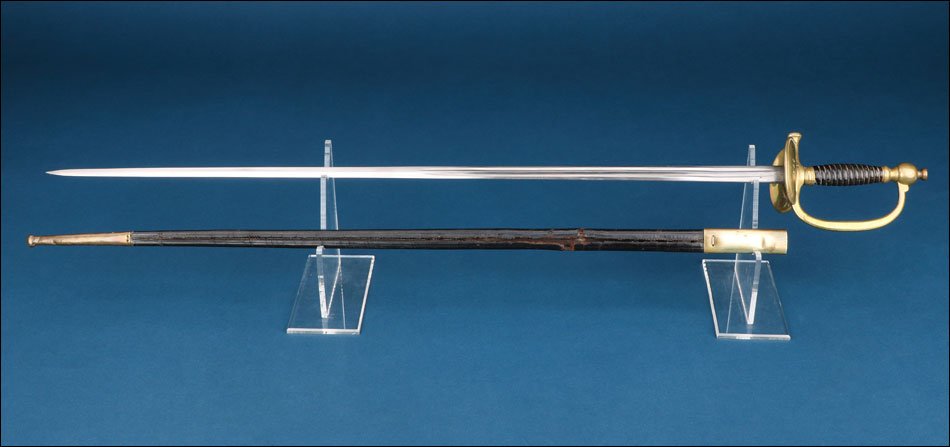
French regulation sword corresponding to the model adopted in 1872 for students of the French Polytechnic School, an institutional piece linked to the military and technical sphere of the French State. It is a sober and elegant model, conceived as a symbol of belonging to one of the most prestigious educational institutions of military character in the country, preserved with its original scabbard.
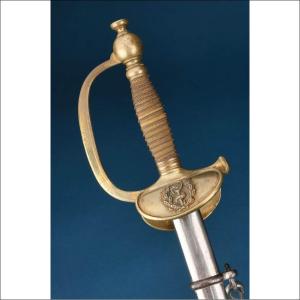
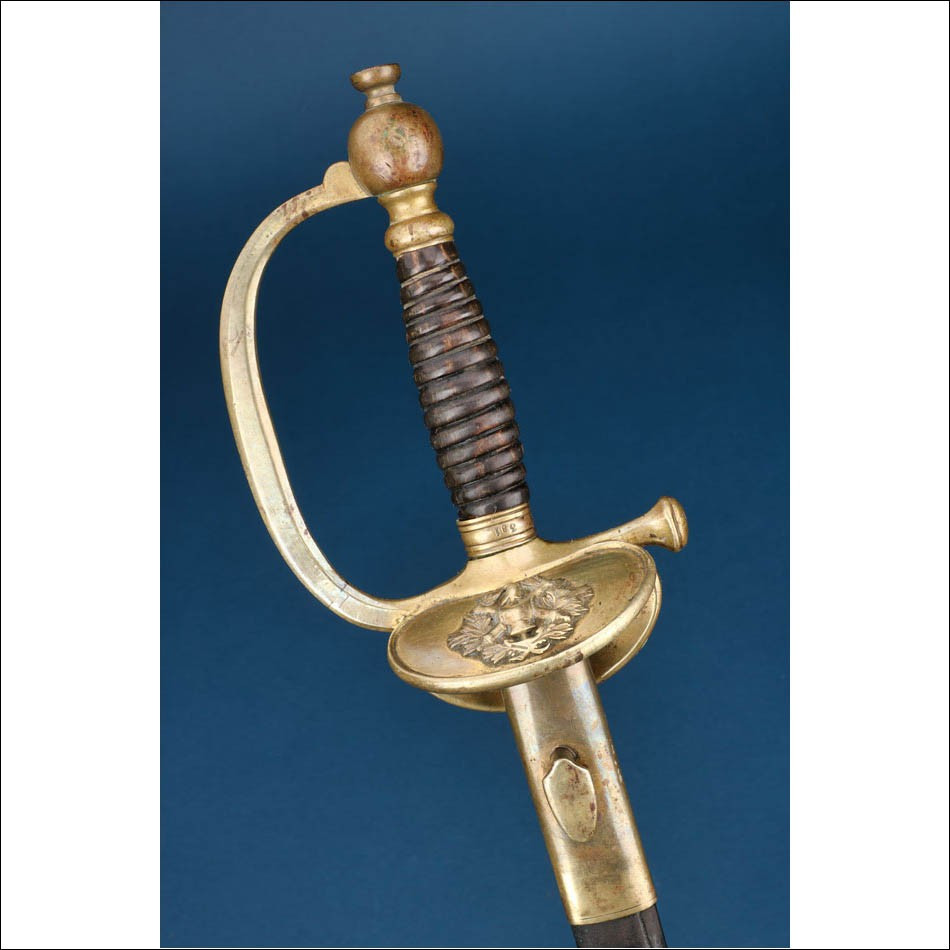
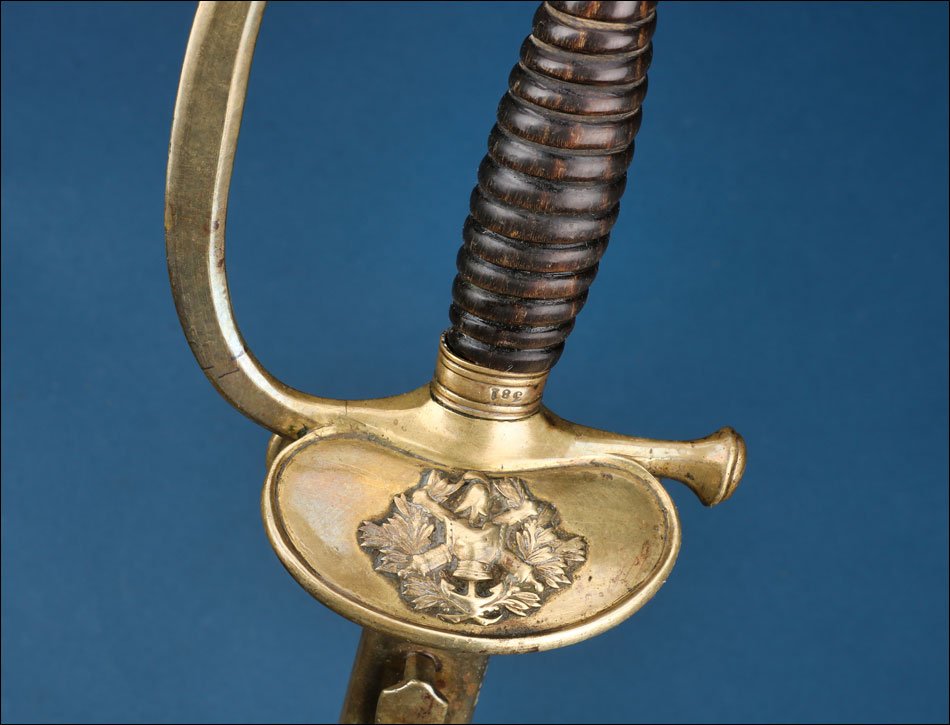
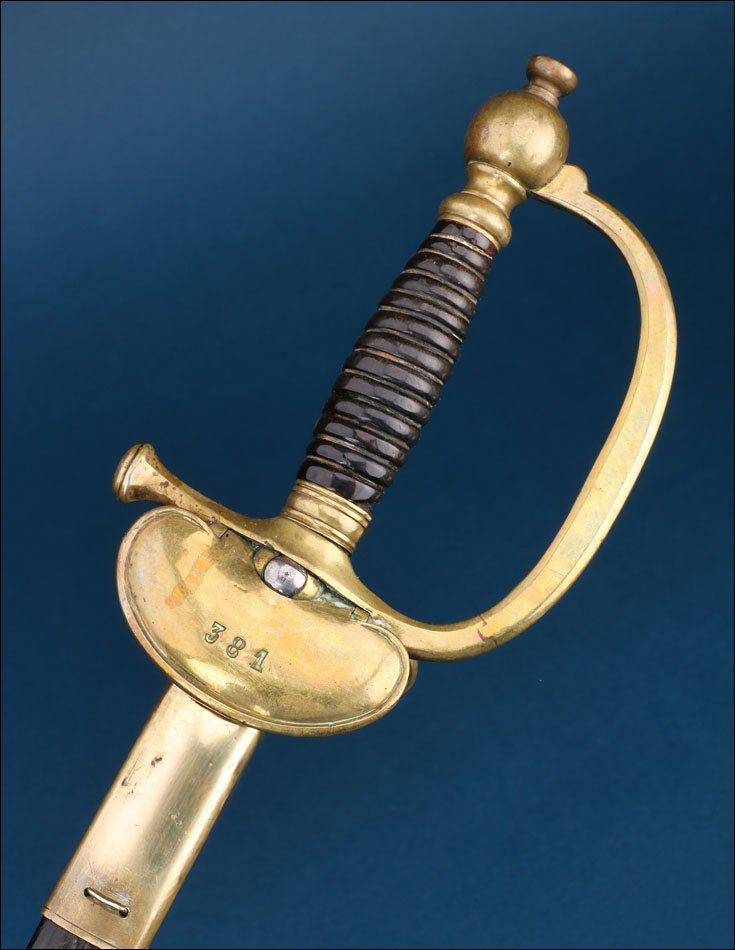
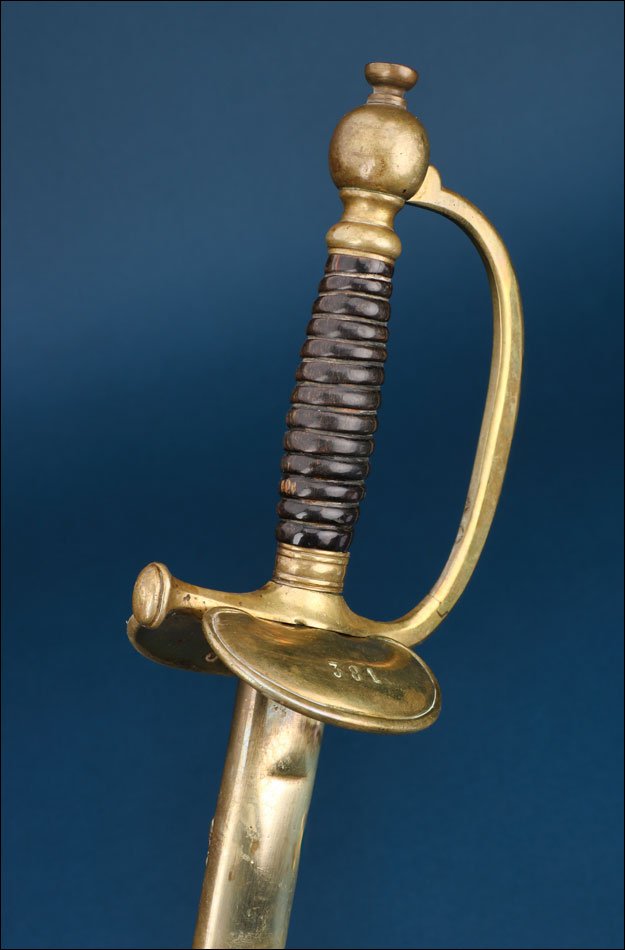
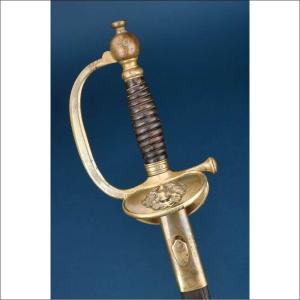
The hilt is made of gilt brass and has a solid and well balanced construction. The guard consists of a single curved branch joining the pommel to the front part of the guard, creating a harmonious silhouette. The pommel is globular, or olive shaped, with a small terminal button. The grip is made of dark wood carved with transverse fluting.
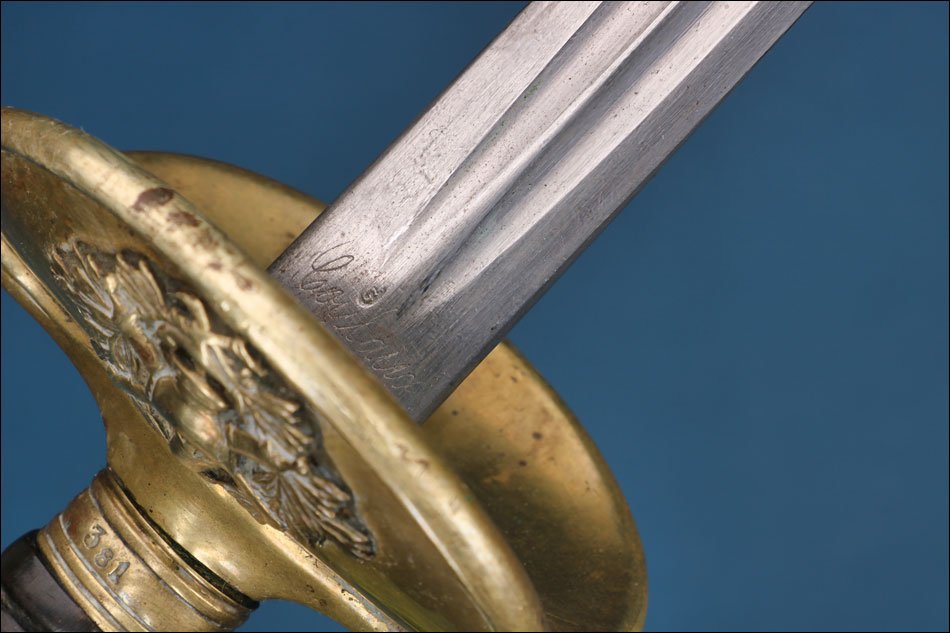
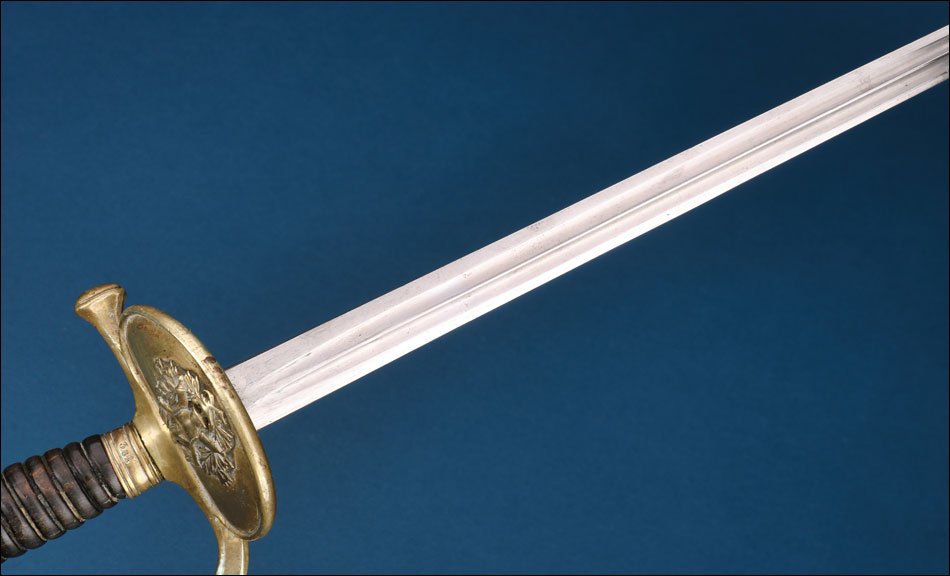
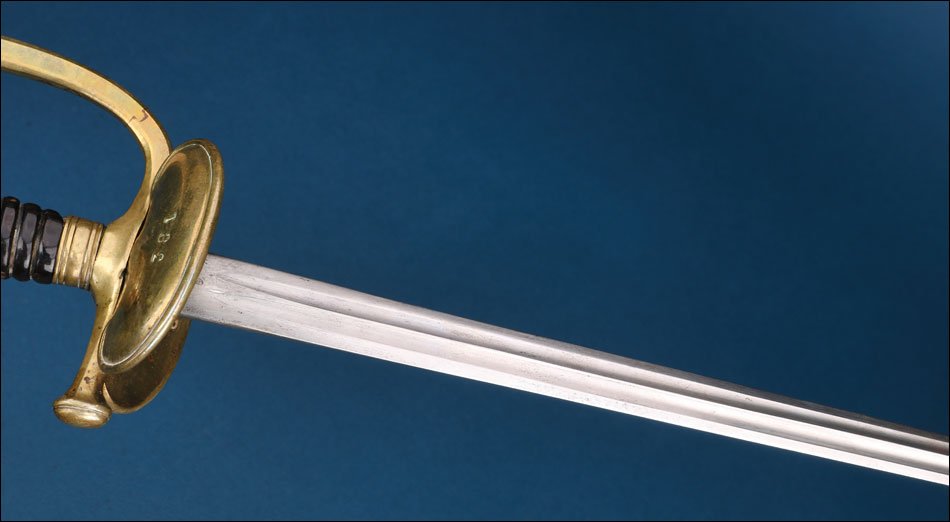
The shell guard, of oval profile, bears on the front the institutional emblem composed of a helmet, crossed cannons, and a naval anchor between laurel branches, an iconography representative of the technical and military character of the French Polytechnic School. On the reverse appears the engraved number “381”, as well as the regulation folding counterguard, a functional element intended to facilitate wearing the sword with uniform.
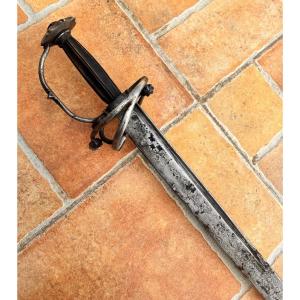
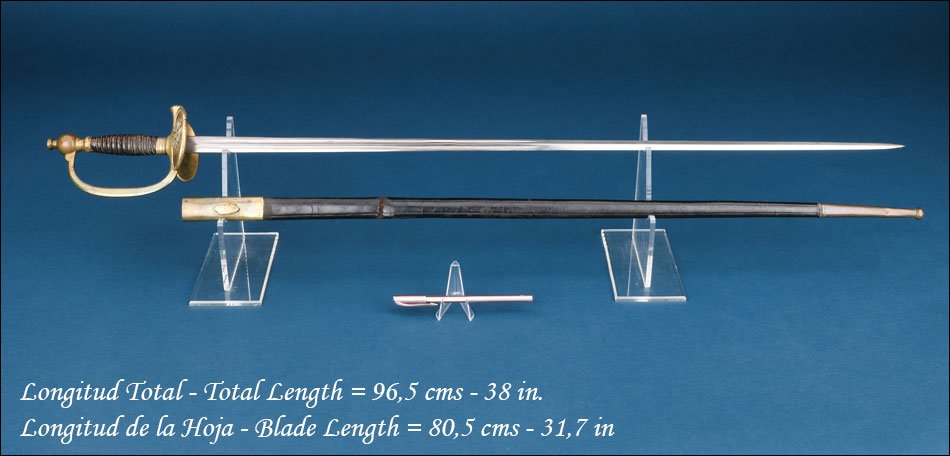
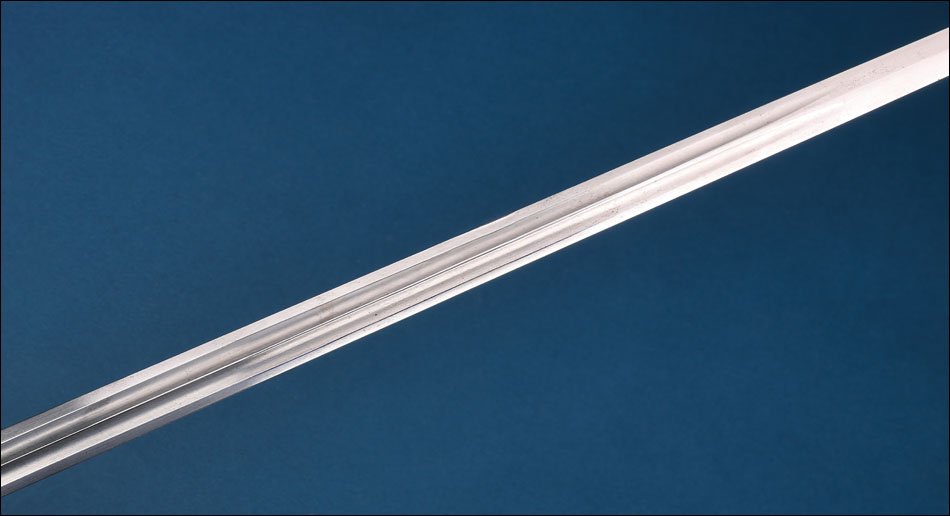
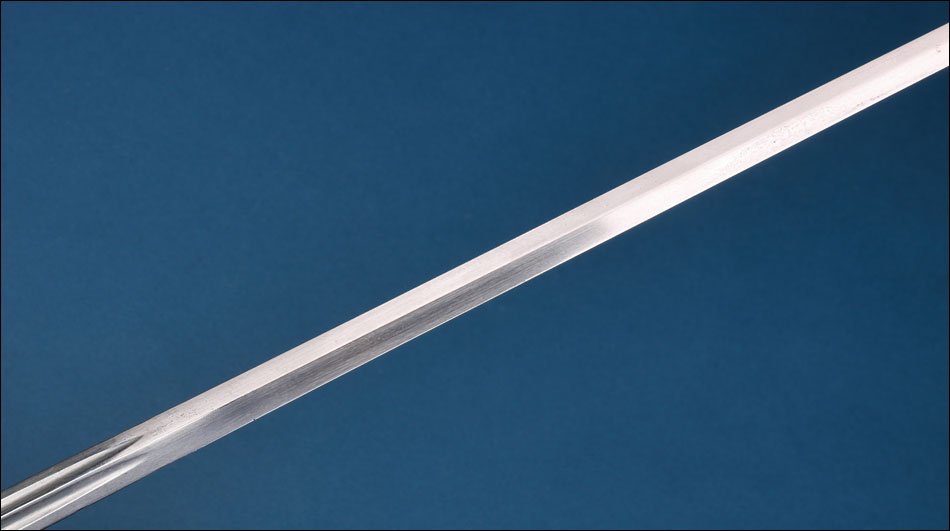
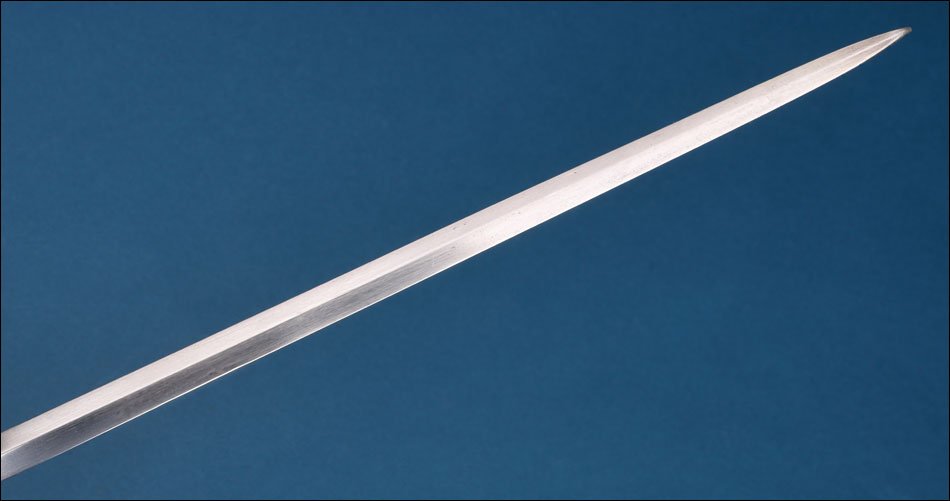
The blade is straight, narrow, and elongated, with a double longitudinal fuller running through much of its length. It corresponds to a light typology conceived mainly for institutional and representative use. It retains good overall alignment, with surface wear and normal signs of age. The point remains well defined. At the base appear markings corresponding to Coulaux & Cie and the Manufacture de Klingenthal, confirming its production within the French regulation sphere.
The sword retains its original black leather scabbard, with gilt brass mounts at the throat and at the lower end. The leather shows wear and a longitudinal opening on the back, a common phenomenon in this type of antique scabbard, while still maintaining its structural integrity and aesthetic coherence with the weapon.
An emblematic sword within the French military academic tradition. The presence of recognizable regulation markings increases its historical interest. The preservation of the complete set reinforces its appeal for specialised collectors.
Measurements: Total length 96.5 cm (38 in). Blade length 80.5 cm (31.7 in).
History of the French Polytechnic School
The French Polytechnic School was founded in 1794 as an institution intended to train the scientific and technical elites of the French State. From its origins it maintained a close relationship with the army and with the great engineering corps, which gave it a singular character between civil academy and military establishment. During the nineteenth century, its students wore uniform and took part in a regulated discipline reflecting the union of science, public service, and military tradition.
The model of this sword, adopted in 1872, belongs to that institutional context. The iconography on the shell guard, with elements such as the helmet, cannons, and anchor, refers to the various technical and military branches into which graduates could enter.
Manufactured by firms such as Coulaux in Klingenthal, these swords represent the high level reached by the French arms industry in the nineteenth century. Their use continued for decades, accompanying generations of engineers and officers trained at the school. Today they stand as material testimony to French educational and military history.
The hilt is made of gilt brass and has a solid and well balanced construction. The guard consists of a single curved branch joining the pommel to the front part of the guard, creating a harmonious silhouette. The pommel is globular, or olive shaped, with a small terminal button. The grip is made of dark wood carved with transverse fluting.
The shell guard, of oval profile, bears on the front the institutional emblem composed of a helmet, crossed cannons, and a naval anchor between laurel branches, an iconography representative of the technical and military character of the French Polytechnic School. On the reverse appears the engraved number “381”, as well as the regulation folding counterguard, a functional element intended to facilitate wearing the sword with uniform.
The blade is straight, narrow, and elongated, with a double longitudinal fuller running through much of its length. It corresponds to a light typology conceived mainly for institutional and representative use. It retains good overall alignment, with surface wear and normal signs of age. The point remains well defined. At the base appear markings corresponding to Coulaux & Cie and the Manufacture de Klingenthal, confirming its production within the French regulation sphere.
The sword retains its original black leather scabbard, with gilt brass mounts at the throat and at the lower end. The leather shows wear and a longitudinal opening on the back, a common phenomenon in this type of antique scabbard, while still maintaining its structural integrity and aesthetic coherence with the weapon.
An emblematic sword within the French military academic tradition. The presence of recognizable regulation markings increases its historical interest. The preservation of the complete set reinforces its appeal for specialised collectors.
Measurements: Total length 96.5 cm (38 in). Blade length 80.5 cm (31.7 in).
History of the French Polytechnic School
The French Polytechnic School was founded in 1794 as an institution intended to train the scientific and technical elites of the French State. From its origins it maintained a close relationship with the army and with the great engineering corps, which gave it a singular character between civil academy and military establishment. During the nineteenth century, its students wore uniform and took part in a regulated discipline reflecting the union of science, public service, and military tradition.
The model of this sword, adopted in 1872, belongs to that institutional context. The iconography on the shell guard, with elements such as the helmet, cannons, and anchor, refers to the various technical and military branches into which graduates could enter.
Manufactured by firms such as Coulaux in Klingenthal, these swords represent the high level reached by the French arms industry in the nineteenth century. Their use continued for decades, accompanying generations of engineers and officers trained at the school. Today they stand as material testimony to French educational and military history.
325 €
Period: 19th century
Style: Other Style
Condition: Good condition
Length: 96,5 cm (38 in)
Reference (ID): 1738049
Availability: In stock
Print