

Spain Or Germany. Antique Light Cavalry Sword. C. 1800 To 1825
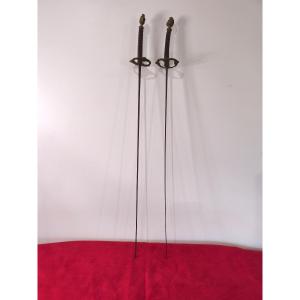
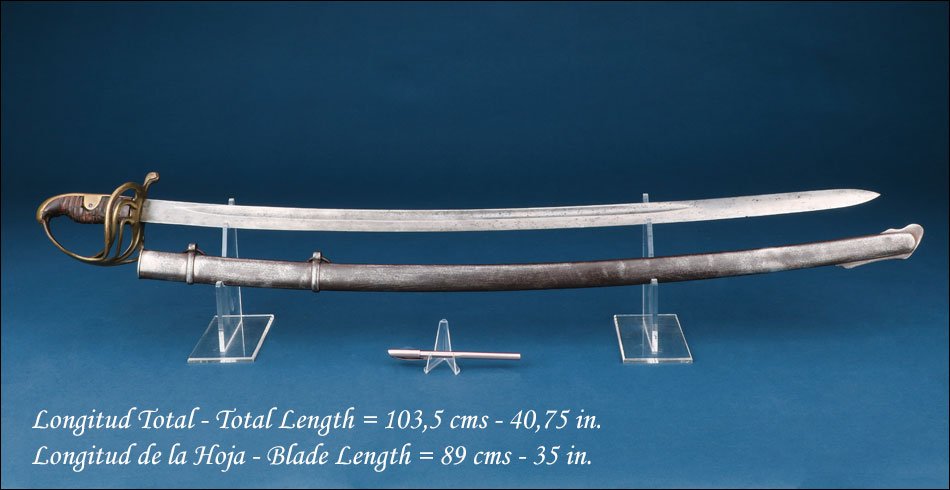
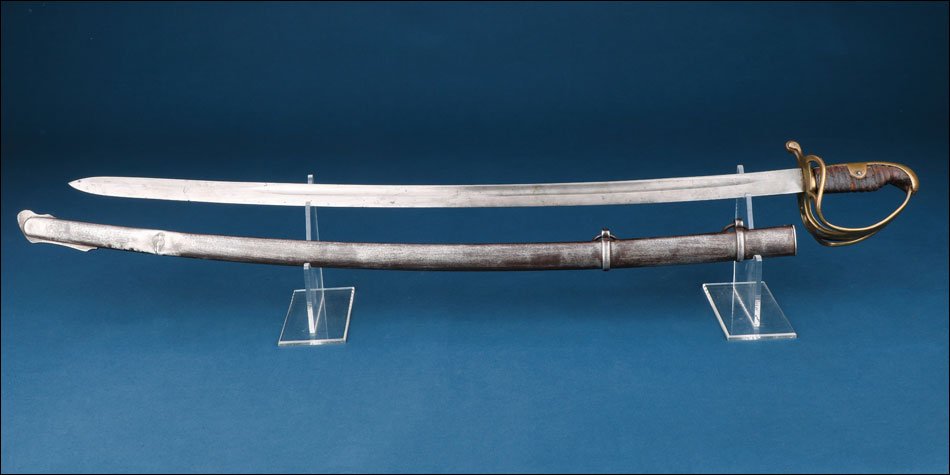
Antique European light cavalry sword from the first half of the 19th century, an authentic military weapon clearly related in typology to the Spanish regulation models of 1815 and 1822. Its configuration follows the classic pattern of sabres intended for light cavalry in the early 19th century, with a curved single edged blade and an open hilt designed to protect the hand without adding excessive weight.
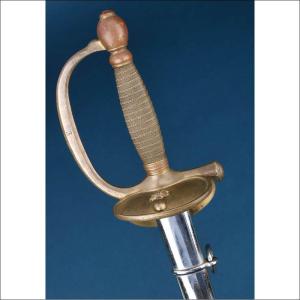
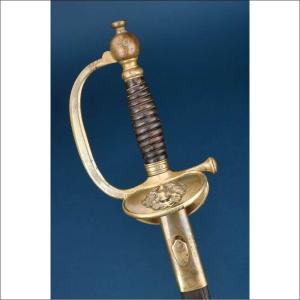
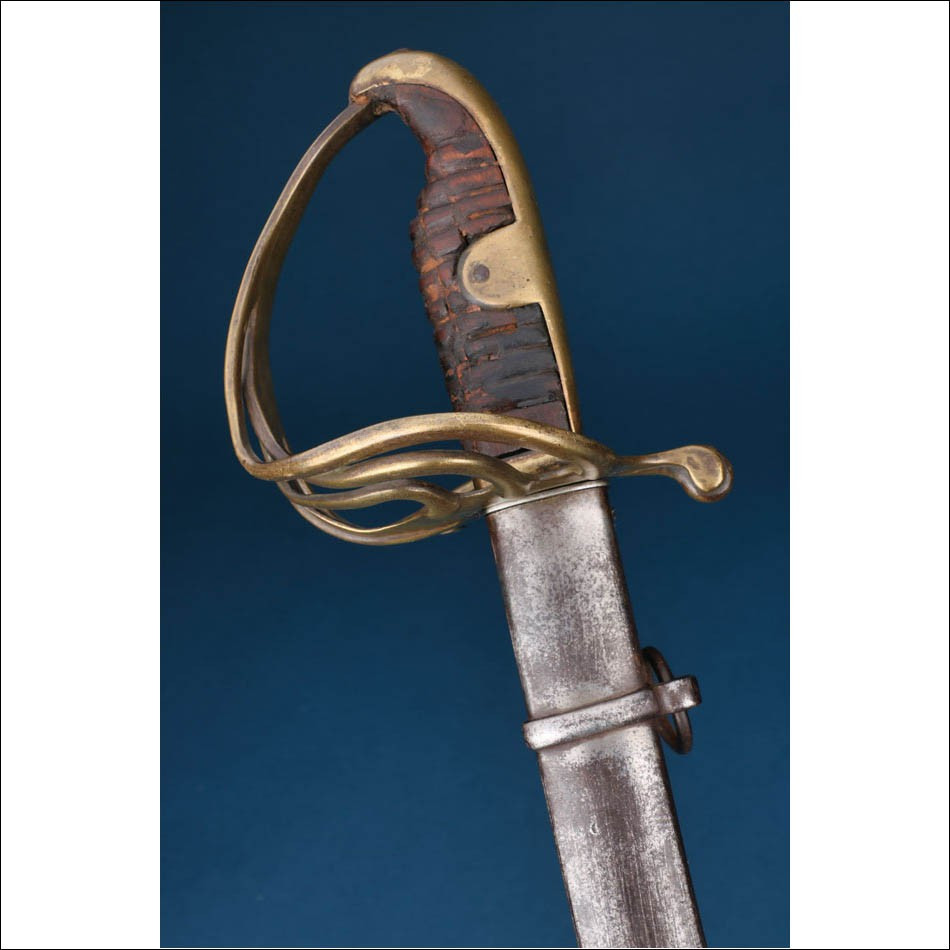
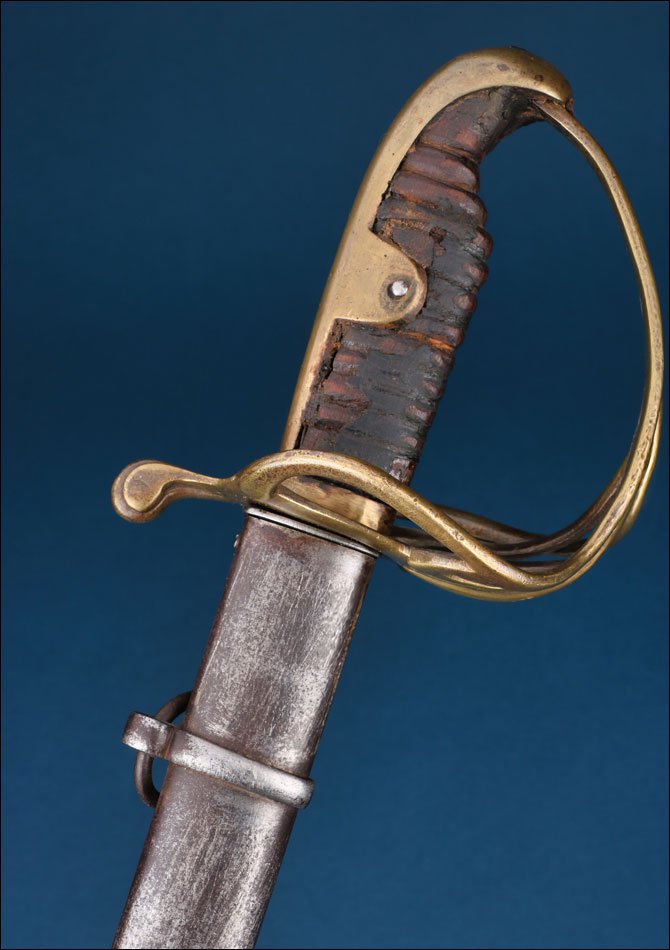
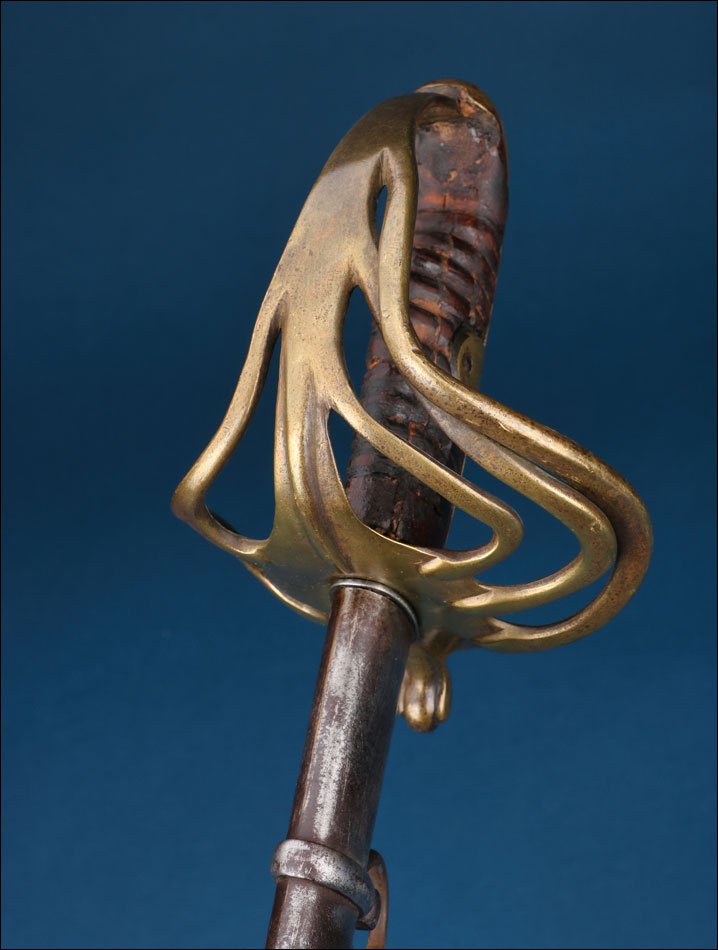
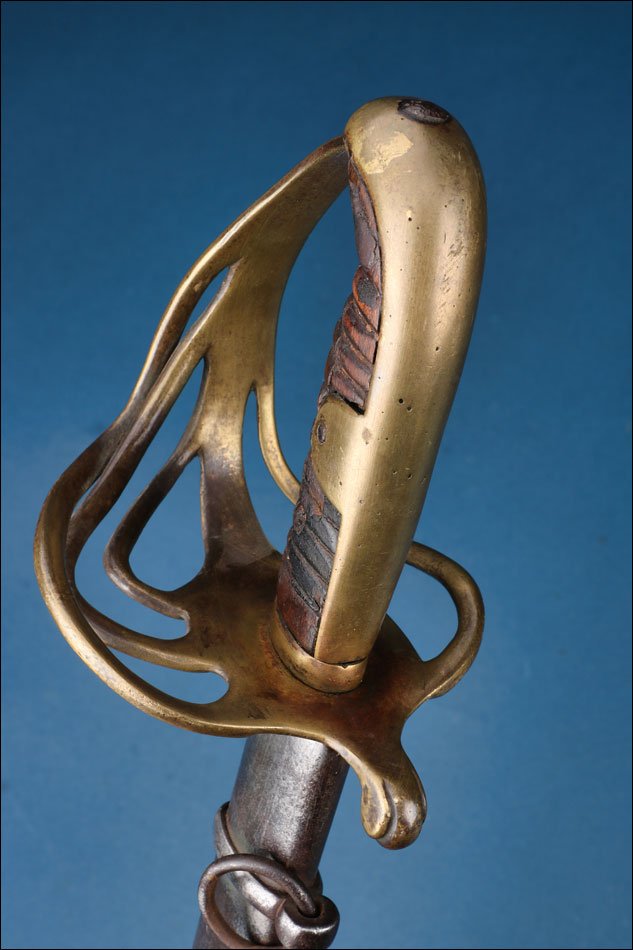
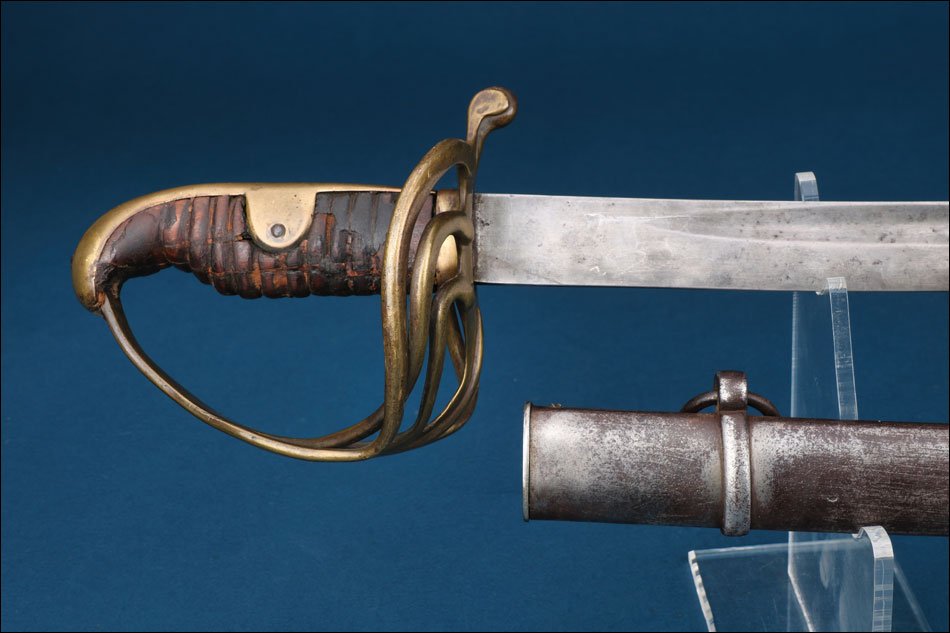
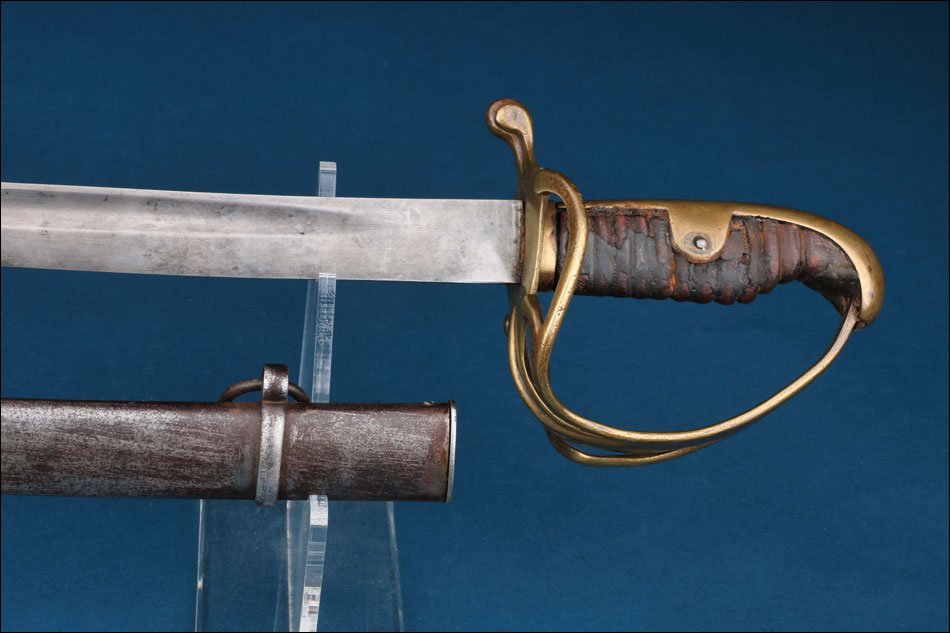
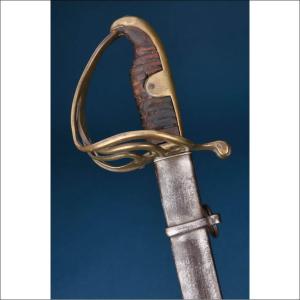
The hilt is made of brass and features a knuckle guard with three curved branches, an extended pommel cap, and a wooden grip covered in leather with longitudinal grooves. This assembly shows a morphology very close to the Spanish light cavalry tradition, although certain construction details suggest possible German manufacture, or at least a Germanic influence. The shape of the guard, the continuity of the pommel cap, and the presence of small brass tongues on the grip are reminiscent of German made models from the period.
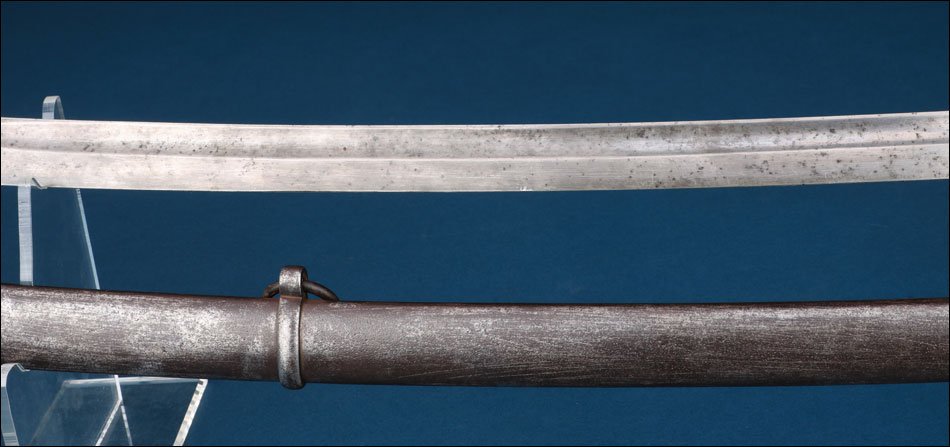
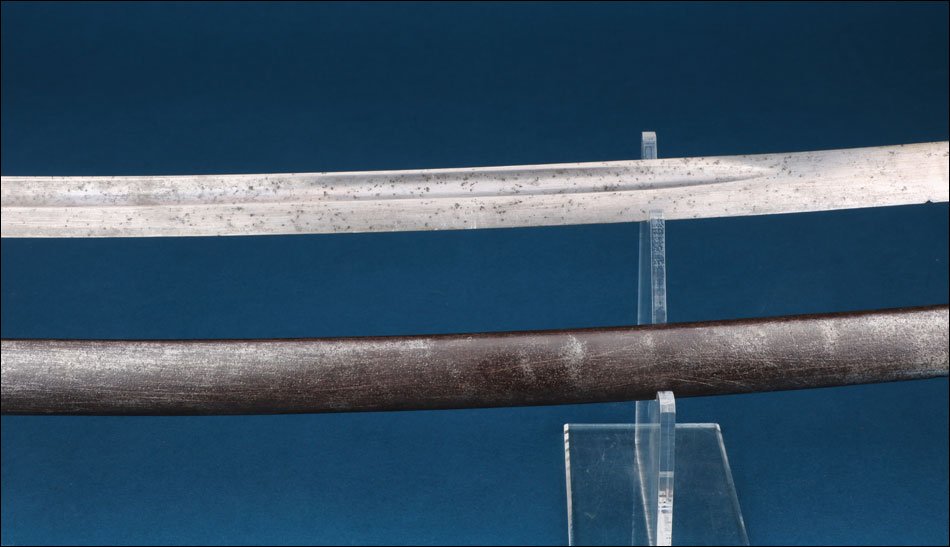
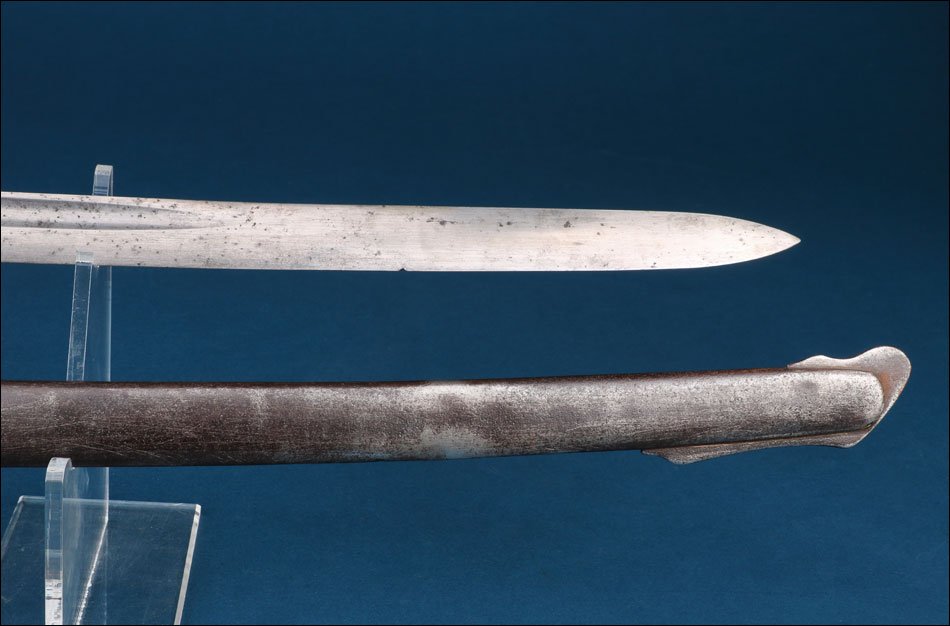
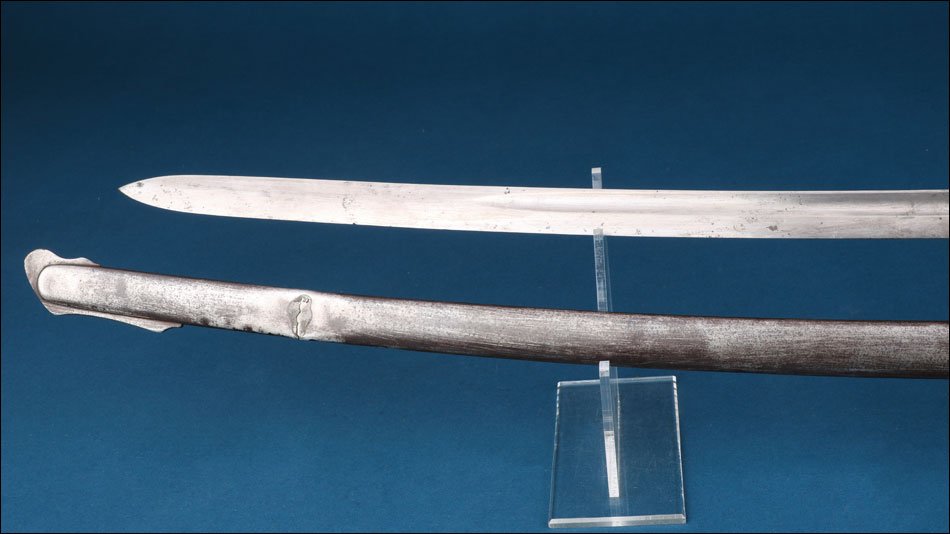
The blade is long, curved, and well proportioned, suitable for mounted use. It shows a consistent patina, surface wear, and marks caused by the passage of time, with no visible markings in the documented areas. These features are common in authentic military weapons that saw real use and are fully consistent with its period.
It retains its original metal scabbard, also curved, with two suspension bands and rings. The scabbard shows age related wear consistent with the antiquity of the weapon, while maintaining a clear formal coherence with the sabre. It should be noted that one of the guard branches is bent and that the scabbard has a repair, both visible in the photographs, and these details may suggest that it was actually used in combat, which gives it a certain aura of mystery.
The overall condition is good within the nature of a 19th century military weapon. The wear to the leather grip, the patina of the metal, and the signs of use reinforce its authenticity. This is a representative sabre of the evolution of European light cavalry arms during and after the Napoleonic period, interesting for its typology and for the possible combination of Spanish and Germanic influences.
A perfect piece for a specialised collection of militaria or 19th century European edged weapons.
Measurements: Total length 103.5 cm (40.75 in), blade length 89 cm (35 in).
History of the Light Cavalry Sabre
At the beginning of the 19th century, light cavalry played an essential role in European armies. These units specialised in reconnaissance, pursuit of the enemy, harassment, and protection of the flanks. Unlike heavy cavalry, whose main role was the frontal charge against closed formations, light cavalry had to act with speed, autonomy, and great manoeuvrability.
The sabre was the characteristic weapon of these troops. Its curved blade allowed effective cutting blows from horseback without interrupting the horse’s movement, favouring continuity of attack. This shape reduced the risk of the weapon becoming trapped after the strike and made quick, repeated actions easier, which were essential in mobile combat or during pursuit.
Around circa 1820, European light cavalry sabres evolved towards more functional and better balanced models. Open hilts offered sufficient protection without adding unnecessary weight, while leather covered grips ensured a firm hold in combat conditions. The experience gained during the Revolutionary and Napoleonic wars encouraged the development of weapons that were resistant, effective, and adapted to prolonged use in campaign.
The similarity between models from different countries reflects the circulation of techniques, designs, and production methods among European arms making centres. Sabres from this period are today a direct testimony to the tactical transformation of modern warfare and to the importance of mobility on the battlefield.
The hilt is made of brass and features a knuckle guard with three curved branches, an extended pommel cap, and a wooden grip covered in leather with longitudinal grooves. This assembly shows a morphology very close to the Spanish light cavalry tradition, although certain construction details suggest possible German manufacture, or at least a Germanic influence. The shape of the guard, the continuity of the pommel cap, and the presence of small brass tongues on the grip are reminiscent of German made models from the period.
The blade is long, curved, and well proportioned, suitable for mounted use. It shows a consistent patina, surface wear, and marks caused by the passage of time, with no visible markings in the documented areas. These features are common in authentic military weapons that saw real use and are fully consistent with its period.
It retains its original metal scabbard, also curved, with two suspension bands and rings. The scabbard shows age related wear consistent with the antiquity of the weapon, while maintaining a clear formal coherence with the sabre. It should be noted that one of the guard branches is bent and that the scabbard has a repair, both visible in the photographs, and these details may suggest that it was actually used in combat, which gives it a certain aura of mystery.
The overall condition is good within the nature of a 19th century military weapon. The wear to the leather grip, the patina of the metal, and the signs of use reinforce its authenticity. This is a representative sabre of the evolution of European light cavalry arms during and after the Napoleonic period, interesting for its typology and for the possible combination of Spanish and Germanic influences.
A perfect piece for a specialised collection of militaria or 19th century European edged weapons.
Measurements: Total length 103.5 cm (40.75 in), blade length 89 cm (35 in).
History of the Light Cavalry Sabre
At the beginning of the 19th century, light cavalry played an essential role in European armies. These units specialised in reconnaissance, pursuit of the enemy, harassment, and protection of the flanks. Unlike heavy cavalry, whose main role was the frontal charge against closed formations, light cavalry had to act with speed, autonomy, and great manoeuvrability.
The sabre was the characteristic weapon of these troops. Its curved blade allowed effective cutting blows from horseback without interrupting the horse’s movement, favouring continuity of attack. This shape reduced the risk of the weapon becoming trapped after the strike and made quick, repeated actions easier, which were essential in mobile combat or during pursuit.
Around circa 1820, European light cavalry sabres evolved towards more functional and better balanced models. Open hilts offered sufficient protection without adding unnecessary weight, while leather covered grips ensured a firm hold in combat conditions. The experience gained during the Revolutionary and Napoleonic wars encouraged the development of weapons that were resistant, effective, and adapted to prolonged use in campaign.
The similarity between models from different countries reflects the circulation of techniques, designs, and production methods among European arms making centres. Sabres from this period are today a direct testimony to the tactical transformation of modern warfare and to the importance of mobility on the battlefield.
650 €
Period: 19th century
Style: Other Style
Condition: Good condition
Length: 103,5 cm (40,75 in)
Reference (ID): 1738028
Availability: In stock
Print