THIS OBJECT WAS SOLD
Miroir Alsacien » Attribué Aux Premières Productions D’andré Mailfert, Orléans, Vers 1910.
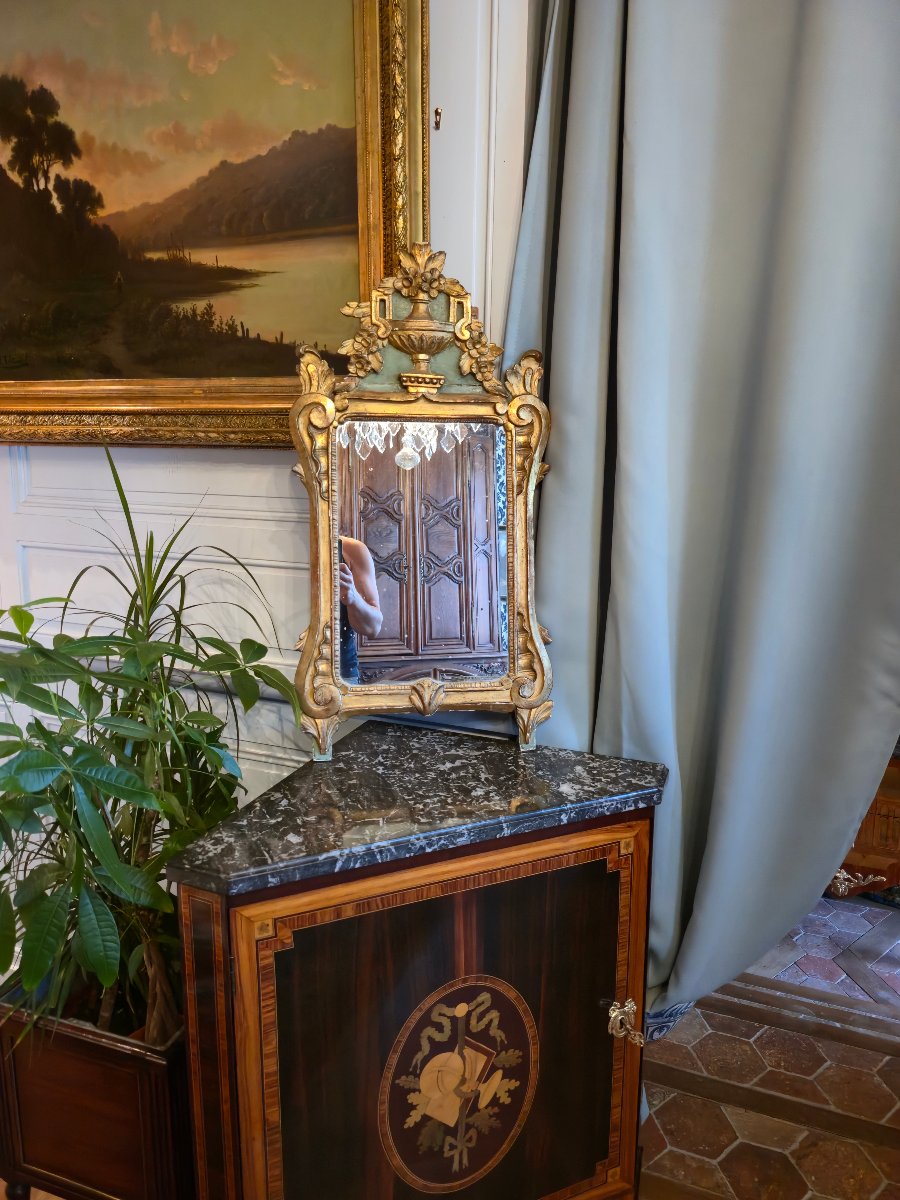
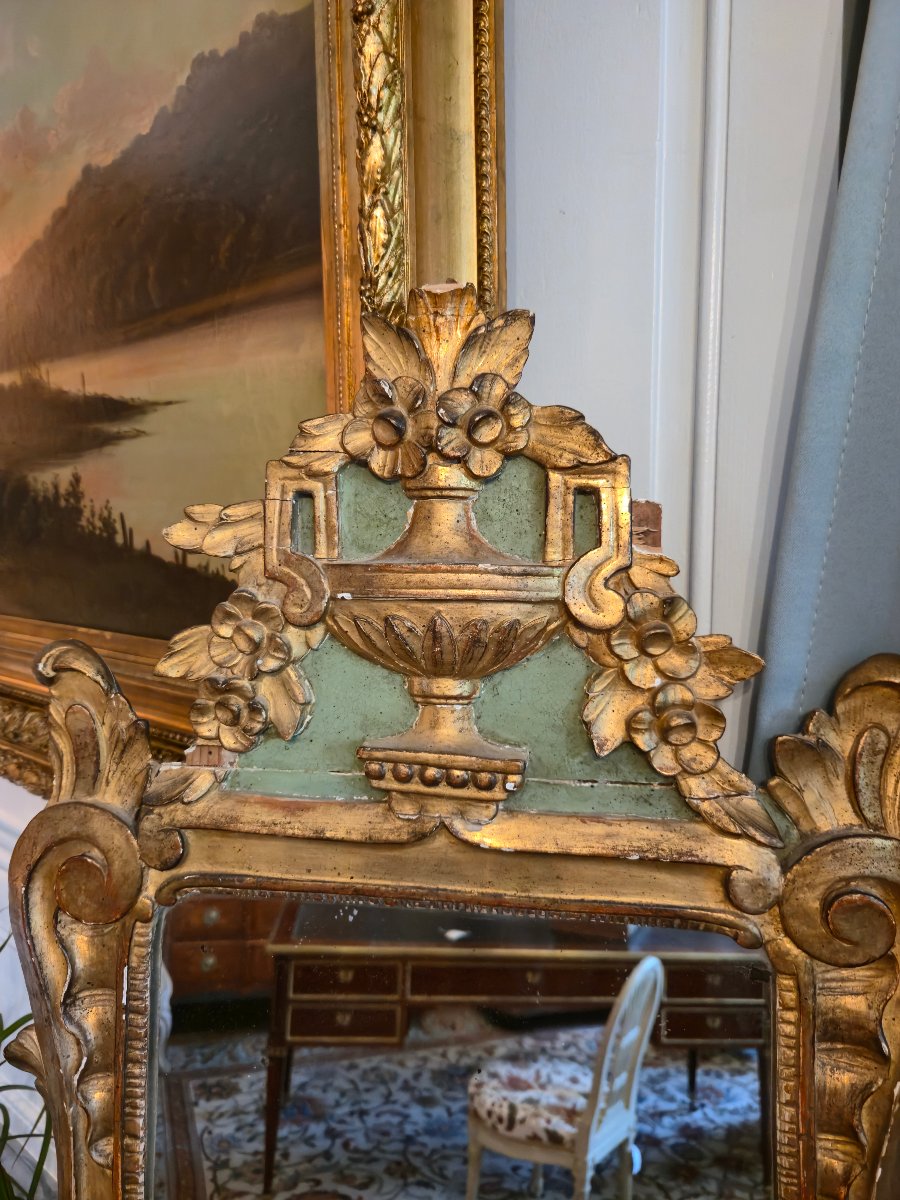


This carved, painted, and gilded wooden mirror offers a fascinating glimpse into the early work of André Mailfert (1884–1940), a figure who is now considered essential to the study of furniture and decorative objects produced in Orléans in the early 20th century.
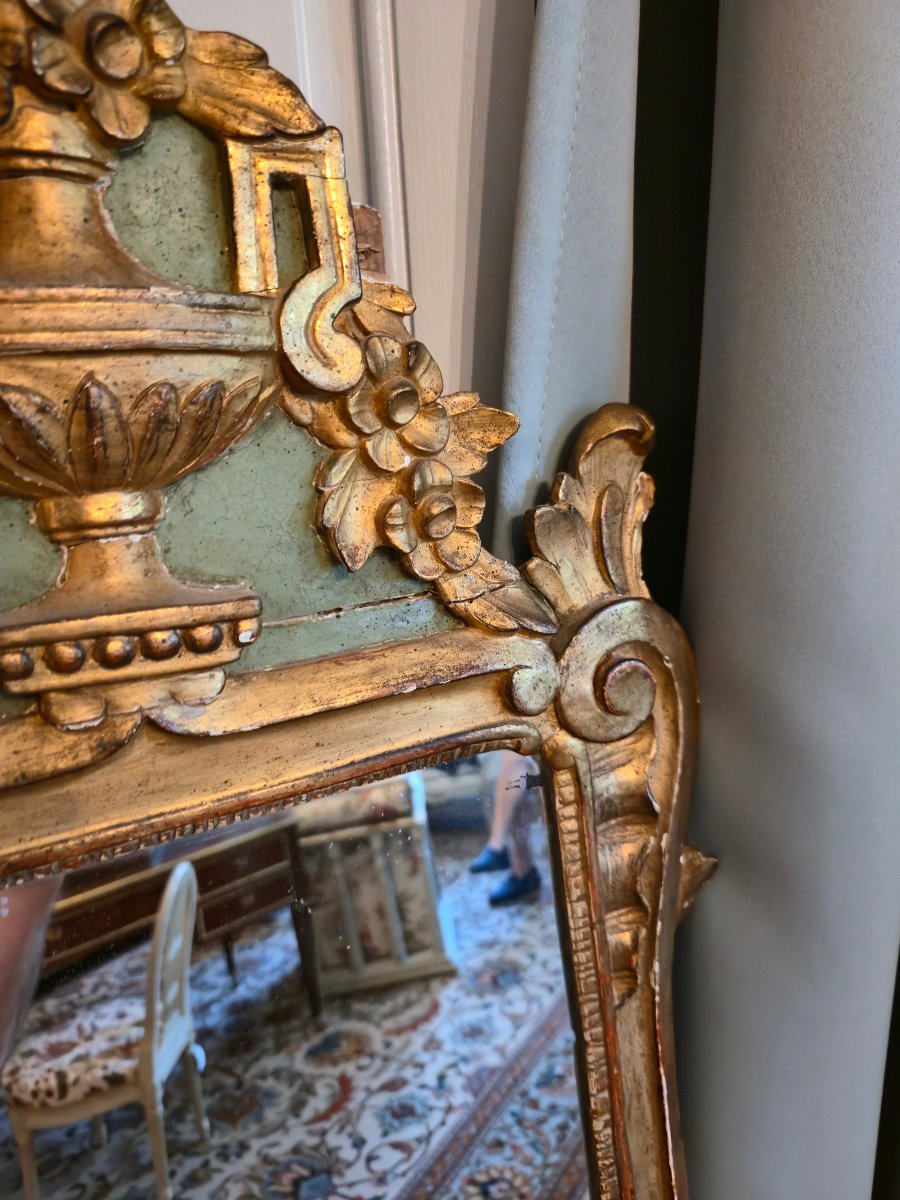
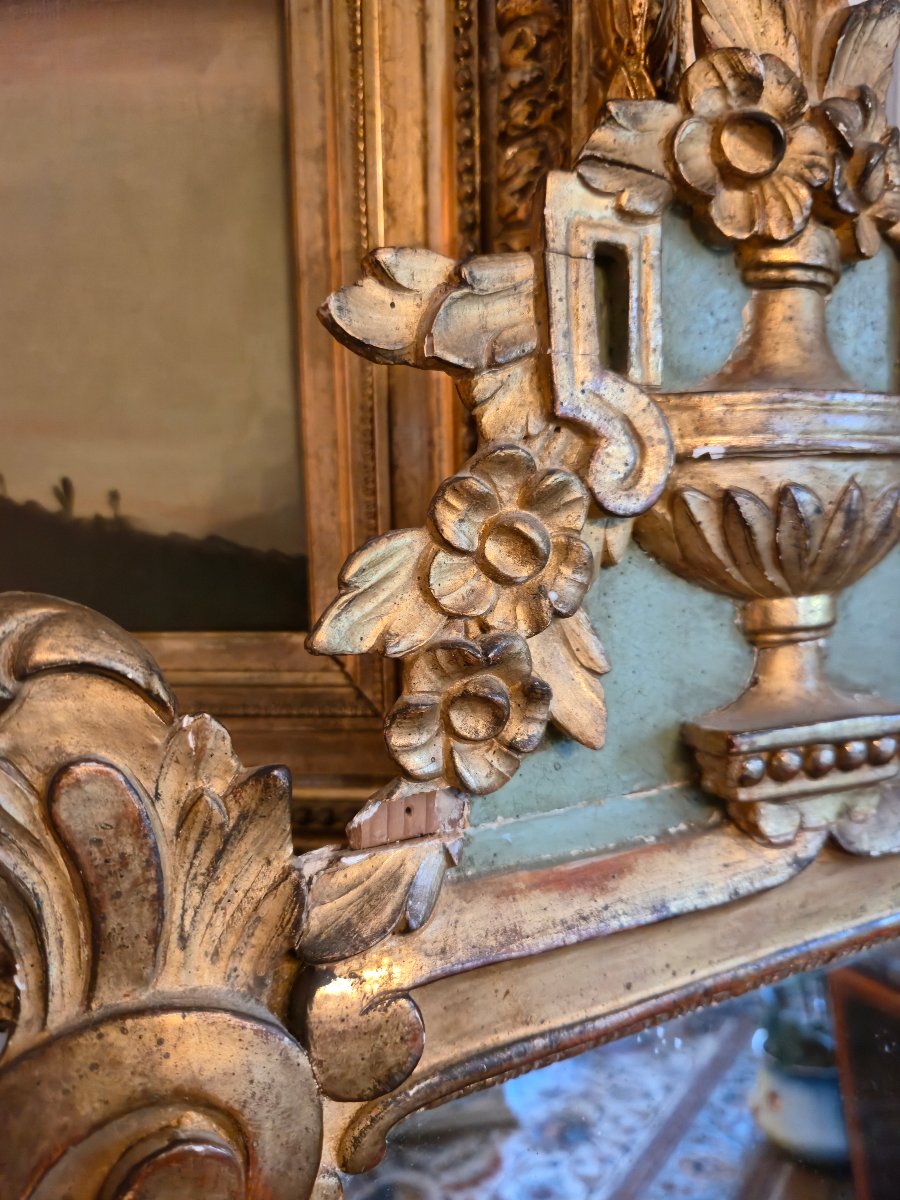
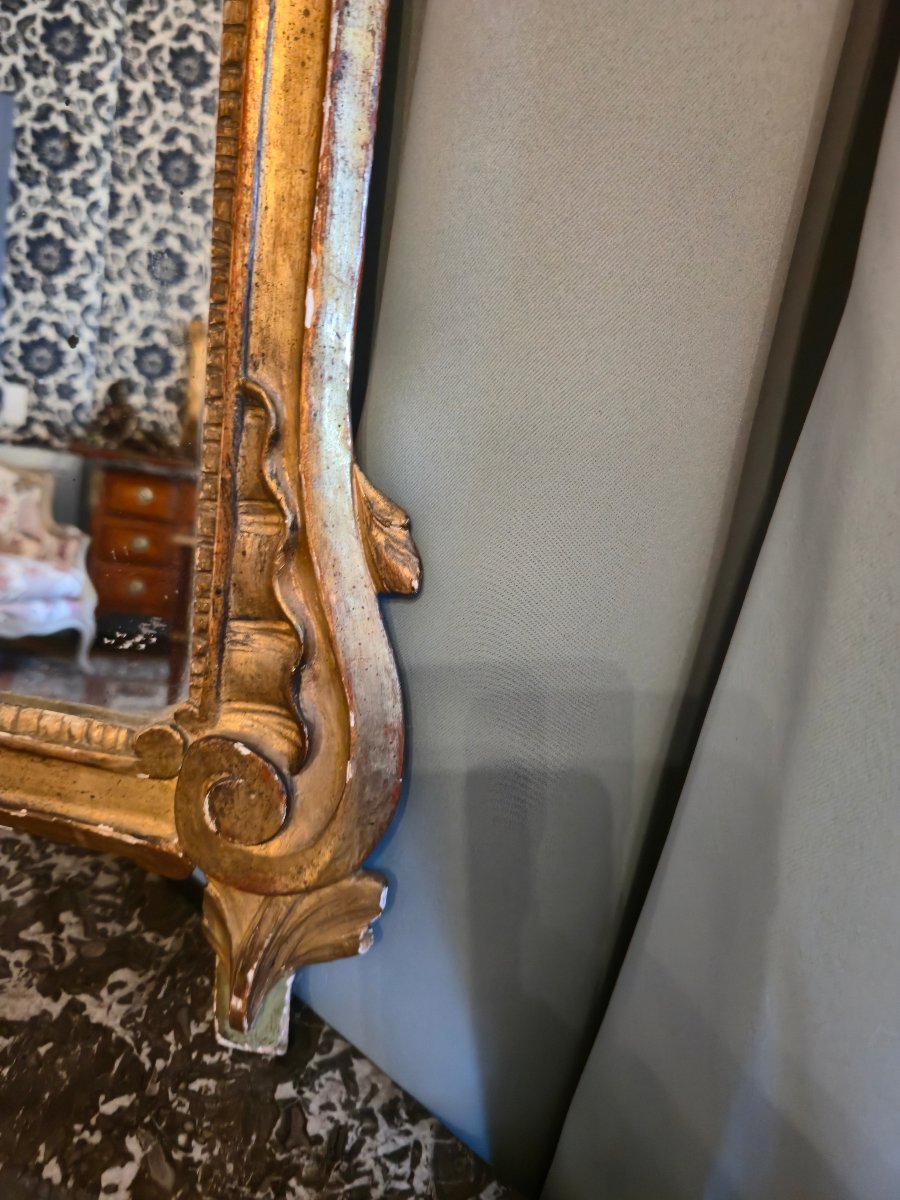
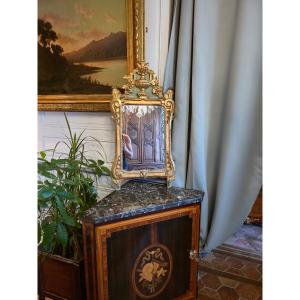
Featuring an elegant silhouette inspired by the Rocaille style, it consists of a frame with sculpted scrollwork resting on leaf-decorated legs and topped by a covered vase surrounded by flowers and foliage. The piece retains its sea-green polychromy and patinated gilding, a treatment intended to evoke the appearance of regional productions from the 18th and 19th centuries.
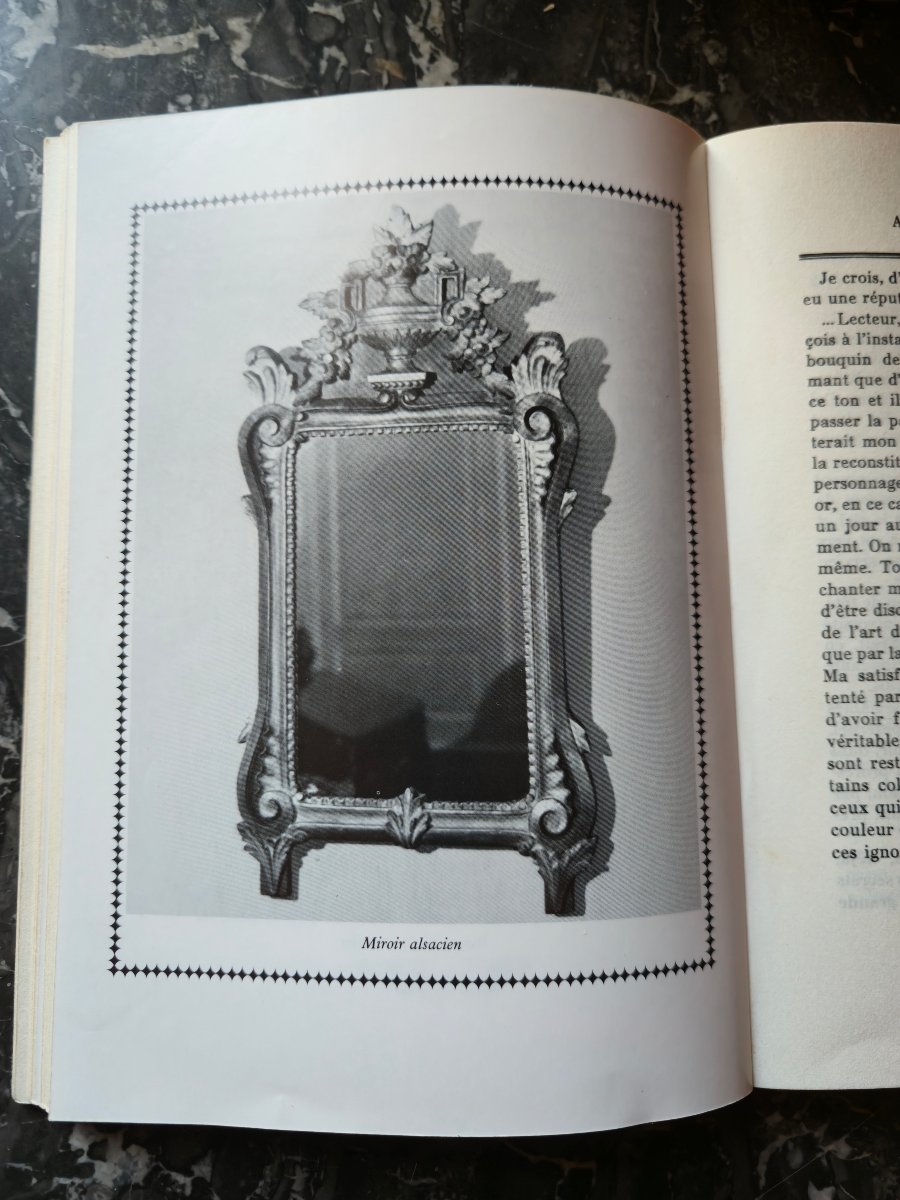
The major interest of this piece lies in its identification. This model is in fact reproduced in André Mailfert’s autobiographical work, *Au Pays des Antiquaires – Confidences d’un « maquilleur » professionnel*, under the name “Alsatian Mirror.” This illustration allows us to link our example with a high degree of certainty to the pieces produced in the Orléans workshops during the early years of Mailfert’s career.
In his book, the author discusses the creation of his first models intended for antique dealers, as well as the processes used in his workshops: the use of old wood, the reuse of materials, hand carving, gilding, and elaborate patinas designed to recreate the appearance and character of older objects. He also discusses the production of mirrors, trumeaux, barometers, and display furniture that contributed to the growth of his business.
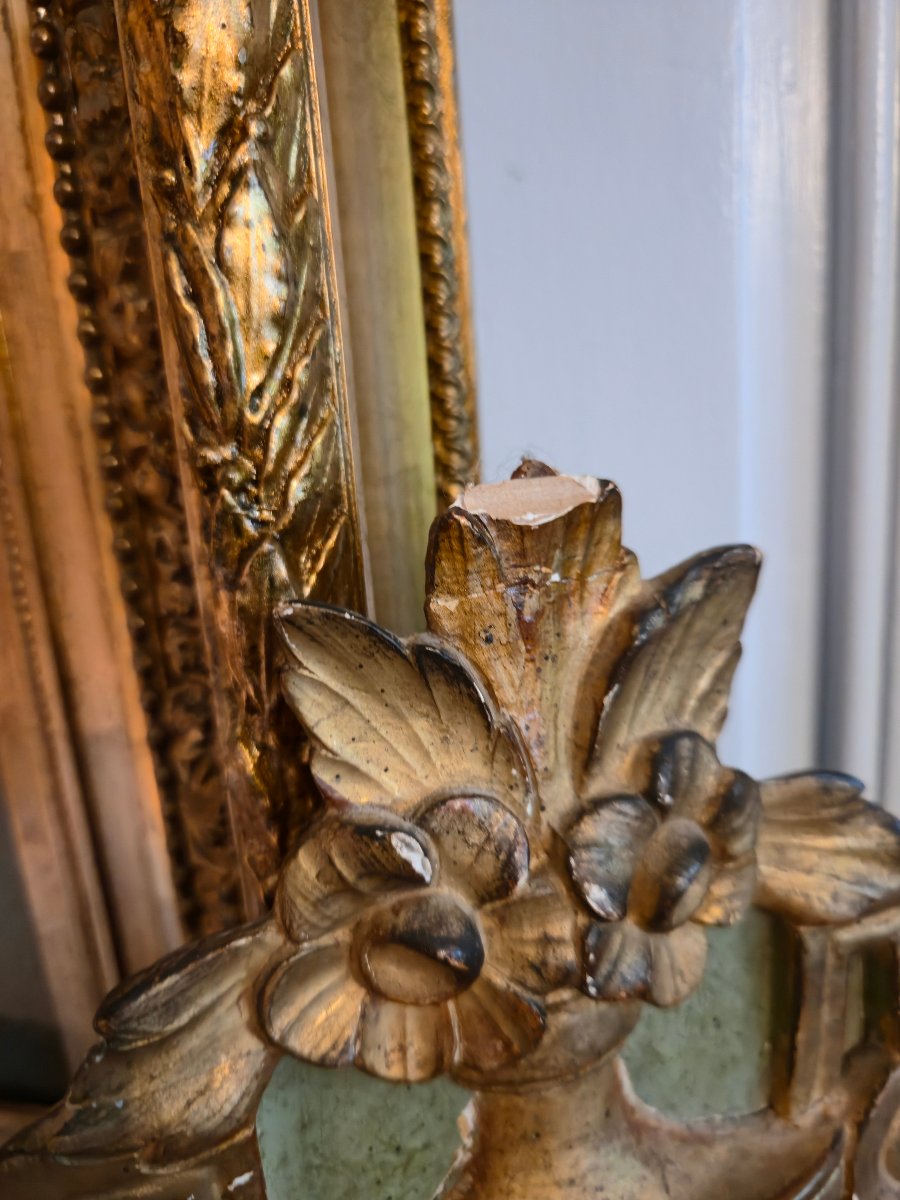
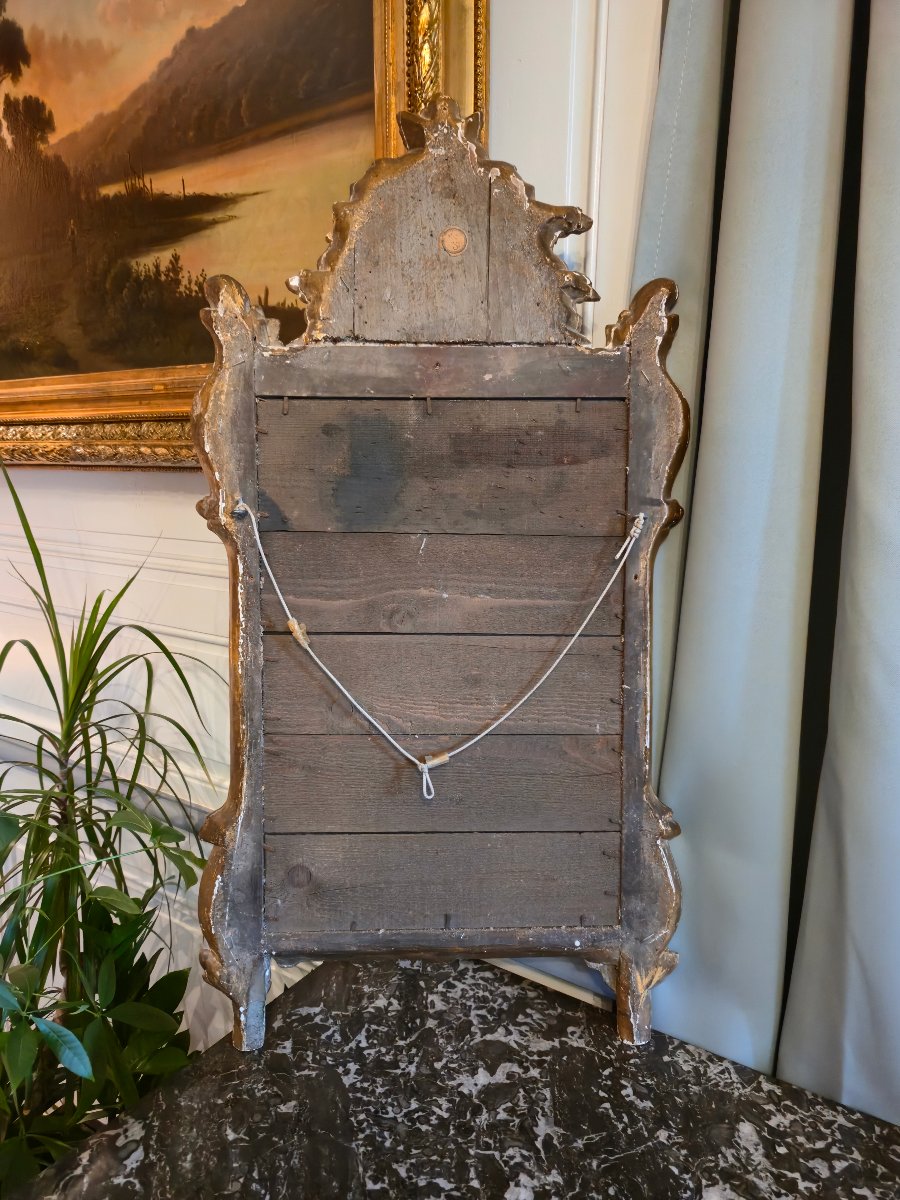
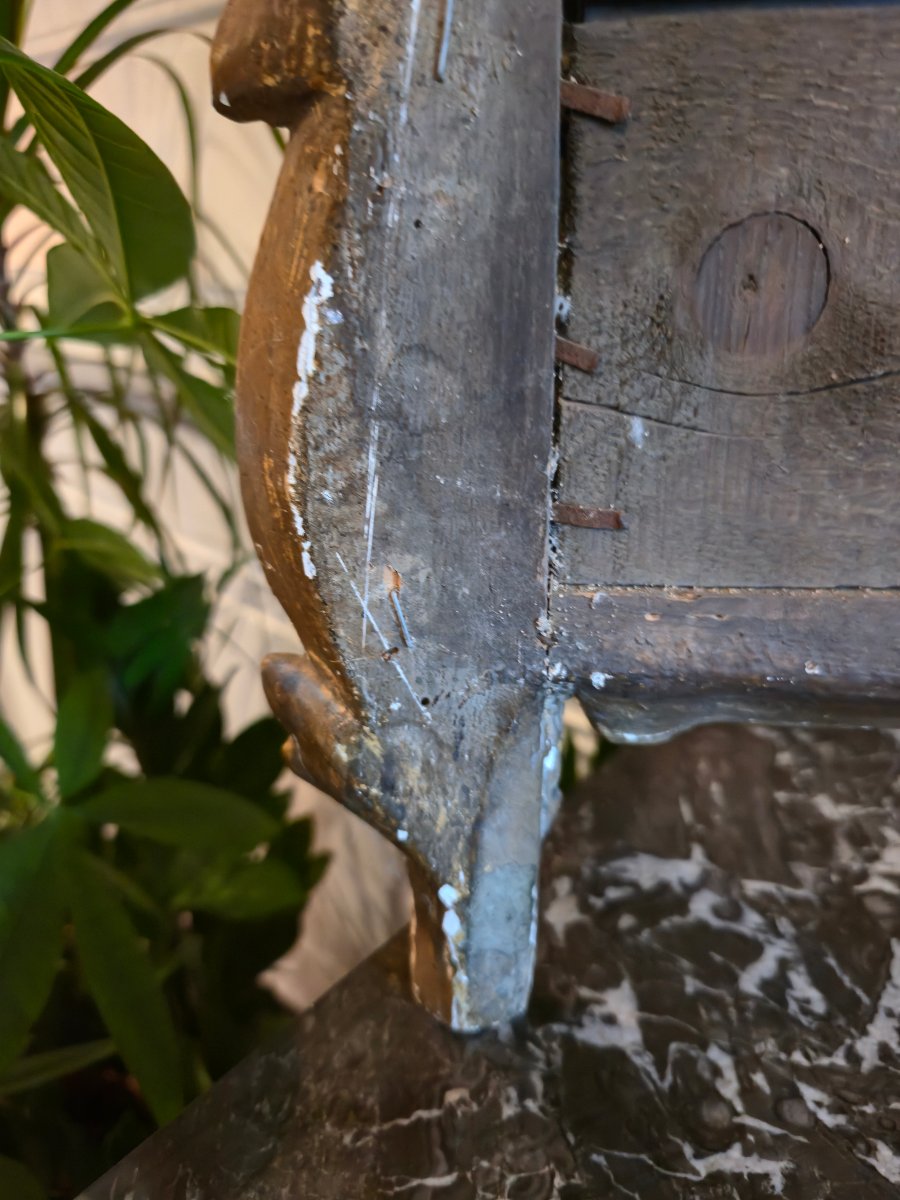
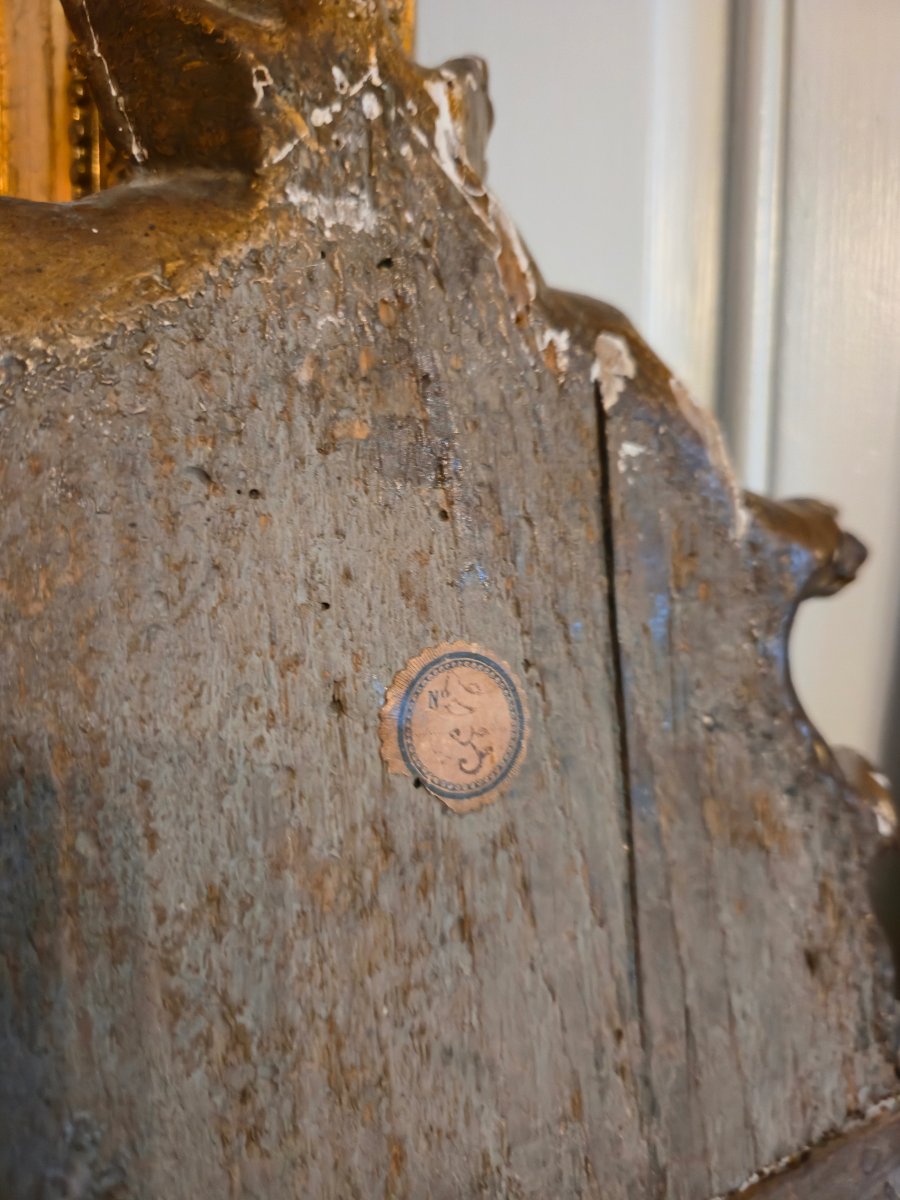
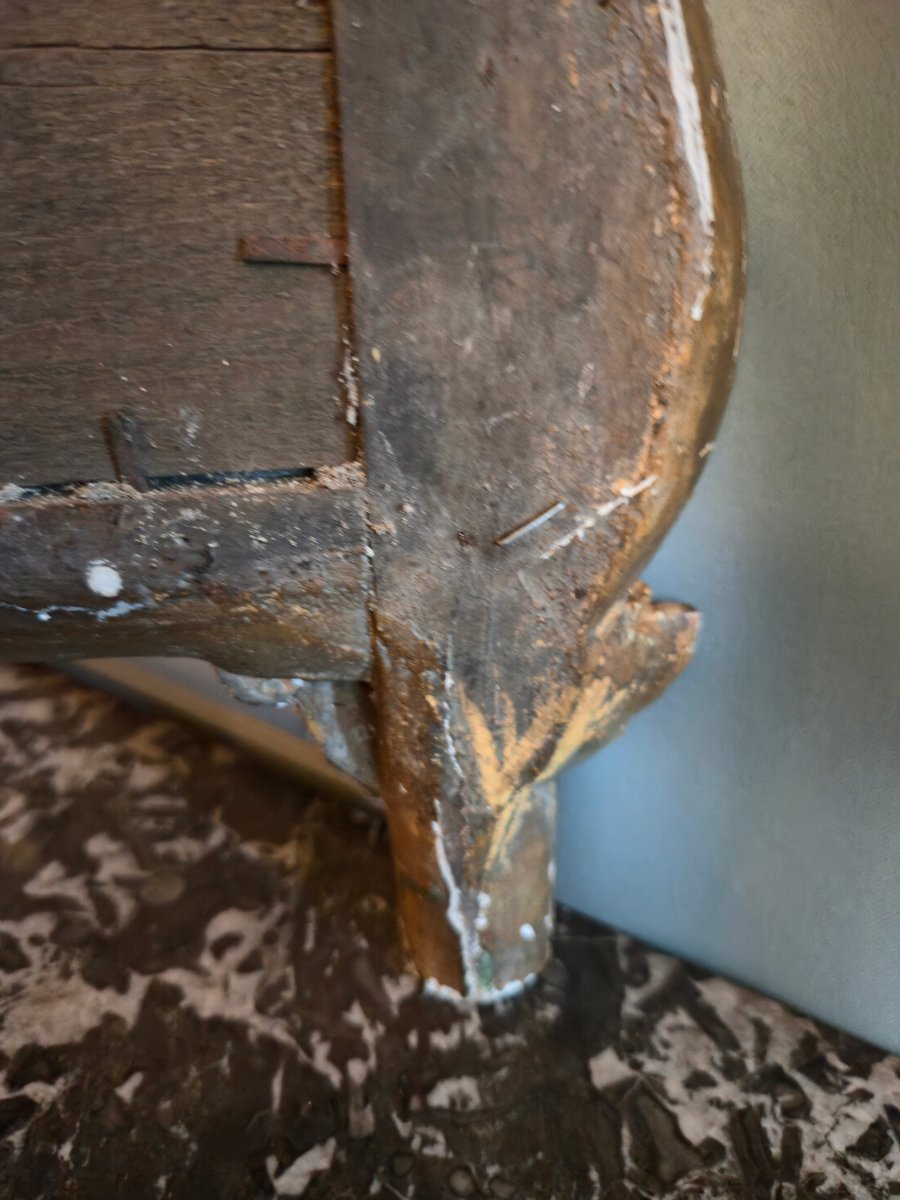
The examination of our example fits squarely within this context. The reverse side features the use of old wood and reused planks, while the joints, nails, and tool marks contribute to the look sought by the workshop. The hand-carved sculpture retains the characteristics of artisanal craftsmanship, while the gilding and polychromy attest to the care taken in applying the patinas.
Thanks to its illustration in Mailfert’s book, this mirror today transcends the mere status of a decorative object. It constitutes a particularly interesting testament to the early years of activity in the Orléans workshops and allows us to establish a direct link between the descriptions left by André Mailfert and a preserved piece. The use of old wood, the reliance on hand carving, and the gilding and patina work are concretely illustrated here, offering valuable insight into the manufacturing methods employed in these workshops at the beginning of the 20th century.
Works that can be definitively linked to an illustration published by Mailfert himself remain relatively rare. As such, this mirror is a particularly valuable resource for studying his work and his early Orléans-based creations.
Dimensions:
Height: 83 cm
Width: 43 cm
Bibliography: André Mailfert, Au Pays des Antiquaires – Confidences d’un « maquilleur » professionnel, model reproduced under the name “Miroir alsacien .”
Featuring an elegant silhouette inspired by the Rocaille style, it consists of a frame with sculpted scrollwork resting on leaf-decorated legs and topped by a covered vase surrounded by flowers and foliage. The piece retains its sea-green polychromy and patinated gilding, a treatment intended to evoke the appearance of regional productions from the 18th and 19th centuries.
The major interest of this piece lies in its identification. This model is in fact reproduced in André Mailfert’s autobiographical work, *Au Pays des Antiquaires – Confidences d’un « maquilleur » professionnel*, under the name “Alsatian Mirror.” This illustration allows us to link our example with a high degree of certainty to the pieces produced in the Orléans workshops during the early years of Mailfert’s career.
In his book, the author discusses the creation of his first models intended for antique dealers, as well as the processes used in his workshops: the use of old wood, the reuse of materials, hand carving, gilding, and elaborate patinas designed to recreate the appearance and character of older objects. He also discusses the production of mirrors, trumeaux, barometers, and display furniture that contributed to the growth of his business.
The examination of our example fits squarely within this context. The reverse side features the use of old wood and reused planks, while the joints, nails, and tool marks contribute to the look sought by the workshop. The hand-carved sculpture retains the characteristics of artisanal craftsmanship, while the gilding and polychromy attest to the care taken in applying the patinas.
Thanks to its illustration in Mailfert’s book, this mirror today transcends the mere status of a decorative object. It constitutes a particularly interesting testament to the early years of activity in the Orléans workshops and allows us to establish a direct link between the descriptions left by André Mailfert and a preserved piece. The use of old wood, the reliance on hand carving, and the gilding and patina work are concretely illustrated here, offering valuable insight into the manufacturing methods employed in these workshops at the beginning of the 20th century.
Works that can be definitively linked to an illustration published by Mailfert himself remain relatively rare. As such, this mirror is a particularly valuable resource for studying his work and his early Orléans-based creations.
Dimensions:
Height: 83 cm
Width: 43 cm
Bibliography: André Mailfert, Au Pays des Antiquaires – Confidences d’un « maquilleur » professionnel, model reproduced under the name “Miroir alsacien .”
Explore similar pieces and discover your ideal find:
Other mirrors