THIS OBJECT WAS SOLD
Portraits Of Eugène Desmaisières And Valérie De Wal
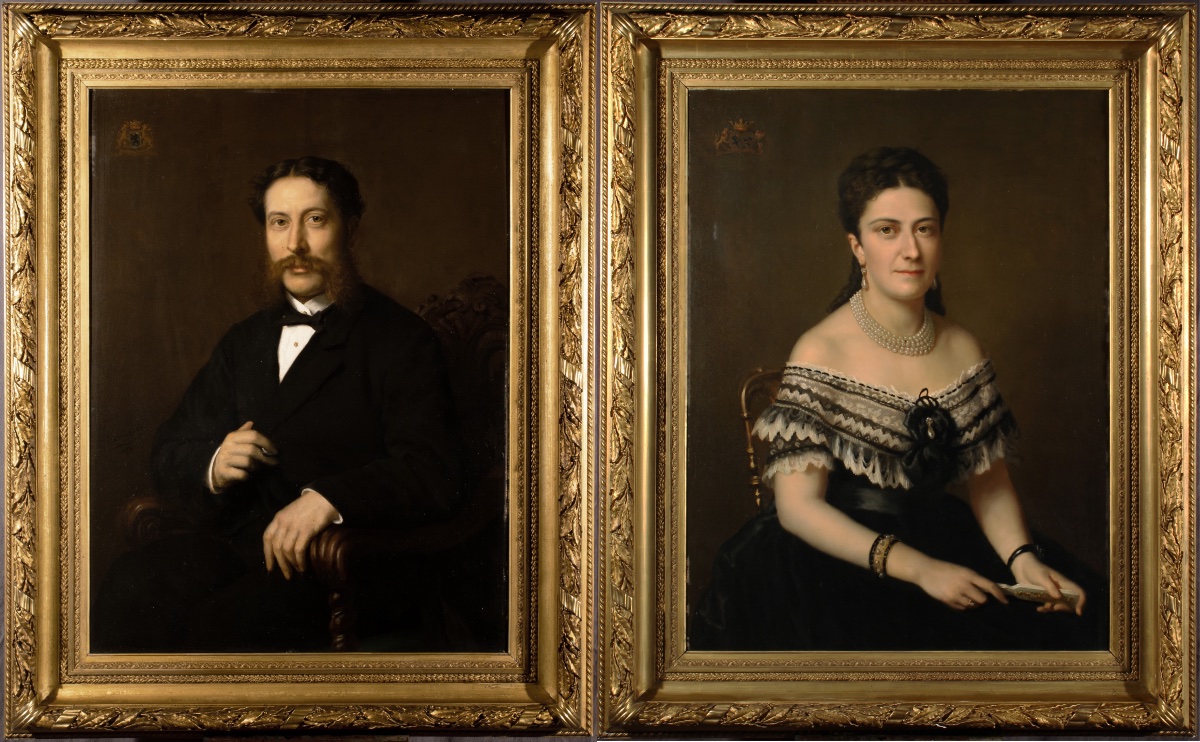
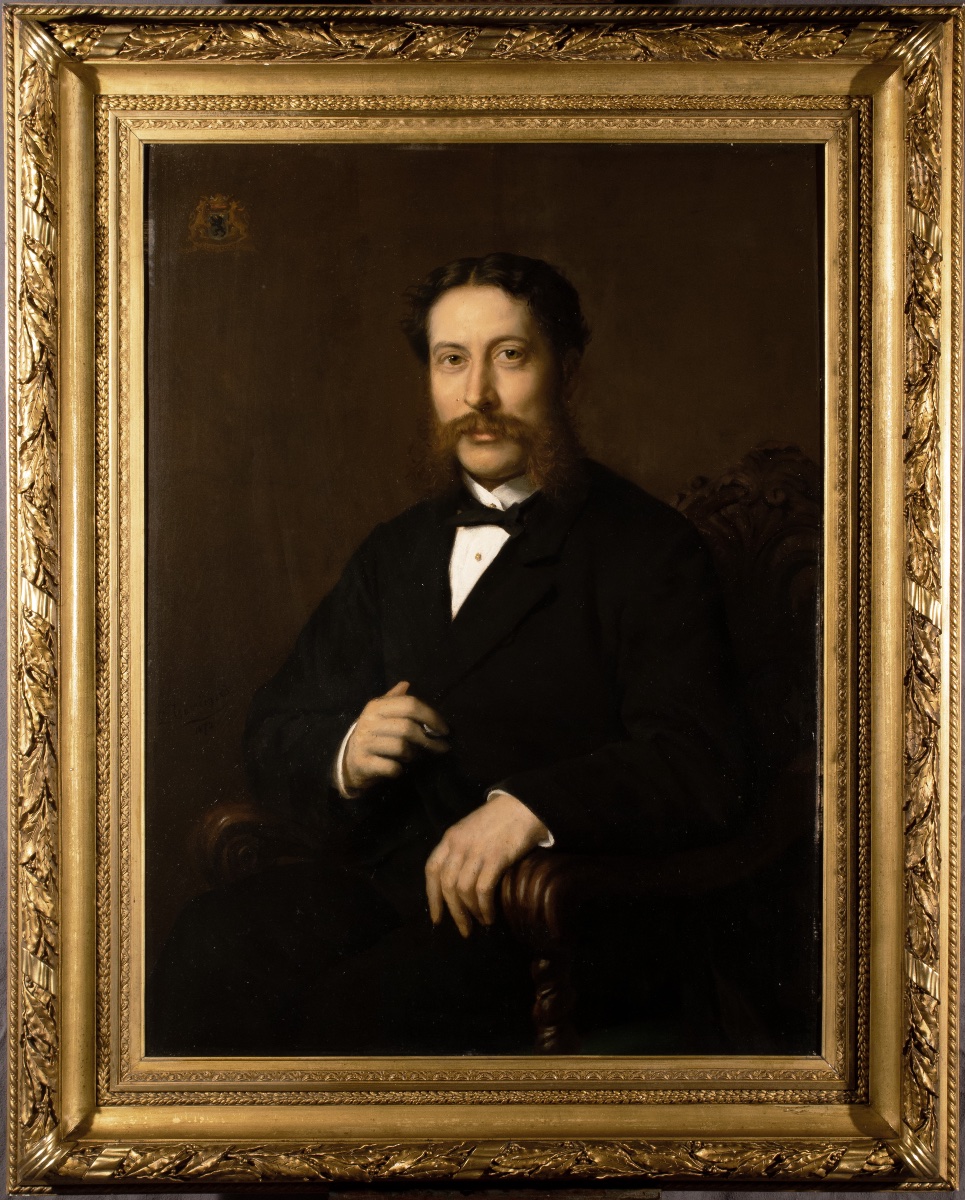
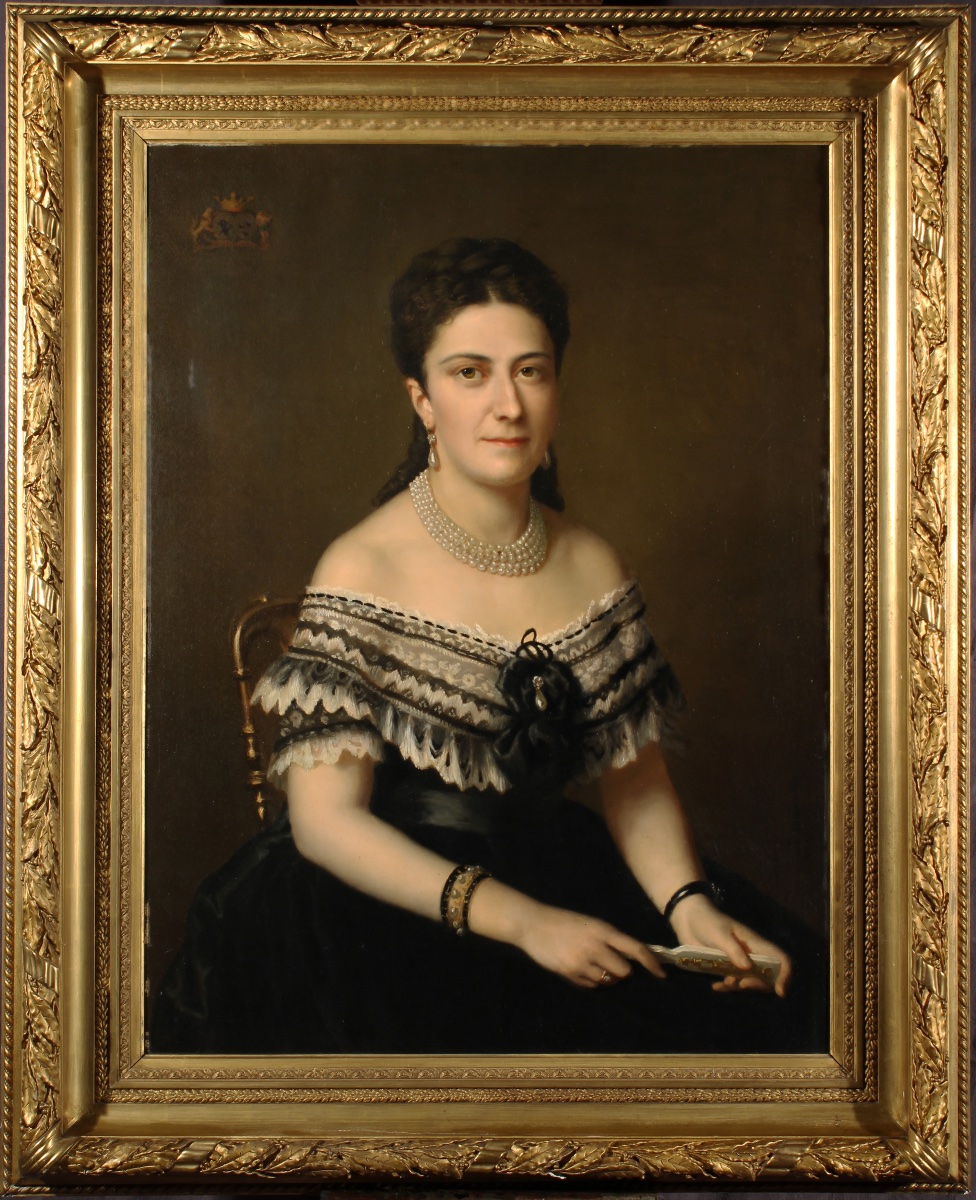


Portraits of Eugène Desmaisières and Valérie de Wal Oil on canvas, gilded stucco frames
Description of the worksThese two portraits, conceived as a pair, illustrate the mastery of the painter Louis Tuerlincks, a portraitist active in the second half of the 19th century.
Eugène Desmaisières, depicted seated in a carved armchair, wears the black suit and white tie of the cultured bourgeois. His direct gaze and the pose turned slightly to the right convey a quiet self-assurance, typical of male portraits of high society during the Second Empire.
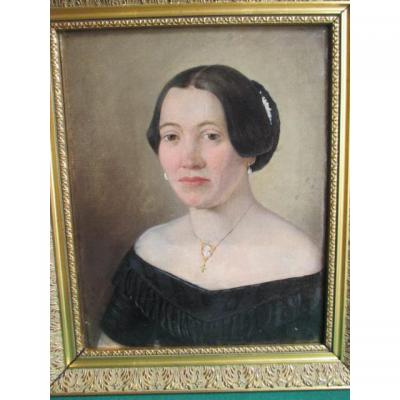
Valérie de Wal, his wife, is depicted in a symmetrical pose, wearing a black evening gown adorned with white lace and ribbons. Her jewelry—a pearl necklace, bracelets, and earrings—emphasizes her rank and the model’s distinction. She holds a closed fan, a feminine symbol of social grace.
The dark backgrounds, the precise modeling of the faces, and the soft light concentrated on the skin reflect an aesthetic inherited from French and Belgian academic portraiture, where the subject’s psychology is revealed through the simplicity of the setting and the subtlety of the rendering.
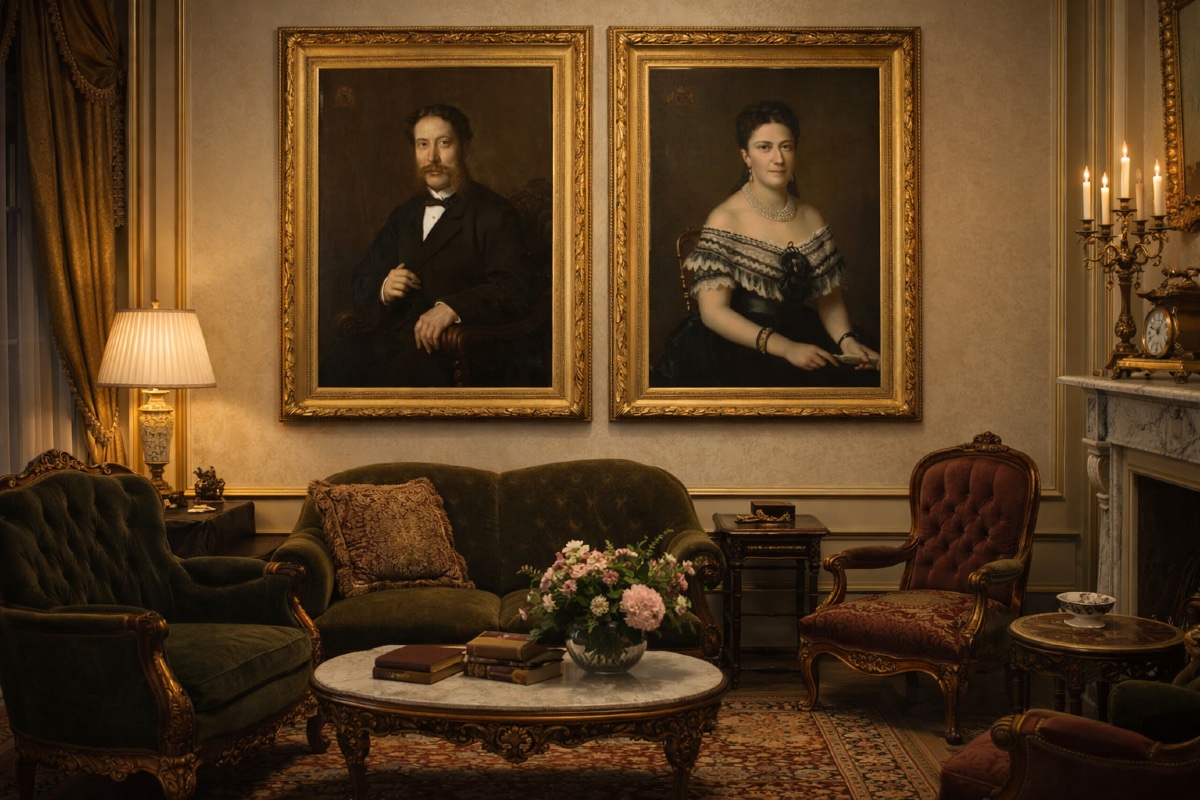
The gilded stucco framesThe original frames are made of leaf-gilded stucco, richly molded with scrollwork and foliage. Their deep relief and warm gilding lend the works a solemnity that reinforces the portrait’s representational value. This type of frame, very much in vogue during the Second Empire, draws inspiration from Louis XVI models while adopting a denser and more brilliant execution, suited to 19th-century bourgeois interiors.
Context in 19th-century art- In the 19th century, the portrait remained a major genre, a symbol of social success and family memory. Artists such as Tuerlincks followed the academic tradition, while incorporating the codes of emerging realism:
The psychological fidelity of the model takes precedence over idealization.
Costumes and accessories became markers of identity.
The bust or half-figure composition emphasized intimacy and dignity.
These couple portraits perfectly illustrate the function of the bourgeois portrait: to celebrate stability, respectability, and family unity, while affirming the refined taste of an era in which painting became a mirror of society.
Explore similar pieces and discover your ideal find:
Portraits