

Portrait Of A Lady Of High Social Standing, Circa 1690
Portrait of a Lady of High Social Standing, circa 1690
Oil on canvas, original carved and gilded wooden frame
French School, late 17th century
Description of the work (71 cm by 56 cm)
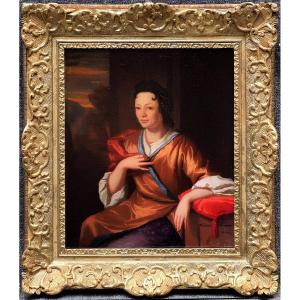
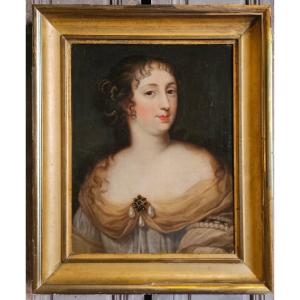
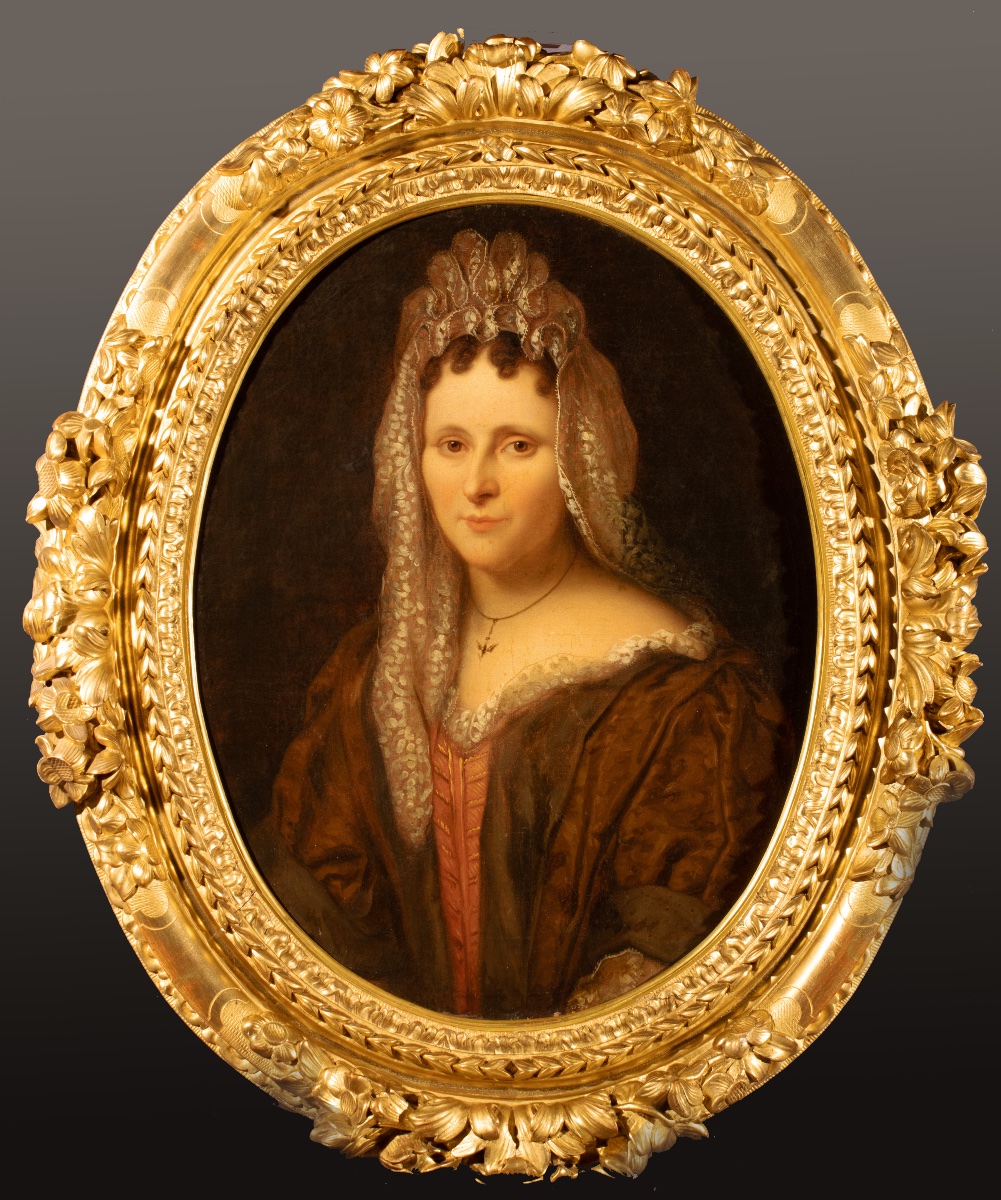
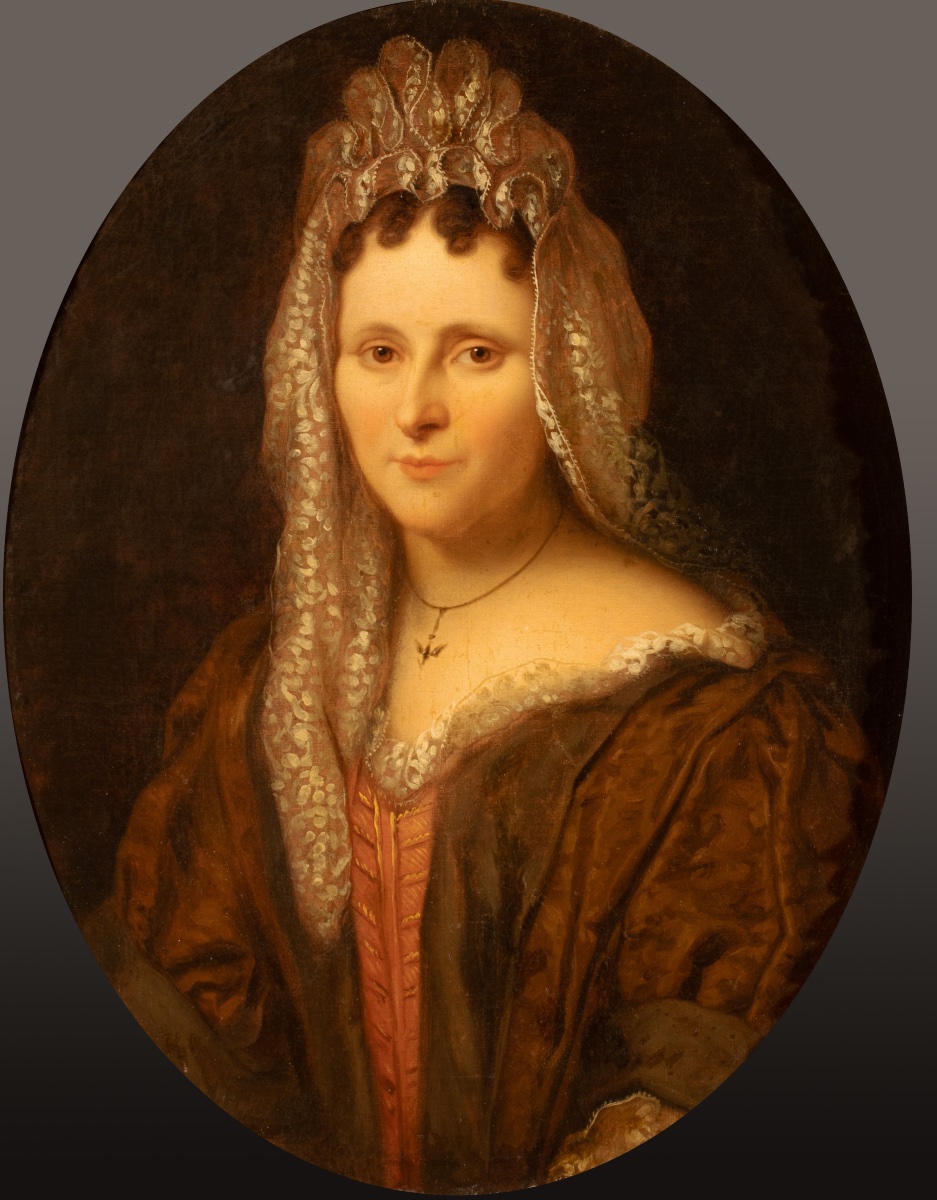
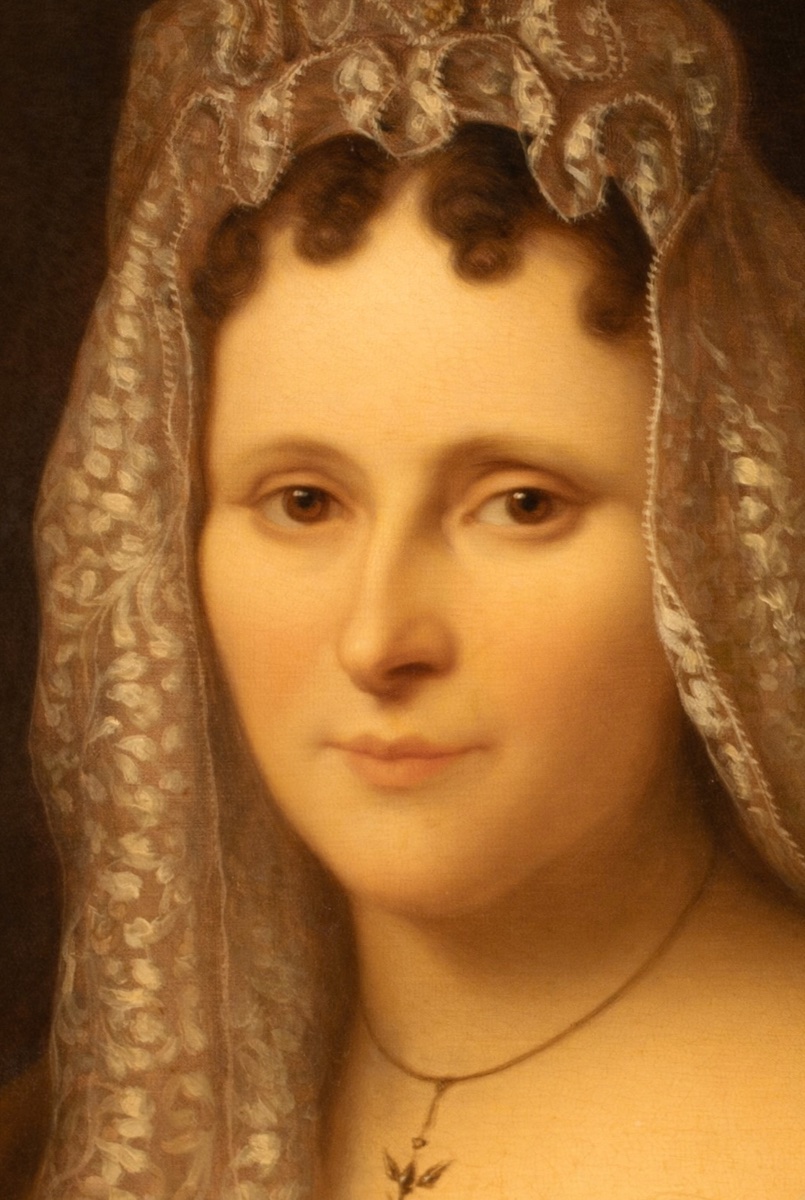
This oval portrait depicts a lady of distinction, with a gentle and serene face, dressed in a brown coat with lace lapels and a red bodice. Her headdress of fine white lace, richly pleated and falling over her shoulders, frames her face with discreet elegance. Around her neck, a delicate necklace features a small pendant in the shape of a bird (the Protestant Holy Spirit dove), a symbol of spiritual freedom.
The dark background highlights the fair complexion and soft light of the face. The restrained, unostentatious expression conveys the quiet dignity and inner piety characteristic of the Protestant elite of the late 17th century.
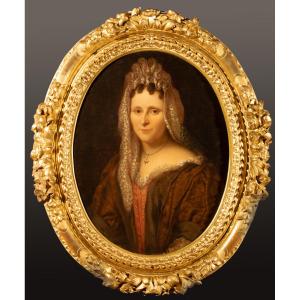
The original frame (99 cm by 85 cm)
The oval frame, carved from wood and gilded, is a masterpiece of late Baroque ornamentation. Its deep molding, adorned with acanthus leaves, flowers, and fruit, reflects the refined taste of Parisian workshops around 1680–1700. The gold leaf gilding underscores the patron’s wealth while lending the ensemble an aura of solemnity. This type of frame, often custom-made, was intended to enhance the portrait while harmoniously integrating it into an aristocratic or bourgeois interior.
Historical Context
Around 1690, France and the United Provinces were experiencing a period of religious and political tension. Following the Revocation of the Edict of Nantes (1685), many French Protestants went into exile in the Netherlands, Germany, or England. The portrait of this lady, likely from a wealthy Huguenot family, illustrates the continuity of a culture of refinement and faith despite exile or imposed discretion.
Protestant portraiture at the time was distinguished by its elegant restraint, its rejection of ostentatious symbols, and its emphasis on moral virtue rather than social rank. Artists trained in the Flemish or French tradition—such as Nicolas Maes, Michiel van Musscher, or their French followers—favor soft lighting, precise costume rendering, and the psychology of the subject.
The importance of the portrait in the late 17th century
At this time, the portrait served as an instrument of memory and social representation. It conveyed the subject’s position in society, but also their spiritual identity. Among Protestants, it became an act of cultural resistance, affirming individual dignity in the face of persecution.
The artist sought to capture inner truth rather than outward grandeur: a moral and aesthetic ideal that already foreshadowed the portraiture of the Enlightenment.
Period: 17th century
Style: Louis 14th, Regency
Condition: Good condition
Material: Oil painting
Width: 85cm
Height: 99cm
Reference (ID): 1778289
Availability: In stock