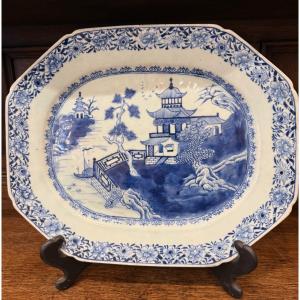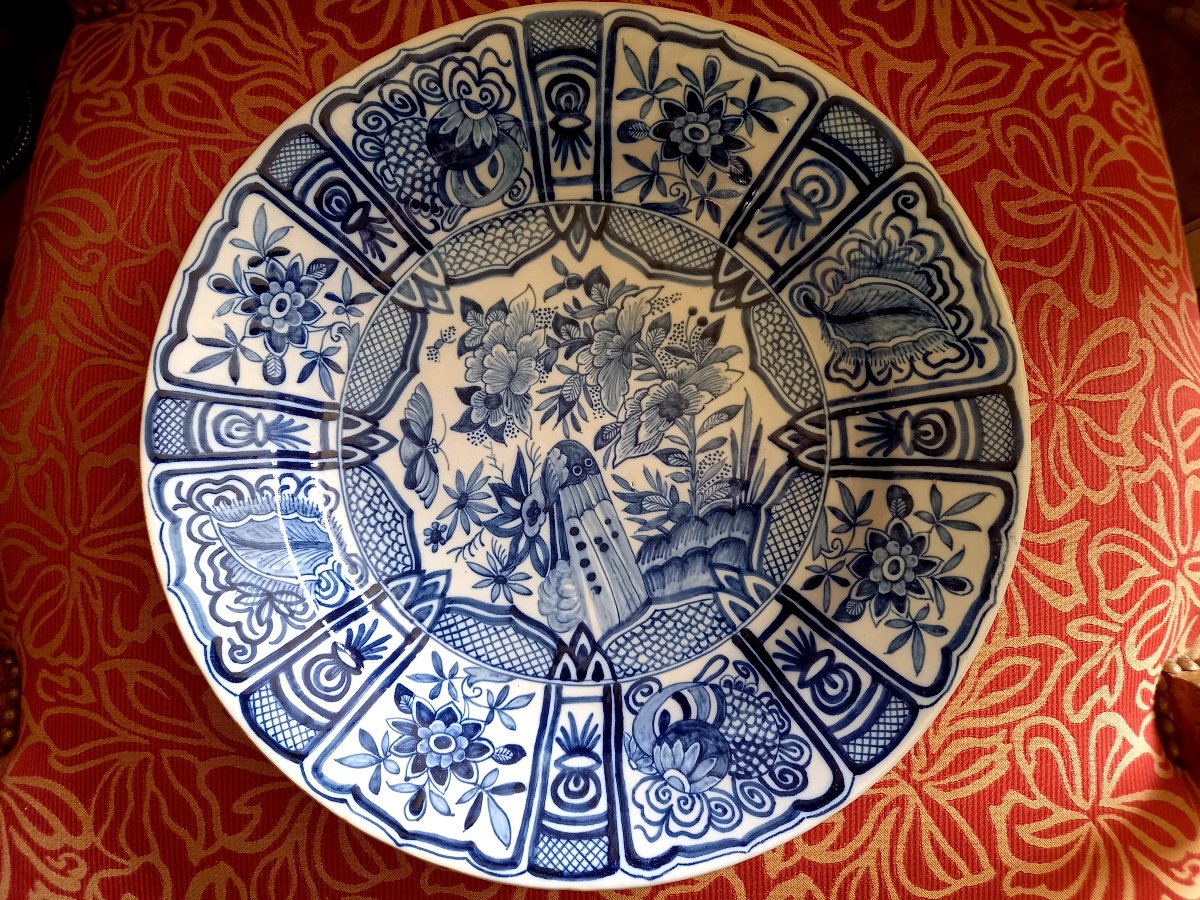
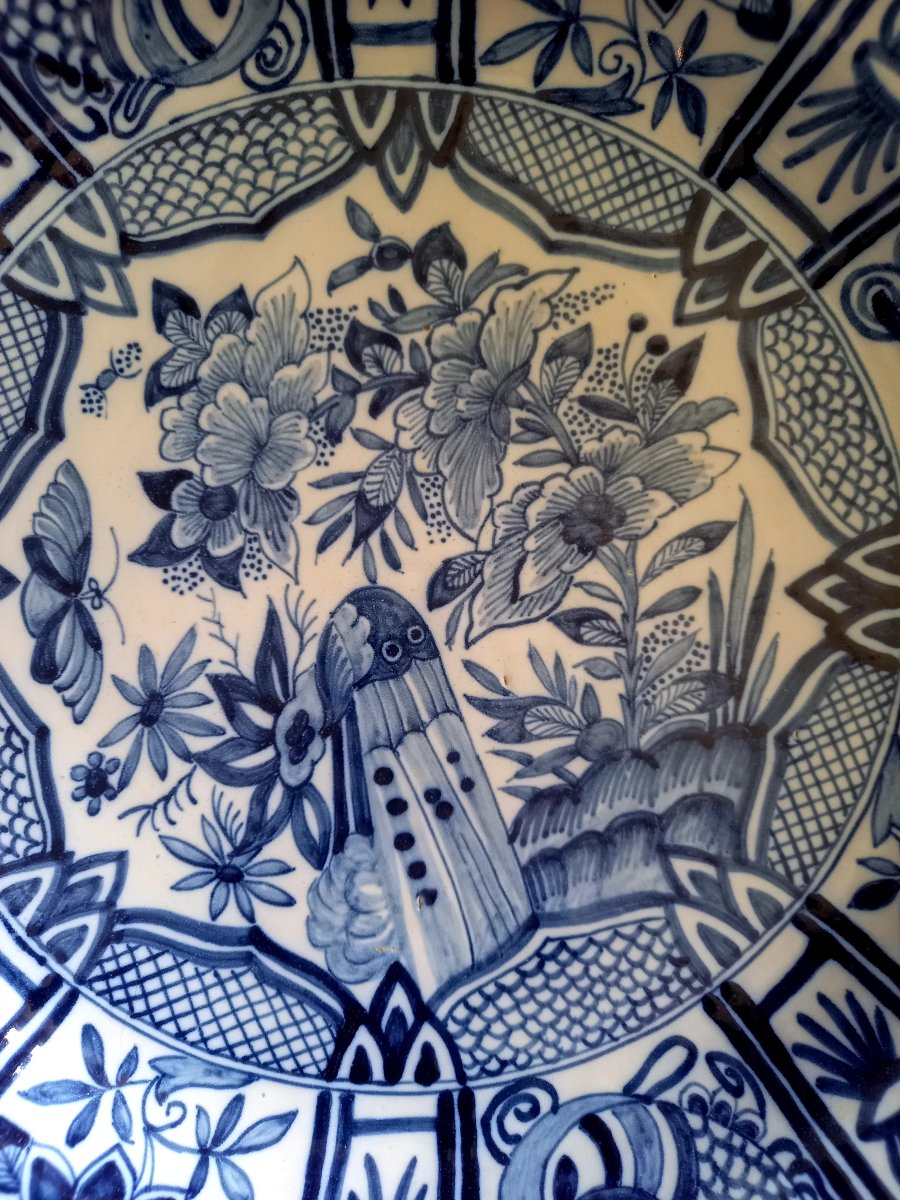
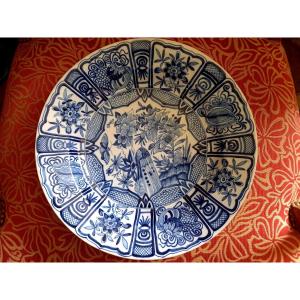


XVIIe Siecle .large Dish In Delft Earthenware In The Style Of Chinese Kraak Porcelains.
Kraak porcelein was produced and exported to Holland under the Ming dynasty, at its peak during the reign of Wang-Li (1573-1620).
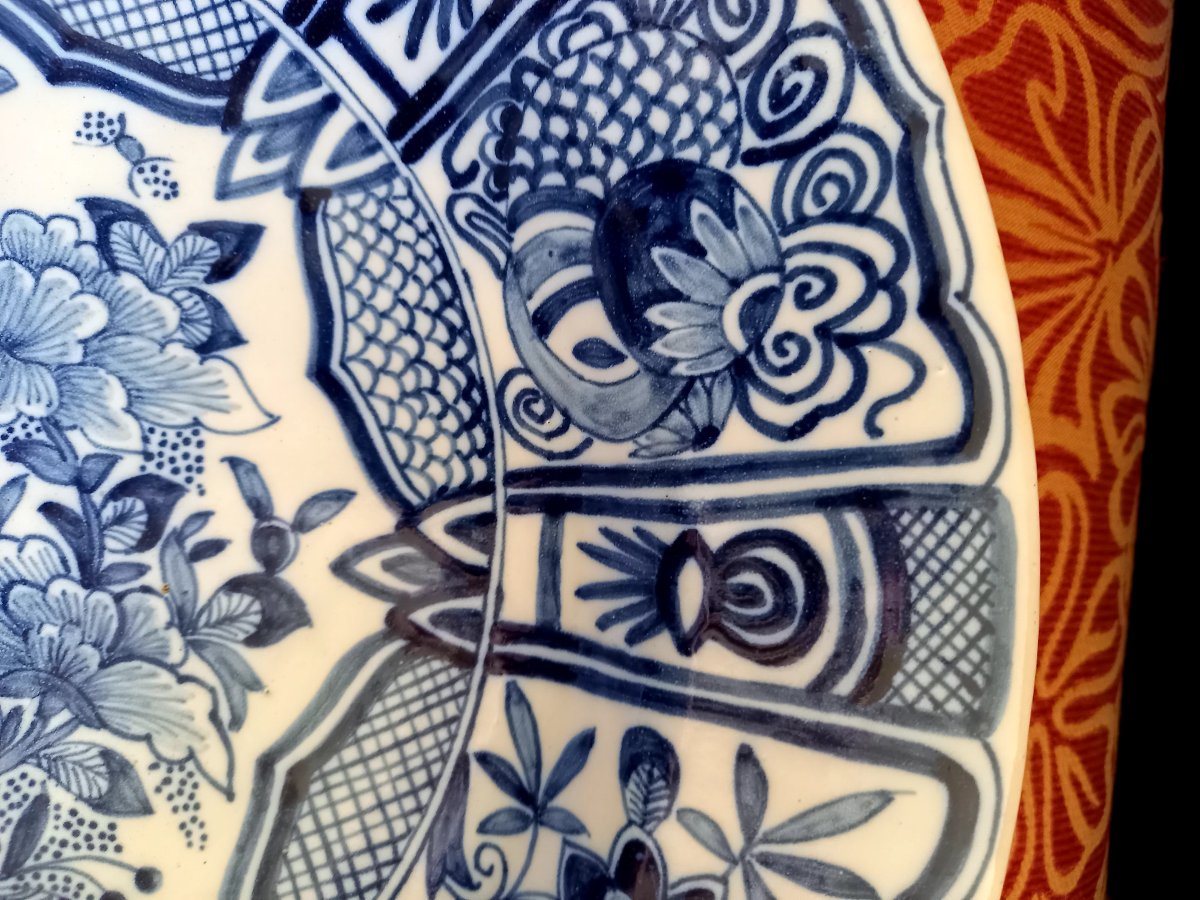
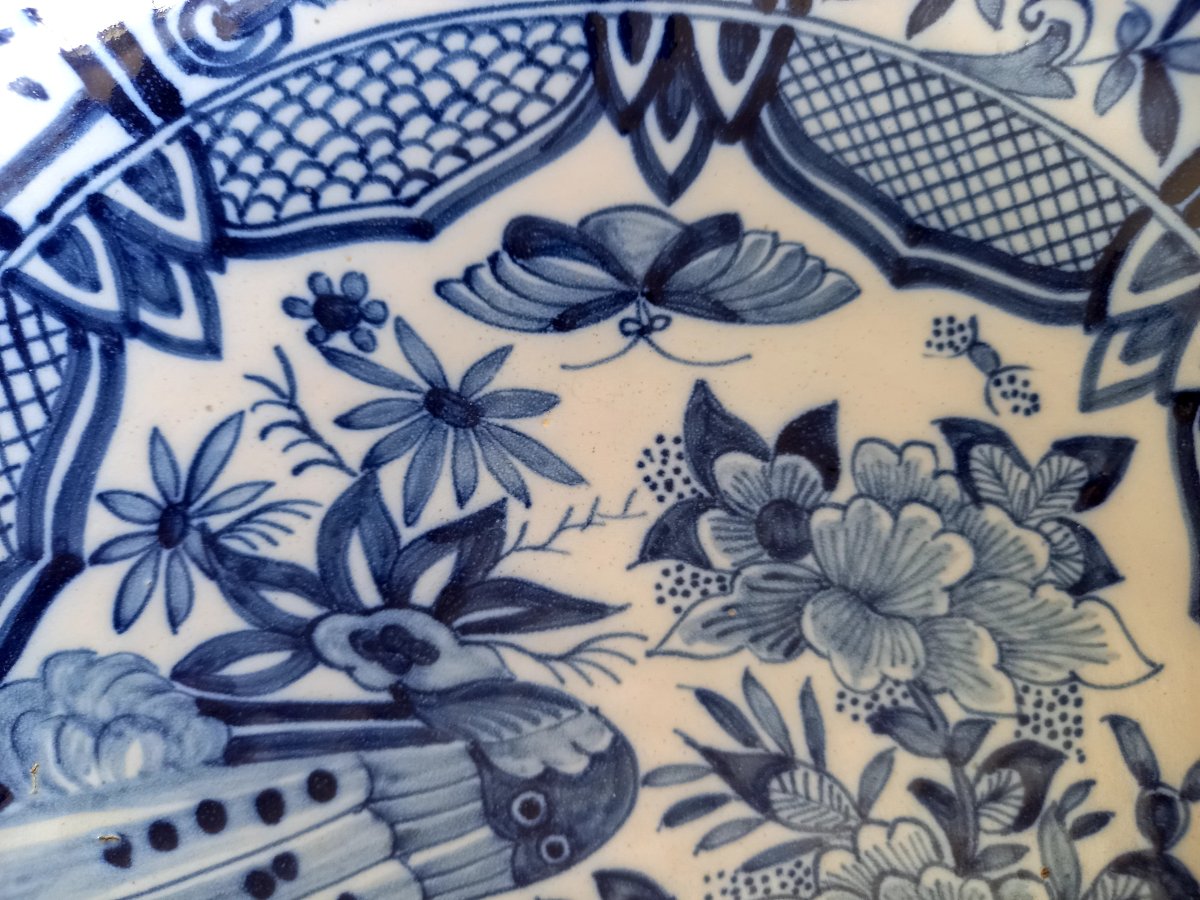
It follows a precise typology, with cobalt-blue decoration and well-defined decorative registers.
Still produced under the Chongzen reign, when it fell in 1644, trade in this porcelain was interrupted by the troubles in the Middle Kingdom.
Demand was so strong that this production was copied in Japan, Iran and finally on site in Delft.
Subterfuges were devised to disguise the earthenware as porcelain, and I must say the resemblance is astounding.
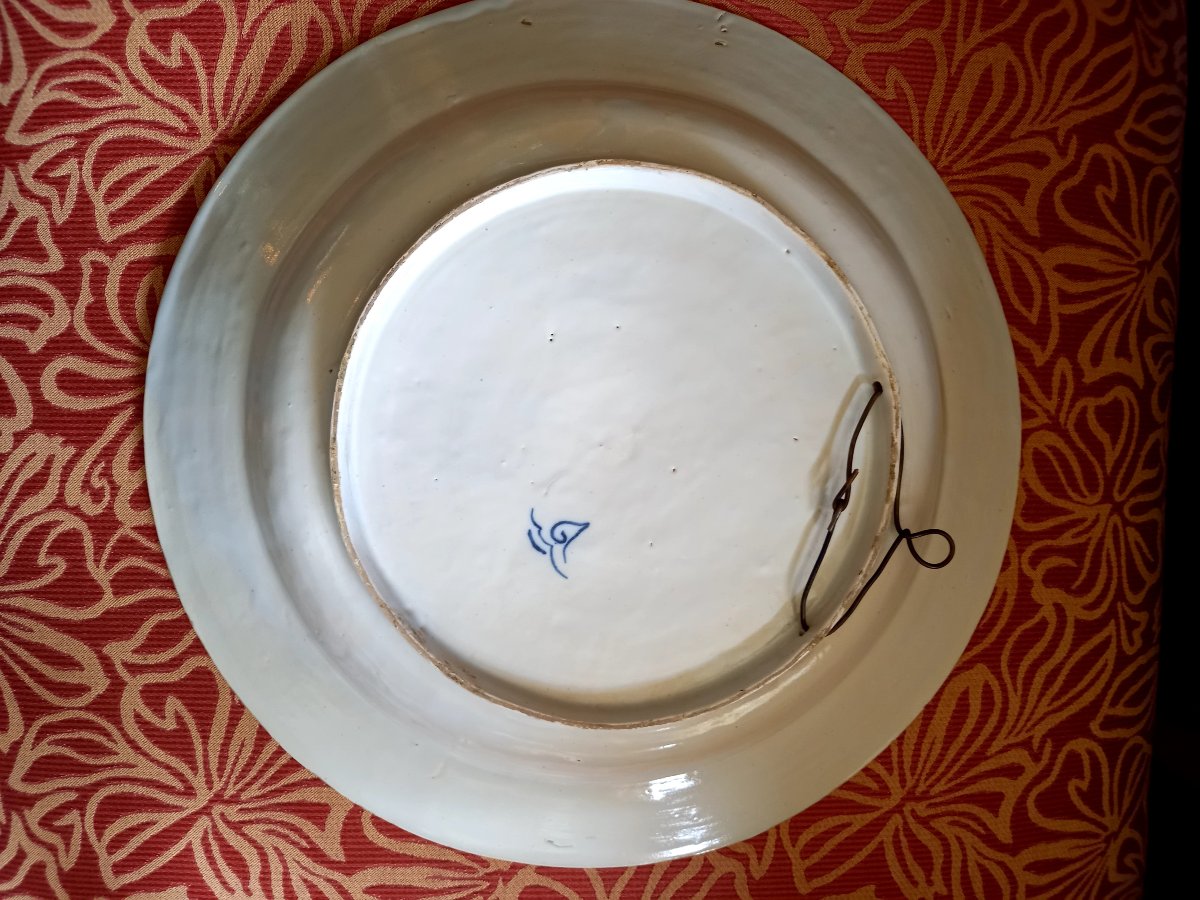
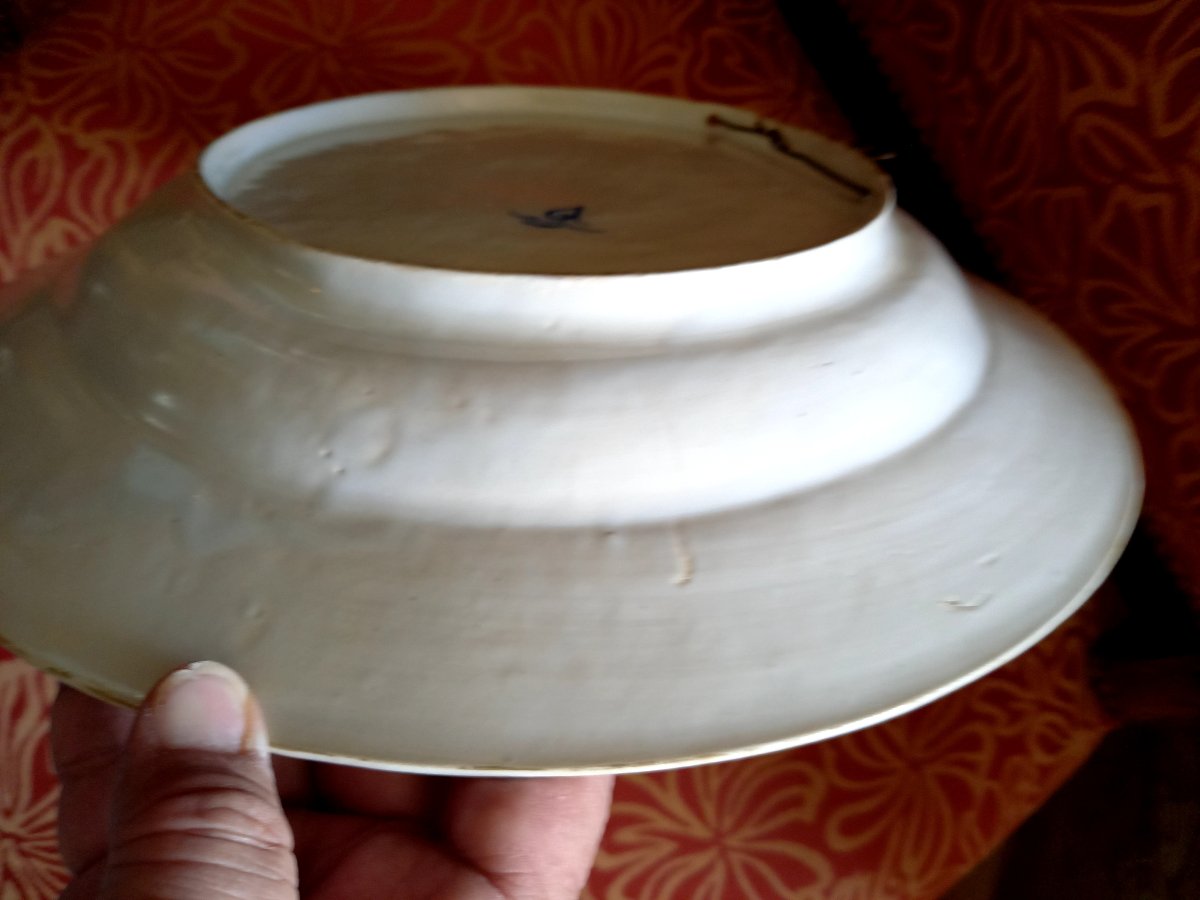
The thickness of the paste is refined as much as possible, an enamel very similar to that of porcelain is created, and the vice of eliminating the pernettes (traces of firing support) is pushed to the limit by firing directly on the heel, so that they don't betray the material.
The well-mastered effect met a constant demand in the second half of the 16th century.
This large dish is typical of this substitute production, with only the back left unadorned to make the difference, also with a shape more of a dish than a large Chinese-style bowl.
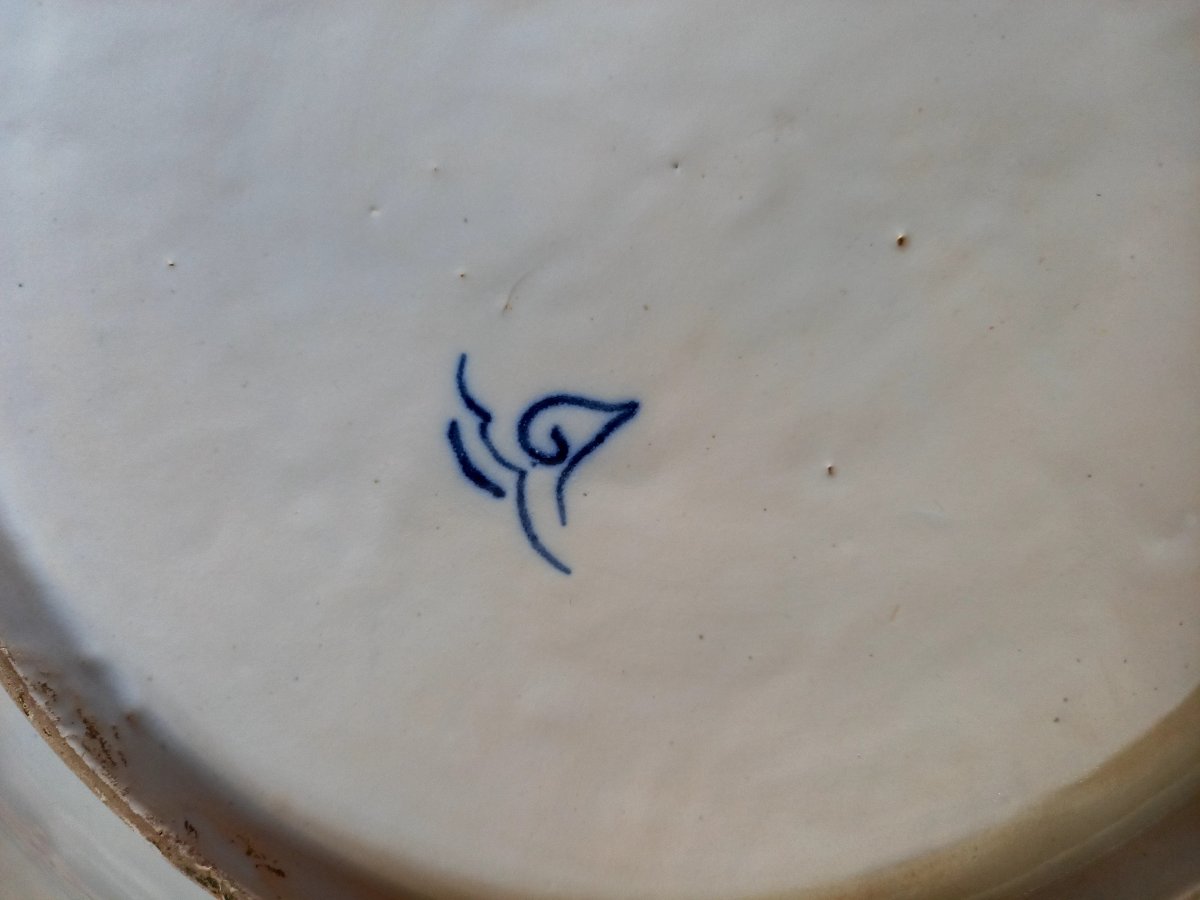
A mark is present, not yet found.
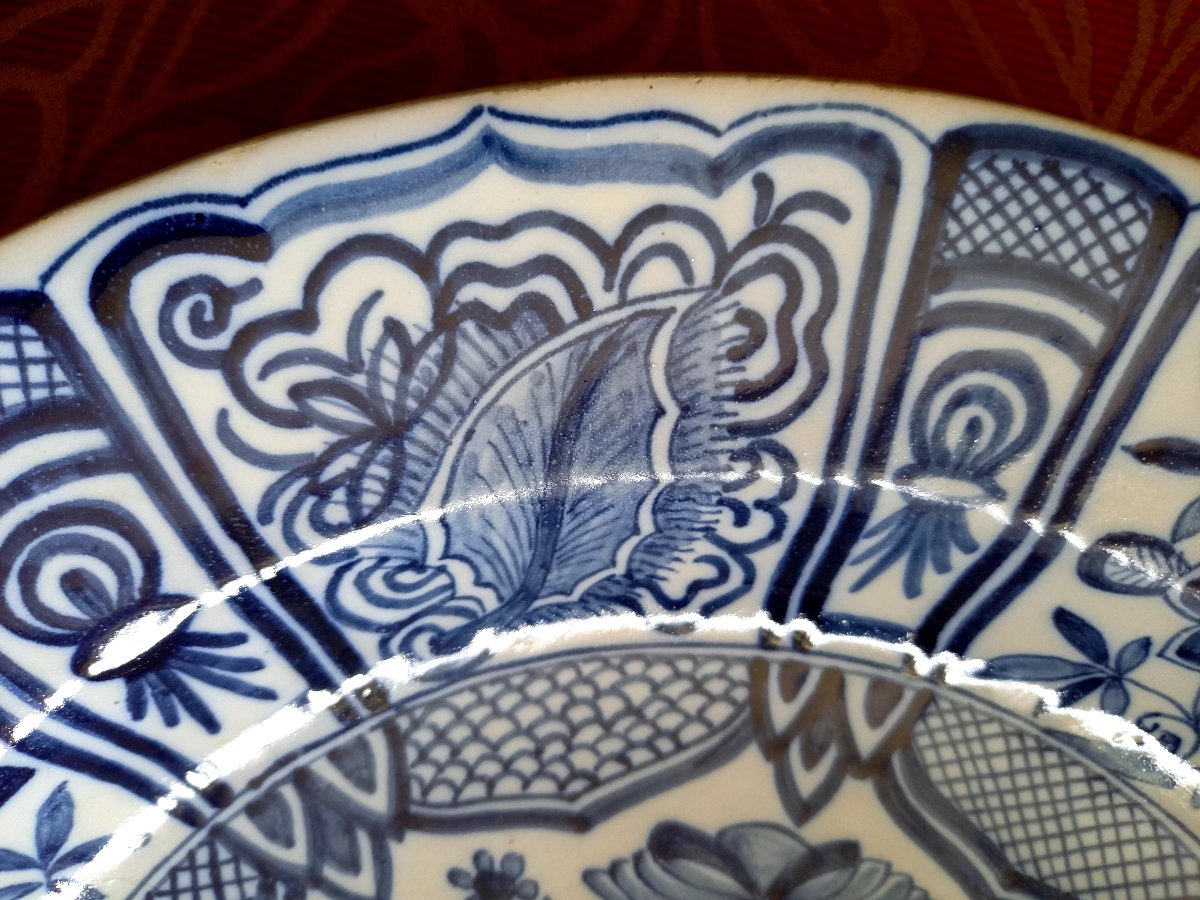
It is in perfect condition, very large , 35 cm , , with no chips, which is extremely rare for a Delft, and sounds very clear.
It follows a precise typology, with cobalt-blue decoration and well-defined decorative registers.
Still produced under the Chongzen reign, when it fell in 1644, trade in this porcelain was interrupted by the troubles in the Middle Kingdom.
Demand was so strong that this production was copied in Japan, Iran and finally on site in Delft.
Subterfuges were devised to disguise the earthenware as porcelain, and I must say the resemblance is astounding.
The thickness of the paste is refined as much as possible, an enamel very similar to that of porcelain is created, and the vice of eliminating the pernettes (traces of firing support) is pushed to the limit by firing directly on the heel, so that they don't betray the material.
The well-mastered effect met a constant demand in the second half of the 16th century.
This large dish is typical of this substitute production, with only the back left unadorned to make the difference, also with a shape more of a dish than a large Chinese-style bowl.
A mark is present, not yet found.
It is in perfect condition, very large , 35 cm , , with no chips, which is extremely rare for a Delft, and sounds very clear.
280 €
Period: 17th century
Style: Asian art
Condition: Perfect condition
Material: Earthenware
Diameter: 35 cm
Reference (ID): 1775822
Availability: In stock
Print