

Japanese Sumida Gawa Vase In The Tradition Of Inoue Ryosai Meiji-taishō Period (circa 1900-1920)
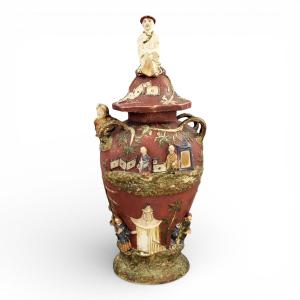
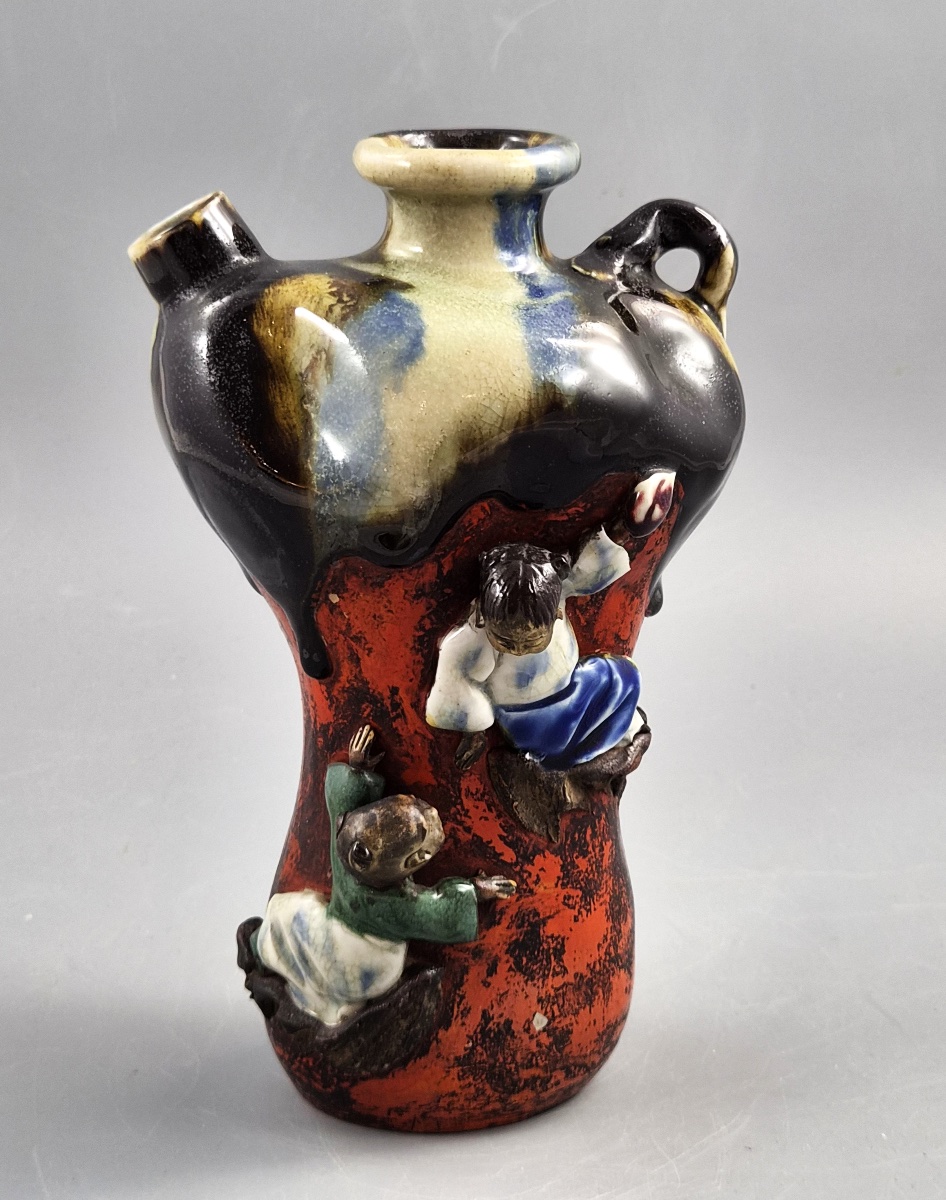
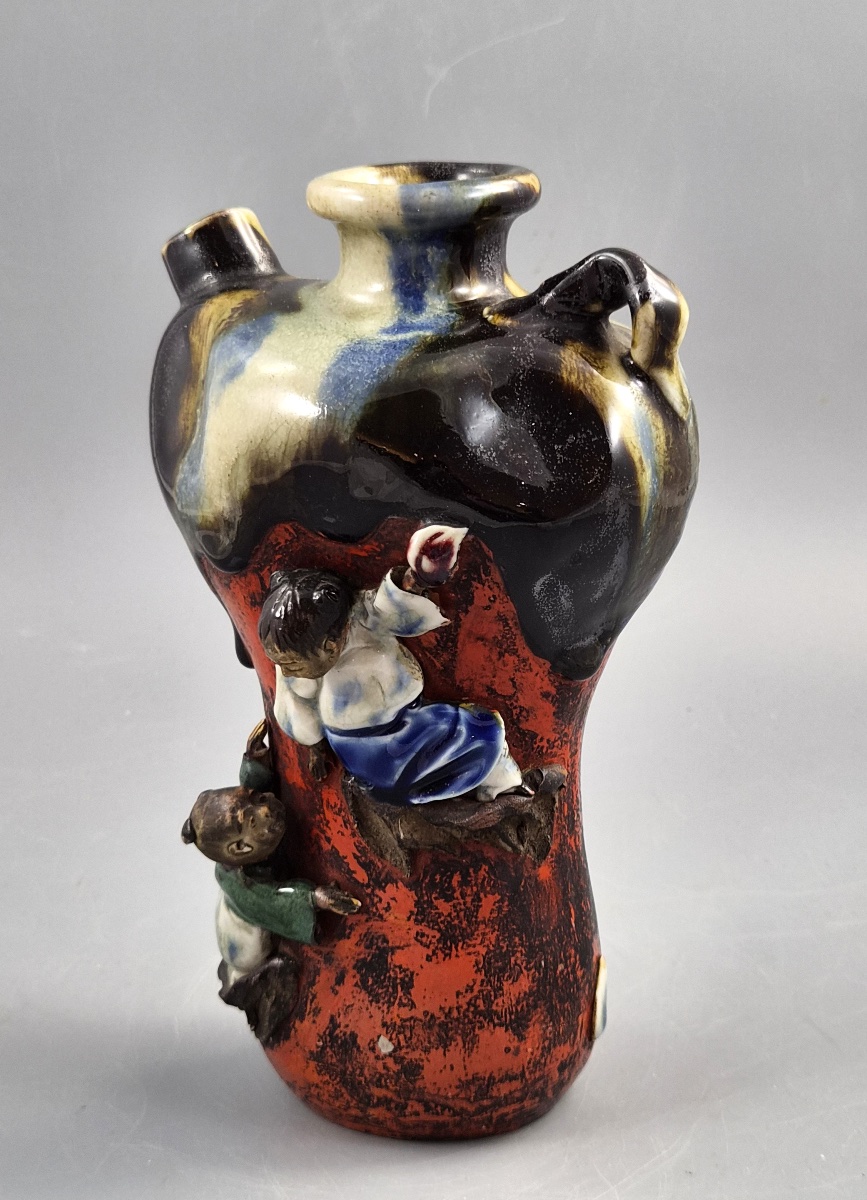
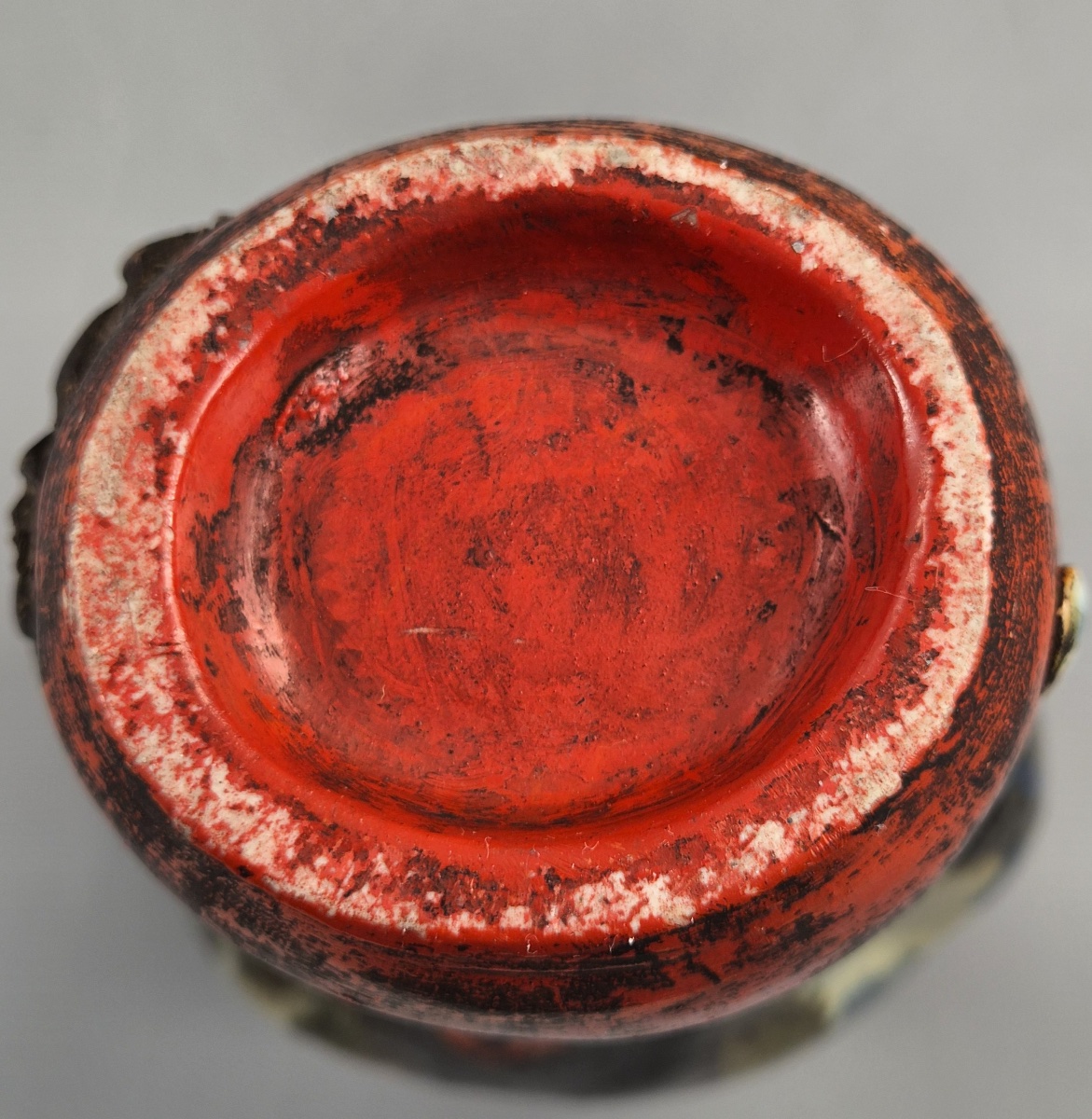
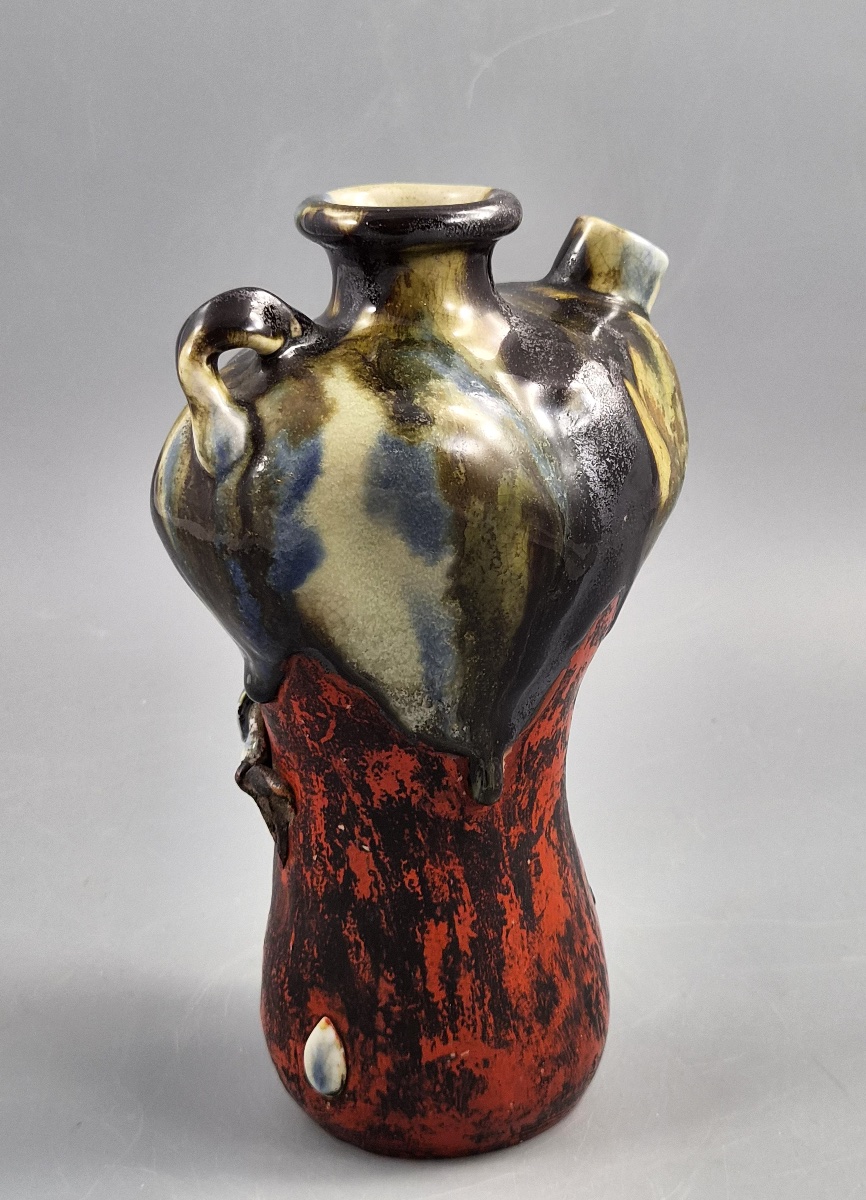
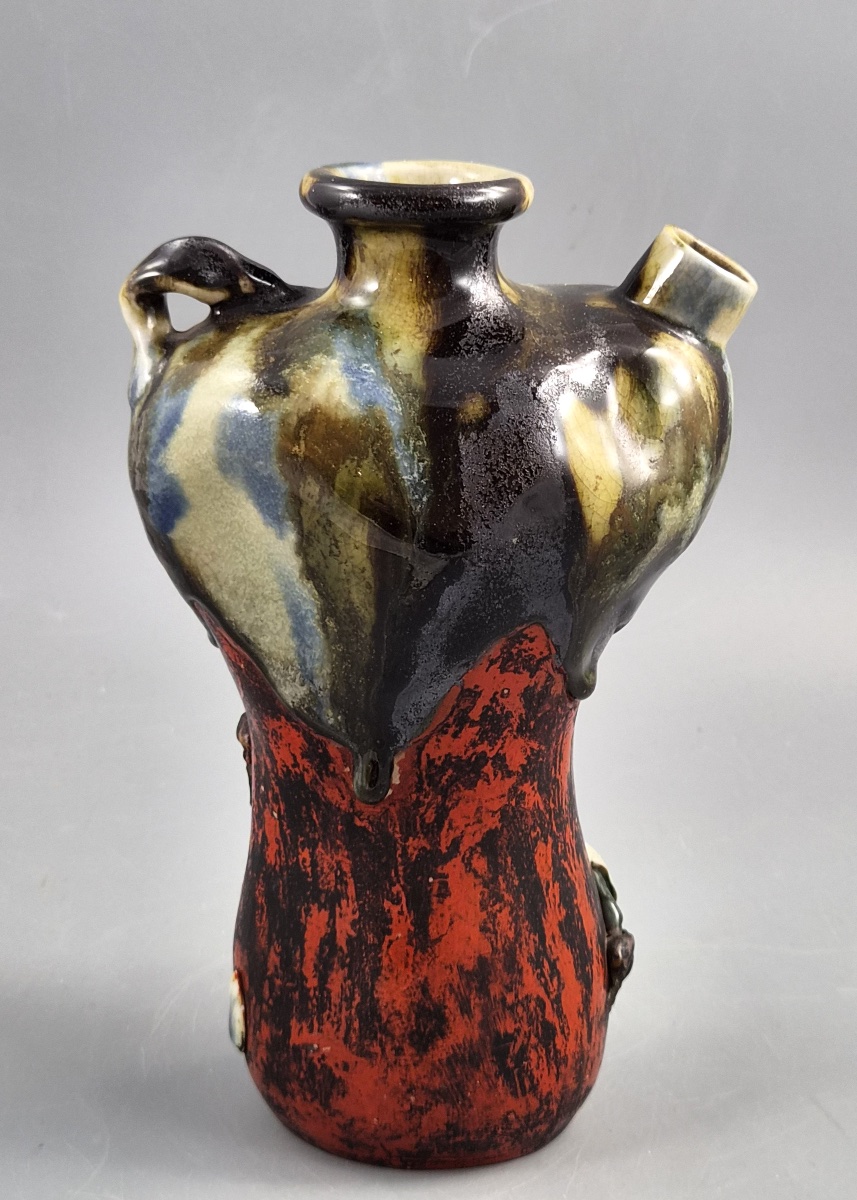
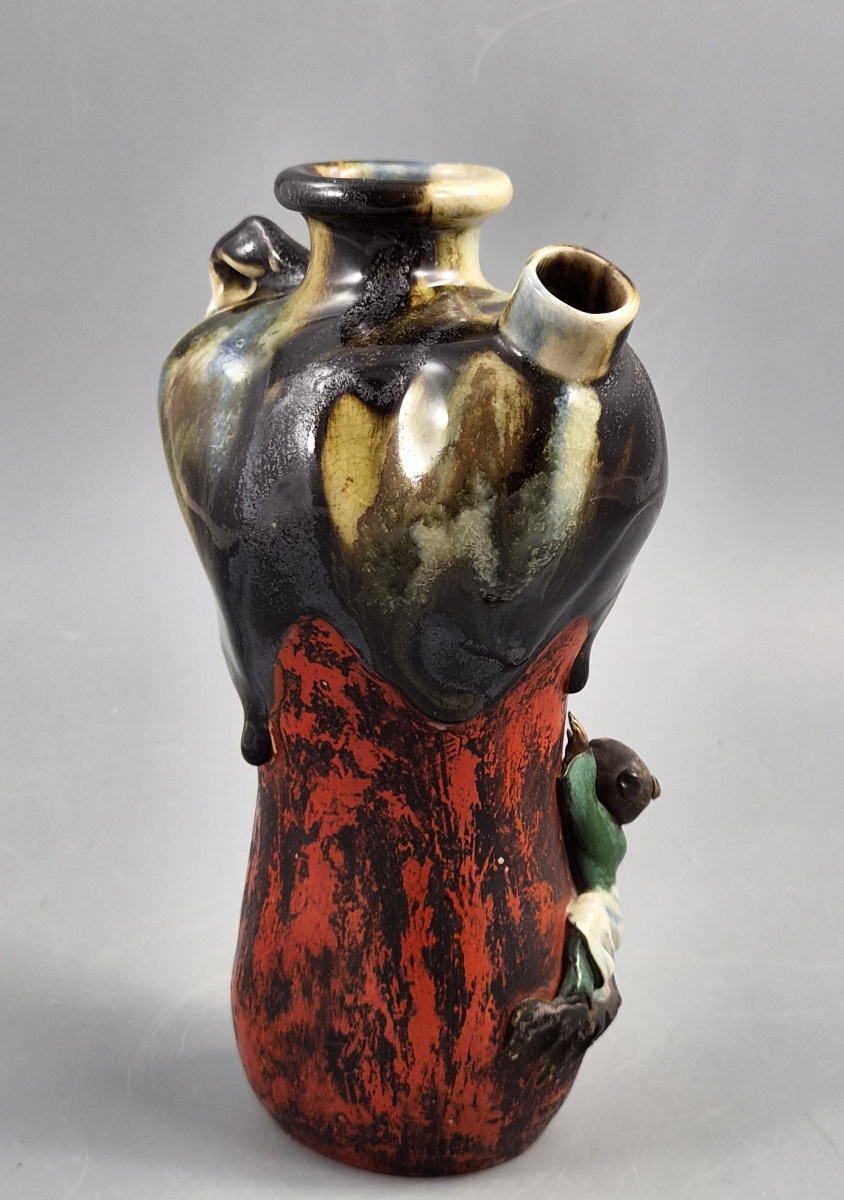
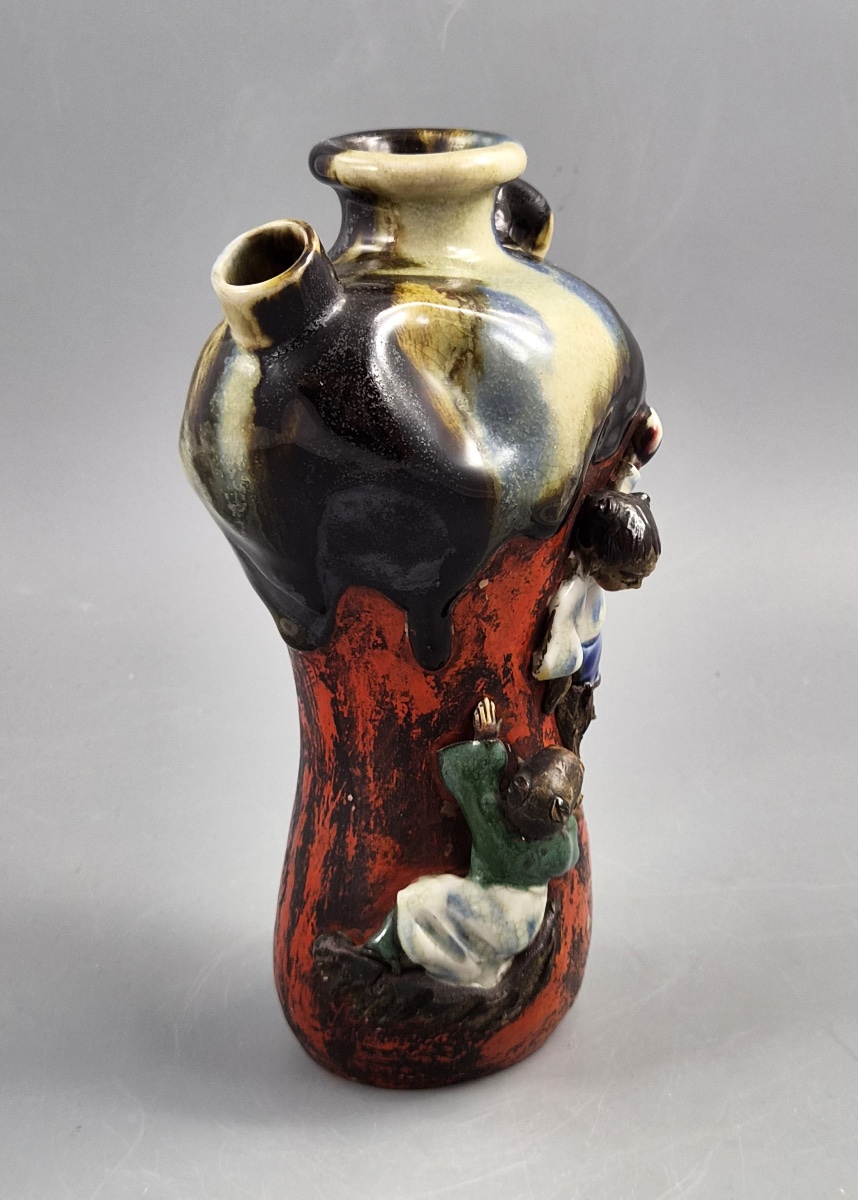
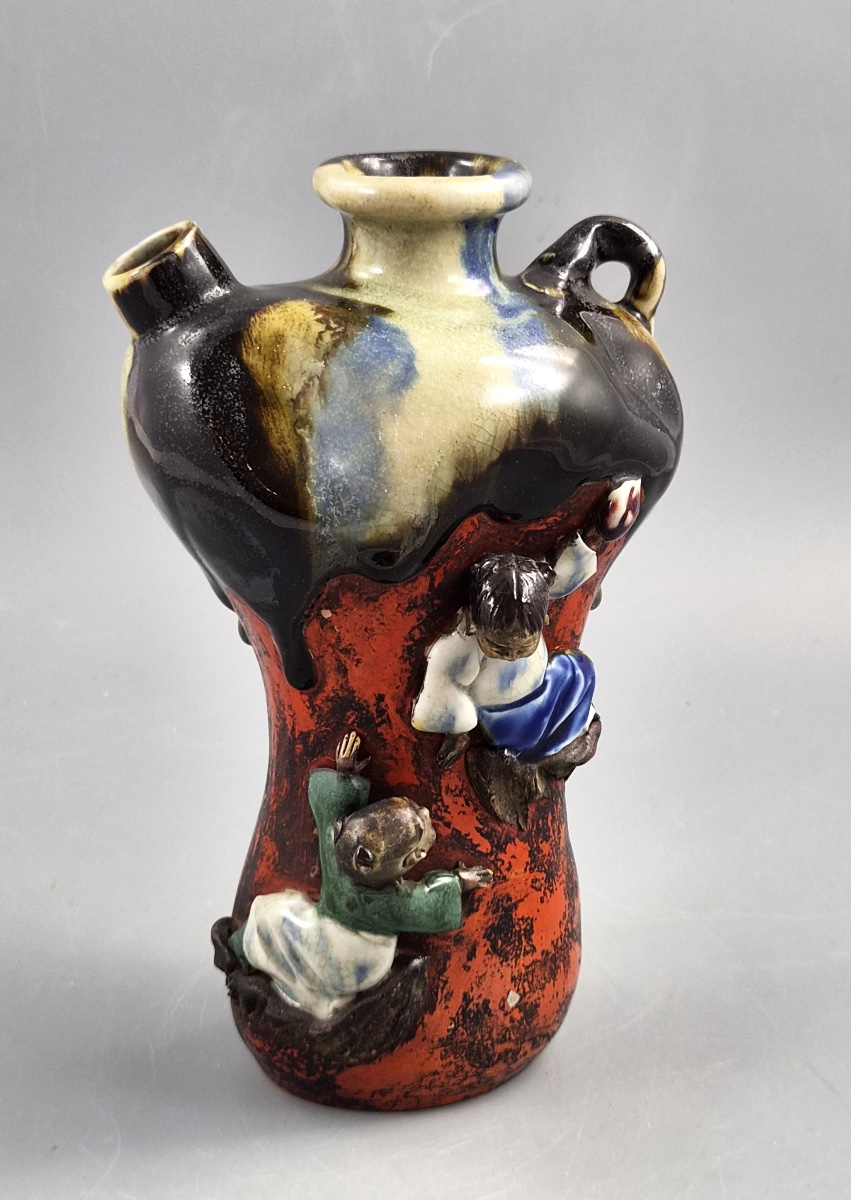
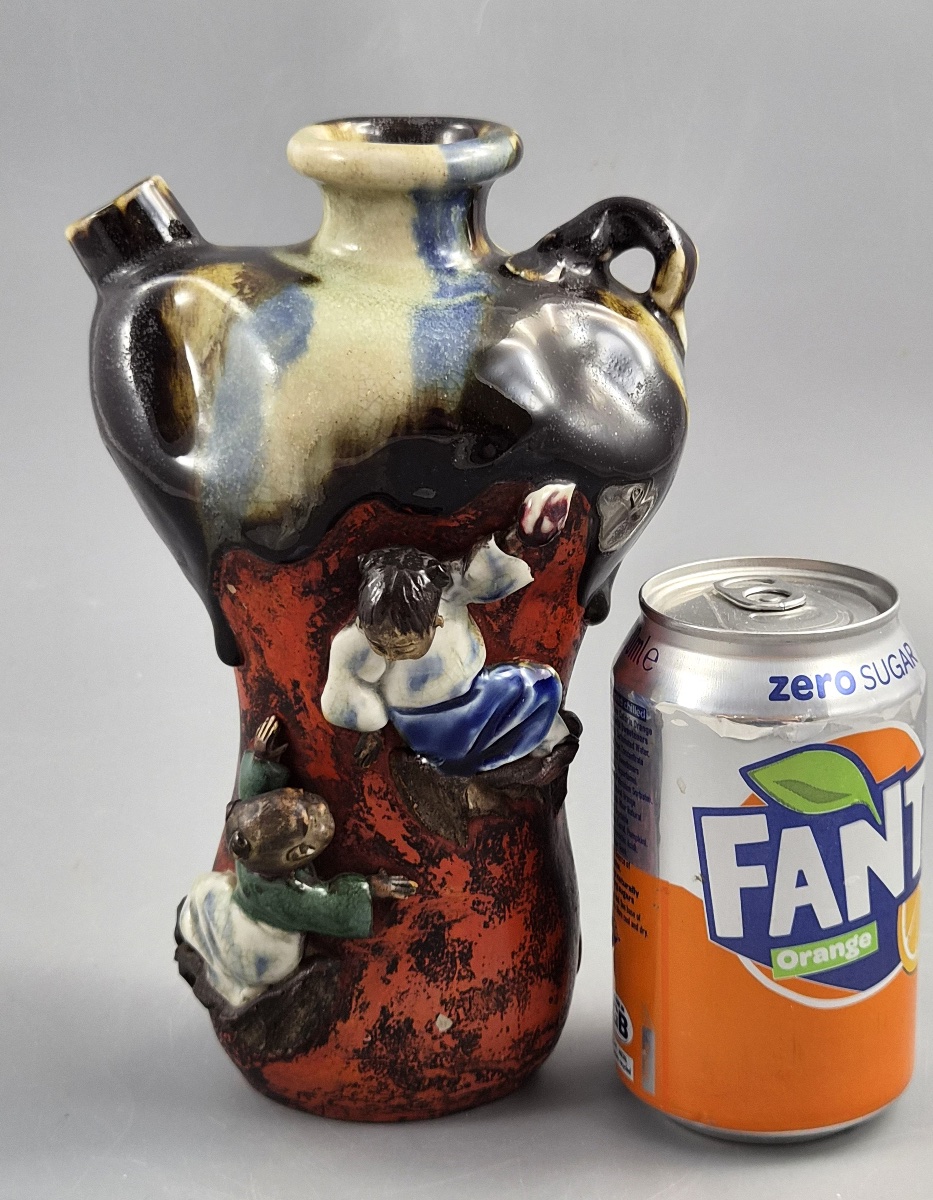
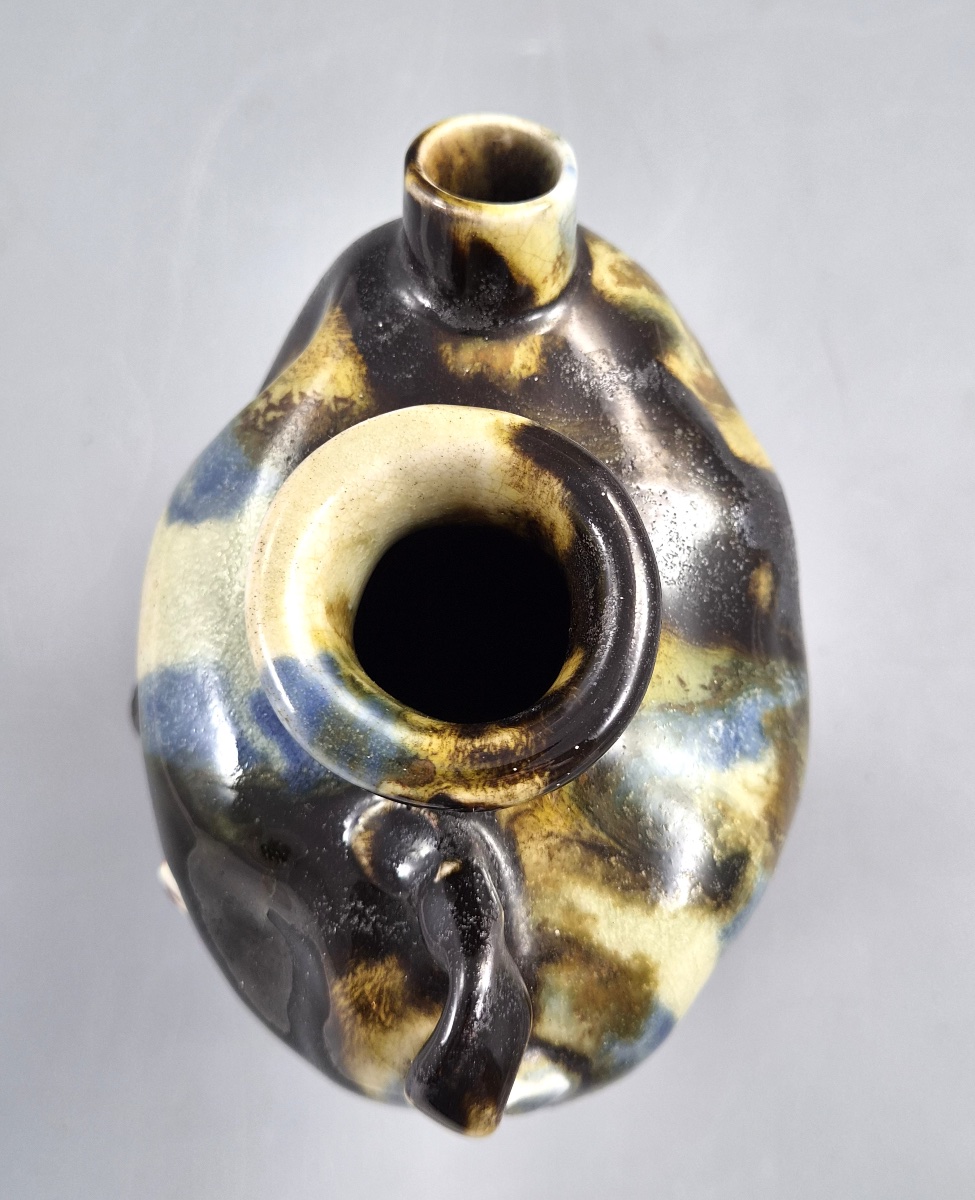
A hand-thrown Japanese Sumida Gawa (Sumida-yaki) vase of unusual multi-spouted form, dating to the late Meiji–Taishō period, circa 1900–1920, worked in the applied-figure tradition developed in the Asakusa/Sumida River district of Tokyo and associated with the workshop of Inoue Ryosai. The low-fired red earthenware body rises from a recessed base through a waisted, tree-trunk-form lower section to a bulbous shoulder, surmounted by an everted rolled mouth flanked by smaller tubular spouts and a single applied loop handle.
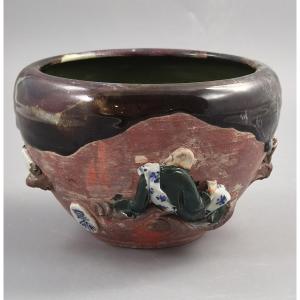
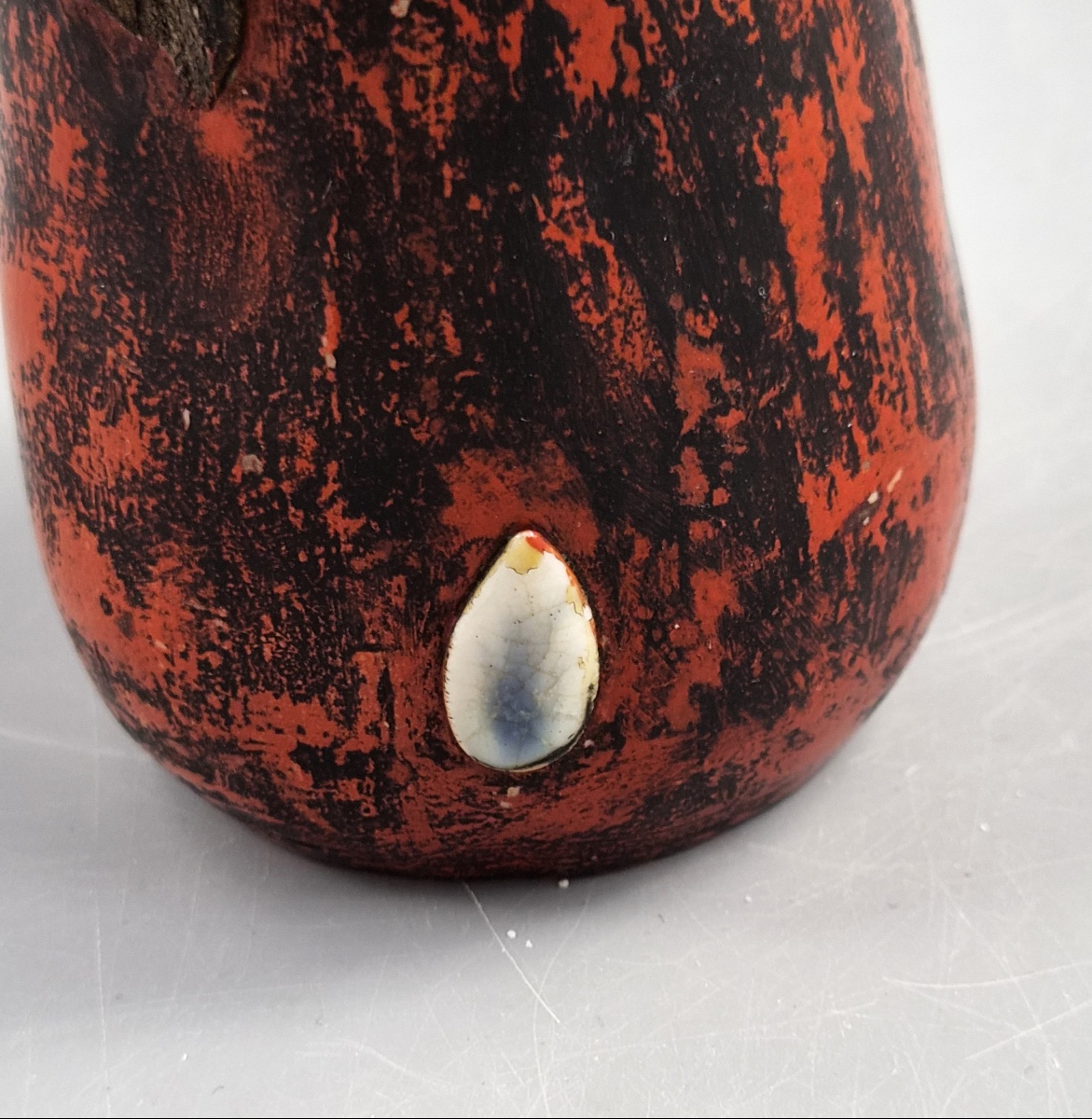
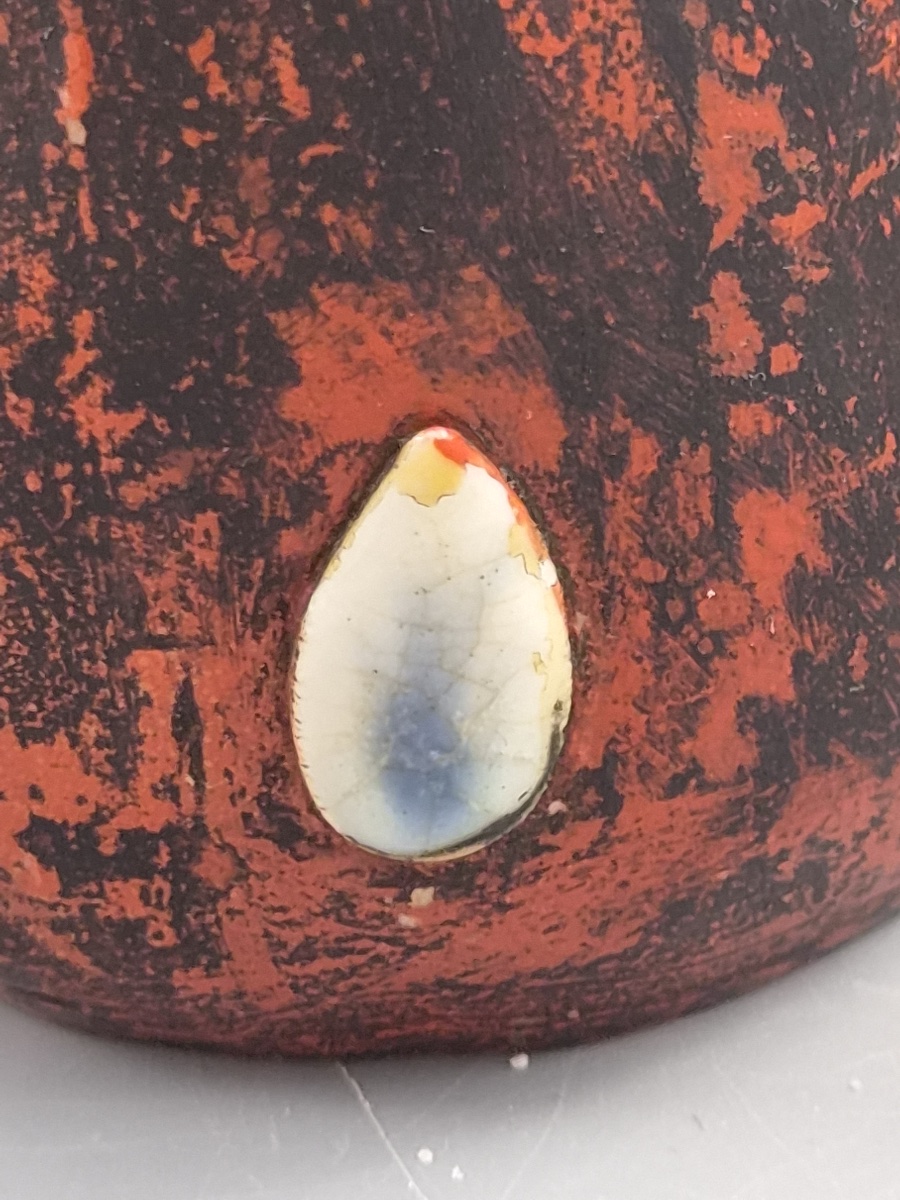
The shoulder is finished in a thick treacle-brown, cream and mottled-blue flambé glaze that cascades in heavy runs over the rim and down the body in the manner of Chinese Shiwan (Shekwan) wares, breaking against a matte iron-red slip ground with dark mottling that forms the "rocky cliff" on which the scene is set. Applied and modelled in high relief are figures in glazed robes of blue, green and cream — one scaling the cliff face and reaching toward a pale ovoid form (an egg) on the upper body, a second clambering below — together with a teardrop glaze reserve to the lower body.
Potetnially Inoue Ryosai. The vase measures 21.5 cm in height, 13 cm in width and 11 cm in depth, and weighs 685 g. In good antique condition, presenting very well, with honest age-related wear consistent with period use; minor glaze nicks/flaking as shown. Please carefully regard all photos as they make an integral part of the listing, and reach out if there are any questions.
Period: 20th century
Style: Asian art
Condition: Excellent condition
Width: 13
Height: 21.5
Depth: 11
Reference (ID): 1774220
Availability: In stock