

Jean-paul Sartre - The Devil And The Good Lord - Autograph Manuscript Fragment
Artist: Jean- Paul Sartre
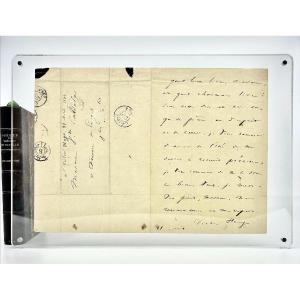
Jean-Paul Sartre (1905-1980). Autograph manuscript fragment from the play The Devil and the Good Lord (1951).
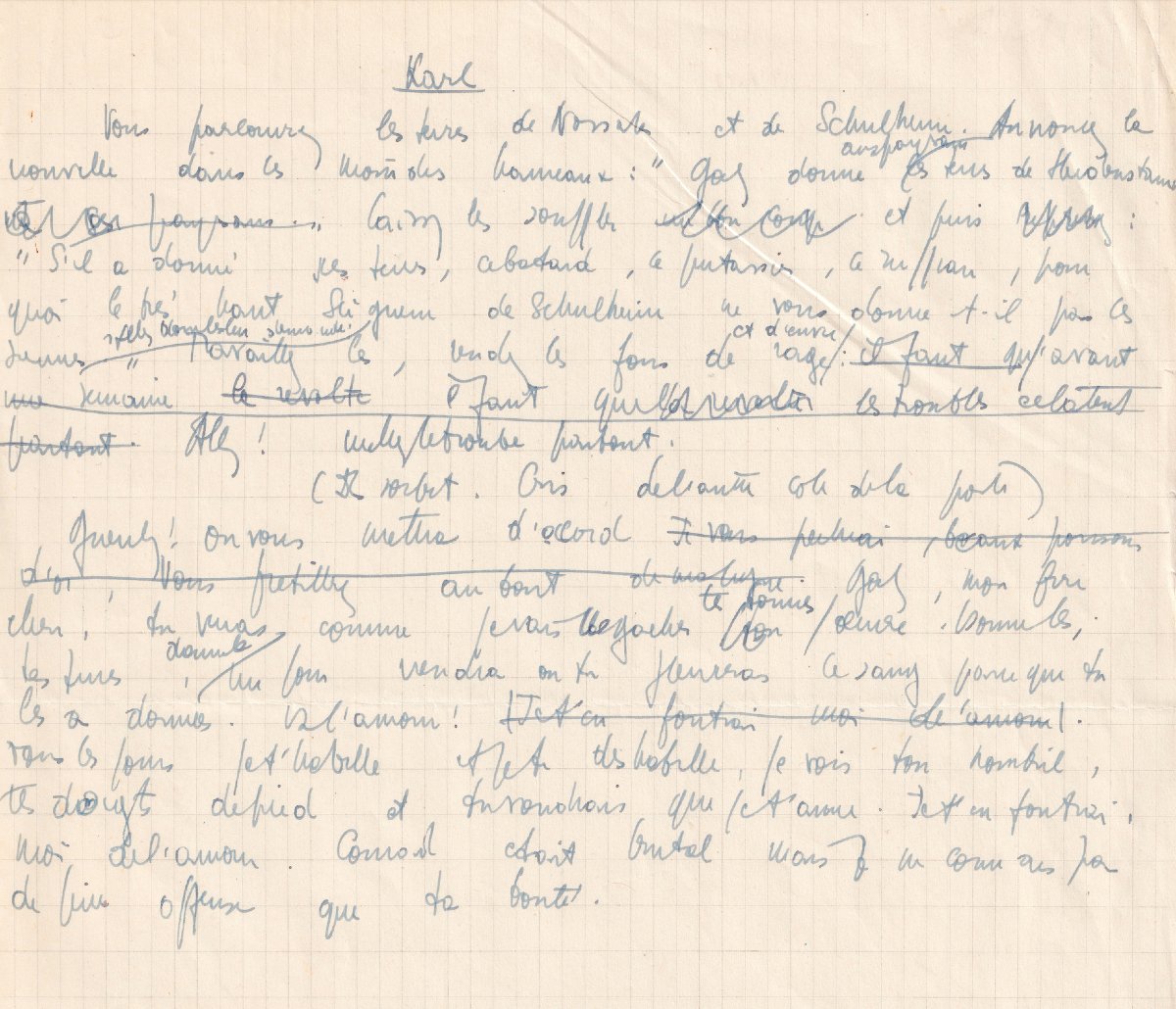
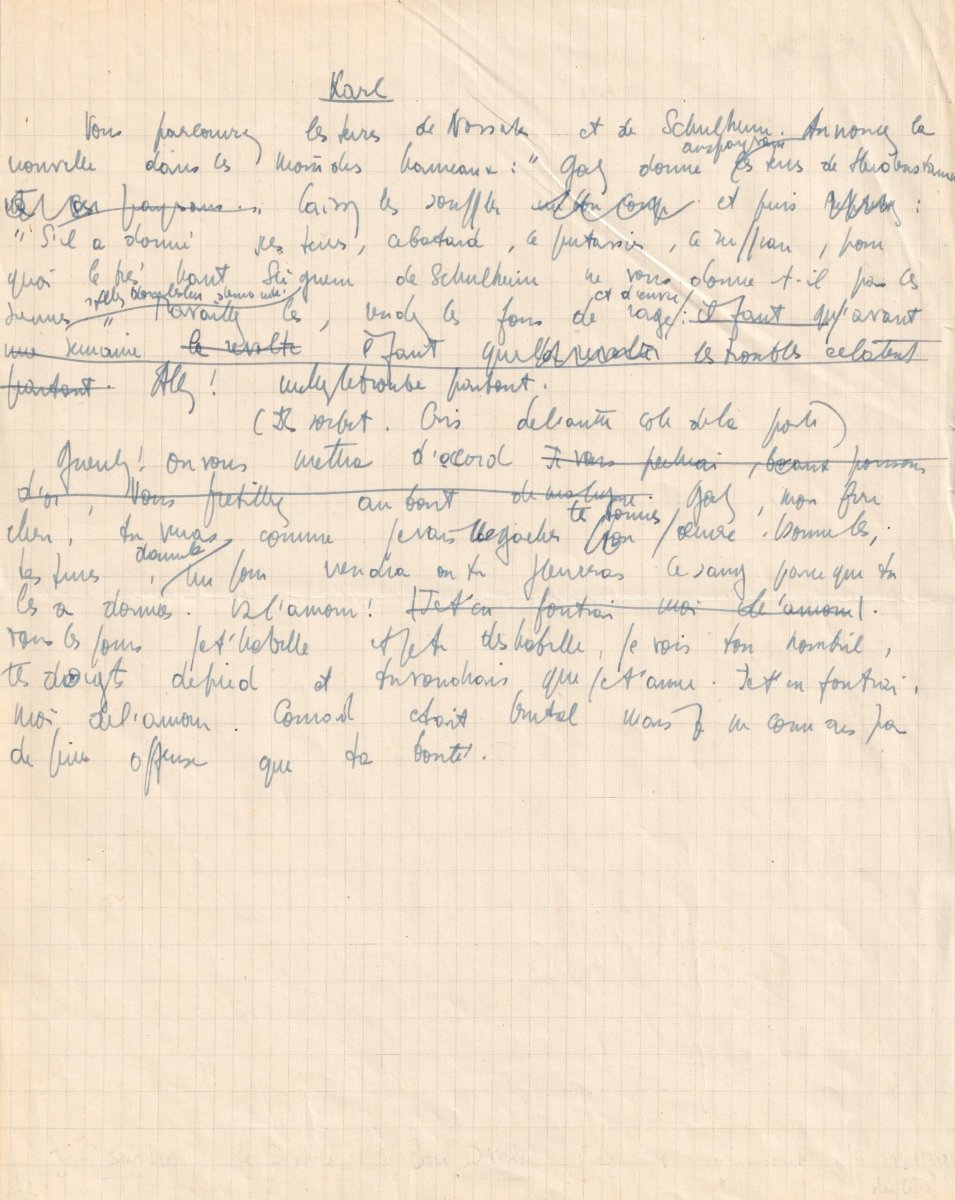
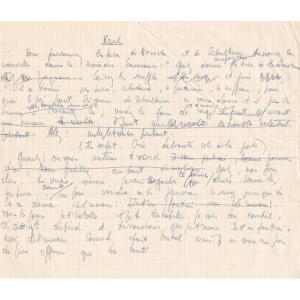
Working manuscript of a key passage from the play: "I'll give you love. Conrad was brutal but I know of no worse offense than your kindness."
[C.1951] No place or date. One page, quarto, on graph paper. Working manuscript for Scene II of Act IV of the play The Devil and the Good Lord, featuring some interesting variations from the published edition. (Pages 129 and 130 of the original edition and 114 and 115 of the Folio Gallimard paperback edition)
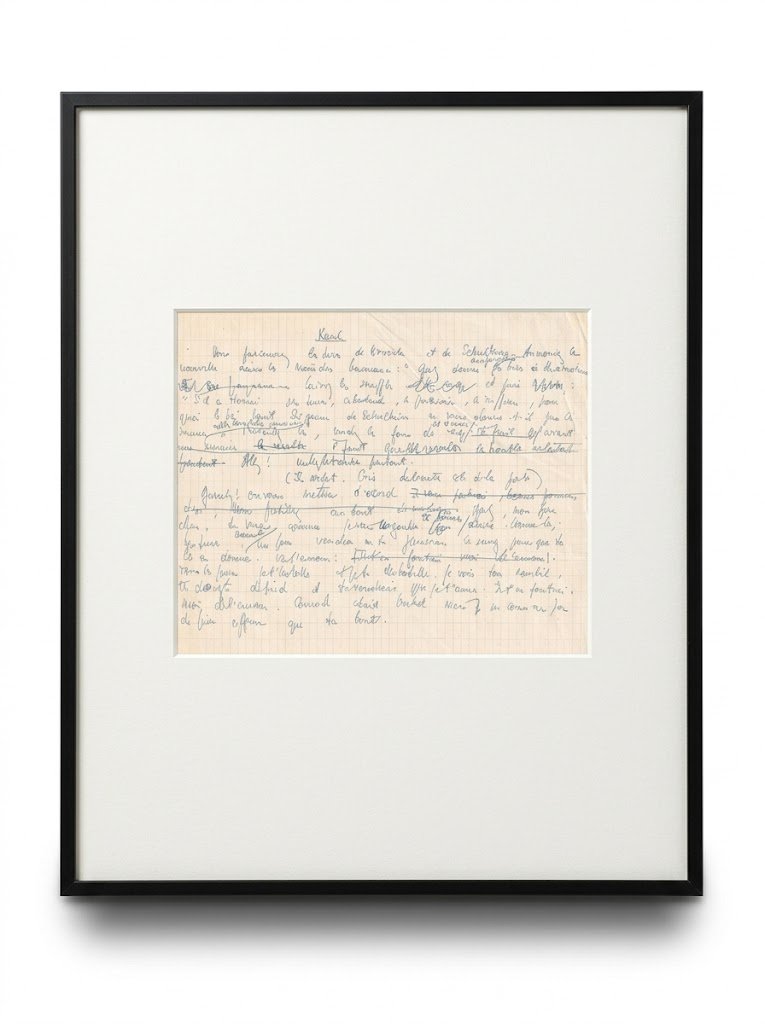
Size: 27 x 21 cm (unframed, not included, + €250 with mat, anti-reflective and UV-protective glass).
A splendid testament to Sartre's creative process on one of his major plays, focusing on a key moment: the moment when Goetz, the fearsome warlord, has a change of heart and decides to do good by giving his lands in Heidenstamm to the peasants.
Karl, a deeply nihilistic agitator who has infiltrated Goetz's inner circle, immediately twists this apparent act of generosity to incite the peasants' revolt, transforming Good into a source of violence and evil.
Karl's monologue is of paramount importance because it marks the tragic failure of Goetz's idealism: in striving for absolute purity, Goetz unwittingly triggers civil war.
Finally, through Karl's visceral hatred for his master's "kindness," Sartre also illustrates an important point of the play: the charity of the powerful is often received by the oppressed as the ultimate insult, an attempt at moral domination even more unbearable than the physical violence of the former tyrant, Conrad.
Conrad's famous closing line in the edition:
"Conrad was harsh and brutal, but his insults offended me less than your kindness."
In our manuscript, this one is even more striking:
"I'll give you love. Conrad was brutal, but I know of no greater offense than your kindness."
Working manuscript:
Karl:
You walk through the streets of Nosselle and Schulkheim. Announce the news in every hamlet: "Goetz is giving the peasants the lands of Heidenstamm. Let them catch their breath, and then: 'If he gave away his lands, the bastard, the whore, the ruffian, why doesn't the high lord of Schulheim give you his?' (crossed out: Within a week, revolt and unrest must break out everywhere.) Go! Sow chaos everywhere!
(They leave. Shouts from the other side of the door)
Goetz! We'll make you agree (crossed out: I'll catch you, beautiful golden fish, you'll wriggle at the end of my line)
Goetz, my dear brother, you'll see how I'll ruin your work. Give them your lands, give them. A day will come when you'll weep blood because you gave them away. Love! (crossed out: I'll give you love). Every day I dress you and undress you, I see your navel, your toes, and you want me to love you. I'll give you love. Conrad was brutal, but I know of no greater offense than your kindness.
Final version published:
Karl:
Here are the orders. Travel through the lands of Nossak and Schulheim. Announce the news in every hamlet: "Goetz gives the peasants the lands of Heidenstamm." “Let them catch their breath, and then: ‘If he gave away his lands, the whore, the bastard, why doesn’t the high lord of Schulheim give you his?’ Work them, drive them mad with rage, sow discord everywhere. Go.
(They exit.)
Goetz, my dear brother, you’ll see how I’ll ruin your good deeds. Give them away, your lands, give them away then: one day you’ll regret not having died before giving them away. (He laughs.) Love! Every day I dress you and undress you, I see your navel, your toes, your arse, and you want me to love you. I’ll give you love. Conrad was harsh and brutal, but his insults offended me less than your kindness.
” To delve deeper:
When Goetz founds his peaceful community (the "City of the Sun"), Karl infiltrates it to corrupt it. He is the one who incites the peasants to civil war, indirectly causing the massacre in the City of the Sun and the complete failure of Goetz's experiment.
Karl is, in a way, Goetz's negative mirror image. Goetz does Good out of pride, to be "superior" and equal to God. Karl, on the other hand, does Evil (provoking war, manipulating the people) out of absolute hatred for domination. The confrontation between the two men highlights the impotence of religion and morality in the face of social misery. Karl forces Goetz to understand that absolute Good does not exist and that, to act effectively on the world, one must be willing to "get one's hands dirty."
The passage in our manuscript precisely captures the key moment when Karl seals the play's fate and tips it toward tragedy.
Working manuscript of a key passage from the play: "I'll give you love. Conrad was brutal but I know of no worse offense than your kindness."
[C.1951] No place or date. One page, quarto, on graph paper. Working manuscript for Scene II of Act IV of the play The Devil and the Good Lord, featuring some interesting variations from the published edition. (Pages 129 and 130 of the original edition and 114 and 115 of the Folio Gallimard paperback edition)
Size: 27 x 21 cm (unframed, not included, + €250 with mat, anti-reflective and UV-protective glass).
A splendid testament to Sartre's creative process on one of his major plays, focusing on a key moment: the moment when Goetz, the fearsome warlord, has a change of heart and decides to do good by giving his lands in Heidenstamm to the peasants.
Karl, a deeply nihilistic agitator who has infiltrated Goetz's inner circle, immediately twists this apparent act of generosity to incite the peasants' revolt, transforming Good into a source of violence and evil.
Karl's monologue is of paramount importance because it marks the tragic failure of Goetz's idealism: in striving for absolute purity, Goetz unwittingly triggers civil war.
Finally, through Karl's visceral hatred for his master's "kindness," Sartre also illustrates an important point of the play: the charity of the powerful is often received by the oppressed as the ultimate insult, an attempt at moral domination even more unbearable than the physical violence of the former tyrant, Conrad.
Conrad's famous closing line in the edition:
"Conrad was harsh and brutal, but his insults offended me less than your kindness."
In our manuscript, this one is even more striking:
"I'll give you love. Conrad was brutal, but I know of no greater offense than your kindness."
Working manuscript:
Karl:
You walk through the streets of Nosselle and Schulkheim. Announce the news in every hamlet: "Goetz is giving the peasants the lands of Heidenstamm. Let them catch their breath, and then: 'If he gave away his lands, the bastard, the whore, the ruffian, why doesn't the high lord of Schulheim give you his?' (crossed out: Within a week, revolt and unrest must break out everywhere.) Go! Sow chaos everywhere!
(They leave. Shouts from the other side of the door)
Goetz! We'll make you agree (crossed out: I'll catch you, beautiful golden fish, you'll wriggle at the end of my line)
Goetz, my dear brother, you'll see how I'll ruin your work. Give them your lands, give them. A day will come when you'll weep blood because you gave them away. Love! (crossed out: I'll give you love). Every day I dress you and undress you, I see your navel, your toes, and you want me to love you. I'll give you love. Conrad was brutal, but I know of no greater offense than your kindness.
Final version published:
Karl:
Here are the orders. Travel through the lands of Nossak and Schulheim. Announce the news in every hamlet: "Goetz gives the peasants the lands of Heidenstamm." “Let them catch their breath, and then: ‘If he gave away his lands, the whore, the bastard, why doesn’t the high lord of Schulheim give you his?’ Work them, drive them mad with rage, sow discord everywhere. Go.
(They exit.)
Goetz, my dear brother, you’ll see how I’ll ruin your good deeds. Give them away, your lands, give them away then: one day you’ll regret not having died before giving them away. (He laughs.) Love! Every day I dress you and undress you, I see your navel, your toes, your arse, and you want me to love you. I’ll give you love. Conrad was harsh and brutal, but his insults offended me less than your kindness.
” To delve deeper:
When Goetz founds his peaceful community (the "City of the Sun"), Karl infiltrates it to corrupt it. He is the one who incites the peasants to civil war, indirectly causing the massacre in the City of the Sun and the complete failure of Goetz's experiment.
Karl is, in a way, Goetz's negative mirror image. Goetz does Good out of pride, to be "superior" and equal to God. Karl, on the other hand, does Evil (provoking war, manipulating the people) out of absolute hatred for domination. The confrontation between the two men highlights the impotence of religion and morality in the face of social misery. Karl forces Goetz to understand that absolute Good does not exist and that, to act effectively on the world, one must be willing to "get one's hands dirty."
The passage in our manuscript precisely captures the key moment when Karl seals the play's fate and tips it toward tragedy.
1 800 €
Period: 20th century
Style: Other Style
Condition: Good condition
Width: 21 cm
Height: 27 cm
Reference (ID): 1773809
Availability: In stock
Print