THIS OBJECT WAS SOLD
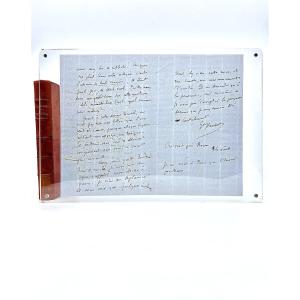
Stendhal - Autograph Letter Signed During The Last Year Of His Life, Civitavecchia, Italy, 1841

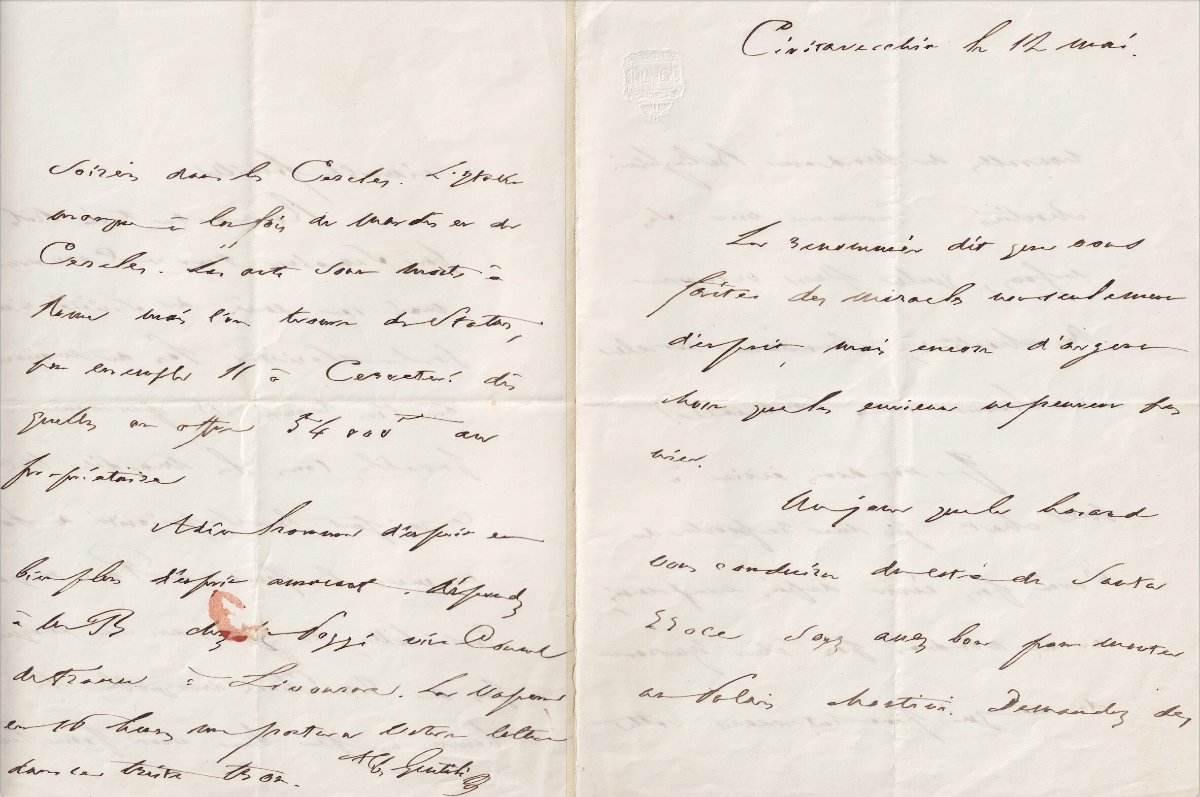
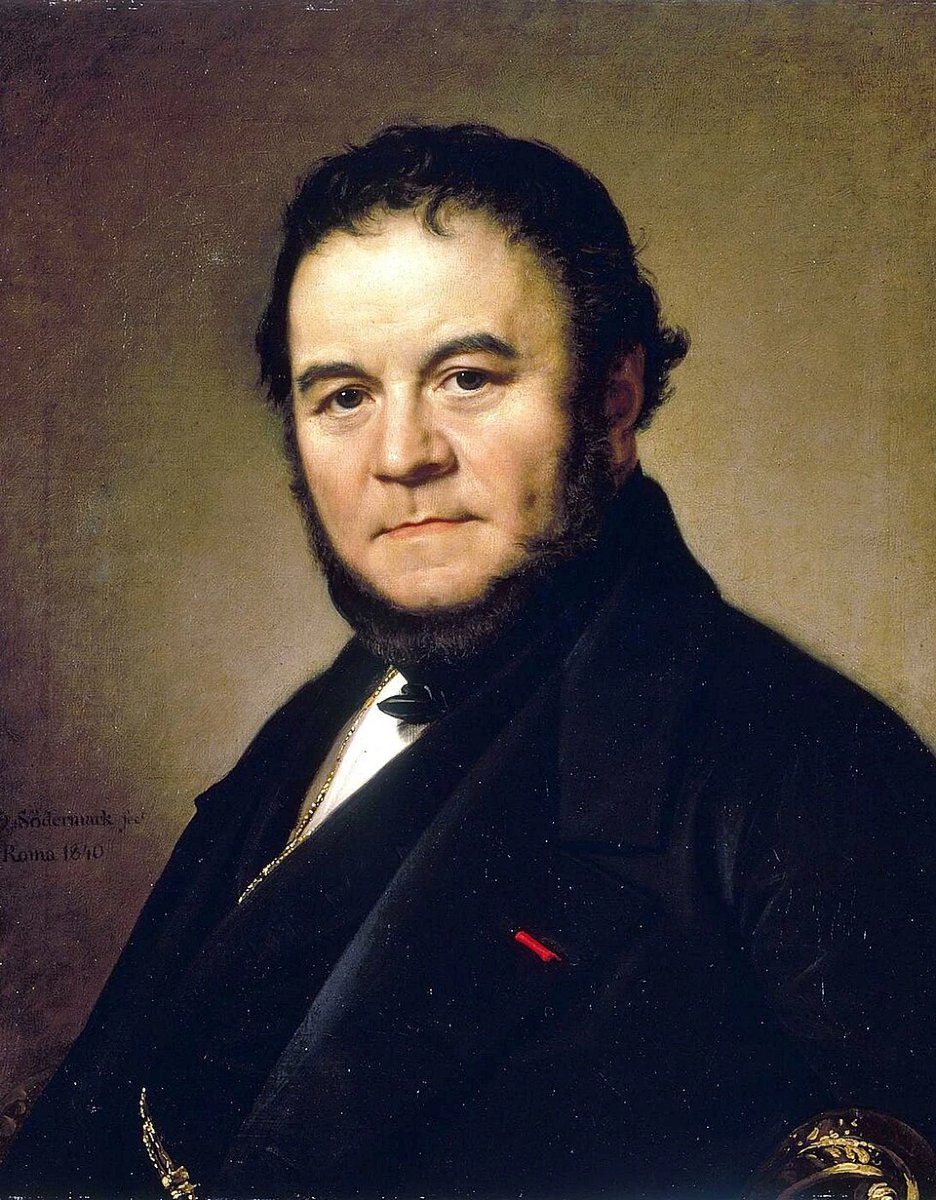
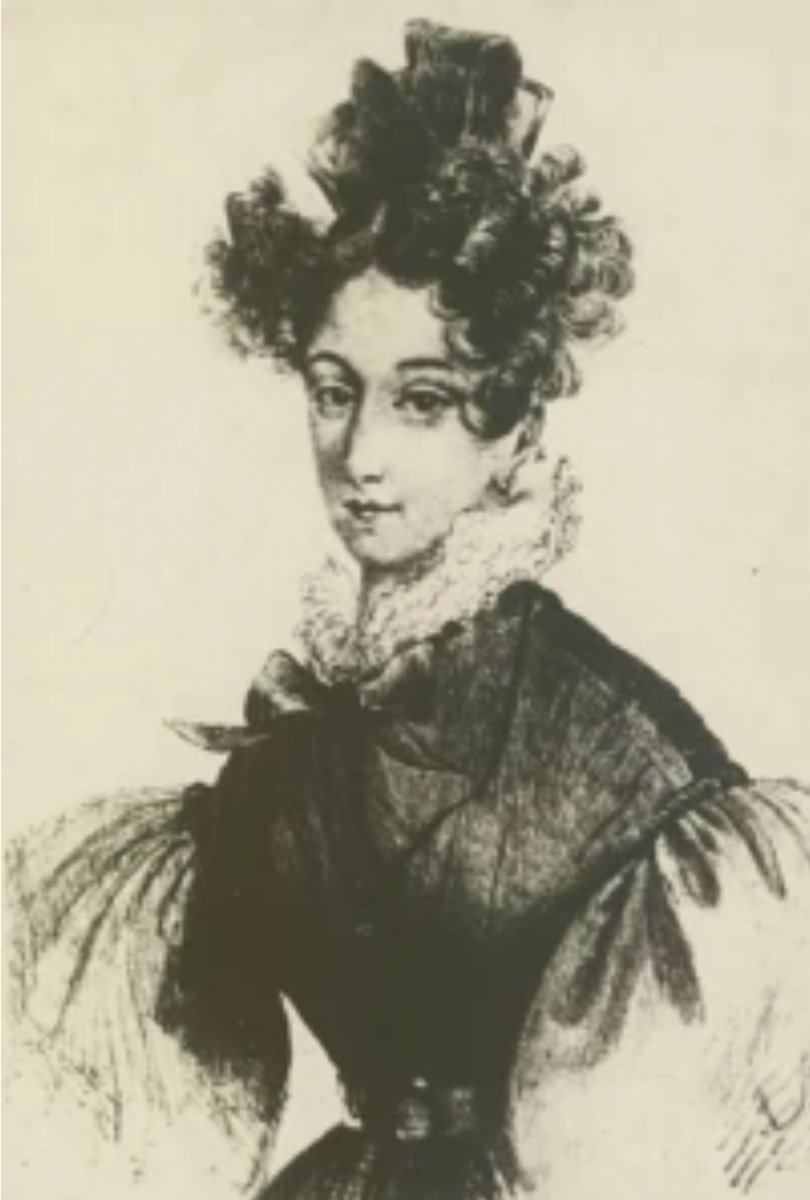
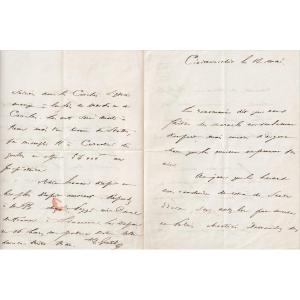


A precious letter from the last year of his life, 1841.Writing from Civitavecchia, Stendhal speaks of Paris, Rome, and Giulia Rinieri.
Autograph letter signed by Stendhal (Henri Beyle, 1783–1842) to his Florentine lawyer, advisor, and friend Vincenzo Salvagnoli (1802–1861).
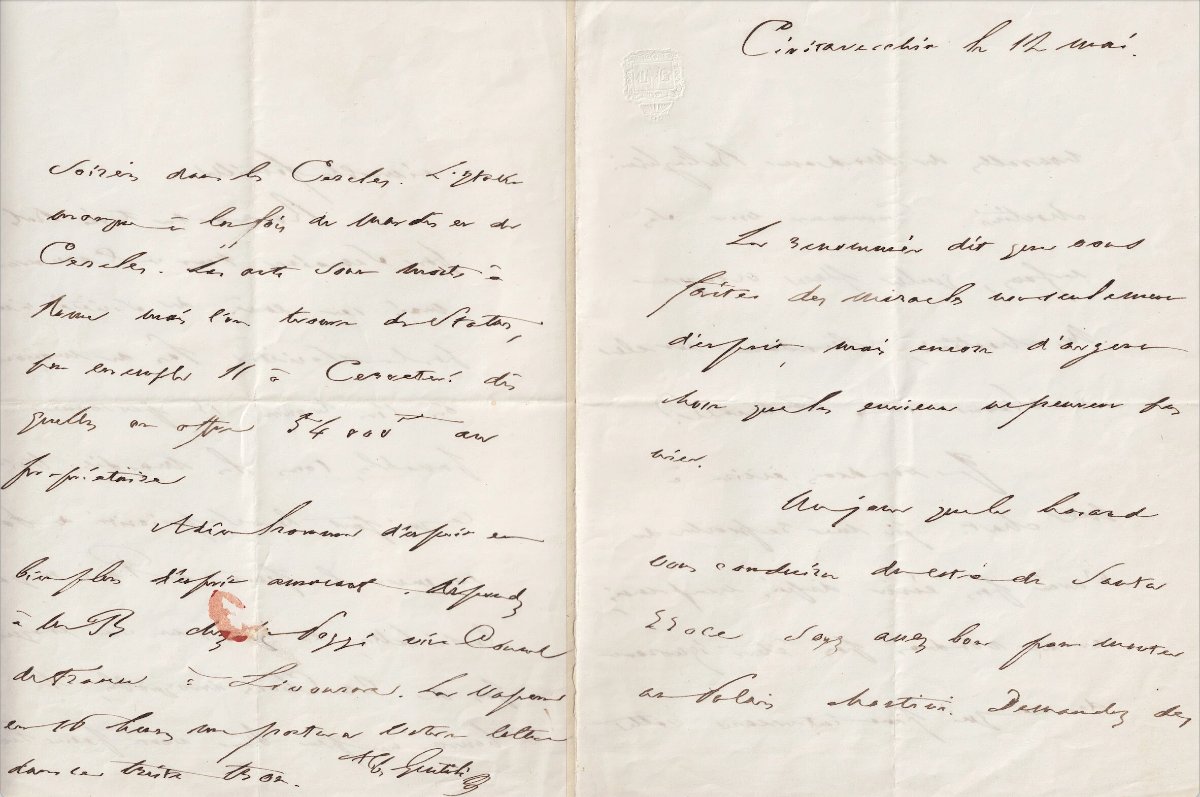
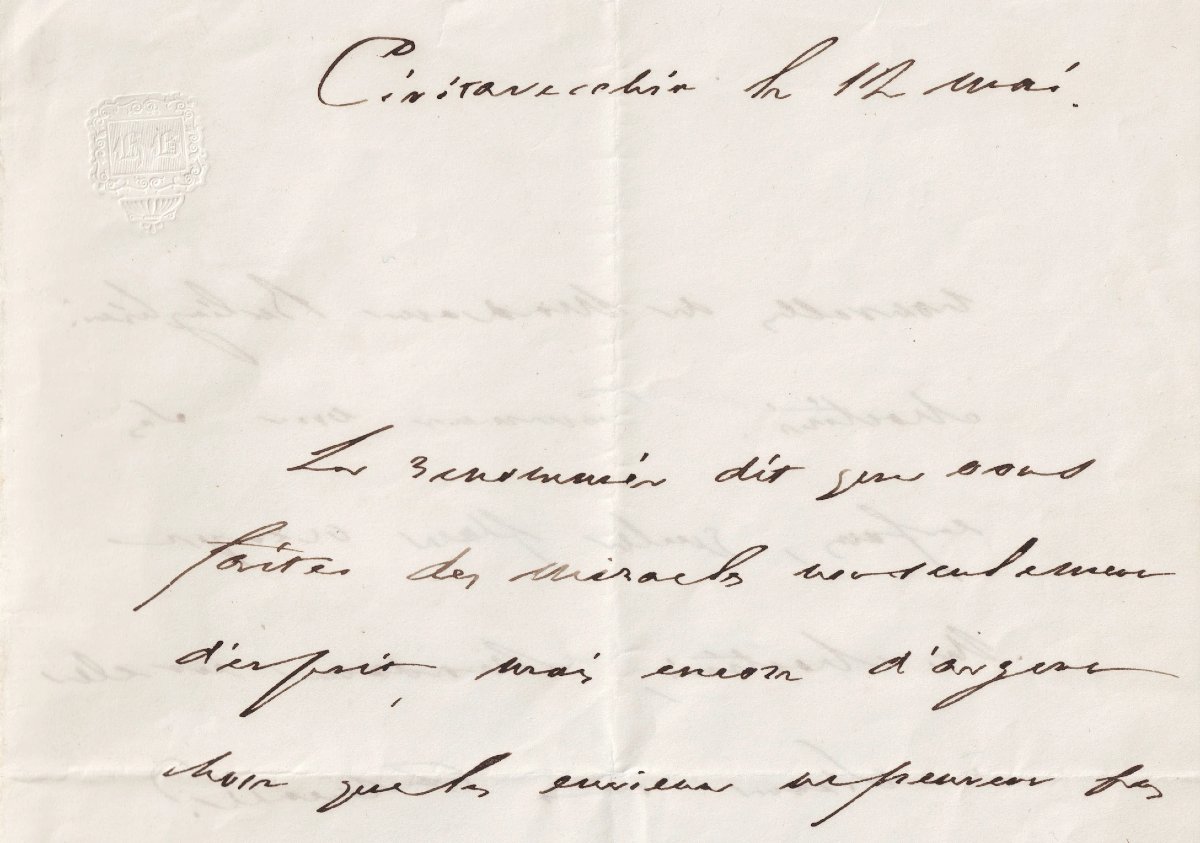
Civitavecchia, May 12 [1841]. Signed with the pseudonym "Alb. Gentili" (see below regarding the choice of this pseudonym).
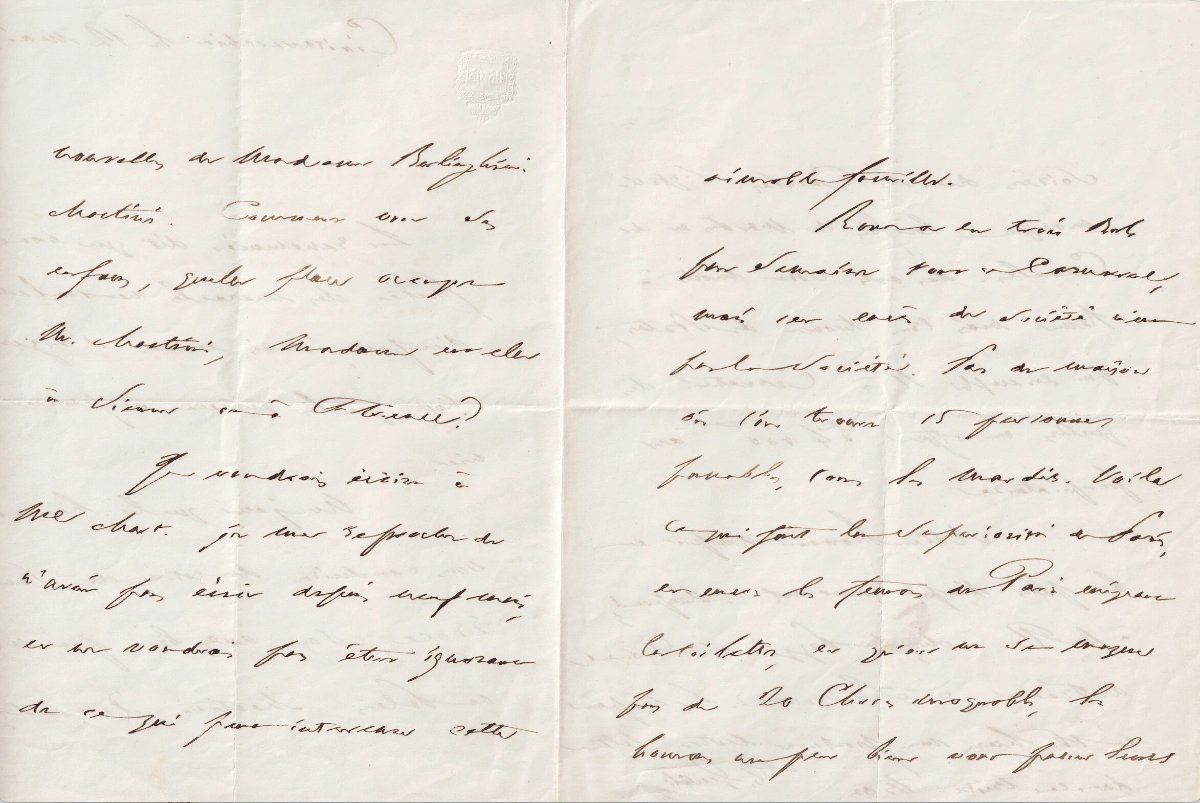
Four full octavo pages. Paper featuring Stendhal’s blind-embossed monogram (a magnificent design of his initials, HB, for Henri Beyle). Slight trace of wax on the front of the first leaf. Traces of a former hinge mount.
Dimensions: 20 x 15.5 cm (20 x 31 cm unfolded).
A fine, lively letter—published in *L’Année stendhalienne*—discussing the financial successes of his friend Salvagnoli, as well as Paris, Rome, and Giulia Rinieri (now Mme Martini). Rinieri was a central figure in Stendhal’s life and the inspiration for certain traits of the character Mathilde de La Mole in *The Red and the Black*.
Giulia Rinieri met Stendhal—who was eighteen years her senior—in Paris in 1827. Three years later, she was the first to declare her love, using words that bring a smile to one's face: "I have known for a long time that you are ugly and old, but I love you." The writer subsequently decided to ask her guardian for her hand in marriage—a request that was refused. On June 24, she married a cousin, Giulio Martini, with whom she had two children. However, she saw Stendhal again during visits to Florence a few years later, and the two maintained a deep and tender friendship until Stendhal’s death. Vincenzo Salvagnoli, a brilliant and cultured young Florentine lawyer, met Stendhal in 1827, and a lasting friendship blossomed between them, forged by a shared passion for art and literature. The lawyer accompanied Stendhal to Paris a few months after the date of this letter—in October 1841.
In 1831, Stendhal was appointed French Consul in Civitavecchia—the only port in the Papal States, and an "abominable hole" with a population of seven and a half thousand, including a thousand convicts. There, he was overcome by boredom and stupidity: no salons, no friends, no pretty women, no intellectual conversation. He kept his spirits up with his personal motto: "SFCDT" (*Se Foutre Carrément De Tout*—"Not giving a damn about anything").
This letter dates from Stendhal’s final May; he would pass away the following year, on March 23, 1842.
"Civitavecchia, May 12
Rumor has it that you work miracles—not only of wit but also of money—something even the envious cannot deny.
If chance should ever take you near Santa Croce, please be kind enough to go up to the Palazzo Martini. Ask after Madame Berlinghieri Martini. How are her children? What position does M. Martini hold? Is Madame in Siena or Florence?
I would like to write to M. Martini. I reproach myself for not having written in nine months, and I would hate to be out of the loop regarding matters of interest to that charming family.
Rome hosted three balls a week throughout the Carnival season, yet this excess of social gatherings was not true society. There isn't a single house where one can find fifteen decent people gathered every Tuesday." That is what gives Paris its superiority—not to mention that Parisian women demand elegant attire and a certain standard of conduct, whereas men of some standing spend their evenings at their clubs. Italy lacks both *mardis* [social gatherings] and clubs. The arts are dead in Rome, yet one still finds statues—for instance, eleven at Cerveteri, for which the owner has been offered 54,000 francs.
Farewell, man of wit—and, more importantly, of entertaining wit.
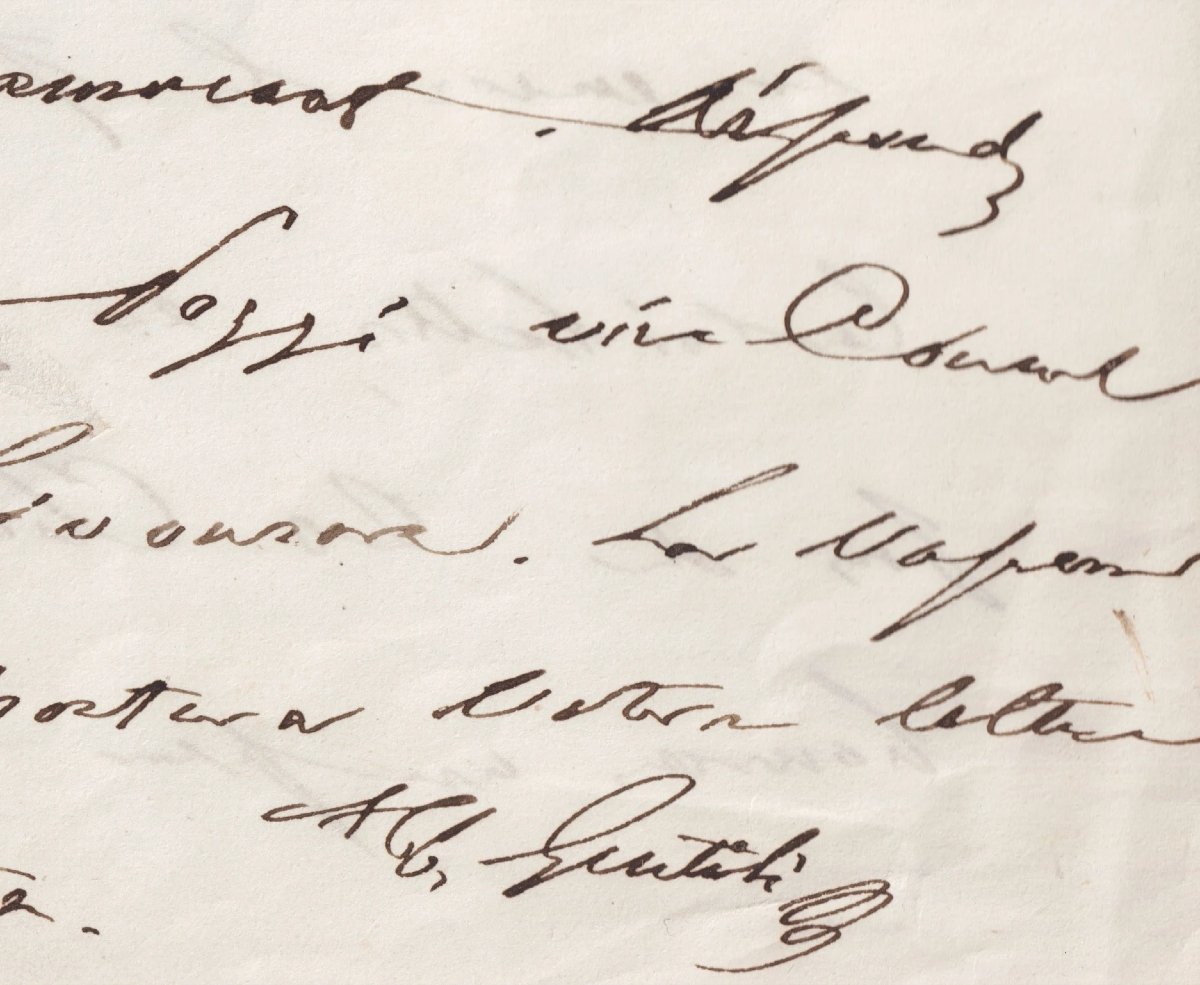
Please reply to M. B* c/o M. Poggi, the French Vice-Consul in Livorno.
The steamship will carry your letter to this dreary hole in sixteen hours.
Alb. Gentili"
* Monsieur Beyle
The author of *The Charterhouse of Parma* and *The Red and the Black* used hundreds of different pseudonyms in his correspondence (over 350 have been identified). The signature "Alb. Gentili" on our letter is a reference by Stendhal to Alberico Gentili, an Italian jurist of the late 16th century whose work contributed to the birth of public international law.
Stendhal was fascinated by Renaissance and 16th-century Italy; he would spend entire days in Roman libraries copying old manuscripts that recounted crimes of passion, trials, and political intrigues. Alberico Gentili—who hailed from the Marche region (like many of Stendhal’s characters)—was a major intellectual figure of that pivotal era the writer so revered.
Autograph letter signed by Stendhal (Henri Beyle, 1783–1842) to his Florentine lawyer, advisor, and friend Vincenzo Salvagnoli (1802–1861).
Civitavecchia, May 12 [1841]. Signed with the pseudonym "Alb. Gentili" (see below regarding the choice of this pseudonym).
Four full octavo pages. Paper featuring Stendhal’s blind-embossed monogram (a magnificent design of his initials, HB, for Henri Beyle). Slight trace of wax on the front of the first leaf. Traces of a former hinge mount.
Dimensions: 20 x 15.5 cm (20 x 31 cm unfolded).
A fine, lively letter—published in *L’Année stendhalienne*—discussing the financial successes of his friend Salvagnoli, as well as Paris, Rome, and Giulia Rinieri (now Mme Martini). Rinieri was a central figure in Stendhal’s life and the inspiration for certain traits of the character Mathilde de La Mole in *The Red and the Black*.
Giulia Rinieri met Stendhal—who was eighteen years her senior—in Paris in 1827. Three years later, she was the first to declare her love, using words that bring a smile to one's face: "I have known for a long time that you are ugly and old, but I love you." The writer subsequently decided to ask her guardian for her hand in marriage—a request that was refused. On June 24, she married a cousin, Giulio Martini, with whom she had two children. However, she saw Stendhal again during visits to Florence a few years later, and the two maintained a deep and tender friendship until Stendhal’s death. Vincenzo Salvagnoli, a brilliant and cultured young Florentine lawyer, met Stendhal in 1827, and a lasting friendship blossomed between them, forged by a shared passion for art and literature. The lawyer accompanied Stendhal to Paris a few months after the date of this letter—in October 1841.
In 1831, Stendhal was appointed French Consul in Civitavecchia—the only port in the Papal States, and an "abominable hole" with a population of seven and a half thousand, including a thousand convicts. There, he was overcome by boredom and stupidity: no salons, no friends, no pretty women, no intellectual conversation. He kept his spirits up with his personal motto: "SFCDT" (*Se Foutre Carrément De Tout*—"Not giving a damn about anything").
This letter dates from Stendhal’s final May; he would pass away the following year, on March 23, 1842.
"Civitavecchia, May 12
Rumor has it that you work miracles—not only of wit but also of money—something even the envious cannot deny.
If chance should ever take you near Santa Croce, please be kind enough to go up to the Palazzo Martini. Ask after Madame Berlinghieri Martini. How are her children? What position does M. Martini hold? Is Madame in Siena or Florence?
I would like to write to M. Martini. I reproach myself for not having written in nine months, and I would hate to be out of the loop regarding matters of interest to that charming family.
Rome hosted three balls a week throughout the Carnival season, yet this excess of social gatherings was not true society. There isn't a single house where one can find fifteen decent people gathered every Tuesday." That is what gives Paris its superiority—not to mention that Parisian women demand elegant attire and a certain standard of conduct, whereas men of some standing spend their evenings at their clubs. Italy lacks both *mardis* [social gatherings] and clubs. The arts are dead in Rome, yet one still finds statues—for instance, eleven at Cerveteri, for which the owner has been offered 54,000 francs.
Farewell, man of wit—and, more importantly, of entertaining wit.
Please reply to M. B* c/o M. Poggi, the French Vice-Consul in Livorno.
The steamship will carry your letter to this dreary hole in sixteen hours.
Alb. Gentili"
* Monsieur Beyle
The author of *The Charterhouse of Parma* and *The Red and the Black* used hundreds of different pseudonyms in his correspondence (over 350 have been identified). The signature "Alb. Gentili" on our letter is a reference by Stendhal to Alberico Gentili, an Italian jurist of the late 16th century whose work contributed to the birth of public international law.
Stendhal was fascinated by Renaissance and 16th-century Italy; he would spend entire days in Roman libraries copying old manuscripts that recounted crimes of passion, trials, and political intrigues. Alberico Gentili—who hailed from the Marche region (like many of Stendhal’s characters)—was a major intellectual figure of that pivotal era the writer so revered.
Explore similar pieces and discover your ideal find:
Old Books