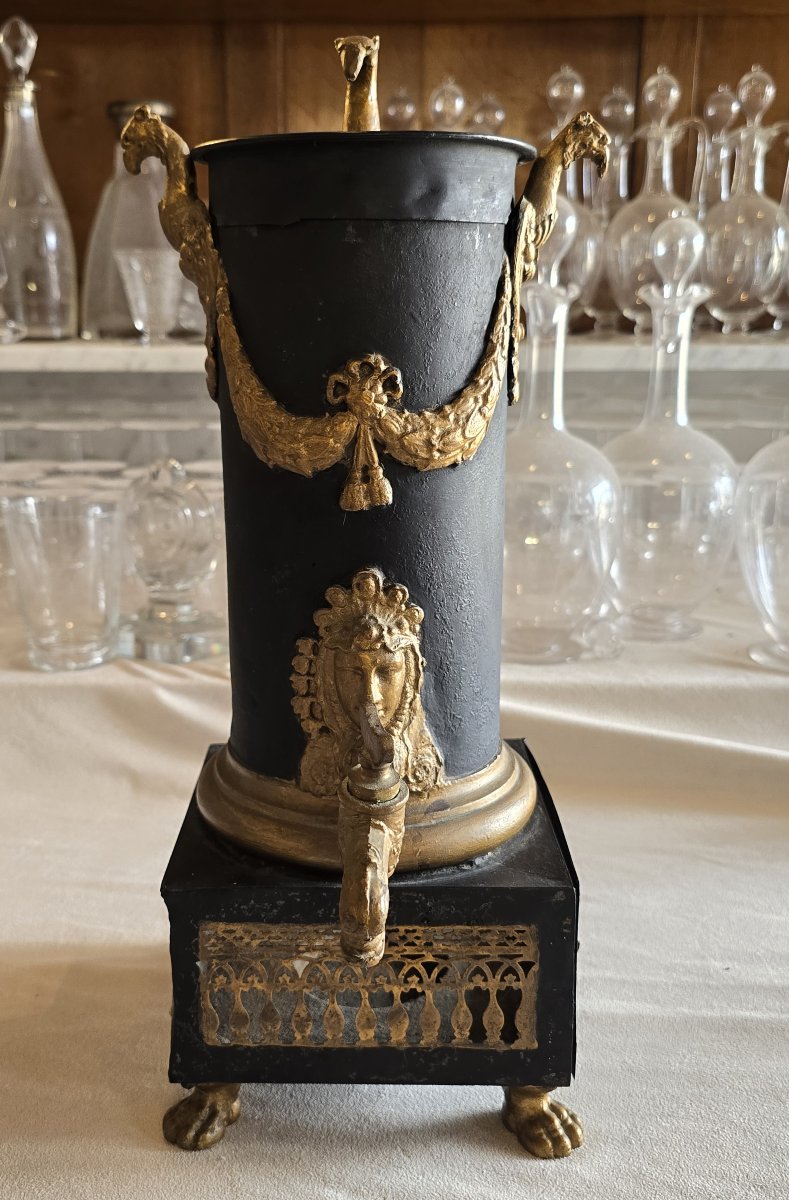


Antique Russian Sheet-metal Samovar, Late 19th Century
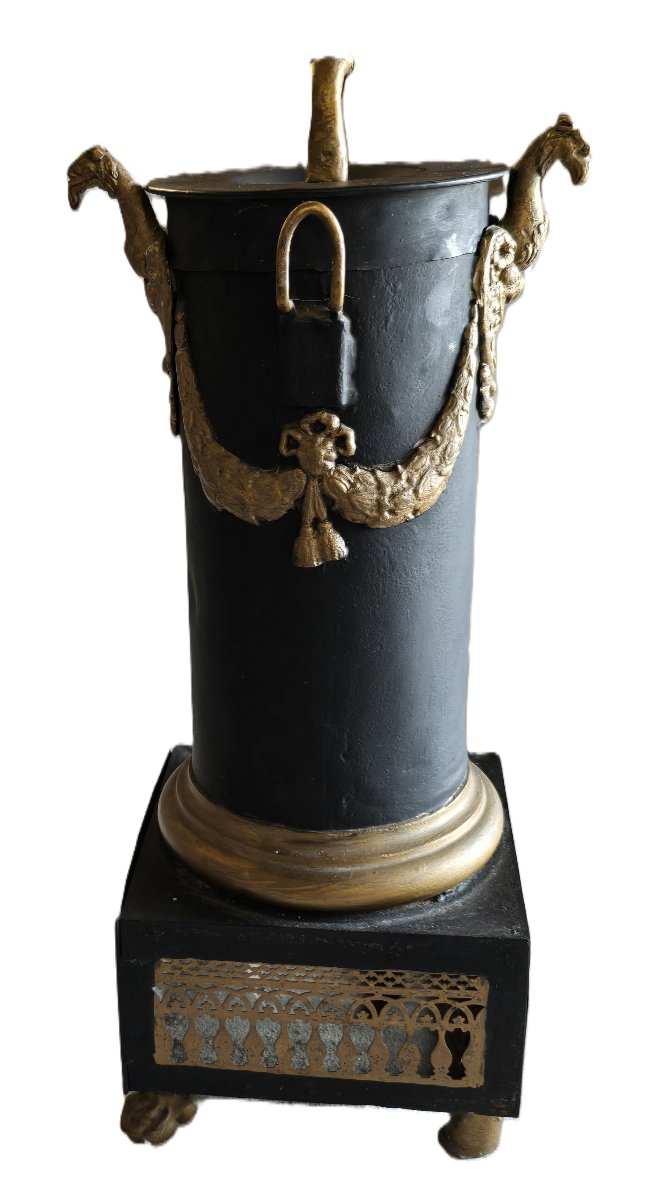
Russian samovar made of sheet iron.
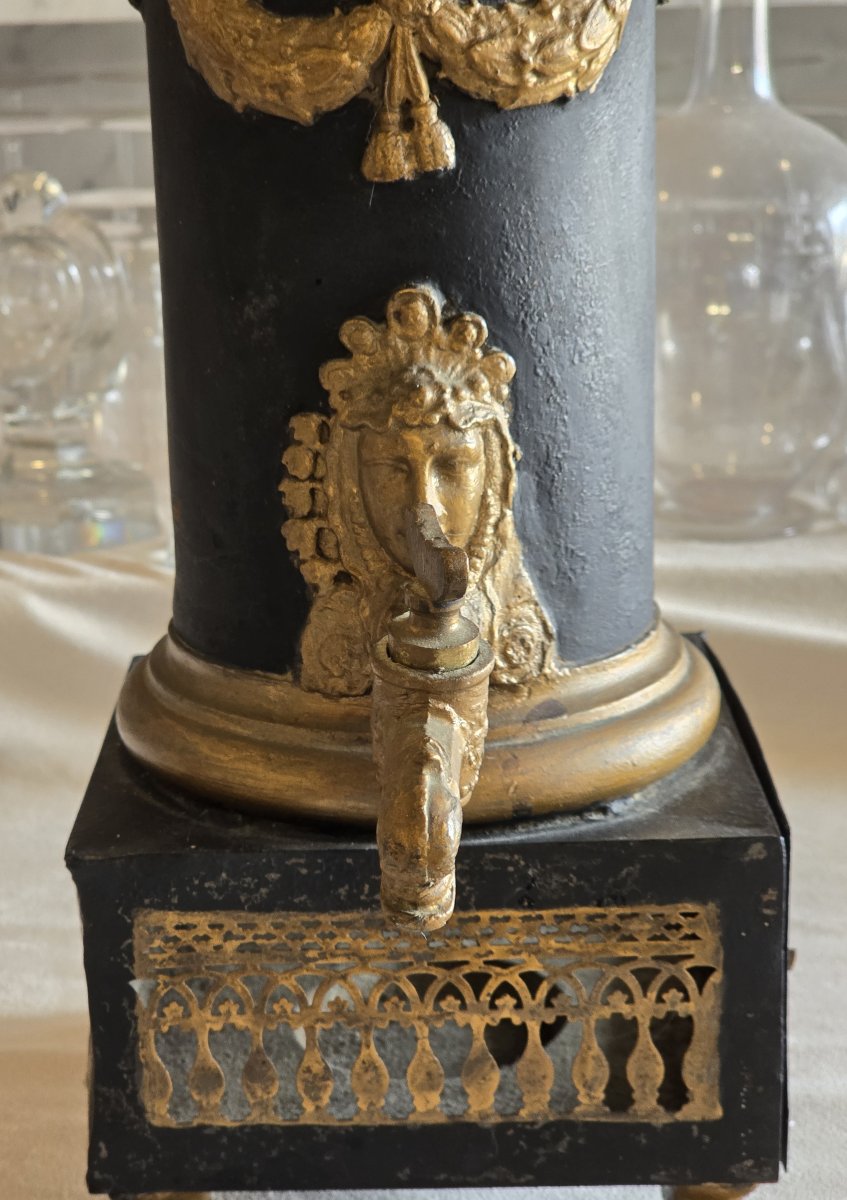
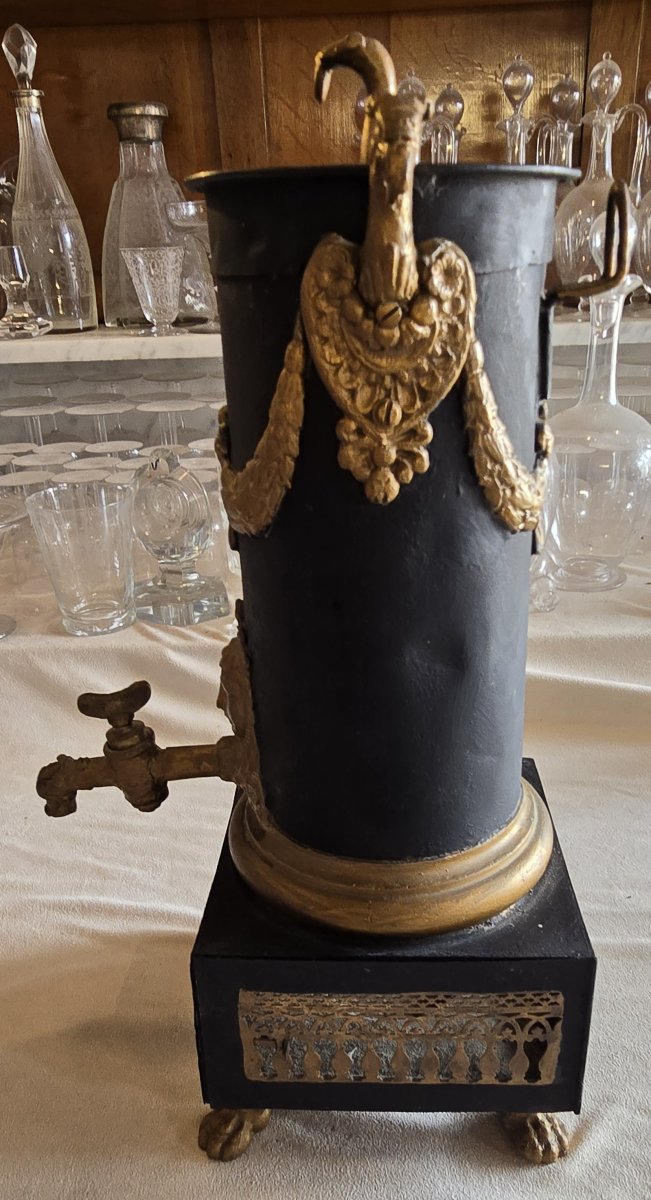
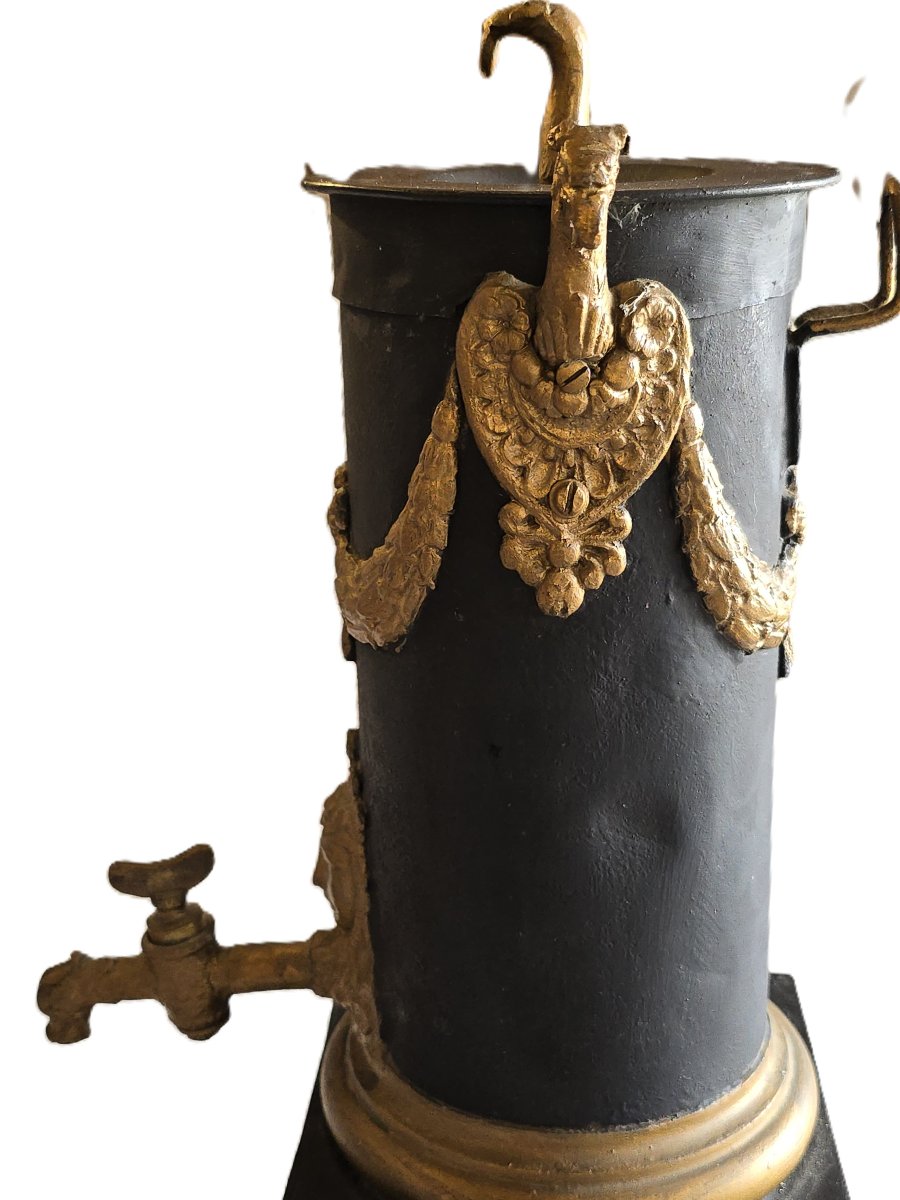
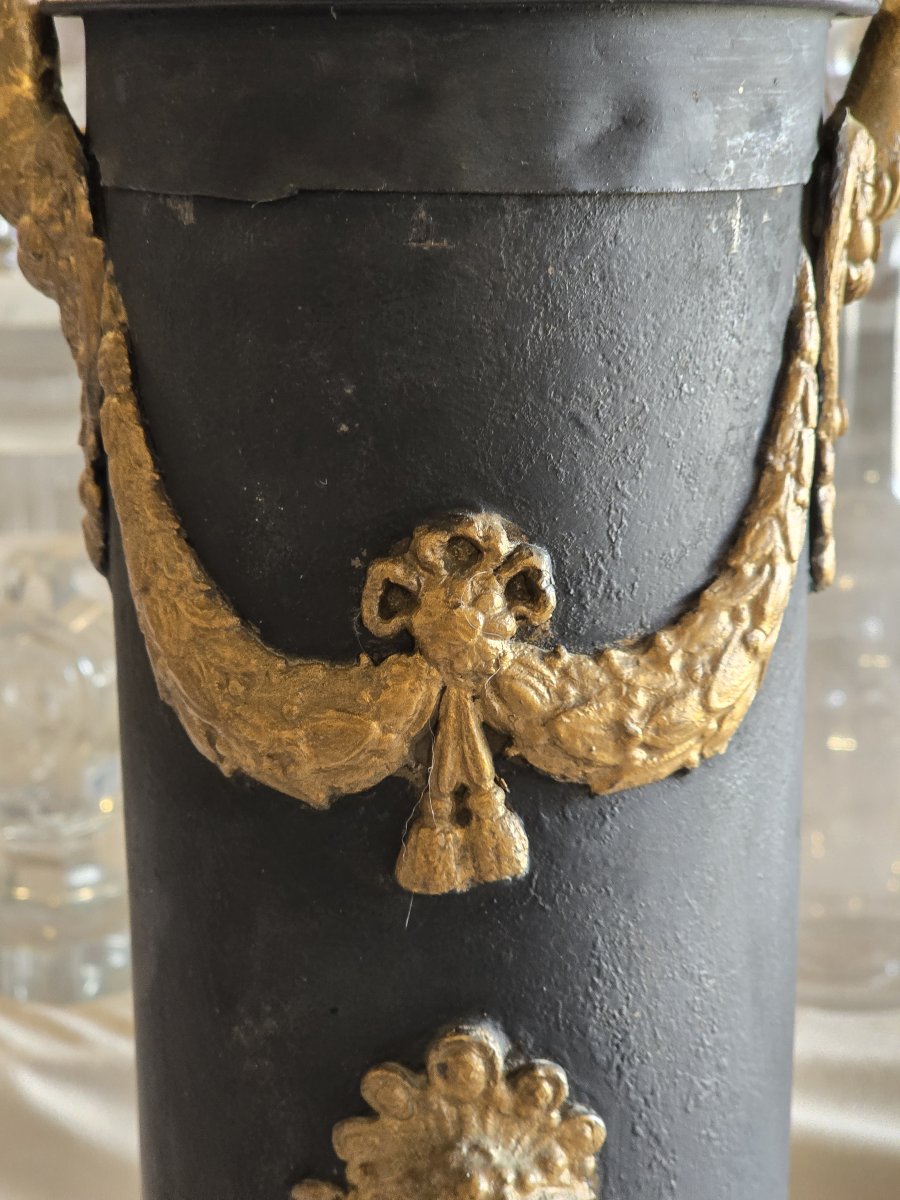
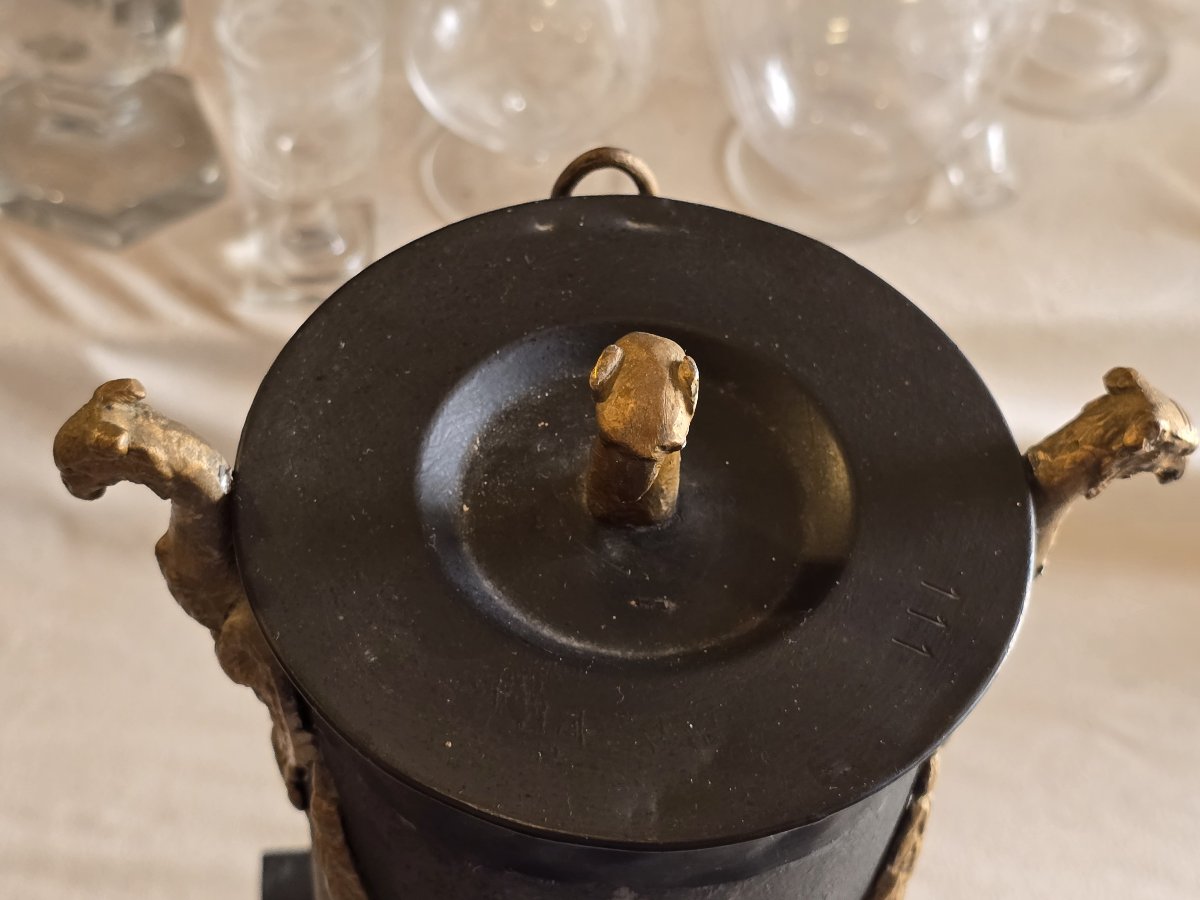
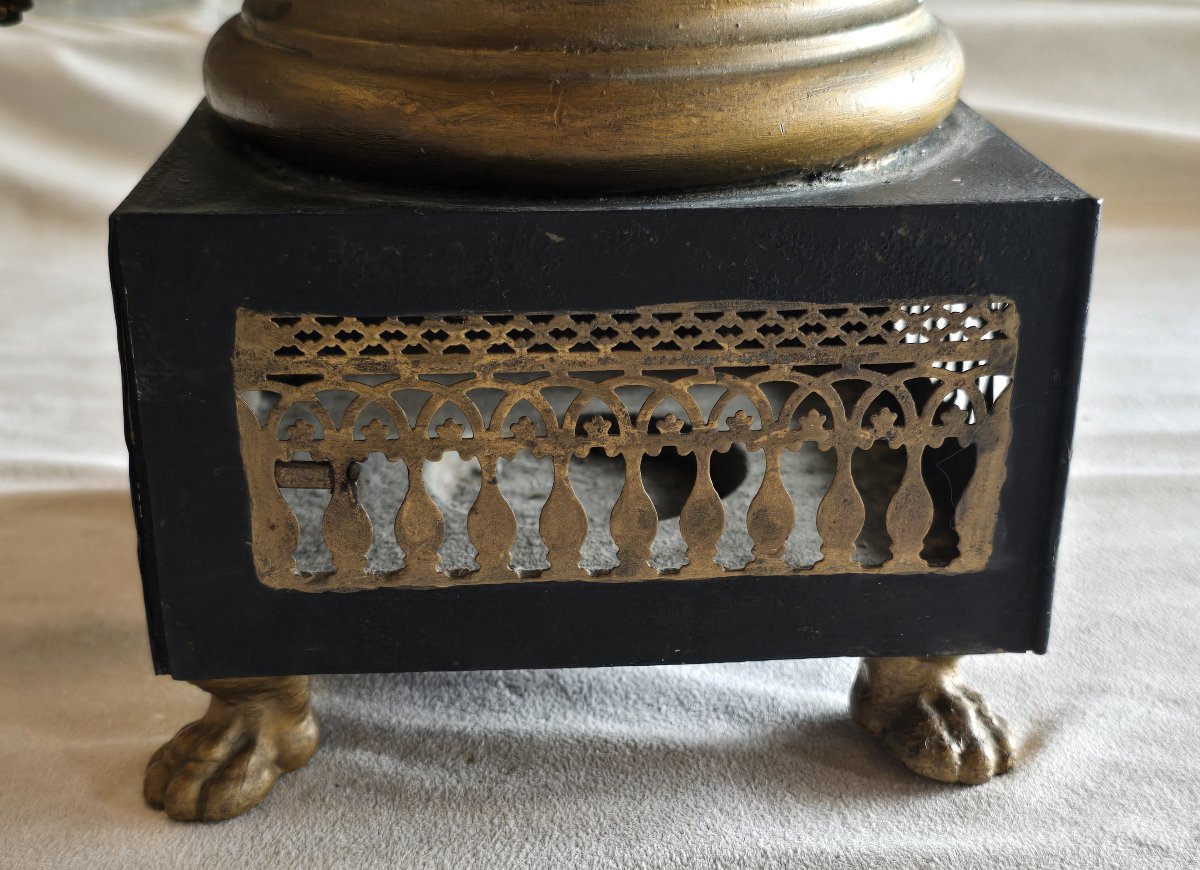
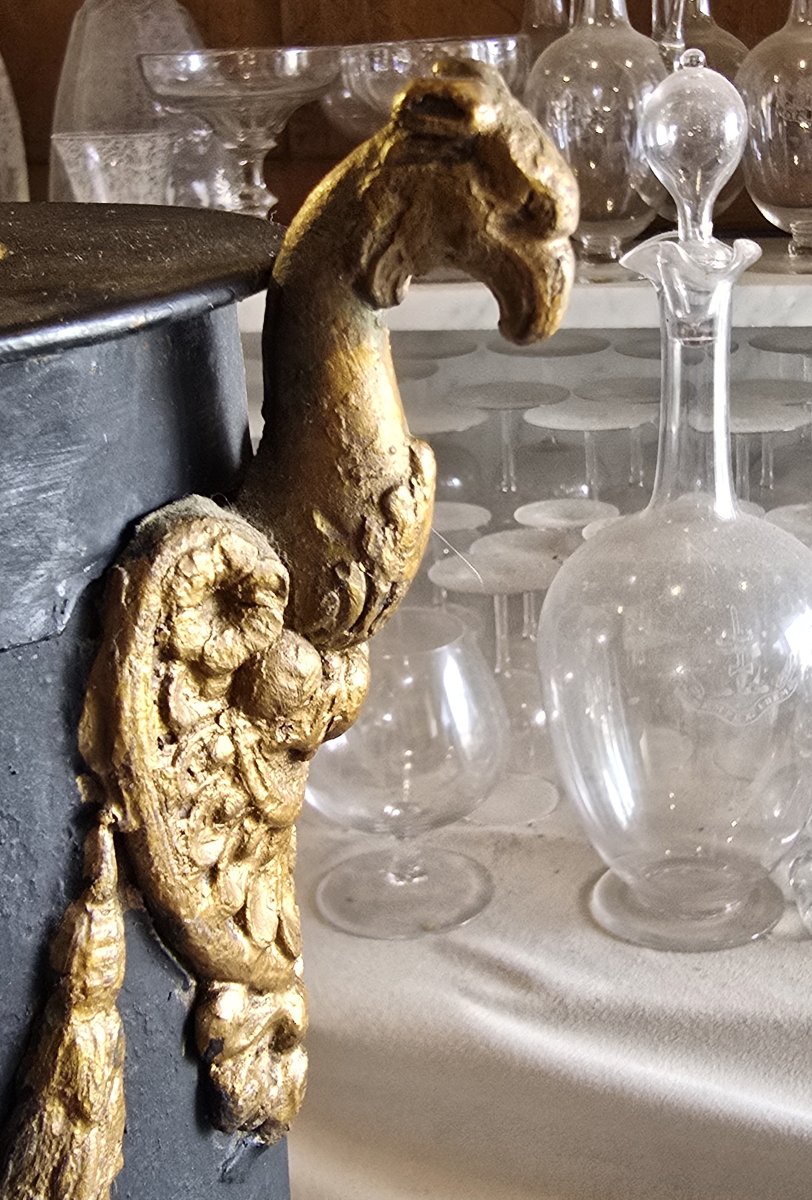
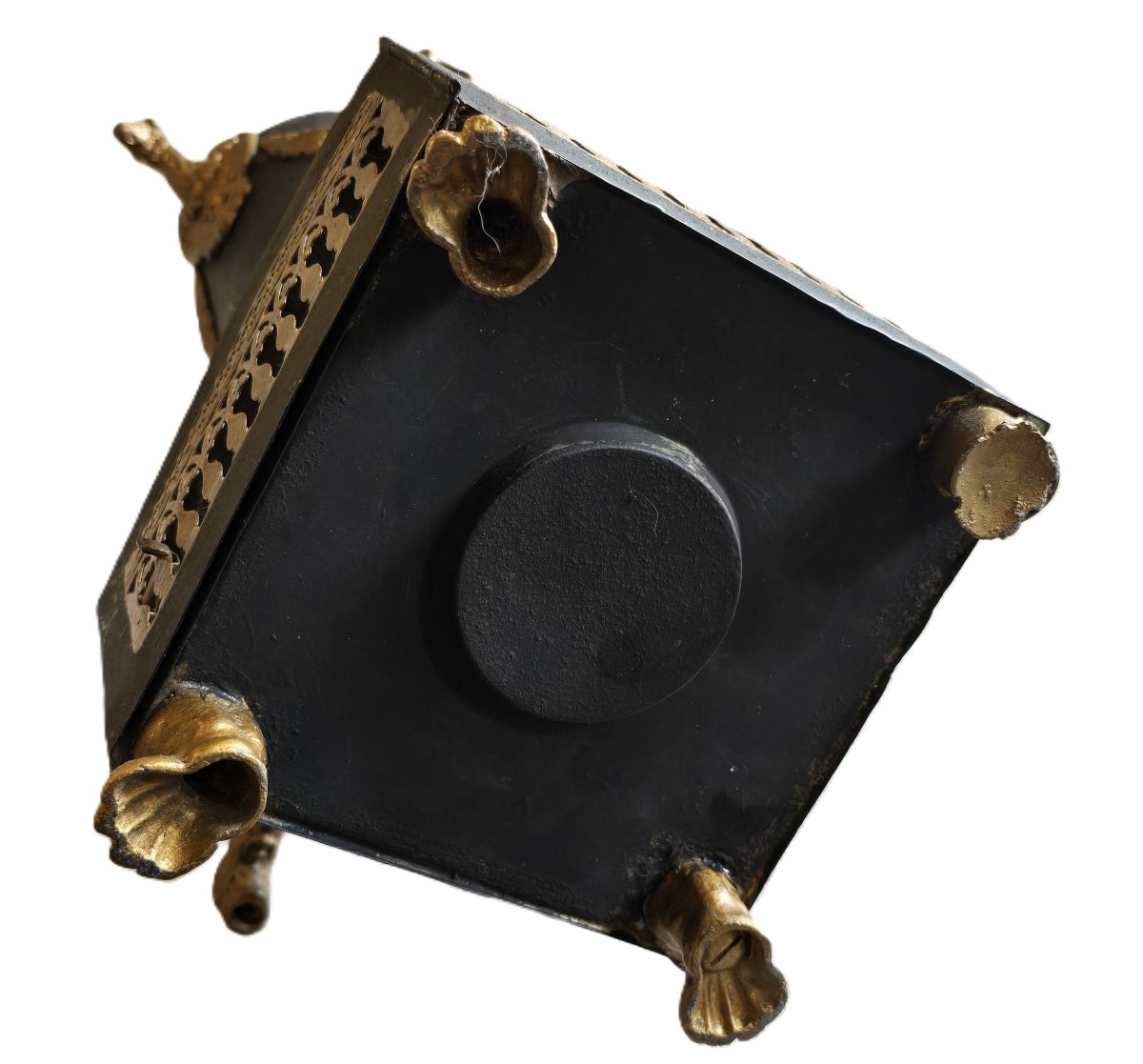
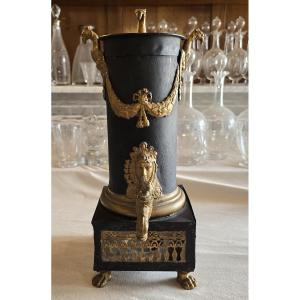
A striking decorative object, representative of late-Tsarist Russian craftsmanship and the evolution of the samovar from a utilitarian object to a ceremonial piece.The cylindrical body rests on a perforated square base, supported by four clawed feet, and is richly adorned with gilded metal appliqués: garlands, palmettes, masks, and stylized animal figures—an ornamental vocabulary inspired by the Russian Neoclassical style.The spout is surmounted by a molded mask, a typical element of late-Imperial Russian production and widely featured in decorative models of the late 19th century.
Stylistic Analysis and Justification of Dating:
Although the piece features an Empire-inspired decorative language—garlands, neoclassical motifs, clawed feet—several elements indicate that it is not a samovar from the Imperial era of the early decades of the 19th century:
- Authentic samovars from the era of Alexander I were generally made of solid copper or brass, not lightweight sheet metal.
- The ornaments on Imperial-era pieces were cast or finely chiseled, whereas here they are stamped and applied, a characteristic of the more economical productions of the late 19th century.
- The decorative ensemble, highly theatrical and richly ornate, corresponds more to late-Tsarist taste than to the neoclassical sobriety of the early 19th century.
- The overall structure and construction technique point to Russian workshops active between 1880 and 1910, a period of widespread production of decorative samovars intended for domestic use or as decorative objects.
These elements allow the piece to be attributed to Russian production from the late 19th to early 20th century, rather than the imperial era.
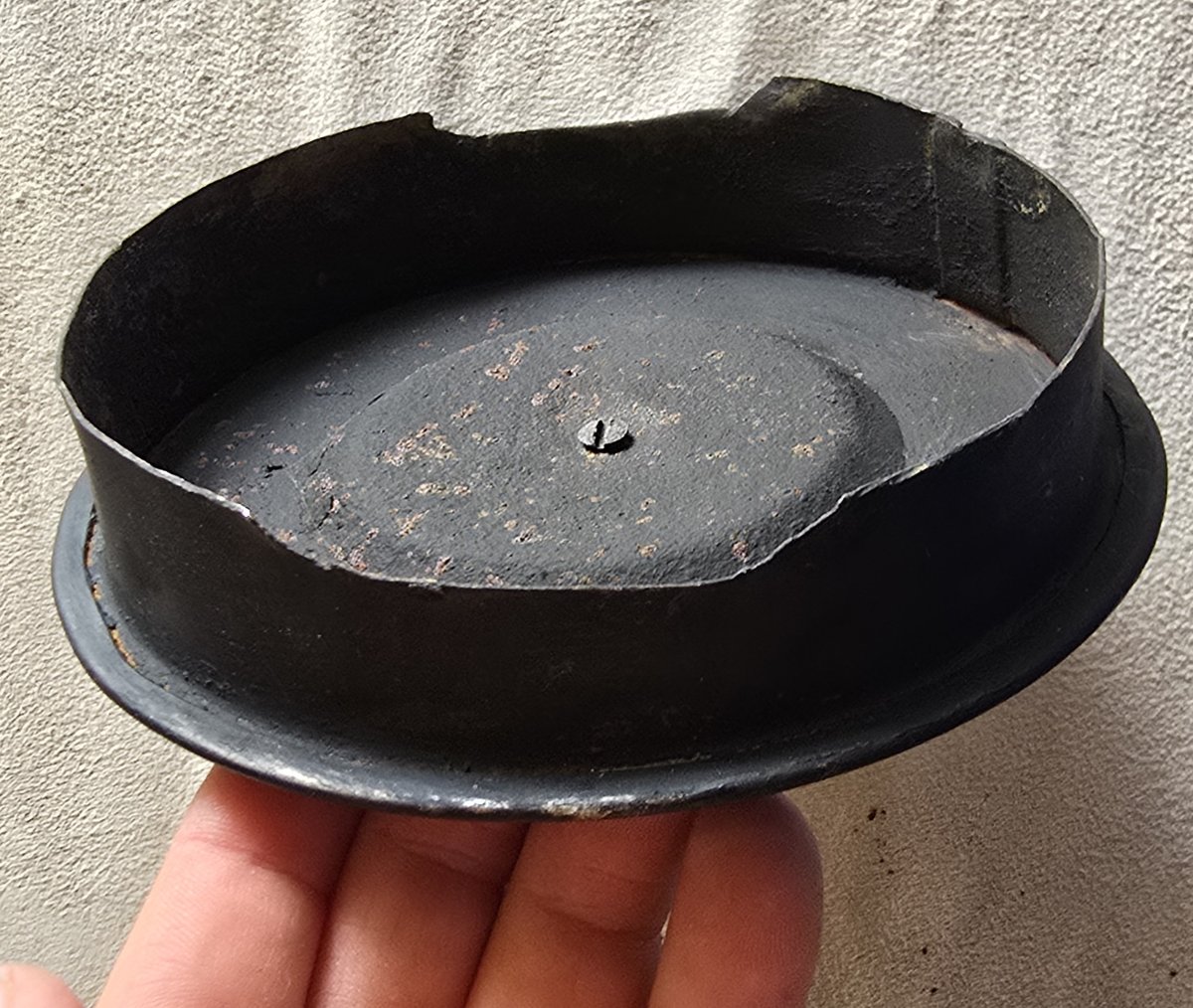
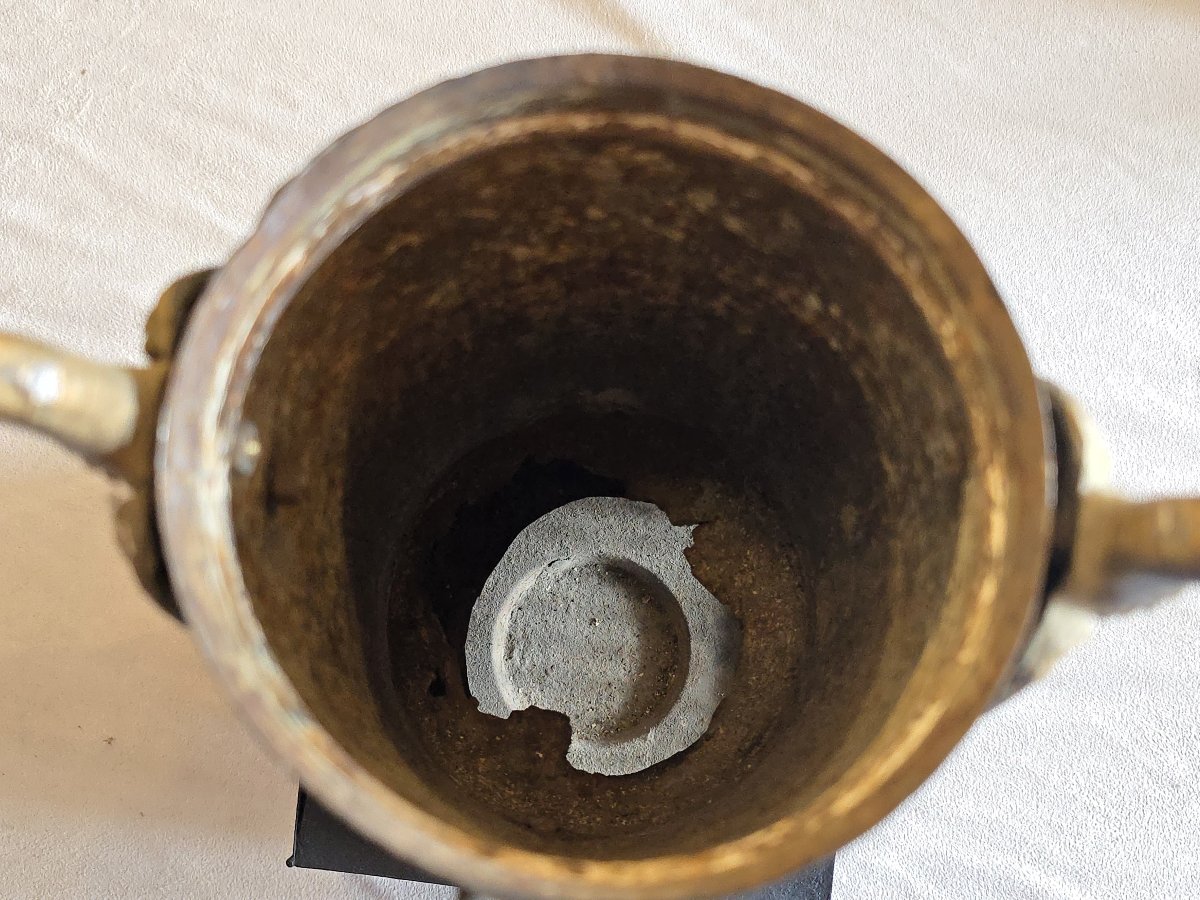
Condition: Non-functional samovar, incomplete and missing some internal components (firebox, piping, combustion chamber).
Period: 19th century
Style: Consulat, Empire
Condition: En l'etat
Material: Wrought iron
Height: 39
Reference (ID): 1773282
Availability: In stock