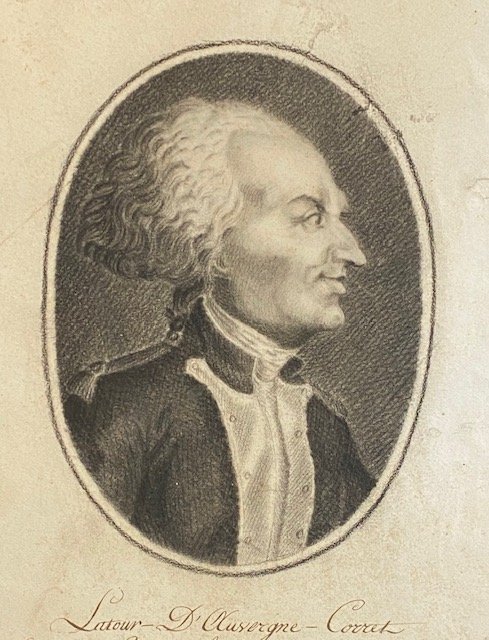
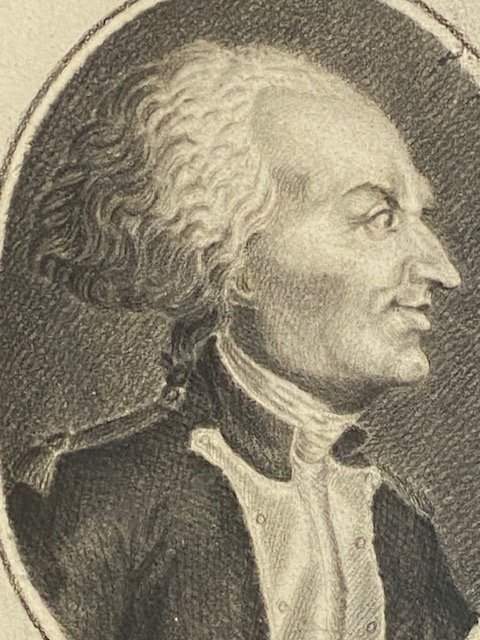


Pencil Drawing Of The Profile Of Théophile-malo De La Tour d'Auvergne-corret (1743–1800)
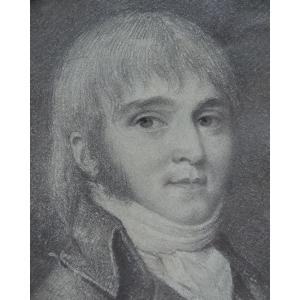
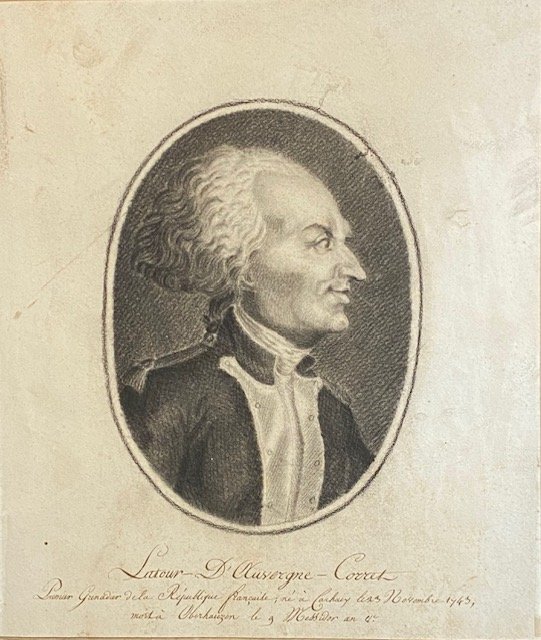
Pencil drawing of the profile of Théophile-Malo de la Tour d'Auvergne-Corret (1743–1800) 1st Grenadier of the French Republic Size of the oval: 18 cm x 13 cm
Size of the sheet: 28 cm x 23.8 cm
THÉOPHILE MALO-CORRET DE LA TOUR D'AUVERGNE (or Théophile Malo de La Tour d'Auvergne-Corret), from a collateral branch of the illustrious Bouillon family, which had already given France Marshal Turenne, was born in Carhaix (Finistère) on 23 November (or December?) 1743 and died on 27 June 1800 (aged 56) in Oberhausen, Bavaria (buried in the Panthéon in Paris in 1889, vault 23). He was a French soldier, a ‘premier grenadier’ in the French armies. The son of the lawyer Olivier Corret and Jeanne Lucrèce Salaün, he was born in Saint-Hernin (where his father was steward of Kergoët Castle) and was baptised in Carhaix. On leaving the Jesuit College in Quimper, he chose the army (around 1765) even though his father wanted him to become a lawyer and his mother a church dignitary. Having joined the Black Musketeers in 1767, he was a second lieutenant in the Angoumois Infantry Regiment when the American War of Independence broke out, and was one of the first to seek the honour of serving such a noble cause, though he was unable to secure it. He was subsequently accepted as a volunteer into the ranks of the Spanish army, and in that capacity took part in the siege of Port Mahon, where he proved himself .
During a deadly engagement, a wounded Spanish officer had remained on the ramparts of the fortress: alone, he returned under terrible fire to hoist him onto his shoulders and carried him back to his comrades. In recognition of this fine deed, the King of Spain awarded La Tour d’Auvergne the Order of Charles III, which came with a pension of 3,000 livres. The French officer accepted only the decoration; though poor, he found in study and the fulfilment of his duties a happiness independent of wealth. On his return to France, he rejoined his regiment and devoted himself entirely to literary pursuits when the Revolution broke out. Soon most of the regiment’s officers emigrated; the descendant of the Dukes of Bouillon remained loyal to his country. A captain before the Revolution, it was still with the rank of captain that he fought under the tricolour flag. He was then fifty years old and had thirty-three years of active service to his credit. In 1792, La Tour d’Auvergne was serving in the Army of the Alps, commanded by Montesquiou. Always in the most perilous position, he contributed mightily to all our successes and was the first to enter Chambéry, sword in hand, at the head of his company. The following year found him in the Army of the Eastern Pyrenees, where, as the most senior captain, he commanded a corps of 8,000 men, comprising all the army’s grenadier companies combined, and which,
known as the ‘Infernal Column’, soon became the terror of the enemy. Almost without exception, this vanguard division had secured victory by the time the main army arrived on the battlefield. Summoned to all the council of war meetings, La Tour d’Auvergne consistently performed the duties of a general throughout the campaign, without ever wishing to accept either the rank or the pay. Passages reputed to be impassable were crossed, rocks scaled, and redoubts taken by his small army: he himself shared with his soldiers their meagre rations and inadequate shelters, and marched on foot like them, despite his advanced age. Having embarked after the peace to return to Brittany, the ship on which he was travelling was captured, and La Tour d’Auvergne was taken prisoner to England. Ordered to remove his cockade, he cut it off with his sword right down to the hilt, declaring that he would rather perish defending it. Such courage was respected by the enemy, who allowed the French prisoners to keep their colours. An exchange of prisoners finally brought him back to his homeland and his friends. Upon his return to France, he was in Paris, living on a retirement pension of 800 francs, when he learnt that conscription had just taken from an octogenarian (Le Brigant) the last of his twenty-two children—a young man of delicate constitution and his aged father’s sole support. Heeding only the voice of friendship, despite being fifty-six years old and in declining health.
Despite the toll that the hardships of war and his time in prison had taken on his robust constitution, he hastened to present himself before the Directory and earnestly sought their favour to take the place of his friend’s son. It was thus as a volunteer that he took part in the memorable campaign of 1799 in Switzerland, after which he returned to Passy, near Paris. A glorious reward awaited him there. On Carnot’s recommendation, the First Consul appointed him First Grenadier of France and awarded him a sabre of honour; a double distinction that imposed upon the old warrior the obligation to die on a battlefield. This was the sentiment he expressed to his friends as he bid them farewell, when, shortly afterwards, he set off for the army: this time, he was never to return! War had just broken out again in Germany; La Tour d’Auvergne, old and ailing, rejoined his corps (the 46th demi-brigade), which was part of the Army of the Rhine. Six days after his arrival, on 27 June 1800, he fell, struck through the heart by a spear thrust from an Austrian hussar, on the heights of Ober-Hausen (Oberhausen), near Neuburg in Bavaria.
Size of the sheet: 28 cm x 23.8 cm
THÉOPHILE MALO-CORRET DE LA TOUR D'AUVERGNE (or Théophile Malo de La Tour d'Auvergne-Corret), from a collateral branch of the illustrious Bouillon family, which had already given France Marshal Turenne, was born in Carhaix (Finistère) on 23 November (or December?) 1743 and died on 27 June 1800 (aged 56) in Oberhausen, Bavaria (buried in the Panthéon in Paris in 1889, vault 23). He was a French soldier, a ‘premier grenadier’ in the French armies. The son of the lawyer Olivier Corret and Jeanne Lucrèce Salaün, he was born in Saint-Hernin (where his father was steward of Kergoët Castle) and was baptised in Carhaix. On leaving the Jesuit College in Quimper, he chose the army (around 1765) even though his father wanted him to become a lawyer and his mother a church dignitary. Having joined the Black Musketeers in 1767, he was a second lieutenant in the Angoumois Infantry Regiment when the American War of Independence broke out, and was one of the first to seek the honour of serving such a noble cause, though he was unable to secure it. He was subsequently accepted as a volunteer into the ranks of the Spanish army, and in that capacity took part in the siege of Port Mahon, where he proved himself .
During a deadly engagement, a wounded Spanish officer had remained on the ramparts of the fortress: alone, he returned under terrible fire to hoist him onto his shoulders and carried him back to his comrades. In recognition of this fine deed, the King of Spain awarded La Tour d’Auvergne the Order of Charles III, which came with a pension of 3,000 livres. The French officer accepted only the decoration; though poor, he found in study and the fulfilment of his duties a happiness independent of wealth. On his return to France, he rejoined his regiment and devoted himself entirely to literary pursuits when the Revolution broke out. Soon most of the regiment’s officers emigrated; the descendant of the Dukes of Bouillon remained loyal to his country. A captain before the Revolution, it was still with the rank of captain that he fought under the tricolour flag. He was then fifty years old and had thirty-three years of active service to his credit. In 1792, La Tour d’Auvergne was serving in the Army of the Alps, commanded by Montesquiou. Always in the most perilous position, he contributed mightily to all our successes and was the first to enter Chambéry, sword in hand, at the head of his company. The following year found him in the Army of the Eastern Pyrenees, where, as the most senior captain, he commanded a corps of 8,000 men, comprising all the army’s grenadier companies combined, and which,
known as the ‘Infernal Column’, soon became the terror of the enemy. Almost without exception, this vanguard division had secured victory by the time the main army arrived on the battlefield. Summoned to all the council of war meetings, La Tour d’Auvergne consistently performed the duties of a general throughout the campaign, without ever wishing to accept either the rank or the pay. Passages reputed to be impassable were crossed, rocks scaled, and redoubts taken by his small army: he himself shared with his soldiers their meagre rations and inadequate shelters, and marched on foot like them, despite his advanced age. Having embarked after the peace to return to Brittany, the ship on which he was travelling was captured, and La Tour d’Auvergne was taken prisoner to England. Ordered to remove his cockade, he cut it off with his sword right down to the hilt, declaring that he would rather perish defending it. Such courage was respected by the enemy, who allowed the French prisoners to keep their colours. An exchange of prisoners finally brought him back to his homeland and his friends. Upon his return to France, he was in Paris, living on a retirement pension of 800 francs, when he learnt that conscription had just taken from an octogenarian (Le Brigant) the last of his twenty-two children—a young man of delicate constitution and his aged father’s sole support. Heeding only the voice of friendship, despite being fifty-six years old and in declining health.
Despite the toll that the hardships of war and his time in prison had taken on his robust constitution, he hastened to present himself before the Directory and earnestly sought their favour to take the place of his friend’s son. It was thus as a volunteer that he took part in the memorable campaign of 1799 in Switzerland, after which he returned to Passy, near Paris. A glorious reward awaited him there. On Carnot’s recommendation, the First Consul appointed him First Grenadier of France and awarded him a sabre of honour; a double distinction that imposed upon the old warrior the obligation to die on a battlefield. This was the sentiment he expressed to his friends as he bid them farewell, when, shortly afterwards, he set off for the army: this time, he was never to return! War had just broken out again in Germany; La Tour d’Auvergne, old and ailing, rejoined his corps (the 46th demi-brigade), which was part of the Army of the Rhine. Six days after his arrival, on 27 June 1800, he fell, struck through the heart by a spear thrust from an Austrian hussar, on the heights of Ober-Hausen (Oberhausen), near Neuburg in Bavaria.
450 €
Period: 18th century
Style: Louis 16th, Directory
Condition: Good condition
Material: Paper
Length: 28 cm
Width: 23,,8 cm
Reference (ID): 1768700
Availability: In stock
Print