THIS OBJECT WAS SOLD
Rare Ptolemaic Armillary Sphere – Robert De Vaugondy – Paris, 18th Century


Rare Ptolemaic Armillary Sphere – Robert de Vaugondy – Paris, 18th Century Description:
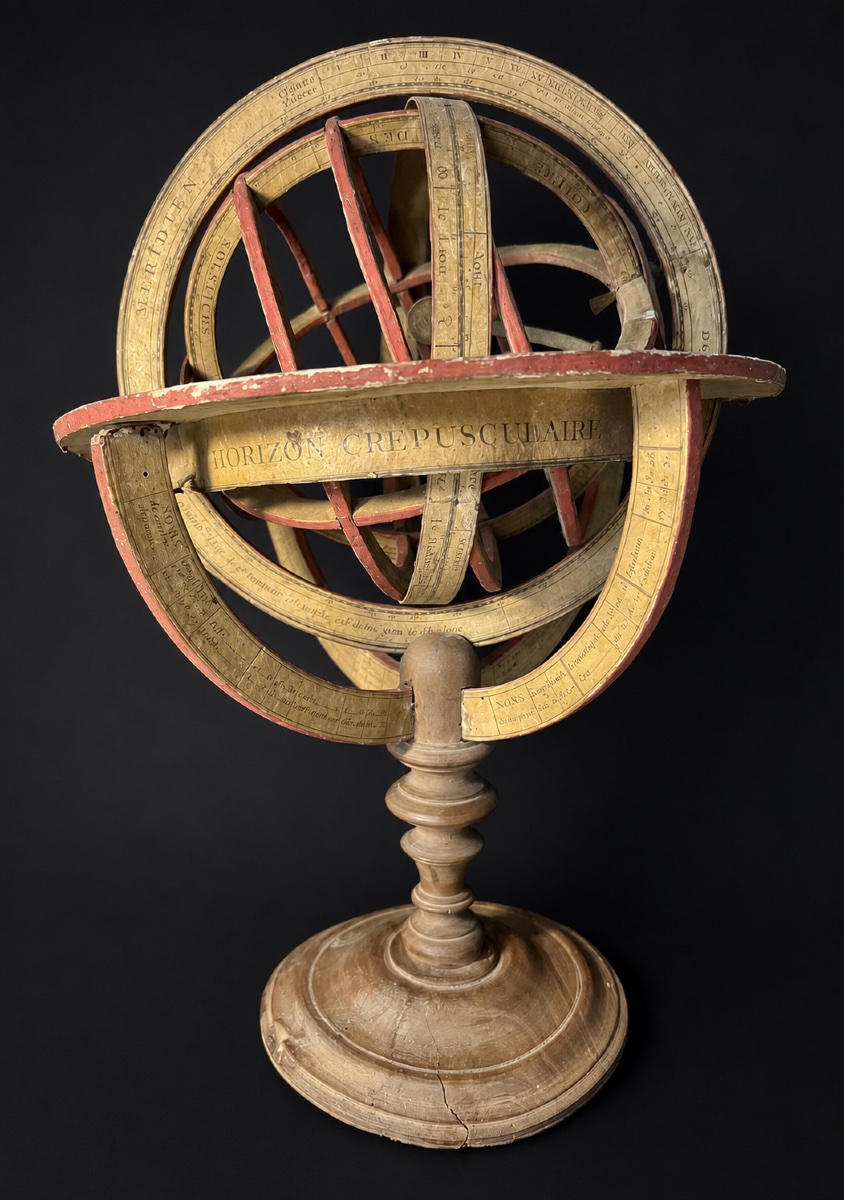
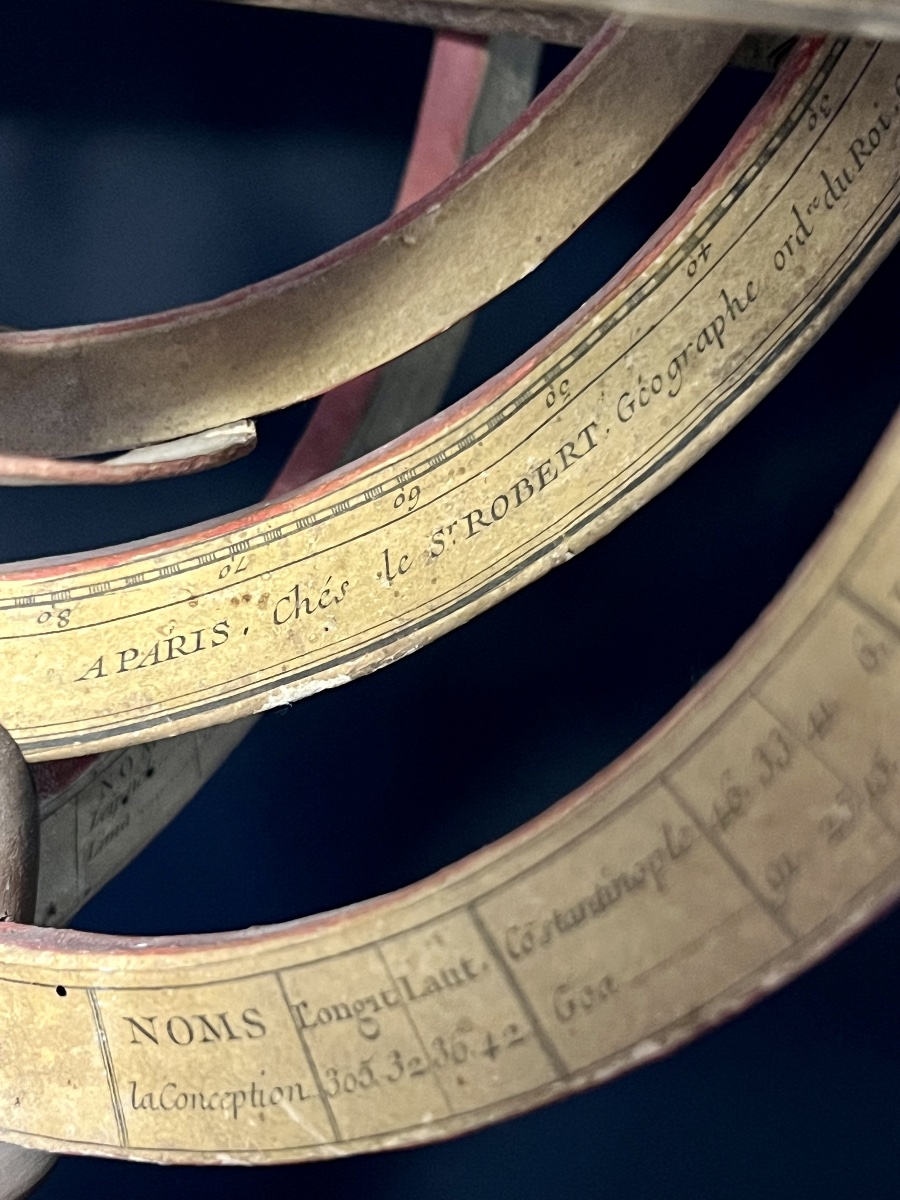
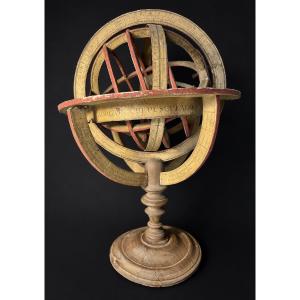
A remarkable Ptolemaic armillary sphere (also known as a geocentric sphere), a French work from the 18th century, bearing the historic signature: “Chés le S[ieur] ROBERT, Géographe ord[inaire] du Roi, Quai de l'Horloge.” This exceptional piece was created based on the work of Gilles Robert de Vaugondy (1688–1766), one of the most celebrated French cartographers of the Ancien Régime. This prestigious instrument illustrates Ptolemy's system, placing the Earth stationary at the center of the universe.
Scientific Characteristics & Structure:
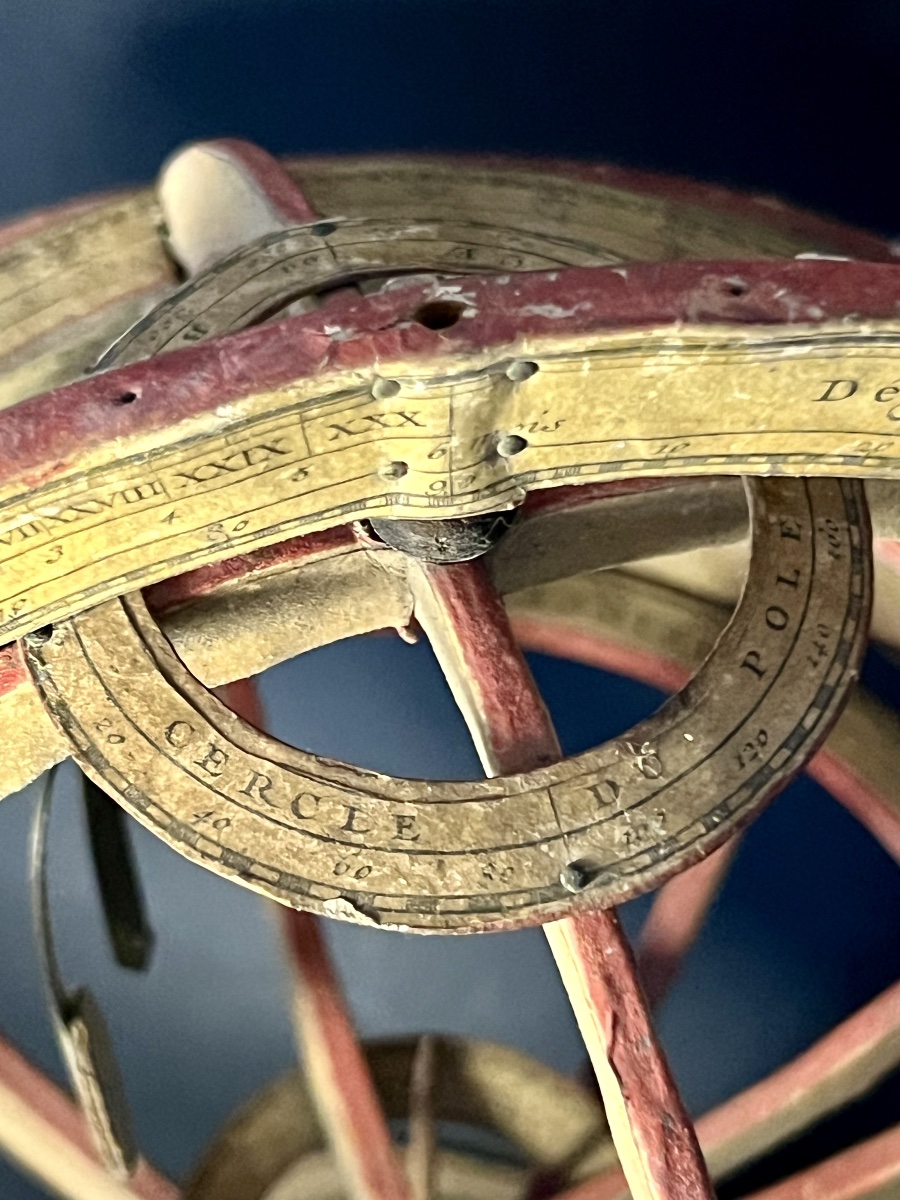
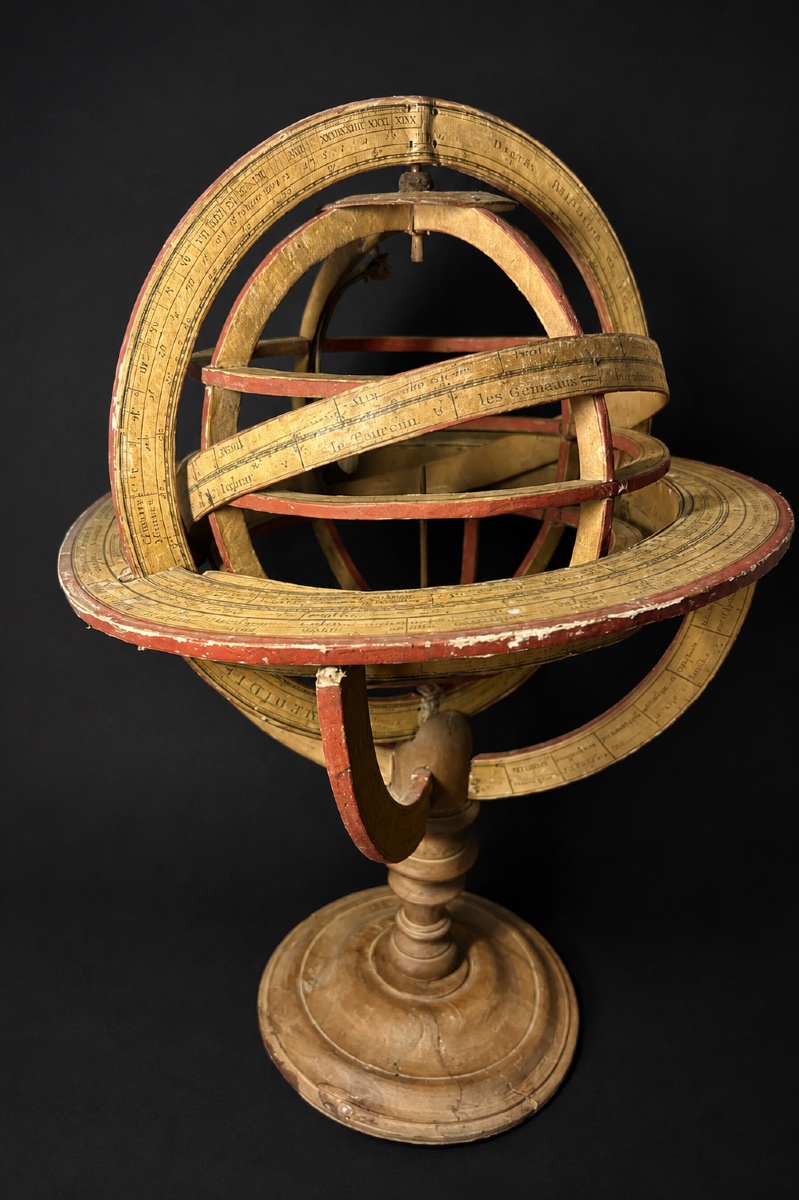
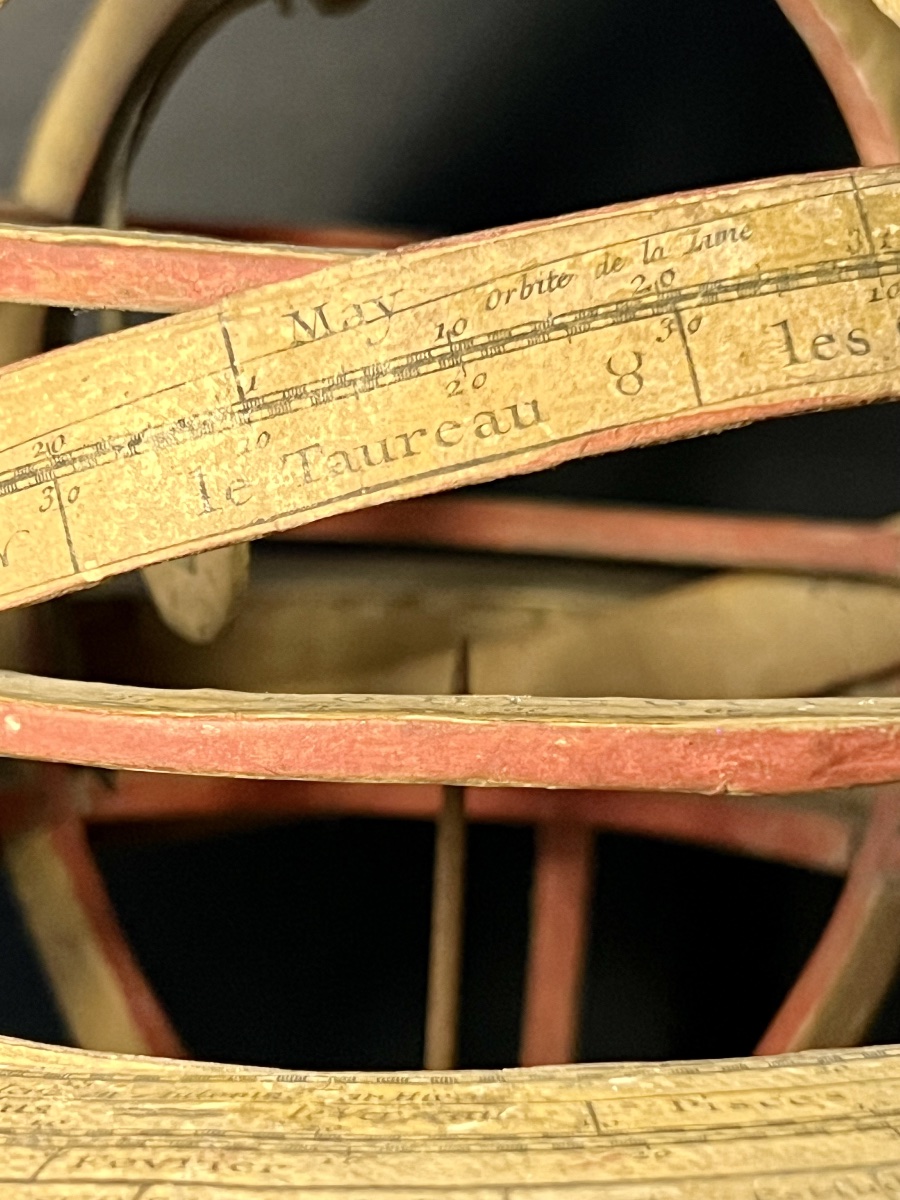
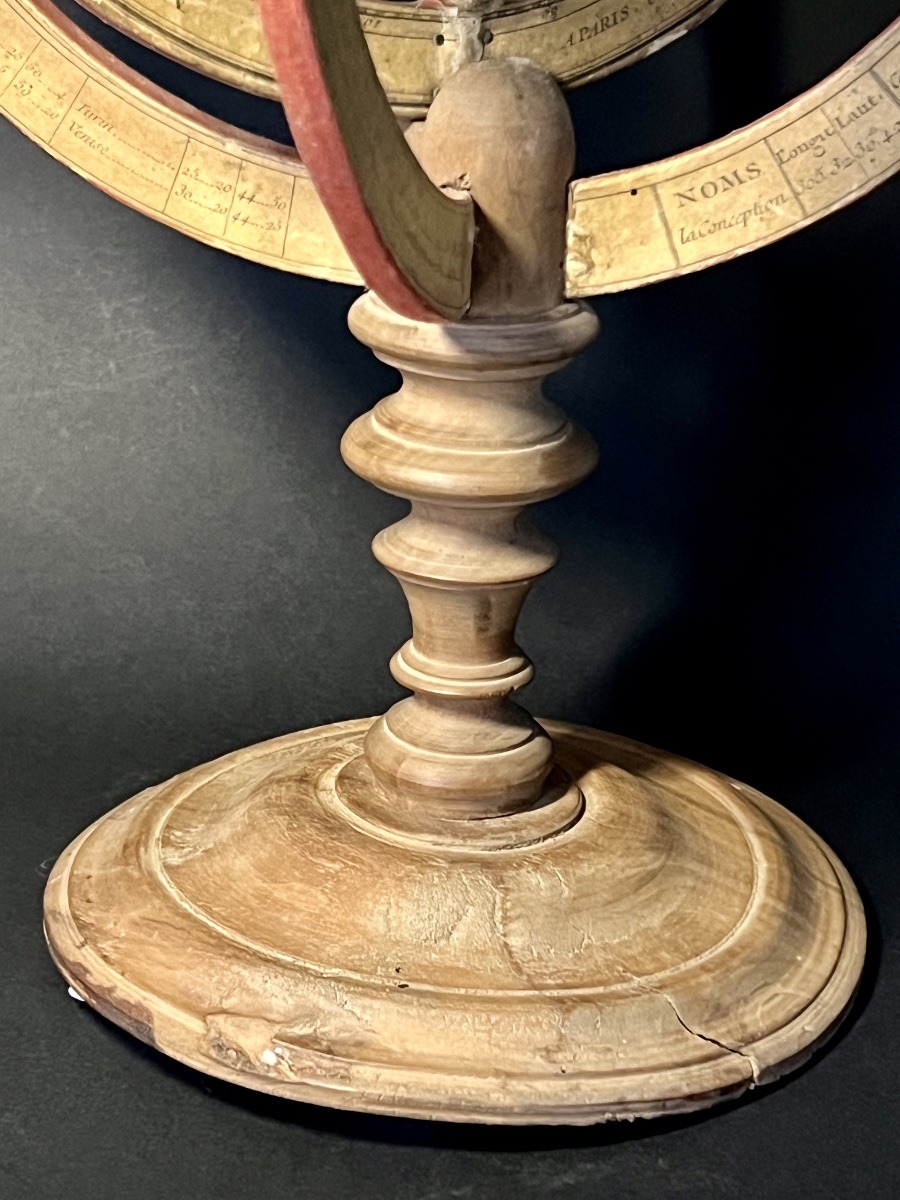
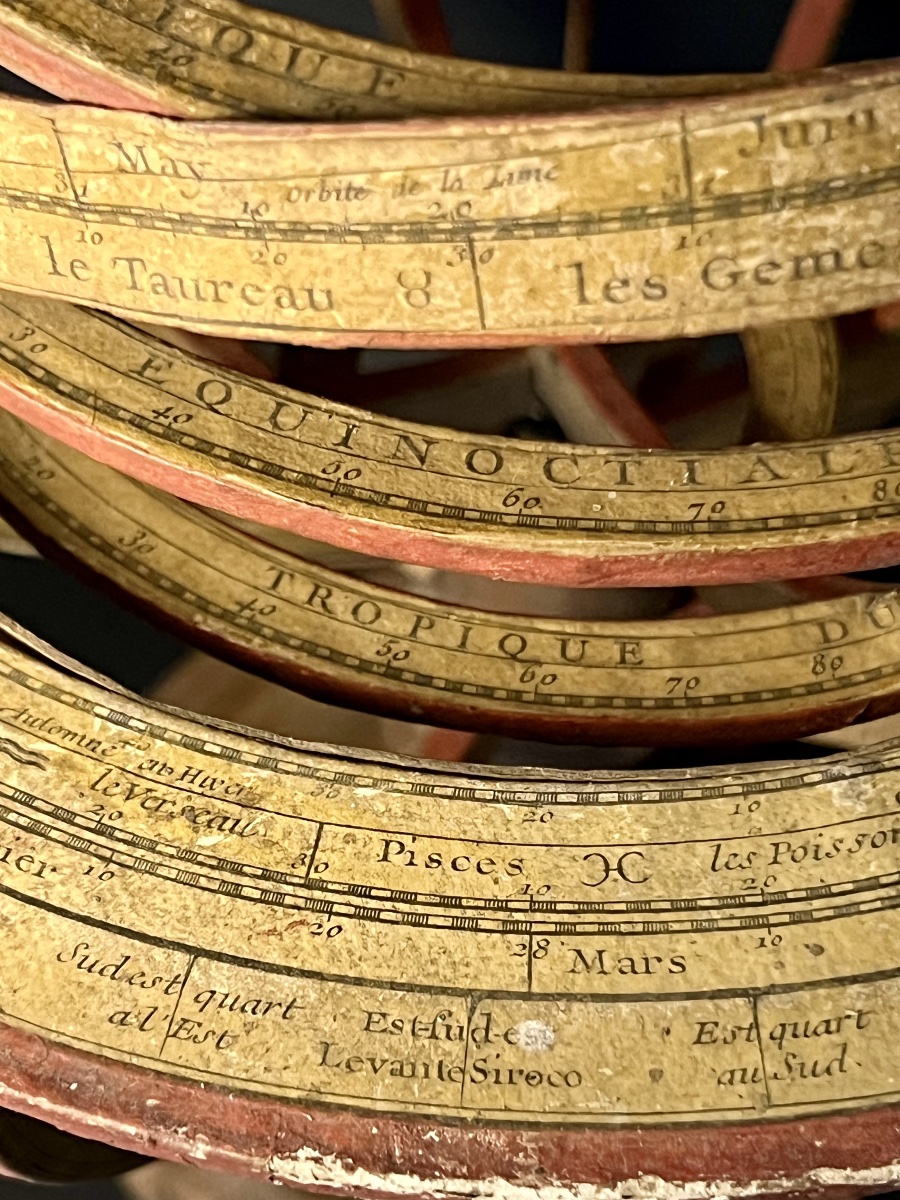
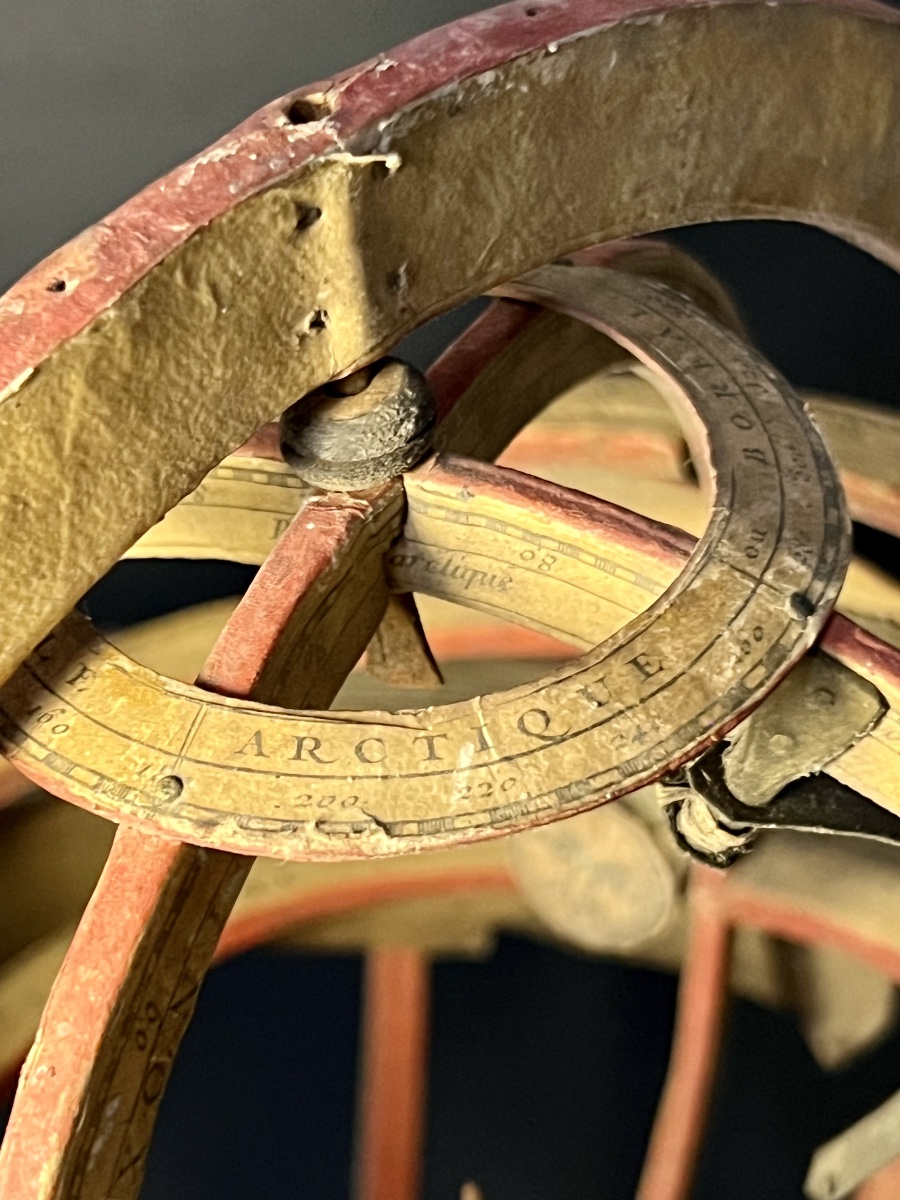
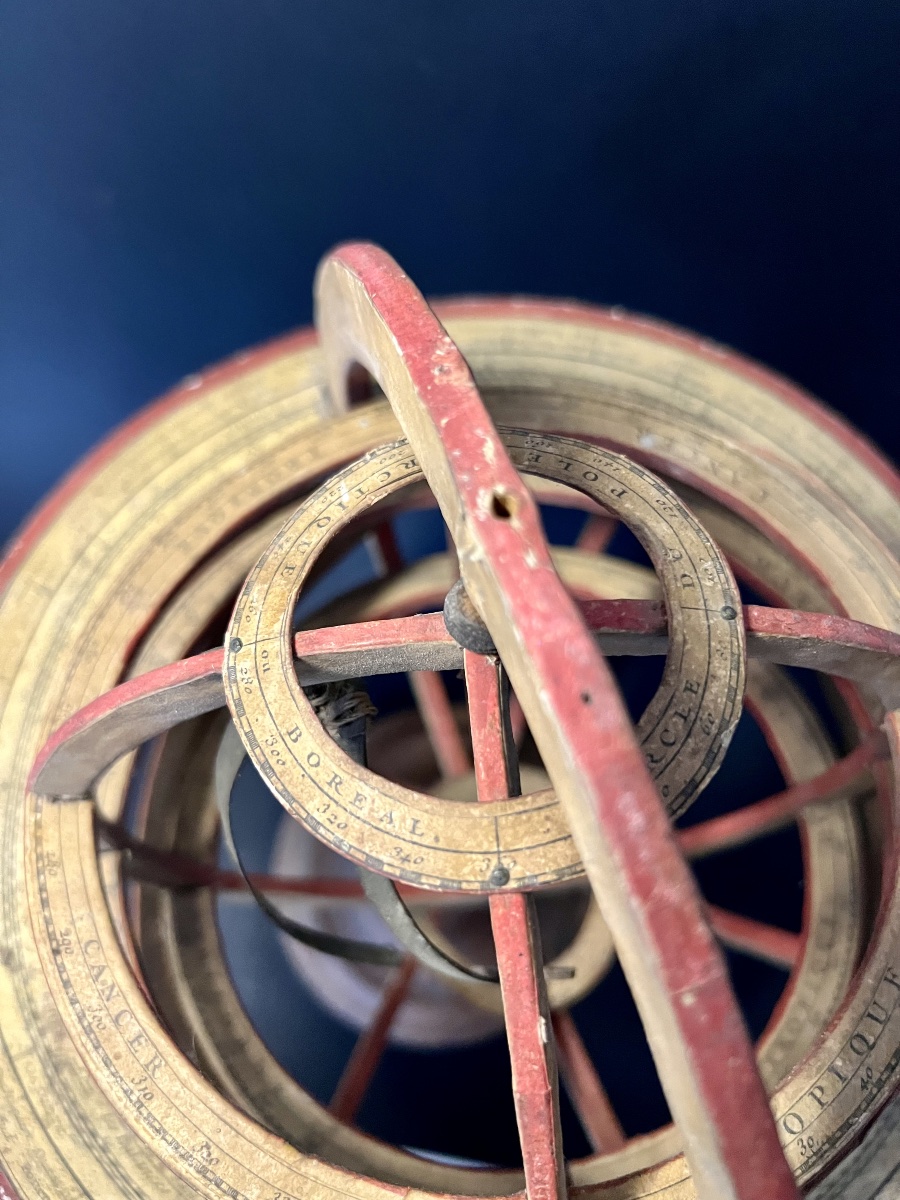
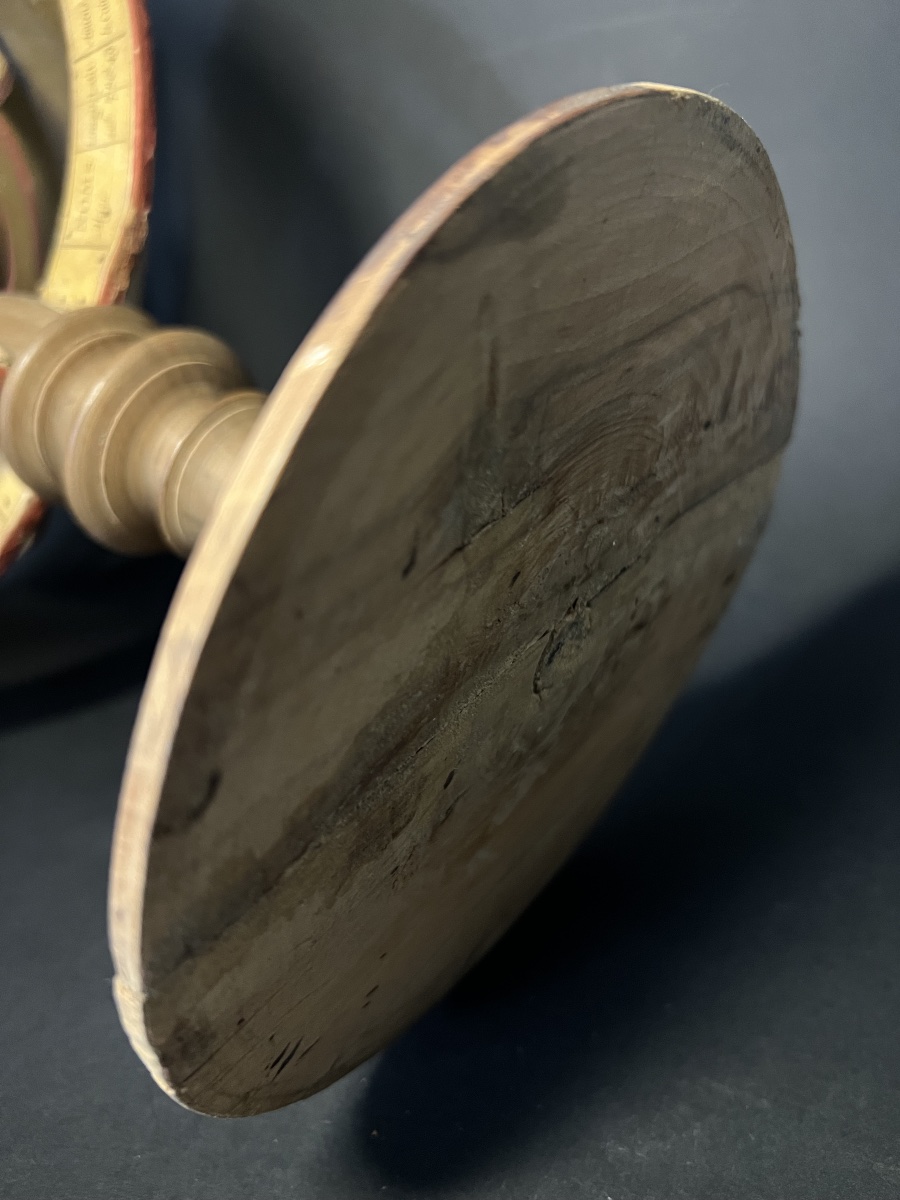
The instrument is composed of a complex set of wooden and cardboard rings (armillae), covered with original printed papers and enhanced with superb polychromy. Analysis of the celestial circles reveals exquisite details: the vertical meridian, the broad horizon ring marked "TWILIGHT HORIZON," and the ecliptic bearing the signs of the zodiac and the months of the year. At the heart of the structure sits the central terrestrial sphere, surrounded by its movable astronomical elements. The entire piece rests on its elegant original base of turned and blackened wood.
Historical Use:
At the end of the 18th century, when Copernicus's heliocentric system was already scientifically accepted, these works of art remained elite teaching tools for cosmography and navigation. Above all, they were essential display pieces for cabinets of curiosities and aristocratic collections.
Condition, Missing Parts & Rarity:
A beautiful scientific object preserved in its original historical condition, displaying a superb patina of use and surface alterations normal for its 250 years of age.
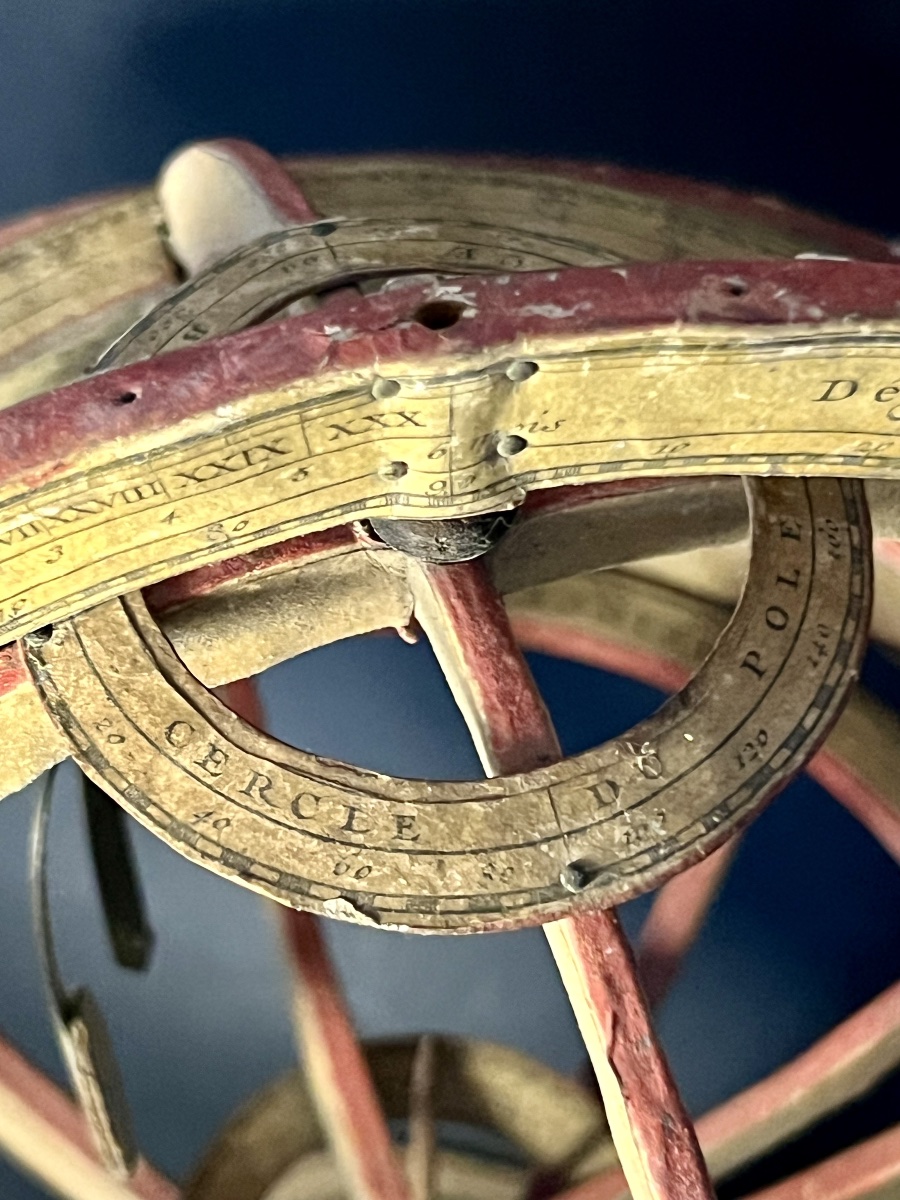
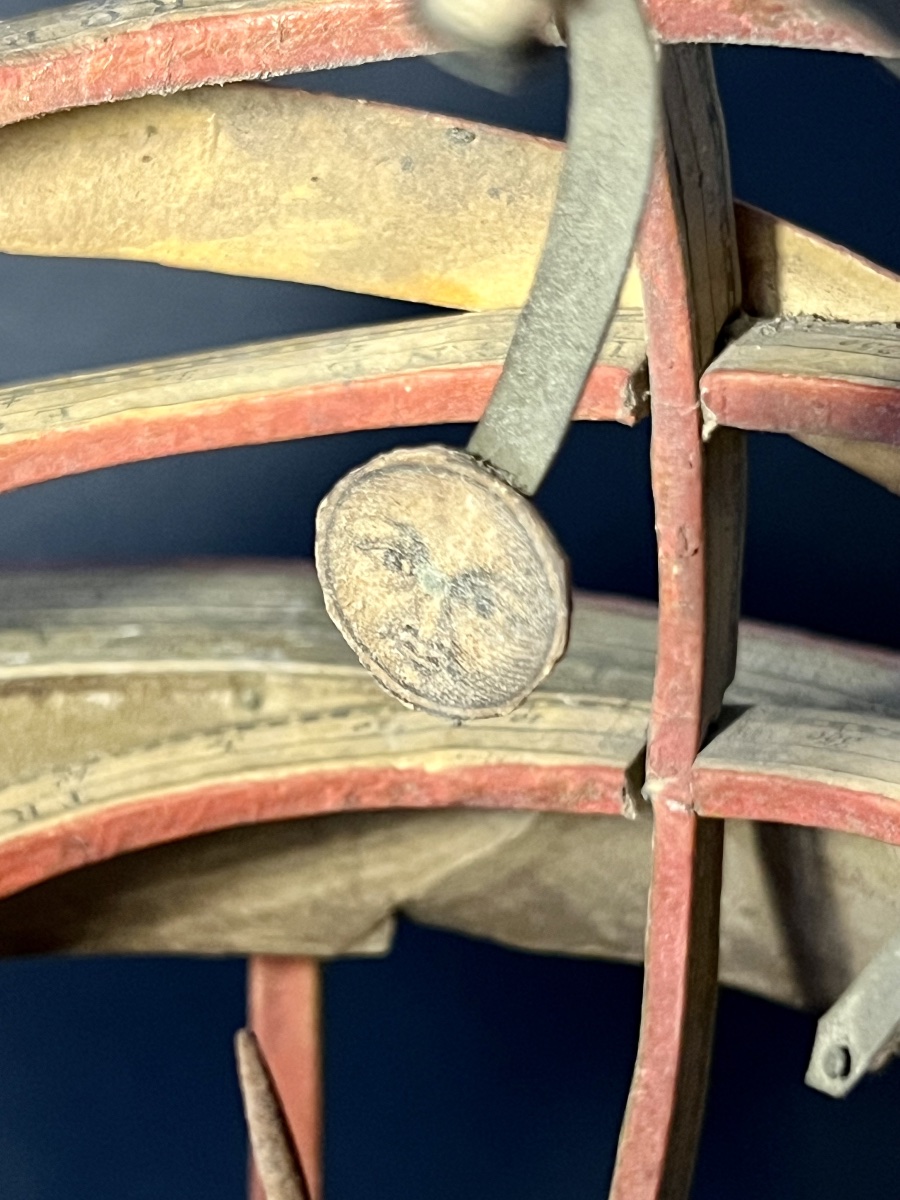
Exceptional Preserved Elements: The sphere retains its rare moving metal parts. The articulated arm supports the original Sun disk, superbly engraved in a classical 18th-century style depicting a humanized face with radiant lines. This rare iconographic detail considerably enhances the aesthetic, visual, and commercial value of the object. Missing Parts: The instrument is incomplete, lacking its small central terrestrial sphere (the vertical metal axis is exposed in this area) and probably the small lunar disk. The missing Earth is the easiest element to have restored by a specialist conservator. The partial paper losses do not affect the perfect legibility of the "Quai de l'Horloge" signature.
Dimensions: Height: 40 cm | Width: 30 cm | Base diameter: 15 cm. Services: Secure professional shipping with ad valorem insurance worldwide. Please feel free to contact us for any further information or detailed photos.
A remarkable Ptolemaic armillary sphere (also known as a geocentric sphere), a French work from the 18th century, bearing the historic signature: “Chés le S[ieur] ROBERT, Géographe ord[inaire] du Roi, Quai de l'Horloge.” This exceptional piece was created based on the work of Gilles Robert de Vaugondy (1688–1766), one of the most celebrated French cartographers of the Ancien Régime. This prestigious instrument illustrates Ptolemy's system, placing the Earth stationary at the center of the universe.
Scientific Characteristics & Structure:
The instrument is composed of a complex set of wooden and cardboard rings (armillae), covered with original printed papers and enhanced with superb polychromy. Analysis of the celestial circles reveals exquisite details: the vertical meridian, the broad horizon ring marked "TWILIGHT HORIZON," and the ecliptic bearing the signs of the zodiac and the months of the year. At the heart of the structure sits the central terrestrial sphere, surrounded by its movable astronomical elements. The entire piece rests on its elegant original base of turned and blackened wood.
Historical Use:
At the end of the 18th century, when Copernicus's heliocentric system was already scientifically accepted, these works of art remained elite teaching tools for cosmography and navigation. Above all, they were essential display pieces for cabinets of curiosities and aristocratic collections.
Condition, Missing Parts & Rarity:
A beautiful scientific object preserved in its original historical condition, displaying a superb patina of use and surface alterations normal for its 250 years of age.
Exceptional Preserved Elements: The sphere retains its rare moving metal parts. The articulated arm supports the original Sun disk, superbly engraved in a classical 18th-century style depicting a humanized face with radiant lines. This rare iconographic detail considerably enhances the aesthetic, visual, and commercial value of the object. Missing Parts: The instrument is incomplete, lacking its small central terrestrial sphere (the vertical metal axis is exposed in this area) and probably the small lunar disk. The missing Earth is the easiest element to have restored by a specialist conservator. The partial paper losses do not affect the perfect legibility of the "Quai de l'Horloge" signature.
Dimensions: Height: 40 cm | Width: 30 cm | Base diameter: 15 cm. Services: Secure professional shipping with ad valorem insurance worldwide. Please feel free to contact us for any further information or detailed photos.
Explore similar pieces and discover your ideal find:
scientific instruments