

Japanese Bronze By Katsuhiro Saito: Sleeping Sesshu
Artist: Katsuhiro Saito 斎藤勝弘
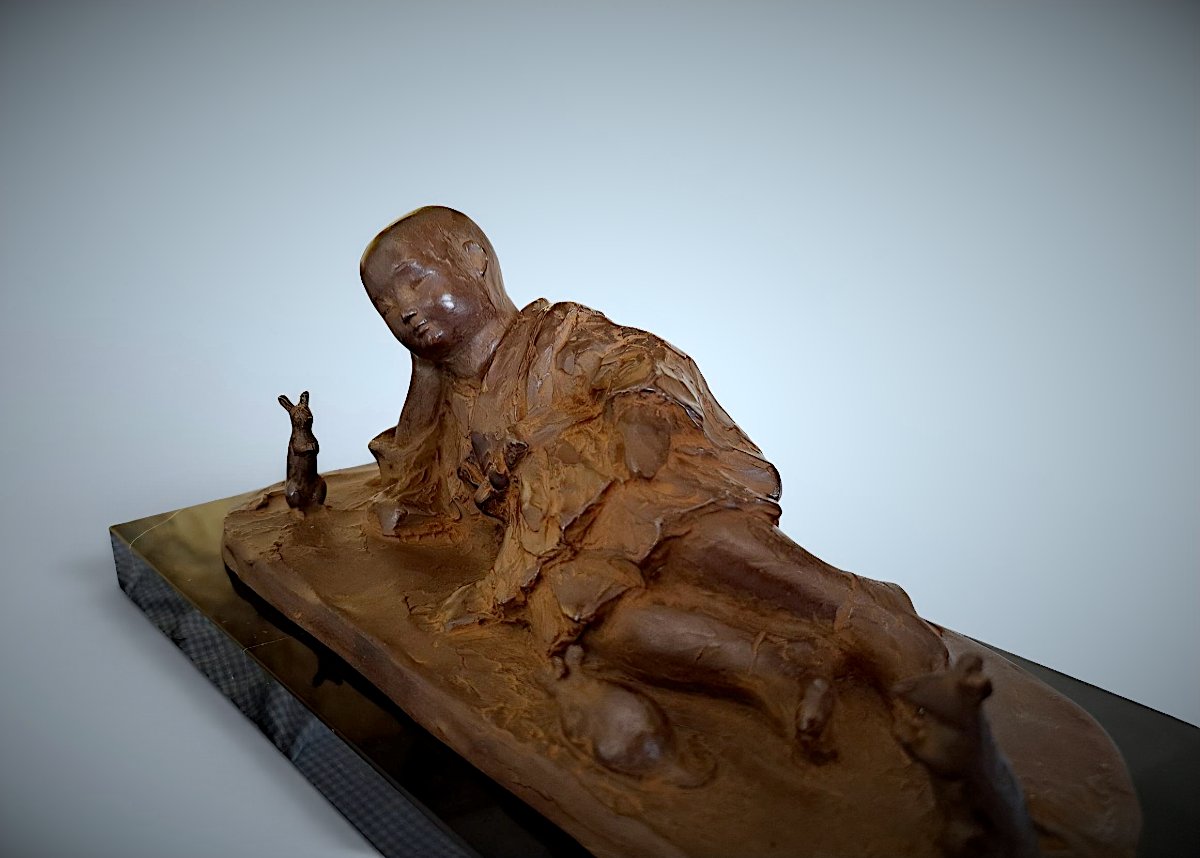
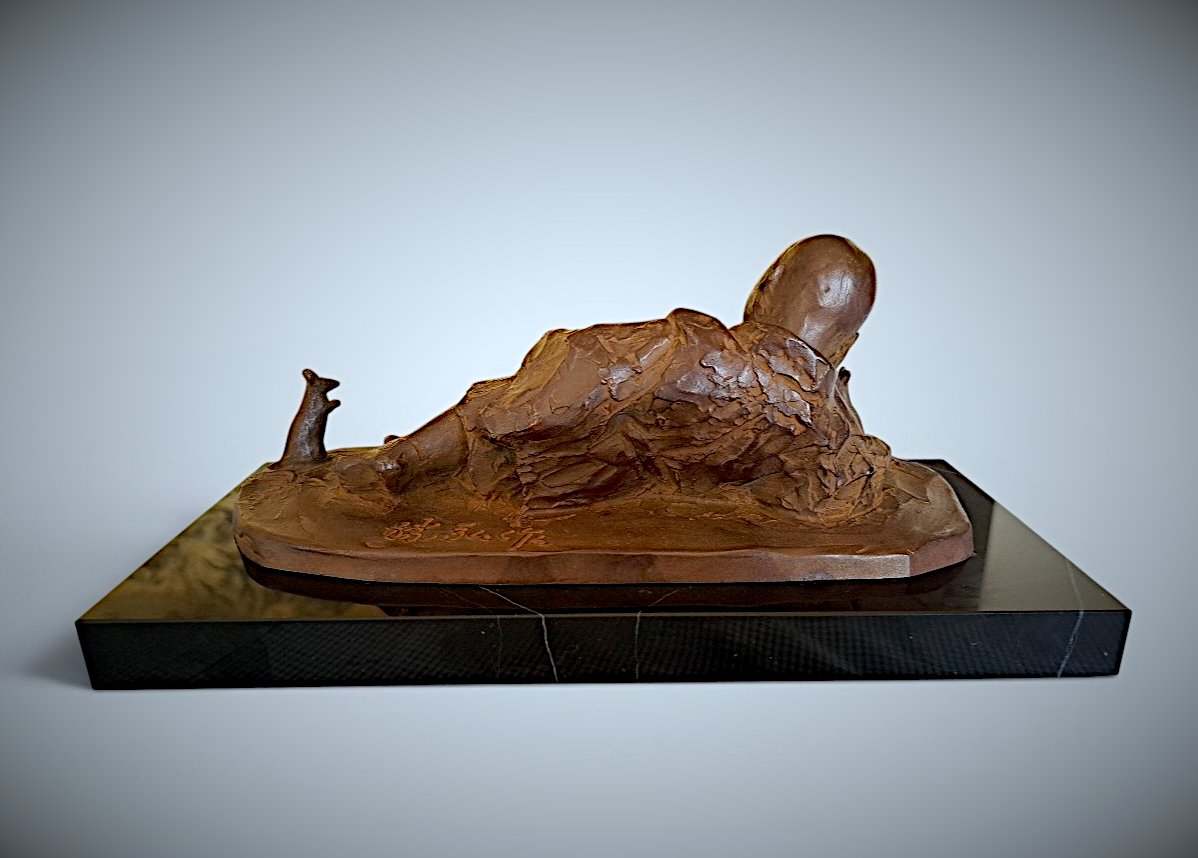
This evocative bronze sculpture, entitled “Sleeping Sesshū” (眠る雪舟 / Nemuru Sesshū), is a poetic and highlyindividual work by the Japanese sculptor Saitō Katsuhiro (斎藤勝弘, born 1942), an artist associated withthe prestigious Nitten exhibition tradition during the late Shōwa period. Thesculpture combines historical imagination, Zen-inflected tranquility, andrefined sculptural craftsmanship into a work of exceptional atmosphere andsensitivity.
The subject refers to Sesshū Tōyō (1420–1506), the legendary Zenmonk-painter widely regarded as one of the greatest masters in the history ofJapanese ink painting. Sesshū revolutionized Muromachi-period monochromelandscape painting through his powerful brushwork, expressive abstraction, andprofound spiritual depth. He was among the first Japanese painters to travel toMing China and assimilate continental ink traditions into a distinctly Japaneseartistic language.
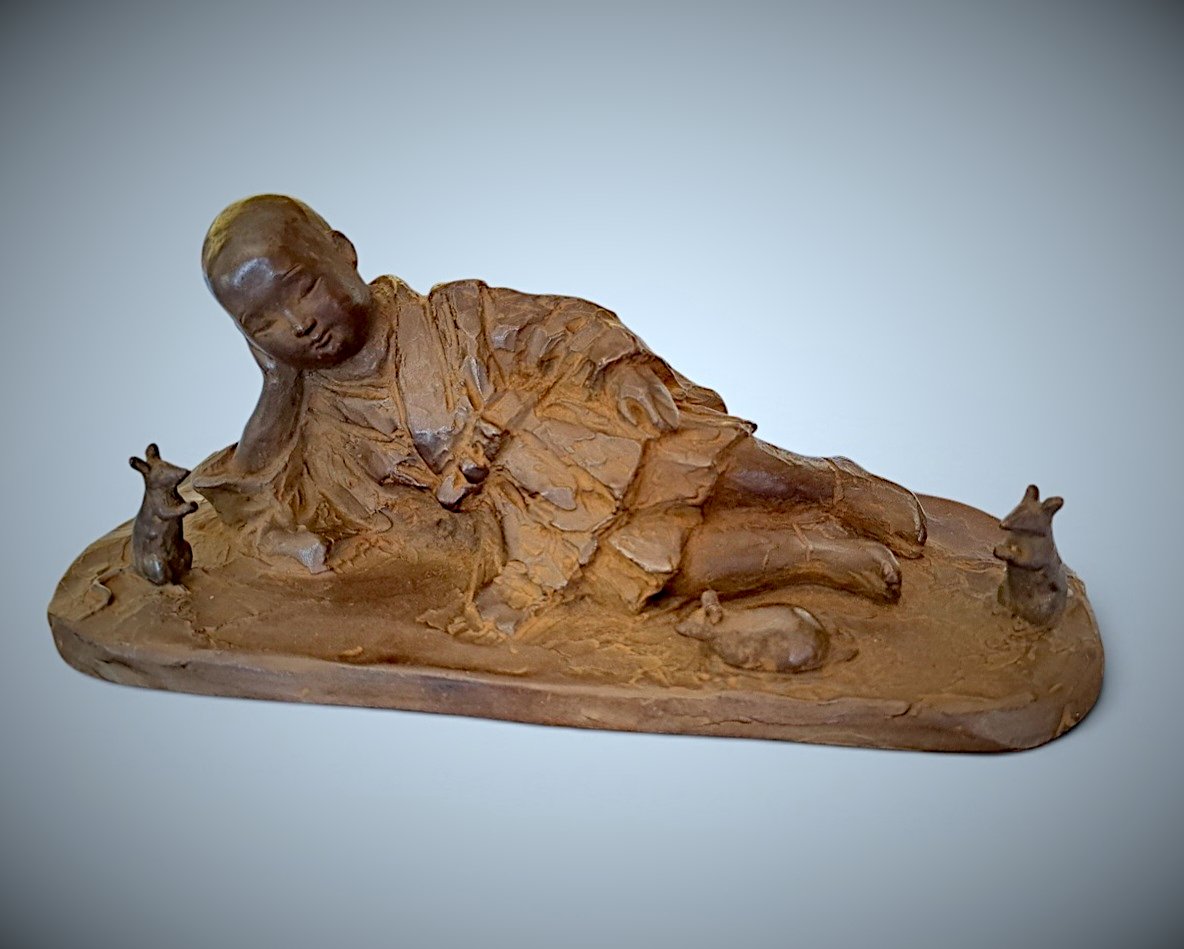
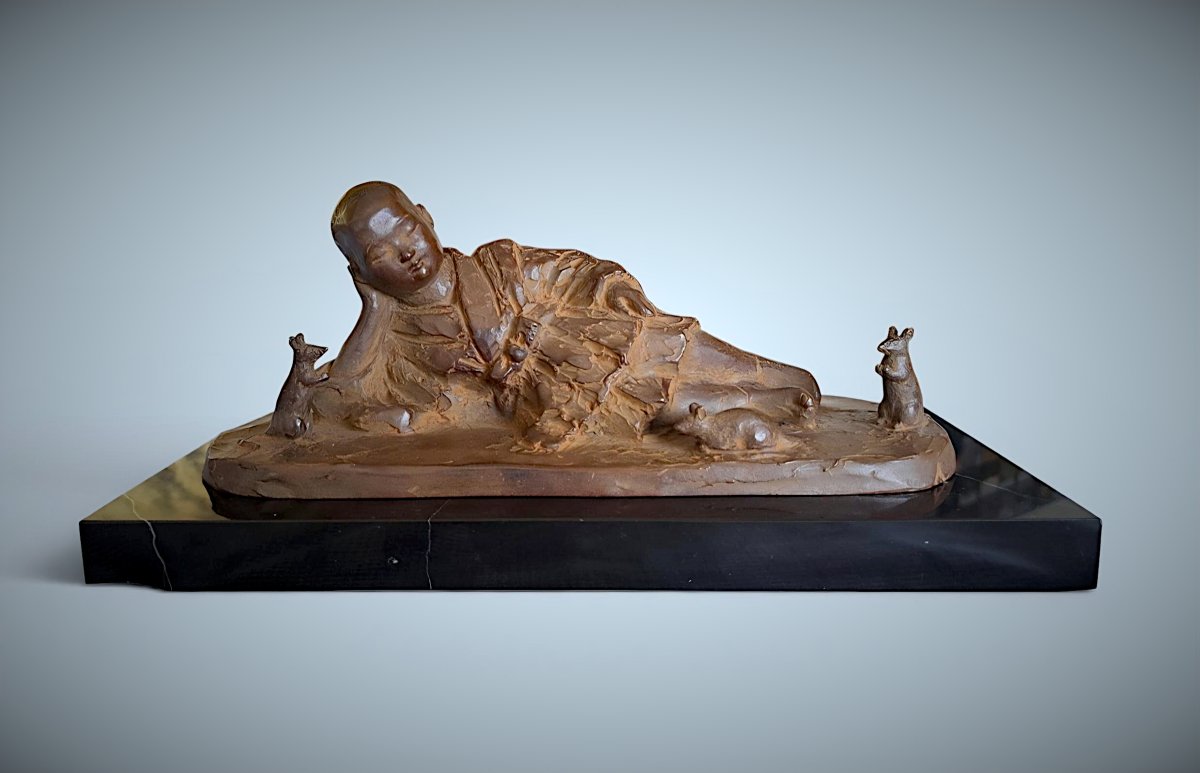
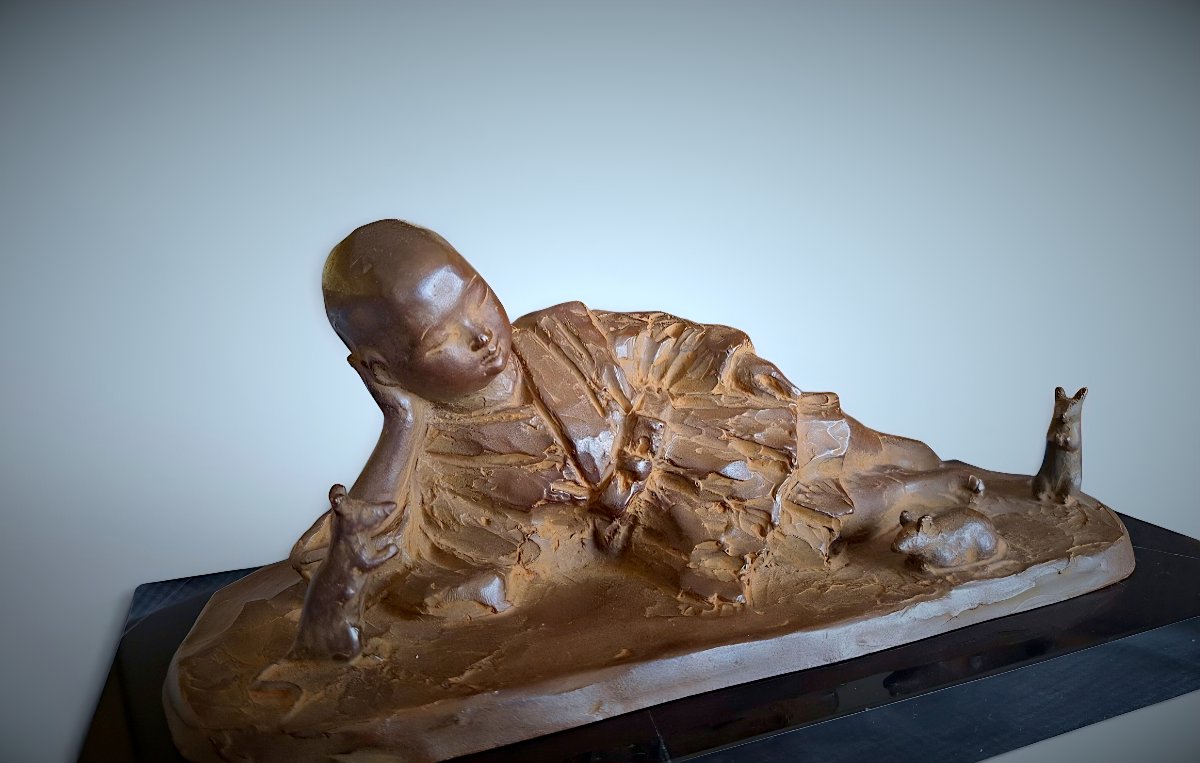
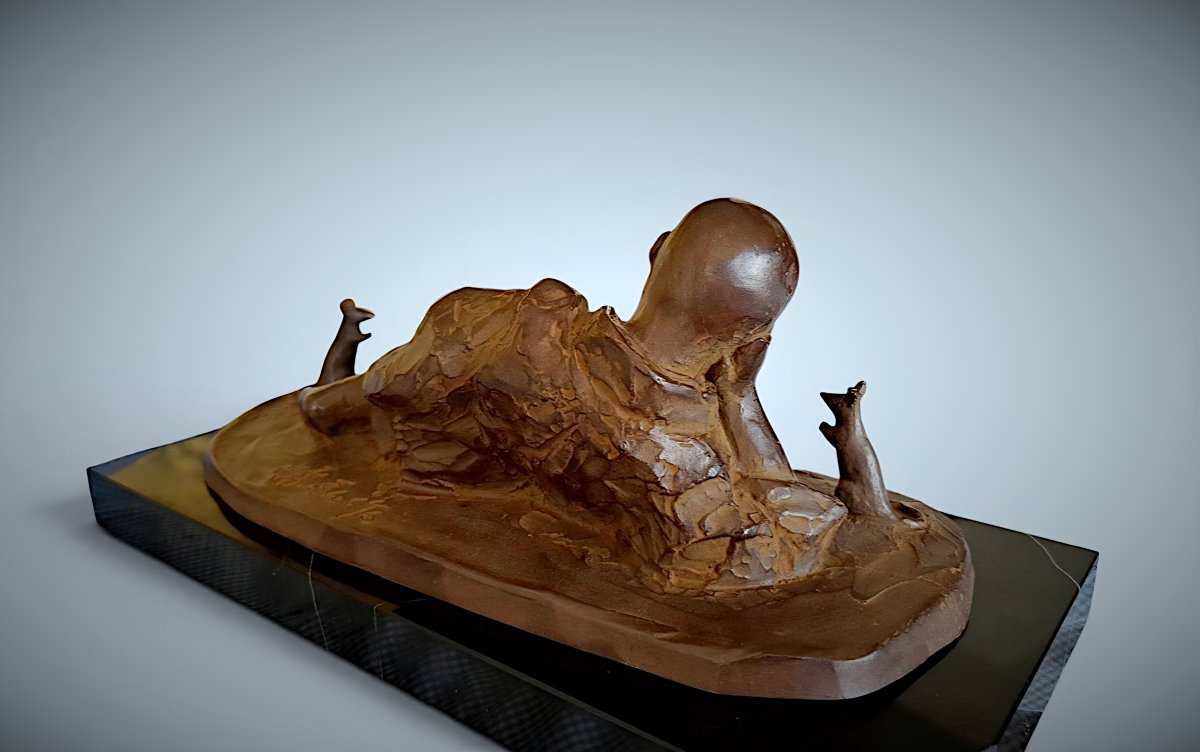
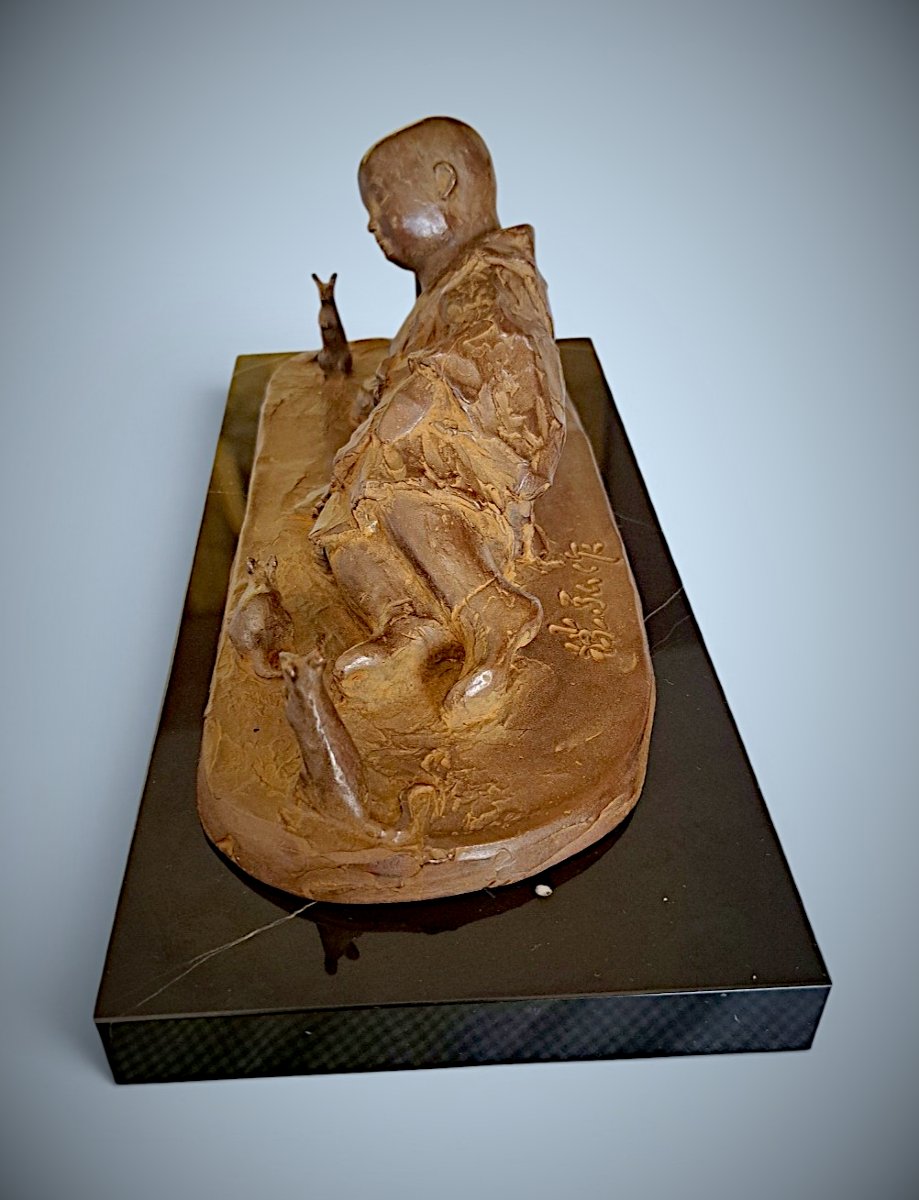
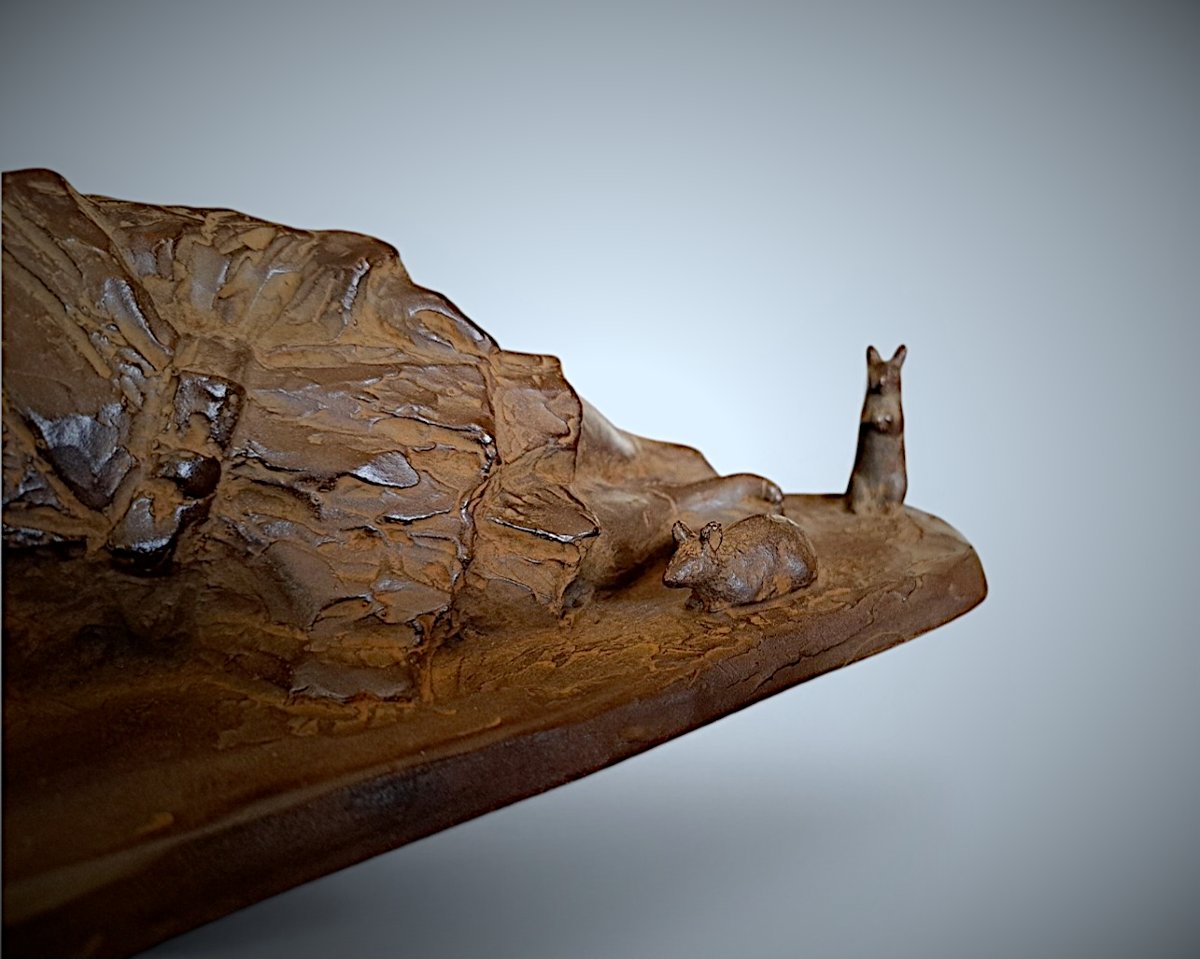
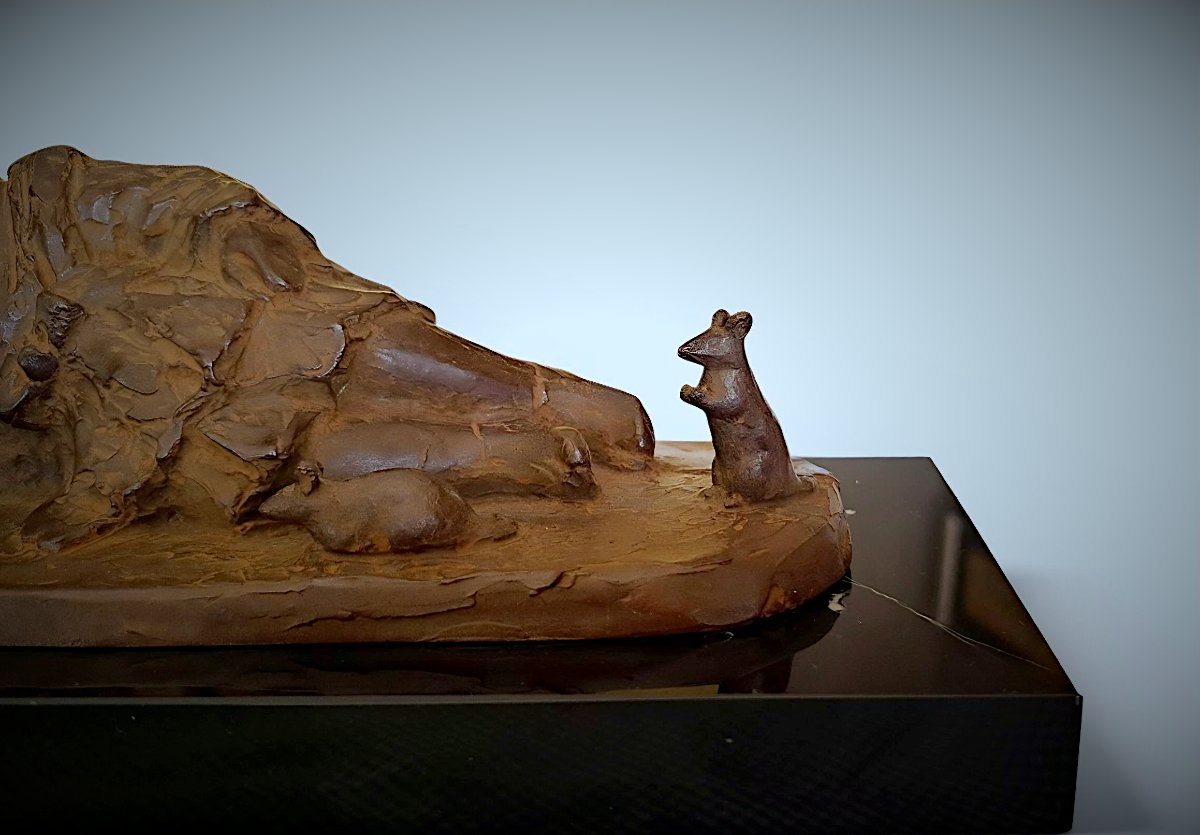
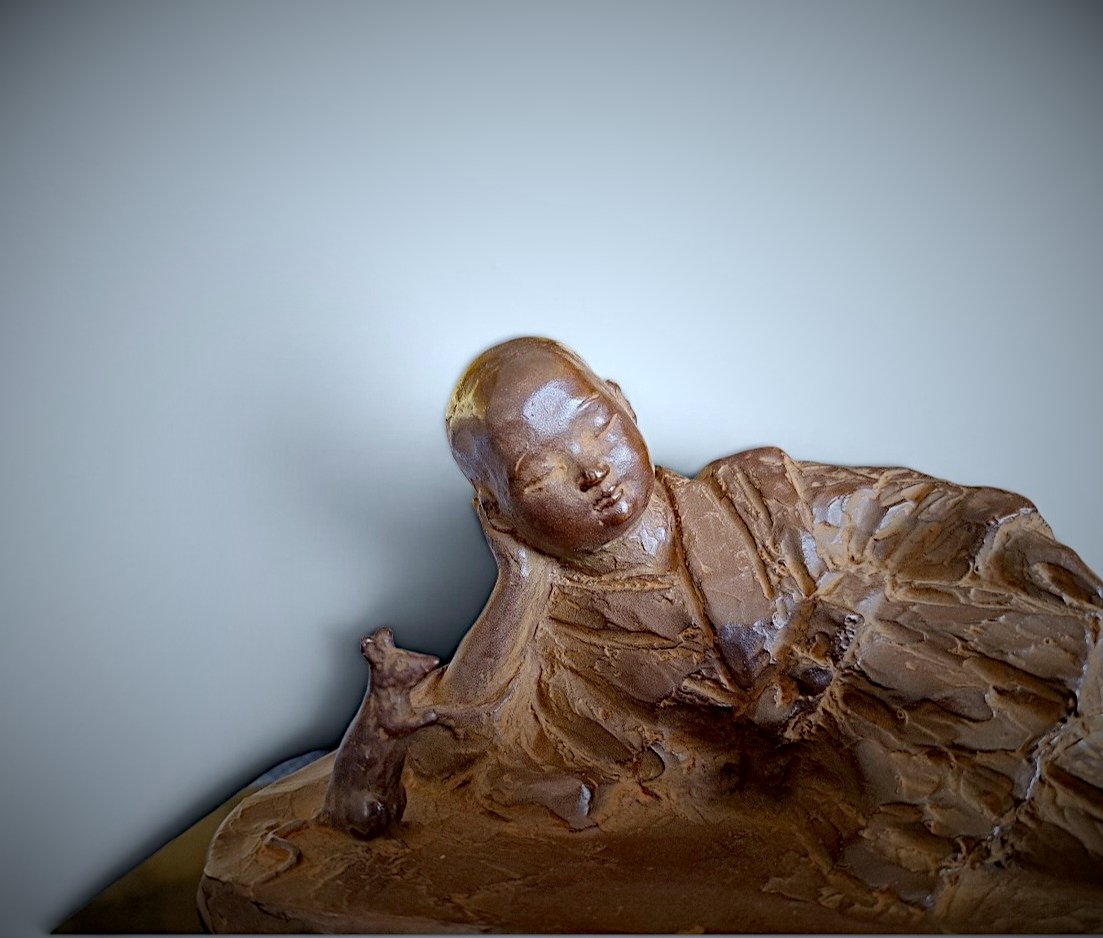
Rather than portraying Sesshū as the austere artistic titan celebratedin art history, Saitō presents him in a deeply human and contemplative manner:reclining peacefully, half-asleep, surrounded by mice that wander freely aroundhis robes. This unexpected tenderness transforms the historical figure into analmost folkloric presence, suspended between Zen meditation, dream, and quiethumor.
The theme of sleeping Zen figures possesses a long tradition in EastAsian art. Medieval Zen paintings frequently depicted monks and eccentrics instates of sleep or relaxed contemplation, symbolizing detachment from worldlyconcerns and harmony with nature. Images such as the celebrated “Four Sleepers”compositions embodied ideals of spiritual peace, enlightenment, and coexistencebetween man and animal. In this context, the mice surrounding Sesshū may beunderstood not merely as decorative companions, but as symbols of naturalinnocence and untroubled existence within a world free of fear and hierarchy.
Saitō’s interpretation is distinctly modern while remaining rooted inJapanese aesthetic tradition. The bronze surface is modeled with remarkablevitality: textured, irregular, and alive with shifting reflections of light.Rather than polishing the sculpture into academic smoothness, the artistpreserves the immediacy of the sculptural process, allowing the tactile qualityof the clay model to remain visible in the final bronze. This expressivesurface treatment recalls the broader development of postwar Japanesefigurative sculpture, where emotional presence and material sensitivity becamecentral artistic concerns.
The composition itself is exceptionally balanced. Although horizontaland intimate in scale, the sculpture possesses a quiet monumentality. Therelaxed posture of the reclining figure creates a flowing rhythm across thebronze base, while the small mice animate the foreground and edges with subtlemovement. The contrast between the serenity of the sleeping monk and the livelyactivity of the animals produces a gentle narrative tension that gives the workits charm and humanity.
Saitō Katsuhiro belonged to an important generation of Japanesesculptors who emerged during Japan’s postwar cultural expansion. His careerdeveloped within the framework of the highly influential Nitten exhibitionsystem. In 1966 he was recommended as a member of the Japan SculptureAssociation; in 1972 he received the prestigious Nitten Chunichi Prize,followed by further recognition at the Nittō Sculpture Exhibition in 1975. By1976 he had attained associate membership within the Nitten Association itself— an important distinction in the hierarchy of modern Japanese artinstitutions.
Alongside his exhibition career, Saitō became active in monumental civicsculpture. His commissions included symbolic statuary for Gamagōri City’sTakeshima recreational complex, a clock tower for the Toyota Regional CulturalPlaza, and the architectural wall sculpture Dance of the Sun for the ToyotaCivic Cultural Center. These public works situate him firmly within thegeneration of artists who shaped the visual identity of modern Japanese civicarchitecture during the economic and cultural flourishing of the late Shōwaera.
“Sleeping Sesshū” reveals another dimensionof the artist’s oeuvre: intimate, reflective, and quietly philosophical. Thesculpture can almost be interpreted as a meditation on artistic genius itself.Sesshū — the great Zen painter whose ink landscapes conveyed silence,emptiness, and spiritual vastness — is here shown at rest, detached fromworldly ambition, accompanied only by humble creatures moving peacefully aroundhim. The work captures an atmosphere profoundly aligned with Japanese Zenaesthetics: simplicity, stillness, naturalness, and compassionate observationof the small details of life.
The accompanying signed tomobako (wooden storage box), inscribed by theartist and bearing his seal, further reinforces the sculpture’s authenticityand cultural integrity. In Japanese artistic tradition, the tomobako forms anessential extension of the artwork itself, preserving provenance and affirmingthe direct connection between artist, object, and collector.
Altogether, “Sleeping Sesshū” stands as an exceptionally lyrical exampleof late Shōwa bronze sculpture: intellectually rooted in Japanese culturalhistory, technically sophisticated, and emotionally restrained yet deeplyhumane. It unites historical homage, Zen sensibility, and modern sculpturalexpression in a work of rare poetic resonance.
The subject refers to Sesshū Tōyō (1420–1506), the legendary Zenmonk-painter widely regarded as one of the greatest masters in the history ofJapanese ink painting. Sesshū revolutionized Muromachi-period monochromelandscape painting through his powerful brushwork, expressive abstraction, andprofound spiritual depth. He was among the first Japanese painters to travel toMing China and assimilate continental ink traditions into a distinctly Japaneseartistic language.
Rather than portraying Sesshū as the austere artistic titan celebratedin art history, Saitō presents him in a deeply human and contemplative manner:reclining peacefully, half-asleep, surrounded by mice that wander freely aroundhis robes. This unexpected tenderness transforms the historical figure into analmost folkloric presence, suspended between Zen meditation, dream, and quiethumor.
The theme of sleeping Zen figures possesses a long tradition in EastAsian art. Medieval Zen paintings frequently depicted monks and eccentrics instates of sleep or relaxed contemplation, symbolizing detachment from worldlyconcerns and harmony with nature. Images such as the celebrated “Four Sleepers”compositions embodied ideals of spiritual peace, enlightenment, and coexistencebetween man and animal. In this context, the mice surrounding Sesshū may beunderstood not merely as decorative companions, but as symbols of naturalinnocence and untroubled existence within a world free of fear and hierarchy.
Saitō’s interpretation is distinctly modern while remaining rooted inJapanese aesthetic tradition. The bronze surface is modeled with remarkablevitality: textured, irregular, and alive with shifting reflections of light.Rather than polishing the sculpture into academic smoothness, the artistpreserves the immediacy of the sculptural process, allowing the tactile qualityof the clay model to remain visible in the final bronze. This expressivesurface treatment recalls the broader development of postwar Japanesefigurative sculpture, where emotional presence and material sensitivity becamecentral artistic concerns.
The composition itself is exceptionally balanced. Although horizontaland intimate in scale, the sculpture possesses a quiet monumentality. Therelaxed posture of the reclining figure creates a flowing rhythm across thebronze base, while the small mice animate the foreground and edges with subtlemovement. The contrast between the serenity of the sleeping monk and the livelyactivity of the animals produces a gentle narrative tension that gives the workits charm and humanity.
Saitō Katsuhiro belonged to an important generation of Japanesesculptors who emerged during Japan’s postwar cultural expansion. His careerdeveloped within the framework of the highly influential Nitten exhibitionsystem. In 1966 he was recommended as a member of the Japan SculptureAssociation; in 1972 he received the prestigious Nitten Chunichi Prize,followed by further recognition at the Nittō Sculpture Exhibition in 1975. By1976 he had attained associate membership within the Nitten Association itself— an important distinction in the hierarchy of modern Japanese artinstitutions.
Alongside his exhibition career, Saitō became active in monumental civicsculpture. His commissions included symbolic statuary for Gamagōri City’sTakeshima recreational complex, a clock tower for the Toyota Regional CulturalPlaza, and the architectural wall sculpture Dance of the Sun for the ToyotaCivic Cultural Center. These public works situate him firmly within thegeneration of artists who shaped the visual identity of modern Japanese civicarchitecture during the economic and cultural flourishing of the late Shōwaera.
“Sleeping Sesshū” reveals another dimensionof the artist’s oeuvre: intimate, reflective, and quietly philosophical. Thesculpture can almost be interpreted as a meditation on artistic genius itself.Sesshū — the great Zen painter whose ink landscapes conveyed silence,emptiness, and spiritual vastness — is here shown at rest, detached fromworldly ambition, accompanied only by humble creatures moving peacefully aroundhim. The work captures an atmosphere profoundly aligned with Japanese Zenaesthetics: simplicity, stillness, naturalness, and compassionate observationof the small details of life.
The accompanying signed tomobako (wooden storage box), inscribed by theartist and bearing his seal, further reinforces the sculpture’s authenticityand cultural integrity. In Japanese artistic tradition, the tomobako forms anessential extension of the artwork itself, preserving provenance and affirmingthe direct connection between artist, object, and collector.
Altogether, “Sleeping Sesshū” stands as an exceptionally lyrical exampleof late Shōwa bronze sculpture: intellectually rooted in Japanese culturalhistory, technically sophisticated, and emotionally restrained yet deeplyhumane. It unites historical homage, Zen sensibility, and modern sculpturalexpression in a work of rare poetic resonance.
500 €
Period: 20th century
Style: Asian art
Condition: Perfect condition
Material: Bronze
Length: 18 cm
Height: 12 cm
Depth: 13 cm
Reference (ID): 1765464
Availability: In stock
Print