

Large Floor Lamp From Accolay
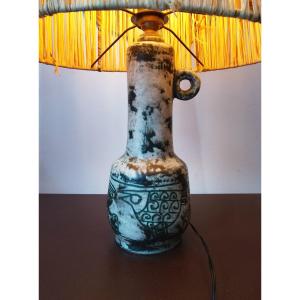
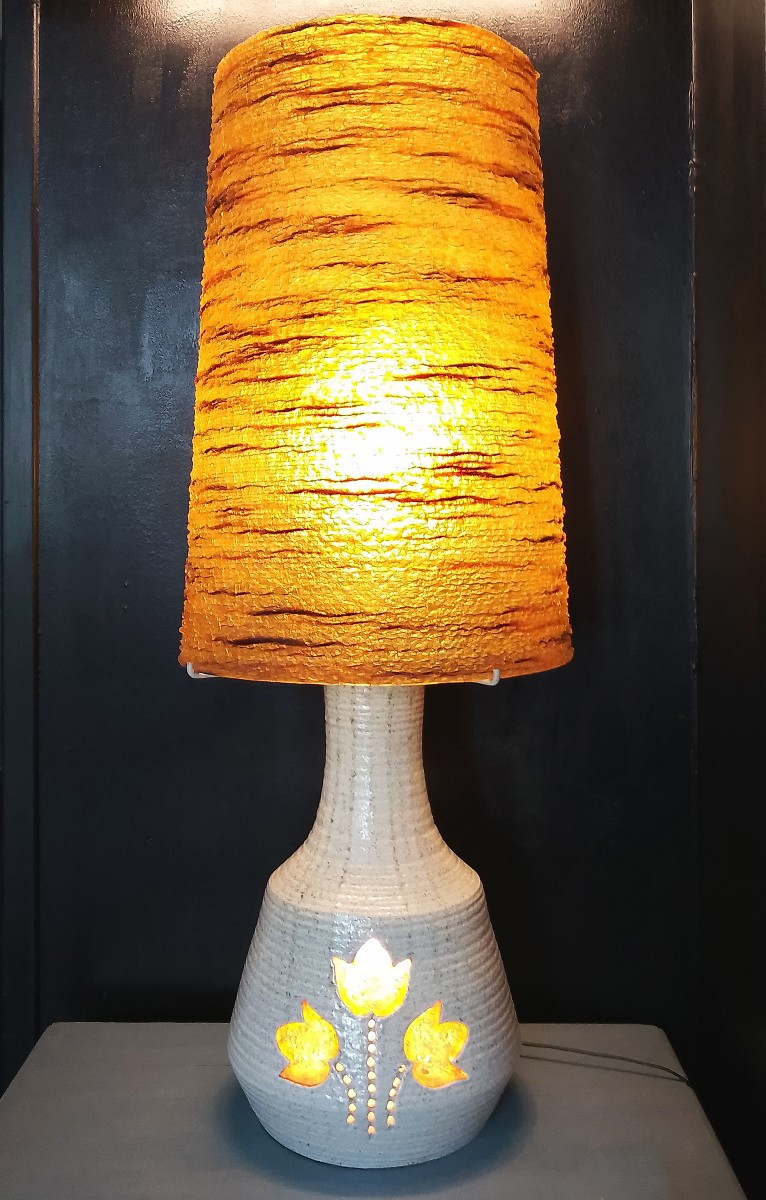
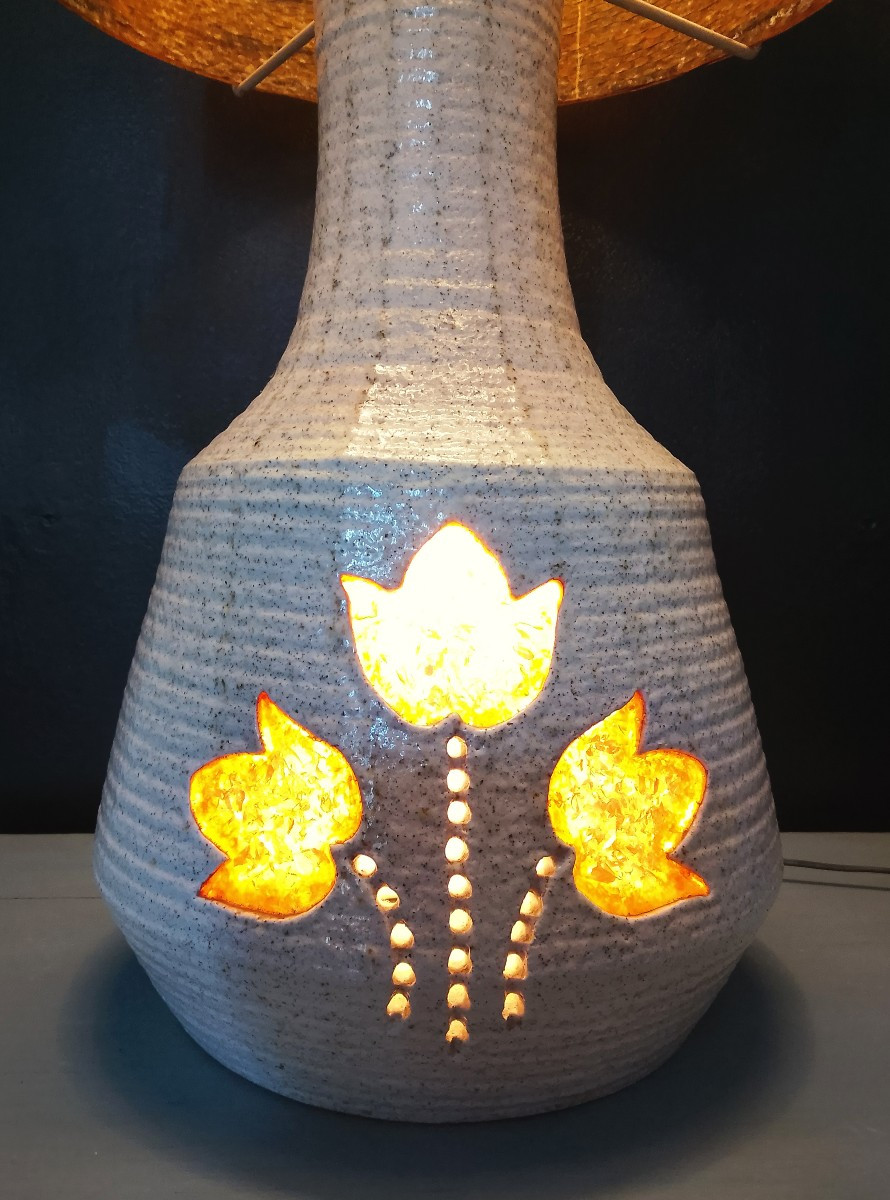
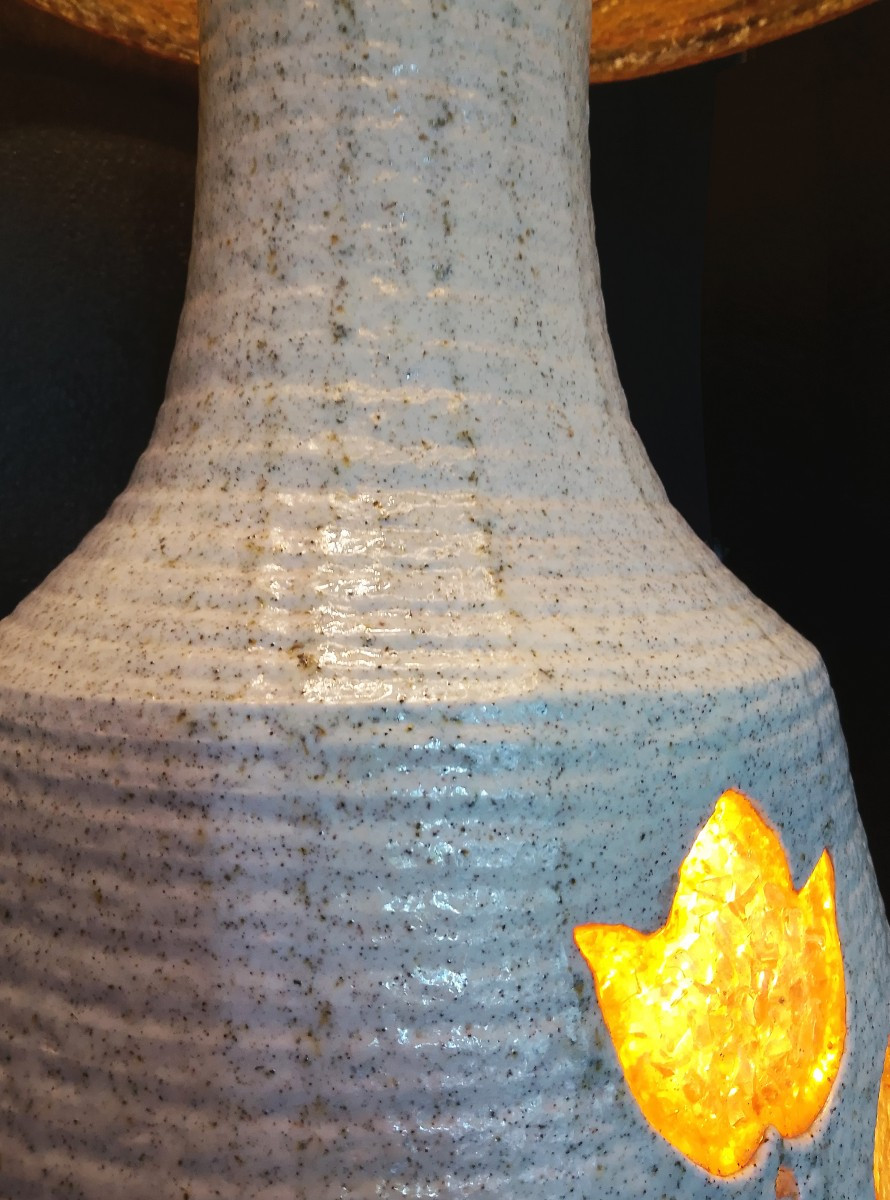
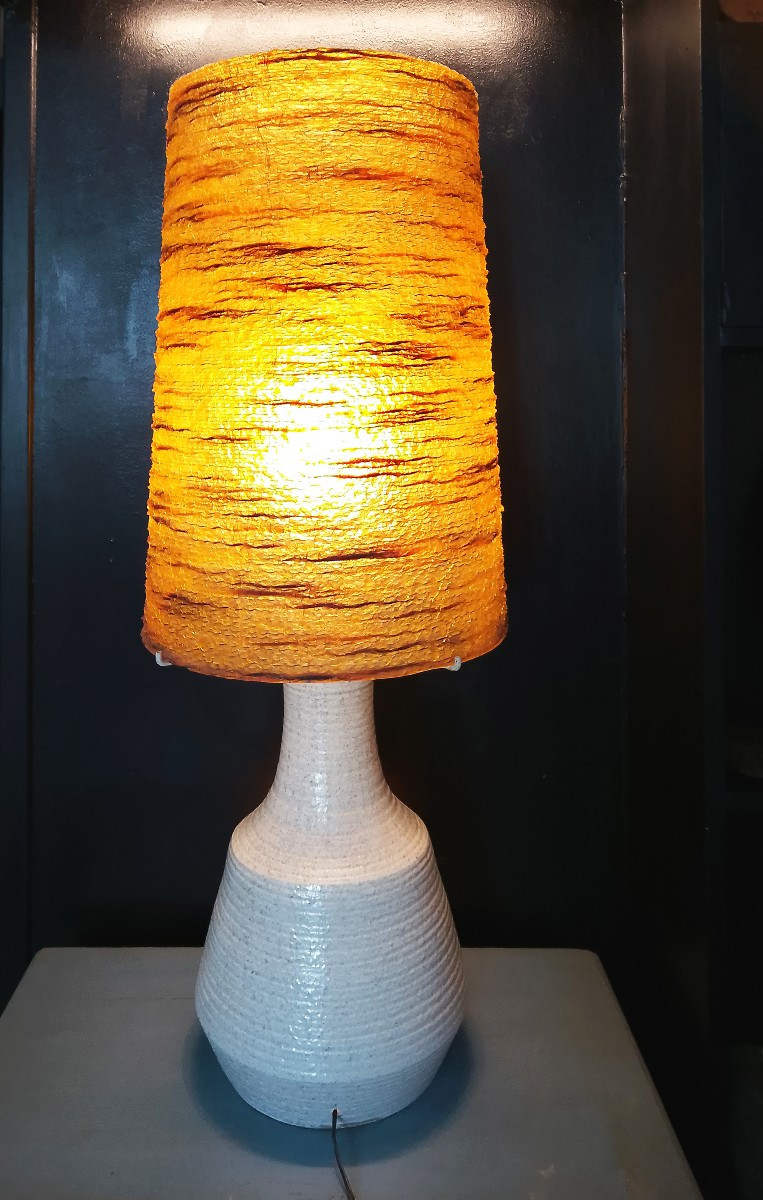
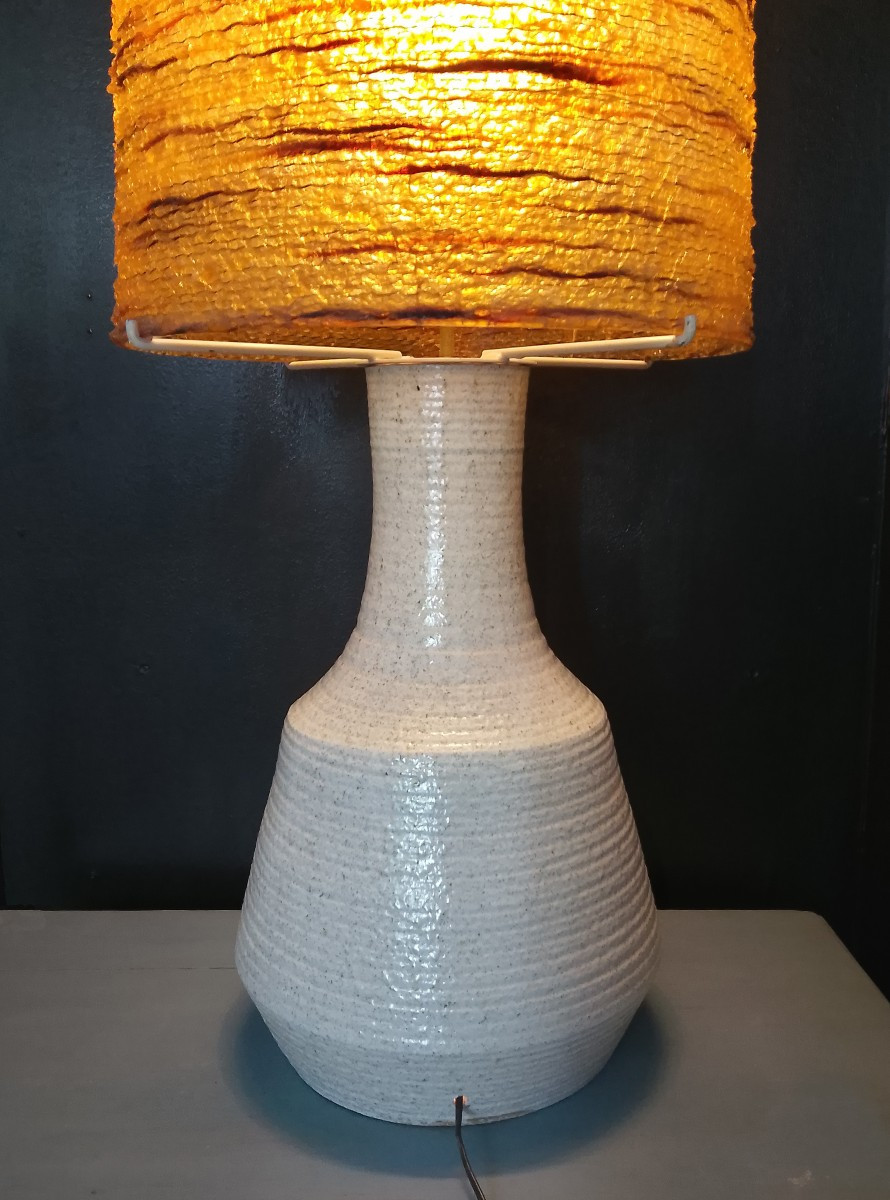
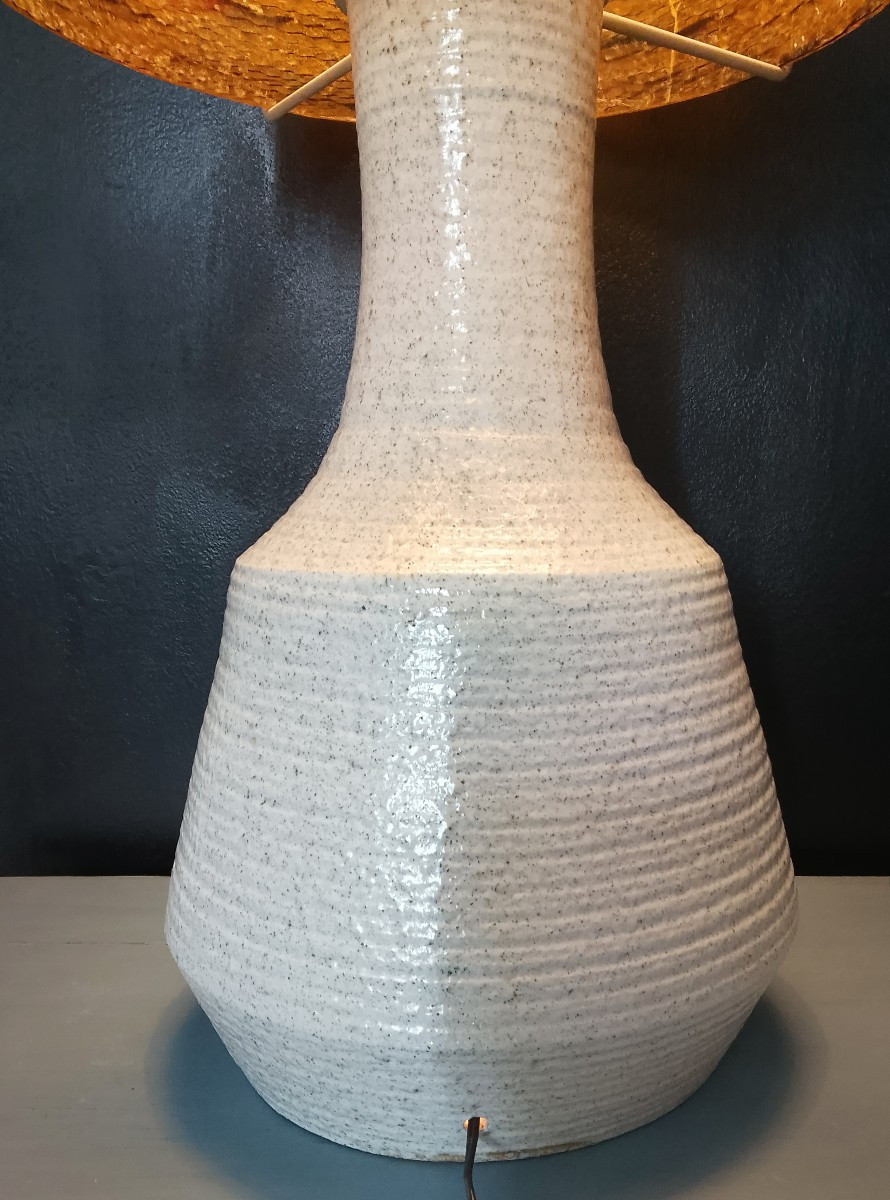
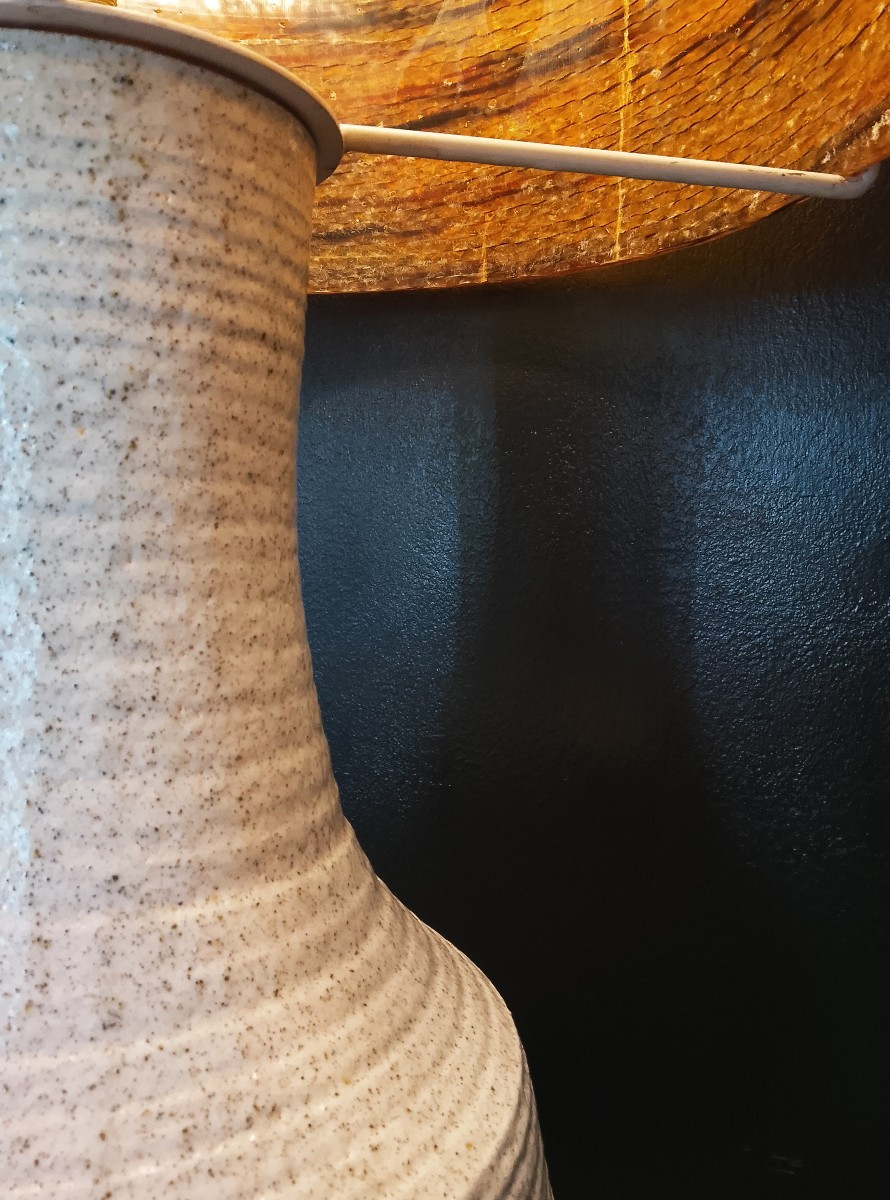
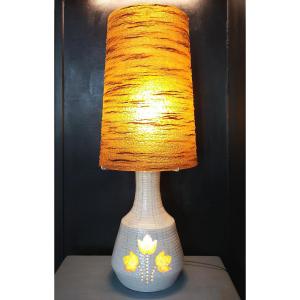
Lamp base in white glazed ceramic, piqueted
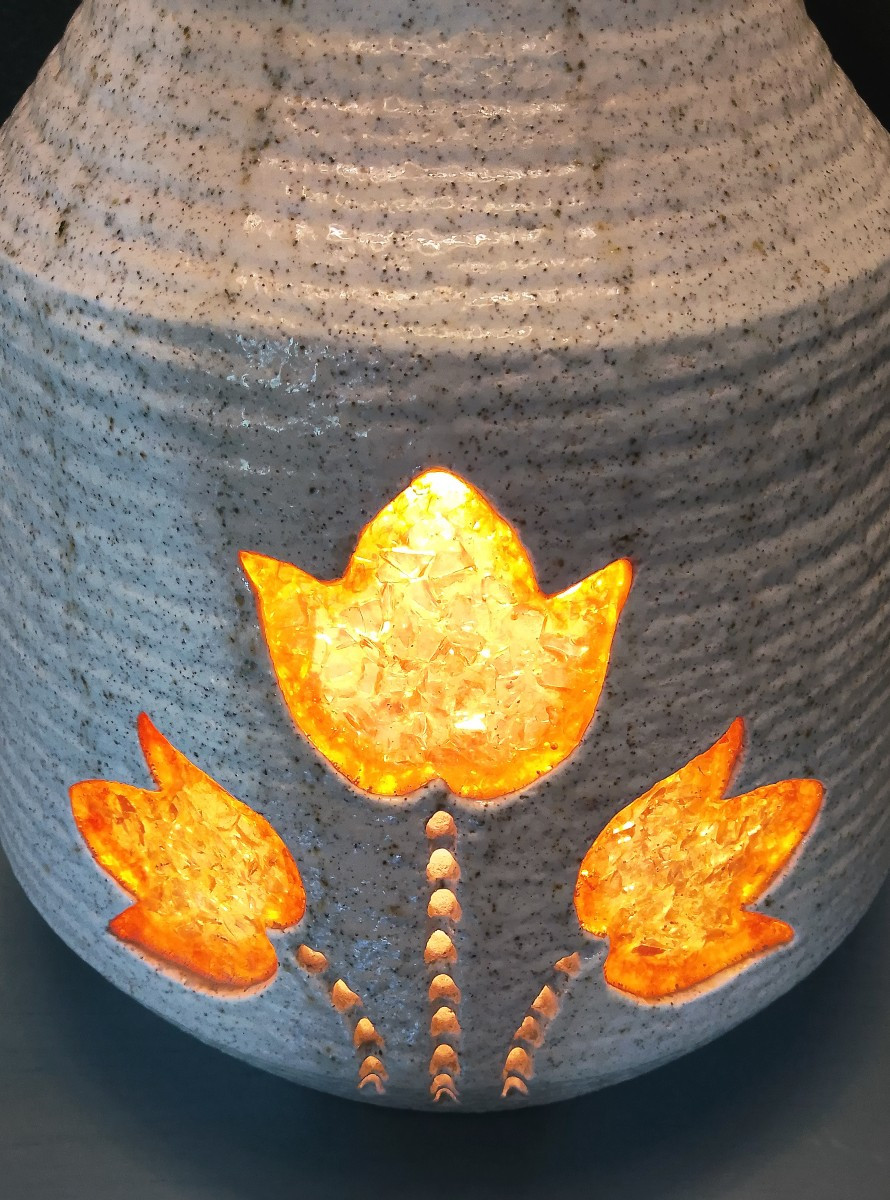
with vertical drips and an openwork decoration
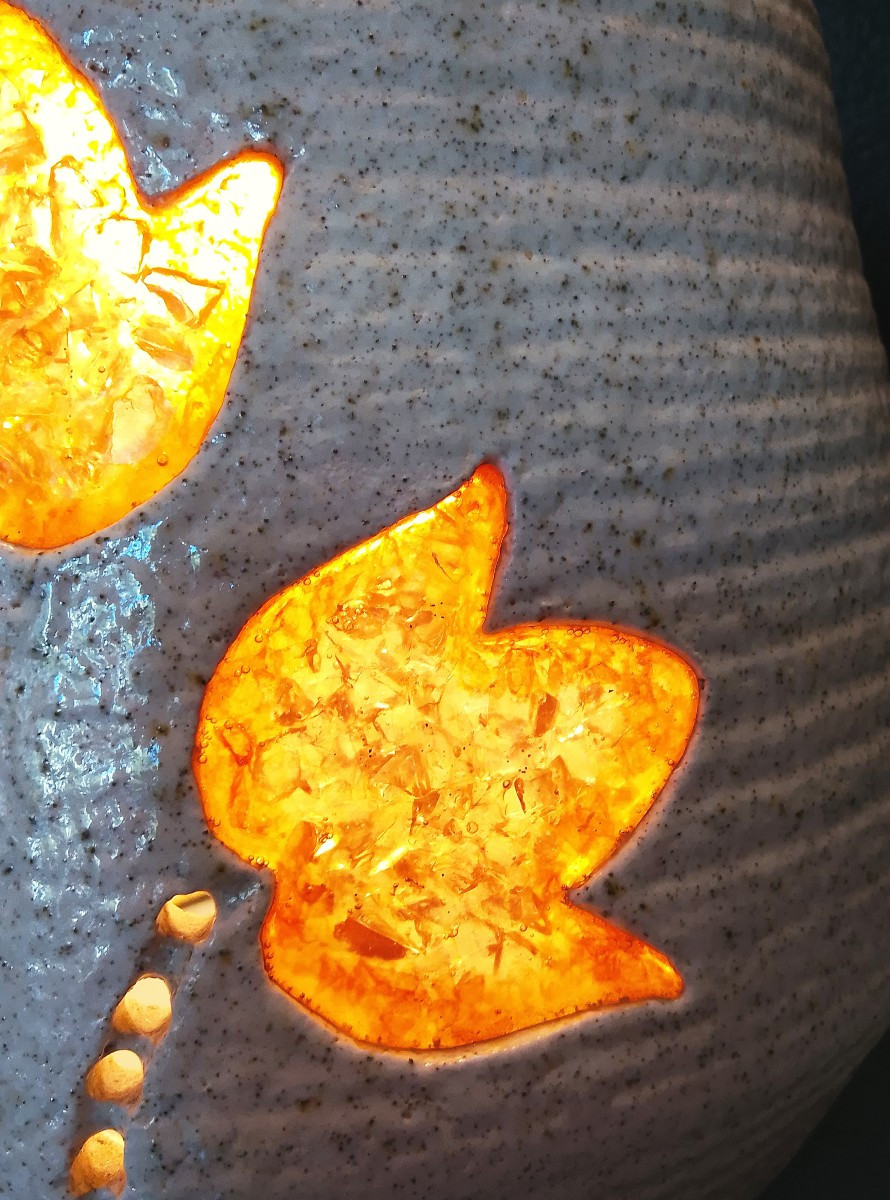
of three tiger tulips inlaid with cepamine.an openwork decoration
of three tiger tulips inlaid with cepamine.
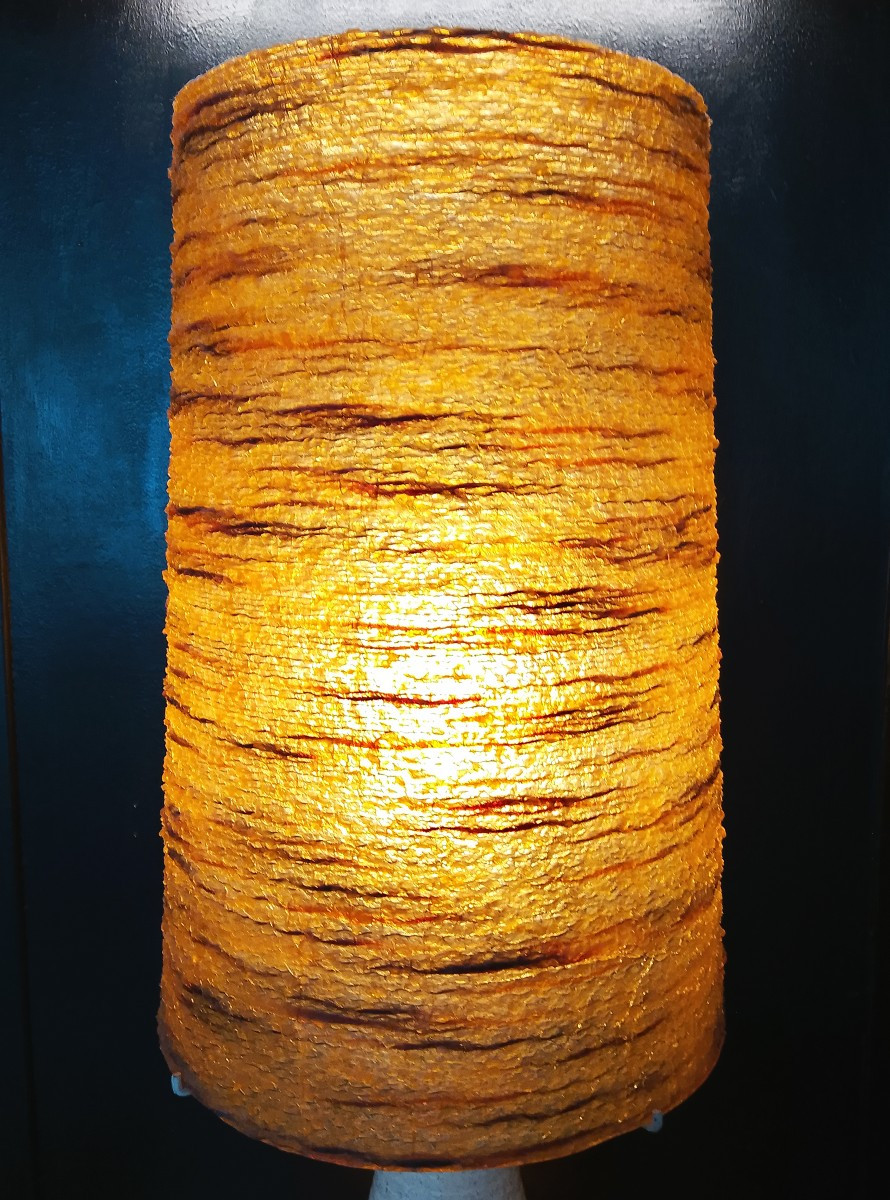
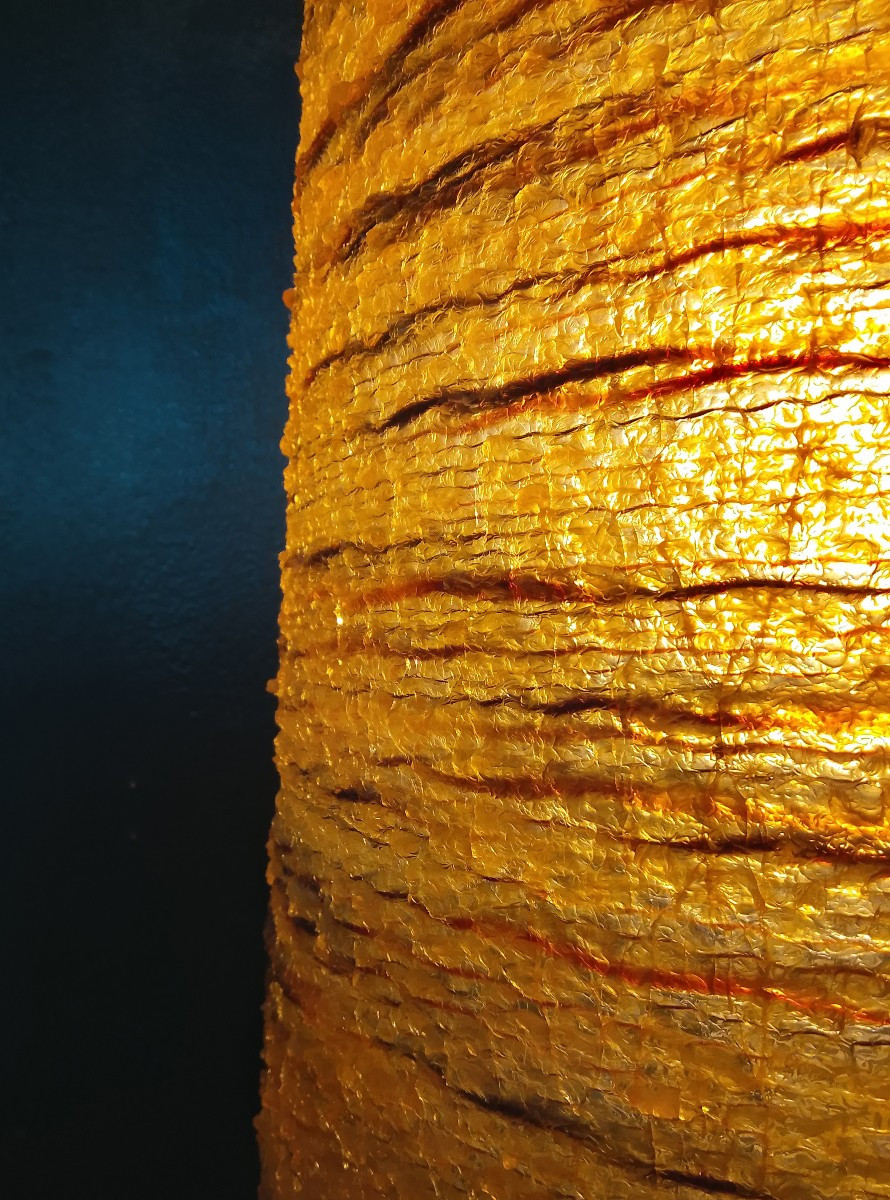
Orange-colored cepamine truncated light
with coiled black wool rope inclusions.
Four-pronged metal stand.
Two light sources: the first in the shade
and the second in the ceramicin the ceramic base.
The period electrical system is functional.
Manufacture desPotiers d'Accolay.
Hand-signed "Accolay" and numbered "323" under the base.
Early1970s.
Height of lamp base: 47 cm.
Maximum diameter of lamp base: 30 cm.
Height of lampshade: 60 cm.
Maximum diameter of lampshade: 41 cm.
Total height: 108cm.
The ceramics of Accolay represent an important chapter
in the History of the Art of CeramicsCeramics in France.
Their unique aesthetic and popular success make them
incontrovertible pieces for collectors and design enthusiasts.
They can also be foundin many museums.
It all began after the Second World War,
when four friendsfriends André Boutaud, Slavik Paley, Rodet
and Louis Dangon, all trained ceramists
(they were students ofAlexandre Kostanda during the war),
decided to settle in Accolay to freely express theirfreely express their art.
Elie Barachant, also a student of Kostanda, soon joined them
followed by Daniel Auger, Hubert Guy, and Fédor Iodtschine.
Inspired by the great masters of ceramicsmasters of ceramics, they quickly developed
their own distinctive style, blendingblending tradition and modernity.
Pure, organic shapes inspired by nature.
Brightoften applied in large solid colors.
Graphic designs with geometric motifsgeometric patterns, simple lines
and ethnic inspirations to enrich the pieces.
One-of-a-kindProvins white clay with the addition of finely ground lead-rich
glass or classic chamotte.chamotte.
The product range extends to a variety of models, many of them
light fixtures: sconces, floor lamps, lamp bases often very high.
The artistsAccolay invent and patent a new material: Cepamine, a
sort of thick resin including glassthick resin, including glass, in which they inlaid
leaves, flowers, insects ...very fashionable at the time.
Translucent lampshades were created in this material, whichgave off a beautiful luminosity.
The success of Accolay ceramics was not long in coming.
TheAccolay style became a symbol of French design in the 1950s and 1960s.
After the deathof André Boutaud, ceramics lost their originality, as
competition from Italy, Spain and Asiaand then Asian competition became increasingly prevalent
and the company ceased production for good in 1989.
with vertical drips and an openwork decoration
of three tiger tulips inlaid with cepamine.an openwork decoration
of three tiger tulips inlaid with cepamine.
Orange-colored cepamine truncated light
with coiled black wool rope inclusions.
Four-pronged metal stand.
Two light sources: the first in the shade
and the second in the ceramicin the ceramic base.
The period electrical system is functional.
Manufacture desPotiers d'Accolay.
Hand-signed "Accolay" and numbered "323" under the base.
Early1970s.
Height of lamp base: 47 cm.
Maximum diameter of lamp base: 30 cm.
Height of lampshade: 60 cm.
Maximum diameter of lampshade: 41 cm.
Total height: 108cm.
The ceramics of Accolay represent an important chapter
in the History of the Art of CeramicsCeramics in France.
Their unique aesthetic and popular success make them
incontrovertible pieces for collectors and design enthusiasts.
They can also be foundin many museums.
It all began after the Second World War,
when four friendsfriends André Boutaud, Slavik Paley, Rodet
and Louis Dangon, all trained ceramists
(they were students ofAlexandre Kostanda during the war),
decided to settle in Accolay to freely express theirfreely express their art.
Elie Barachant, also a student of Kostanda, soon joined them
followed by Daniel Auger, Hubert Guy, and Fédor Iodtschine.
Inspired by the great masters of ceramicsmasters of ceramics, they quickly developed
their own distinctive style, blendingblending tradition and modernity.
Pure, organic shapes inspired by nature.
Brightoften applied in large solid colors.
Graphic designs with geometric motifsgeometric patterns, simple lines
and ethnic inspirations to enrich the pieces.
One-of-a-kindProvins white clay with the addition of finely ground lead-rich
glass or classic chamotte.chamotte.
The product range extends to a variety of models, many of them
light fixtures: sconces, floor lamps, lamp bases often very high.
The artistsAccolay invent and patent a new material: Cepamine, a
sort of thick resin including glassthick resin, including glass, in which they inlaid
leaves, flowers, insects ...very fashionable at the time.
Translucent lampshades were created in this material, whichgave off a beautiful luminosity.
The success of Accolay ceramics was not long in coming.
TheAccolay style became a symbol of French design in the 1950s and 1960s.
After the deathof André Boutaud, ceramics lost their originality, as
competition from Italy, Spain and Asiaand then Asian competition became increasingly prevalent
and the company ceased production for good in 1989.
1 600 €
Period: 20th century
Style: Design 50's and 60's
Condition: Perfect condition
Material: Ceramic
Height: 108 cm.
Reference (ID): 1764748
Availability: In stock
Print