

China - Mingqi Miniature Architectural Model - Ming Dynasty - Tl
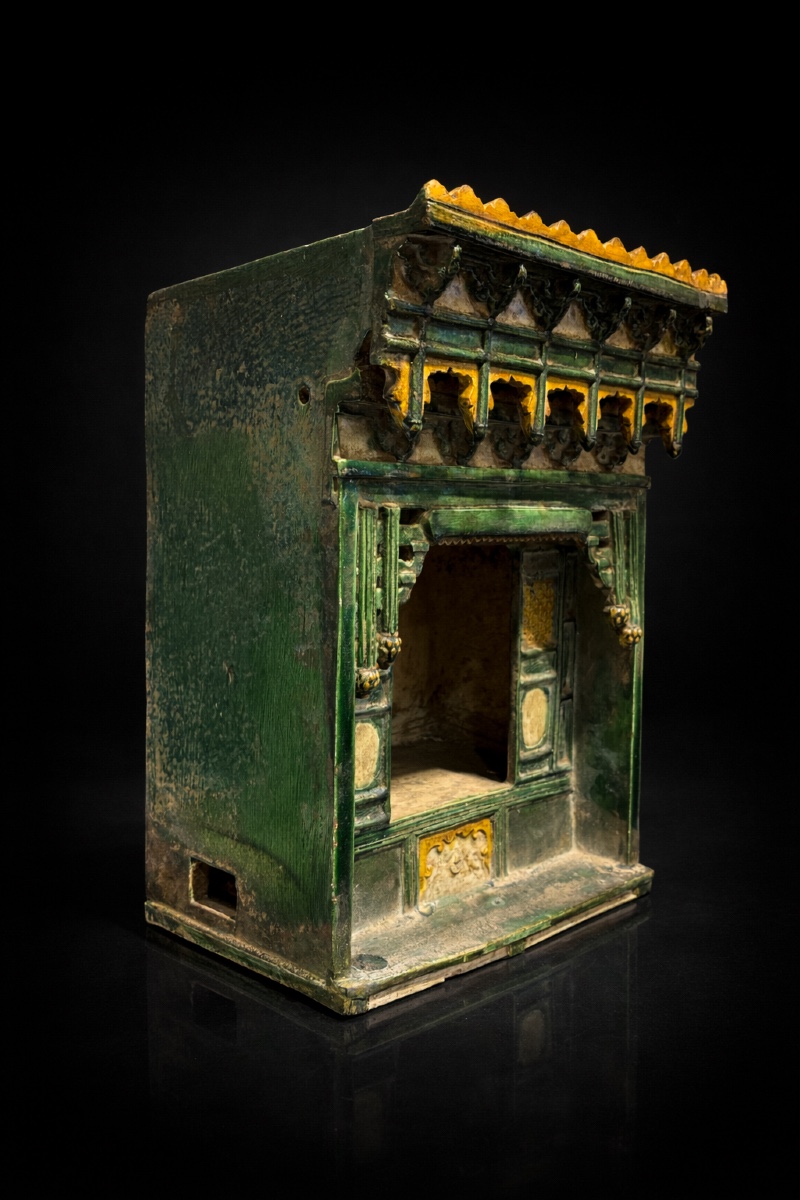
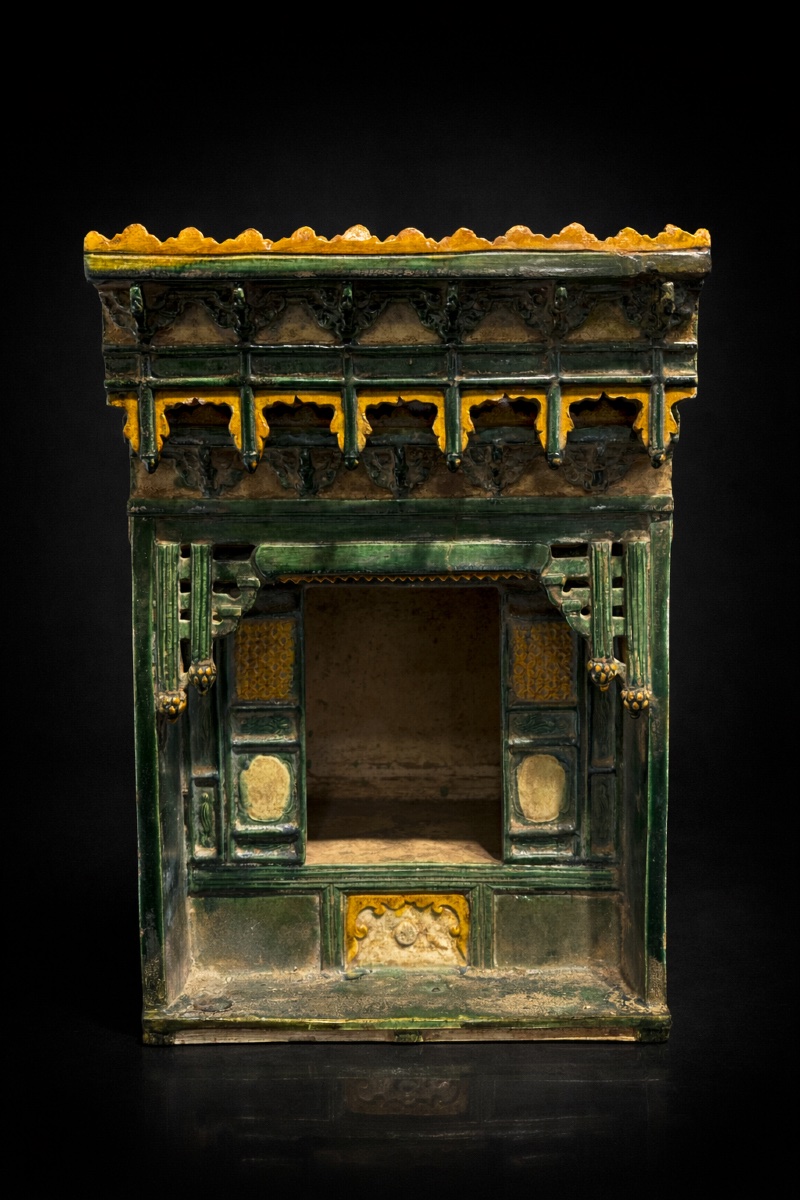
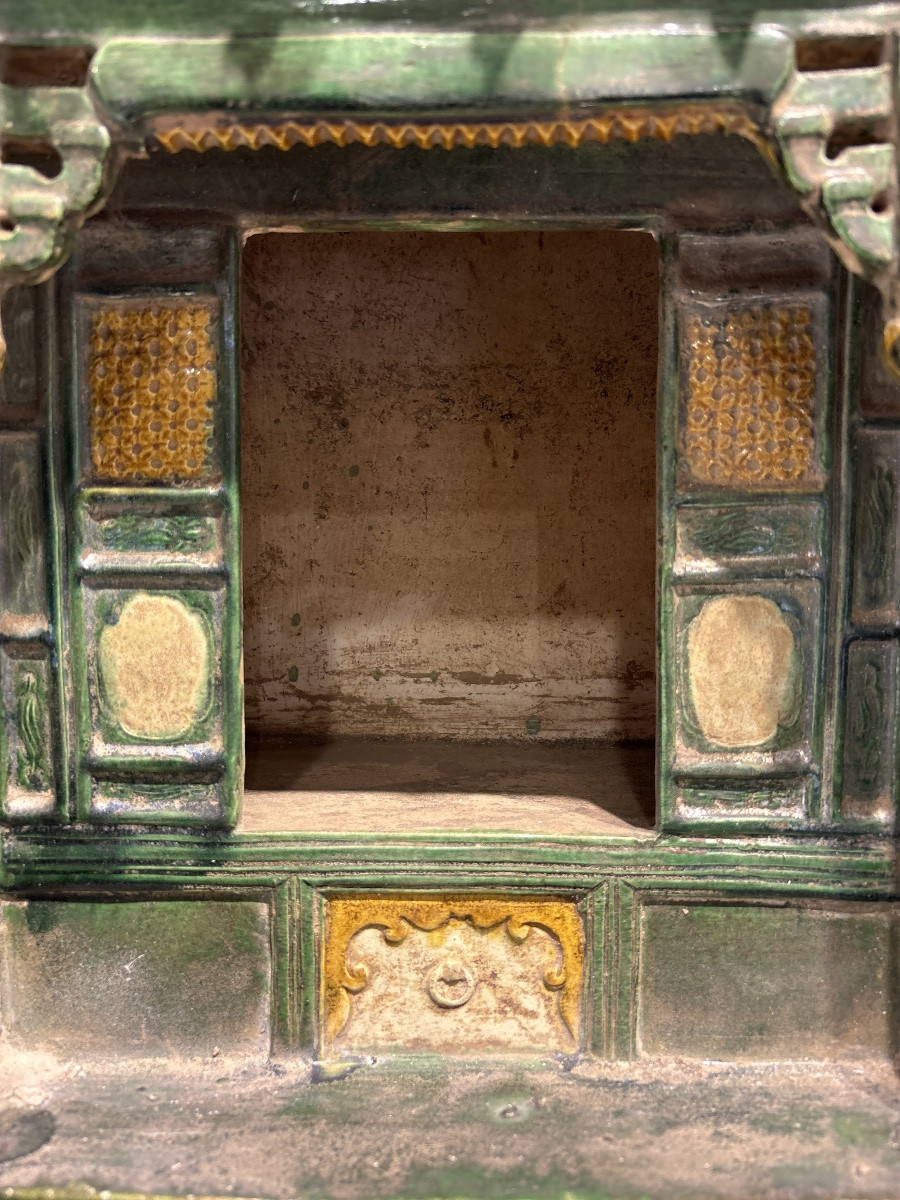
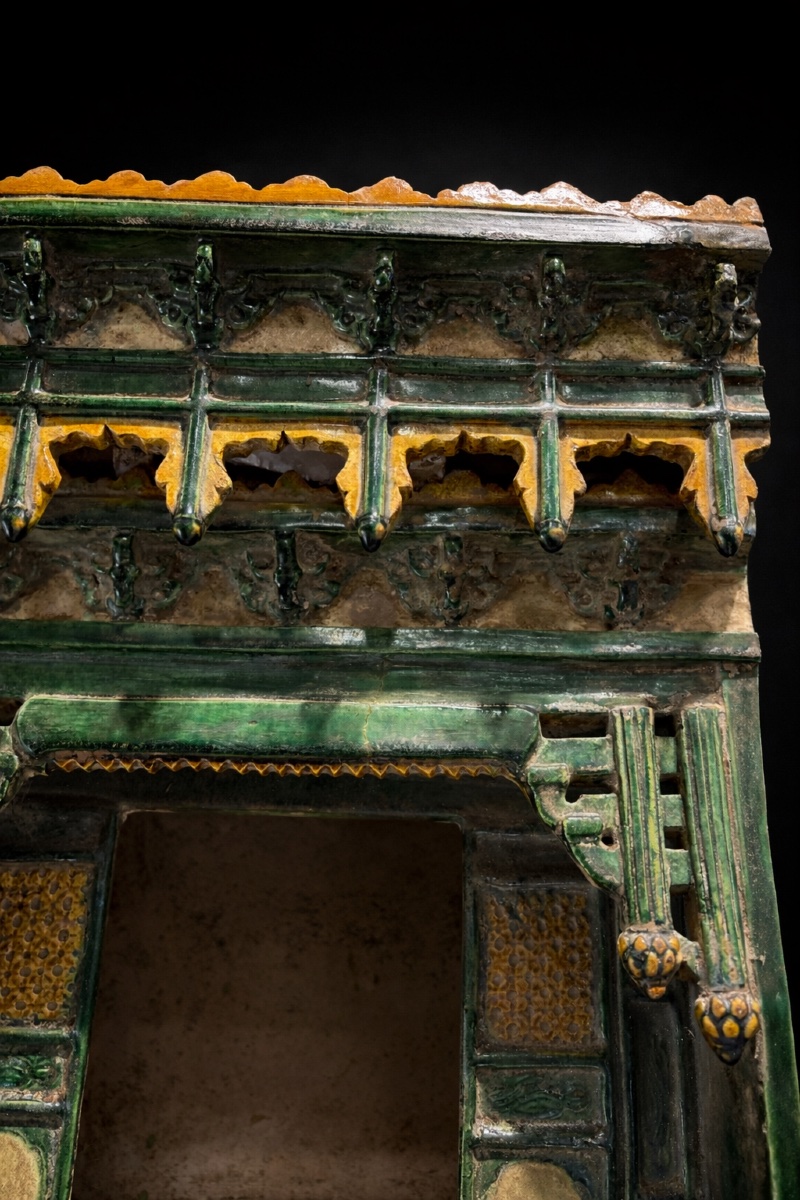
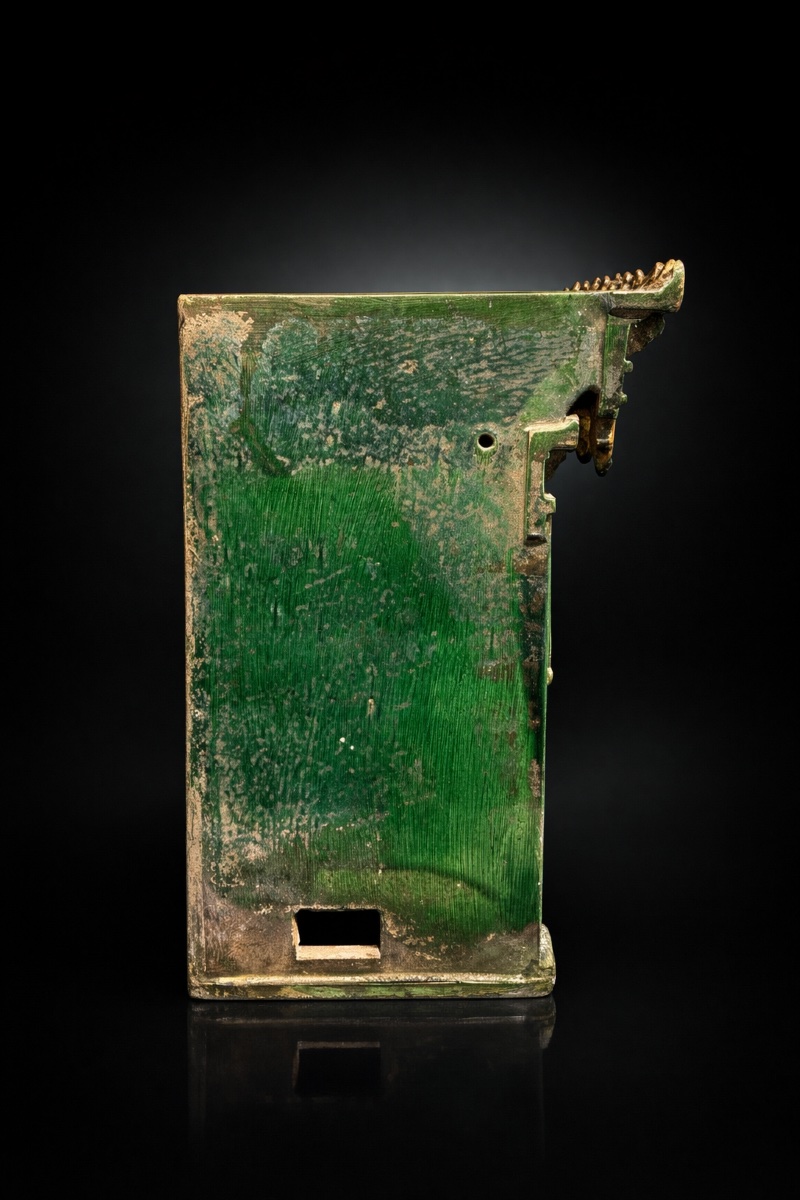
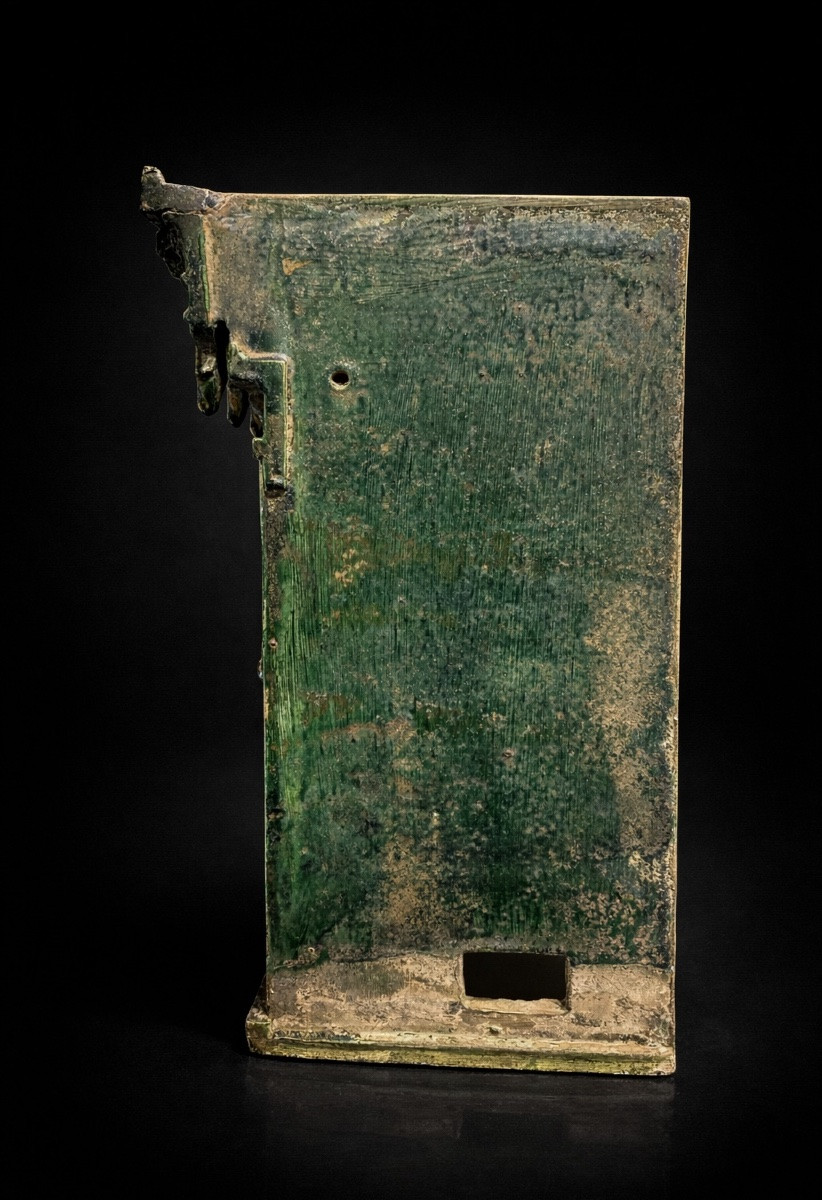
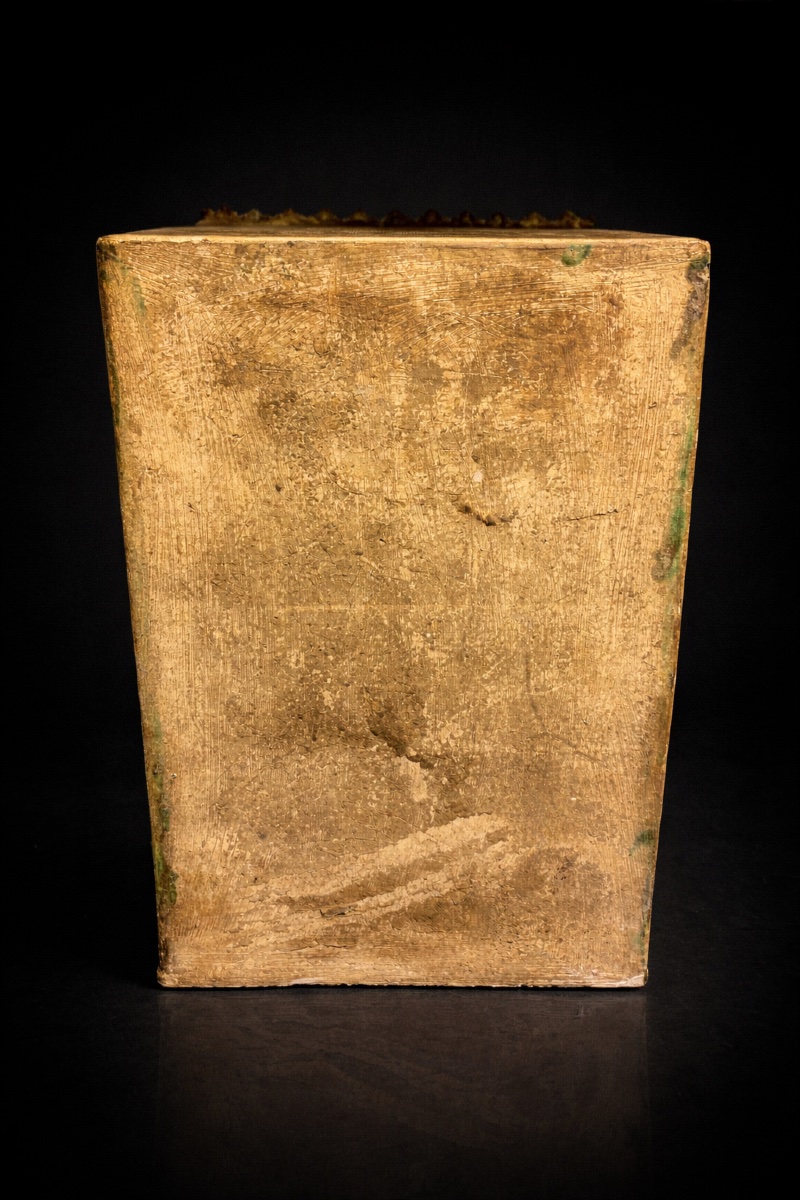
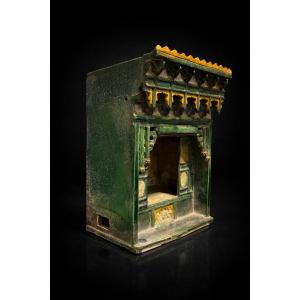
Funerary architectural model in ceramic with green lead glaze and yellow highlights, representing a miniature domestic pavilion. The piece takes the form of a rectangular aedicula, open at the front, evoking an interior space accessible via a marked threshold. The structure is organized around a central opening framed by lateral pillars and topped by a richly molded architectural register. The upper part is topped by a stylized, scalloped-edged roof in yellow glaze, resting on a set of brackets and relief elements evoking traditional Chinese roofing systems (simplified dougong). The hollow interior suggests an inhabited or ritualized space. The slightly raised threshold marks the symbolic transition between exterior and interior, a fundamental element of Chinese architecture. The surfaces are covered with a green lead glaze, showing variations in hue, wear and concretions associated with long burial. The back, top and base reveal bare earth, with traces of shaping and ancient deposits. This model is part of the Ming tradition of funerary architectural representations, heir to Han and Tang productions but with a more elaborate structuring and assertive architectural vocabulary. The presence of the roof, brackets and threshold clearly indicates a desire to reproduce a building in elevation, and not mere furniture. The frontal organization and interior space suggest a domestic pavilion that could be associated with cultic practices, particularly related to ancestor worship. The object is not the representation of an isolated altar, but rather that of a complete architectural space likely to accommodate ritual functions.
Origin: China
Era: Ming Dynasty (1368-1644)
Dimensions: Height: 42 cm; Length: 28.5 cm; Width: 25 cm.
Conditions: Very good condition. Glaze wear, particularly on edges and protruding elements. Presence of concretions and burial deposits consistent with significant age. Small chips and occasional missing pieces, but no structural damage. The ensemble retains excellent legibility of detail.
Provenance:Private Belgian collection.
Science at the Service of Art: What is a Thermoluminescence Test (TL)? In the world of high antiquity, the expert eye is paramount, but science provides absolute certainty. For this funerary brick from the Han dynasty, the expertise was carried out by the QED laboratory. The scientific principle:Thermoluminescence is a physical dating method that measures the energy stored in crystalline minerals (such as quartz or feldspar) contained in clay since its initial firing.
Origin: China
Era: Ming Dynasty (1368-1644)
Dimensions: Height: 42 cm; Length: 28.5 cm; Width: 25 cm.
Conditions: Very good condition. Glaze wear, particularly on edges and protruding elements. Presence of concretions and burial deposits consistent with significant age. Small chips and occasional missing pieces, but no structural damage. The ensemble retains excellent legibility of detail.
Provenance:Private Belgian collection.
Science at the Service of Art: What is a Thermoluminescence Test (TL)? In the world of high antiquity, the expert eye is paramount, but science provides absolute certainty. For this funerary brick from the Han dynasty, the expertise was carried out by the QED laboratory. The scientific principle:Thermoluminescence is a physical dating method that measures the energy stored in crystalline minerals (such as quartz or feldspar) contained in clay since its initial firing.
- The geological clock: When the object was fired, the heat "reset" the clay's energy counter.
- The accumulation: Since that day, the object has absorbed a small amount of natural radioactivity from the soil.
- The revelation: In the laboratory, a micro-sample is heated to high temperature. The light then emitted (thermoluminescence) is proportional to the time elapsed since the last firing.
4 200 €
Period: Before 16th century
Style: Asian art
Condition: Excellent condition
Material: Terracotta
Length: 28,5 cm
Width: 25 cm
Height: 42 cm
Reference (ID): 1763463
Availability: In stock
Print