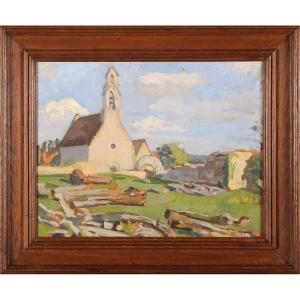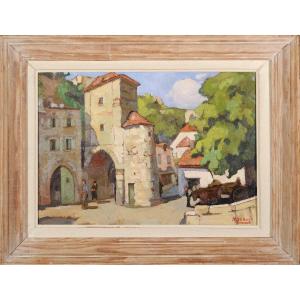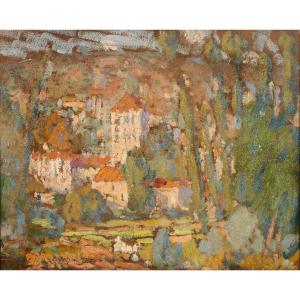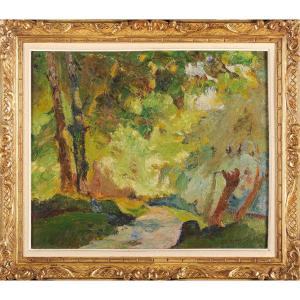


Robert Dessales-quentin (1885-1958) The Cloister Of Saint Jean De Côle Brantôme
Artist: Robert Dessales-quentin
Robert DESSALES-QUENTIN
(Brantôme 1885 - 1958)
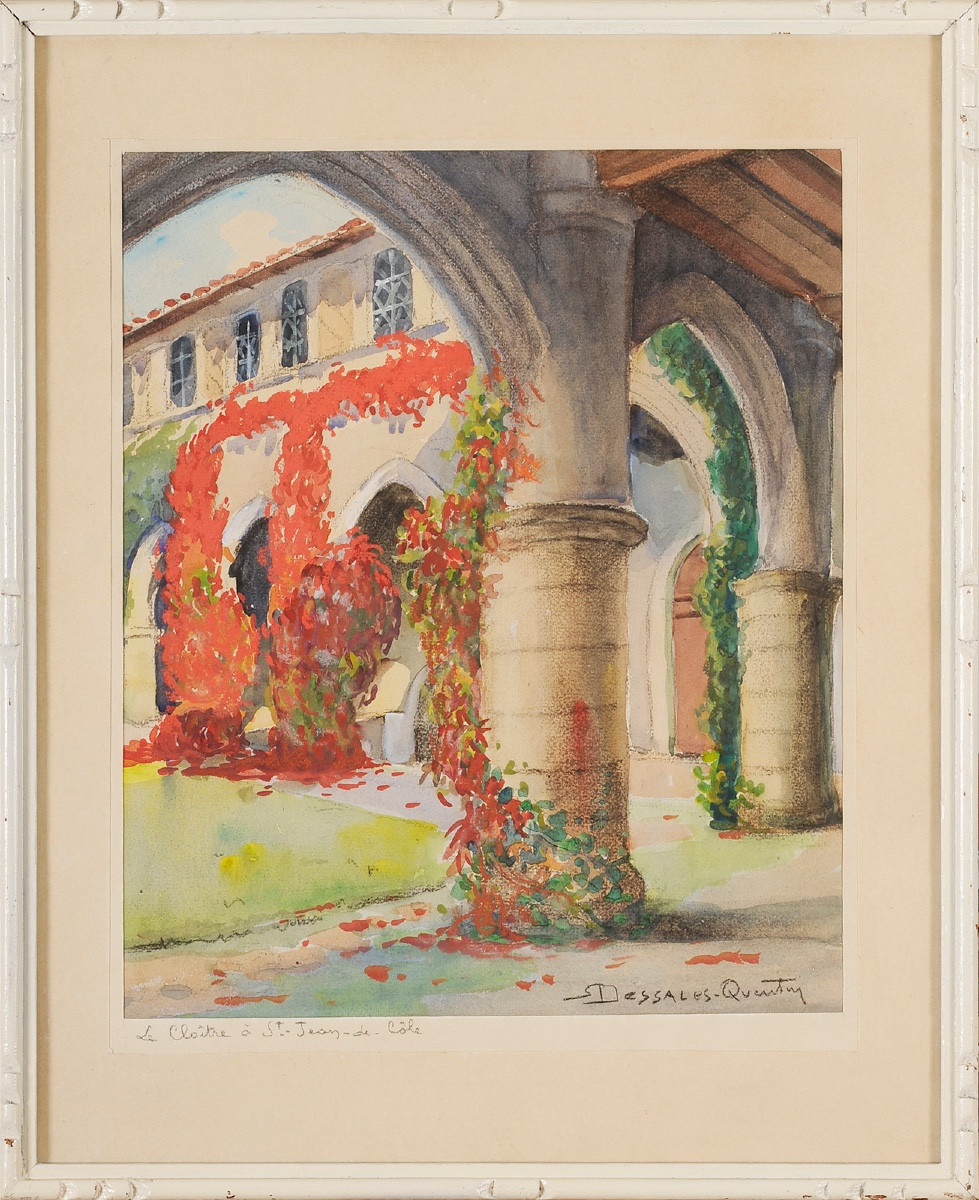
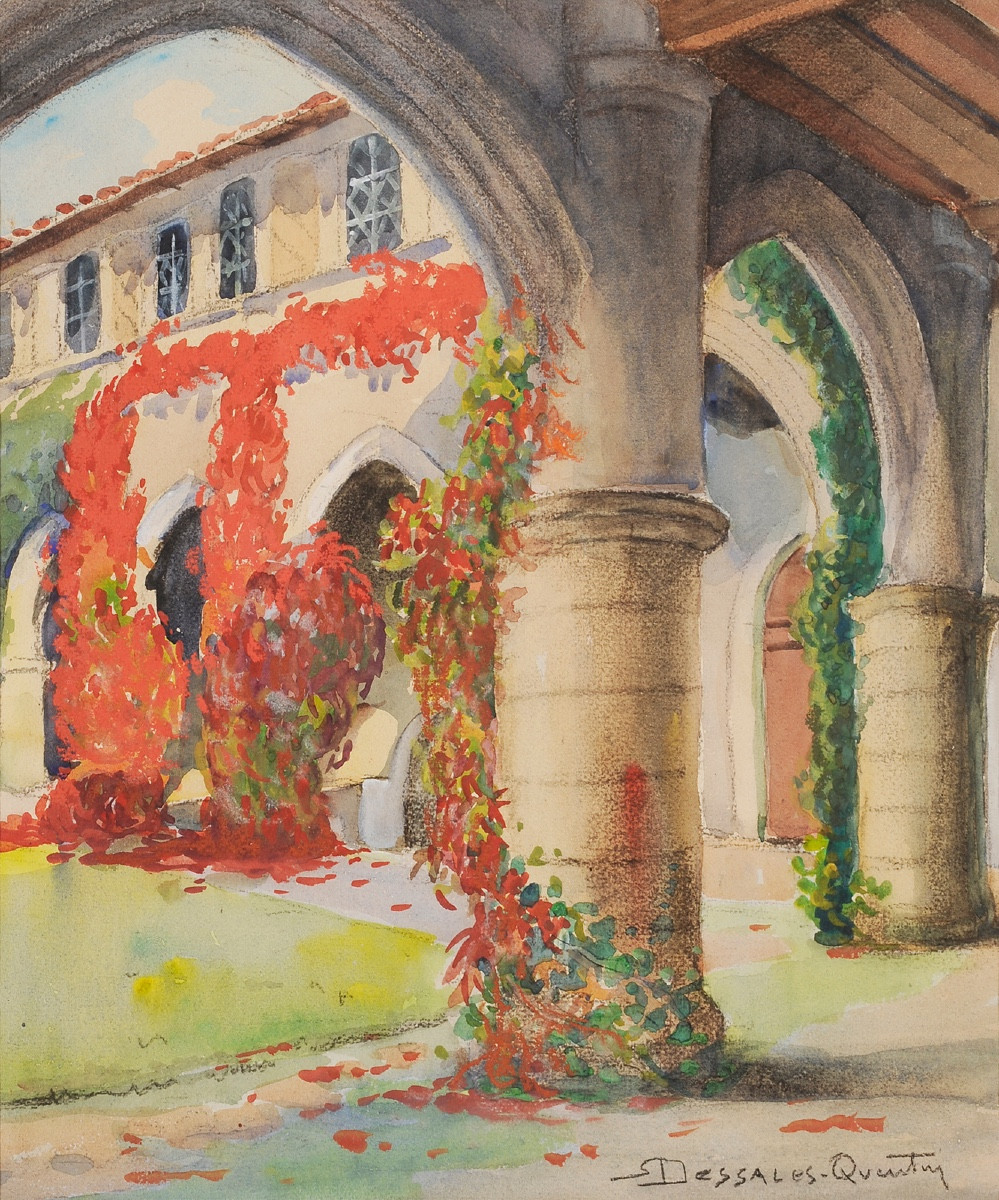
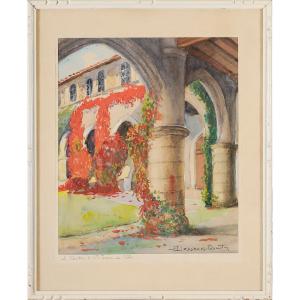
The cloisterof the former prioryof Saint Jean de Côle
Aquarelle
H. 36 cm; L. 29.5 cm à vue
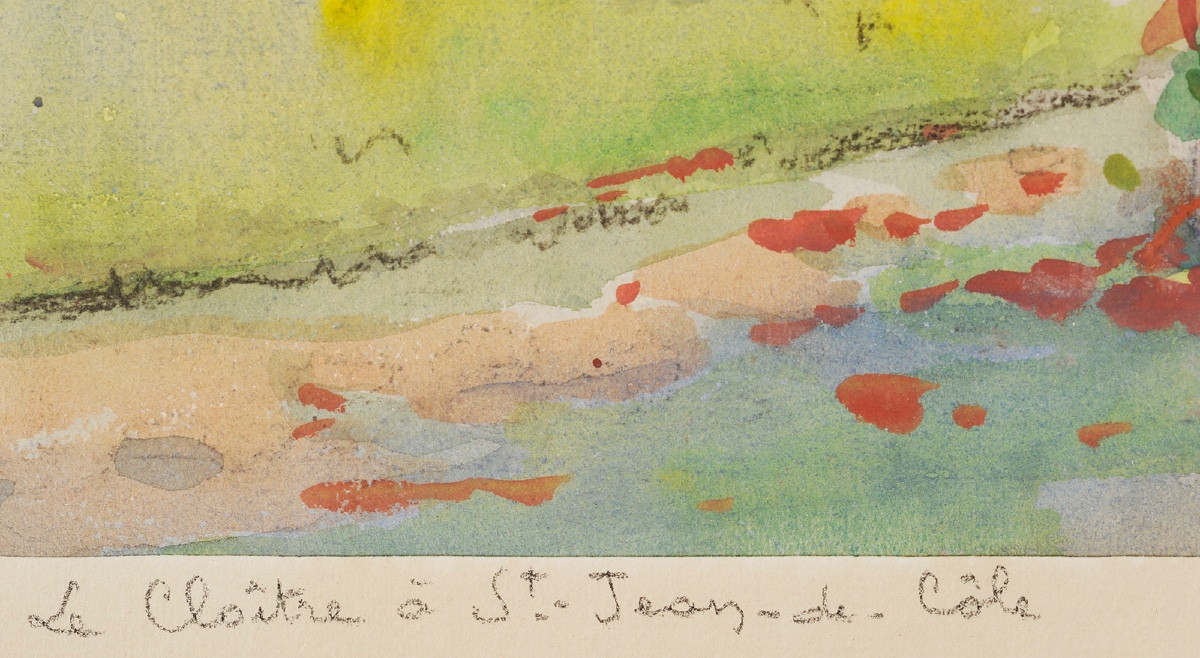
Signed lower right, located lower left
Provenance: Private collection, Charente
Robert Dessales-Quentin was born in one of France's most beautiful villages: Brantôme, nicknamed the Venice of Périgord, as it is located on the banks of the Dronne, a river that became a natural defense by encircling the town. This small town in northern Périgord was the artist's playground throughout his life. At the age of four, he lost his hearing completely as a result of a treatment unsuited to his intolerance to quinine, unknown at the time. His father, a notary from Brantôme, decided to send him to Paris, where he attended the Institut National des Sourds-Muets. Aware of his artistic tastes, his parents enrolled him at the Académie Jullian, in the studio of the famous Jean-Paul Laurens. Dessales-Quentin was a man of taste, with a strong attachment to his homeland. Dessales-Quentin easily turned to landscapes rather than the historical painting his studies had predestined him for.
It was in Périgord that he quickly returned and found his calling, depicting the local heritage. Castles, fine homes, churches and town views were presented at the Salon des Artistes Français in Paris in 1909. It was in watercolor that he was most at ease, even winning a Grande Mention Honorable at the Salon in 1928, a rare feat for this medium. In oil, he had several different periods and styles, including a period that could be called "wisteria", due to the recurrent presence of this plant in his paintings between the two wars.
Drawing teacher for over fifteen years at the large Saint-Joseph Institution in Périgueux, and in his studio on rue du Plantier, he was referred to by his pupils as the "left-handed genius". It was in this workshop that Dessales-Quentin welcomed the "tout-Périgord" each year for an eagerly-awaited exhibition of his work.
Habituated to the old stones of Périgord, he never abandoned "elsewhere". He exhibited his work in many French towns, and his well-known labels on the backs of his watercolours and their original frames are a regular reminder of this.
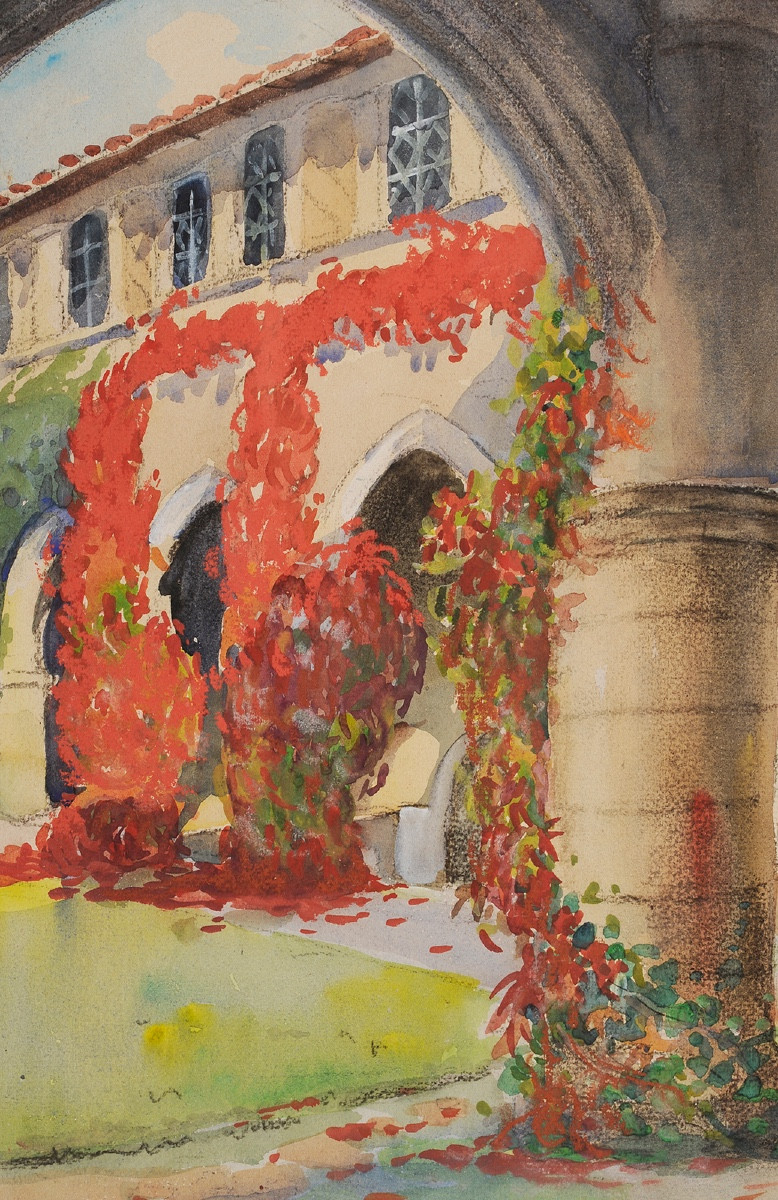
Saint Jean de Côle, a magnificent village near Brantôme and Thiviers, is steeped in history and boasts a fine architectural heritage. The old priory, built in the 16th century and remodeled in the following century, stands on the banks of the Côle, a small stream that flows into the Dronne. This large building, whose last monks left during the French Revolution, has undergone many transformations over the years. Nevertheless, some fine architectural features bear witness to its past splendor, such as the cloister vaults visible in this sheet by Dessales-Quentin.
(Brantôme 1885 - 1958)
The cloisterof the former prioryof Saint Jean de Côle
Aquarelle
H. 36 cm; L. 29.5 cm à vue
Signed lower right, located lower left
Provenance: Private collection, Charente
Robert Dessales-Quentin was born in one of France's most beautiful villages: Brantôme, nicknamed the Venice of Périgord, as it is located on the banks of the Dronne, a river that became a natural defense by encircling the town. This small town in northern Périgord was the artist's playground throughout his life. At the age of four, he lost his hearing completely as a result of a treatment unsuited to his intolerance to quinine, unknown at the time. His father, a notary from Brantôme, decided to send him to Paris, where he attended the Institut National des Sourds-Muets. Aware of his artistic tastes, his parents enrolled him at the Académie Jullian, in the studio of the famous Jean-Paul Laurens. Dessales-Quentin was a man of taste, with a strong attachment to his homeland. Dessales-Quentin easily turned to landscapes rather than the historical painting his studies had predestined him for.
It was in Périgord that he quickly returned and found his calling, depicting the local heritage. Castles, fine homes, churches and town views were presented at the Salon des Artistes Français in Paris in 1909. It was in watercolor that he was most at ease, even winning a Grande Mention Honorable at the Salon in 1928, a rare feat for this medium. In oil, he had several different periods and styles, including a period that could be called "wisteria", due to the recurrent presence of this plant in his paintings between the two wars.
Drawing teacher for over fifteen years at the large Saint-Joseph Institution in Périgueux, and in his studio on rue du Plantier, he was referred to by his pupils as the "left-handed genius". It was in this workshop that Dessales-Quentin welcomed the "tout-Périgord" each year for an eagerly-awaited exhibition of his work.
Habituated to the old stones of Périgord, he never abandoned "elsewhere". He exhibited his work in many French towns, and his well-known labels on the backs of his watercolours and their original frames are a regular reminder of this.
Saint Jean de Côle, a magnificent village near Brantôme and Thiviers, is steeped in history and boasts a fine architectural heritage. The old priory, built in the 16th century and remodeled in the following century, stands on the banks of the Côle, a small stream that flows into the Dronne. This large building, whose last monks left during the French Revolution, has undergone many transformations over the years. Nevertheless, some fine architectural features bear witness to its past splendor, such as the cloister vaults visible in this sheet by Dessales-Quentin.
360 €
Period: 20th century
Style: Modern Art
Condition: Excellent condition
Material: Water color
Length: 36 cm à vue
Width: 29,5 cm à vue
Reference (ID): 1762051
Availability: In stock
Print