THIS OBJECT WAS SOLD
Pair Of Porcelain Plates From Paris, Manufacture Ed. Honoré & Cie - Louis XVIII Period,
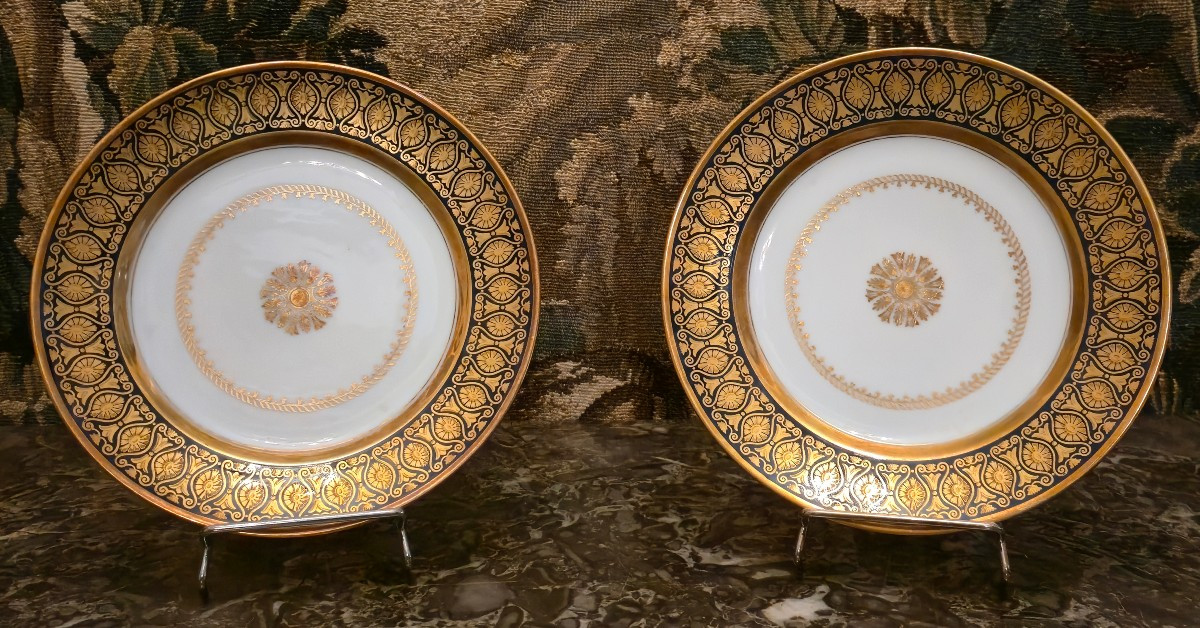
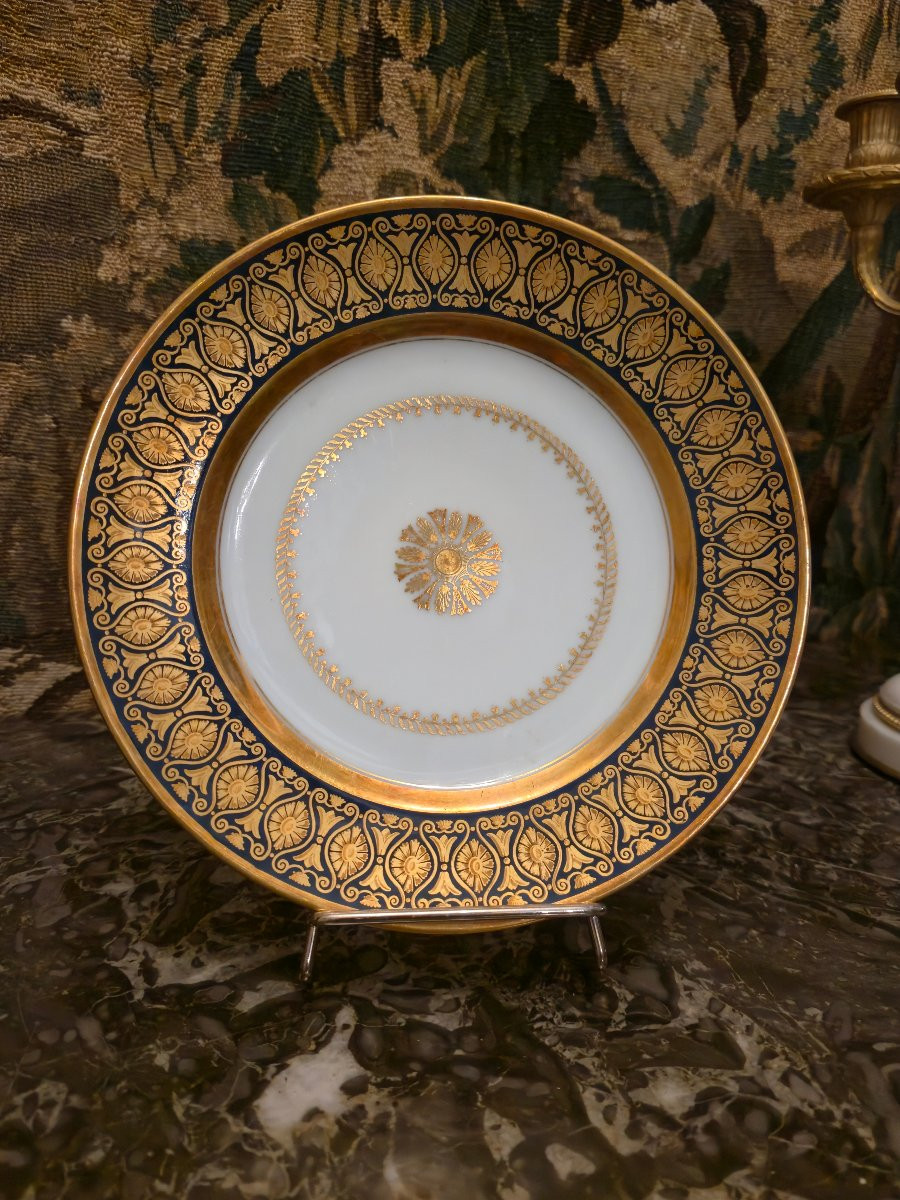
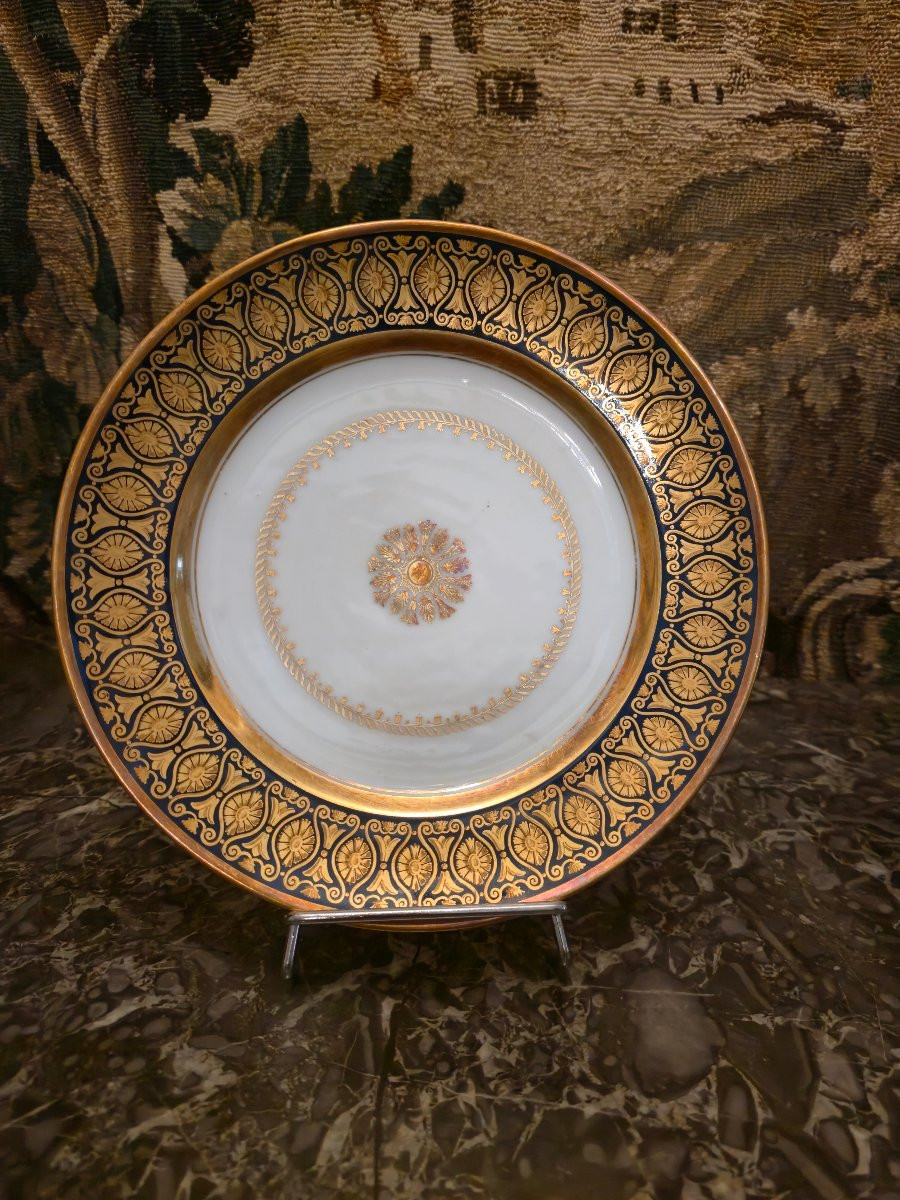
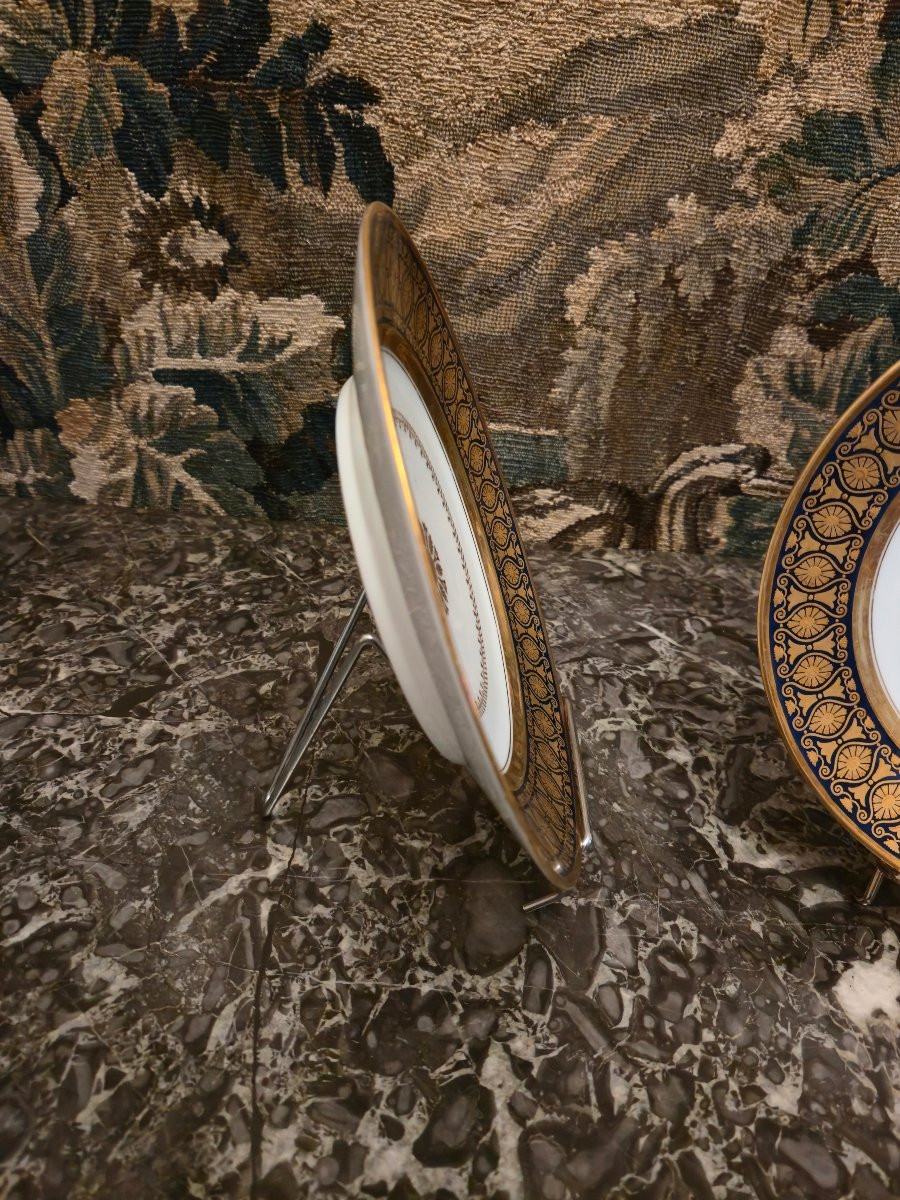
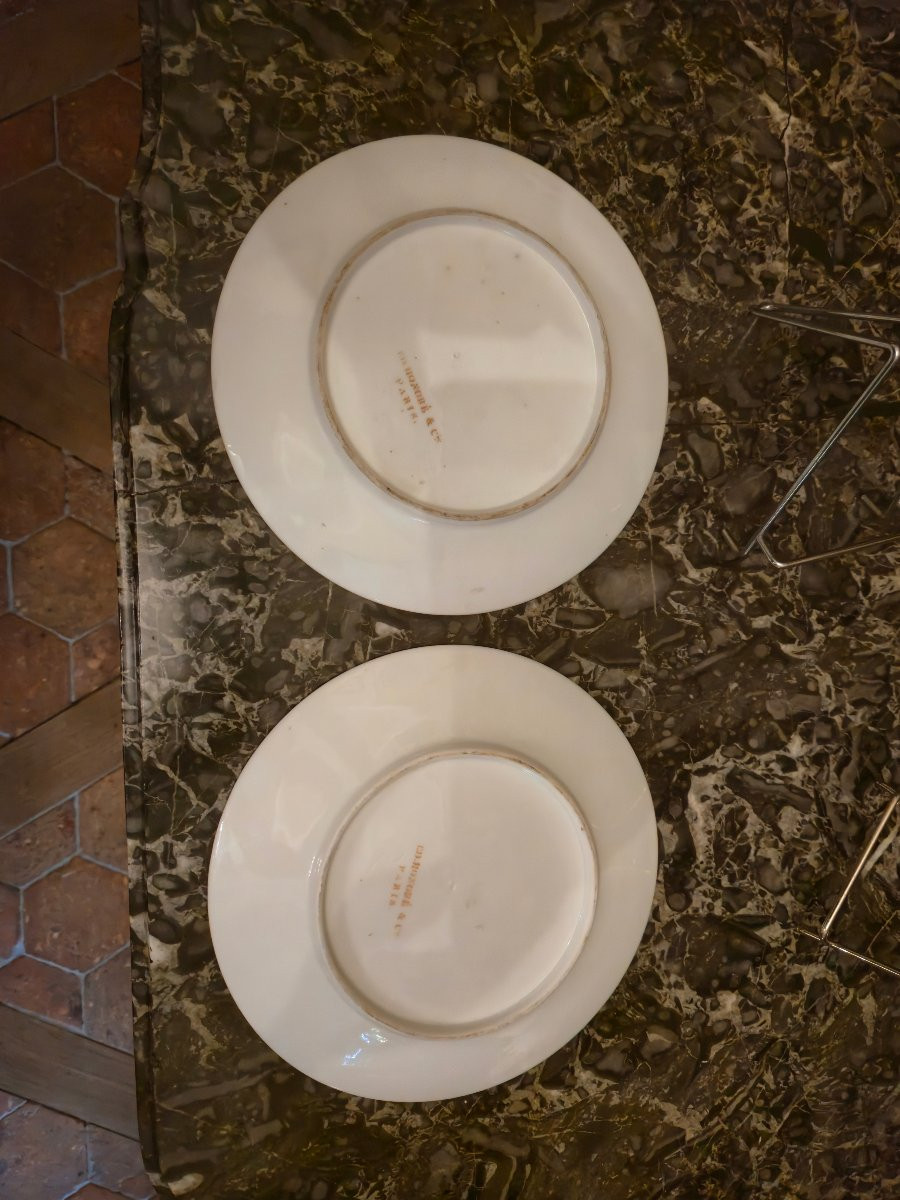
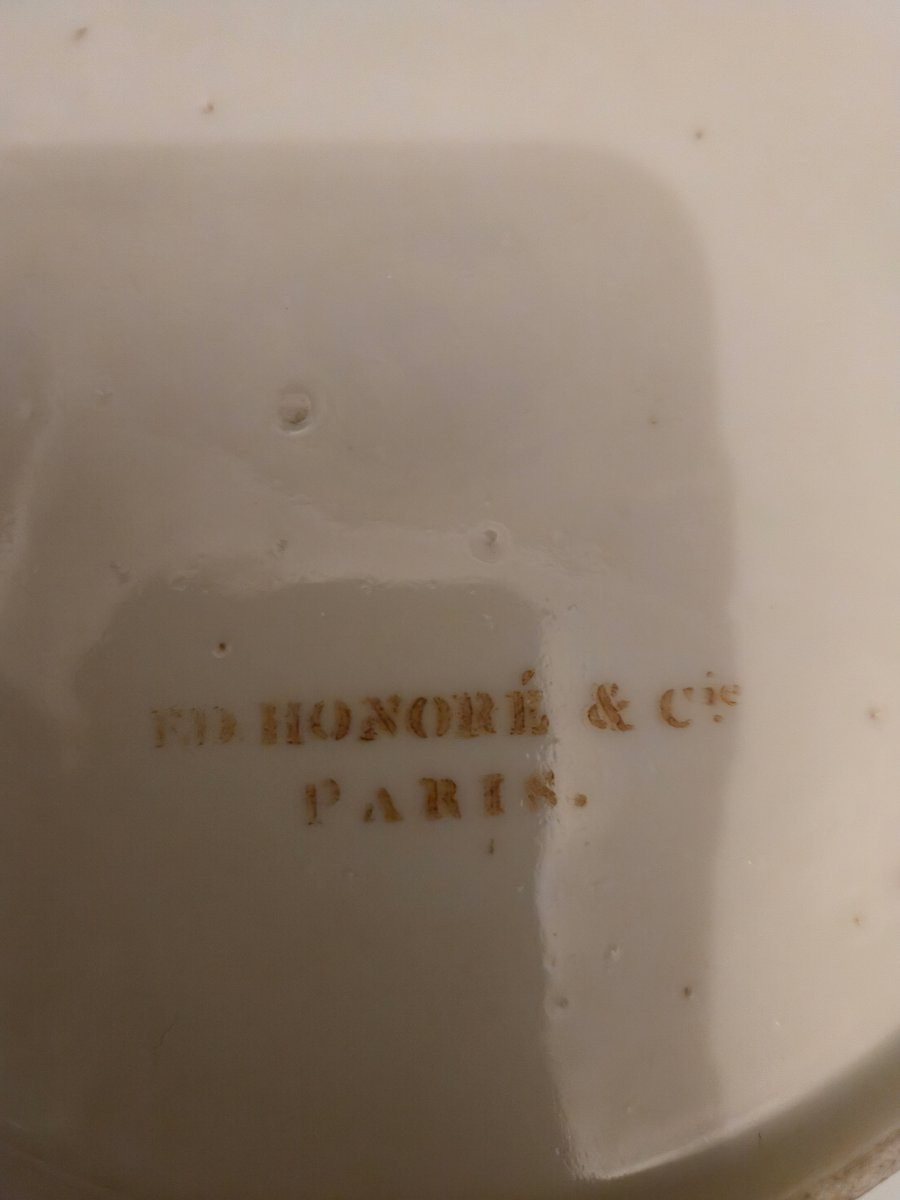
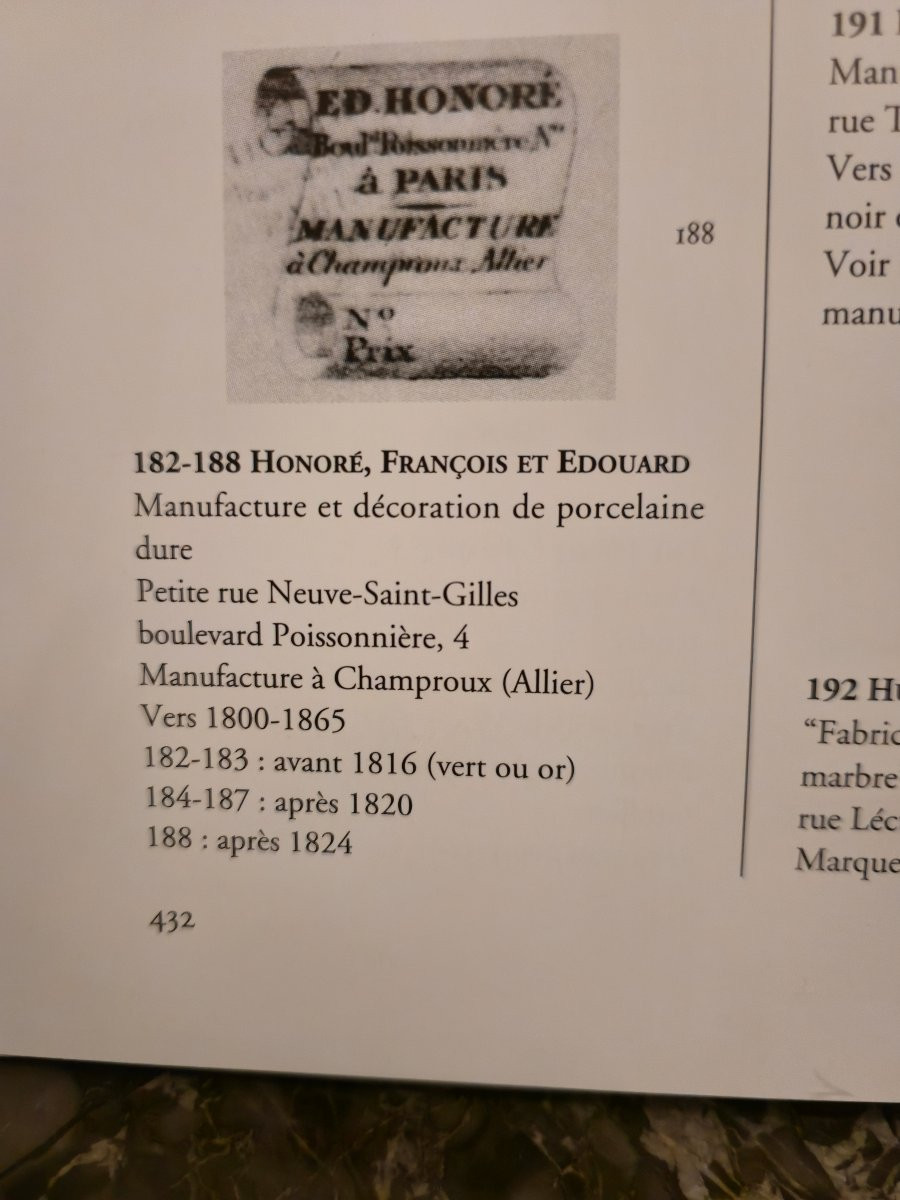
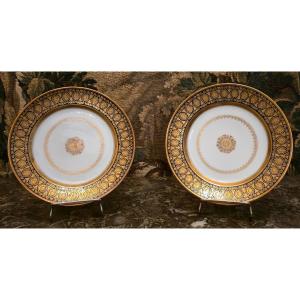


Elegant pair of Paris porcelain plates dating from the Louis XVIII period, circa 1820-1824, bearing on the reverse the mark of the Ed. Honoré & Cie factory in Paris.
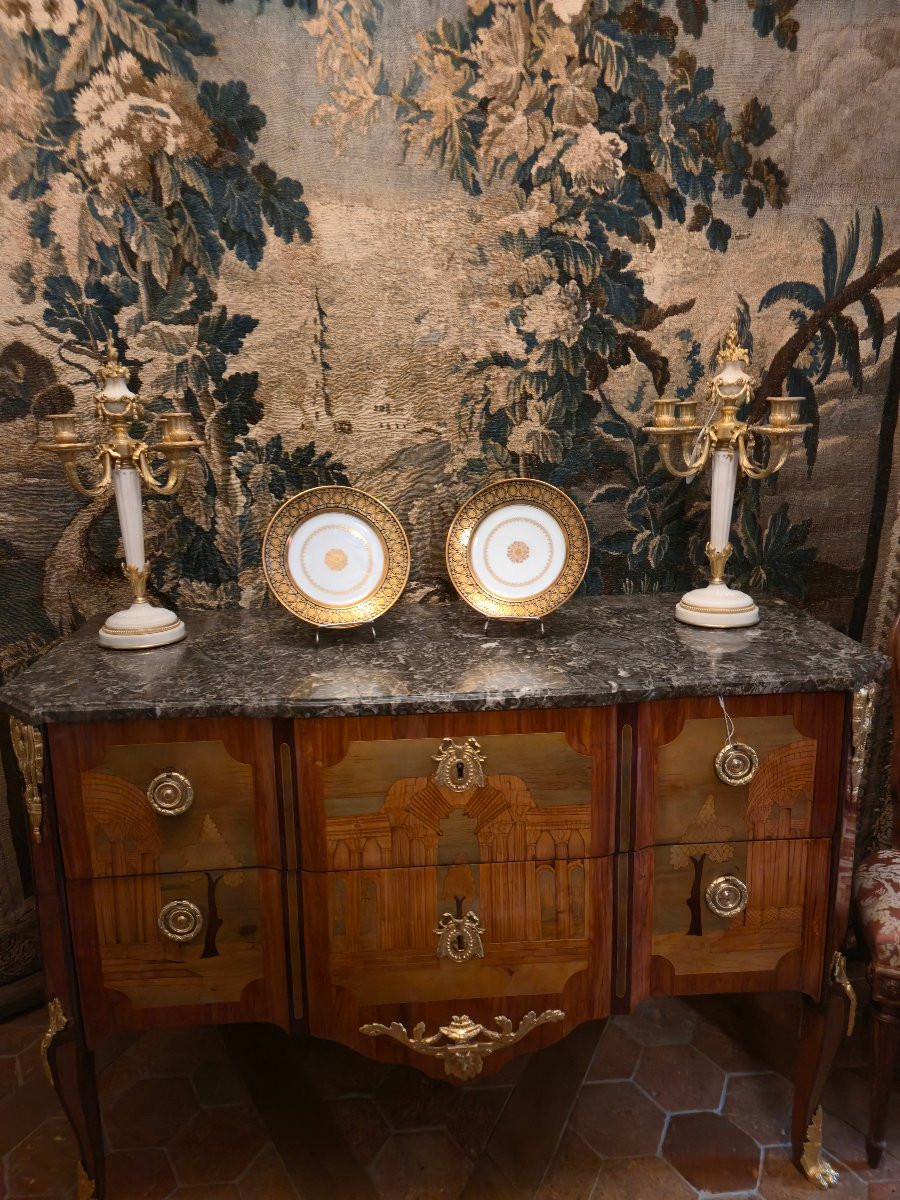
This pair features a remarkable neoclassical decoration hand-painted in gold on a deep midnight-blue ground, in a spirit still very strongly influenced by the decorative arts of the First Empire.
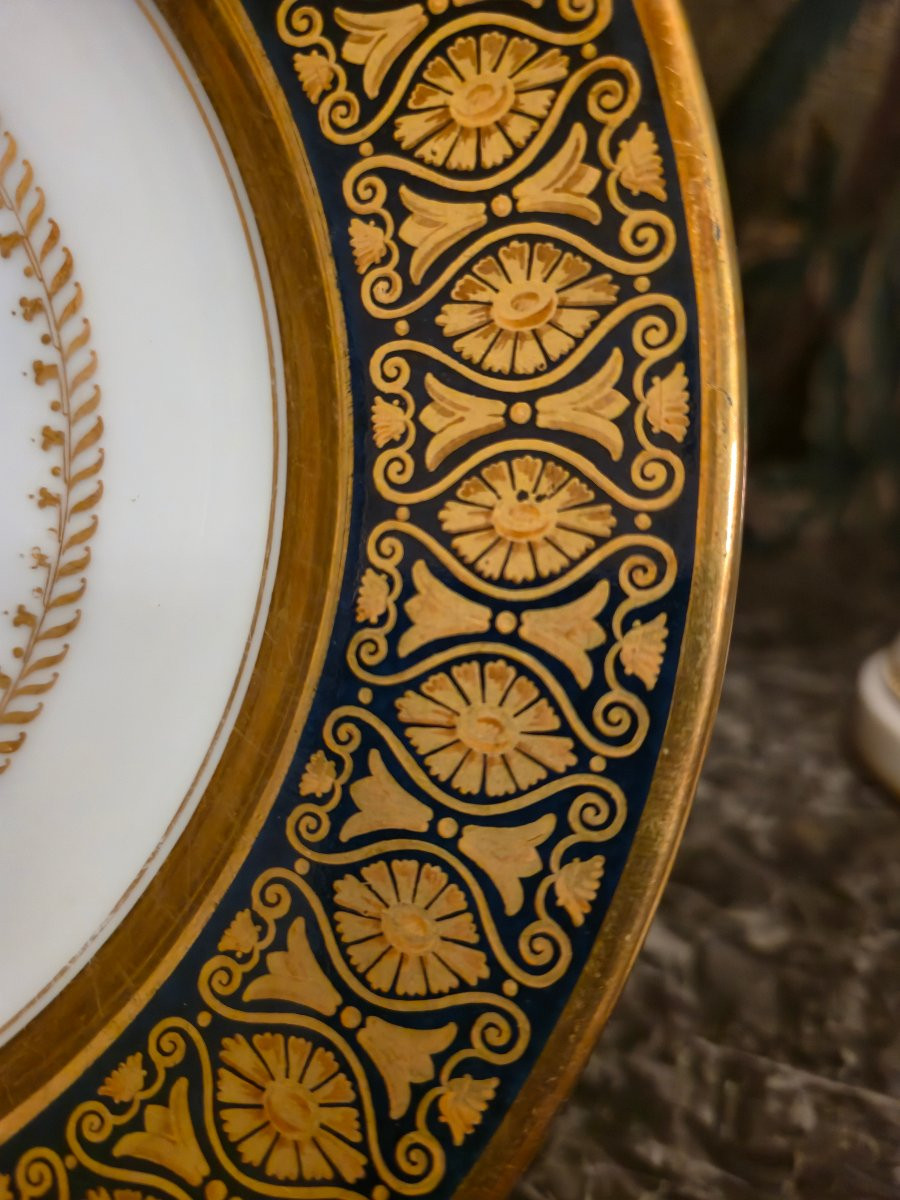
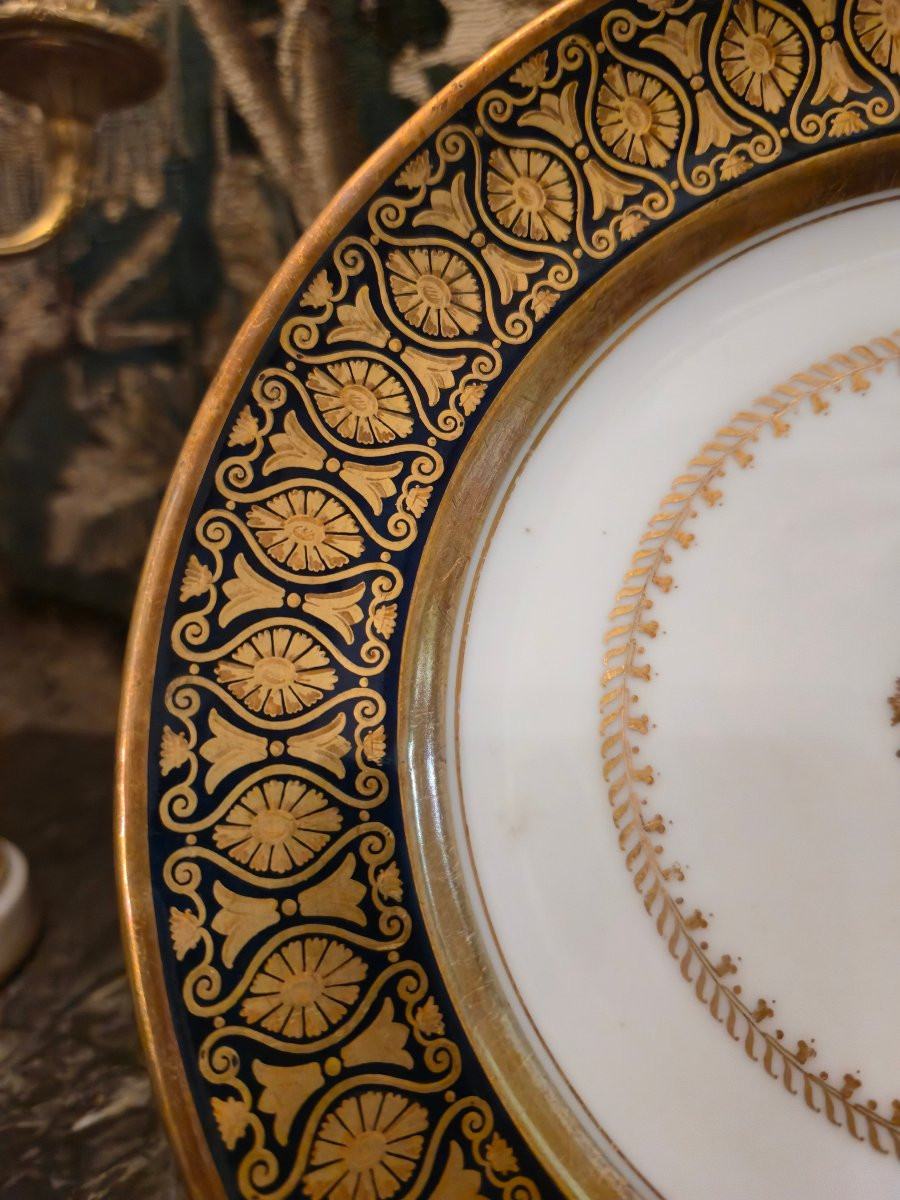
The wide marli develops a particularly refined architectural frieze composed of radiating rosettes, stylized palmettes and symmetrical scrolls inspired by the antique and Pompeian repertoires then in vogue in the Parisian decorative arts of the early 19th century.
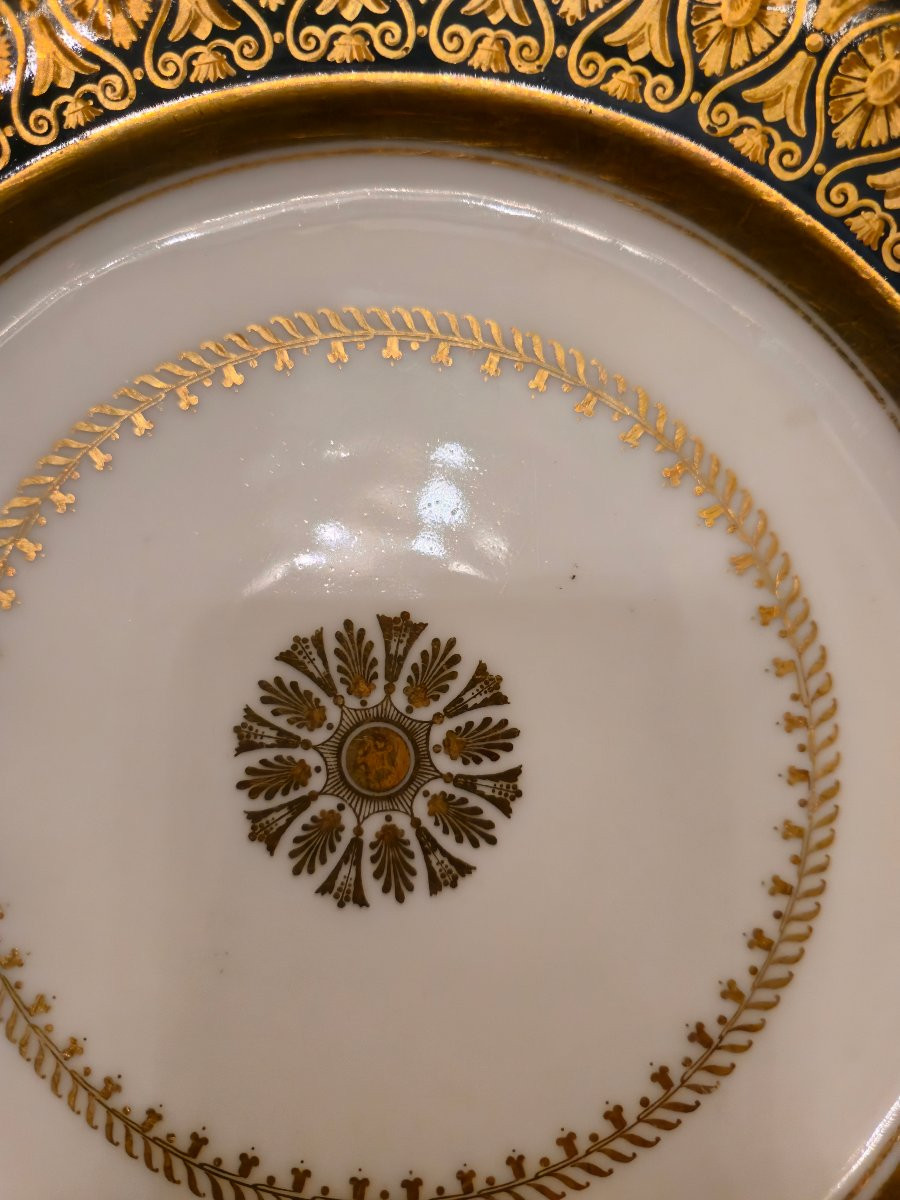
The basin, left deliberately sober to highlight the richness of the marli, is underlined by a fine gilded peripheral frieze and centered by a radiating motif evoking a stylized antique rosette.
The workmanship is of a very high standard. The decoration is entirely hand-painted and reveals, on close examination, all the subtlety of the gilders' work: alternating matte and burnished golds, finely brushed contours, slight variations in the filling of motifs and great finesse of design.
The particularly dense midnight-blue background beautifully highlights the brilliance of the gilding. This contrast between the white of the porcelain, the depth of the blue and the richness of the gold is one of the most sought-after characteristics of fine Parisian porcelain from this period.
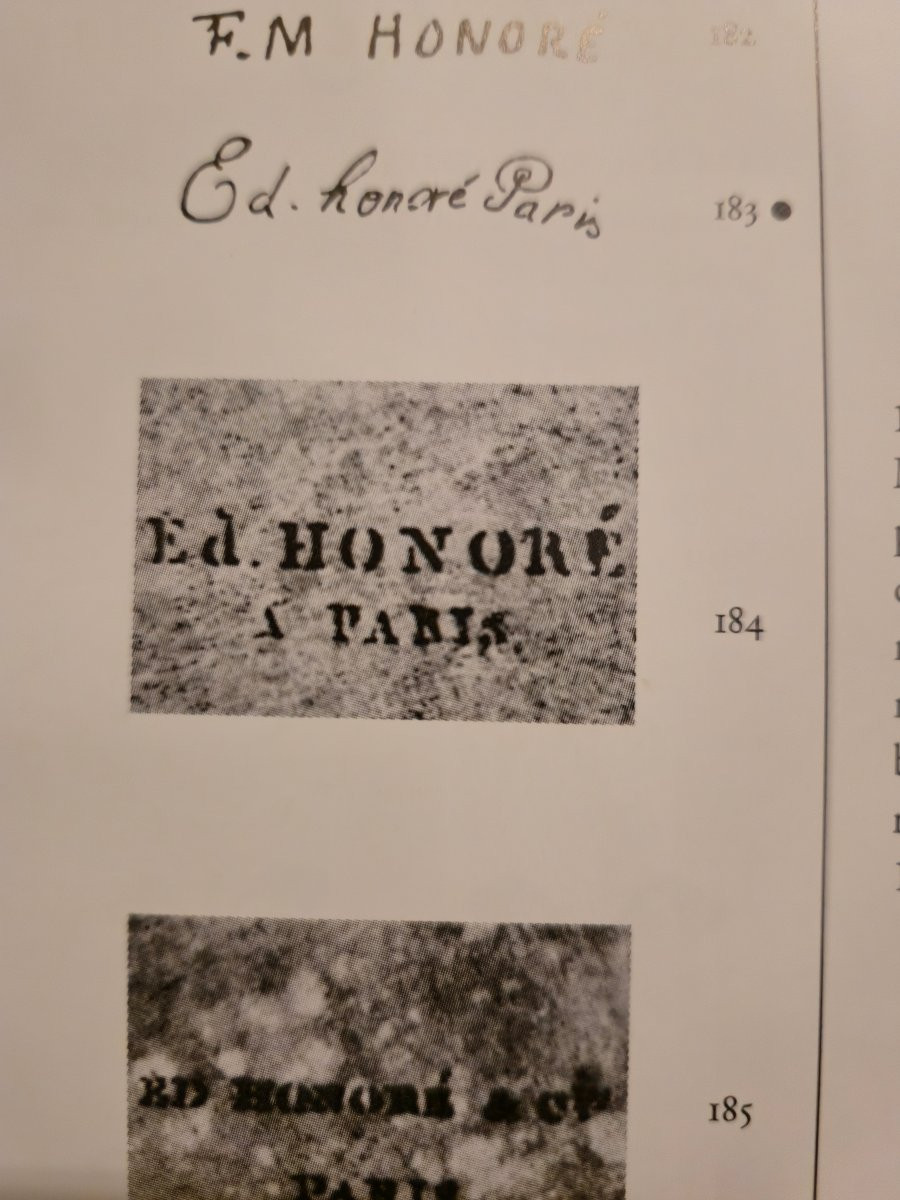
The Honoré factory occupies an important place in the history of early 19th-century Parisian porcelain. Associated for a time with Dagoty, under the Restoration it developed a refined production still deeply marked by the Empire taste. Information on the brands and history of this factory can be found in Régine de Plinval de Guillebon's Faïence et porcelaine de Paris XVIIIe-XIXe siècles, published by Éditions Faton.
These plates perfectly illustrate this transitional period, when Parisian manufactures continued the imperial aesthetic while developing a lighter, more precious decorative refinement typical of the early years of the Restoration.
Very good overall condition. No chips or cracks. Very discreet wear to the gilding.
Dimensions: Diameter: 23.2 cm
This pair features a remarkable neoclassical decoration hand-painted in gold on a deep midnight-blue ground, in a spirit still very strongly influenced by the decorative arts of the First Empire.
The wide marli develops a particularly refined architectural frieze composed of radiating rosettes, stylized palmettes and symmetrical scrolls inspired by the antique and Pompeian repertoires then in vogue in the Parisian decorative arts of the early 19th century.
The basin, left deliberately sober to highlight the richness of the marli, is underlined by a fine gilded peripheral frieze and centered by a radiating motif evoking a stylized antique rosette.
The workmanship is of a very high standard. The decoration is entirely hand-painted and reveals, on close examination, all the subtlety of the gilders' work: alternating matte and burnished golds, finely brushed contours, slight variations in the filling of motifs and great finesse of design.
The particularly dense midnight-blue background beautifully highlights the brilliance of the gilding. This contrast between the white of the porcelain, the depth of the blue and the richness of the gold is one of the most sought-after characteristics of fine Parisian porcelain from this period.
The Honoré factory occupies an important place in the history of early 19th-century Parisian porcelain. Associated for a time with Dagoty, under the Restoration it developed a refined production still deeply marked by the Empire taste. Information on the brands and history of this factory can be found in Régine de Plinval de Guillebon's Faïence et porcelaine de Paris XVIIIe-XIXe siècles, published by Éditions Faton.
These plates perfectly illustrate this transitional period, when Parisian manufactures continued the imperial aesthetic while developing a lighter, more precious decorative refinement typical of the early years of the Restoration.
Very good overall condition. No chips or cracks. Very discreet wear to the gilding.
Dimensions: Diameter: 23.2 cm
Explore similar pieces and discover your ideal find:
Porcelain Plates & Dinnerware