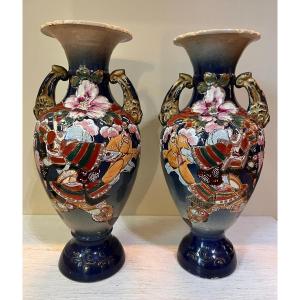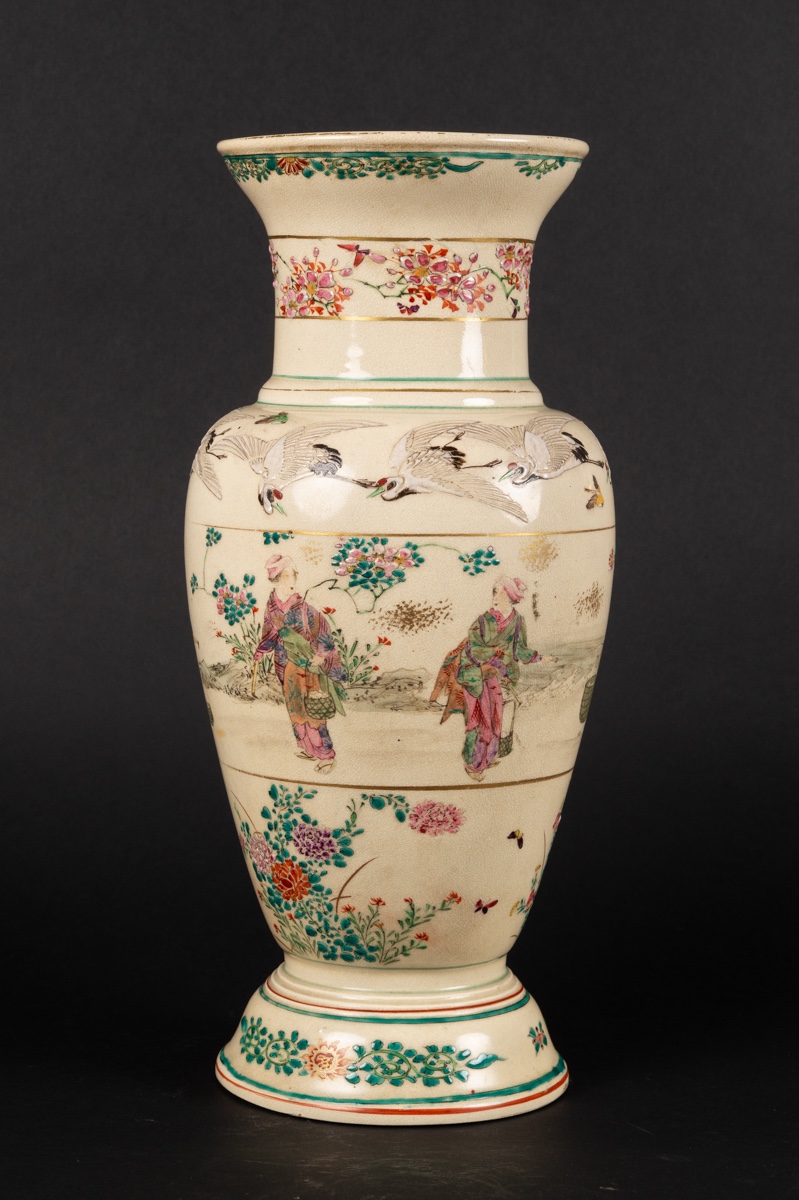
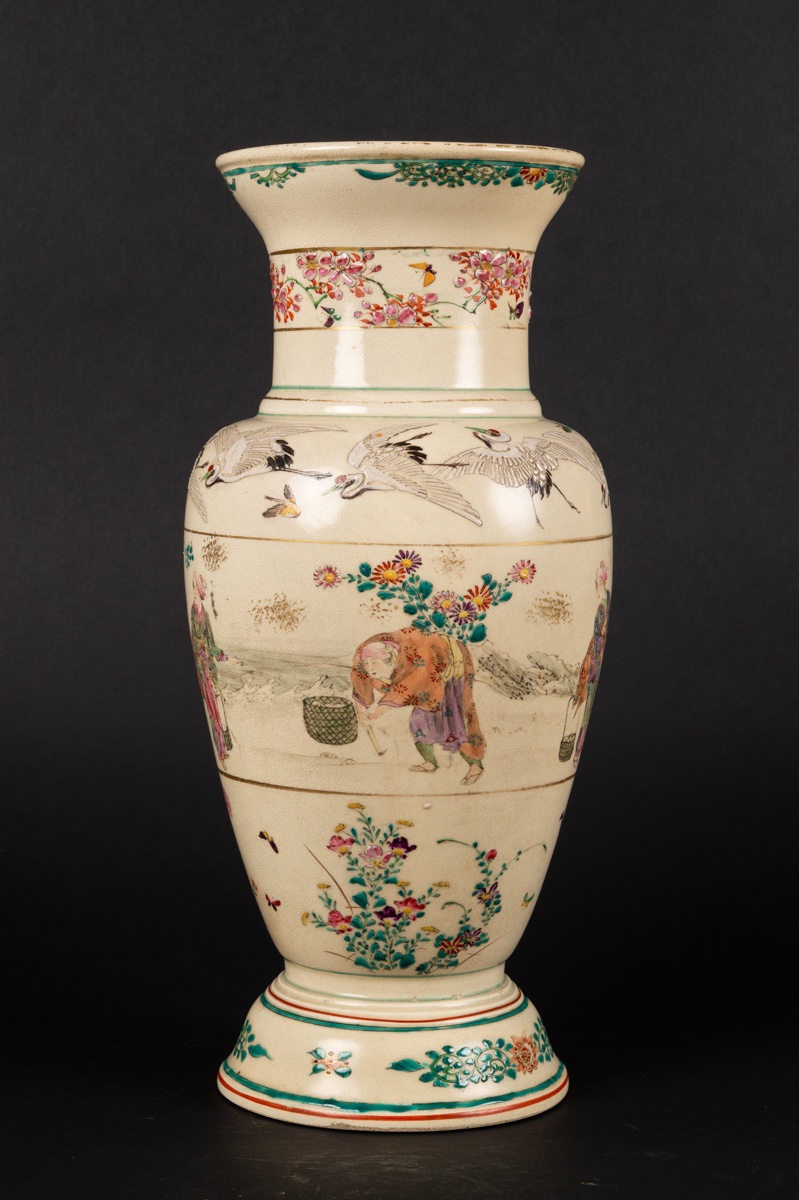
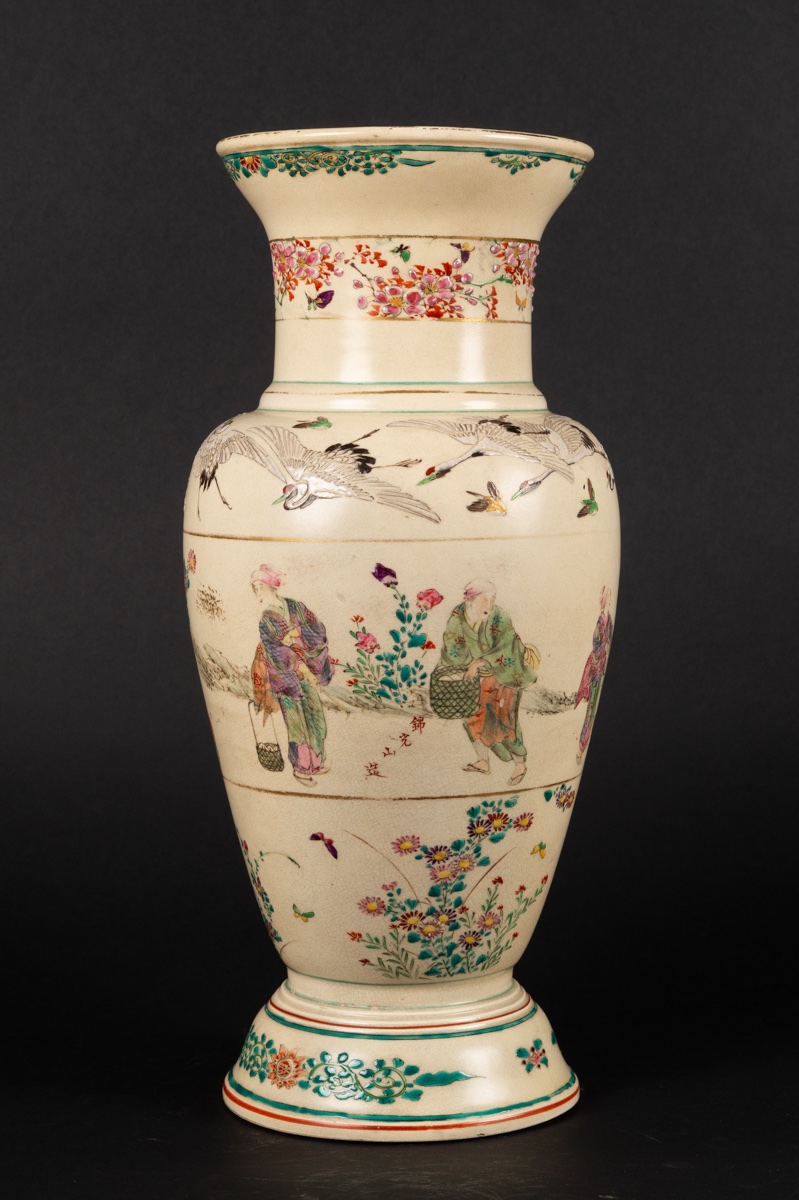
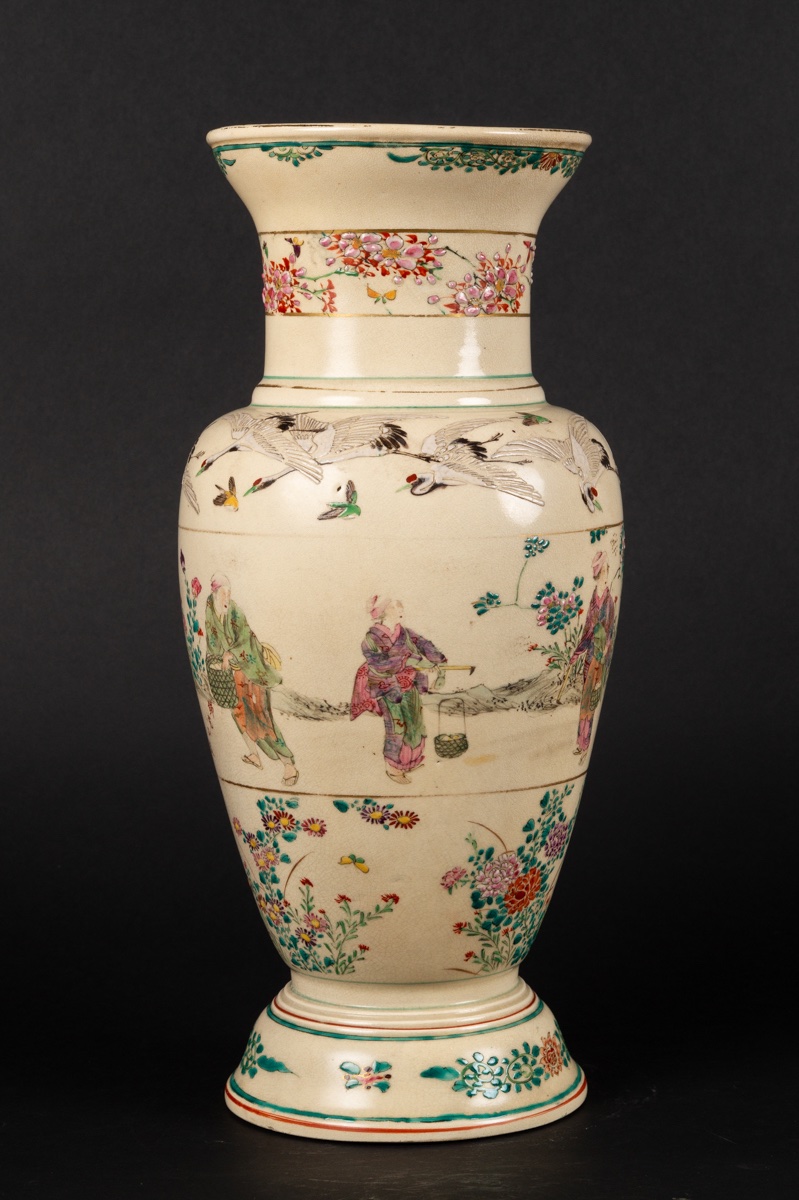


Vase With Figures, Kinkozan, Satsuma, Japan, Meiji Period (1868-1912).
Artist: Kinkozan
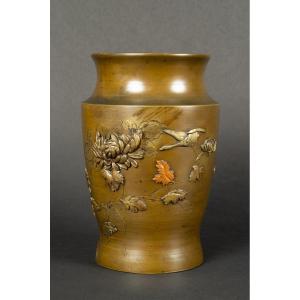
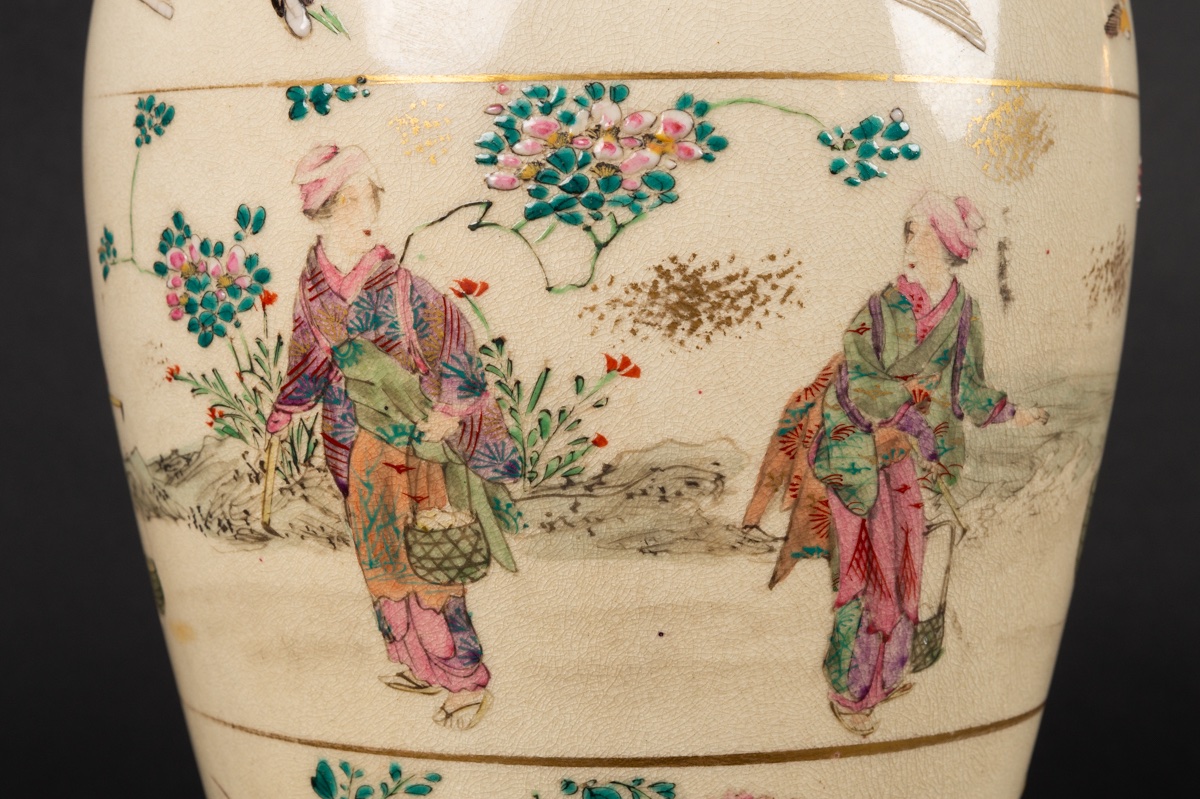
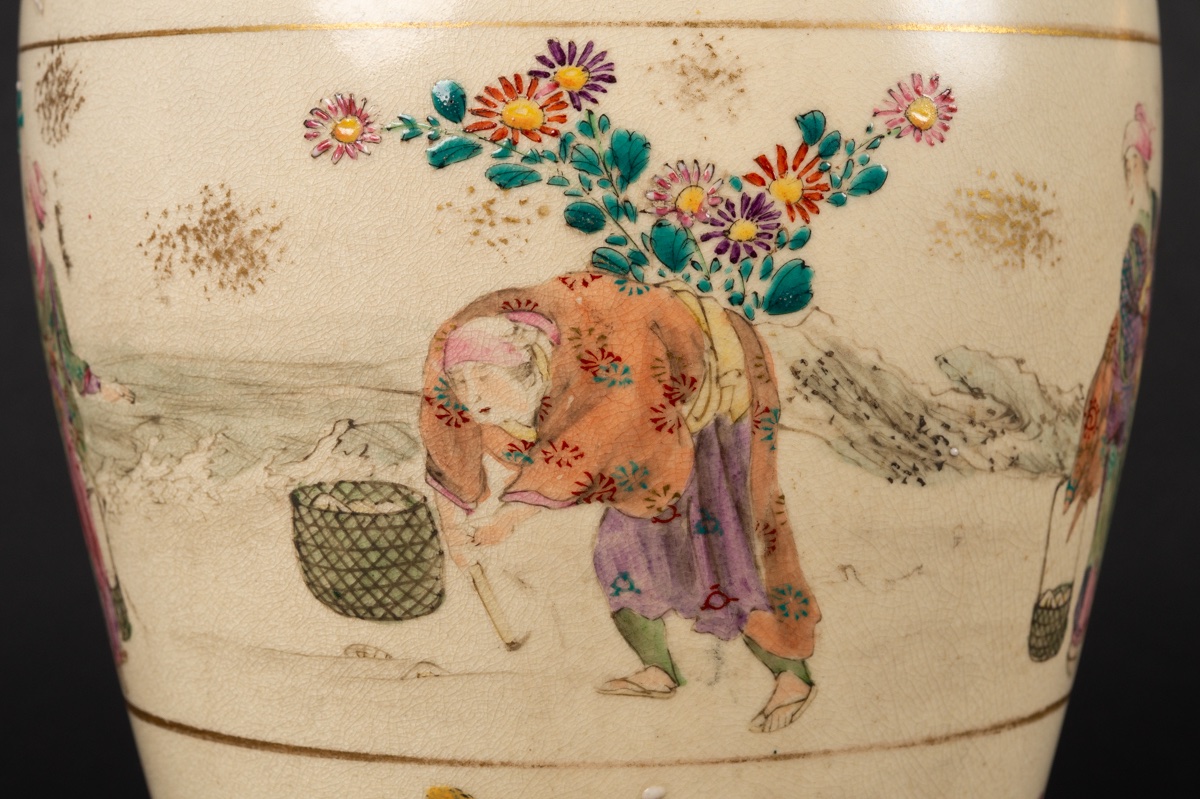
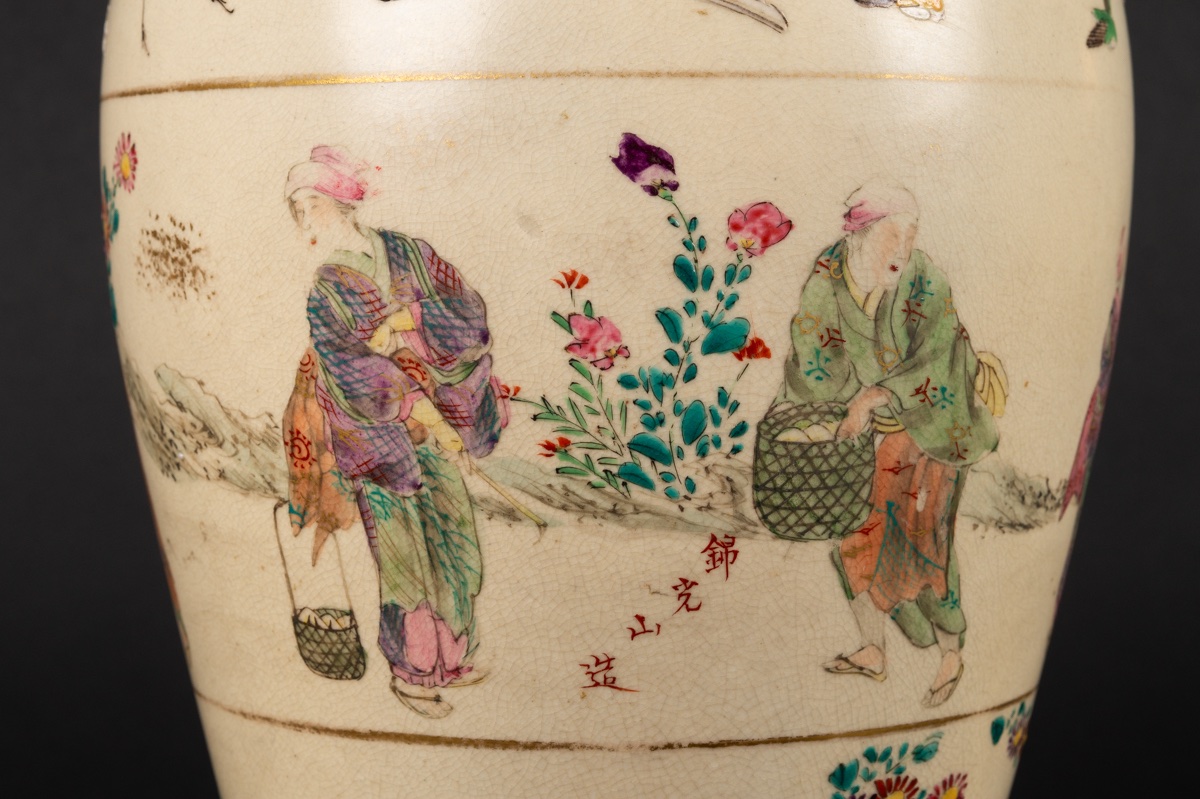
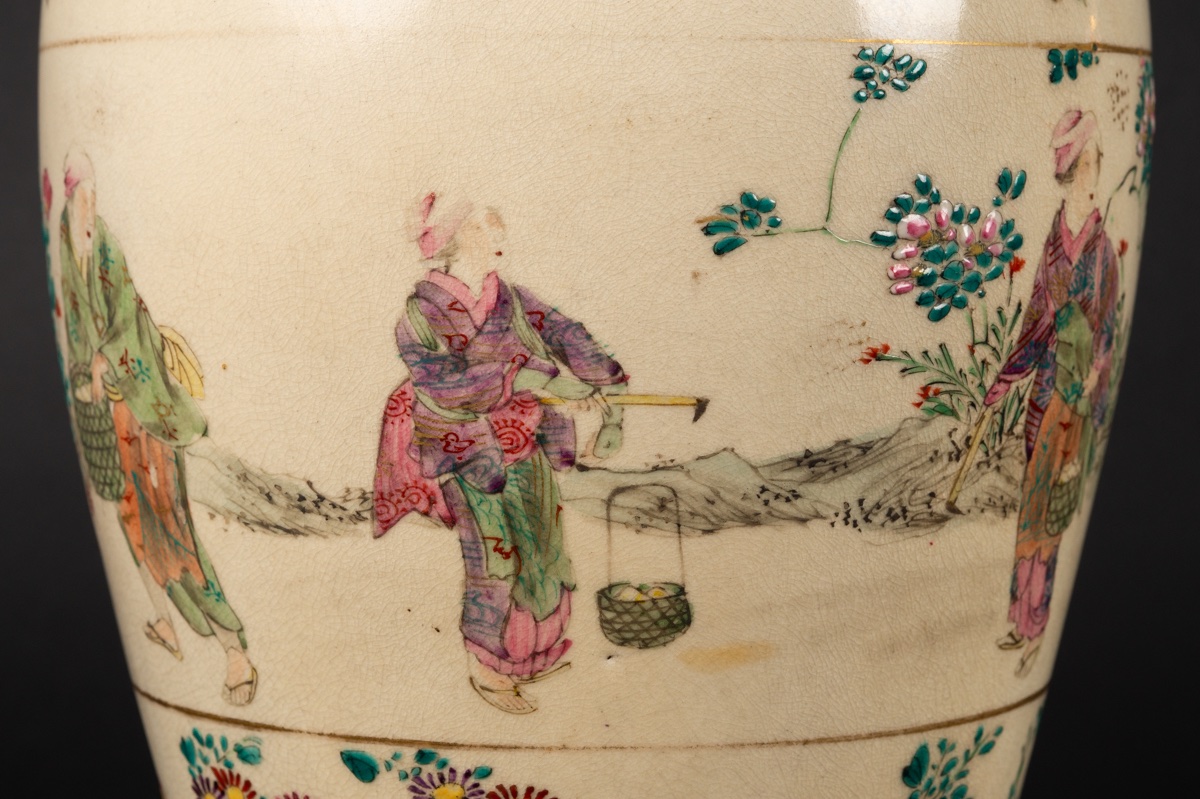
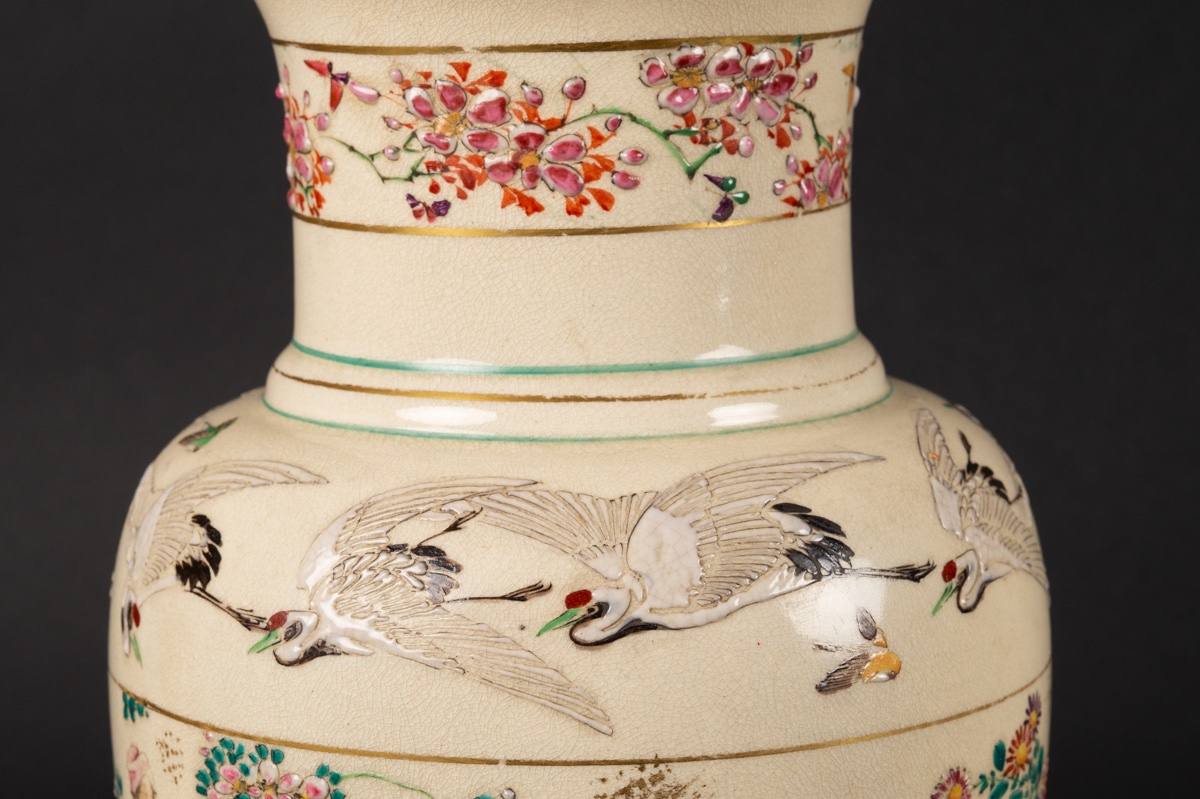
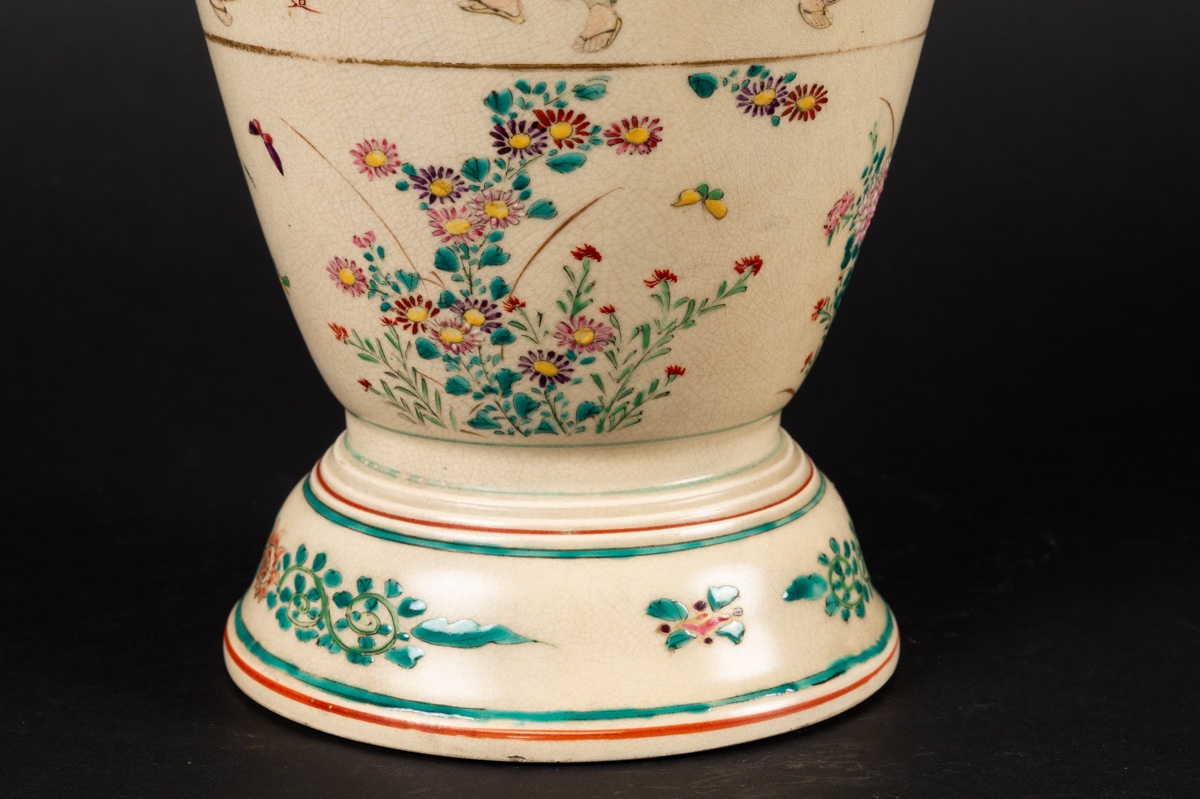
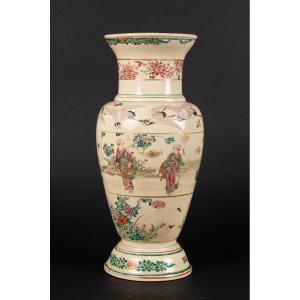
Vase made by the famous Kinkozan workshop. Satsuma-type ceramic (earthenware with a densely crackled cream glaze). Hand-painted polychrome enamels with gilding. The decoration is slightly raised (moriage technique), particularly visible on the outlines of the cranes and flowers. Decorated with floral motifs: cherry or plum blossoms, symbolizing rebirth, peony or chrysanthemum blossoms. Flying cranes are a symbol of longevity, fidelity and happiness in Japanese culture. Figurative scenes depicting figures in traditional costumes (kimonos) harvesting the fruits of the earth.
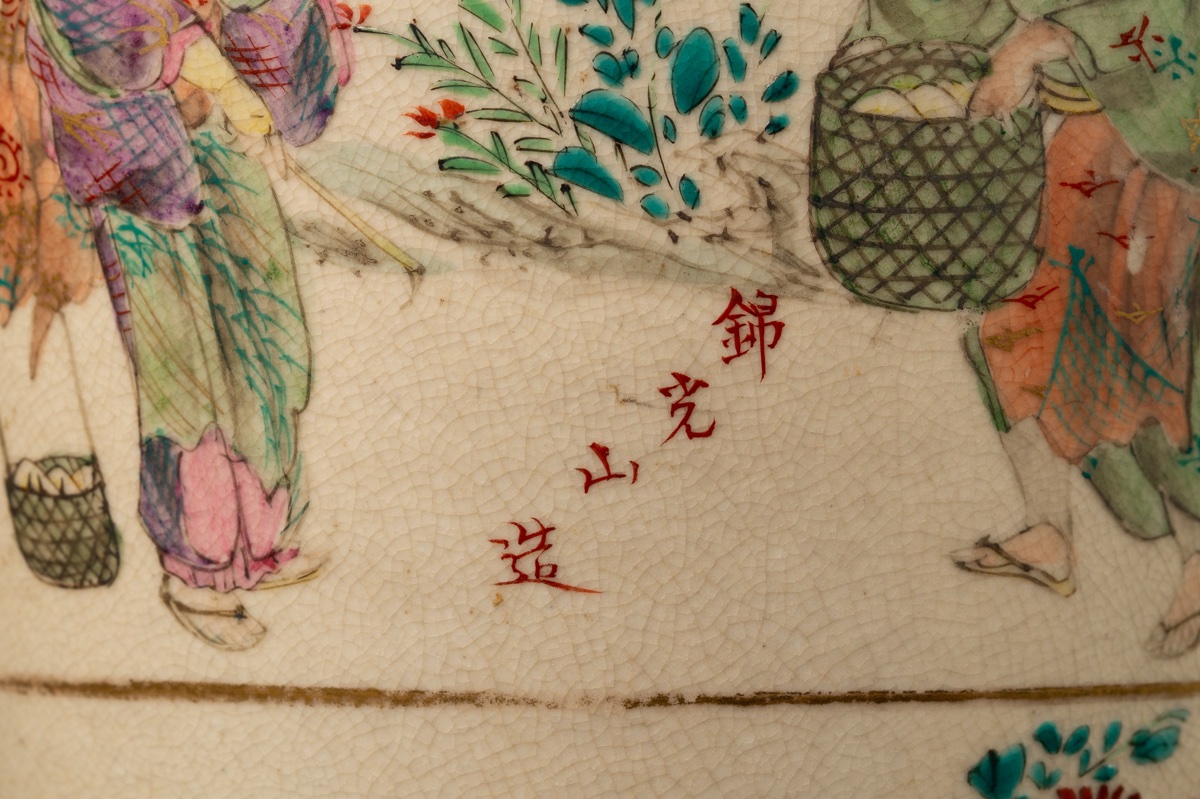
Kinkozan, Satsuma, Japan, Meiji era (1868-1912). Signed: 錦光山造 (Kinkōzan zō, i.e. "made by Kinkozan").
Height 40 cm, diameter 17 cm.
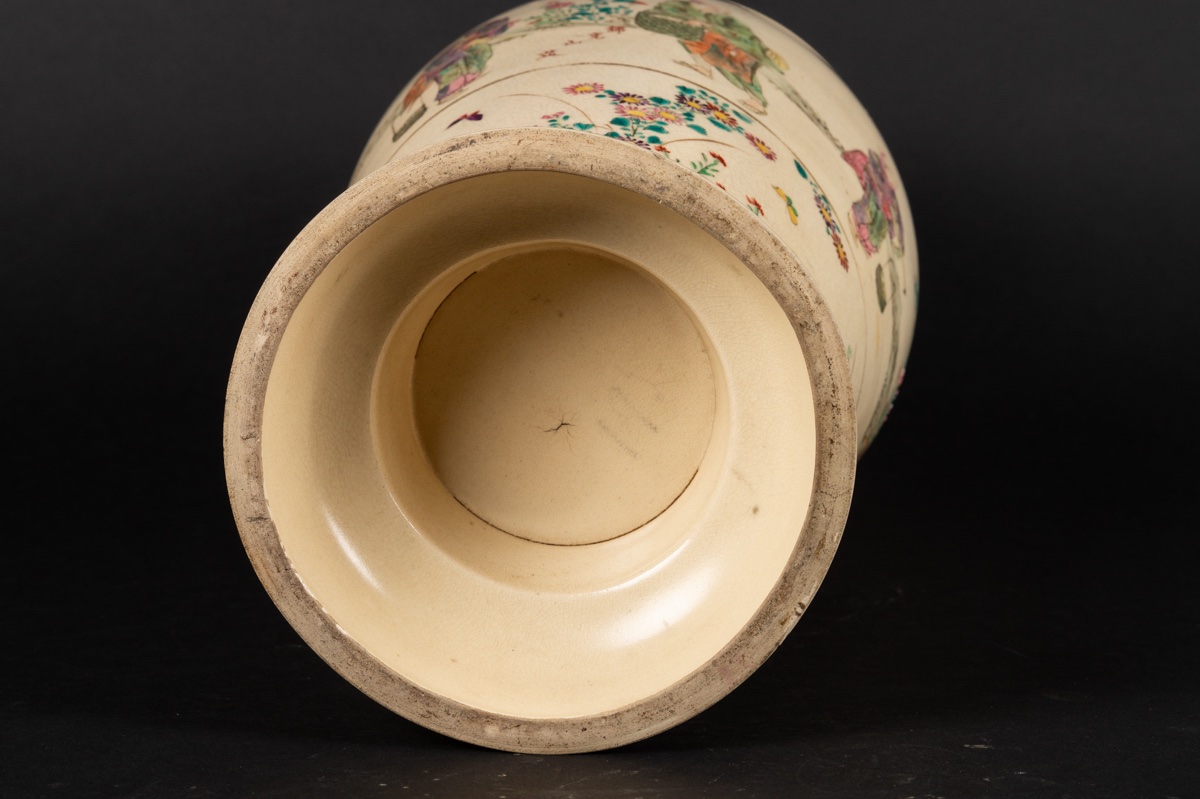
Very good condition, slight traces of wear on the gilding, shrinkage cracks (appearing during ceramic firing) on the bottom.
Kinkozan - Although the Kinkōzan family is mainly associated with the Meiji era (1868-1912), its roots go back to the mid-17th century in Kyoto (Awata district). For generations, the workshop worked on commission for the Tokugawa shogunate and the imperial court. The name "Kinkōzan" was given to the family by the shogun himself in 1756, an immense honor and confirmation of the exceptional quality of their products. Kinkōzan Sōbei VI (1824-1884) was a visionary who grasped the potential of export. He was one of the first to introduce Western colorants and gilding techniques, which gave Satsuma ceramics their characteristic luxurious sheen. Under his leadership, Kinkōzan Sōbei VII (1867-1927) brought the workshop to its peak, thanks to the strong demand for Japanese ceramics in the West, but it closed its doors for good after his death.
Free shipping within the European Union! I send parcels by insured courier (DPD or DHL). All items are carefully packed. Payment by international bank transfer. I will issue a certificate of authenticity on request.
Kinkozan, Satsuma, Japan, Meiji era (1868-1912). Signed: 錦光山造 (Kinkōzan zō, i.e. "made by Kinkozan").
Height 40 cm, diameter 17 cm.
Very good condition, slight traces of wear on the gilding, shrinkage cracks (appearing during ceramic firing) on the bottom.
Kinkozan - Although the Kinkōzan family is mainly associated with the Meiji era (1868-1912), its roots go back to the mid-17th century in Kyoto (Awata district). For generations, the workshop worked on commission for the Tokugawa shogunate and the imperial court. The name "Kinkōzan" was given to the family by the shogun himself in 1756, an immense honor and confirmation of the exceptional quality of their products. Kinkōzan Sōbei VI (1824-1884) was a visionary who grasped the potential of export. He was one of the first to introduce Western colorants and gilding techniques, which gave Satsuma ceramics their characteristic luxurious sheen. Under his leadership, Kinkōzan Sōbei VII (1867-1927) brought the workshop to its peak, thanks to the strong demand for Japanese ceramics in the West, but it closed its doors for good after his death.
Free shipping within the European Union! I send parcels by insured courier (DPD or DHL). All items are carefully packed. Payment by international bank transfer. I will issue a certificate of authenticity on request.
1 250 €
Period: 19th century
Style: Asian art
Condition: Excellent condition
Material: Ceramic
Diameter: 17
Height: 40
Reference (ID): 1758758
Availability: In stock
Print