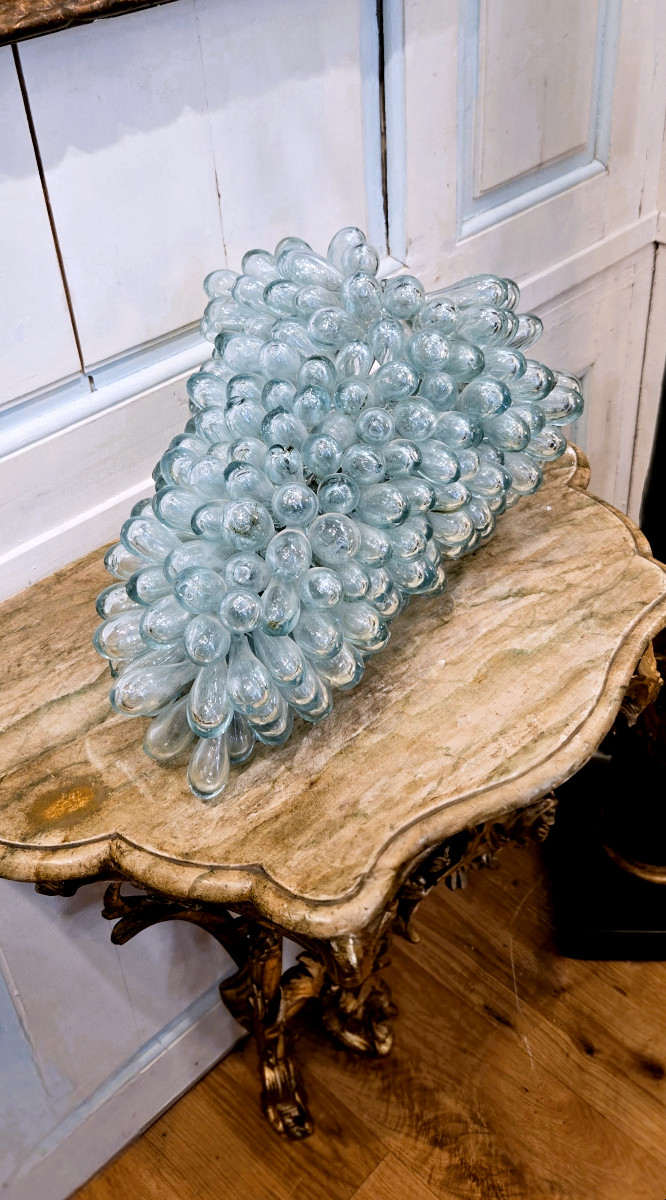
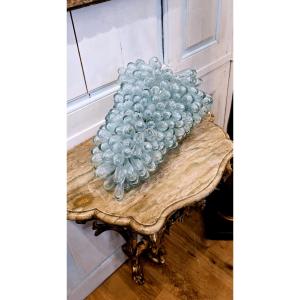


Murano Blown Glass Cluster
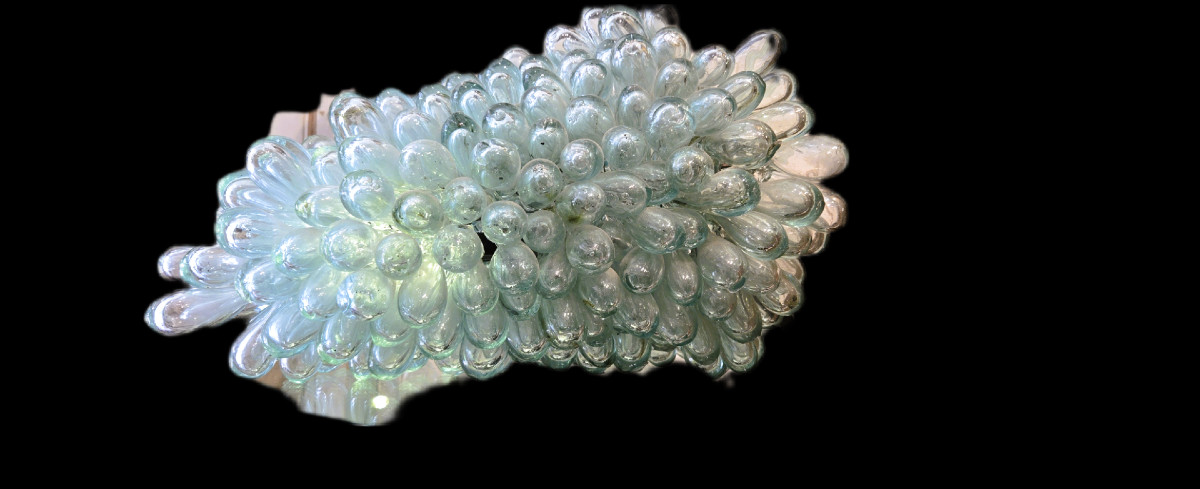
The vast majority of these high-quality blown-glass clusters come from the workshops in Murano, near Venice. They enjoyed immense success between the 1950s and 1970
.- Each grape "seed" is an individually blown glass sphere, attached to a central structure.
- Houses such as Barovier & Toso or Vetreria Gino Cenedese produced variants of these objects, although many had nosignature, as they were sold as luxury decorative objects.
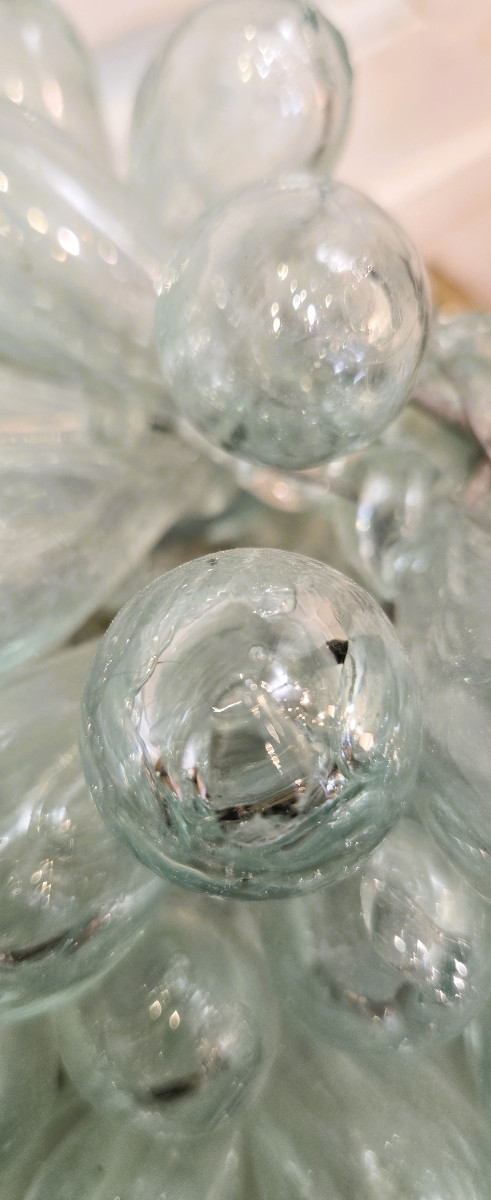
- The hue is a "water green" or"crystal clear" with reflections. Small bubbles are visible inside the glassinside the glass, a sign of craftsmanship
The "Pulegoso" glass technique
Glass filled with air bubbles is not a flaw, it's a deliberate and complex technique.
This method was made famous by Napoleone Martinuzzi in Murano in the 1920s/1930s.
Substances (such as baking soda) are added to the molten glass paste to create this chemical reaction.
Bubble-glass clusters are often more sought-after than those made ofas they diffuse light in a much softer, more textured way.A "sculptural" decorative object
The fact that it is not originally electrified is an excellent sign. This means that it is a table sculpture or a ceremonial centerpiece, not a mass-produced light fixture.
At the time, these pieces were sold in luxury boutiques as pure decorative objects.
The heavy metal structure served to maintain the balance of theas 40 cm of solid or thick blown glass is a considerable weight.considerable weight
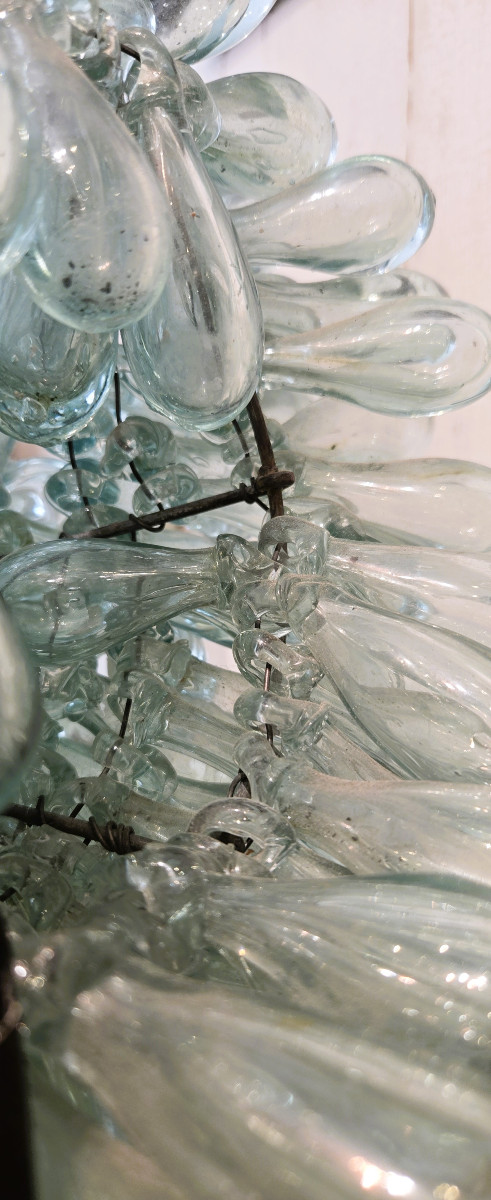
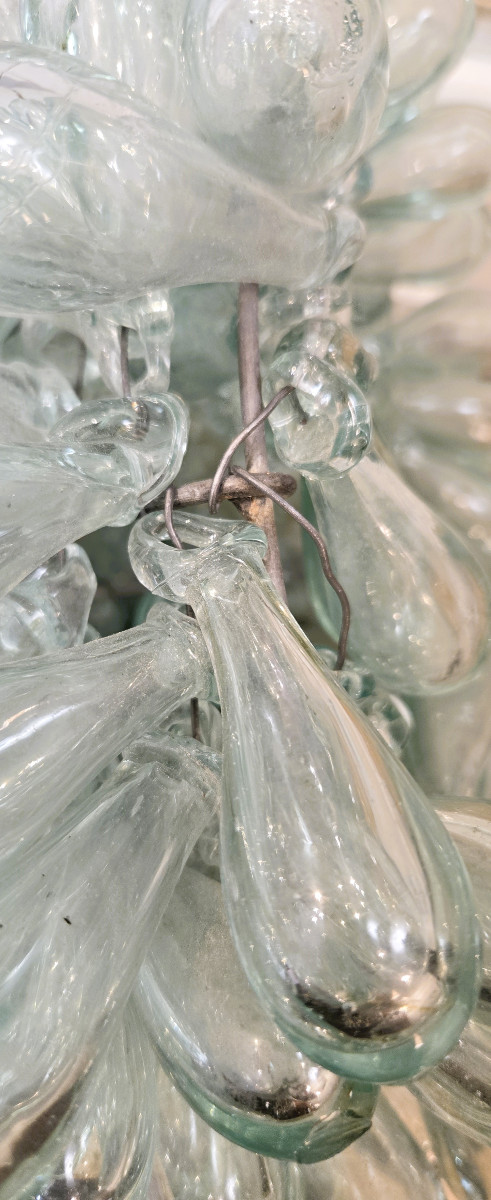
The beads are attached to the structure by a glass ring that forms part of the drop
This attachment system - where each bead ends in an integrated hook or glass ring - is the signature of Murano's lustrers and art glassmakers.
A "Venetian-style"
850 €
Period: 20th century
Style: Design 50's and 60's
Condition: Good condition
Length: 40cm
Height: 27cm
Reference (ID): 1757213
Availability: In stock
Print