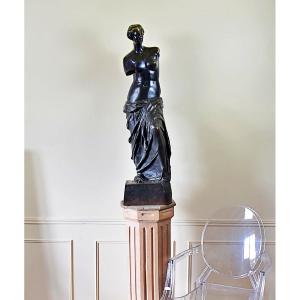
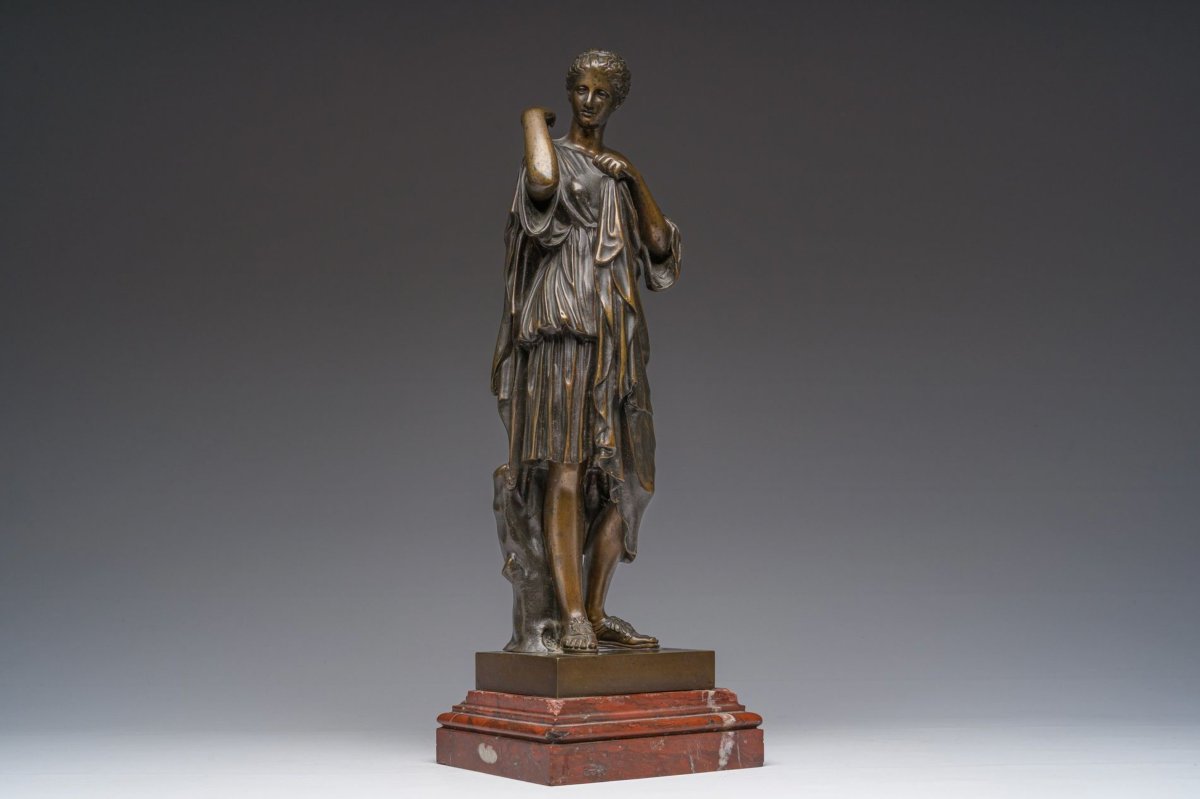
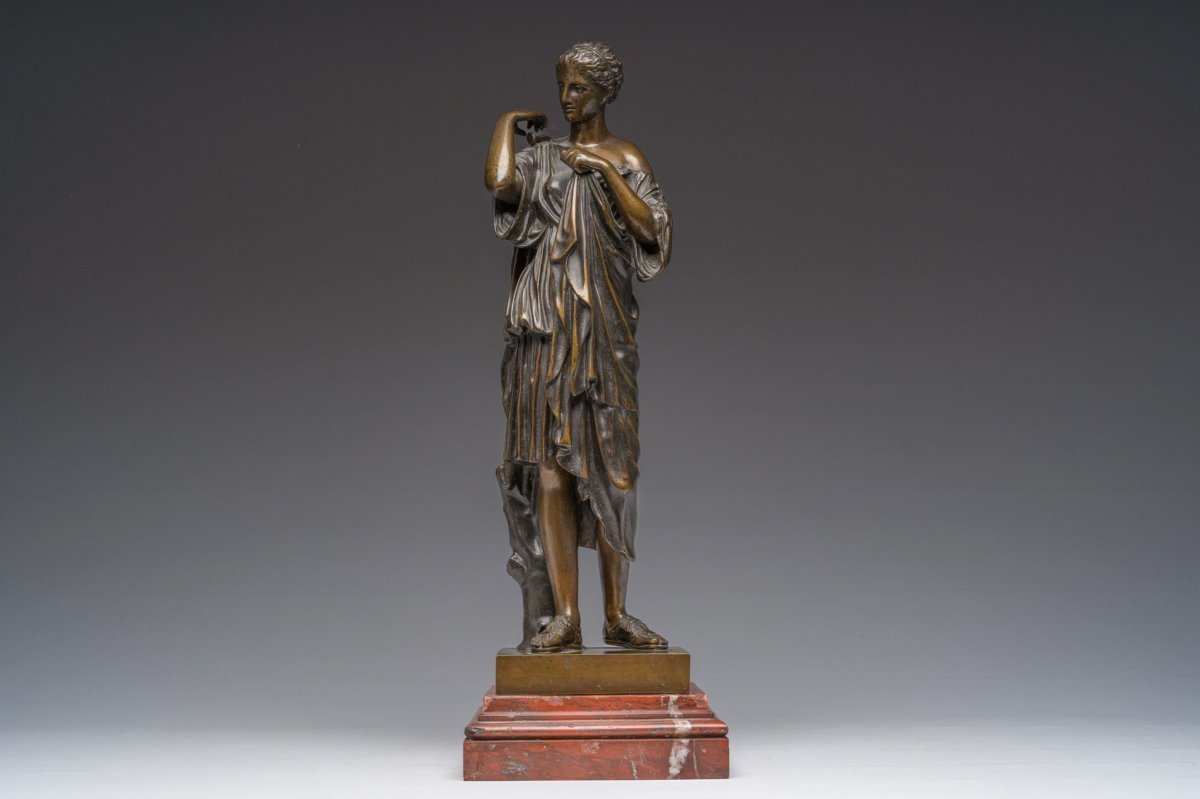
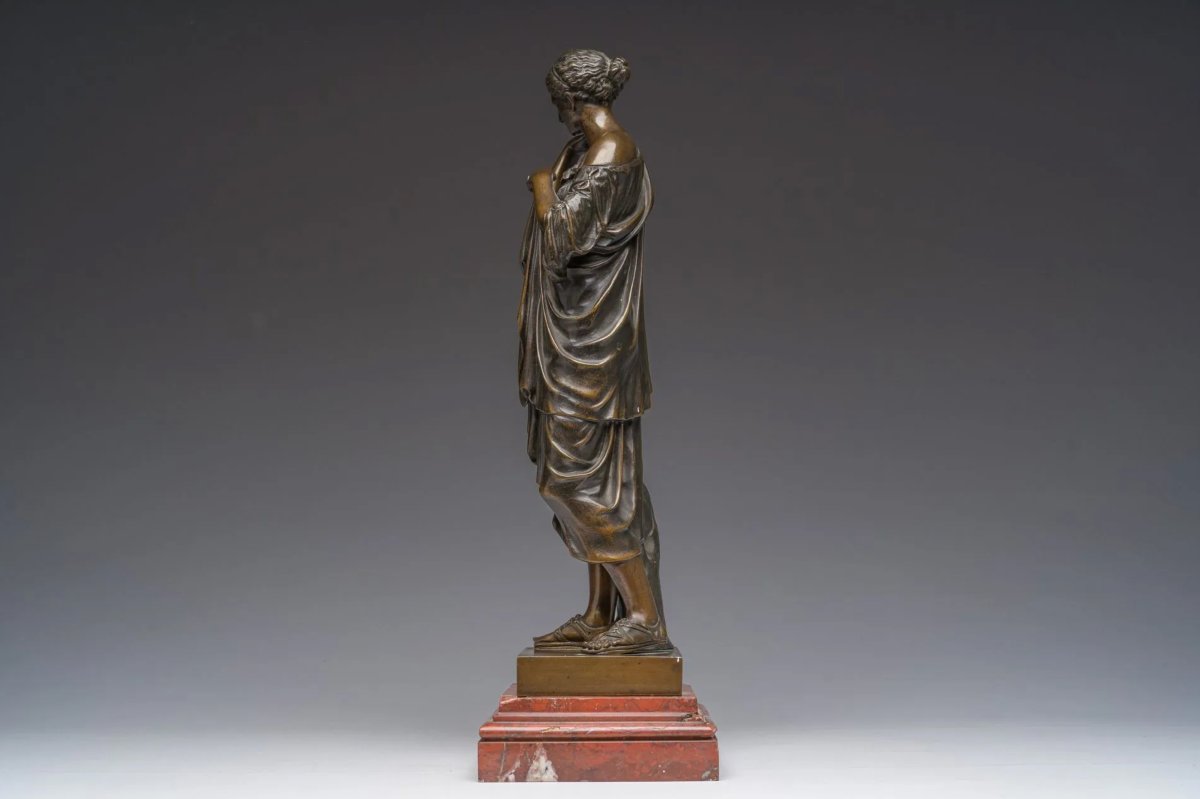
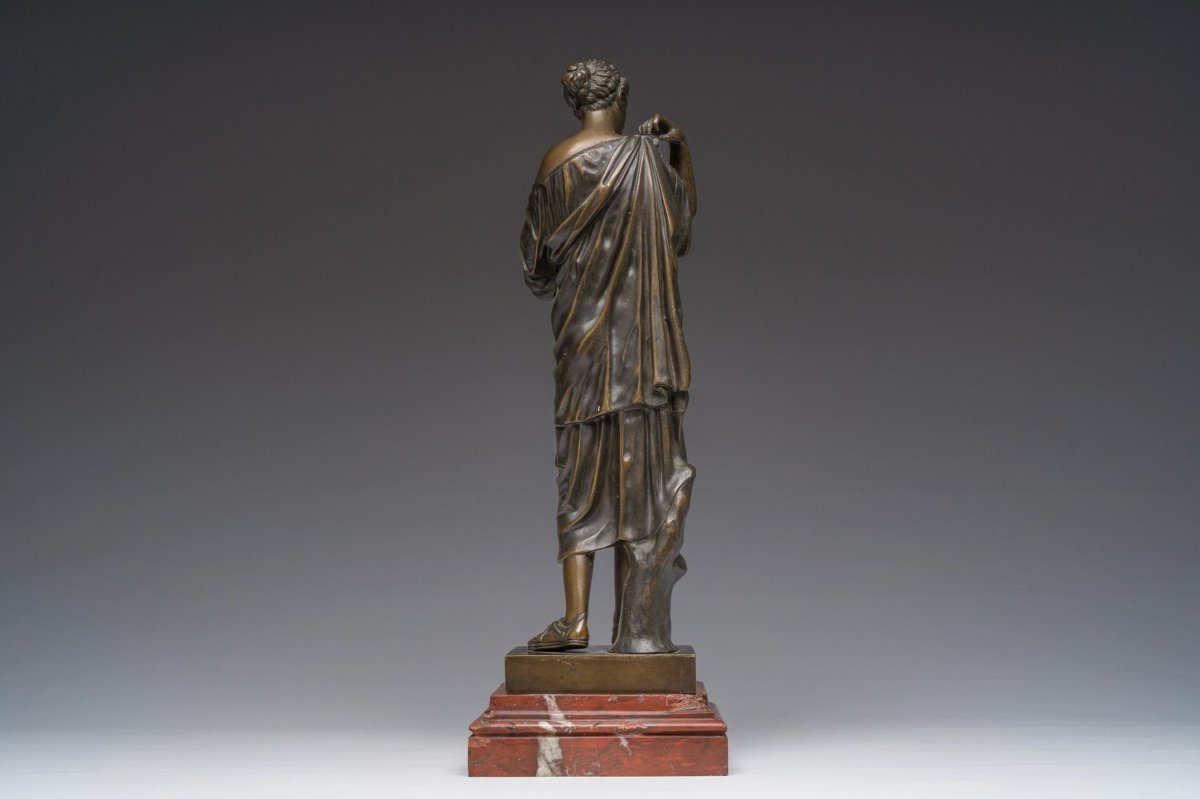
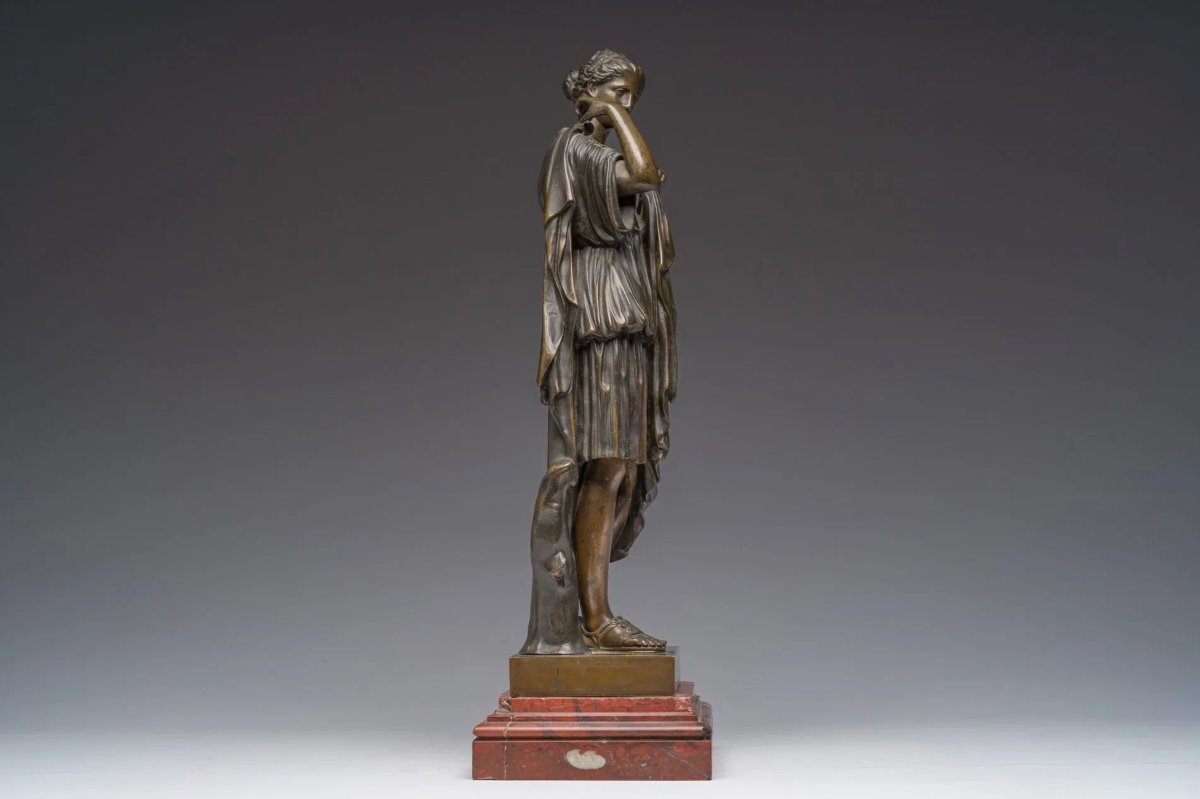
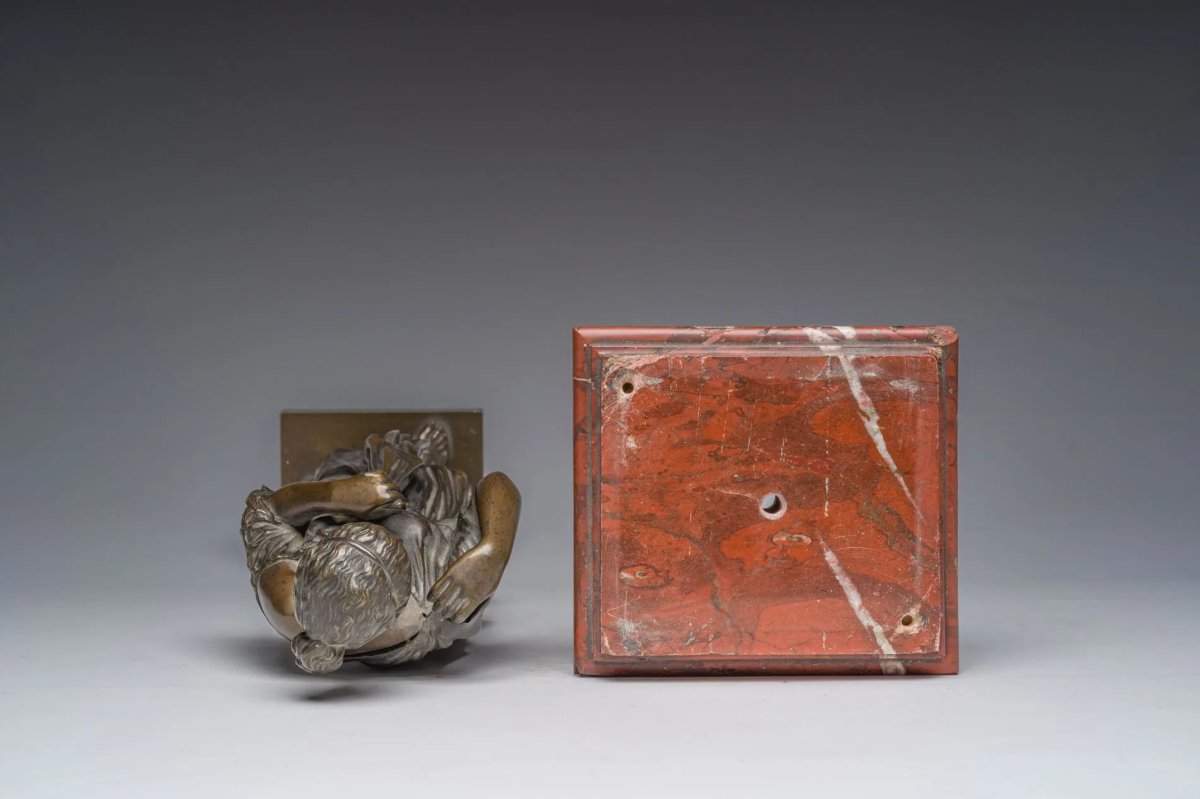
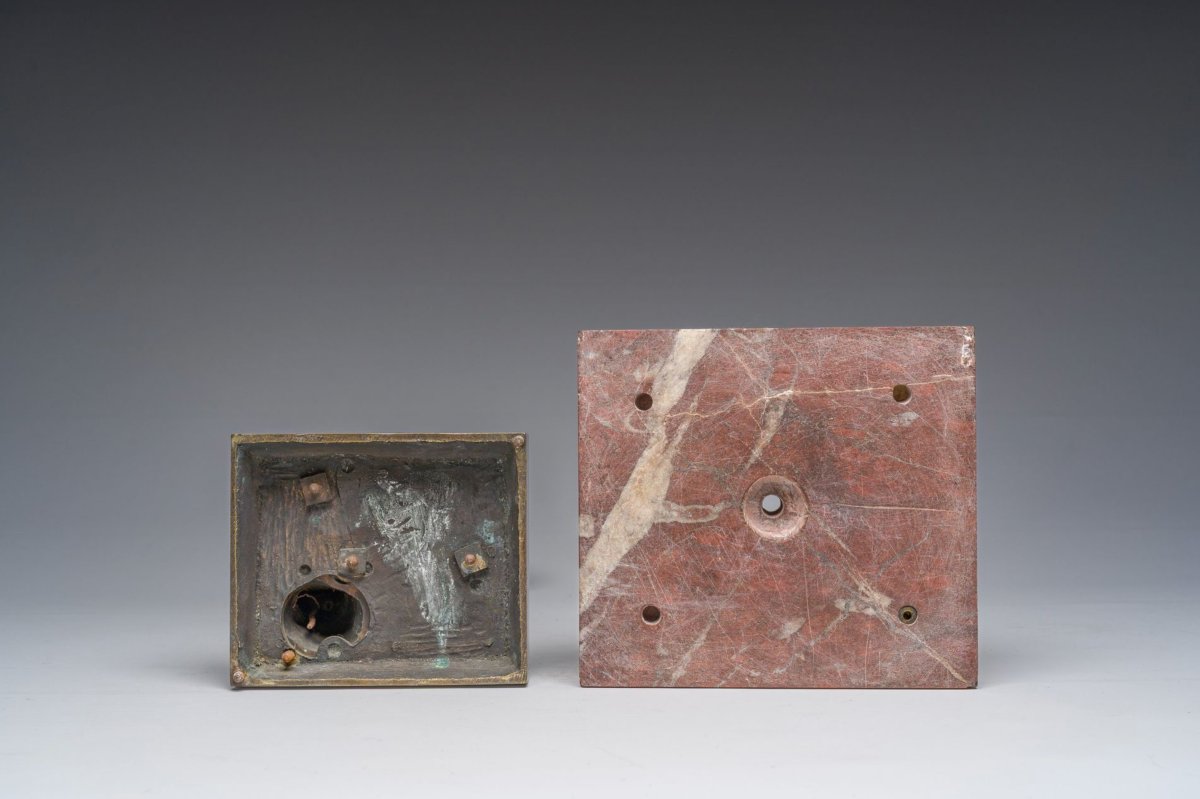


Bronze Statue Of Diane De Gabbi, After Gabriel Sauvage, France (1860-1880)
Artist: Gabriel Sauvage
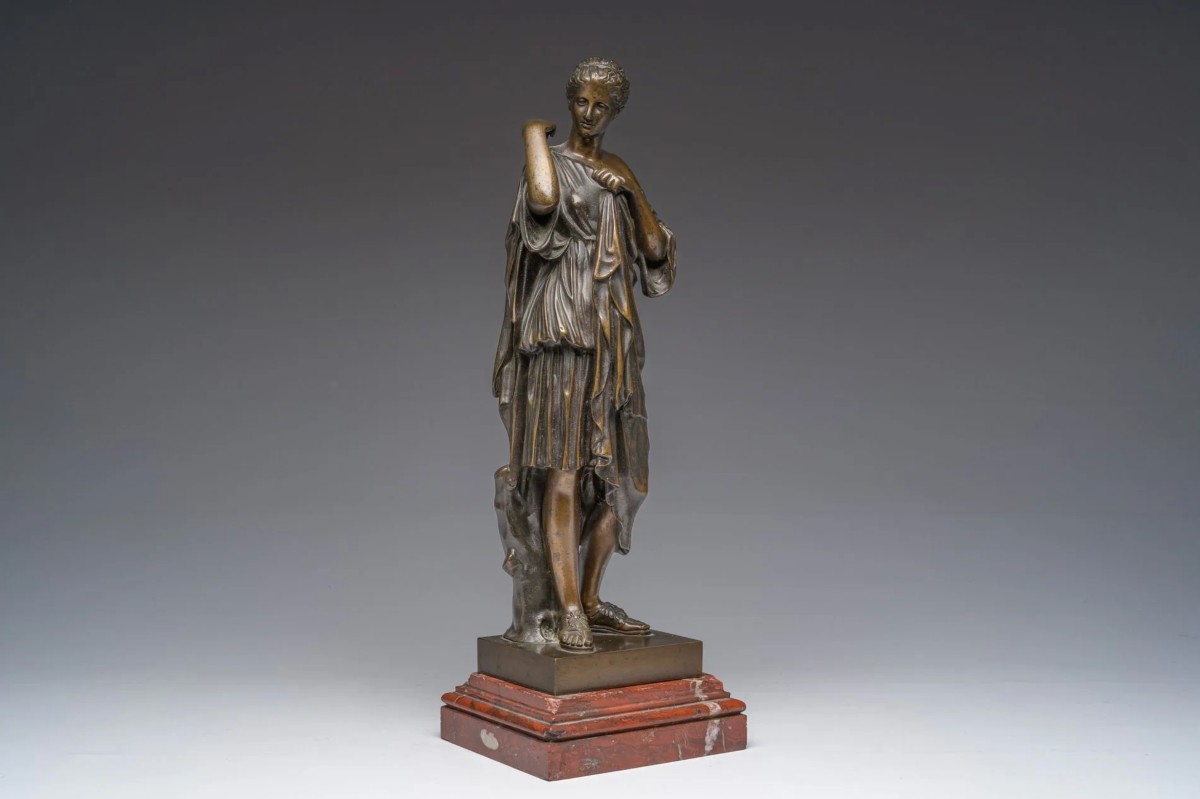
This sculpture represents Artemis, the Greek goddess of the hunt. She is wearing a long, wide-sleeved chiton, typical of this goddess. Two belts, one visible around her waist, emphasize the silhouette of the chiton. The invisible belt partially raises the fabric, revealing the knee. In this depiction, Artemis is about to fasten her cloak. With her right hand, she holds a fibula and a flap of the robe over her shoulder, while her left hand lifts another flap to chest height.
The Diana of Gabii is a representation, originally in marble, of the Greek goddess Artemis that has been part of the Louvre collection in Paris since 1820. Scottish archaeologist Gavin Hamilton discovered the statue in 1792 on the estate of the Prince of Borghese at Gabii, not far from Rome. The Prince immediately added it to his personal collection, but sold it to Napoleon in 1807. In the 19th century, the statue enjoyed great popularity and copies were installed in many places, such as the Cour Carrée of the Louvre, the Athenaeum Club in London and the Botanical Gardens in Copenhagen.
About the artist:
The Gabbi Diana was long thought to be a copy of a statue by the Greek artist Praxiteles (395-330 BC). This version of the classical original is the work of French sculptor Charles-Gabriel Sauvage (1741-1824), who had been working as a modeler at the Niderviller factory since 1759. He was best known for his classical nude sculptures in cookie porcelain. As an artist, Sauvage belonged to the transitional period between Rococo and Neoclassicism.
The Diana of Gabii is a representation, originally in marble, of the Greek goddess Artemis that has been part of the Louvre collection in Paris since 1820. Scottish archaeologist Gavin Hamilton discovered the statue in 1792 on the estate of the Prince of Borghese at Gabii, not far from Rome. The Prince immediately added it to his personal collection, but sold it to Napoleon in 1807. In the 19th century, the statue enjoyed great popularity and copies were installed in many places, such as the Cour Carrée of the Louvre, the Athenaeum Club in London and the Botanical Gardens in Copenhagen.
About the artist:
The Gabbi Diana was long thought to be a copy of a statue by the Greek artist Praxiteles (395-330 BC). This version of the classical original is the work of French sculptor Charles-Gabriel Sauvage (1741-1824), who had been working as a modeler at the Niderviller factory since 1759. He was best known for his classical nude sculptures in cookie porcelain. As an artist, Sauvage belonged to the transitional period between Rococo and Neoclassicism.
600 €
Period: 19th century
Style: Rome and Antic Greece
Condition: Good condition
Material: Bronze
Height: 40,50 cm (sans socle)
Reference (ID): 1754184
Availability: In stock
Print