

Rare Corbel With Foliate Mask Known As "green Man" - France, 14th Century
Rare corbel with foliate mask known as the "Green Man"
France, 14th century
Limestone
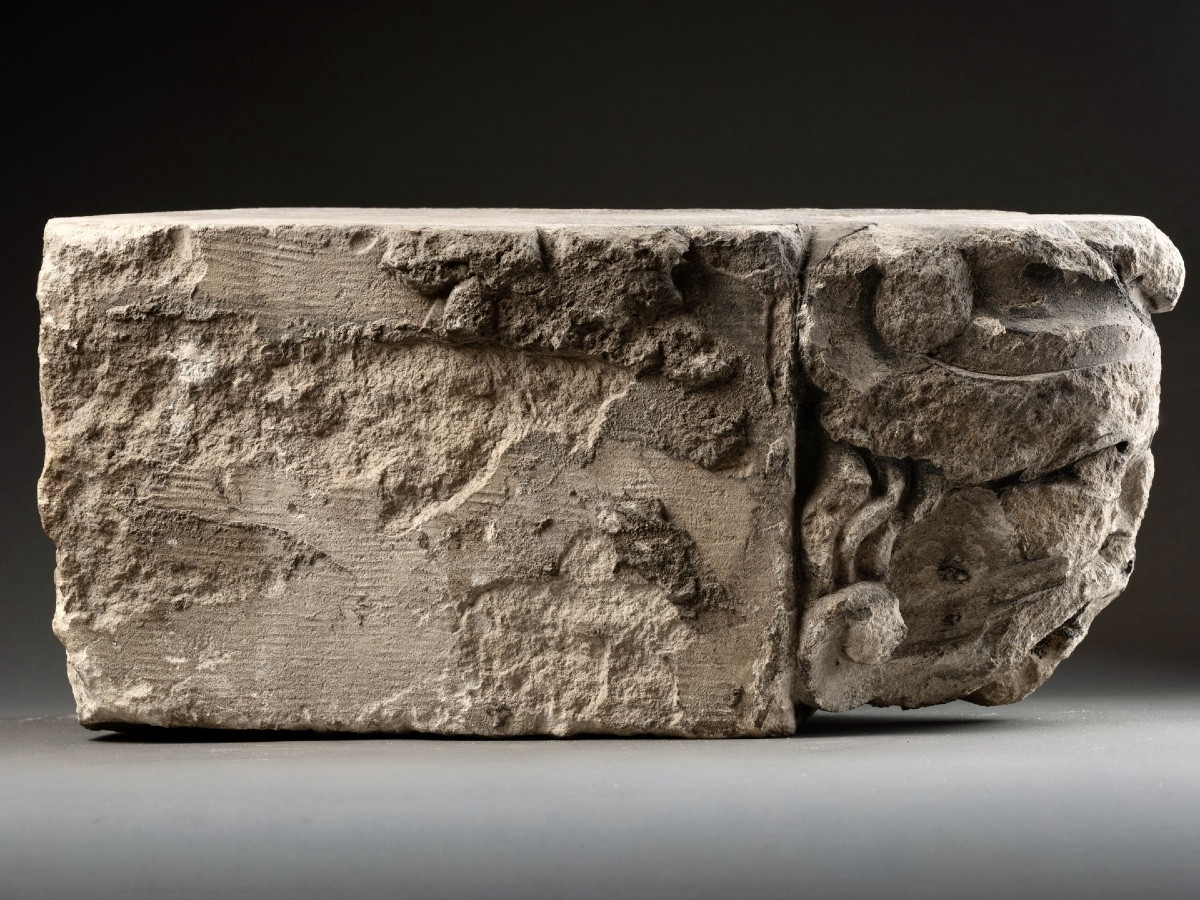
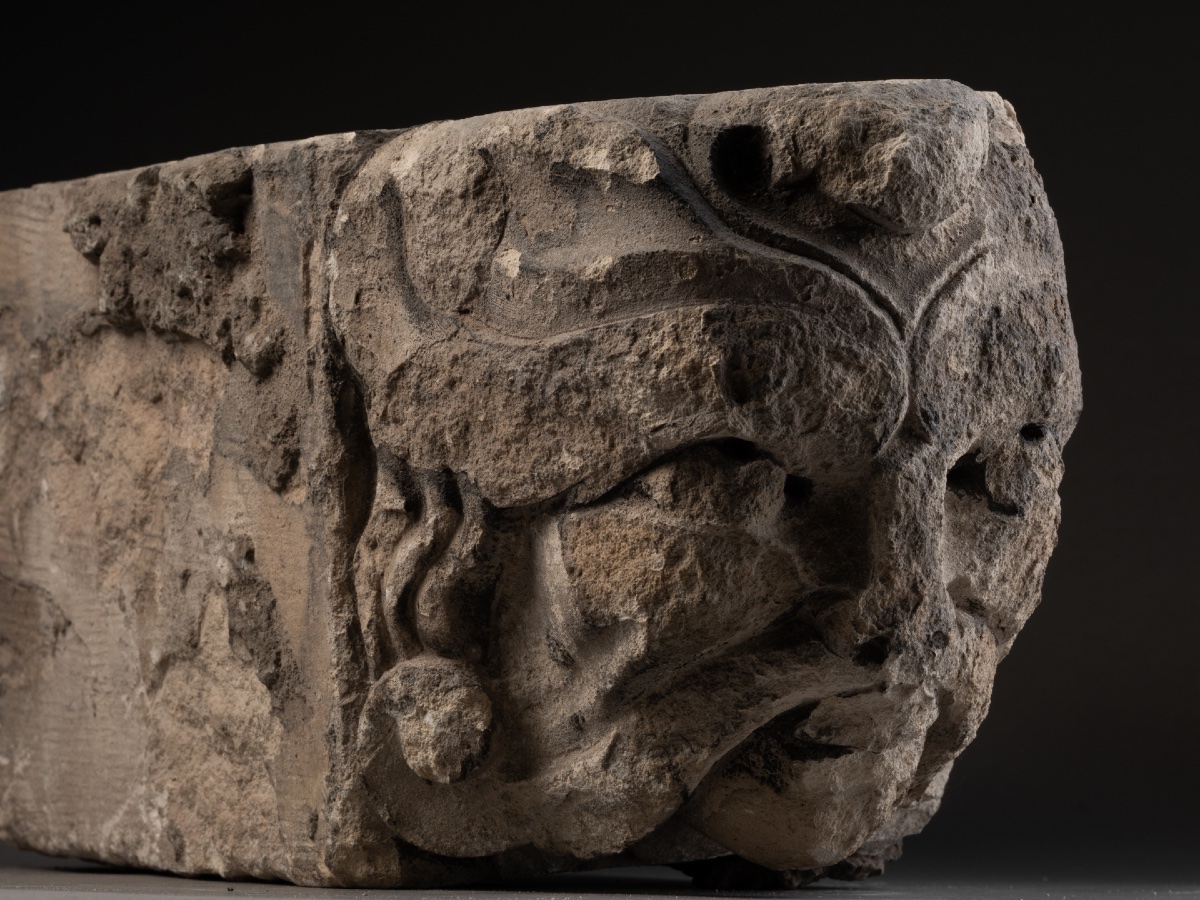
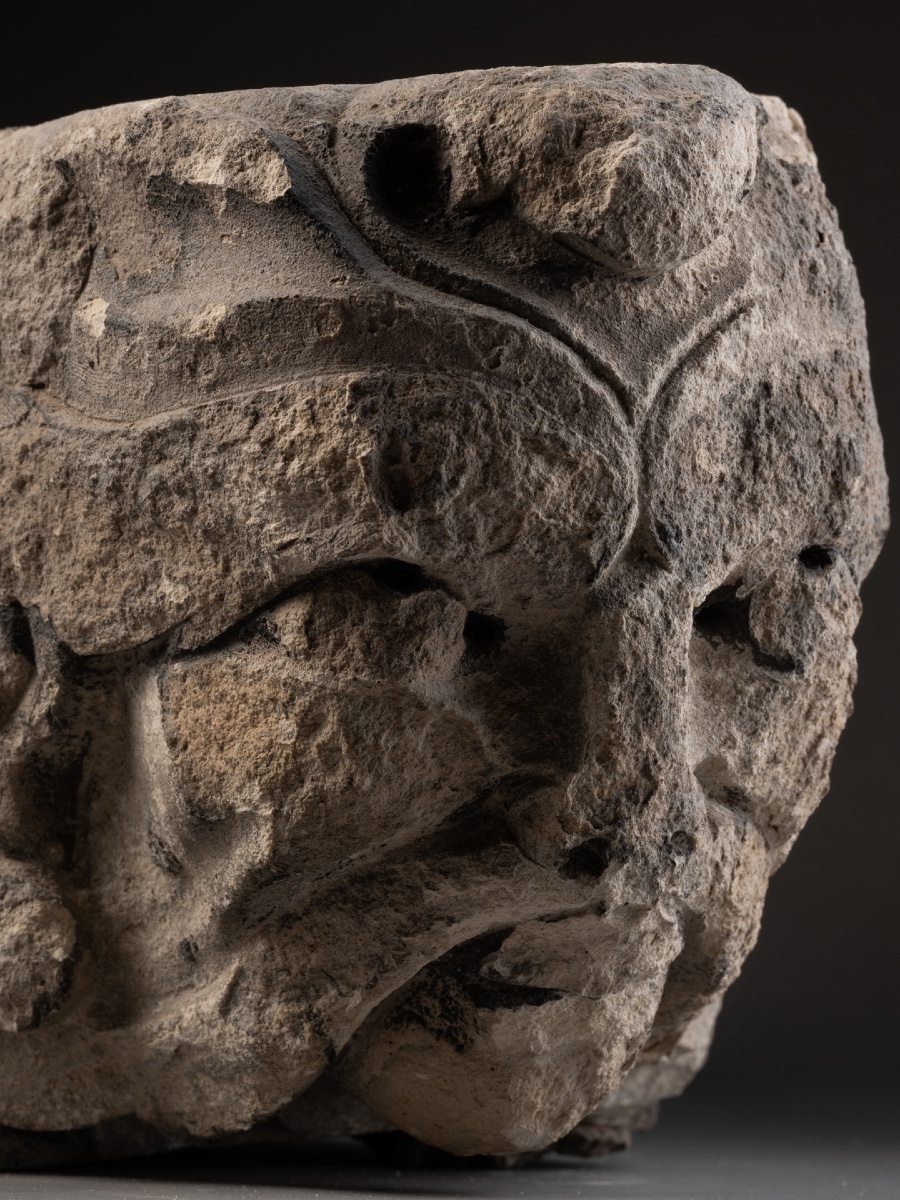
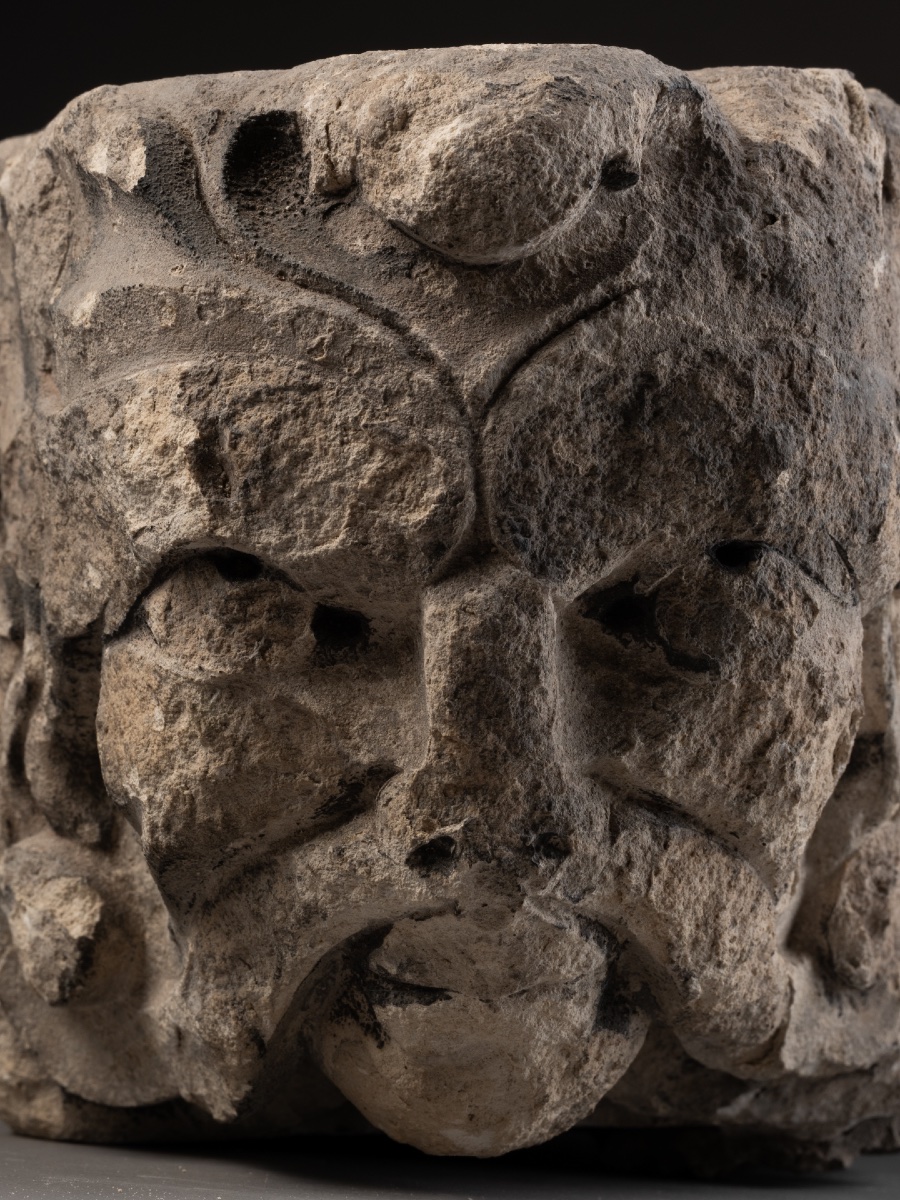
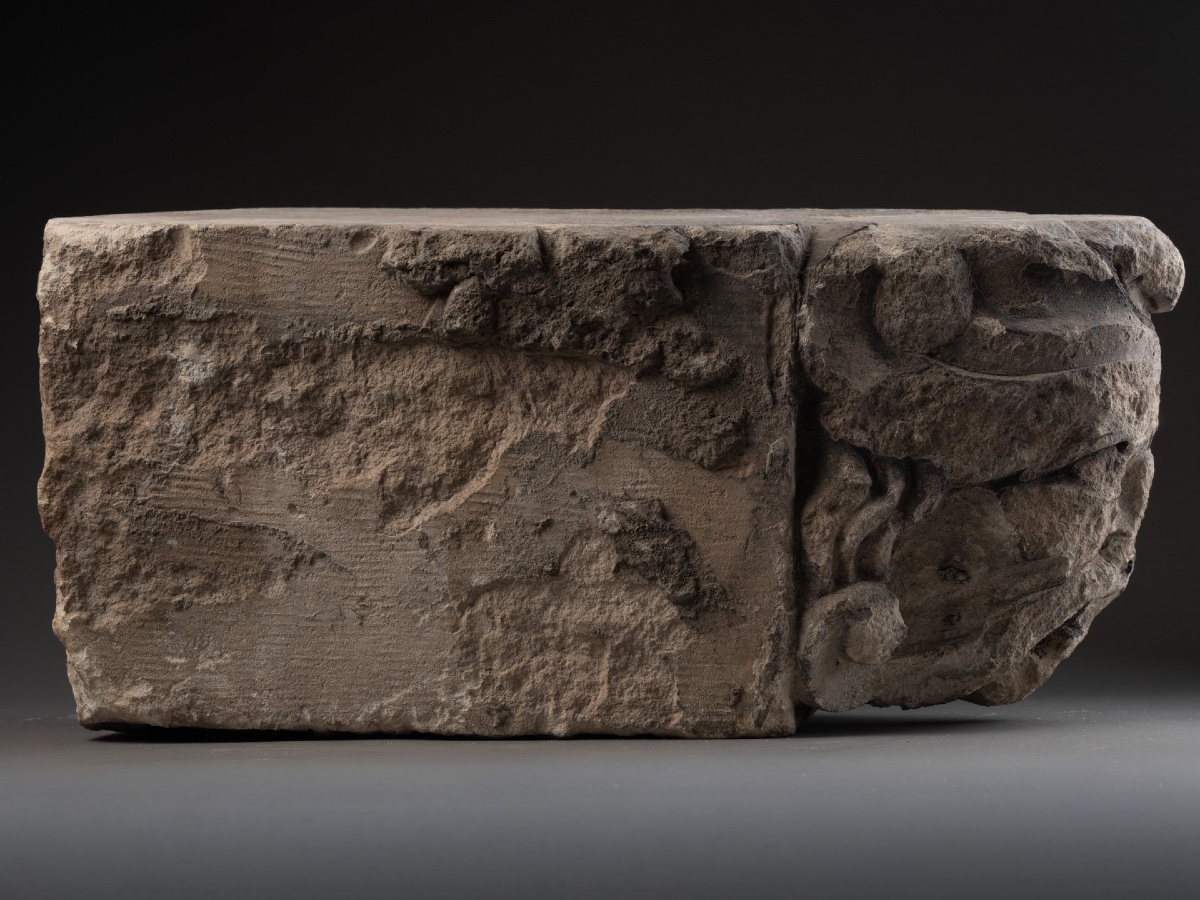
Architectonic fragment in grey limestone, featuring in relief an anthropomorphic mask known as foliate head or "green man" (Green Man).
The face, fleshy and expressive, is distinguished by its powerfully modeled features: protruding superciliary arches, eyes sunken beneath a domed forehead, wide nose and half-open mouth with fleshy lips, whose corners seem extended by vegetal scrolls that invade the entire surface. The foliage, treated in a flattened manner, forms an organic crown spreading out from the figure's head and merging with the rough stone that frames it, following the iconographic tradition of the Green Man where human and plant merge into an ambiguous hybrid figure.
The motif of the Green Man - a human face emerging from foliage or spitting out vegetal tendrils - was widely disseminated in French Gothic sculpture from the 13th to 15th centuries, particularly in the decorative programs of cathedrals and abbeys. A protean figure oscillating between the apotropaic grotesque and the celebration of nature, it adorns capitals, keystones, misericords and corbels.
The schematic yet vigorous treatment of the face, as well as the facture of the flattened foliage, evoke the Gothic sculpture workshops of the 14th century, a period of great diffusion of this ornamental repertoire in Northern France.
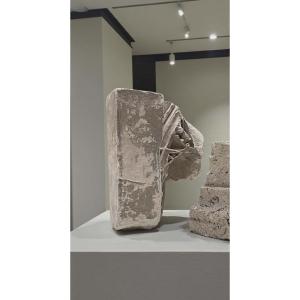
The limestone block, rectangular in cross-section, served as a load-bearing corbel - a modenature element designed to support a cornice, vault or arch - presumably within a religious or civil building.
Period: Before 16th century
Style: Renaissance, Louis 13th
Condition: Good condition
Material: Stone
Length: 35
Height: 16
Depth: 12
Reference (ID): 1752735
Availability: In stock