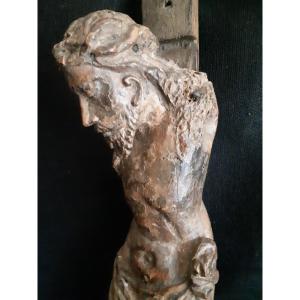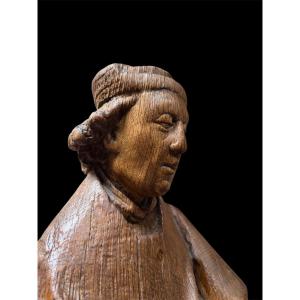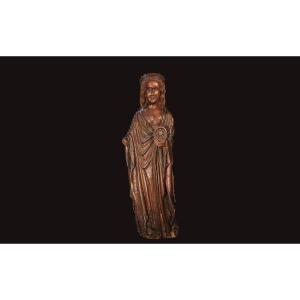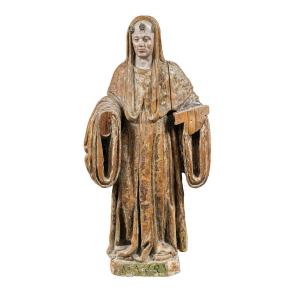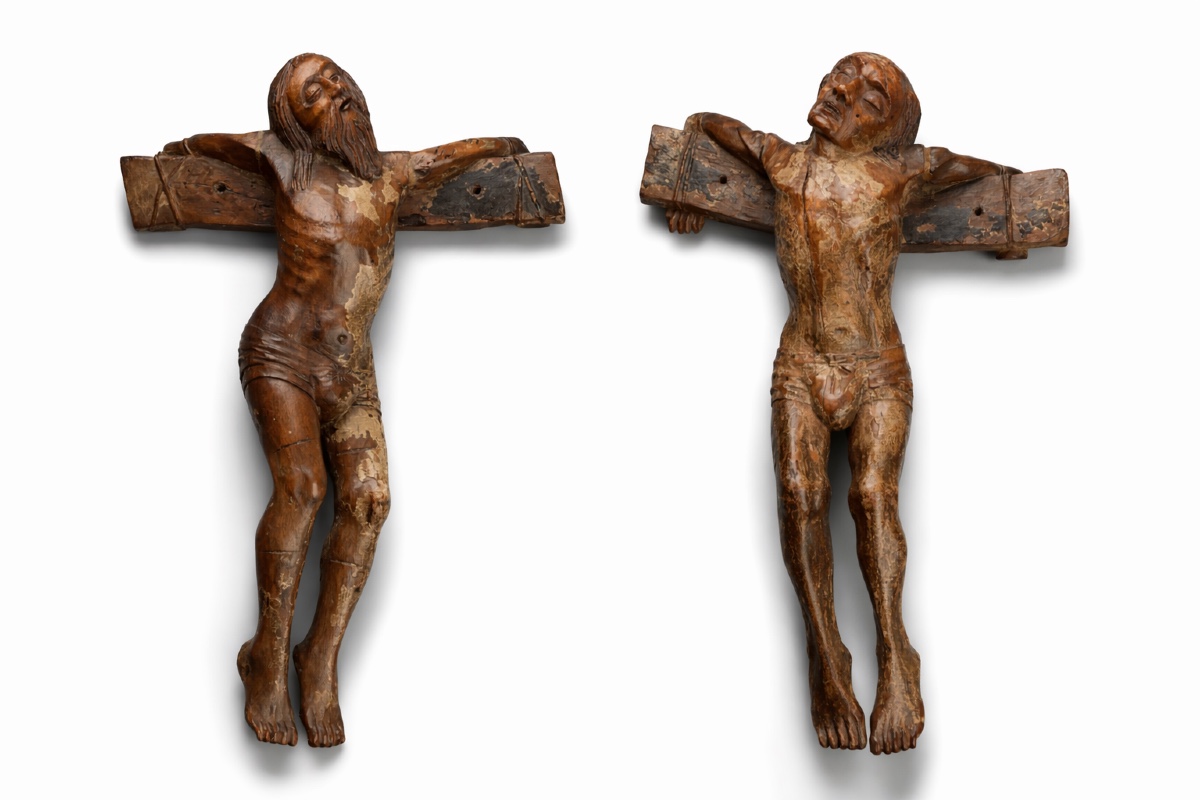
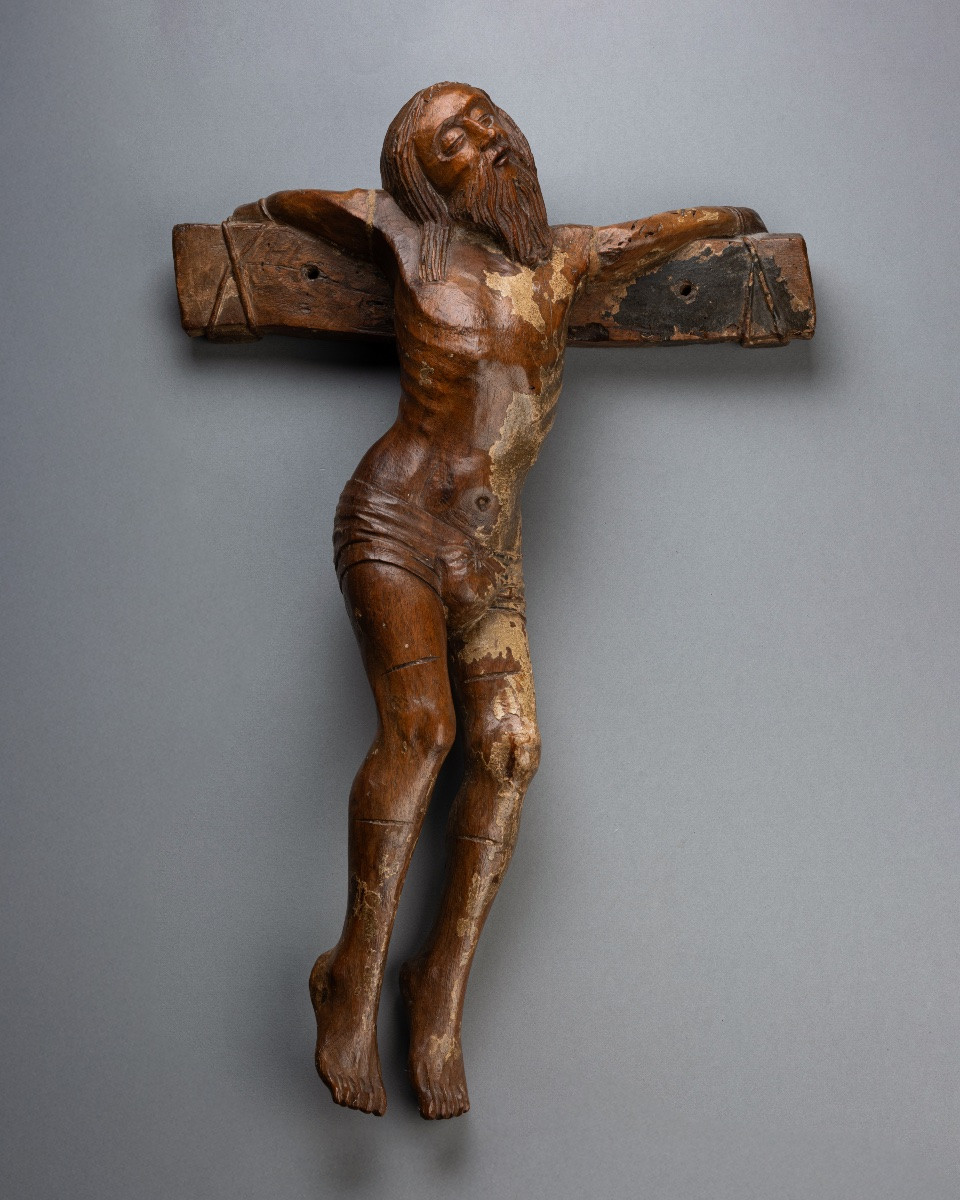
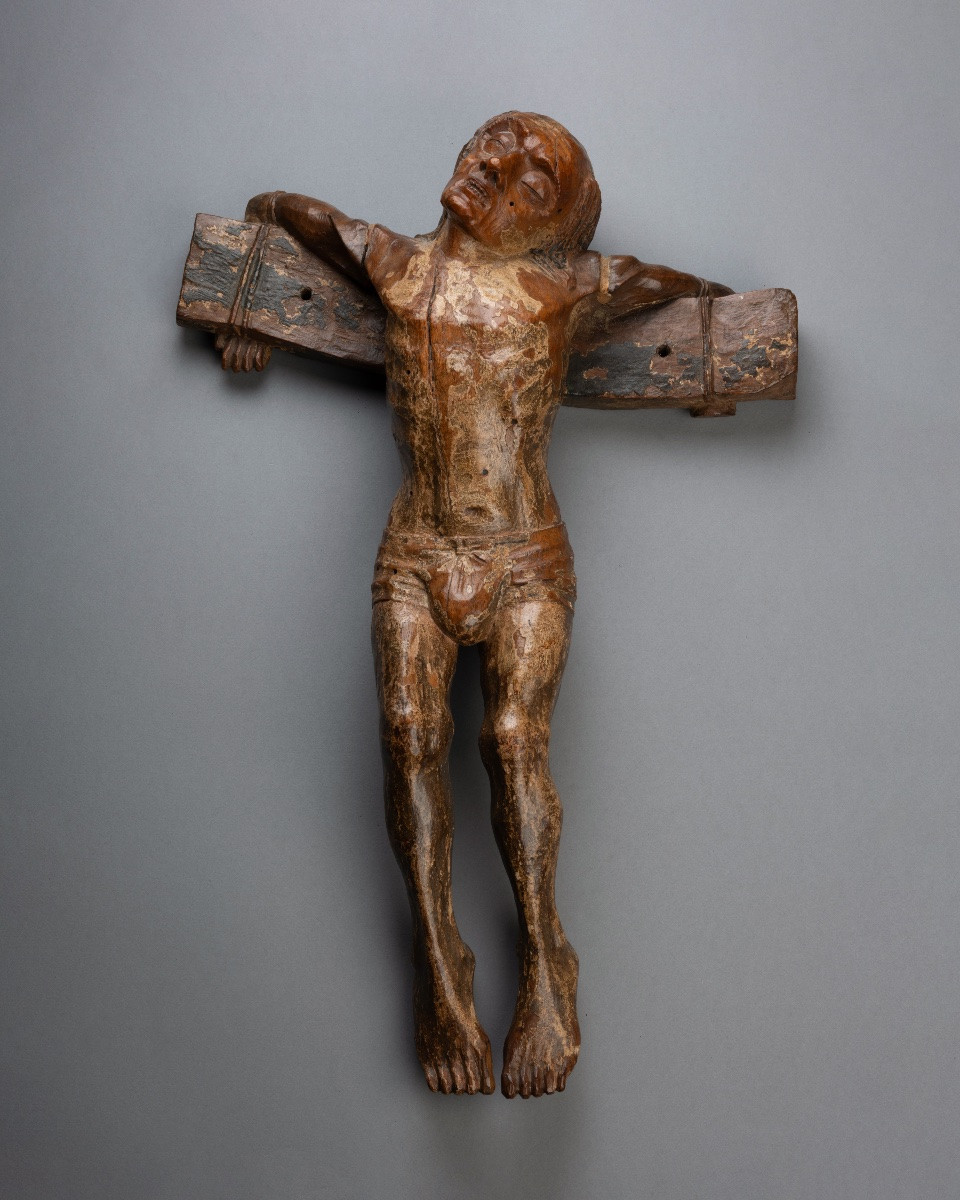


The Good And The Bad Thief (dismas Et Gestas) - C. 1480–1490
The Good and the Bad Thief
Brabantine workshop, c. 1480–1490
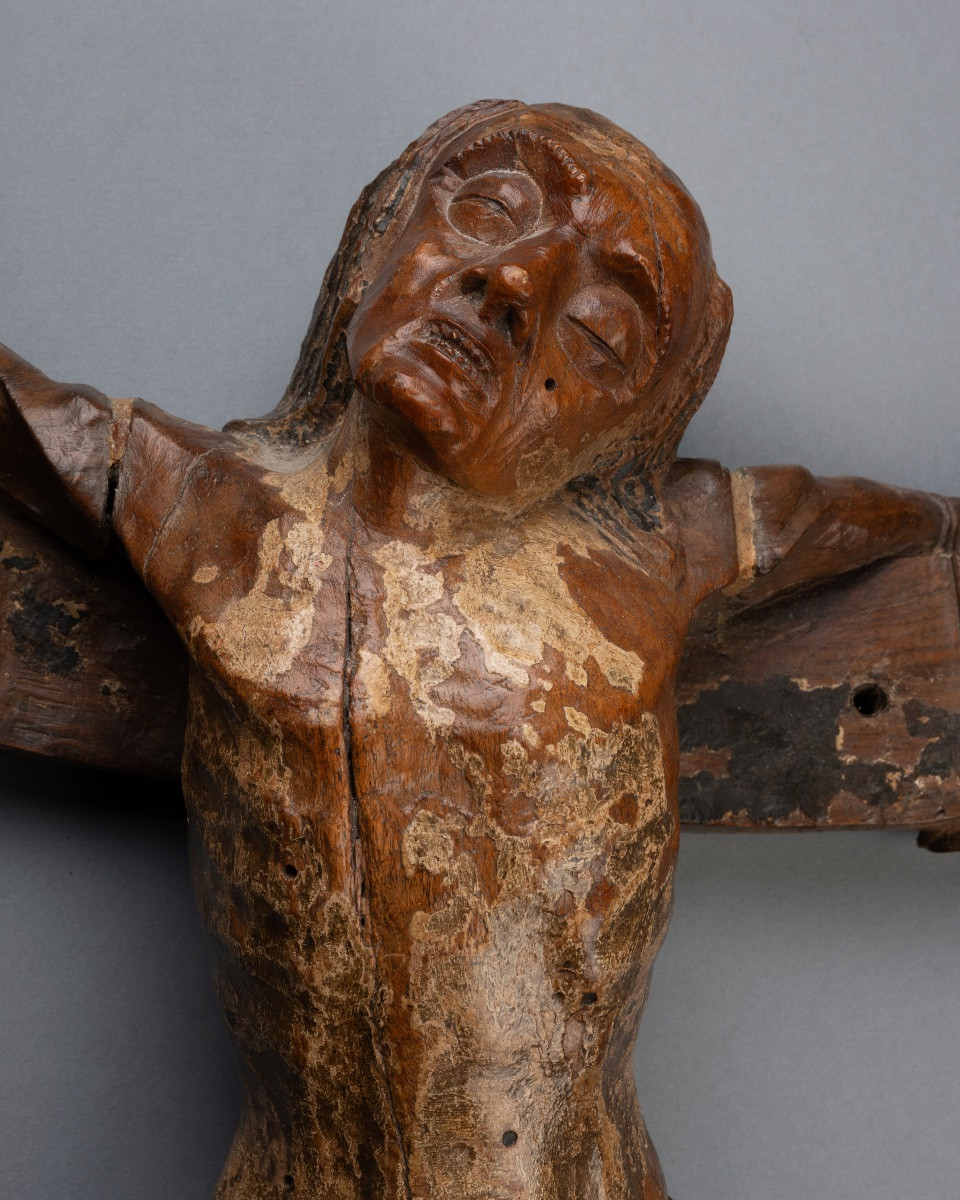
Carved walnut with traces of polychromy
H : 56 and 58 cm
Provenance:
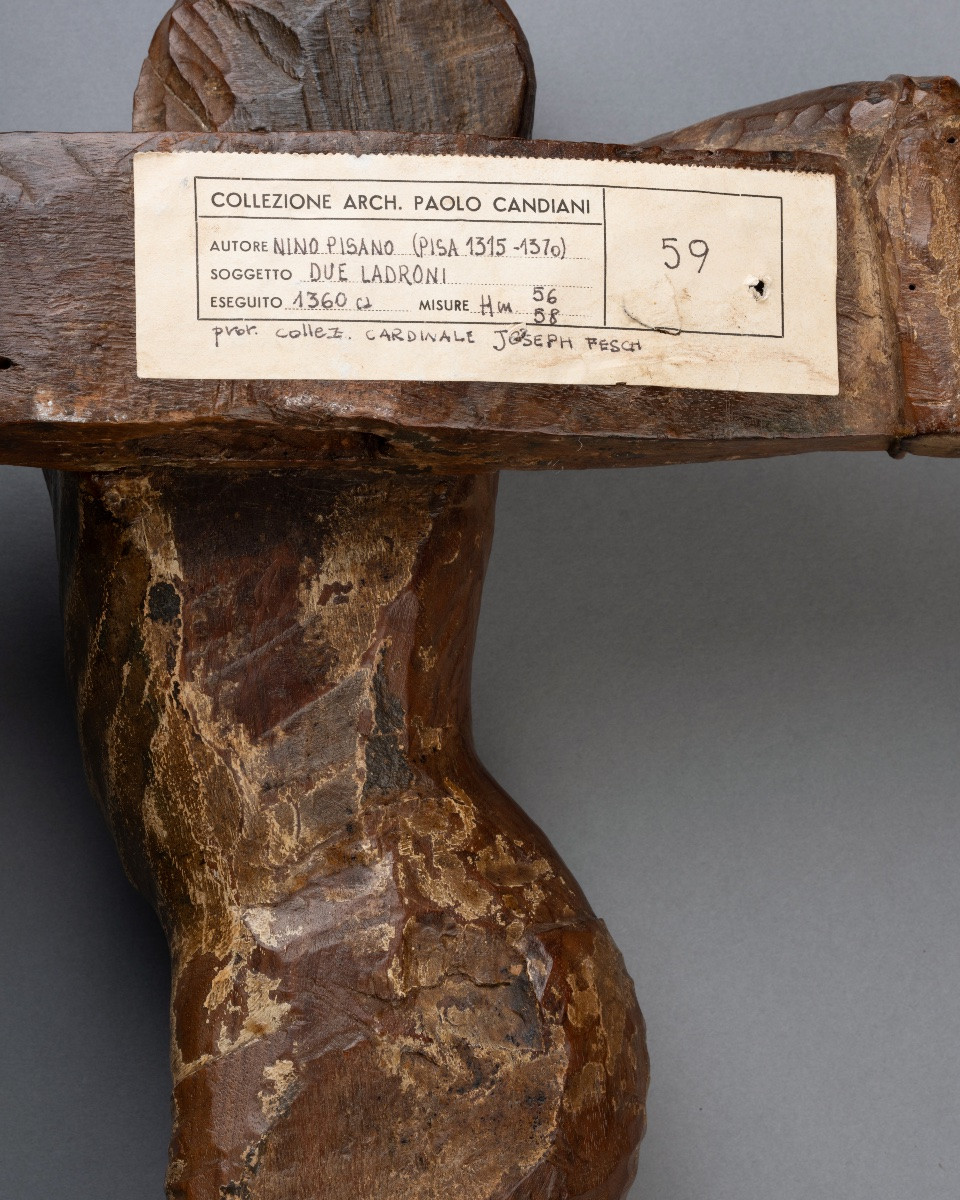
Formerly in the collection of Cardinal Joseph Fesch (Ajaccio, 1763–Rome, 1839)
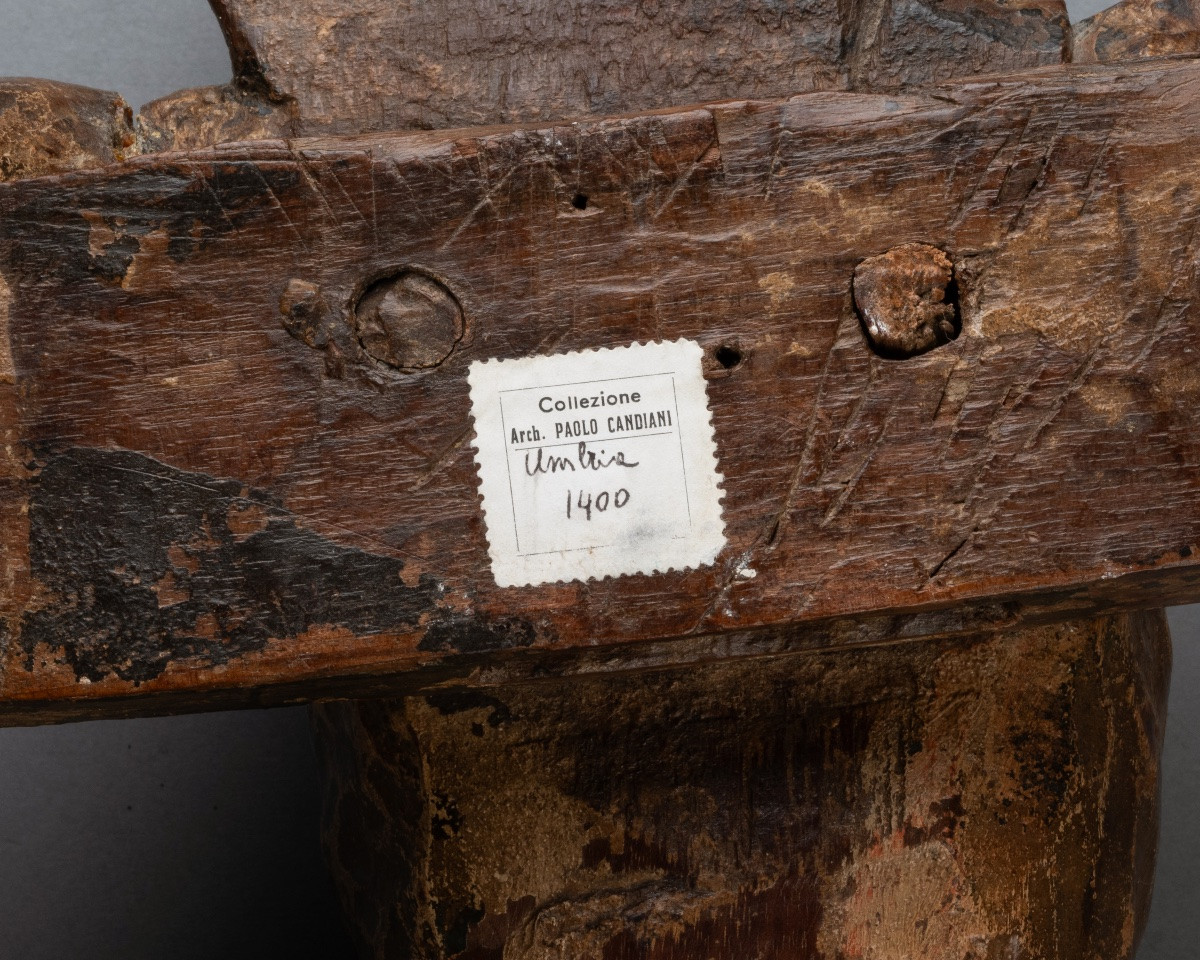
Private collection Paolo Candiani (1897- 1981), Former President of Accademia di Belle Arti di Brera, Milano
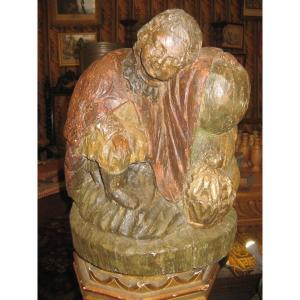
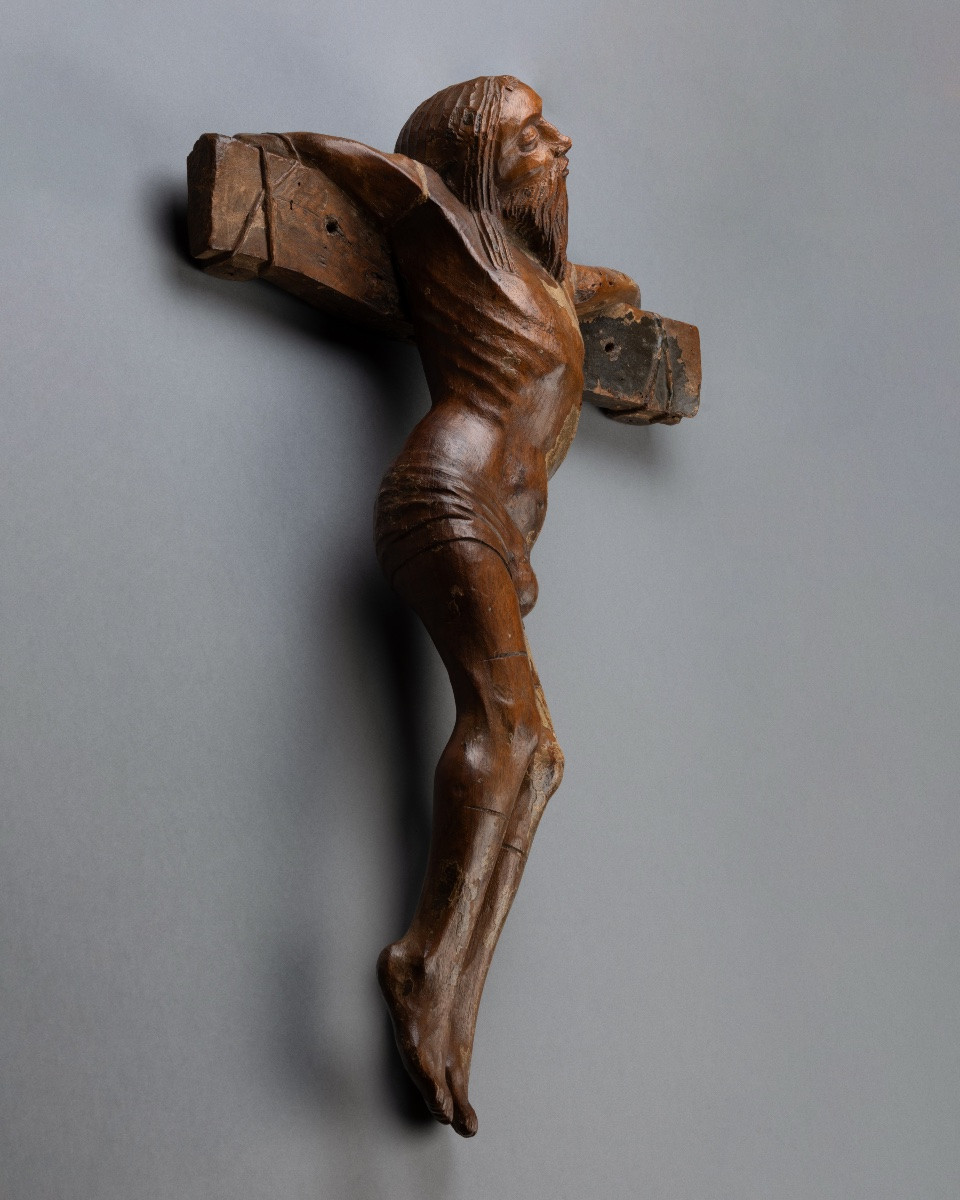
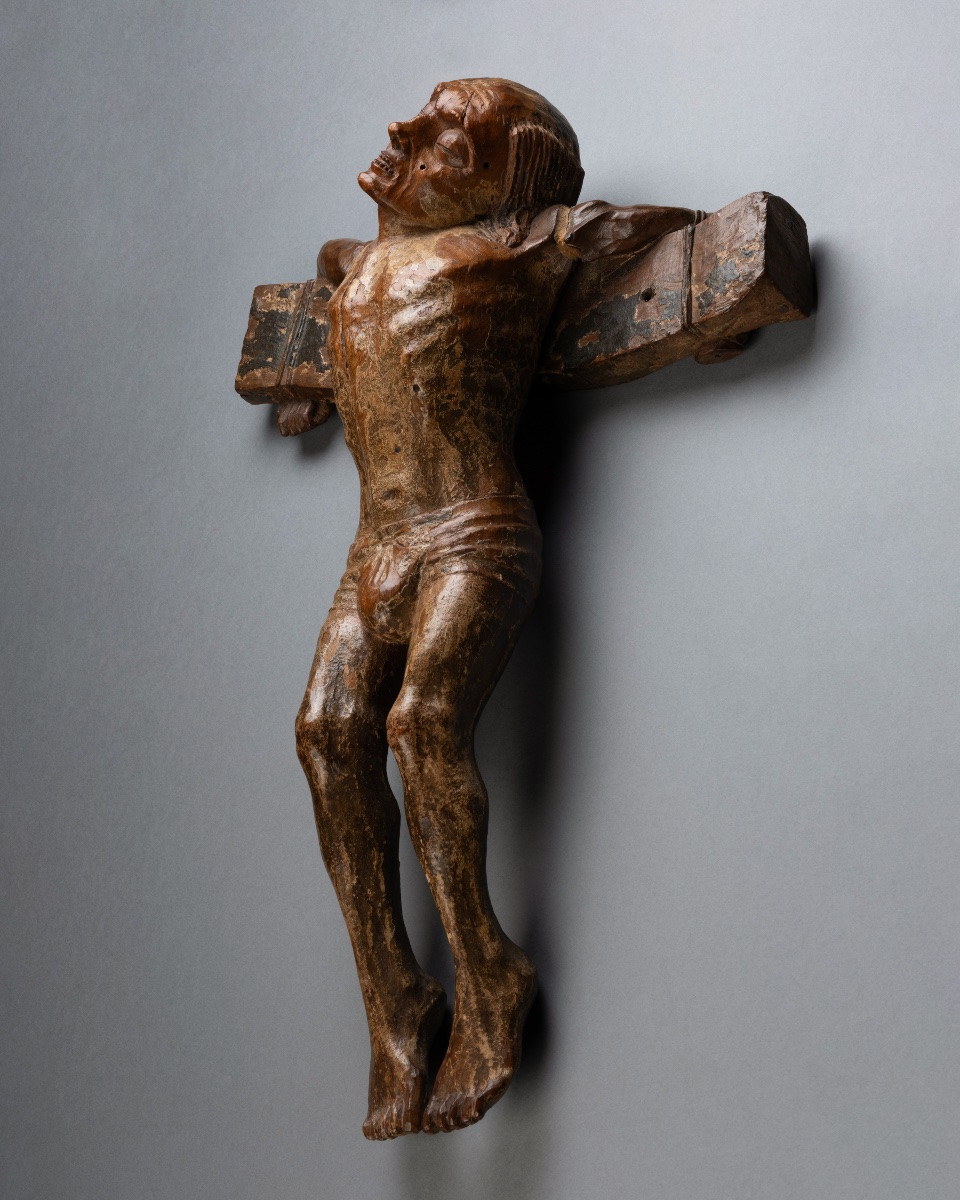
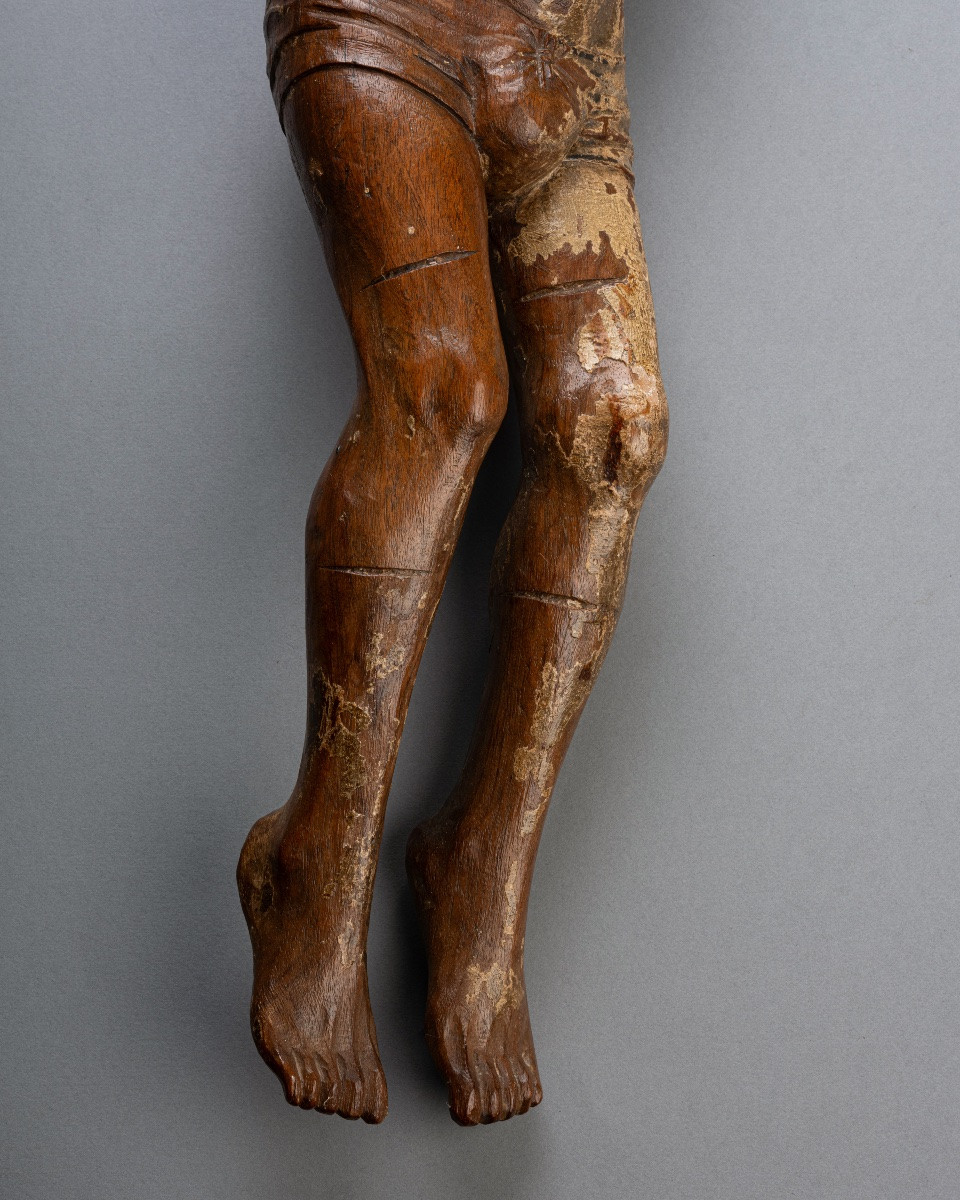
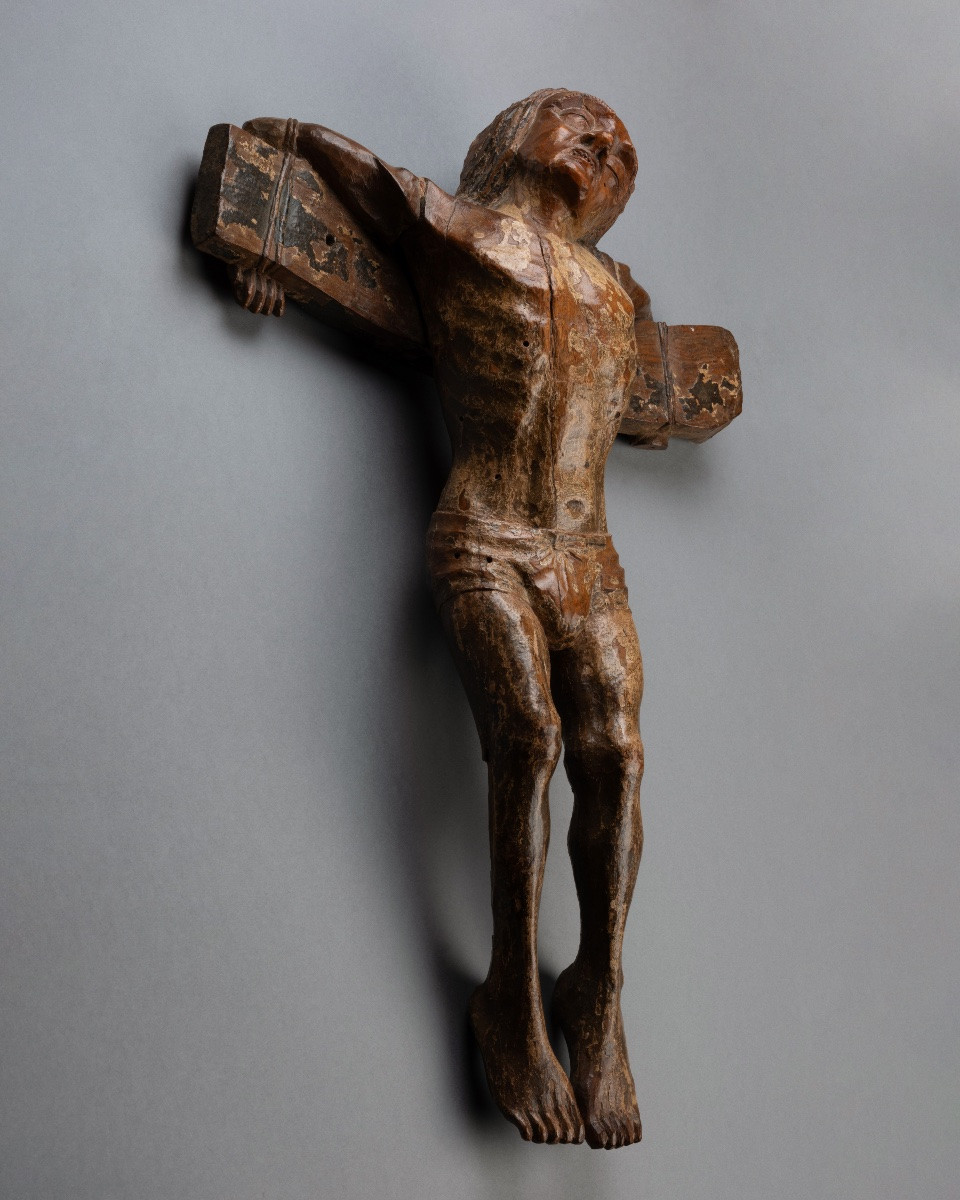
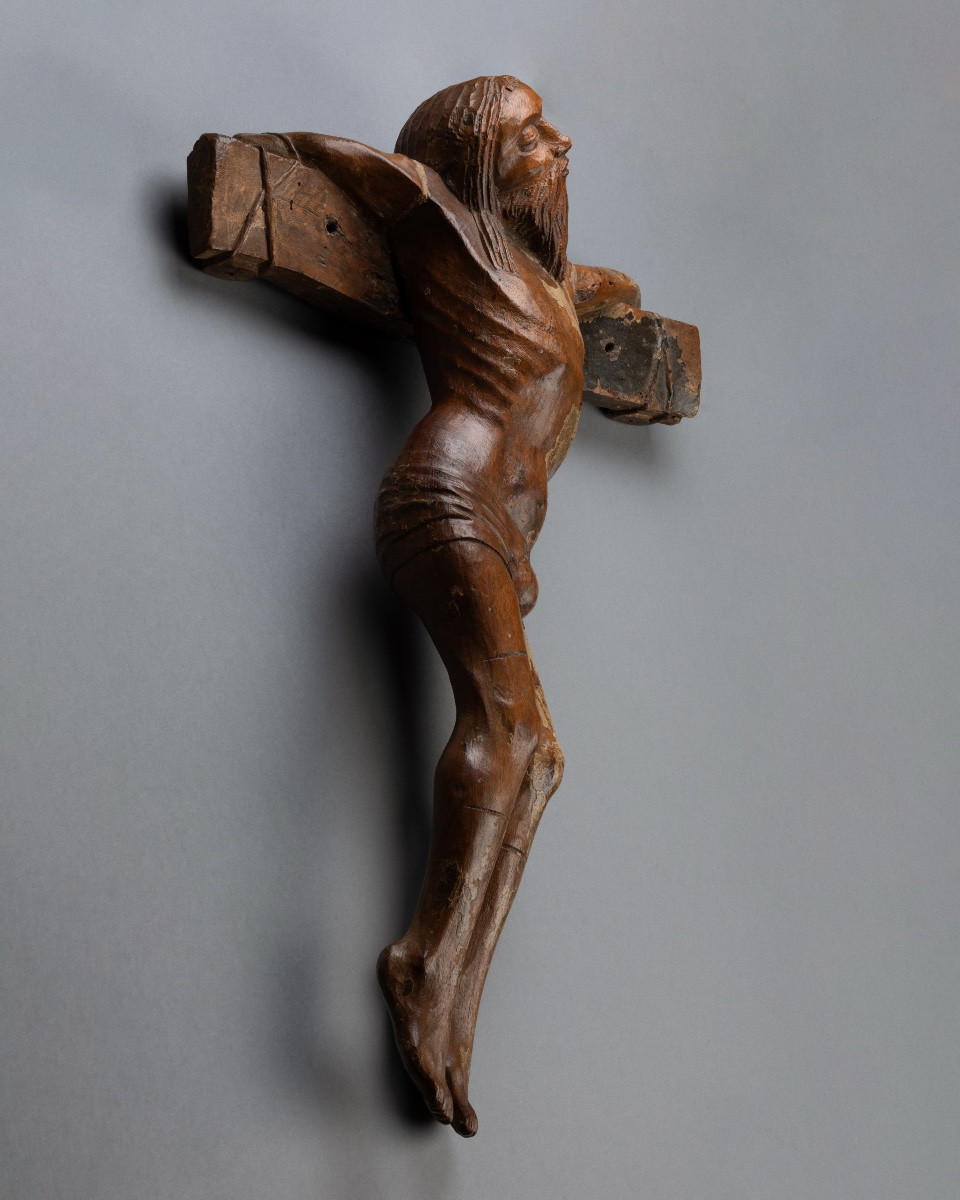
These imposing walnut figures of the Good and the Bad Thief (Dismas and Gestas) once flanked a central Crucifixion in a monumental altarpiece.Their unusual height—significantly exceeding that of standard Antwerp or Brabantine retable figures—suggests a commission of considerable ambition. Executed in high relief, they exemplify the expressive naturalism and technical precision characteristic of Brabantine workshops active in the late fifteenth century.
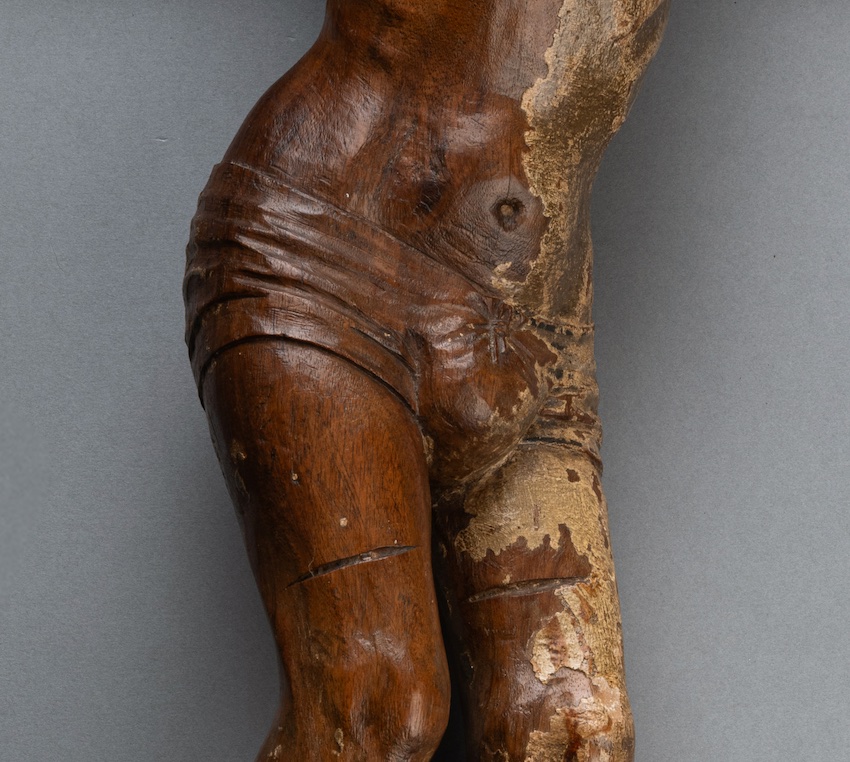
In keeping with established iconography, the thieves are bound to rough tau-shaped trunks (cruces commissae), their arms secured behind the crossbeam. This austere configuration, together with the simply knotted perizonia, underscores the stark devotional tenor of Northern late Gothic imagery.
The figures display marked affinities with Brussels-made Brabantine retables, notably the Retable of the Passion (c. 1470, Musées royaux d’Art et d’Histoire, Brussels). Their angular modelling and emphatic physiognomies align with the broader sculptural idiom of the period and anticipate the heightened emotionalism later associated with early Boschian production.
The early provenance of the pair is distinguished by their inclusion in the renowned collection of Cardinal Joseph Fesch, uncle of Napoleon Bonaparte and one of the major art collectors of the early nineteenth century. Following the dispersal of portions of his vast holdings after his death—while others formed the basis of the Musée Fesch in Ajaccio. The sculptures were later owned by Paolo Candiani, architect and painter, and former President of the Accademia di Belle Arti di Brera, whose discerning Milanese collection reflected a deep engagement with Northern Renaissance sculpture.
They remain significant witnesses to Southern Netherlandish devotional sculpture on the eve of the Renaissance, combining dramatic intensity with the vivid immediacy of late Gothic expression.
Period: 16th century
Style: Renaissance, Louis 13th
Condition: Good condition
Material: Painted wood
Height: 58
Reference (ID): 1716132
Availability: In stock