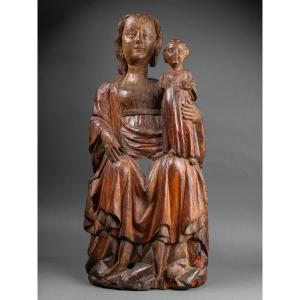


Sedes Sapientiae - Mosan Region, Second Half Of The 13th Century
Virgin and Child (Sedes Sapientiae)
Mosan region, second half of the 13th century
Polychrome wood
73 × 29 × 12 cm
Provenance
Former Belgian private collection
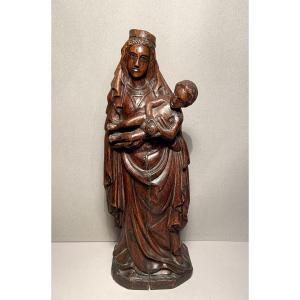
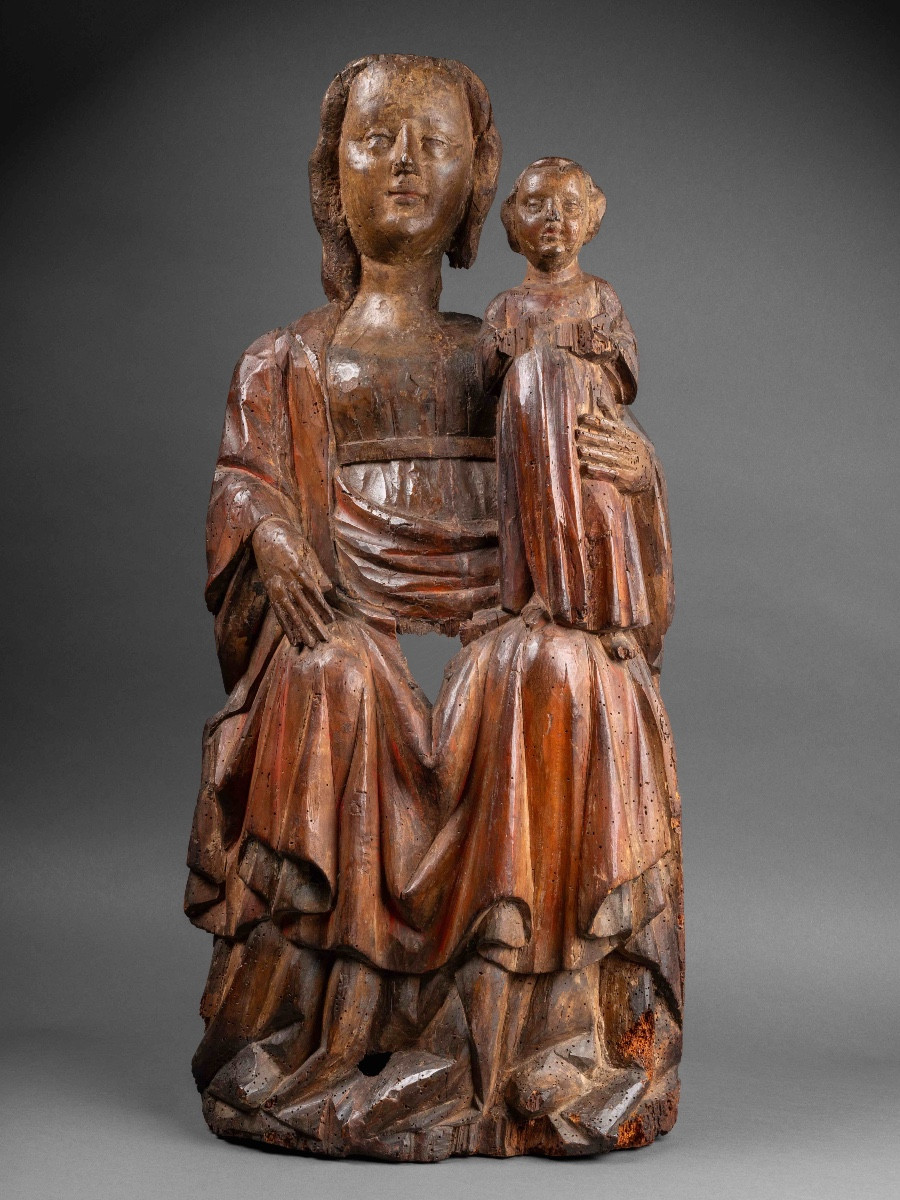
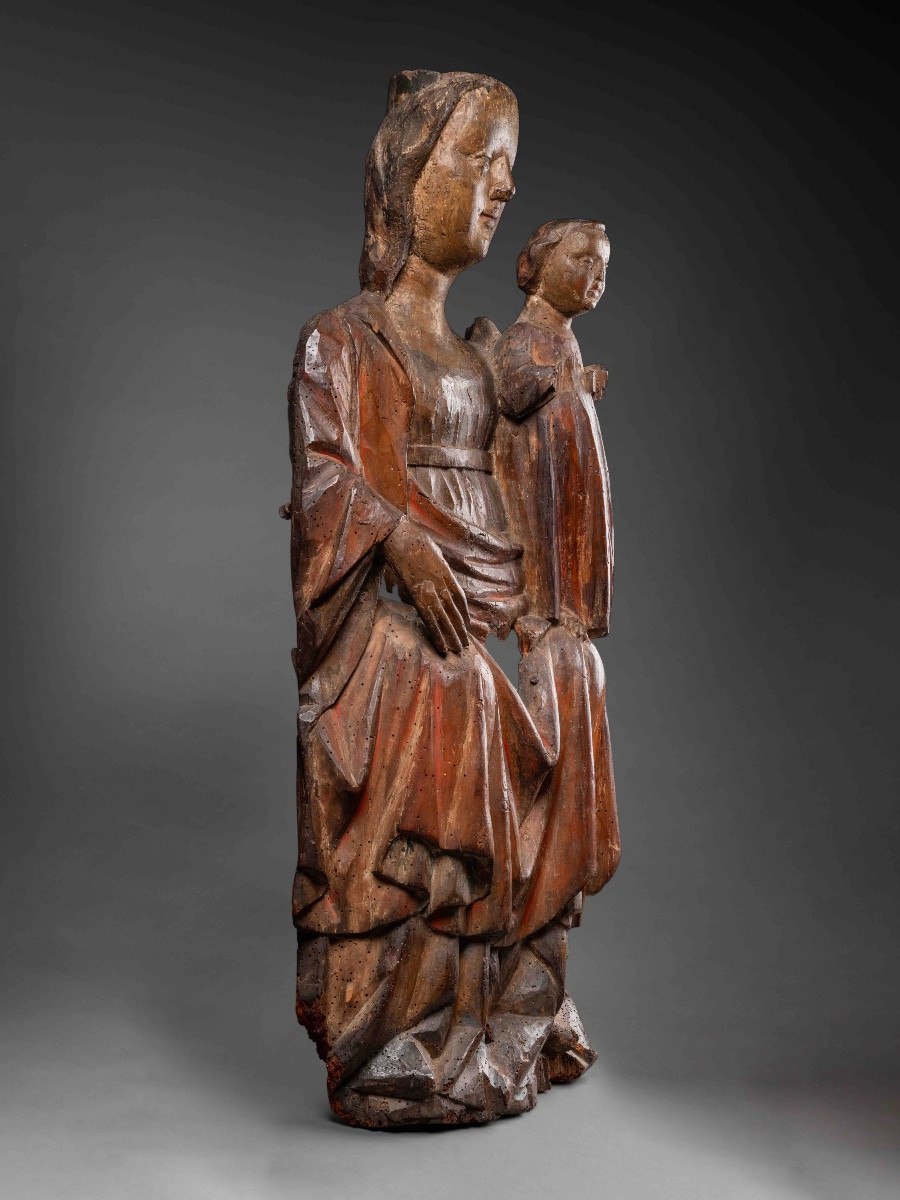
This remarkable sculpture depicts the Enthroned Virgin and Child, the Sedes Sapientiae — the “Seat of Wisdom.” The title refers to Christ as Divine Wisdom incarnate (Logos Incarnatus), made flesh through Mary. As bearer of this incarnate Wisdom, Mary herself becomes the Throne. The theological foundation of this imagery was laid at the Council of Ephesus in 431, when Mary was proclaimed Theotokos, Mother of God.
Central to the Marian devotion of the Romanesque period, the Sedes Sapientiae presents the Virgin in her dual role as Mother of God and Queen of Heaven. Christ is seated upon her knee while she herself is enthroned, embodying both majesty and maternal presence. From the 10th century onwards, this type emerged as one of the principal forms of independent devotional sculpture, distinct from architectural programs. It became one of the most powerful and enduring images of medieval Christianity, mediating between earthly worshippers and the divine realm.
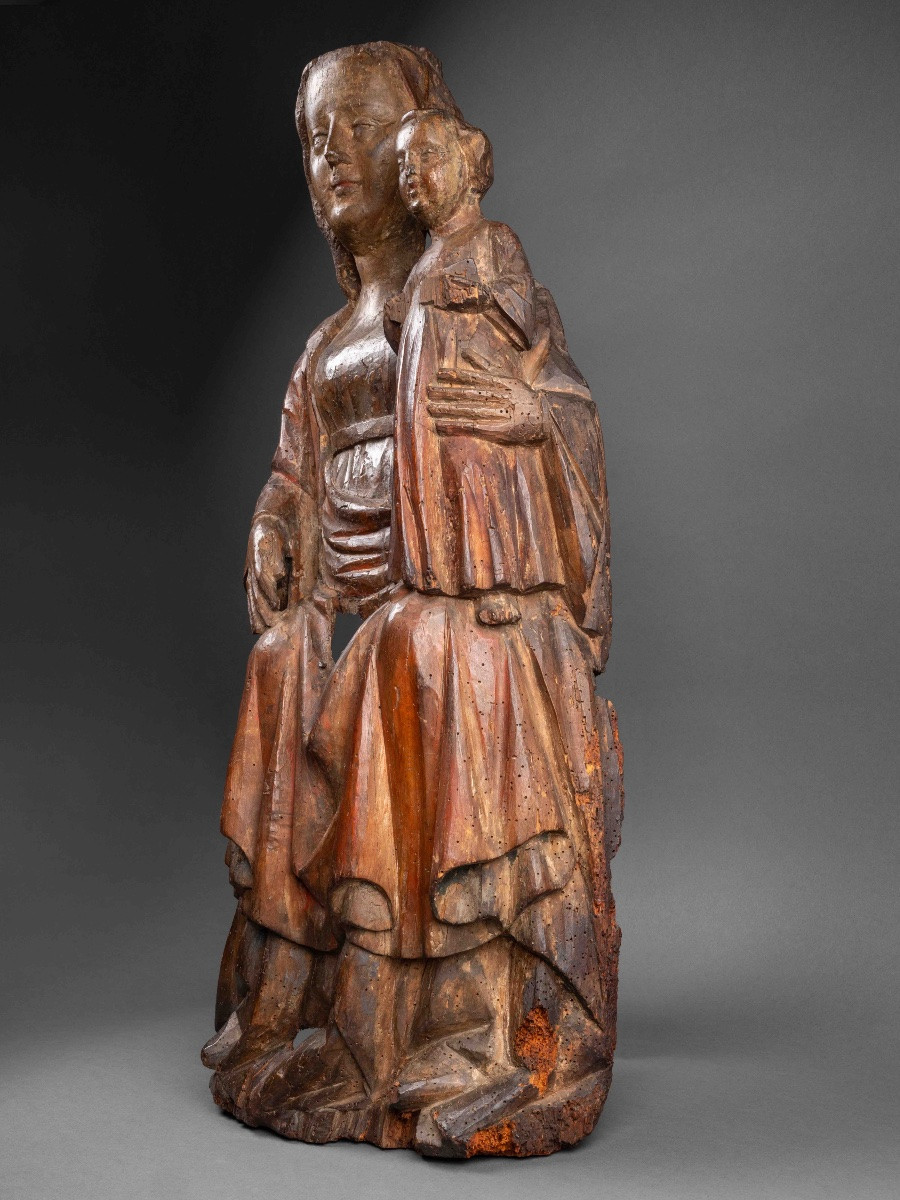
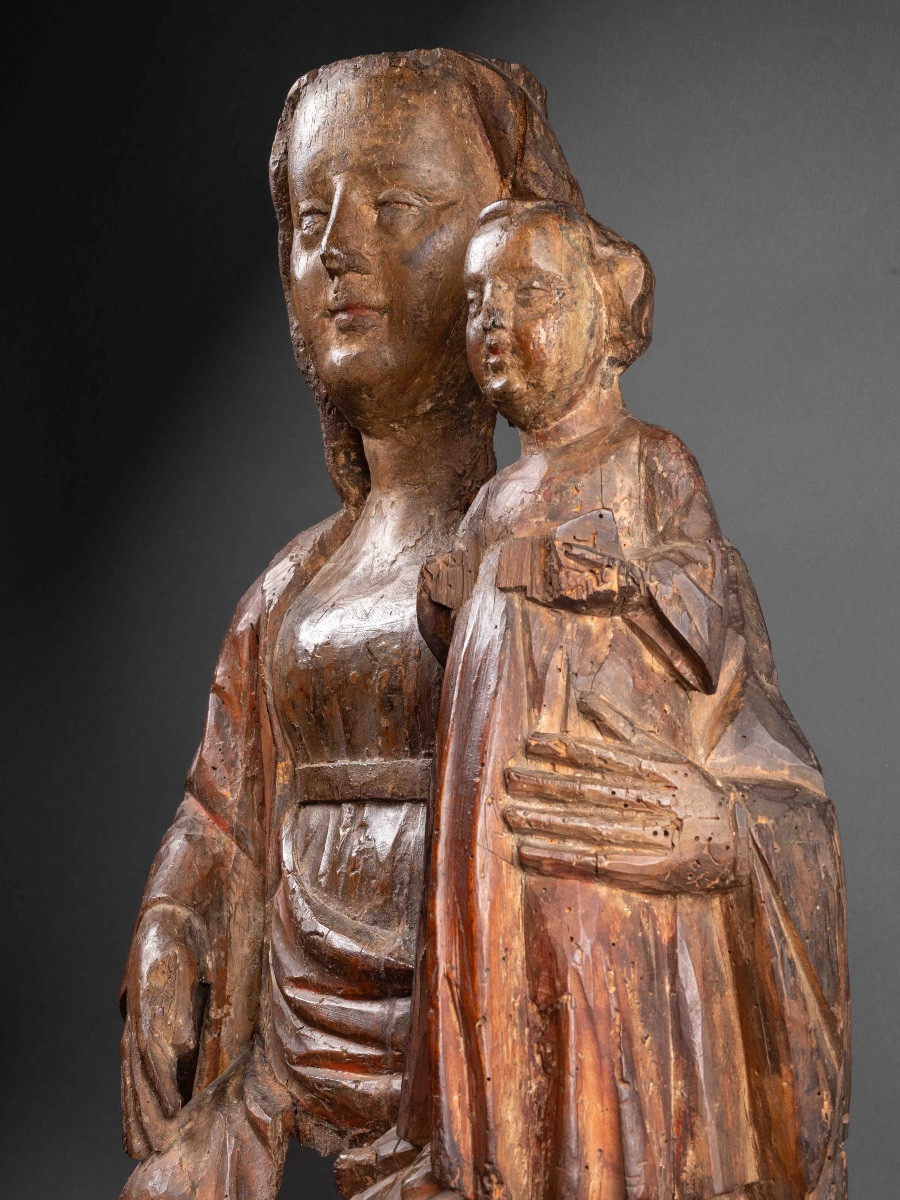
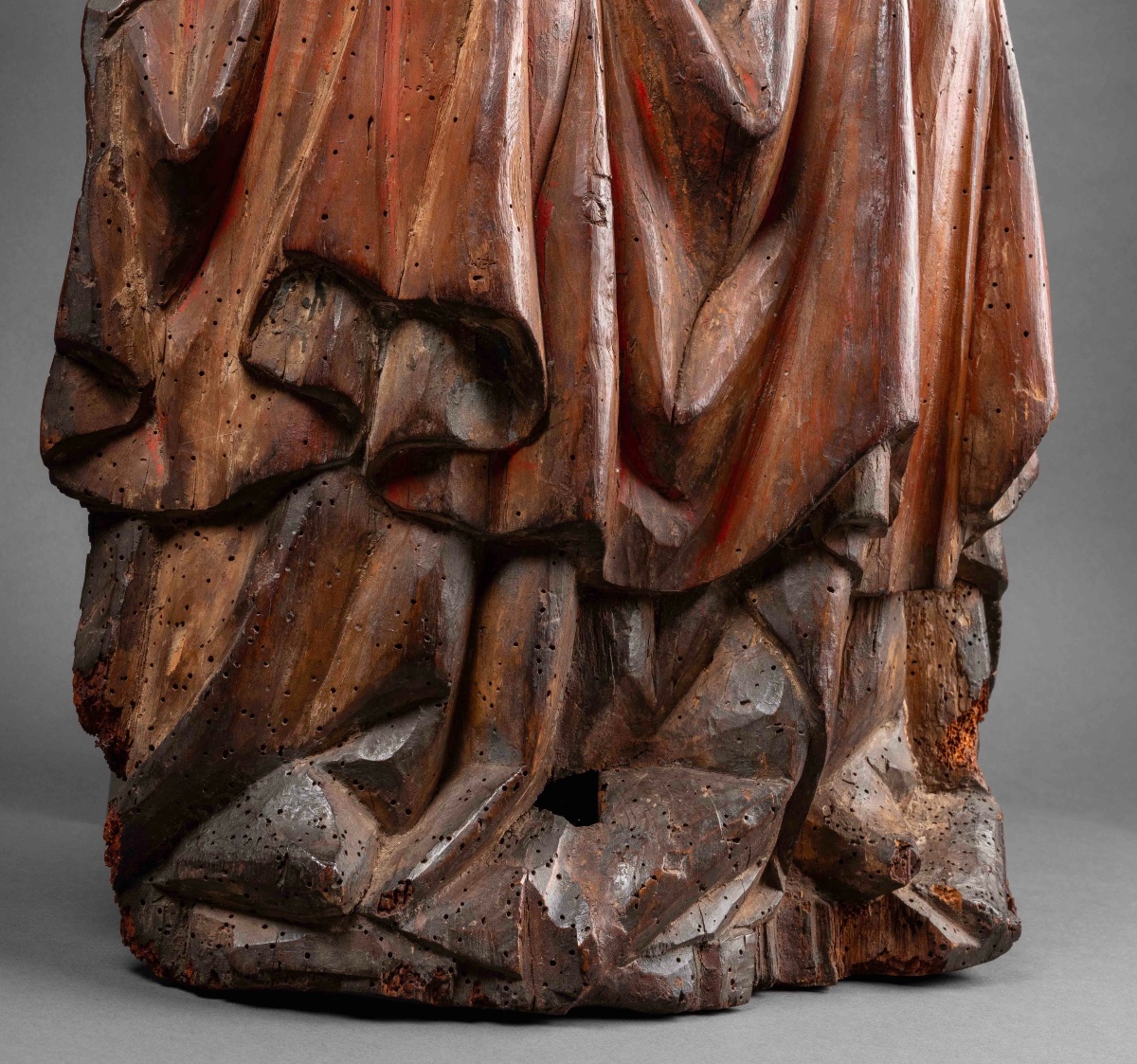
Exquisitely carved, the Virgin sits frontally and hieratically upon her throne, the Christ Child standing upon her left knee. Mary’s elongated face, high forehead, straight nose and almond-shaped eyes are rendered with refined restraint. A faint, enigmatic smile softens her solemnity. She wears a short veil framing her harmonious features, and a long tunic that falls in ample folds, revealing but one delicately carved shoe.
In contrast to the serene composure of the Virgin, the Christ Child conveys a livelier presence, notably through the subtle movement of his feet. His features, resembling those of a diminutive adult, affirm his identity as Divine Wisdom in human form.
While the composition retains the formal rigidity characteristic of Romanesque sculpture, it is enlivened by the elegant flow of the drapery and the expressive quality of the faces. The heavy, deeply carved folds envelop and articulate the bodies with convincing naturalism. The almond-shaped eyes, straight nose, restrained smiles, and the sculptural treatment of the drapery firmly situate the work within the refined corpus of Mosan Sedes Sapientiae produced in present-day Belgium in the later 13th century.
Two principal centres fostered the development of this iconography: the South-Eastern French and Pyrenean regions — exemplified by the now-lost Madonna of Clermont-Ferrand (c. 946) — and the Rhine-Meuse (Mosan) region, whose early masterpiece is the Golden Madonna of Essen (c. 973–1050).
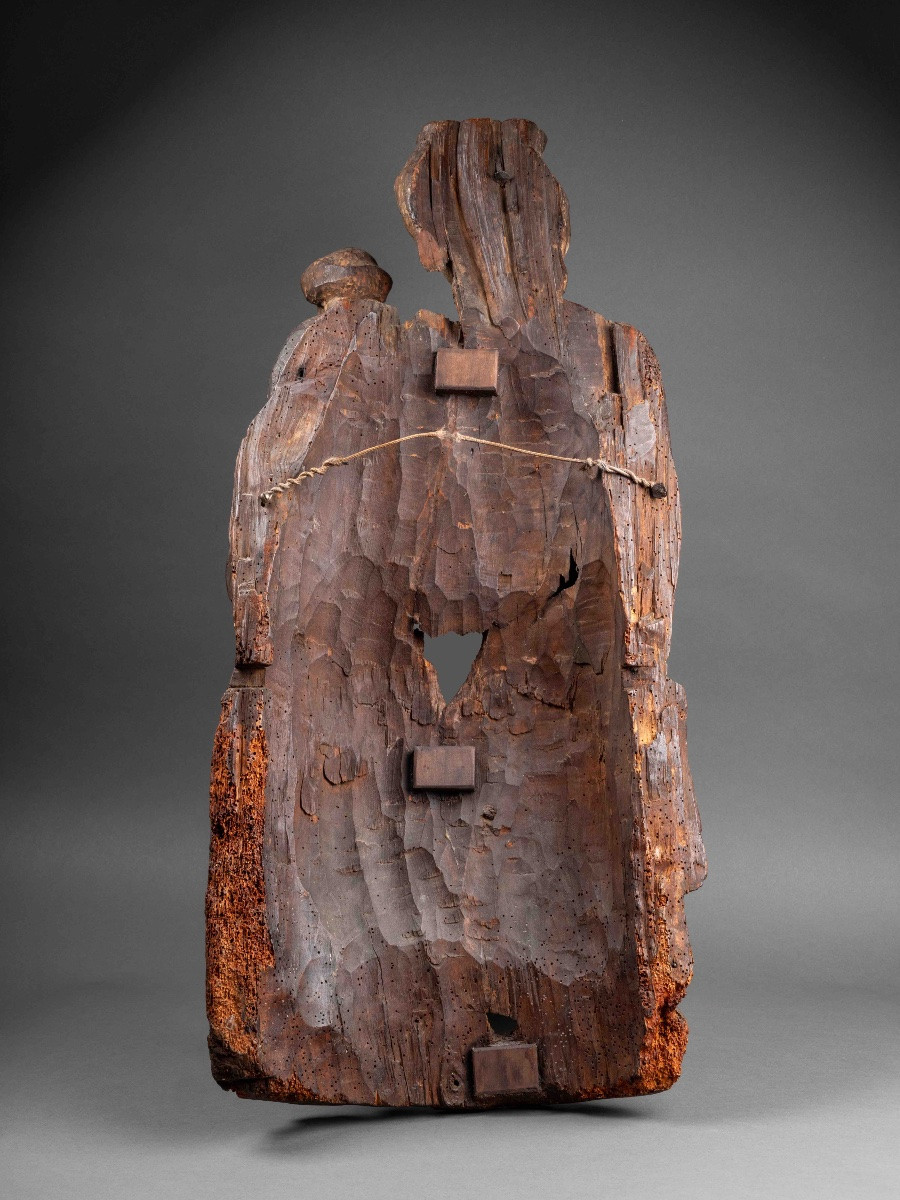
This sculpture stands out for its relative naturalism and humanised expression, as well as for the rare survival of traces of its original polychromy. Romanesque wooden sculptures of the 13th century are scarce, particularly in comparison with the more numerous later Gothic examples. This refined and moving representation is therefore of exceptional rarity and quality.
Period: Before 16th century
Style: Renaissance, Louis 13th
Condition: Good condition
Material: Painted wood
Width: 29
Height: 73
Depth: 12
Reference (ID): 1709143
Availability: In stock