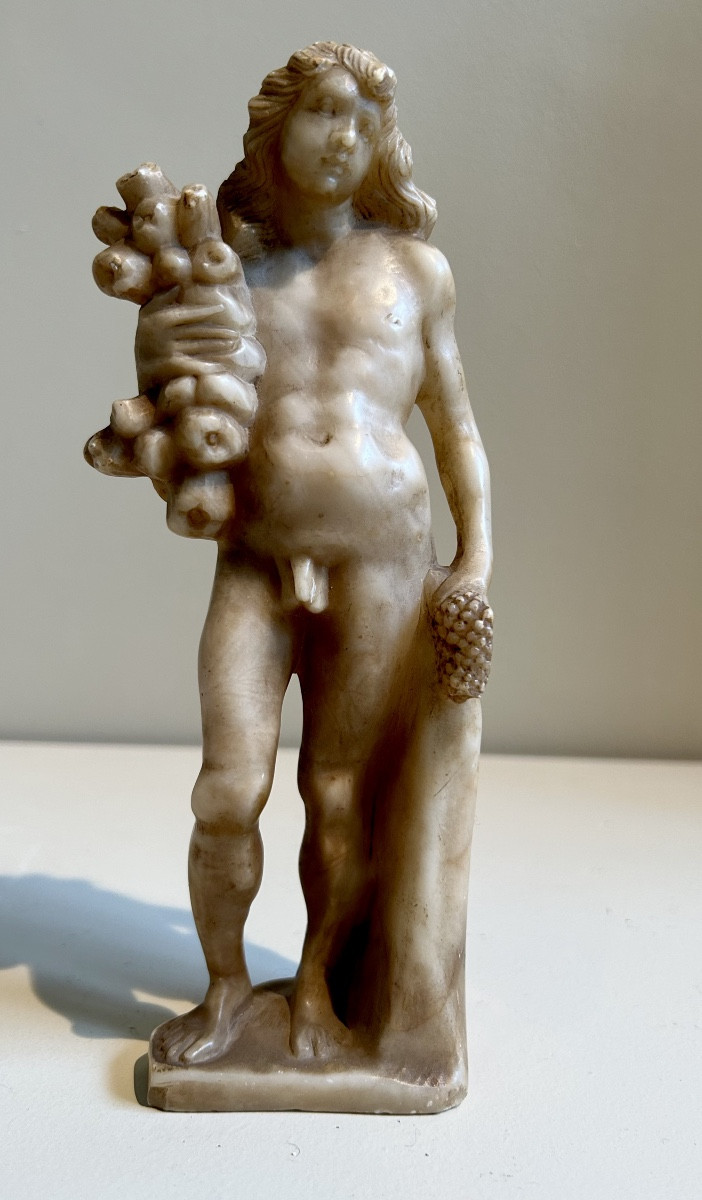
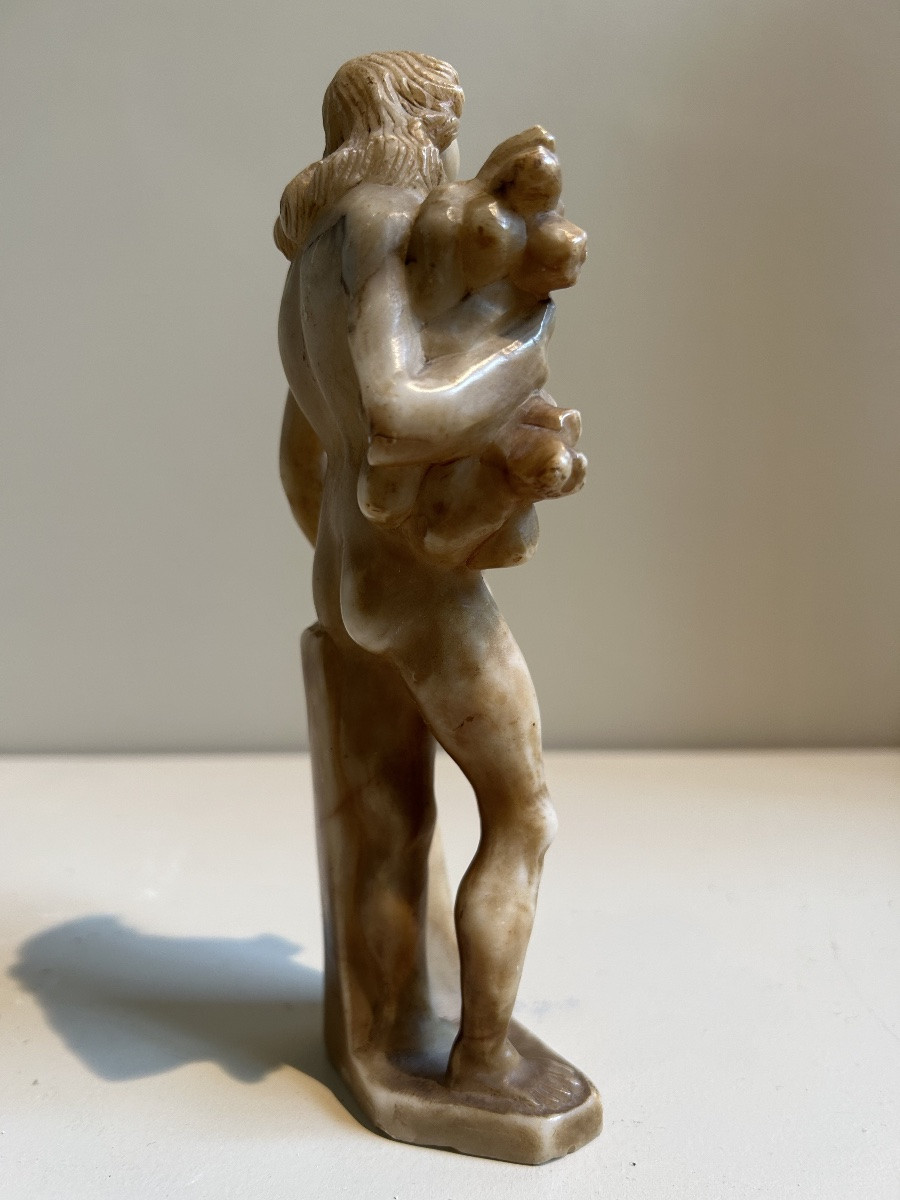
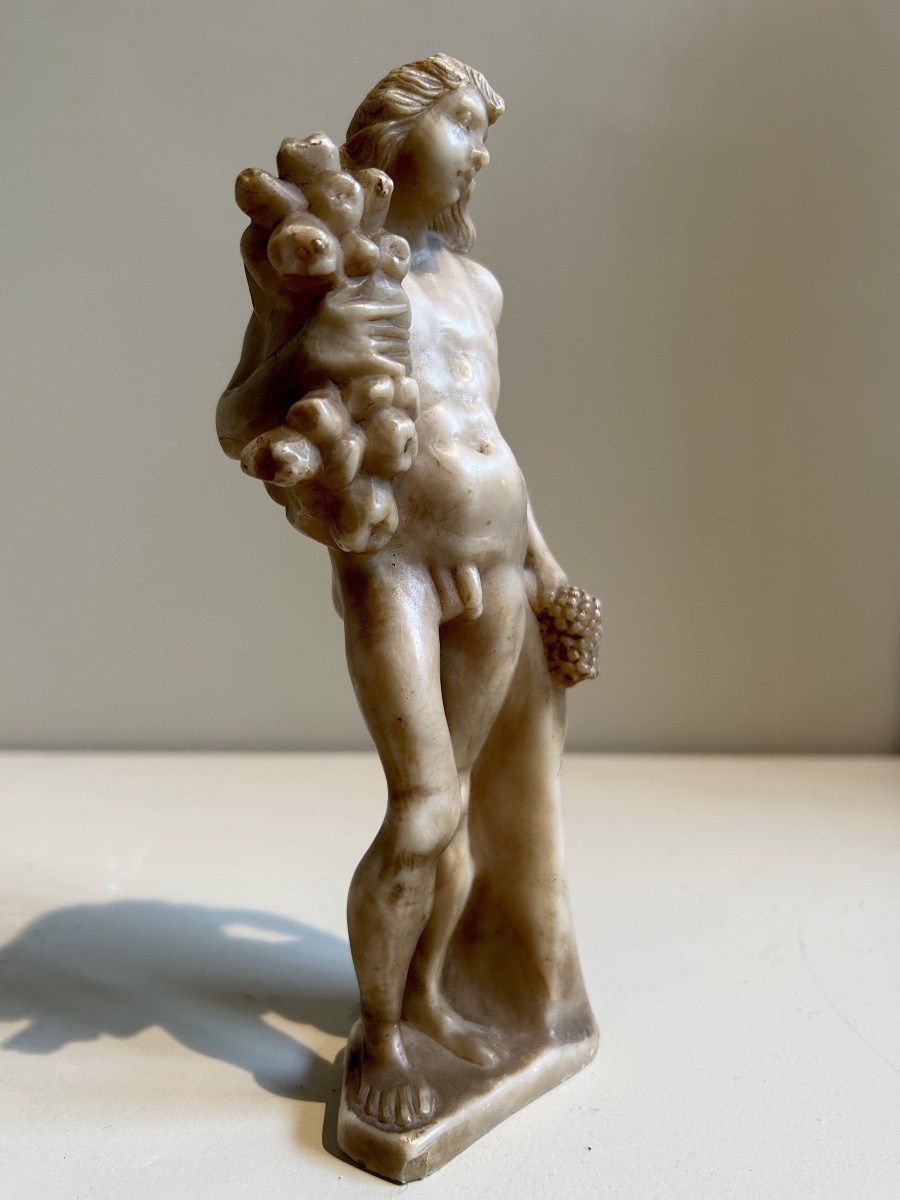
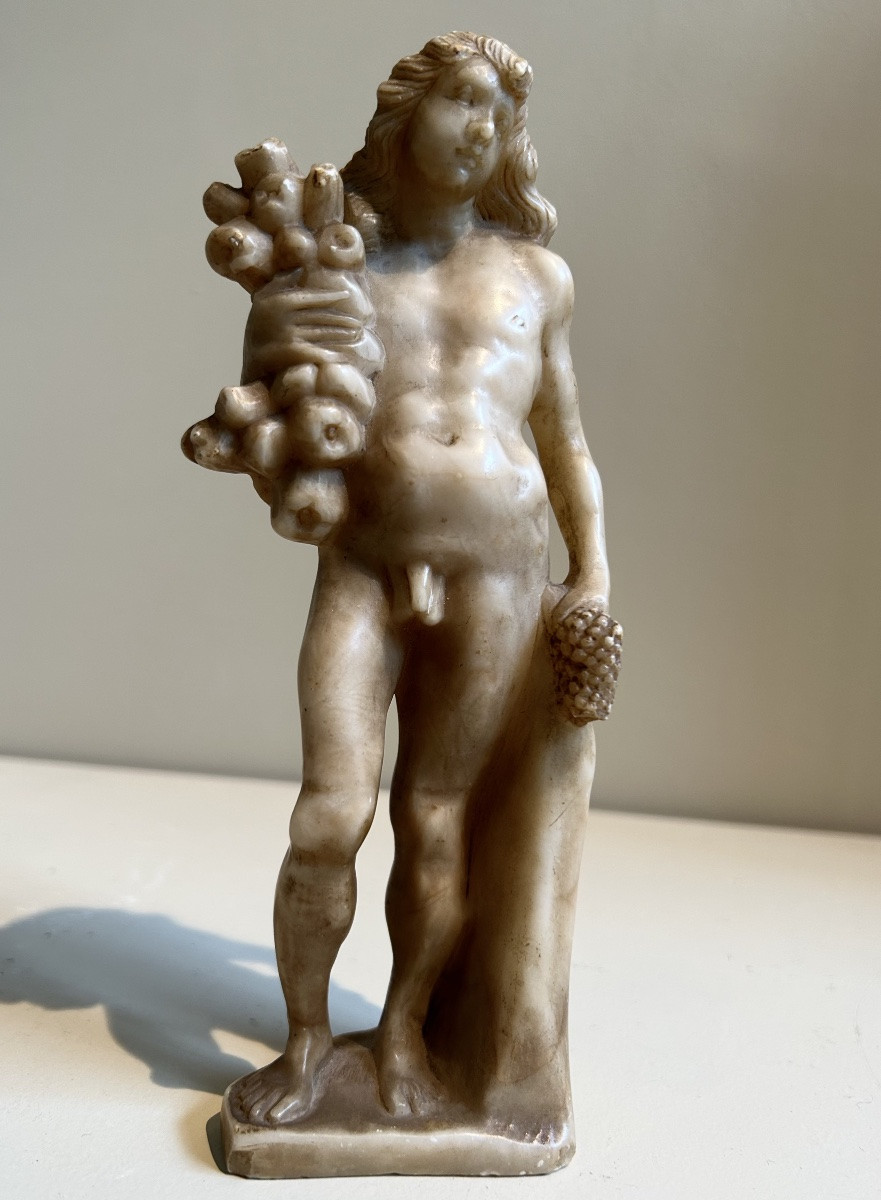

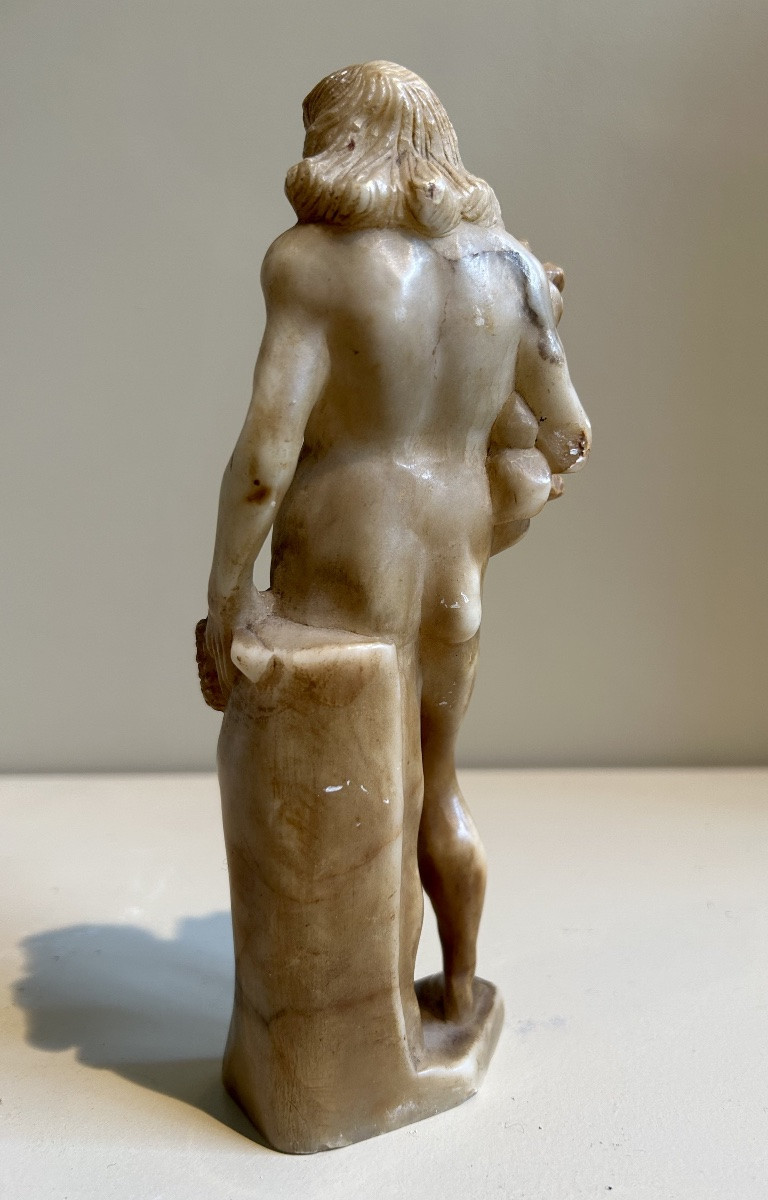


Bacchus - Southern Italy, 17th Century
Bacchus
Southern Italy, late 17th century
Alabaster Sculpture
H: 20 cm
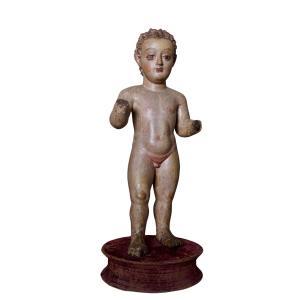
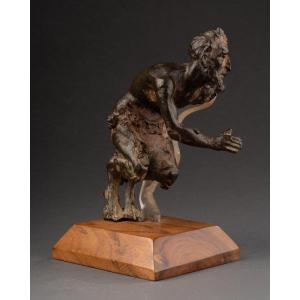
A finely carved 17th-century alabaster sculpture of a naked Bacchus, god of wine and the vine, but also the god of festivities, dance, nature, pleasure, and abundance.
Alabaster, a soft and translucent stone, was highly prized by 17th-century Sicilian sculptors for its ability to mimic the softness of human skin and for the way it captured light. This made it particularly suitable for the creation of detailed figurative works, such as this statuette of Bacchus, but also saints, and other mythological or religious figures that were common subjects during this era.
The process of carving alabaster required skilled craftsmanship, as the stone was soft enough to be intricately carved but could also break or fracture if handled improperly. Sicilian artists, often trained in both local traditions and the broader European Renaissance influences, excelled in producing finely detailed works that highlighted their technical ability.
This statuette was probably brought back after a long journey across Europe. Known as "The Grand Tour," this journey was undertaken by many artists and aristocrats, who sought to immerse themselves in the study of the arts and classical culture.
Period: 17th century
Style: Renaissance, Louis 13th
Condition: Excellent condition
Material: Alabaster
Height: 20
Reference (ID): 1631870
Availability: In stock