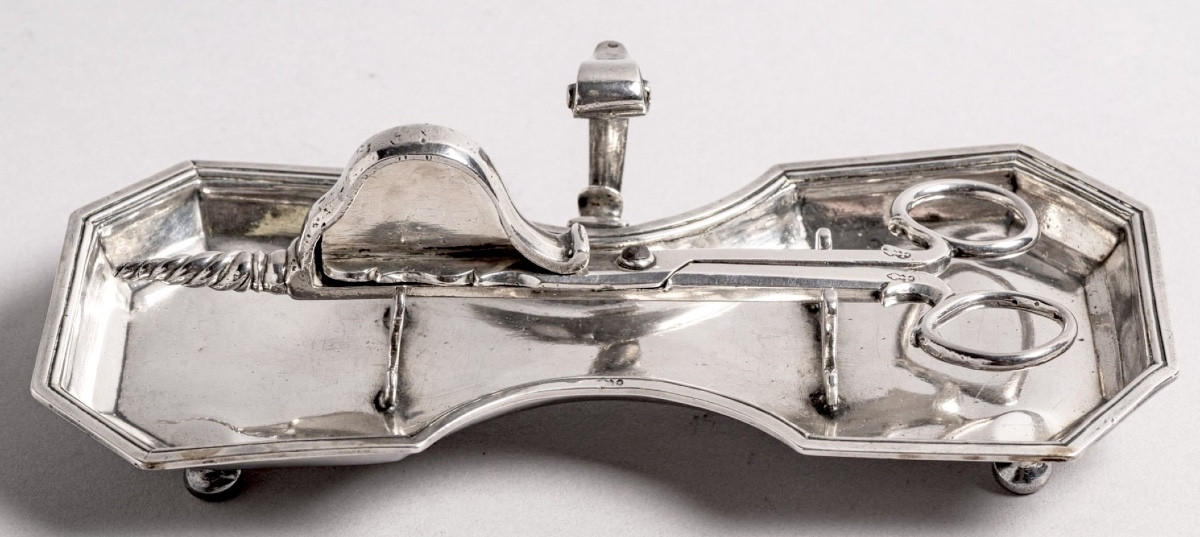
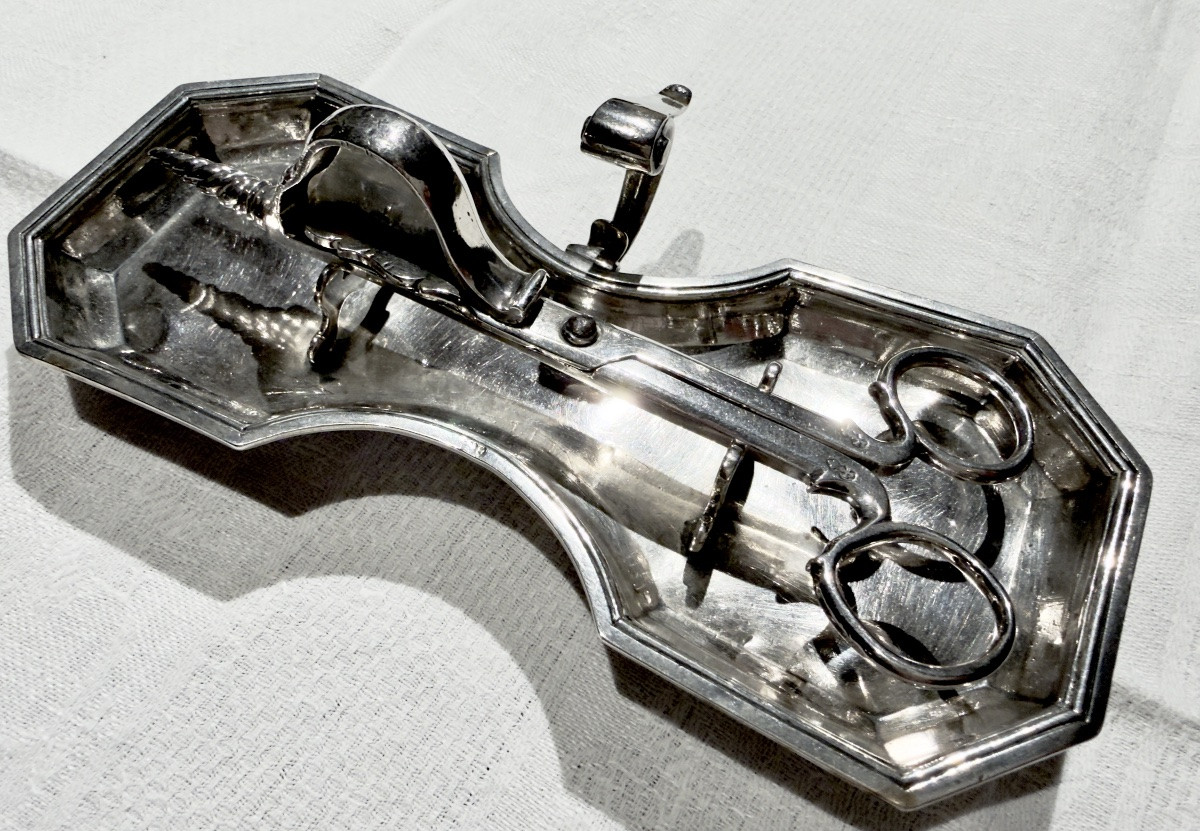
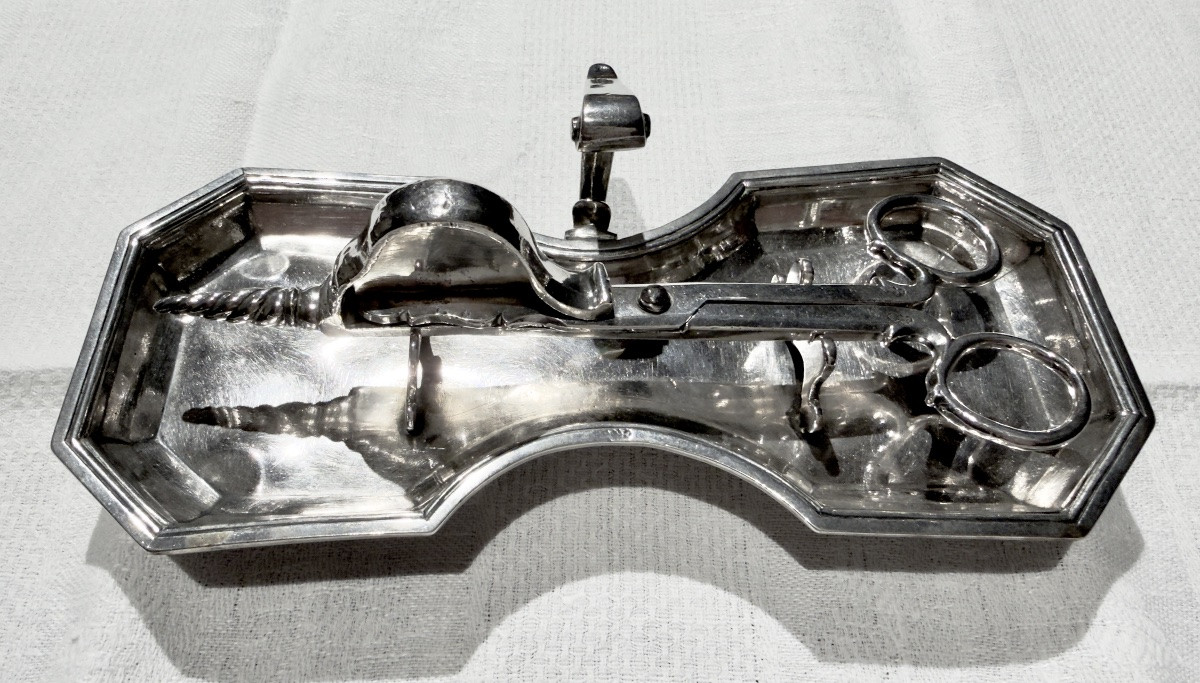
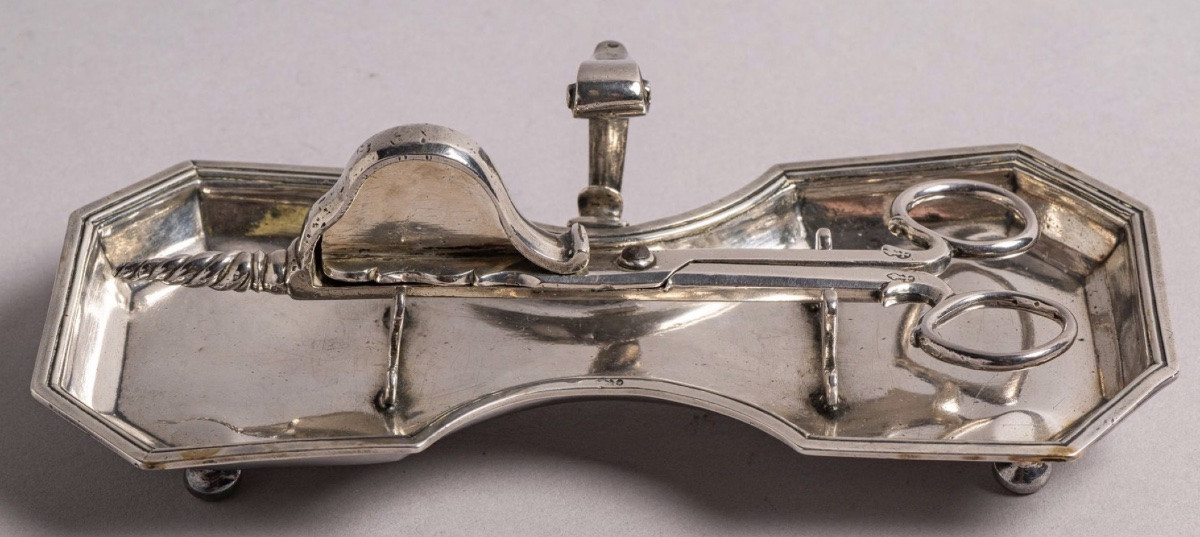


Toulouse 1714, Barthelemy Capdeville , Pair Of Snuffers With Their Original Tray, Silver
Artist: Barthelemy Capdeville , Maître En 1703
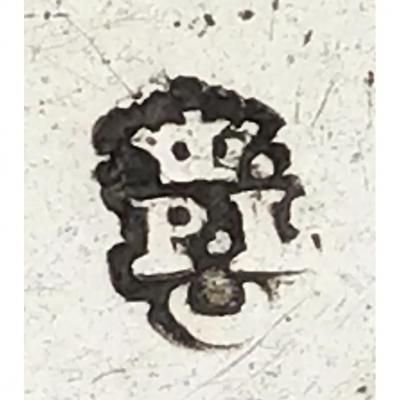
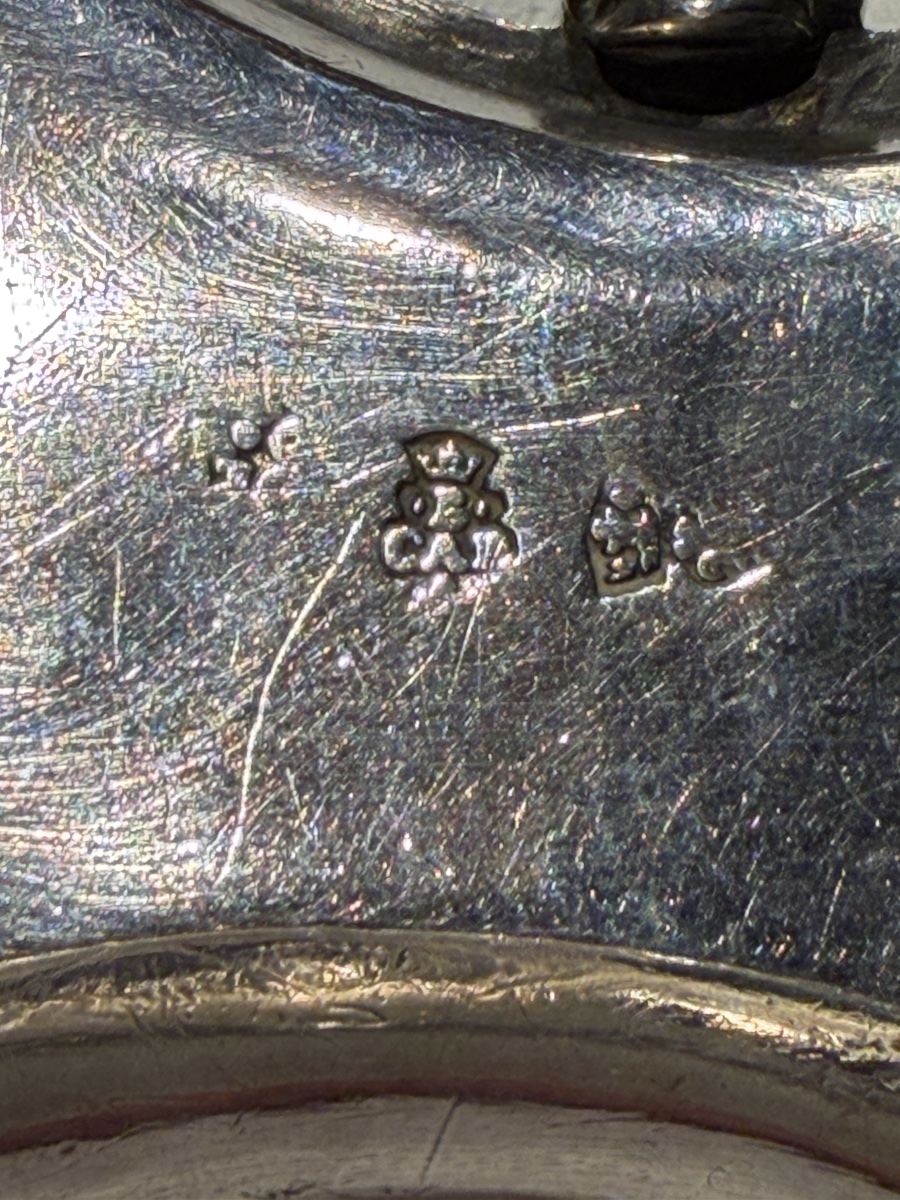
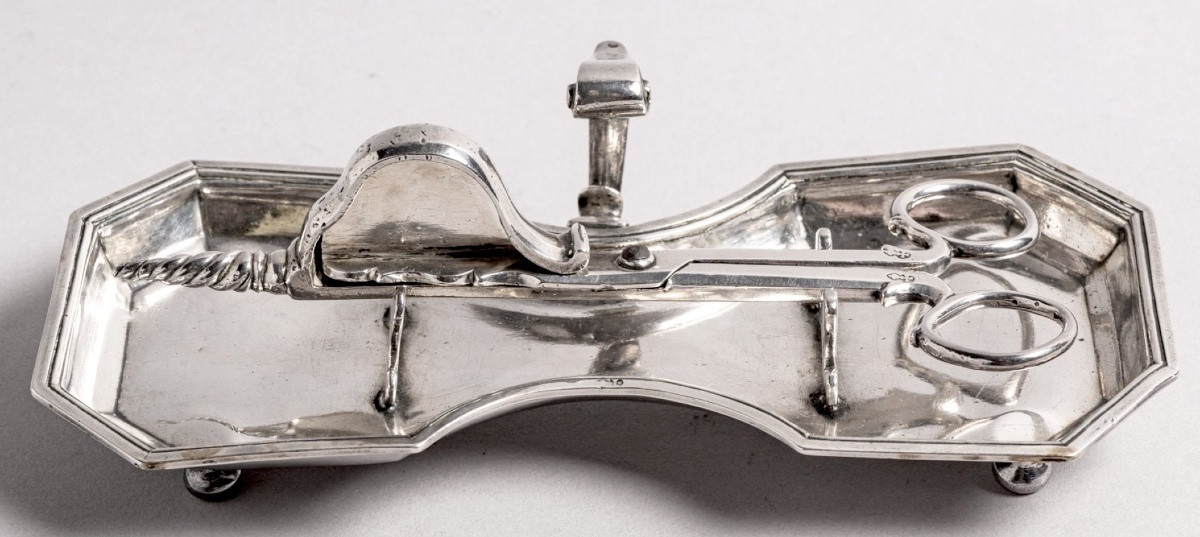
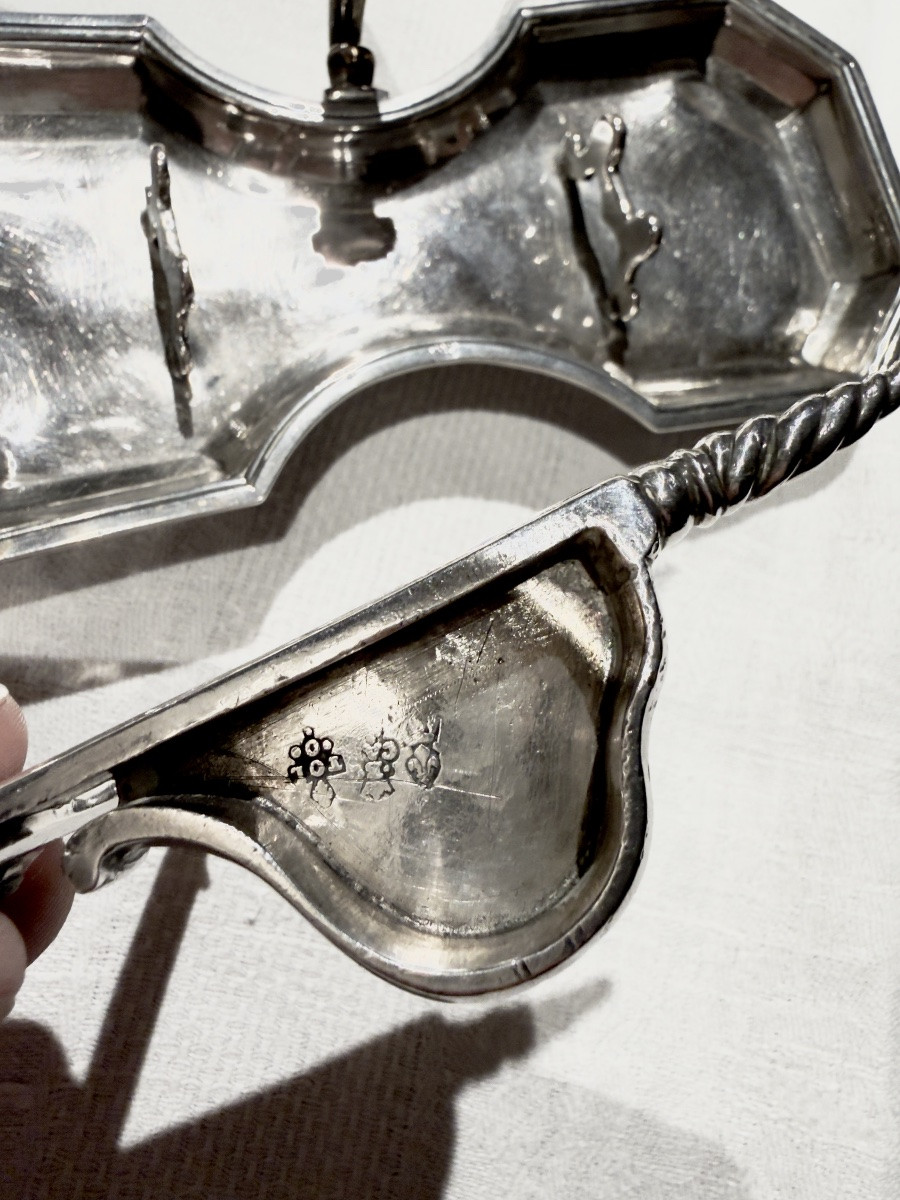
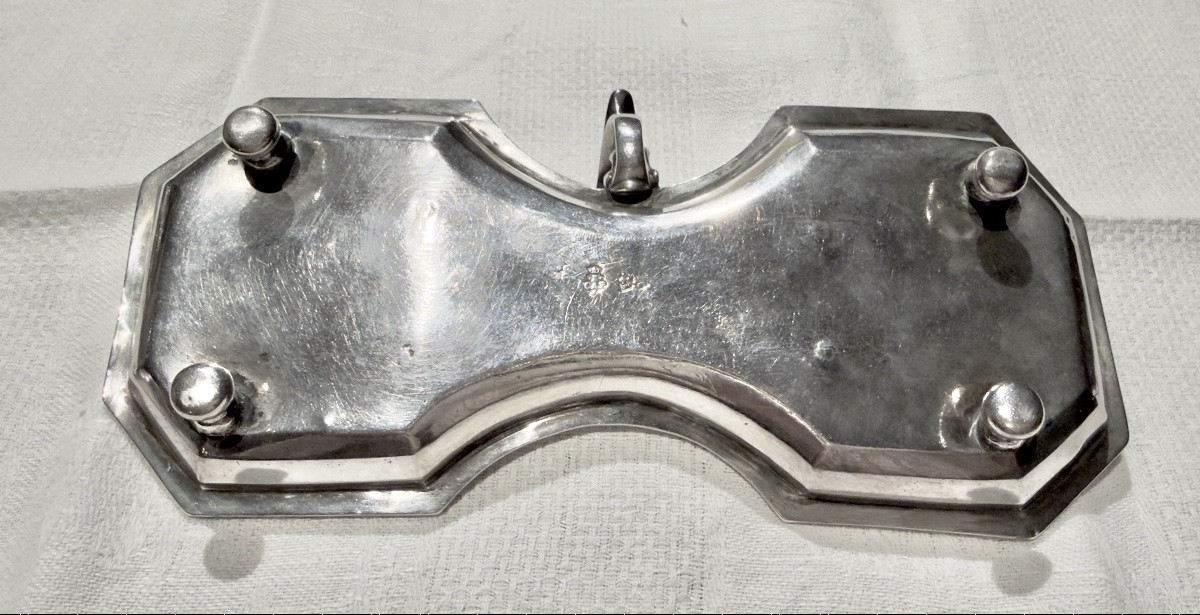
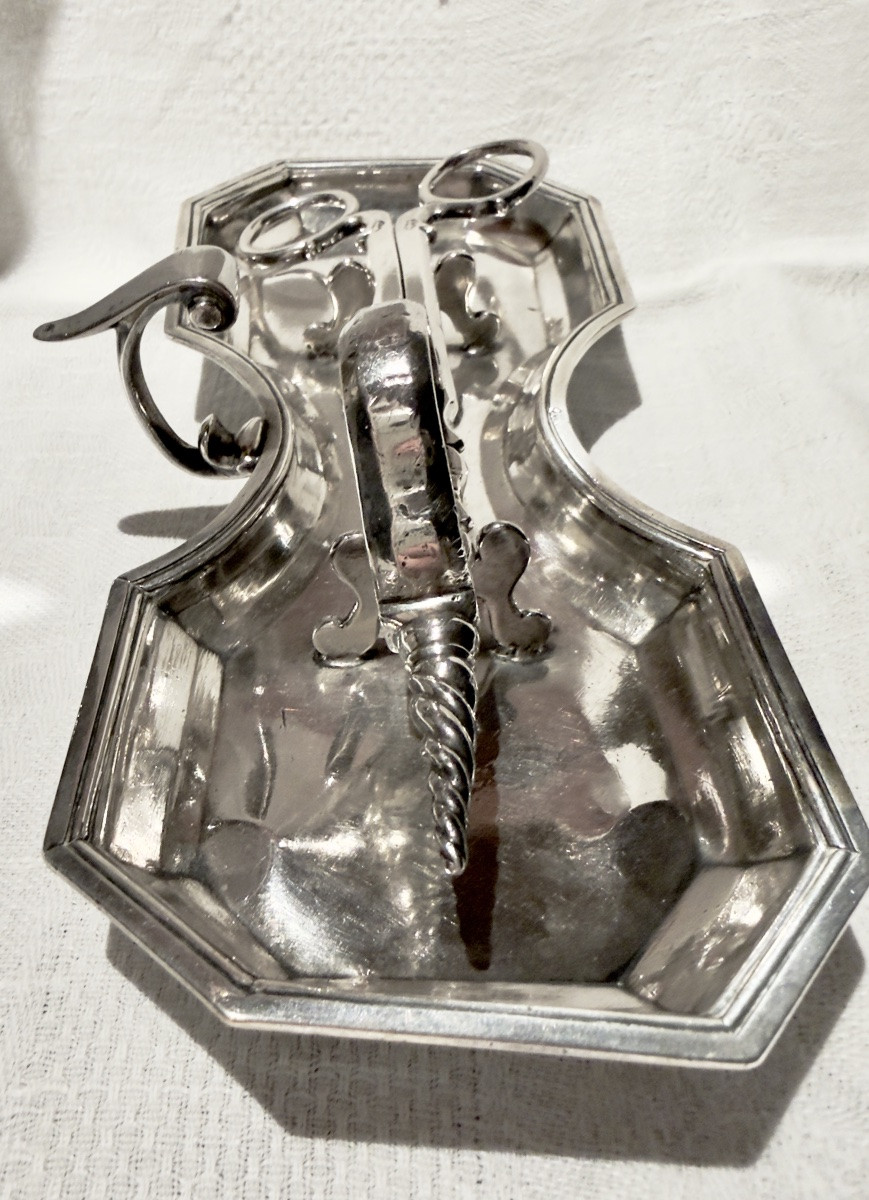
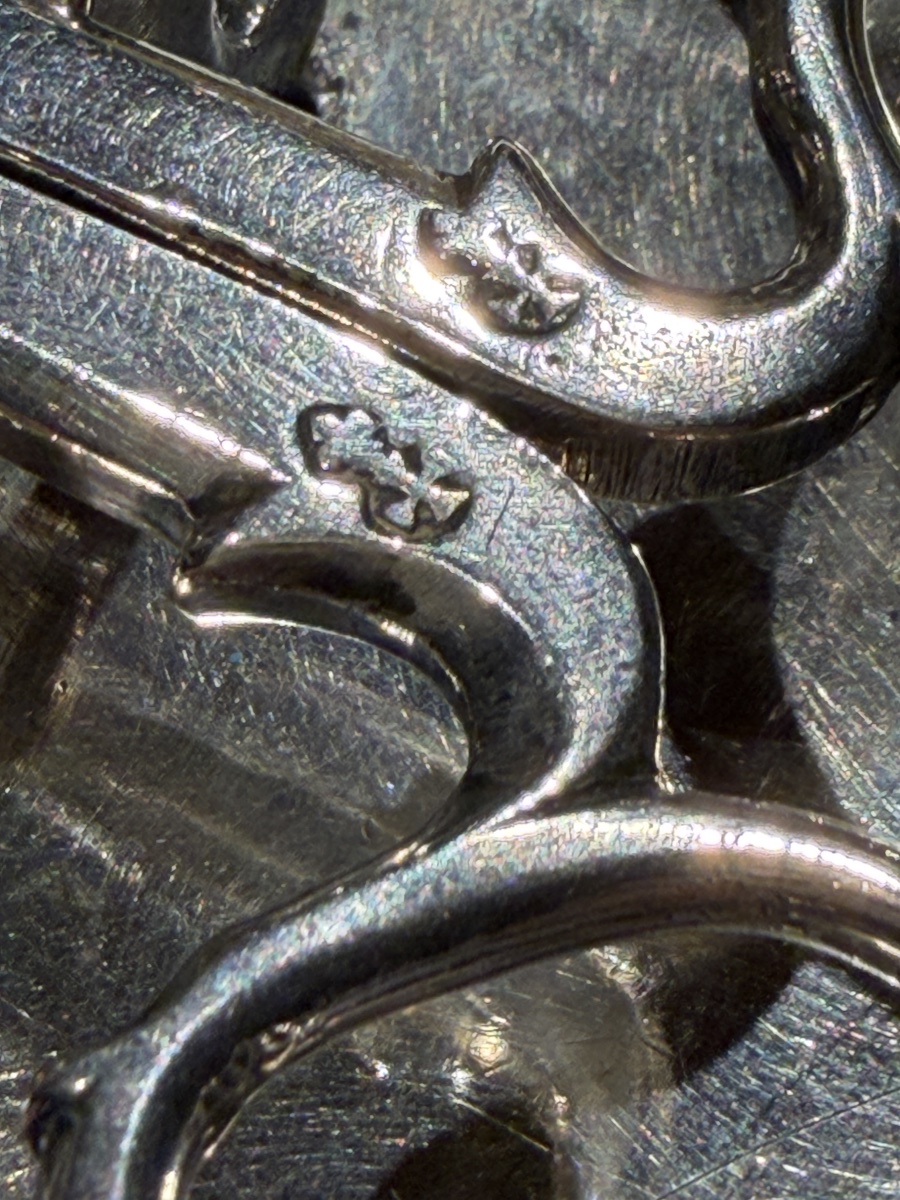
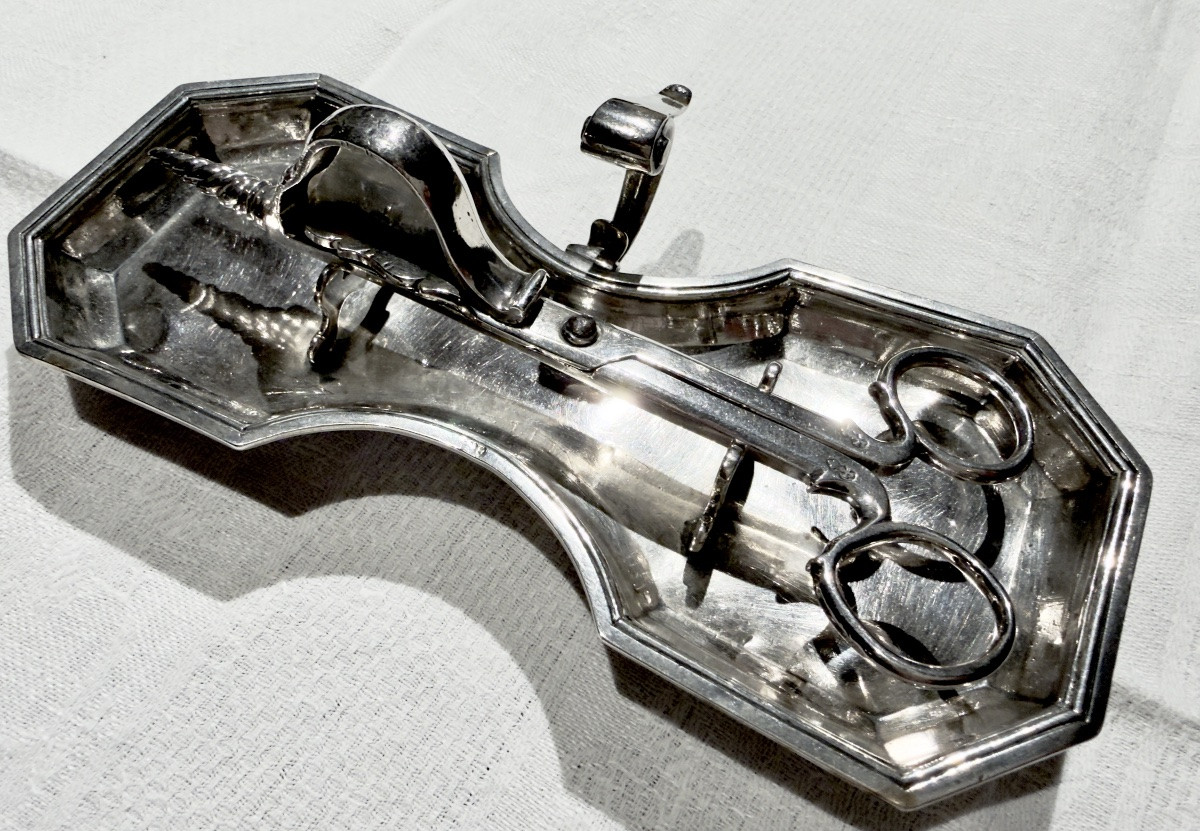
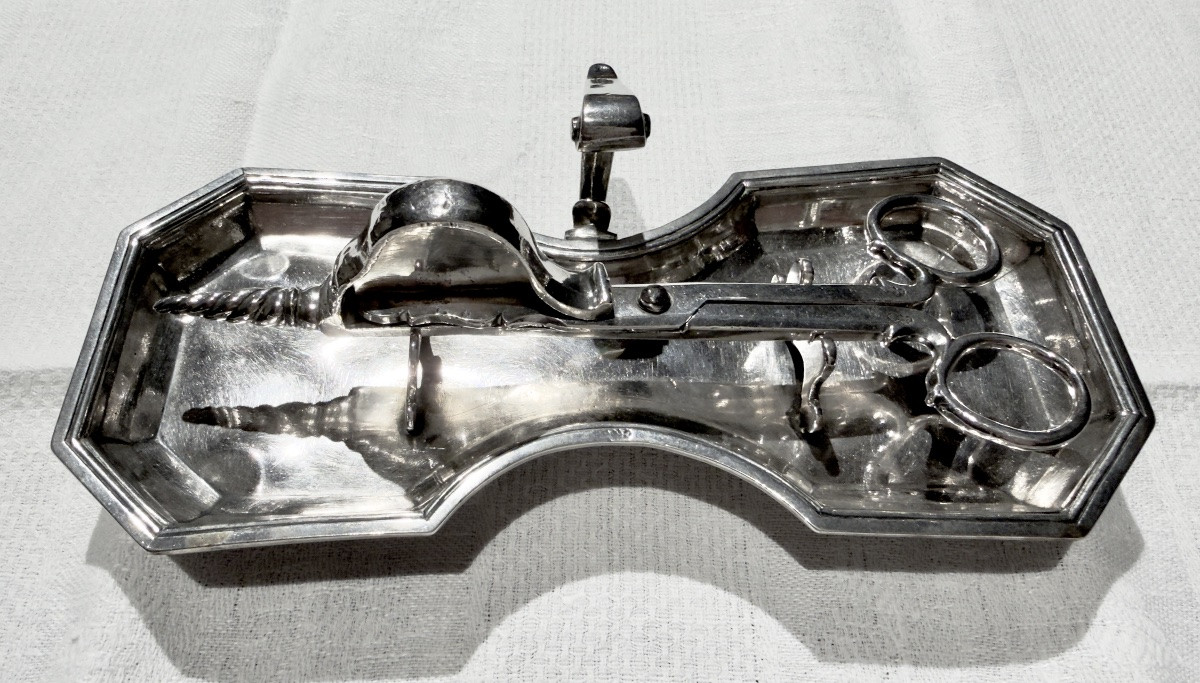
Extremely rare pair of Louis XIV period mouchettes or snuffers with their original tombeau or tray. Both objects perfectly hallmarked Toulouse 1714, master goldsmith hallmark of Barthélémy Capdeville. In impeccable condition. A few dozen generations of owners have all had the good sense not to separate them, which is a small miracle when you think about it...
Flechettes or pairs of mouchettes are an object from yesterday's time, but one that has its enthusiasts today.
From a popular instrument in the 14th century, the flyspeck was transformed from the 17th century onwards into a goldsmith's piece of the finest effect.
A little explanation is in order: unlike the candle, made of beeswax and very expensive, the candle was more democratic in price, as it was commonly made from a wick of hemp and tallow, a pasty substance composed of animal fat whose combustion generated a beautiful clarity, but also a malodorous black smoke.
As a result, the lumignon or "moucheron" - the end of the wick - had to be removed regularly, so that the flame regained its intensity and the tallow didn't drip.
A technique that necessitated the invention of a dedicated pair of scissors, made of metal and later silver by Europe's greatest master silversmiths.
By 1840, with the advent of braided wicks, the object disappeared from interiors.
Mouchettes and tombeaux together weigh 240 grams.
Flechettes or pairs of mouchettes are an object from yesterday's time, but one that has its enthusiasts today.
From a popular instrument in the 14th century, the flyspeck was transformed from the 17th century onwards into a goldsmith's piece of the finest effect.
A little explanation is in order: unlike the candle, made of beeswax and very expensive, the candle was more democratic in price, as it was commonly made from a wick of hemp and tallow, a pasty substance composed of animal fat whose combustion generated a beautiful clarity, but also a malodorous black smoke.
As a result, the lumignon or "moucheron" - the end of the wick - had to be removed regularly, so that the flame regained its intensity and the tallow didn't drip.
A technique that necessitated the invention of a dedicated pair of scissors, made of metal and later silver by Europe's greatest master silversmiths.
By 1840, with the advent of braided wicks, the object disappeared from interiors.
Mouchettes and tombeaux together weigh 240 grams.
5 500 €
Period: 18th century
Style: Louis 14th, Regency
Condition: Excellent condition
Material: Sterling silver
Length: plateau 19,3 cm
Width: plateau 8,3 cm
Reference (ID): 1750840
Availability: In stock
Print