



Flemish History Of Ulysses Tapestry, Last Quarter Of 17th Century
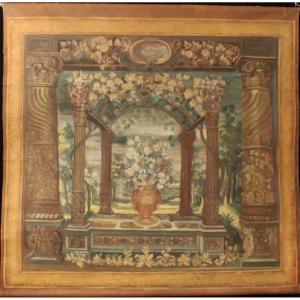
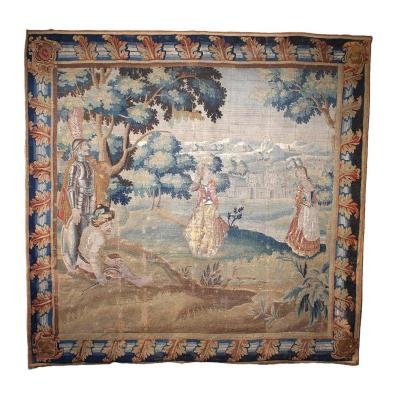
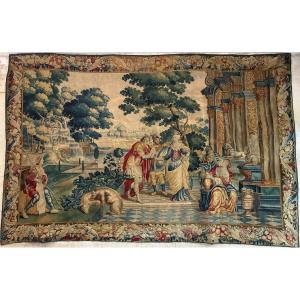
- Circé présente son philtre à Ulysse", wool and silk tapestry from the History of Ulysses hanging woven in Antwerp in the workshop of Jérémie Cockx and Corneille de Wael between 1682 and 1688. The cartoon that served as a model for the liciers was the result of a collaboration between two painters: Pierre Spierincx (1635-1711) for the landscape and Pierre Ijkens (1648-1695) for the figures.
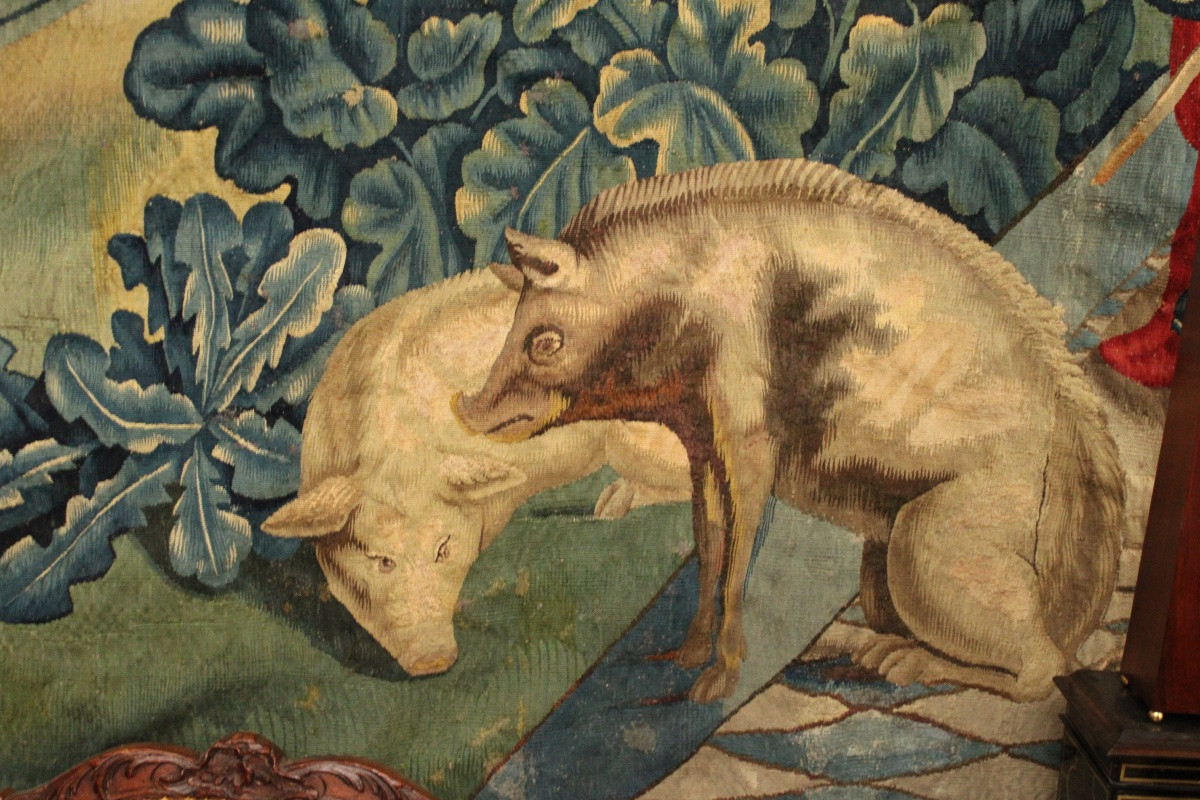
- The scene depicts an episode from the story of Odysseus, recounted in Canto X of the Odyssey with Circe, a sorceress who lives on the island of Eea, in a palace set in the middle of a clearing. When Ulysses and his companions land on the island, twenty-two of them, led by Eurylochus, are drawn to the palace by a harmonious voice. The magician welcomes them and offers them a cyceon, a beverage made from barley gruel, green honey, cheese and Pramnos wine, to which she adds a poison. As soon as they've drunk, she strikes them with a wand, turning them into pigs.
Alerted by Eurylochus, who had stayed behind, Ulysses sets off in his turn to meet Circe, but Hermes has equipped him with a counterpoison.
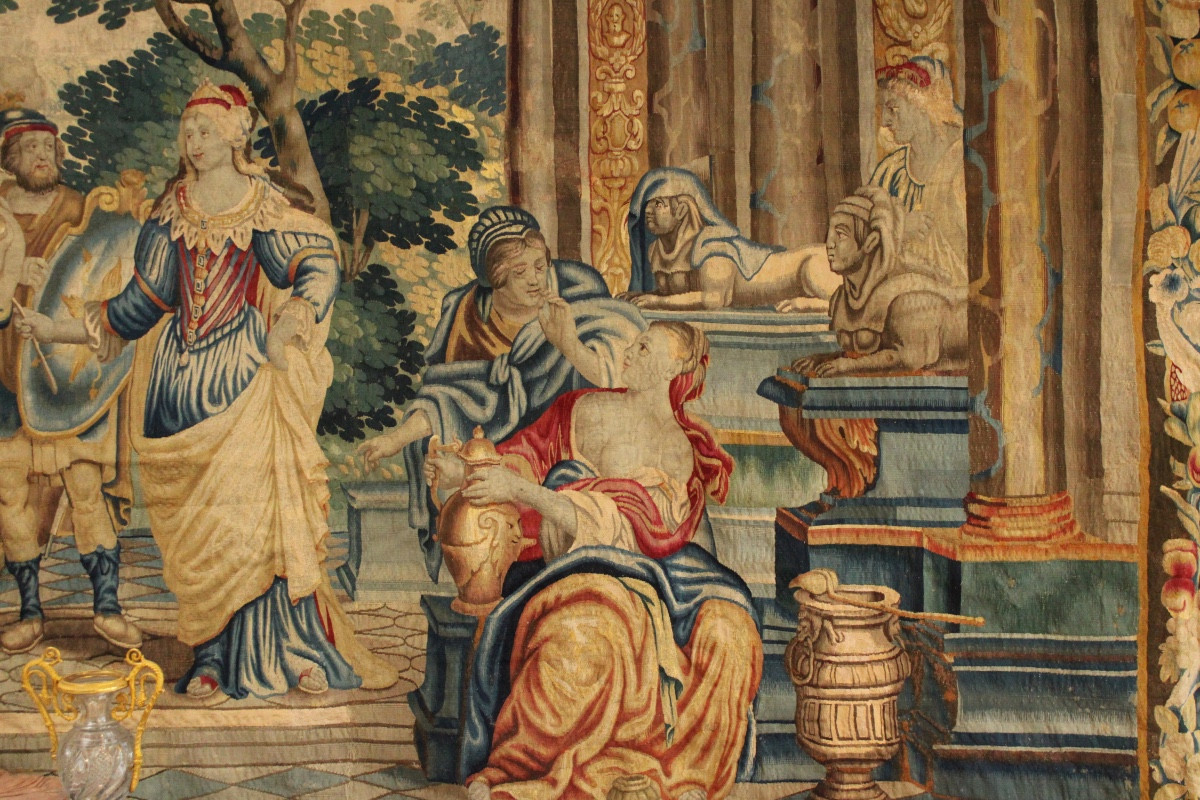
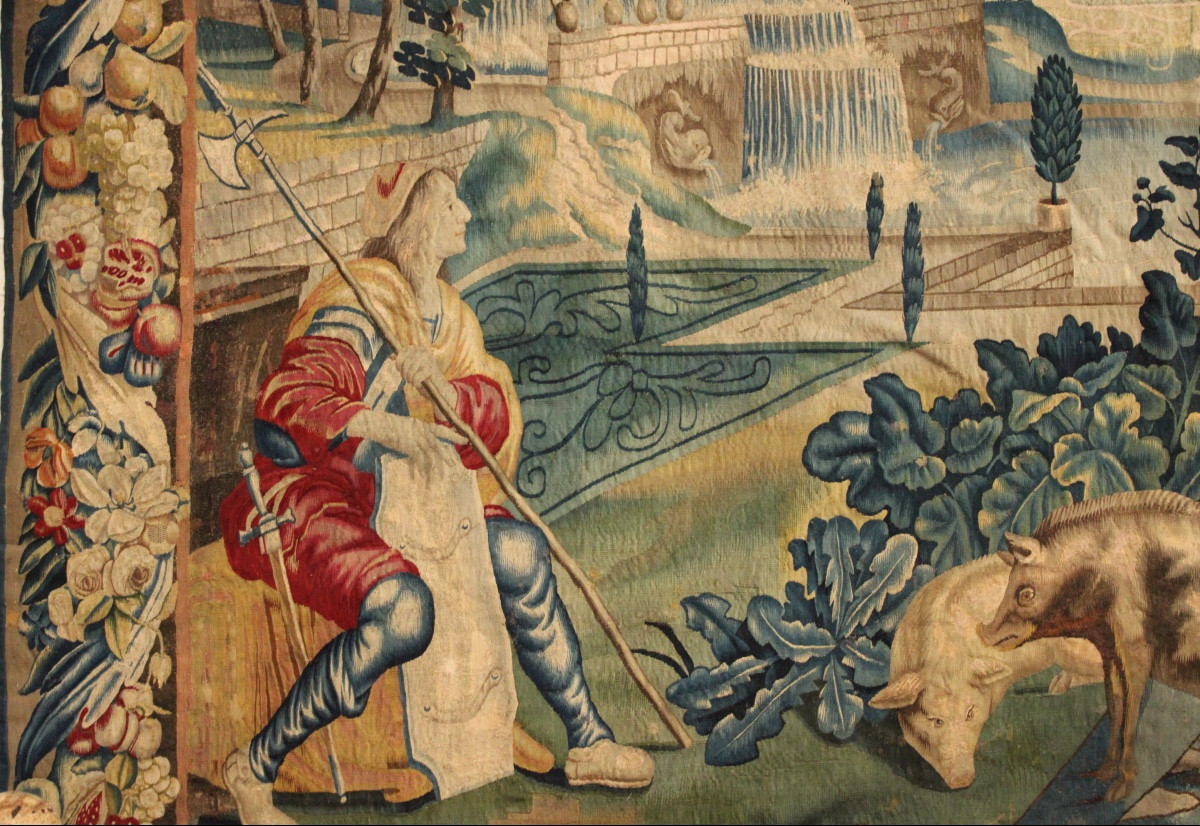
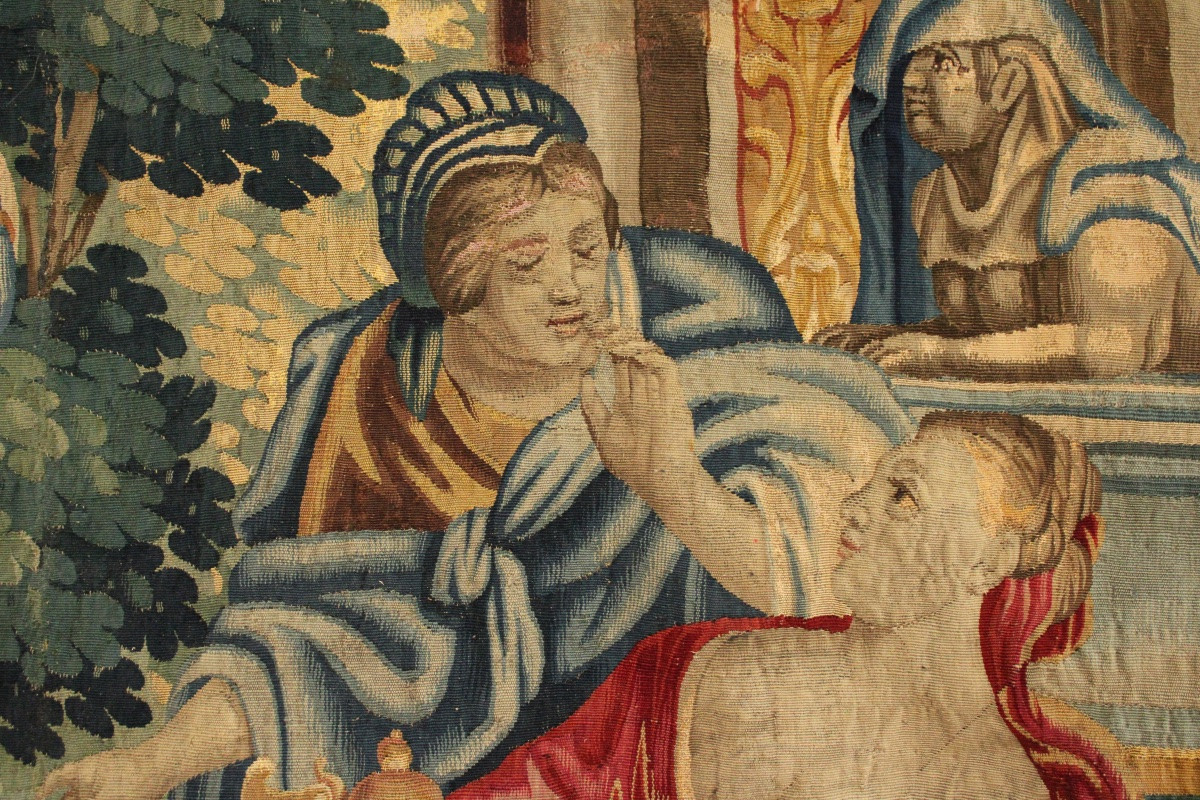
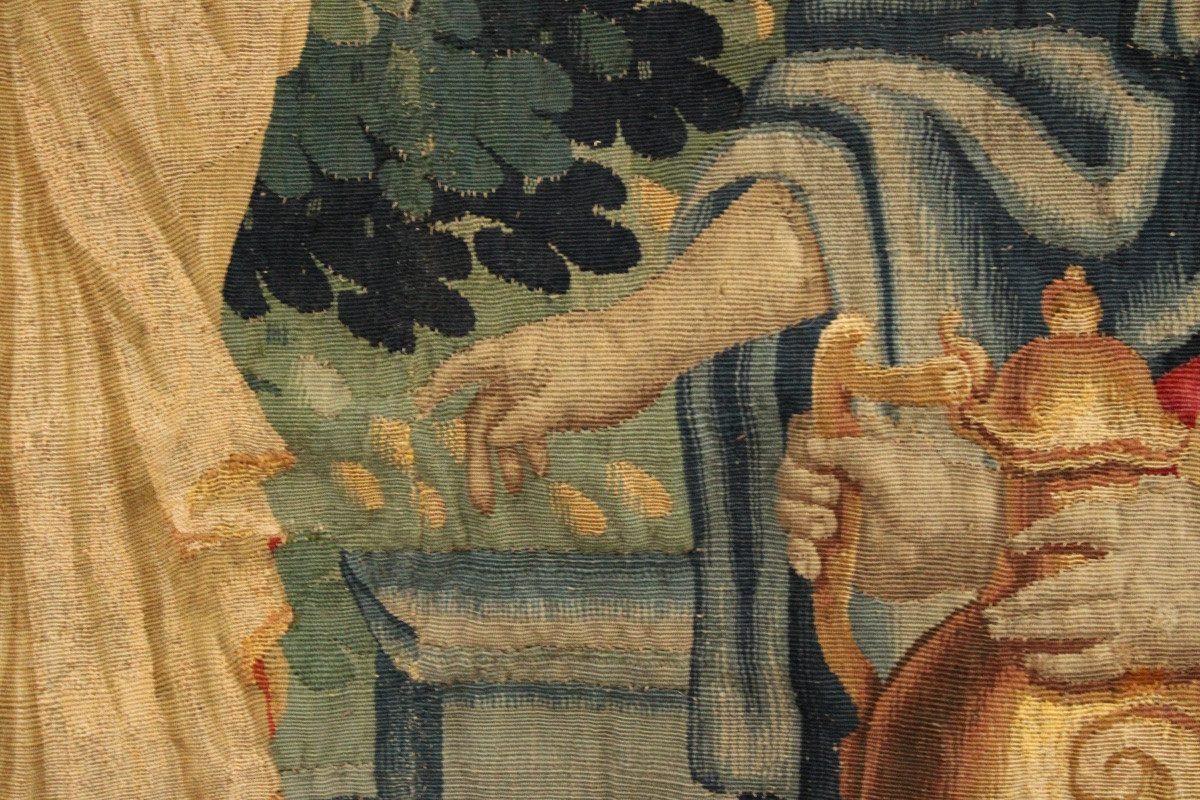
- So, in the center, we see Circe, the blonde-haired female figure, richly dressed. Ulysses, in turn, is drinking the concoction under the watchful eye of his companion Eurylochus, while Circe lays her magic wand on him, transforming him into a pig like his companions in the left foreground. However, thanks to the counterpoison, the drink doesn't work, hence the astonishment on the servants' faces.
- The episode is staged here in a formidable architectural and landscaped setting. The scene takes place on the outskirts of majestic palatial architecture, with blue-and-white diamond paving creating depth. The landscape is embellished by a cascading fountain, topped by a stone sculpture of Neptune, trident in hand, holding the reins of a team of sea chimeras. A parterre with plant embroidery also adds to the charm of this landscape that stretches into the distance. There's great subtlety in the background, where the elements gradually fade to give depth and create perspective.
- Characteristic of Flemish works, it's easy to smile at the sight of certain details, such as on the right, where the sphinx is wearing the garment of one of Circe's handmaidens.
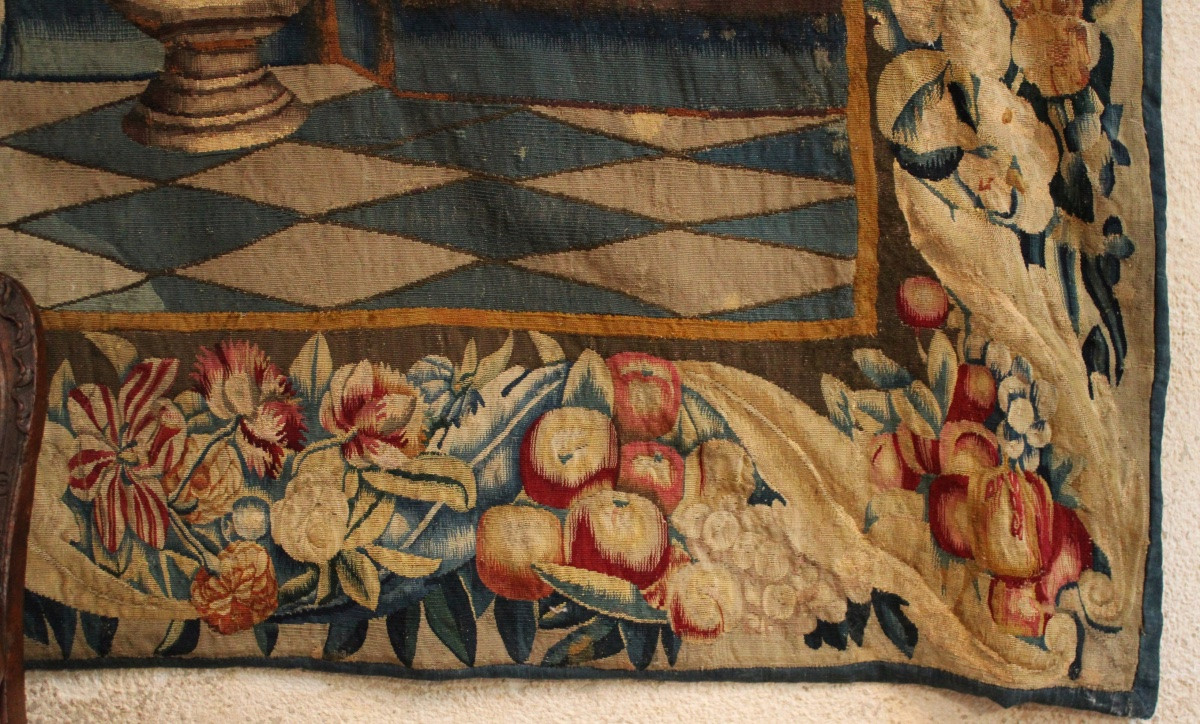
- The border that completes this work is an ode to nature, with a multitude of varied fruits and flowers arranged in garlands. Realistically depicted, these plants exude a certain vitality and freshness, like the half-open pomegranates revealing juicy arils, or the fleshy cherries sporting a brilliant crimson red color.
- This tapestry is remarkable in several respects. Firstly, the richness of its decoration and the details meticulously transcribed by the weavers, thanks to the appreciable quality and finesse of the weave (8 to 9 threads/cm). It also stands out for its well-preserved condition, with colors of great freshness.
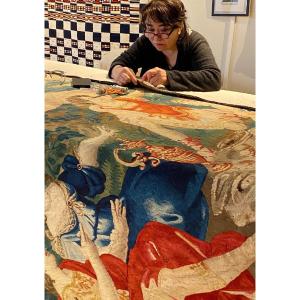
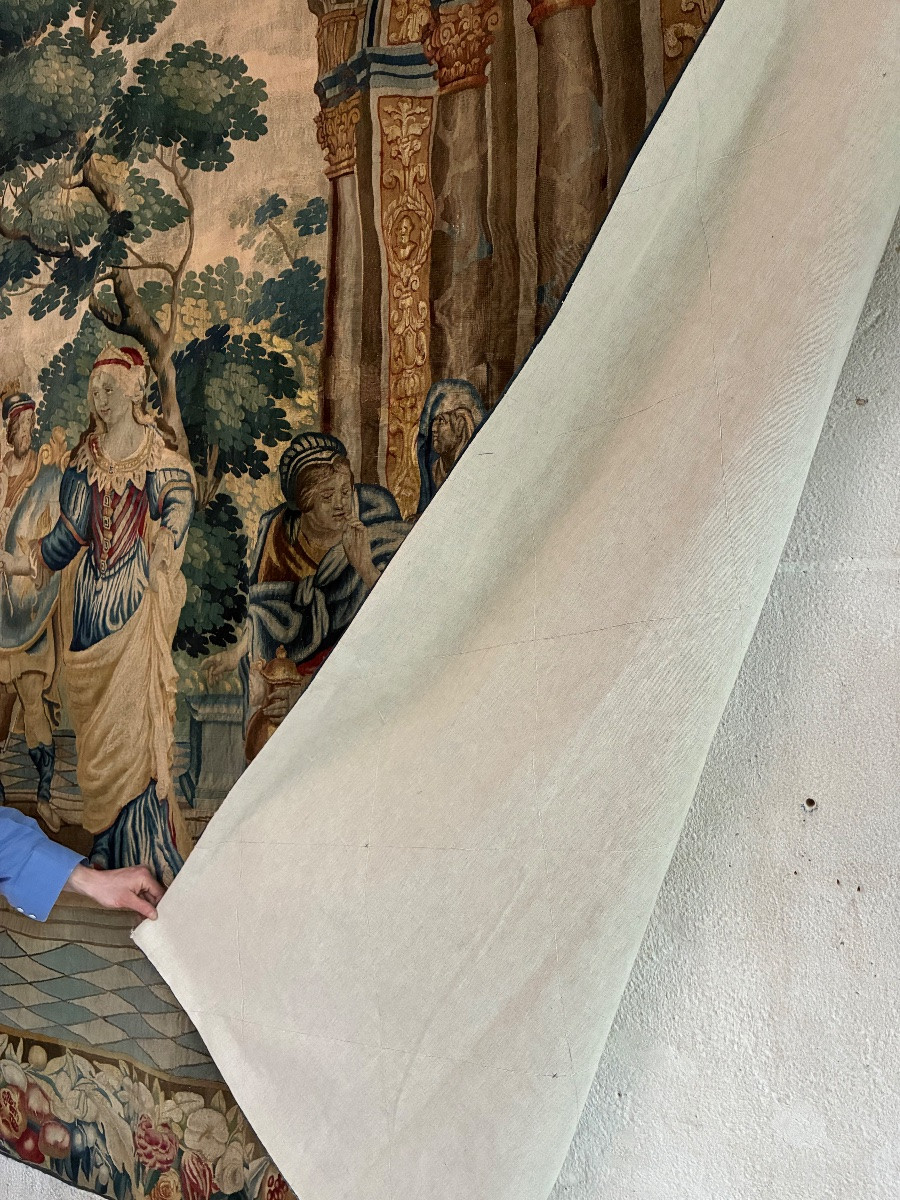
- Very good condition. Old restorations of good quality are to be noted: re-striping on two verticals, part of the upper border has been rewoven, which explains the color variation (see photos). Tapestry fully lined, with hook and staple system.
- Dimensions - width: 429 cm, height: 284cm
- Similar tapestries referenced:
- The scene depicts an episode from the story of Odysseus, recounted in Canto X of the Odyssey with Circe, a sorceress who lives on the island of Eea, in a palace set in the middle of a clearing. When Ulysses and his companions land on the island, twenty-two of them, led by Eurylochus, are drawn to the palace by a harmonious voice. The magician welcomes them and offers them a cyceon, a beverage made from barley gruel, green honey, cheese and Pramnos wine, to which she adds a poison. As soon as they've drunk, she strikes them with a wand, turning them into pigs.
Alerted by Eurylochus, who had stayed behind, Ulysses sets off in his turn to meet Circe, but Hermes has equipped him with a counterpoison.
- So, in the center, we see Circe, the blonde-haired female figure, richly dressed. Ulysses, in turn, is drinking the concoction under the watchful eye of his companion Eurylochus, while Circe lays her magic wand on him, transforming him into a pig like his companions in the left foreground. However, thanks to the counterpoison, the drink doesn't work, hence the astonishment on the servants' faces.
- The episode is staged here in a formidable architectural and landscaped setting. The scene takes place on the outskirts of majestic palatial architecture, with blue-and-white diamond paving creating depth. The landscape is embellished by a cascading fountain, topped by a stone sculpture of Neptune, trident in hand, holding the reins of a team of sea chimeras. A parterre with plant embroidery also adds to the charm of this landscape that stretches into the distance. There's great subtlety in the background, where the elements gradually fade to give depth and create perspective.
- Characteristic of Flemish works, it's easy to smile at the sight of certain details, such as on the right, where the sphinx is wearing the garment of one of Circe's handmaidens.
- The border that completes this work is an ode to nature, with a multitude of varied fruits and flowers arranged in garlands. Realistically depicted, these plants exude a certain vitality and freshness, like the half-open pomegranates revealing juicy arils, or the fleshy cherries sporting a brilliant crimson red color.
- This tapestry is remarkable in several respects. Firstly, the richness of its decoration and the details meticulously transcribed by the weavers, thanks to the appreciable quality and finesse of the weave (8 to 9 threads/cm). It also stands out for its well-preserved condition, with colors of great freshness.
- Very good condition. Old restorations of good quality are to be noted: re-striping on two verticals, part of the upper border has been rewoven, which explains the color variation (see photos). Tapestry fully lined, with hook and staple system.
- Dimensions - width: 429 cm, height: 284cm
- Similar tapestries referenced:
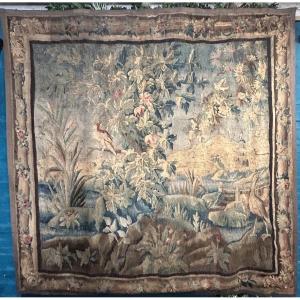
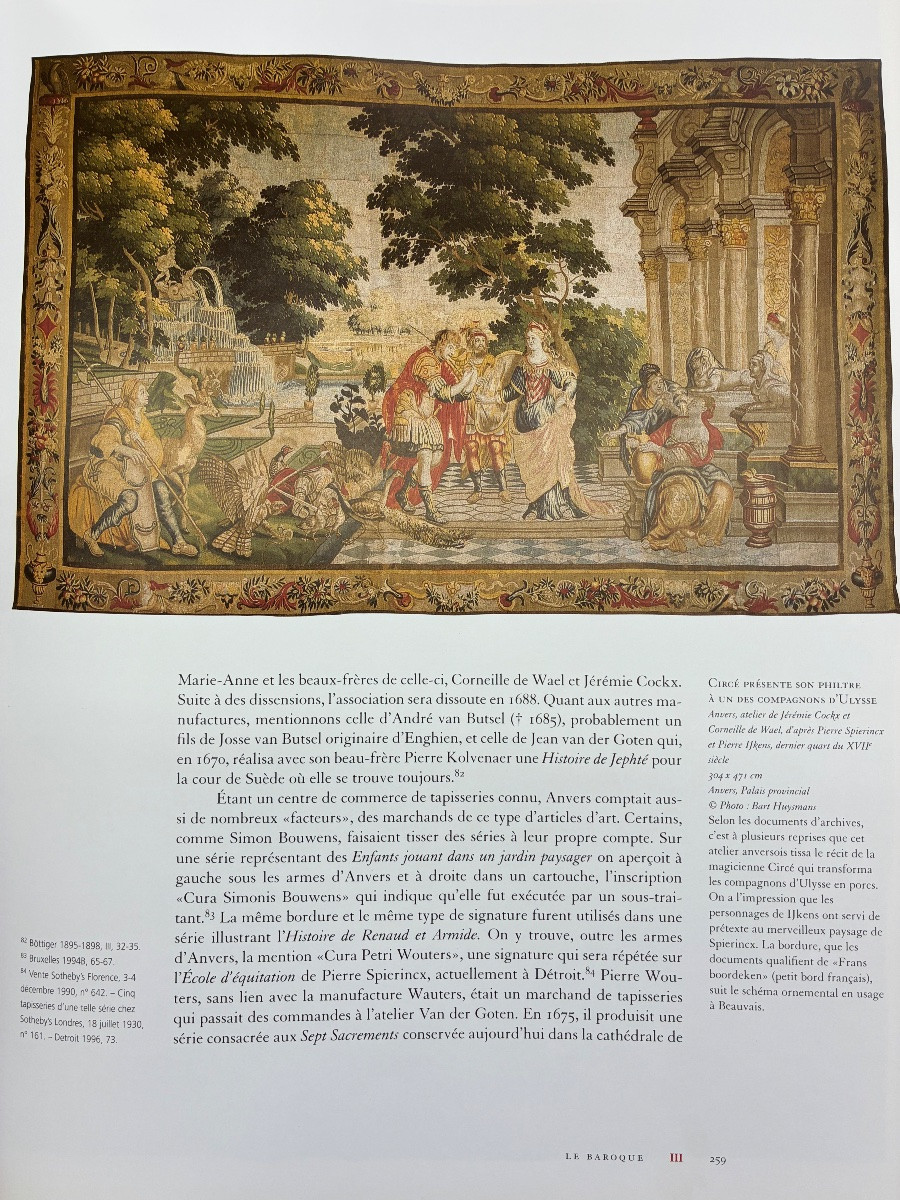
- Tapestry of the same episode (304 x 471 cm) preserved in Antwerp at the Provincial Palace, some variations: the border, the presence of a deer on the left, the companions are changed into fowl instead of suidae. This piece is referenced in Delmarcel (Guy), La Tapisserie Flamande: du XVe au XVIIIe siècle, Racine Lannoo, 200, page 259 (cf last photo)
- Tenture de l'Histoire de Circé de la Cour d'Appel de Riom. Only a photo of the tapestry depicting this same episode is visible, the piece having been stolen. It is obviously not the tapestry shown. Variants: the border, the plants on the right between Circe and the Palace, the species between Circe and the architectural element...
25 000 €
Period: 17th century
Style: Louis 14th, Regency
Condition: Good condition
Material: Wool
Length: 429 cm
Height: 278 cm
Reference (ID): 1745391
Availability: In stock
Print