



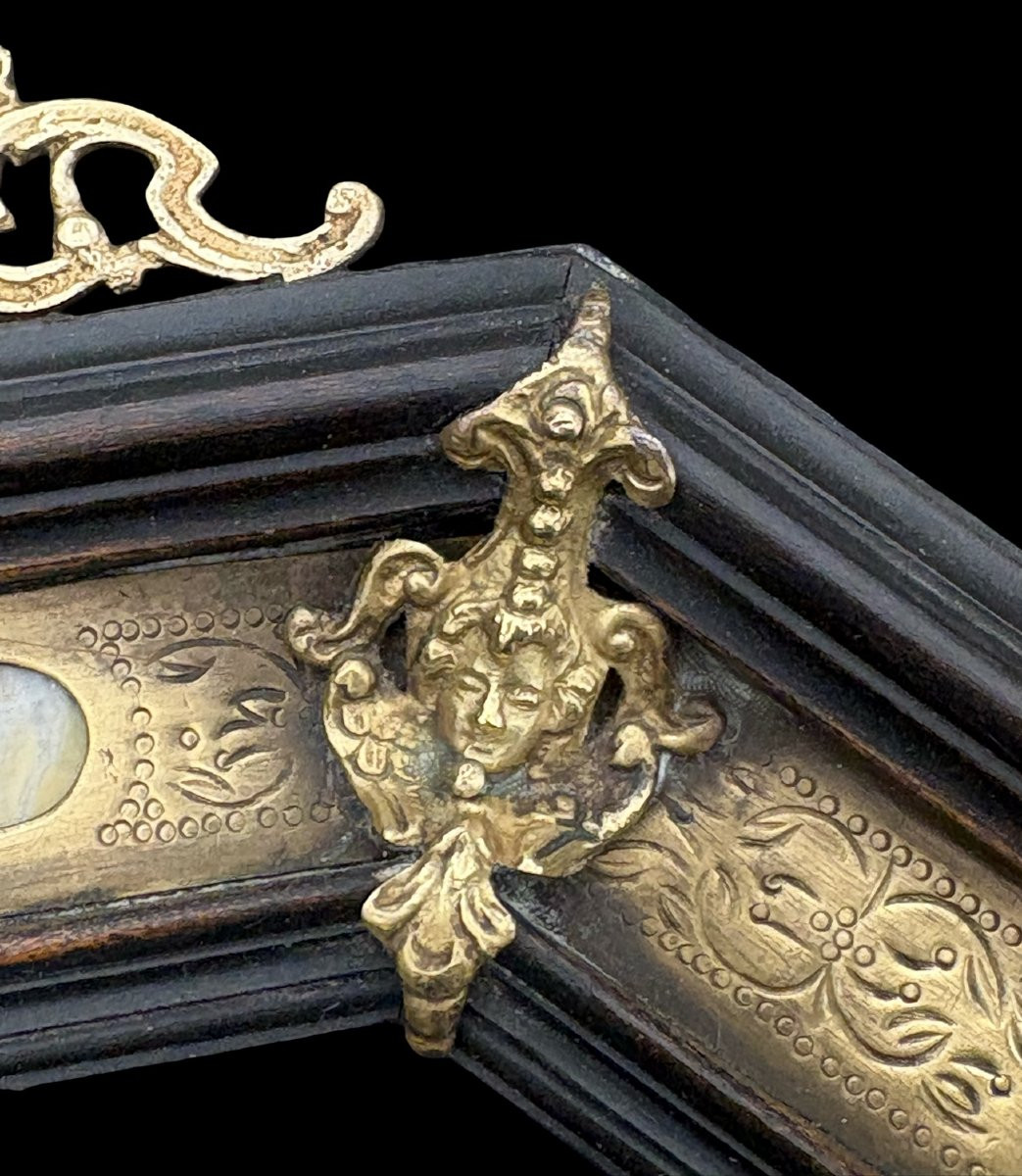


Grand Tour Frame, Semi-precious Stones And Gilded Bronze, Rome, 19th Century
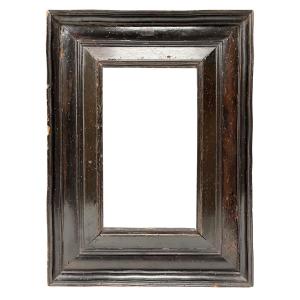
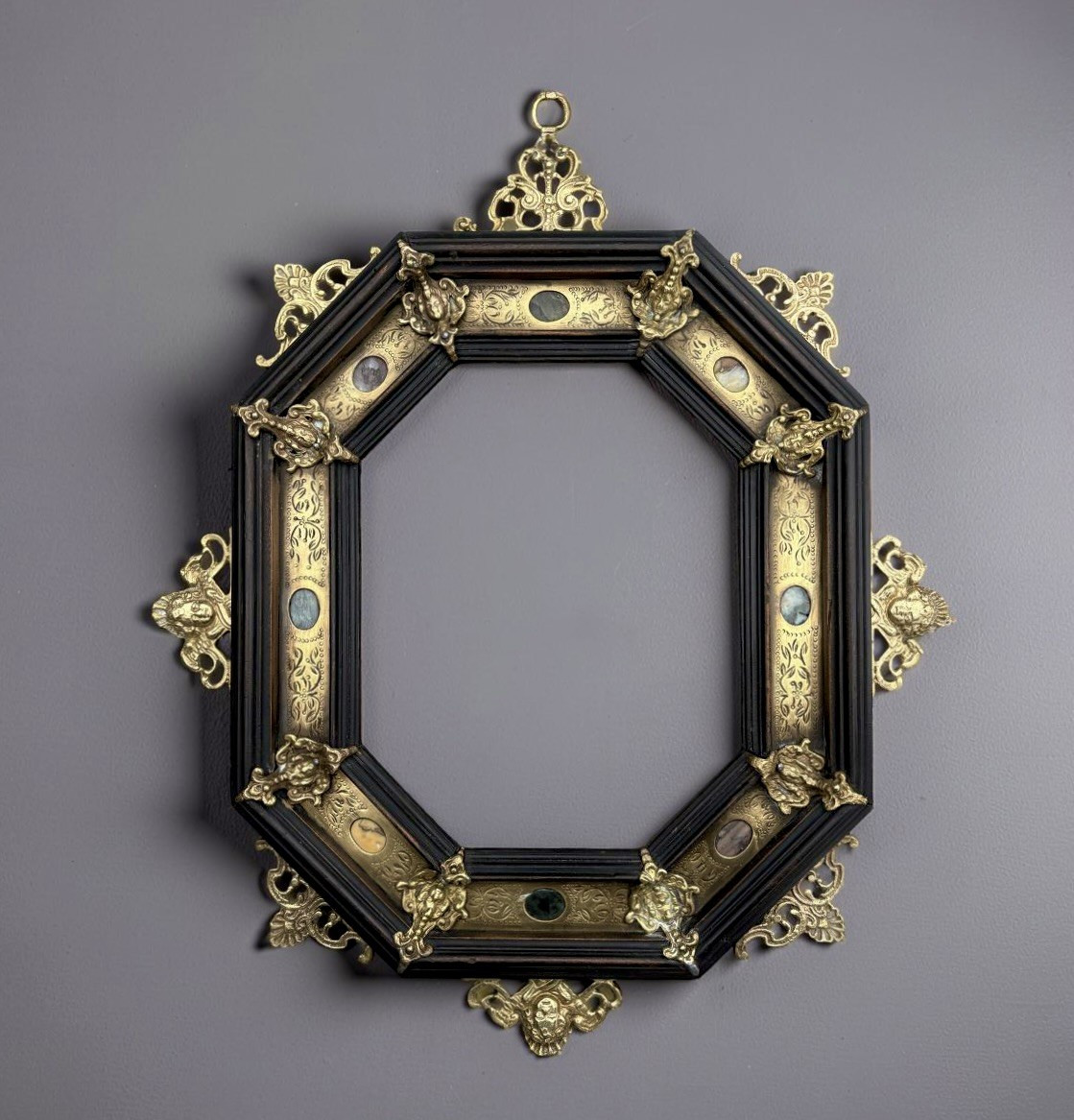
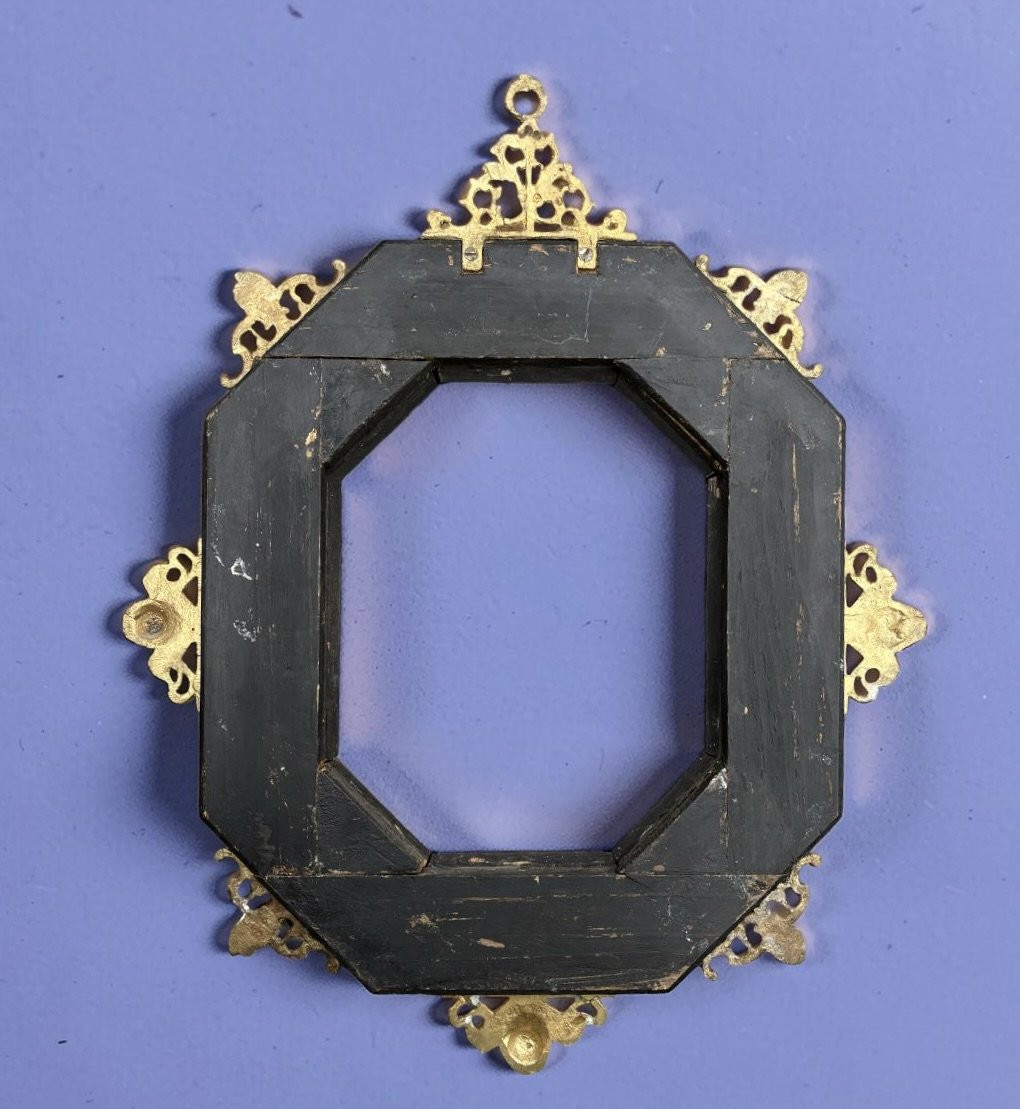
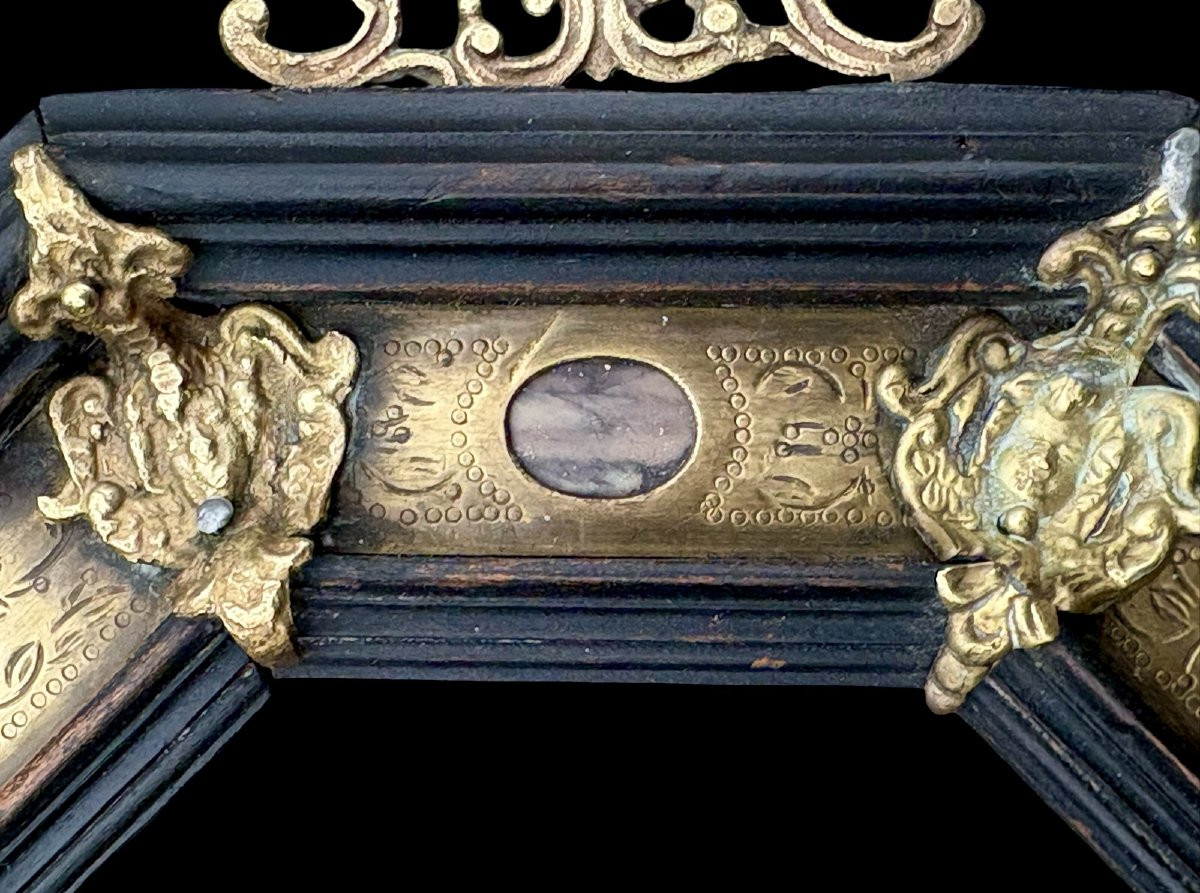
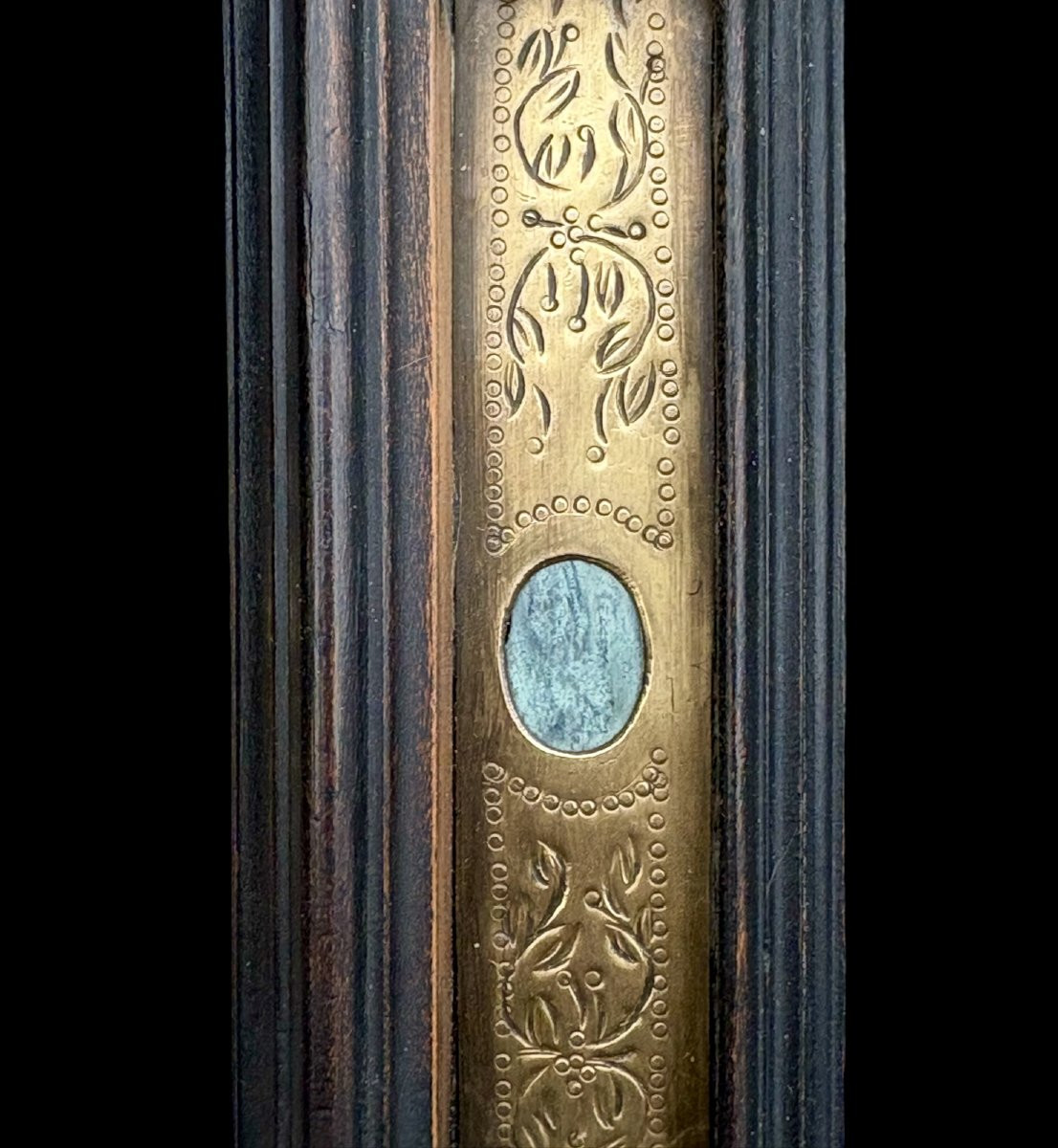
Roman frame in ebonized wood with semi-precious stone marquetry, Rome, 19th century.
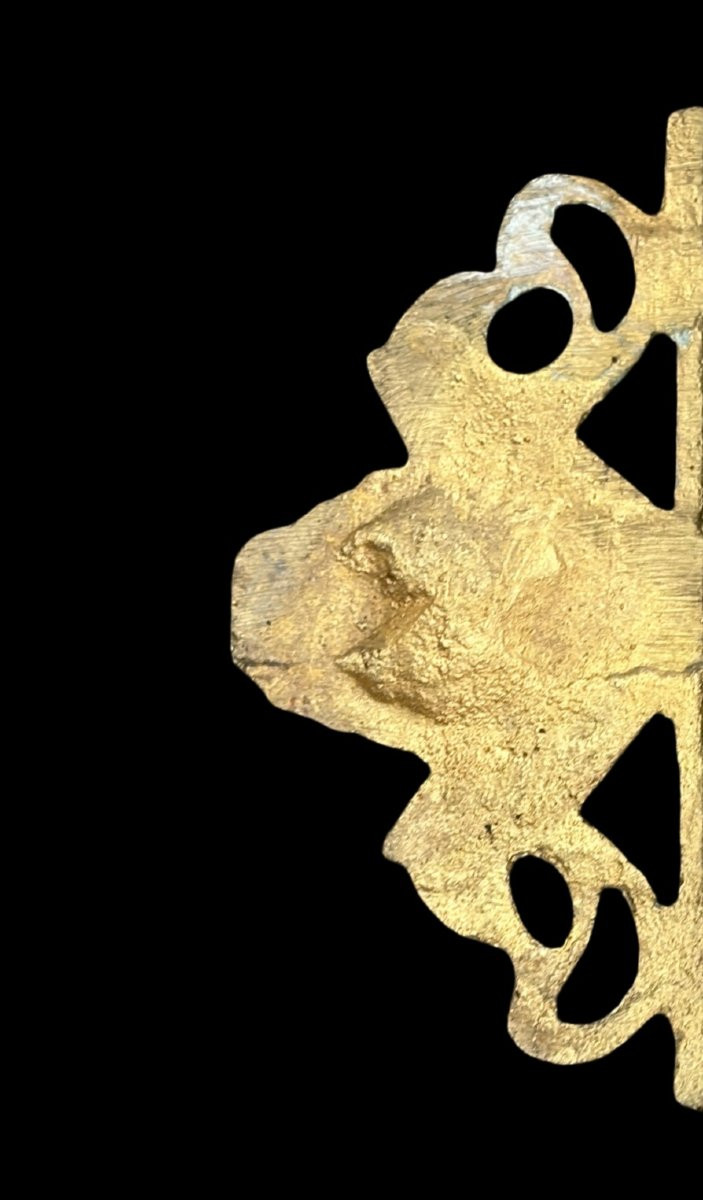
This frame model is a staple of Florentine and Roman Baroque, representing a true link between the two cities. As is well known, the craftsmanship of semi-precious stones was a hallmark of excellence in both cities’ workshops and reached sublime levels in the decoration of tabletops, cabinets, caskets, and even frames. With regard to the latter, the material used was strictly ebony (or ebonized wood), with so-called “box-shaped” frames embellished with semi-precious stones such as lapis lazuli on the corners, and often combined with yellow or Egyptian red jasper, amethyst, agate, in compositions whose geometric pattern could be more or less emphasized (for example, with silver fillets), but which generally featured rectangular, spindle-shaped, and lozenge motifs. Another material used for this type of work was gilded bronze, generally applied in leaf motifs, or even in the form of cherubs, which adorned the frame’s back panel, marked the space near the corners, and created movement with sinuous lines along the outer edges. A type of object, therefore, that involved cabinetmakers, stonemasons, and bronze casters simultaneously.
This frame model returned to prominence during the Grand Tour era, both in the early period from the late 18th century to 1840 and in the so-called late Grand Tour, in the second half of the 19th century, highly sought after by wealthy collectors and foreign travelers. Our frame belongs to the second period, but this in no way detracts from the quality of the craftsmanship and materials used. Highly sought after in the art market, they have been the subject of numerous reproductions, particularly in the last two decades, recognizable not only by their craftsmanship but also by the use of modern oriental marbles in place of semi-precious stones and fine antique marbles.
Excellent condition, original gilding.
Dimensions
H 45 cm
W 37 cm
++++++++++++++++++++++++++++++++++++++++DELIVERY AND PAYMENT++++++++++++++++++++++++++++++++
SHIPPING VIA MBE with UPS, TNT, and FEDEX couriers - DHL
Payment methods: Bank transfer - Online credit card (including AMEX) - PayPal (+3.7%) - NO checks
https://internationalantiques.eu/it/consegna-e-assicurazione/
+++++++++++++++++++++++++++++++++++++++++++++++++++++++++++++++++++++++++++++++++++++++++++++++++
This frame model is a staple of Florentine and Roman Baroque, representing a true link between the two cities. As is well known, the craftsmanship of semi-precious stones was a hallmark of excellence in both cities’ workshops and reached sublime levels in the decoration of tabletops, cabinets, caskets, and even frames. With regard to the latter, the material used was strictly ebony (or ebonized wood), with so-called “box-shaped” frames embellished with semi-precious stones such as lapis lazuli on the corners, and often combined with yellow or Egyptian red jasper, amethyst, agate, in compositions whose geometric pattern could be more or less emphasized (for example, with silver fillets), but which generally featured rectangular, spindle-shaped, and lozenge motifs. Another material used for this type of work was gilded bronze, generally applied in leaf motifs, or even in the form of cherubs, which adorned the frame’s back panel, marked the space near the corners, and created movement with sinuous lines along the outer edges. A type of object, therefore, that involved cabinetmakers, stonemasons, and bronze casters simultaneously.
This frame model returned to prominence during the Grand Tour era, both in the early period from the late 18th century to 1840 and in the so-called late Grand Tour, in the second half of the 19th century, highly sought after by wealthy collectors and foreign travelers. Our frame belongs to the second period, but this in no way detracts from the quality of the craftsmanship and materials used. Highly sought after in the art market, they have been the subject of numerous reproductions, particularly in the last two decades, recognizable not only by their craftsmanship but also by the use of modern oriental marbles in place of semi-precious stones and fine antique marbles.
Excellent condition, original gilding.
Dimensions
H 45 cm
W 37 cm
++++++++++++++++++++++++++++++++++++++++DELIVERY AND PAYMENT++++++++++++++++++++++++++++++++
SHIPPING VIA MBE with UPS, TNT, and FEDEX couriers - DHL
Payment methods: Bank transfer - Online credit card (including AMEX) - PayPal (+3.7%) - NO checks
https://internationalantiques.eu/it/consegna-e-assicurazione/
+++++++++++++++++++++++++++++++++++++++++++++++++++++++++++++++++++++++++++++++++++++++++++++++++
1 250 €
Period: 19th century
Style: Renaissance, Louis 13th
Condition: Excellent condition
Material: Marquetry
Width: 37
Height: 45
Reference (ID): 1744498
Availability: In stock
Print