


Francisque-joseph Duret (1804–1865) Marble Male Bust
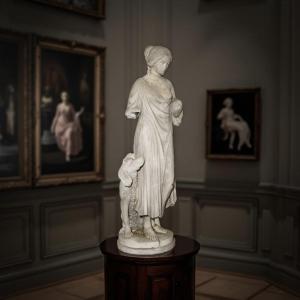
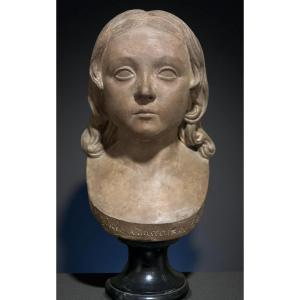
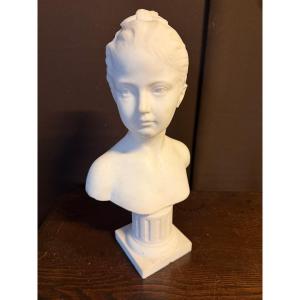
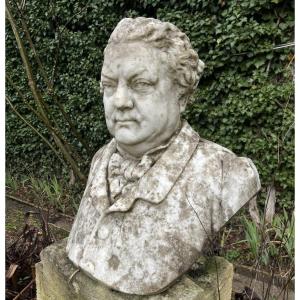
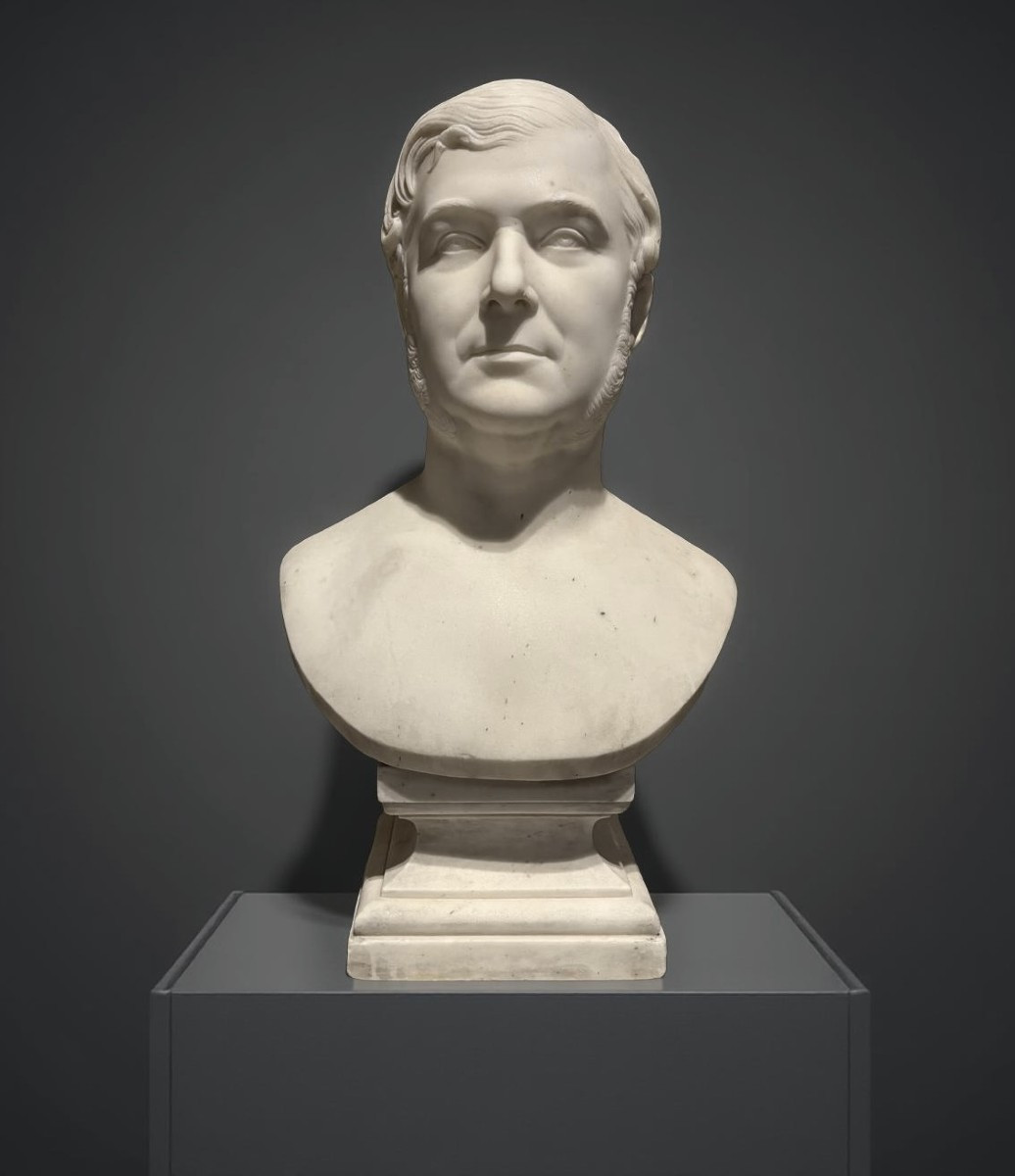
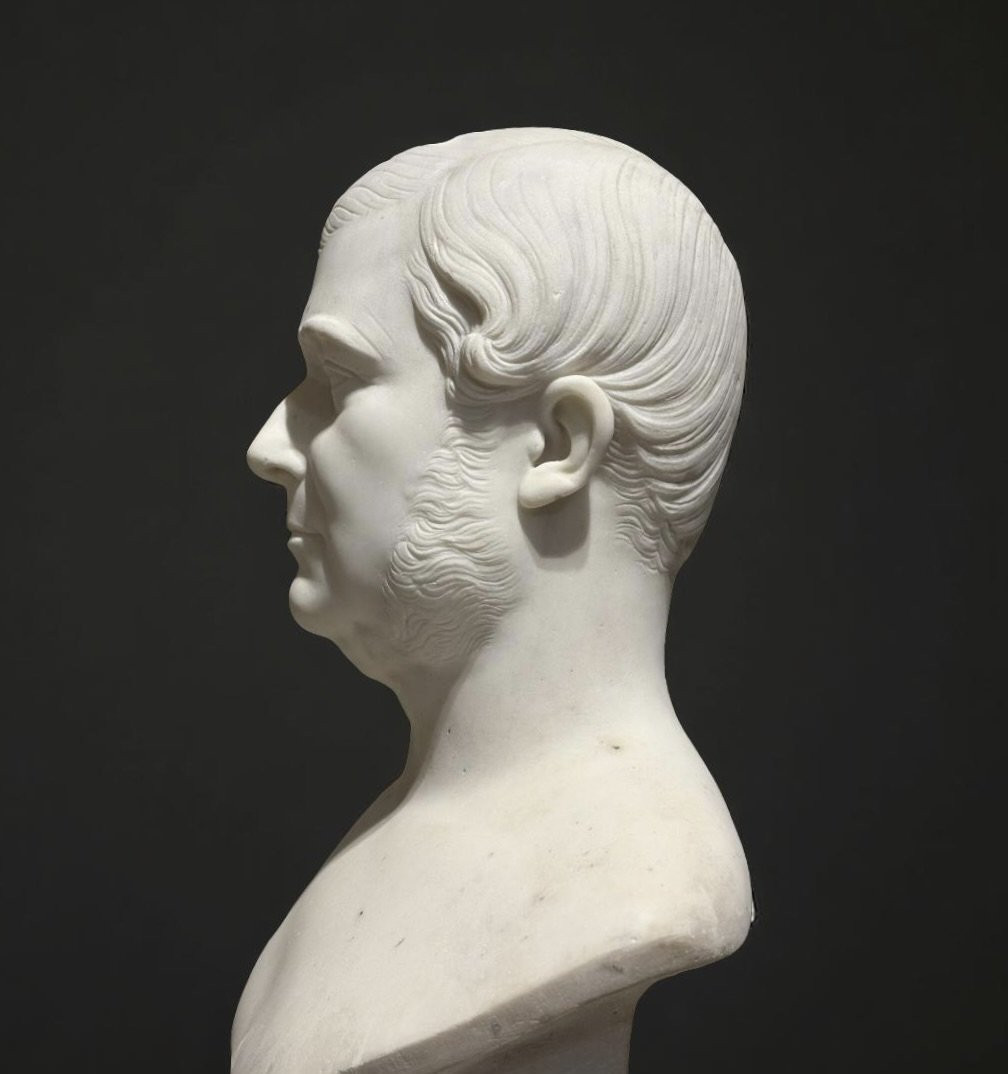
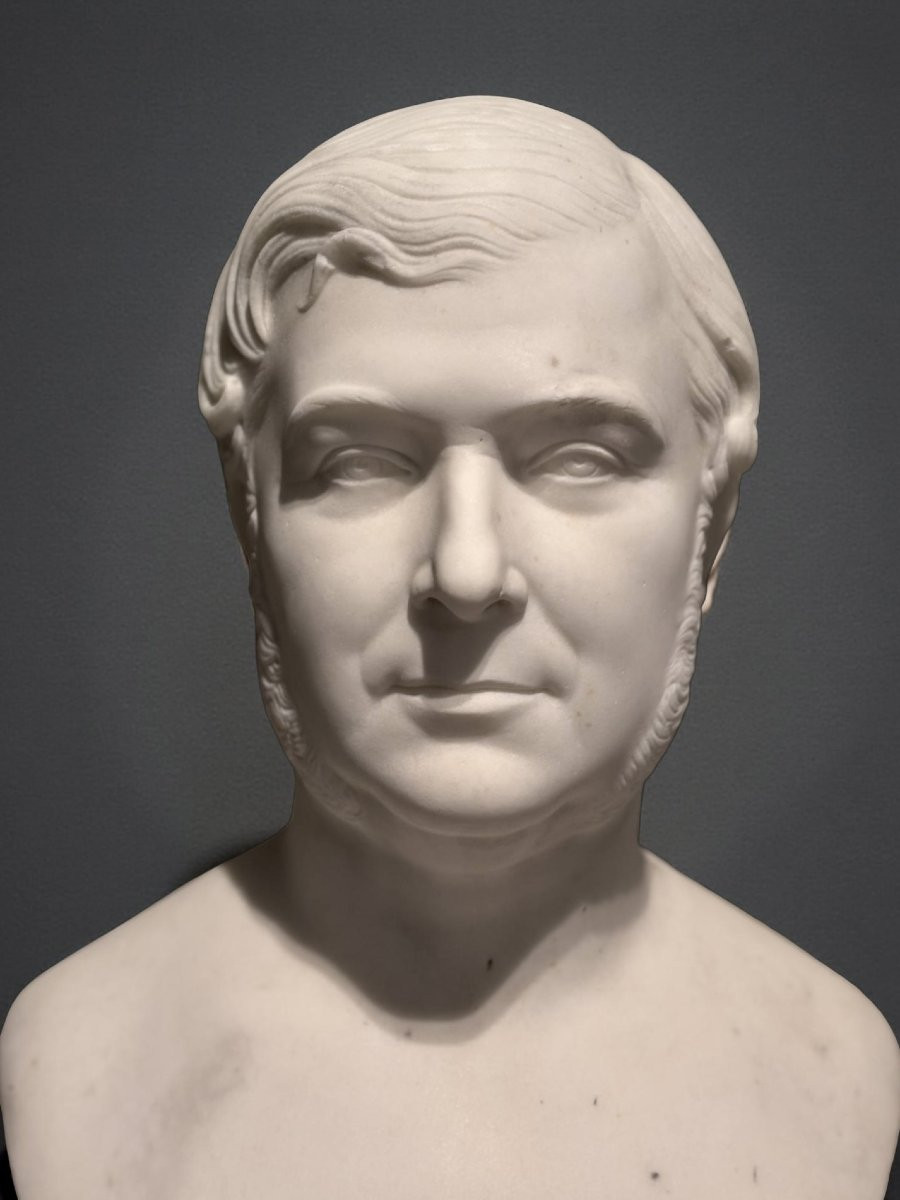
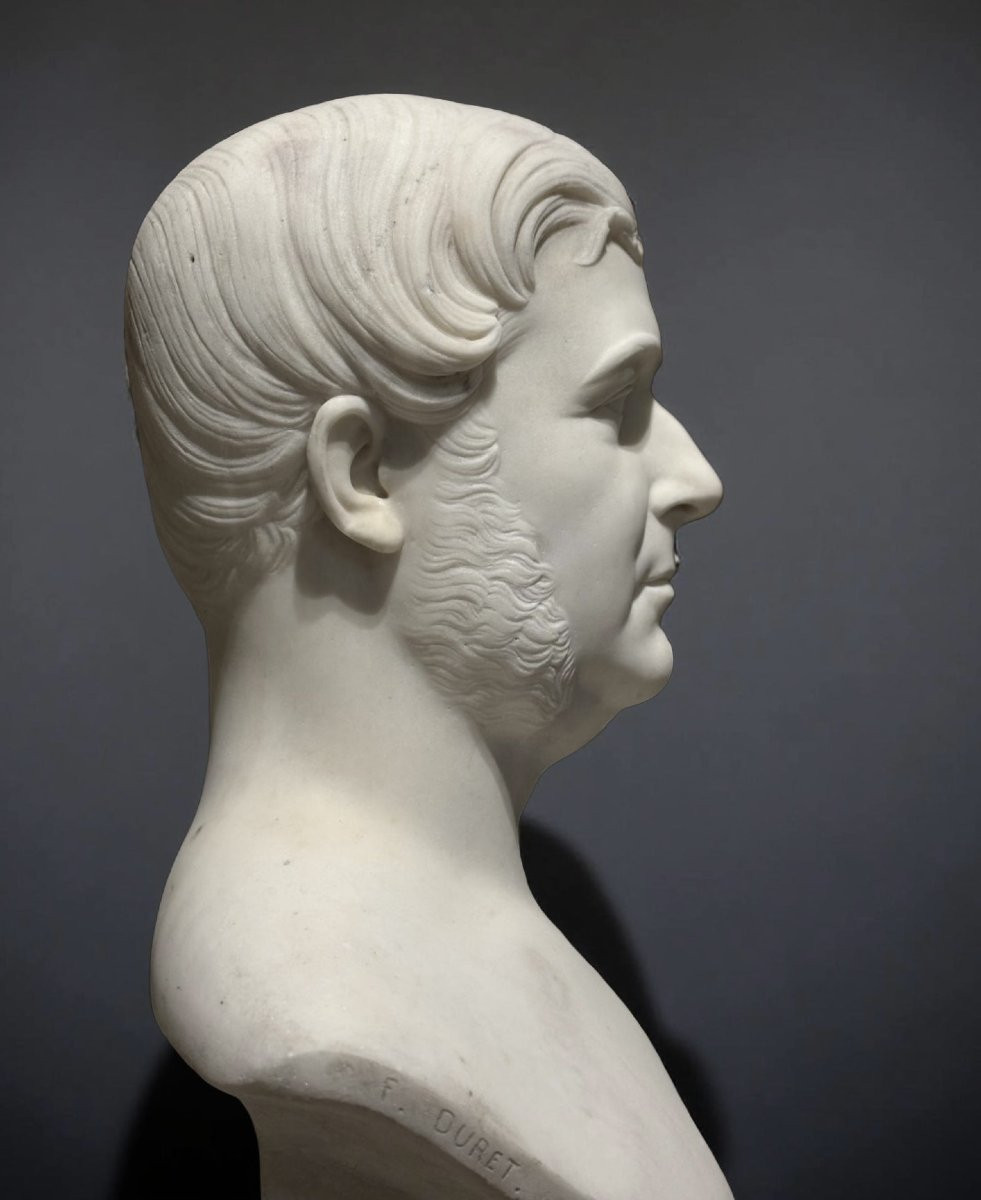
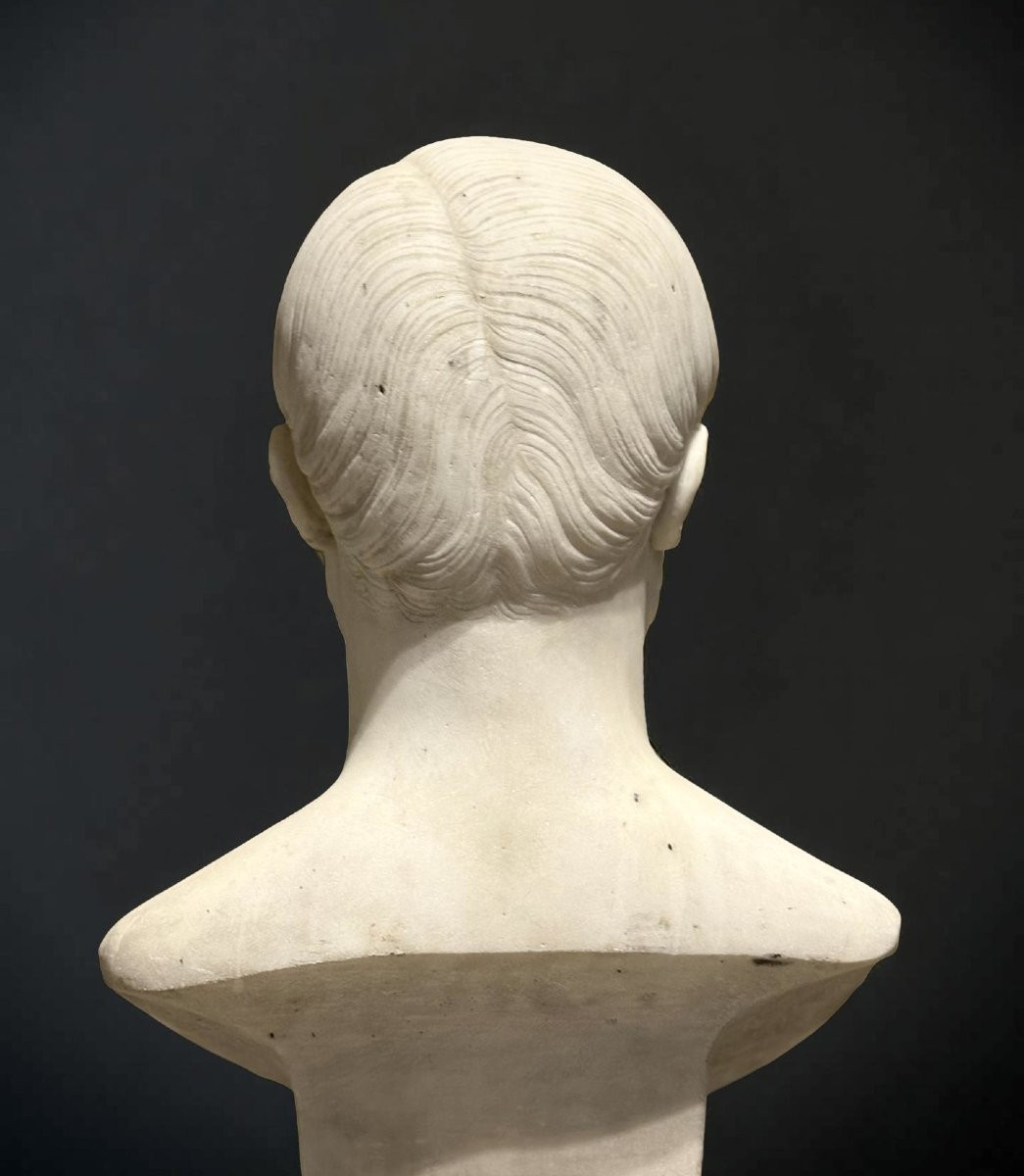
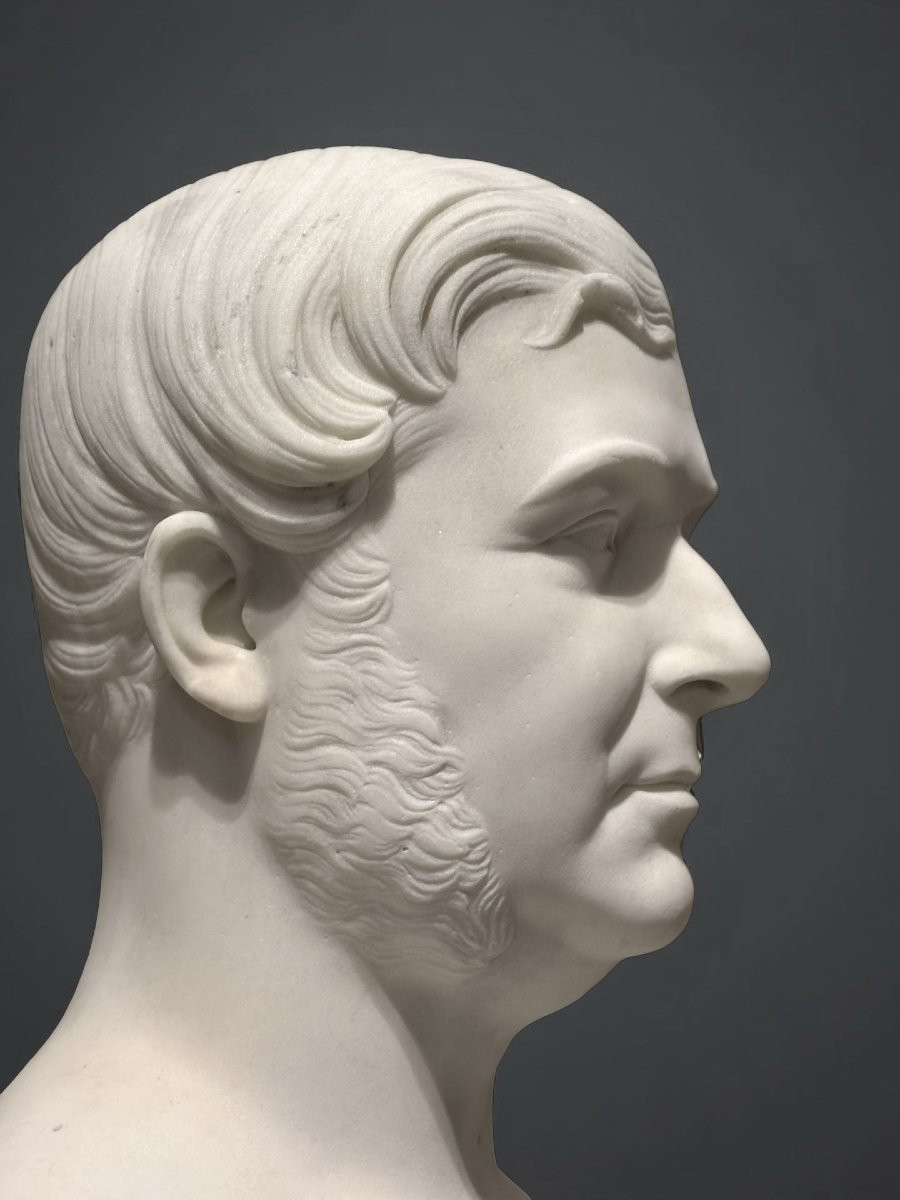
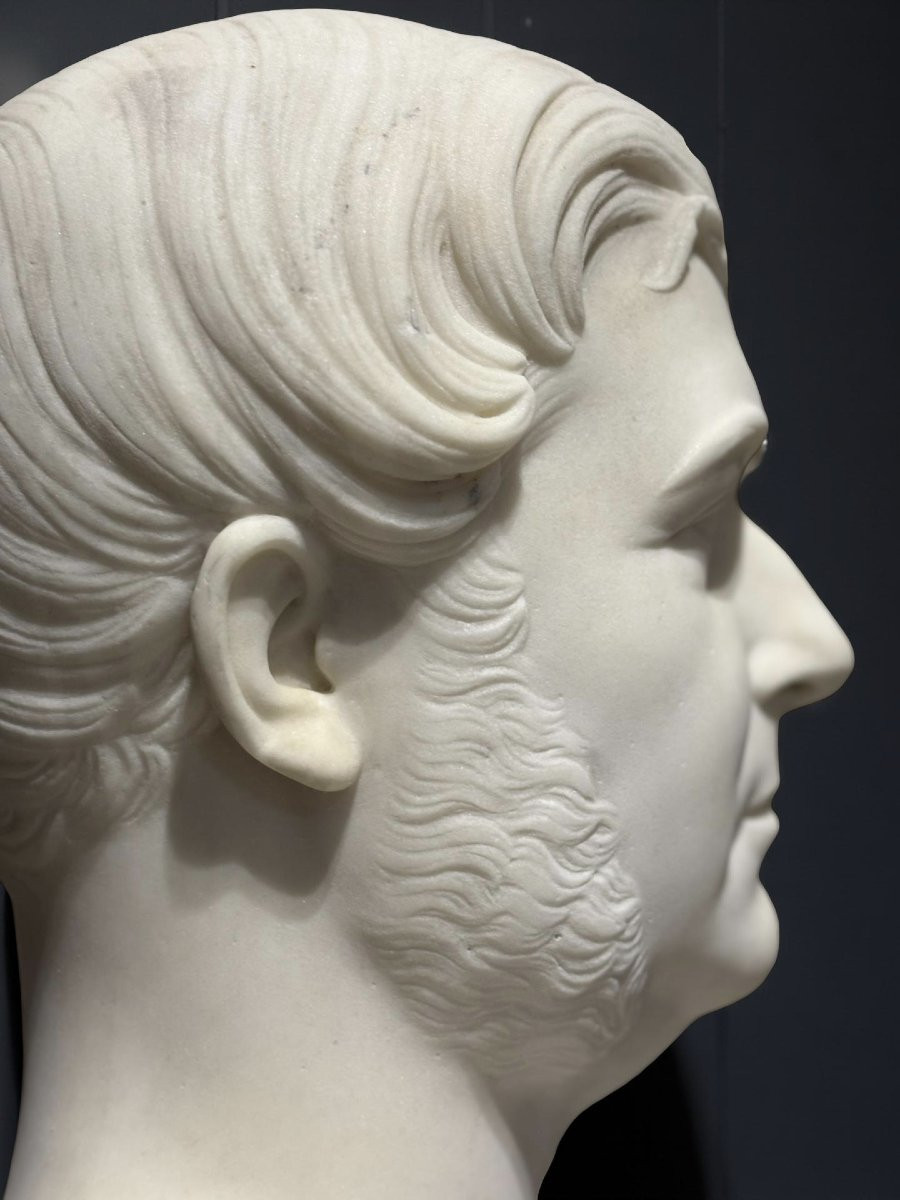
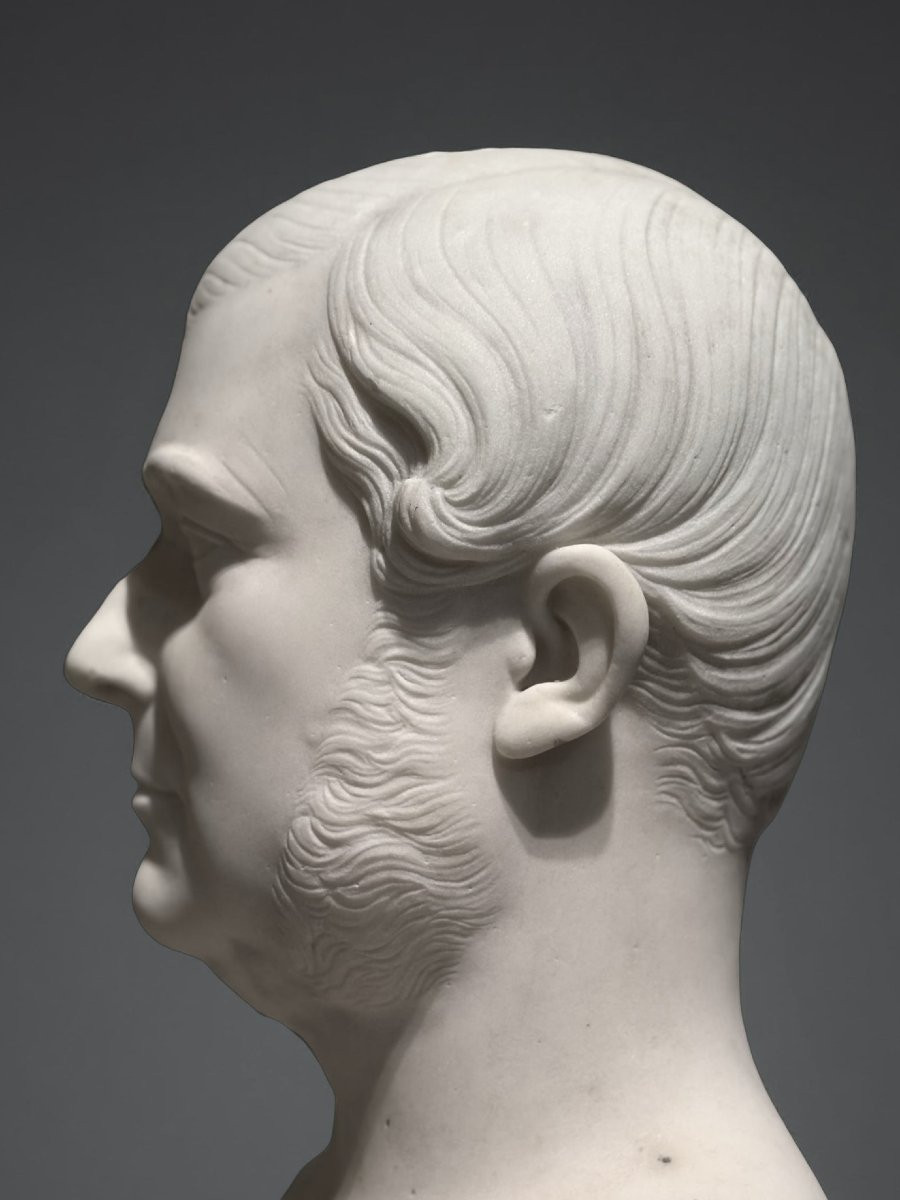
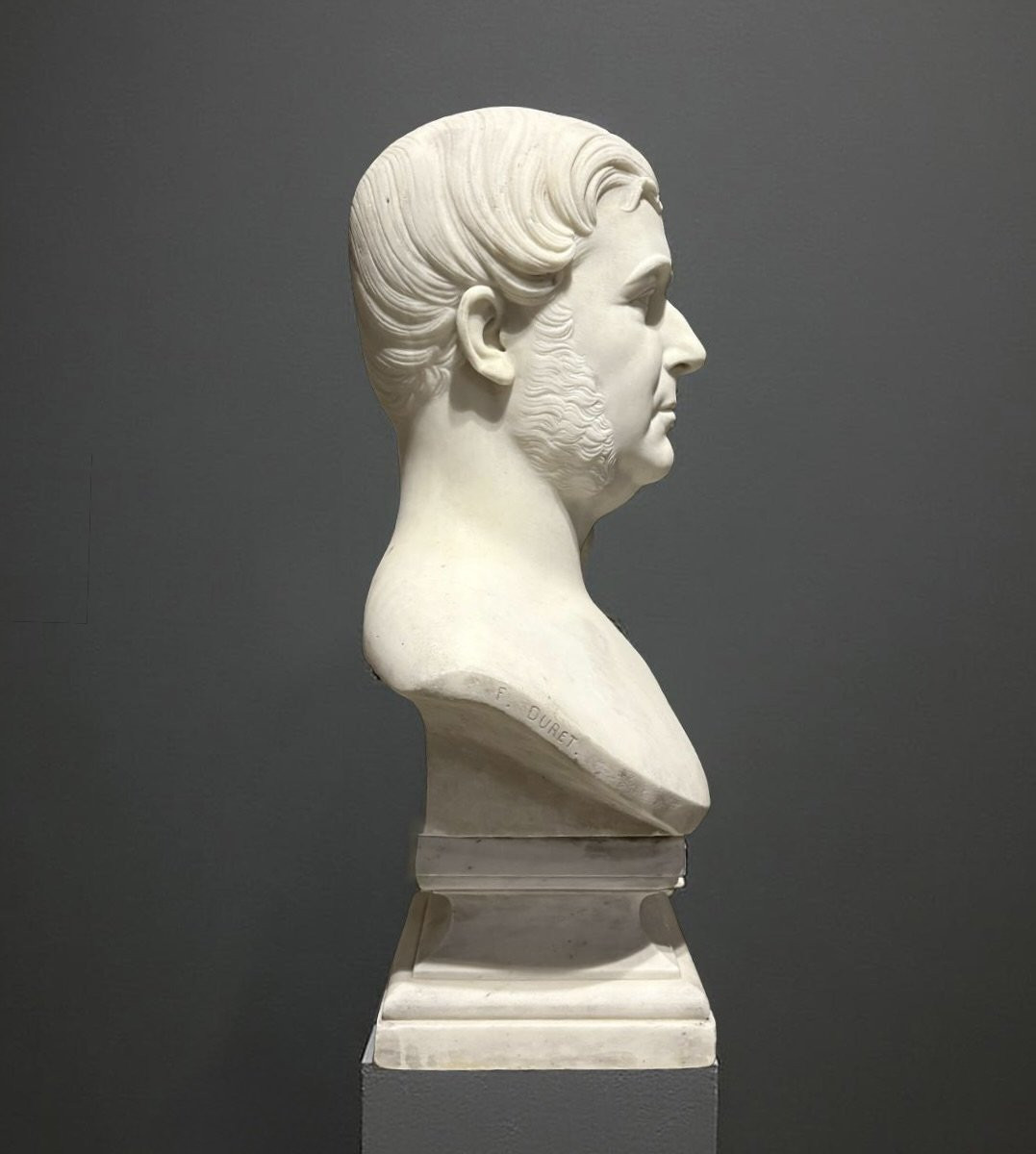
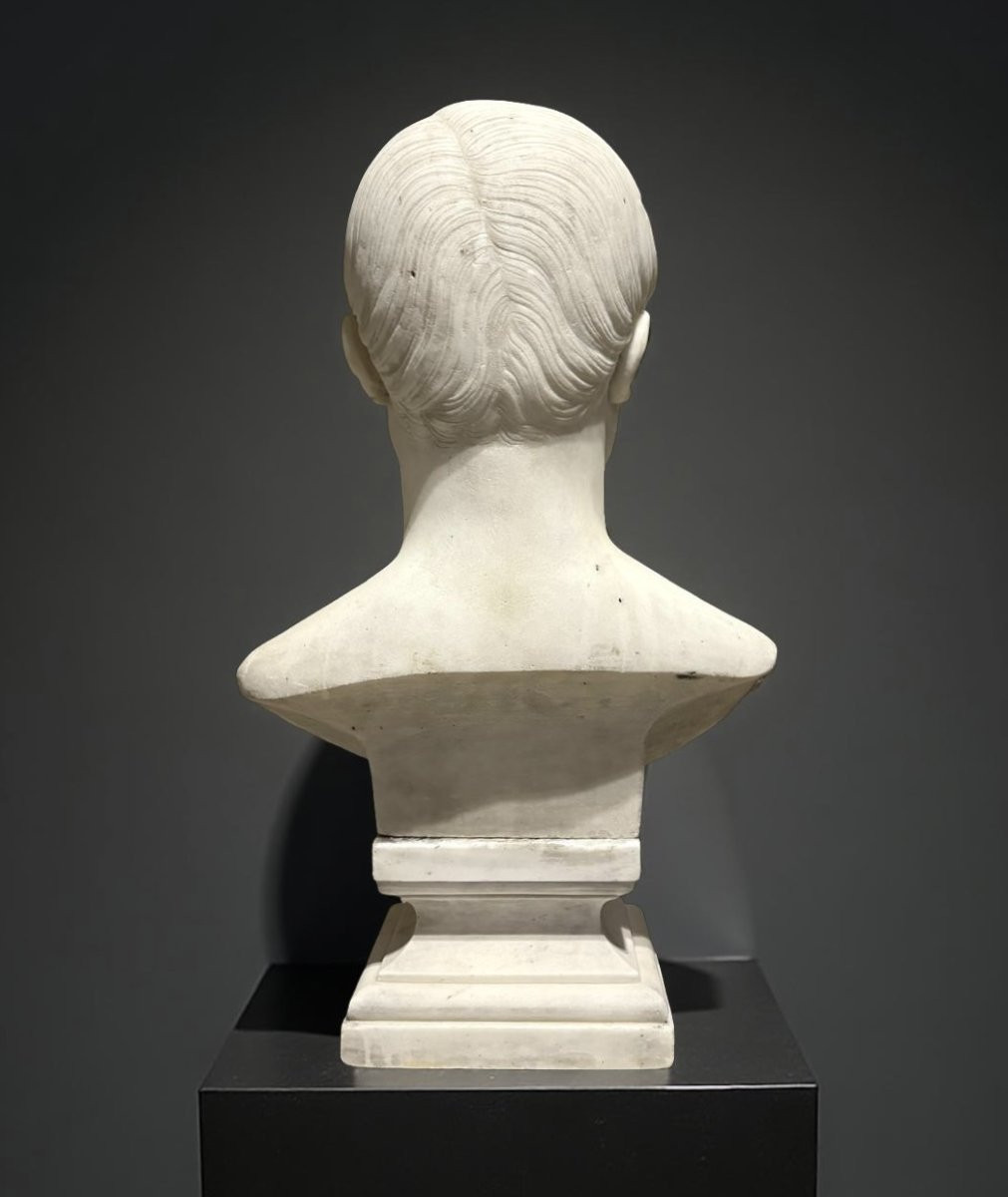
Francisque-Joseph Duret (Paris, 1804–1865), white marble male bust.
Francisque Joseph Duret (October 19, 1804 – May 26, 1865) was a French sculptor, the son and pupil of François-Joseph Duret (1732–1816). He embodied the spirit of Romantic idealism within the Neoclassical tradition, creating monumental sculptures that captured both grandeur and human emotion. His legacy extends beyond his individual works, shaping the artistic landscape of mid-century France and influencing generations of sculptors.
Born in Paris into a family steeped in sculptural tradition—his father was himself a celebrated sculptor—Duret's formative years were marked by exposure to art and craftsmanship from an early age. He initially studied theater, demonstrating an appreciation for performance and visual storytelling. However, he quickly recognized sculpture as his true calling, enrolling at the Conservatory and studying with François-Joseph Bosio, whose influence instilled in him a meticulous attention to detail and a deep understanding of classical aesthetics. Crucially, Bosio's teachings fostered Duret's ability to observe human behavior, a skill that would prove invaluable throughout his artistic career. The Prix de Rome scholarship, awarded to him in 1823, solidified his position as an emerging talent, projecting him into the Italian artistic milieu, where he honed his skills and developed his distinctive style.
Duret's artistic sensibility leaned strongly toward Neoclassicism, reflecting the prevailing stylistic trends of his time: a reaction to the excesses of Rococo and a return to the ideals of ancient Greece and Rome. This commitment is evident in his early works, characterized by serene compositions, idealized figures, and masterful execution. *Neapolitan Fisherman Dancing the Tarantella* (1833), exhibited at the Louvre, is a testament to this style: a dynamic bronze sculpture that captured the fervor of Italian folk traditions with remarkable precision. It immediately cemented Duret's reputation as a sculptor capable of conveying both intellectual rigor and visceral emotion. Equally impressive is *Neapolitan Improvisatore* (1839), housed in the Leipzig Museum, which demonstrates his ability to portray human character with nuanced sensitivity.
Duret's career rose to prominence thanks to numerous prestigious commissions, both for public buildings and for producing portraits, thanks in part to the insightful observation of human behavior he acquired during his theatrical studies.
Duret's influence extended beyond his sculpture; He was a respected professor at the École des Beaux-Arts, where he cultivated the talent of future generations of sculptors, including Jean-Baptiste Carpeaux, Jules Dalou, Henri Chapu, Alphonse Lami, Édouard Lanteri, Bénédict Rougelet, and Jules Édouard Valtat.
Although Duret's oeuvre is not as extensive as that of some of his contemporaries, his sculptures, particularly those commissioned for monumental projects, remain enduring symbols of Romantic idealism and French cultural heritage. They continue to inspire admiration for their technical brilliance and expressive power, securing Duret's place as a pivotal figure in the history of 19th-century sculpture.
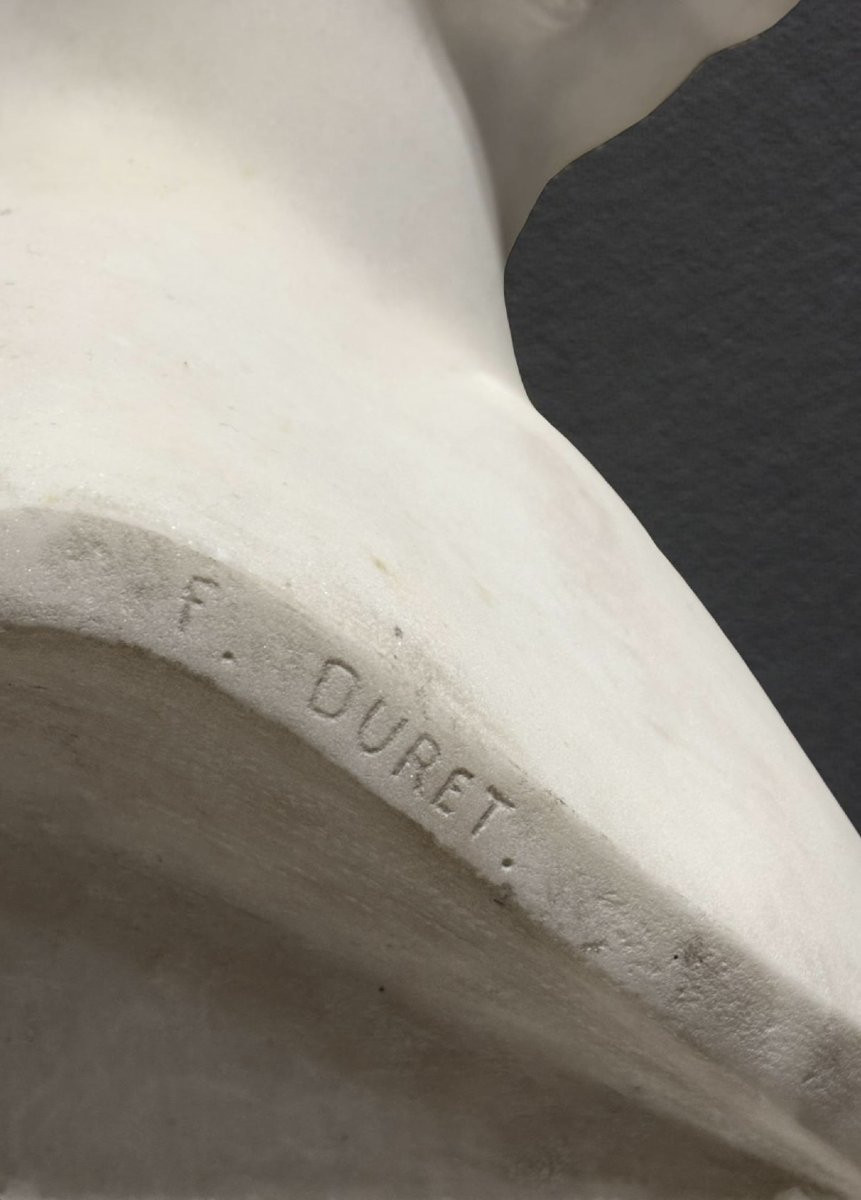
The bust is in excellent condition. It is signed F. Duret on the right bust. Minor signs of aging consistent with the period.
Measures
H 58 cm
L max 36 cm
D max 20 cm
Base 20 x 18.5 cm
+++++++++++++++++++++++++++++++++++++++++++++++++++++++++++++++++++++++++++++++++++++++++++++++ PACKAGE in a custom wooden case.
SHIPPING VIA MBE, pallet transport with TNT/FeDex
Payment methods: -Bank transfer -Online credit card (also AMEX) with Nexi-pay link -PayPal (+3.7%) -NO checks
https://internationalantiques.eu/delivery-and-insurance/
+++++++++++++++++++++++++++++++++++++++++++++++++++++++++++++++++++++++++++++++++++++++++++++++
Francisque Joseph Duret (October 19, 1804 – May 26, 1865) was a French sculptor, the son and pupil of François-Joseph Duret (1732–1816). He embodied the spirit of Romantic idealism within the Neoclassical tradition, creating monumental sculptures that captured both grandeur and human emotion. His legacy extends beyond his individual works, shaping the artistic landscape of mid-century France and influencing generations of sculptors.
Born in Paris into a family steeped in sculptural tradition—his father was himself a celebrated sculptor—Duret's formative years were marked by exposure to art and craftsmanship from an early age. He initially studied theater, demonstrating an appreciation for performance and visual storytelling. However, he quickly recognized sculpture as his true calling, enrolling at the Conservatory and studying with François-Joseph Bosio, whose influence instilled in him a meticulous attention to detail and a deep understanding of classical aesthetics. Crucially, Bosio's teachings fostered Duret's ability to observe human behavior, a skill that would prove invaluable throughout his artistic career. The Prix de Rome scholarship, awarded to him in 1823, solidified his position as an emerging talent, projecting him into the Italian artistic milieu, where he honed his skills and developed his distinctive style.
Duret's artistic sensibility leaned strongly toward Neoclassicism, reflecting the prevailing stylistic trends of his time: a reaction to the excesses of Rococo and a return to the ideals of ancient Greece and Rome. This commitment is evident in his early works, characterized by serene compositions, idealized figures, and masterful execution. *Neapolitan Fisherman Dancing the Tarantella* (1833), exhibited at the Louvre, is a testament to this style: a dynamic bronze sculpture that captured the fervor of Italian folk traditions with remarkable precision. It immediately cemented Duret's reputation as a sculptor capable of conveying both intellectual rigor and visceral emotion. Equally impressive is *Neapolitan Improvisatore* (1839), housed in the Leipzig Museum, which demonstrates his ability to portray human character with nuanced sensitivity.
Duret's career rose to prominence thanks to numerous prestigious commissions, both for public buildings and for producing portraits, thanks in part to the insightful observation of human behavior he acquired during his theatrical studies.
Duret's influence extended beyond his sculpture; He was a respected professor at the École des Beaux-Arts, where he cultivated the talent of future generations of sculptors, including Jean-Baptiste Carpeaux, Jules Dalou, Henri Chapu, Alphonse Lami, Édouard Lanteri, Bénédict Rougelet, and Jules Édouard Valtat.
Although Duret's oeuvre is not as extensive as that of some of his contemporaries, his sculptures, particularly those commissioned for monumental projects, remain enduring symbols of Romantic idealism and French cultural heritage. They continue to inspire admiration for their technical brilliance and expressive power, securing Duret's place as a pivotal figure in the history of 19th-century sculpture.
The bust is in excellent condition. It is signed F. Duret on the right bust. Minor signs of aging consistent with the period.
Measures
H 58 cm
L max 36 cm
D max 20 cm
Base 20 x 18.5 cm
+++++++++++++++++++++++++++++++++++++++++++++++++++++++++++++++++++++++++++++++++++++++++++++++ PACKAGE in a custom wooden case.
SHIPPING VIA MBE, pallet transport with TNT/FeDex
Payment methods: -Bank transfer -Online credit card (also AMEX) with Nexi-pay link -PayPal (+3.7%) -NO checks
https://internationalantiques.eu/delivery-and-insurance/
+++++++++++++++++++++++++++++++++++++++++++++++++++++++++++++++++++++++++++++++++++++++++++++++
2 600 €
Period: 19th century
Style: Louis Philippe, Charles 10th
Condition: Excellent condition
Material: Marble
Width: 36
Height: 58
Depth: 20
Reference (ID): 1674175
Availability: In stock
Print