


Francesco Lavagna (naples 1684-1724), Pair Of Still Life With Flowers And Watermelon
Artist: Françesco Lavagna (naples 1684-1724)
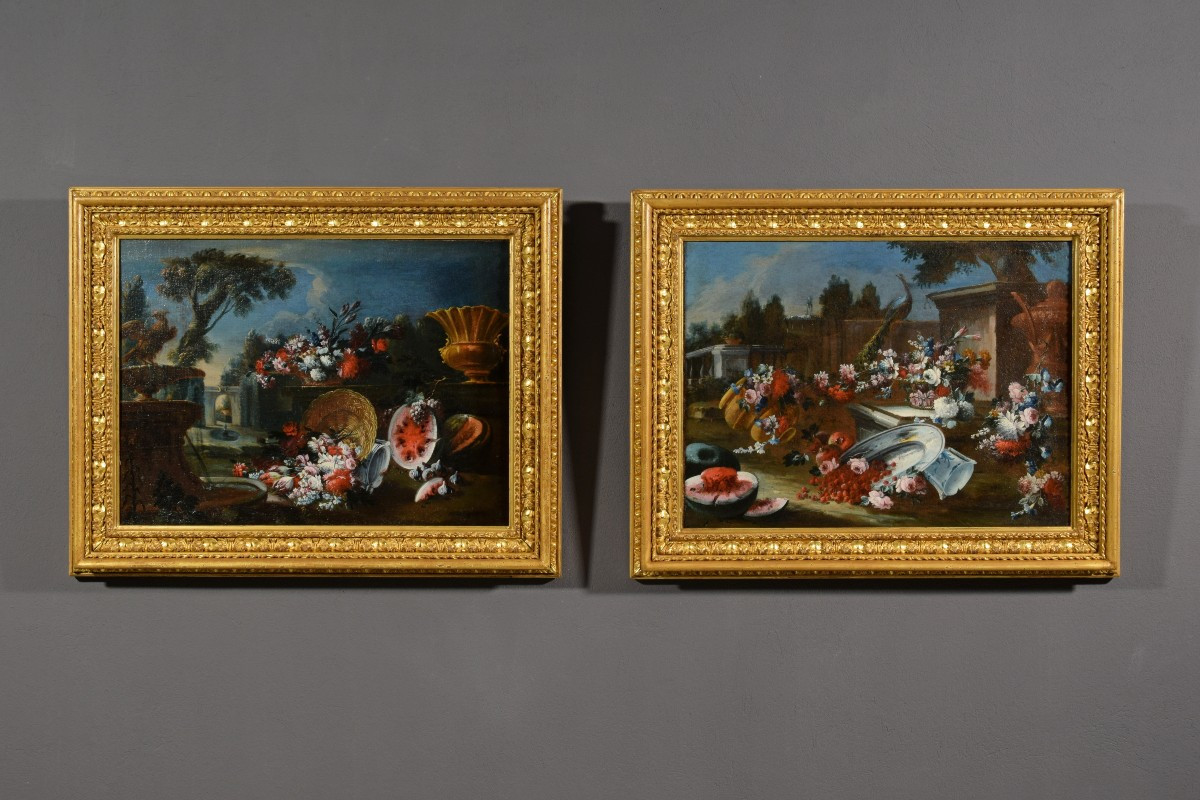
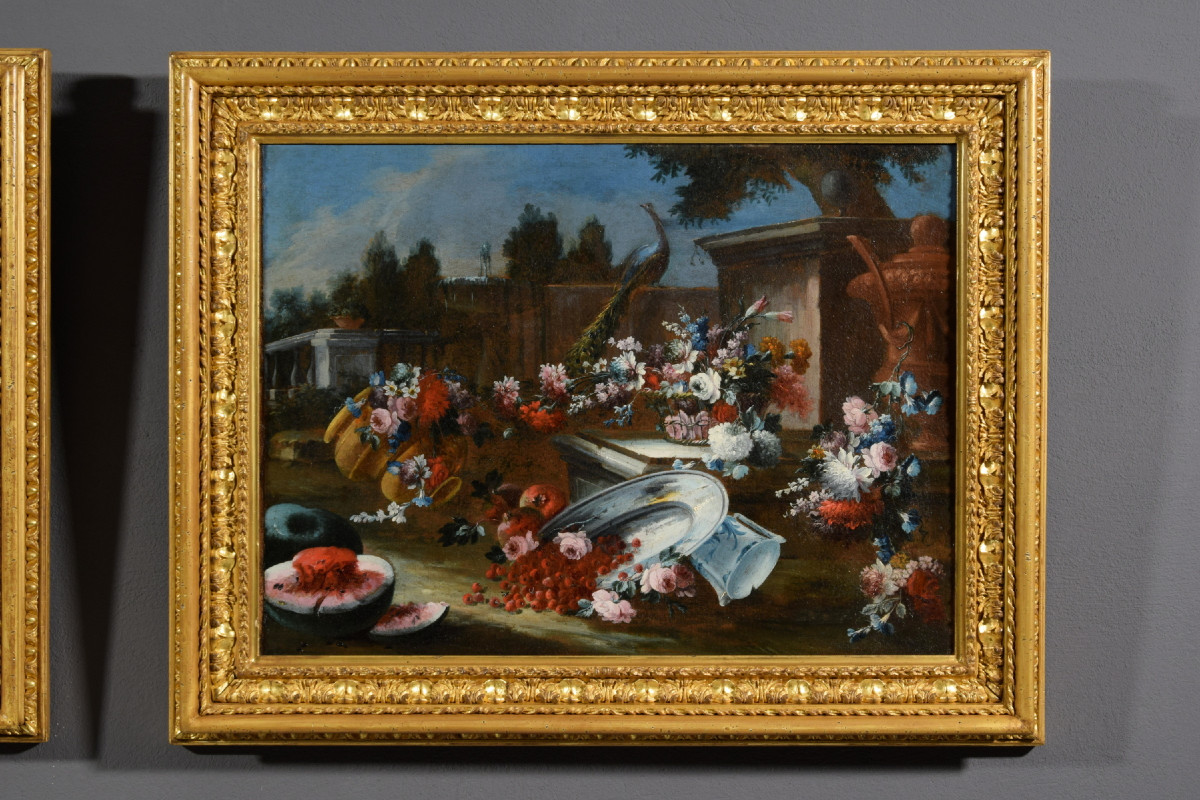
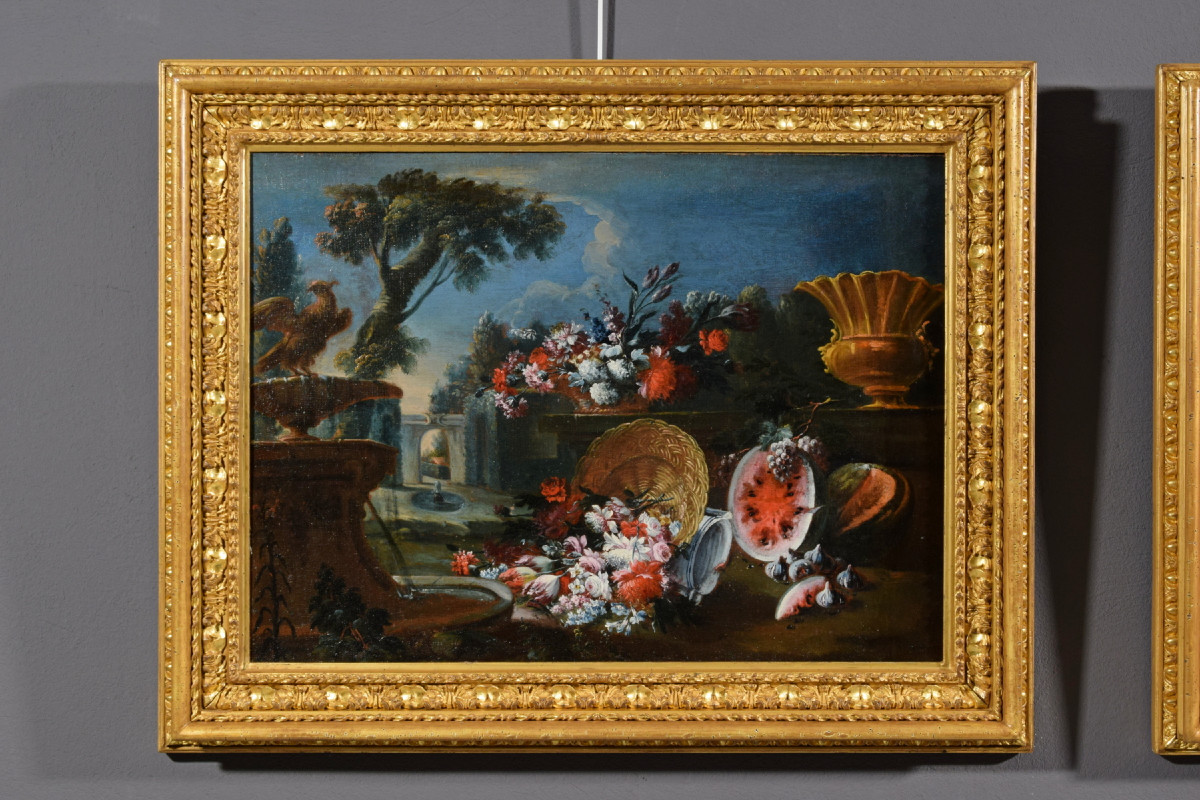
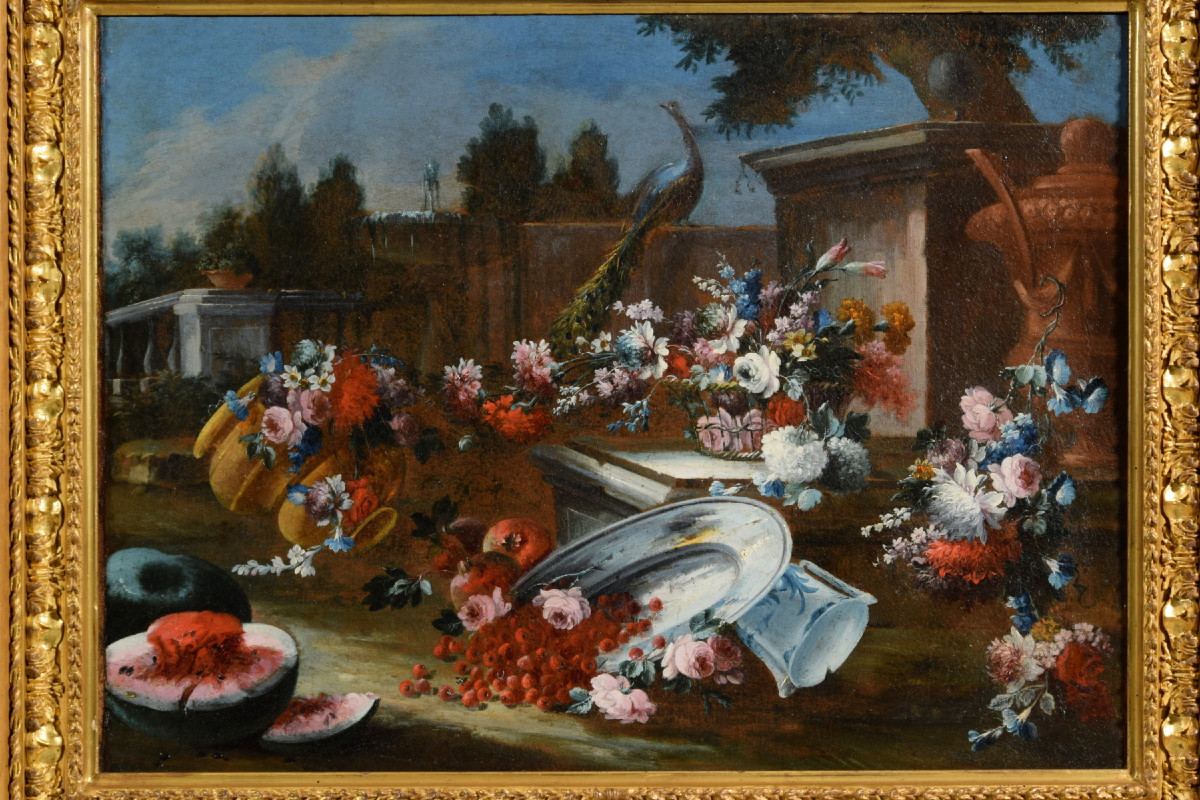
Francesco Lavagna (Naples1684-1724), Pair of paintings depicting Still Lifecomposition of flowers and watermelon and garden in the background
Dimensions: H 48 x W 65 cm; frameH 66 x W 83 x D 6 cm
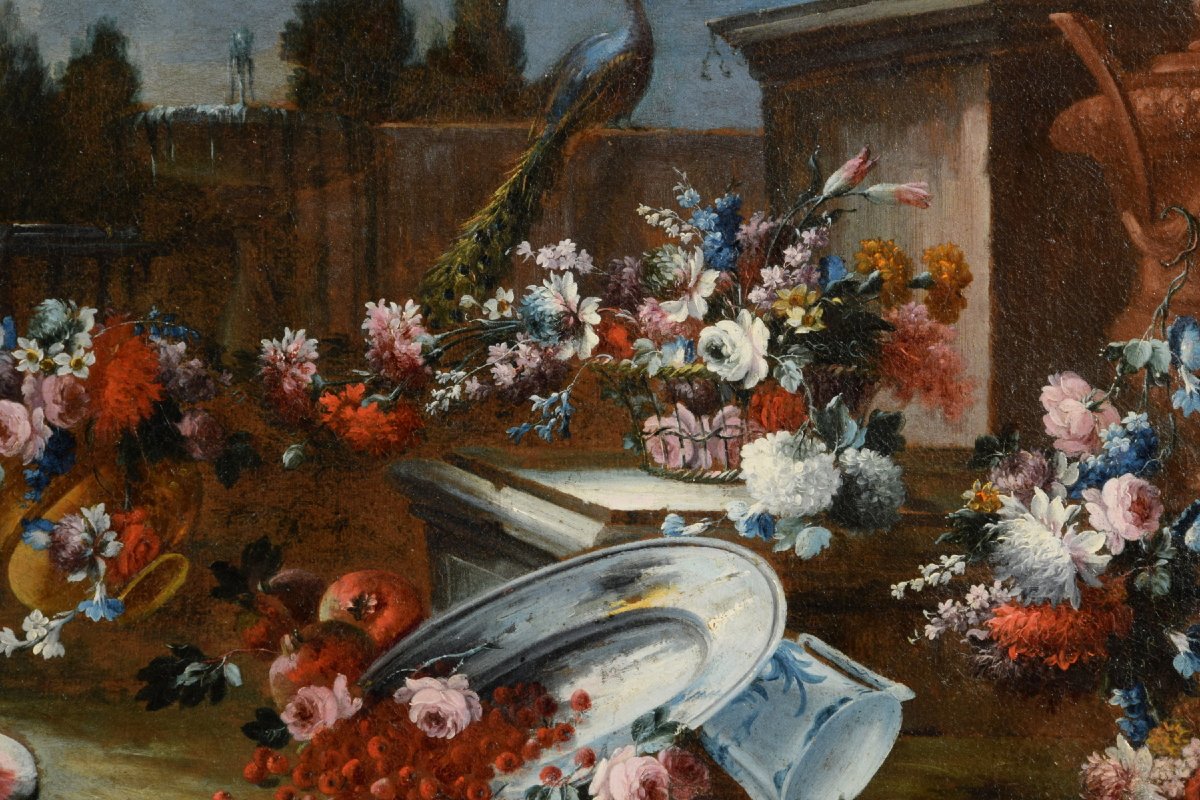
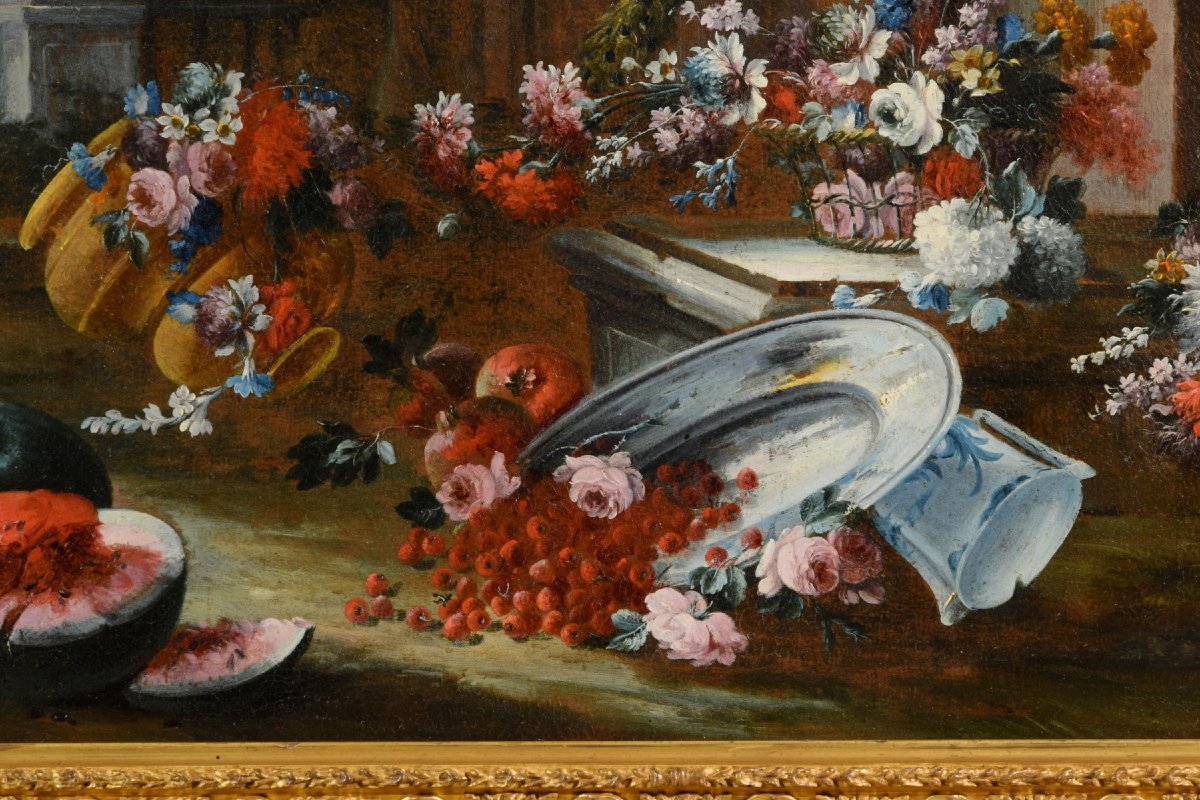
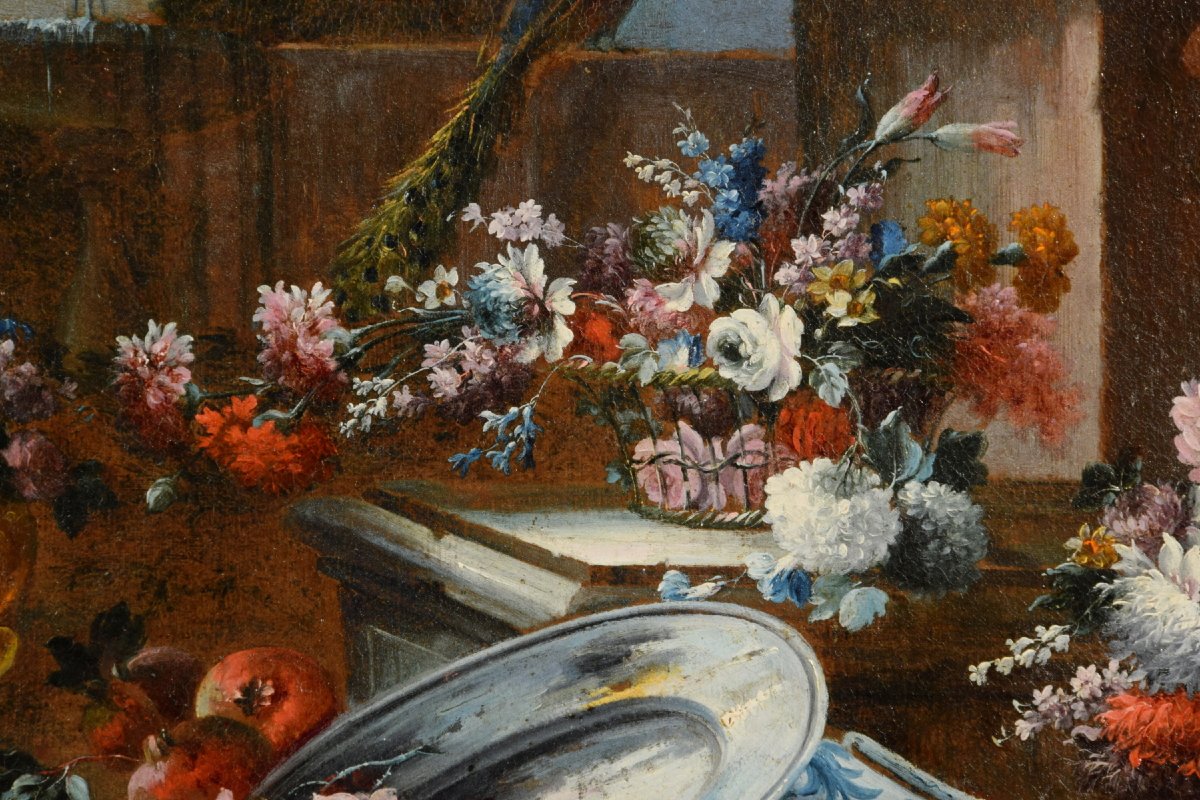
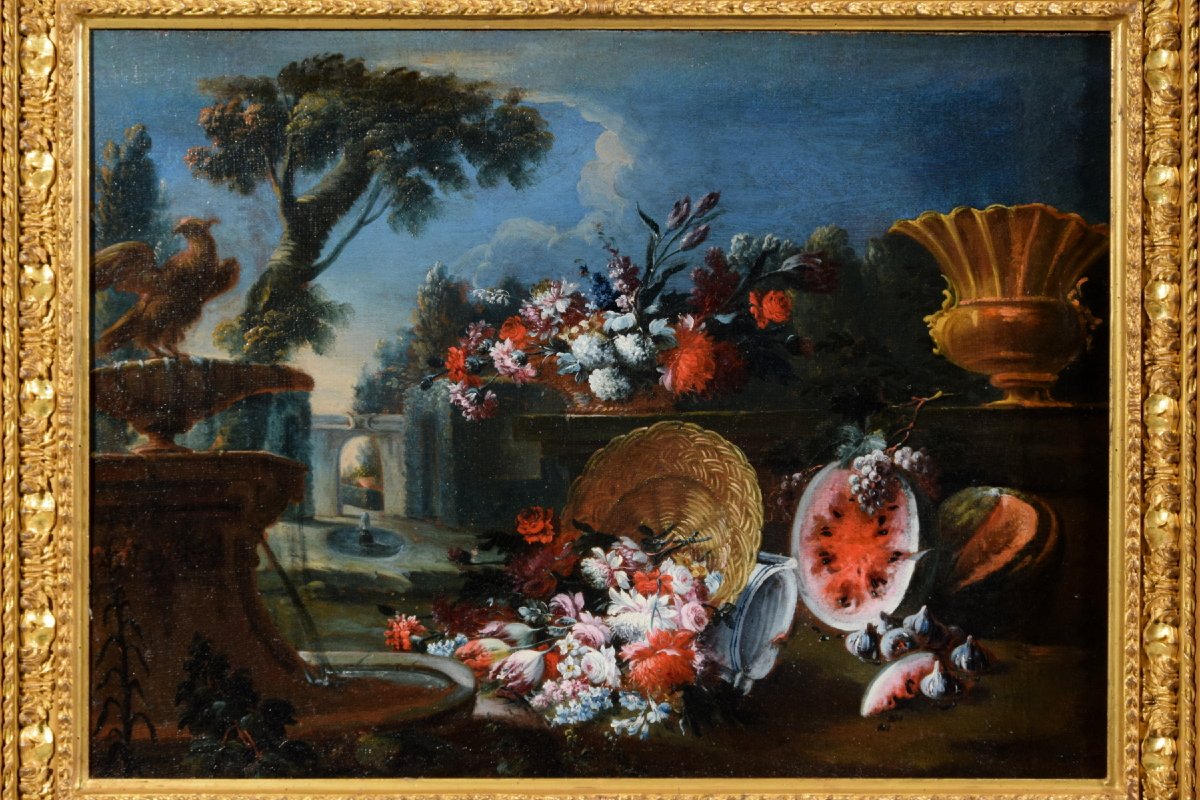
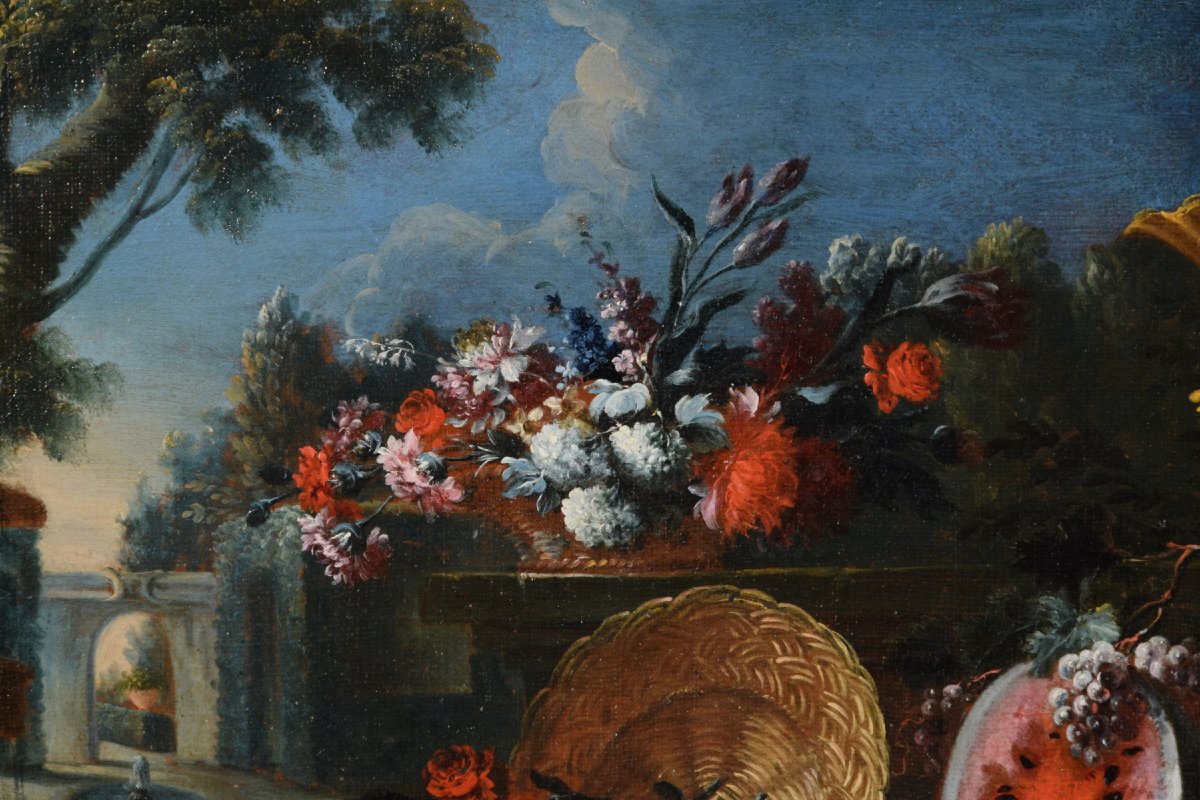
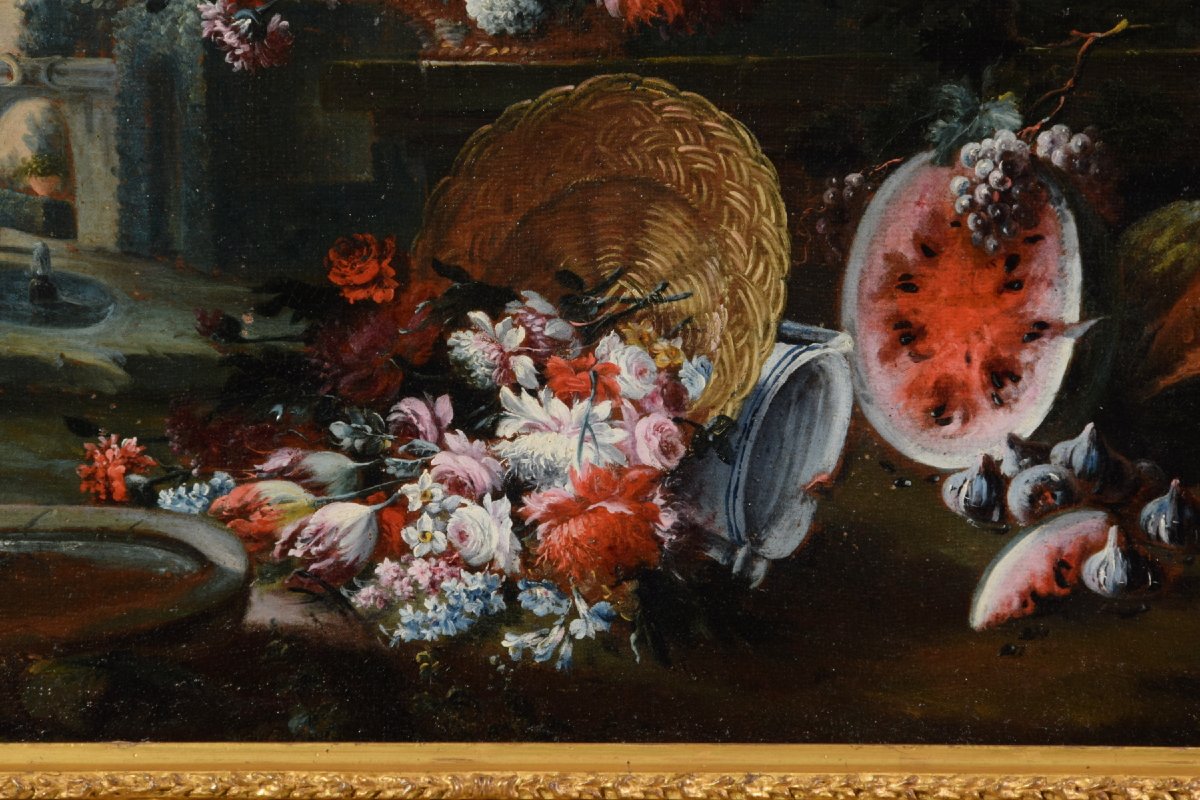
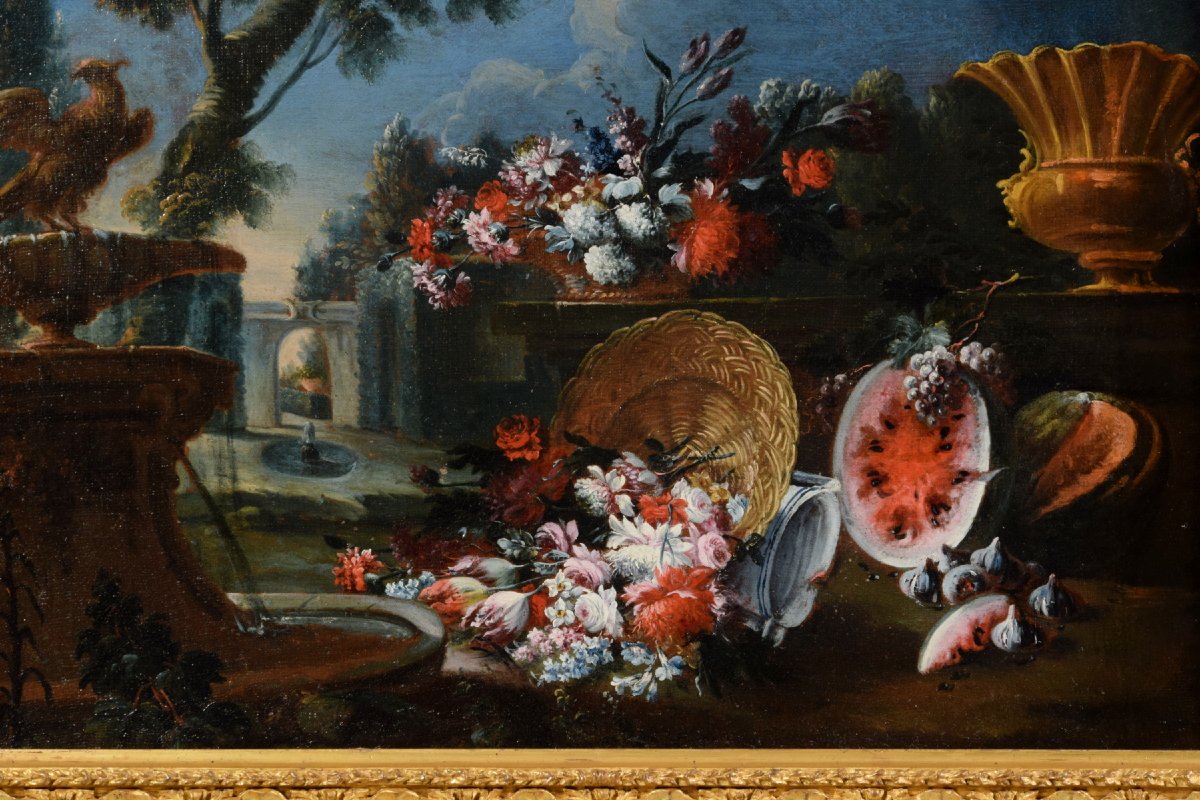
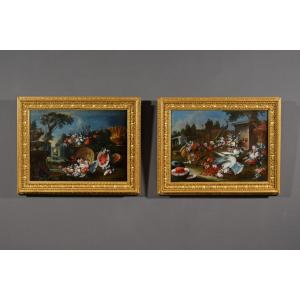
The paintings, beautifully made and in goodcondition, depict sumptuous compositions of flowers and fruits in elegantgardens. Attributable to the Neapolitan painter Francesco Lavagna, they presentcompositional and stylistic analogies with certain and signed works of thepainter. In our collection we also propose anotherpainting attributed to the Blackboard and the same size, replaceable at will inthe couple. In the painting proposed here on the left, inthe foreground and in the backlight is placed a gushing fountain crowned by thesculpture of a raptor with open wings. Some wild plants grow around her. At thecenter of the canvas, in an apparent random arrangement, lie two triumphs offlowers, characterized by bright colors in shades of magenta and carmine reds,with notes of blue and white white. On the ground, the flowers emerge from aninverted wicker basket resting on a white porcelain cup threaded in blue. Tothe side are a watermelon cut in half, a yellow melon, some figs and a bunch ofgrapes. Immediately behind, placed on a low wall that acts as a fifth, there isa wicker basket with great floral decoration and a copper vase with globularbody and large flared and embossed neck. The scene leaves ample space to thedescription of the surrounding environment: it is a formal garden, or Italian,characterized by a geometric subdivision of the spaces obtained with the use ofhedges and plant sculptures obtained by pruning evergreen bushes, geometricmirrors of water, often combined with architectural elements such as fountainsand statues. You can see two large topiary in boxwood, arched, with a smallfountain in the center circular section. In addition to this fence, a fifth oftrees stands out on a blue sky, in which there are some fluffy clouds.The painting proposed on the right, of similar composition andworkmanship, is distinguished by a watermelon in the foreground, some objectsin white porcelain adorned with blue surrounded by compositions of flowers thatlie on the ground and on architectural elements. On the right a largeterracotta vase is placed ahead of a portion of the wall in addition to which atree creates a fifth to the scene. In the background a peacock, with acharacteristic long coloured tail, sits from the back to the observer. Then youcan see a gushing fountain and a balustrade that, cut from the composition,suggests the continuity of the spaces in addition to what is depicted. Branchesof trees in the distance delimit the horizon.Clearly belonging to the Neapolitan school, thecanvas shows undisputed analogies with the style of the painter FrancescoLavagna (1684-1724). It is one of the protagonists of Neapolitan naturamortismof the early eighteenth century. The eighteenth-century Neapolitan, in thefield of still life, is much appreciated and sought after today by both theantique market and critics. It was appreciated and much requested in the pastby the great collectors and patrons, rich lords owners of the most beautifulbuildings of Naples and surroundings. Today it is still under study, andFrancesco Lavagna himself has very little information. Many artists haveventured into naturamortism and their figures are slowly emerging fromoblivion, allowing critics to outline their stylistic characteristics, groupingcorpus of works under some names mainly thanks to the discovery of signedworks.It is still very difficult to distinguish thehand of some painters such as Giuseppe and Francesco Lavagna and Gaspare Lopez.The same works appear in catalogues and in the antique market sometimesattributed to one, sometimes to the other artist. Francesco Lavagna, as mentioned, is active inNaples in the first half of the 18th century. He is often confused with GaspareLopez and Giuseppe Lavagna, probably linked to him by a bond of kinship, andalso an interpreter of the same pictorial genre. The canvases document very well the expressivequalities of Francesco Lavagna, able to create works never banal and full of adescriptive ability, of remarkable visual impact, in the rendering of theeffects of light, color and matter, characterized by a fine and meticulousbrushstroke.
We apologize for any translation errors.
Please click here to viewthe expertise in Italian.
Dimensions: H 48 x W 65 cm; frameH 66 x W 83 x D 6 cm
The paintings, beautifully made and in goodcondition, depict sumptuous compositions of flowers and fruits in elegantgardens. Attributable to the Neapolitan painter Francesco Lavagna, they presentcompositional and stylistic analogies with certain and signed works of thepainter. In our collection we also propose anotherpainting attributed to the Blackboard and the same size, replaceable at will inthe couple. In the painting proposed here on the left, inthe foreground and in the backlight is placed a gushing fountain crowned by thesculpture of a raptor with open wings. Some wild plants grow around her. At thecenter of the canvas, in an apparent random arrangement, lie two triumphs offlowers, characterized by bright colors in shades of magenta and carmine reds,with notes of blue and white white. On the ground, the flowers emerge from aninverted wicker basket resting on a white porcelain cup threaded in blue. Tothe side are a watermelon cut in half, a yellow melon, some figs and a bunch ofgrapes. Immediately behind, placed on a low wall that acts as a fifth, there isa wicker basket with great floral decoration and a copper vase with globularbody and large flared and embossed neck. The scene leaves ample space to thedescription of the surrounding environment: it is a formal garden, or Italian,characterized by a geometric subdivision of the spaces obtained with the use ofhedges and plant sculptures obtained by pruning evergreen bushes, geometricmirrors of water, often combined with architectural elements such as fountainsand statues. You can see two large topiary in boxwood, arched, with a smallfountain in the center circular section. In addition to this fence, a fifth oftrees stands out on a blue sky, in which there are some fluffy clouds.The painting proposed on the right, of similar composition andworkmanship, is distinguished by a watermelon in the foreground, some objectsin white porcelain adorned with blue surrounded by compositions of flowers thatlie on the ground and on architectural elements. On the right a largeterracotta vase is placed ahead of a portion of the wall in addition to which atree creates a fifth to the scene. In the background a peacock, with acharacteristic long coloured tail, sits from the back to the observer. Then youcan see a gushing fountain and a balustrade that, cut from the composition,suggests the continuity of the spaces in addition to what is depicted. Branchesof trees in the distance delimit the horizon.Clearly belonging to the Neapolitan school, thecanvas shows undisputed analogies with the style of the painter FrancescoLavagna (1684-1724). It is one of the protagonists of Neapolitan naturamortismof the early eighteenth century. The eighteenth-century Neapolitan, in thefield of still life, is much appreciated and sought after today by both theantique market and critics. It was appreciated and much requested in the pastby the great collectors and patrons, rich lords owners of the most beautifulbuildings of Naples and surroundings. Today it is still under study, andFrancesco Lavagna himself has very little information. Many artists haveventured into naturamortism and their figures are slowly emerging fromoblivion, allowing critics to outline their stylistic characteristics, groupingcorpus of works under some names mainly thanks to the discovery of signedworks.It is still very difficult to distinguish thehand of some painters such as Giuseppe and Francesco Lavagna and Gaspare Lopez.The same works appear in catalogues and in the antique market sometimesattributed to one, sometimes to the other artist. Francesco Lavagna, as mentioned, is active inNaples in the first half of the 18th century. He is often confused with GaspareLopez and Giuseppe Lavagna, probably linked to him by a bond of kinship, andalso an interpreter of the same pictorial genre. The canvases document very well the expressivequalities of Francesco Lavagna, able to create works never banal and full of adescriptive ability, of remarkable visual impact, in the rendering of theeffects of light, color and matter, characterized by a fine and meticulousbrushstroke.
We apologize for any translation errors.
Please click here to viewthe expertise in Italian.
19 500 €
Period: 18th century
Style: Louis 14th, Regency
Condition: Good condition
Material: Oil painting
Width: 83
Height: 66
Depth: 6
Reference (ID): 1739417
Availability: In stock
Print