THIS OBJECT WAS SOLD
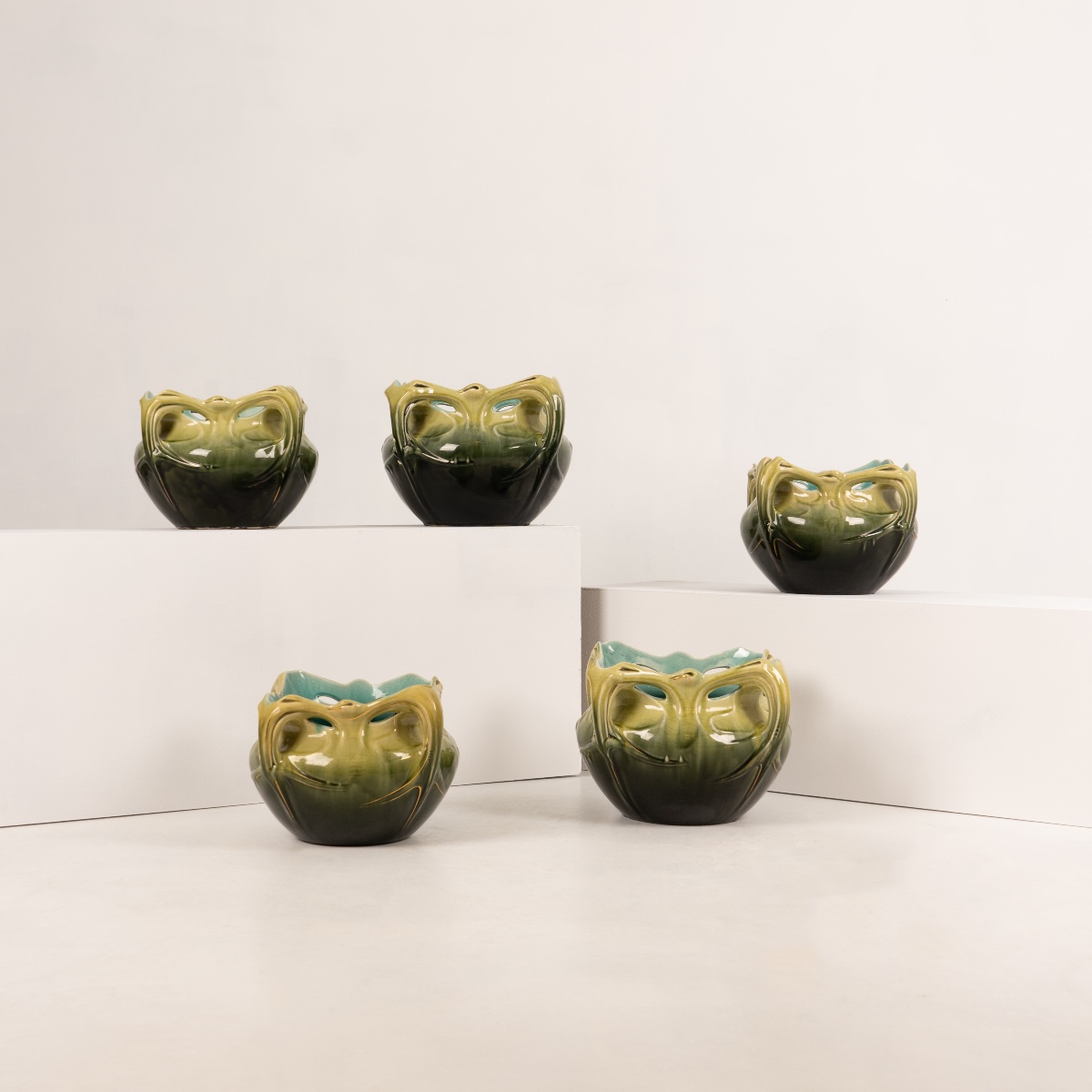
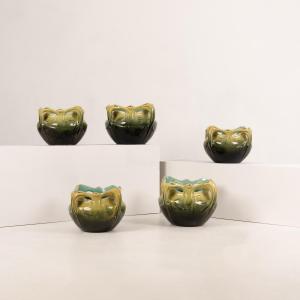
Hector Guimard, Rare Set Of 5 Ceramics, De Bruyn Ed., Circa 1900

Hector Guimard (1867-1942) after
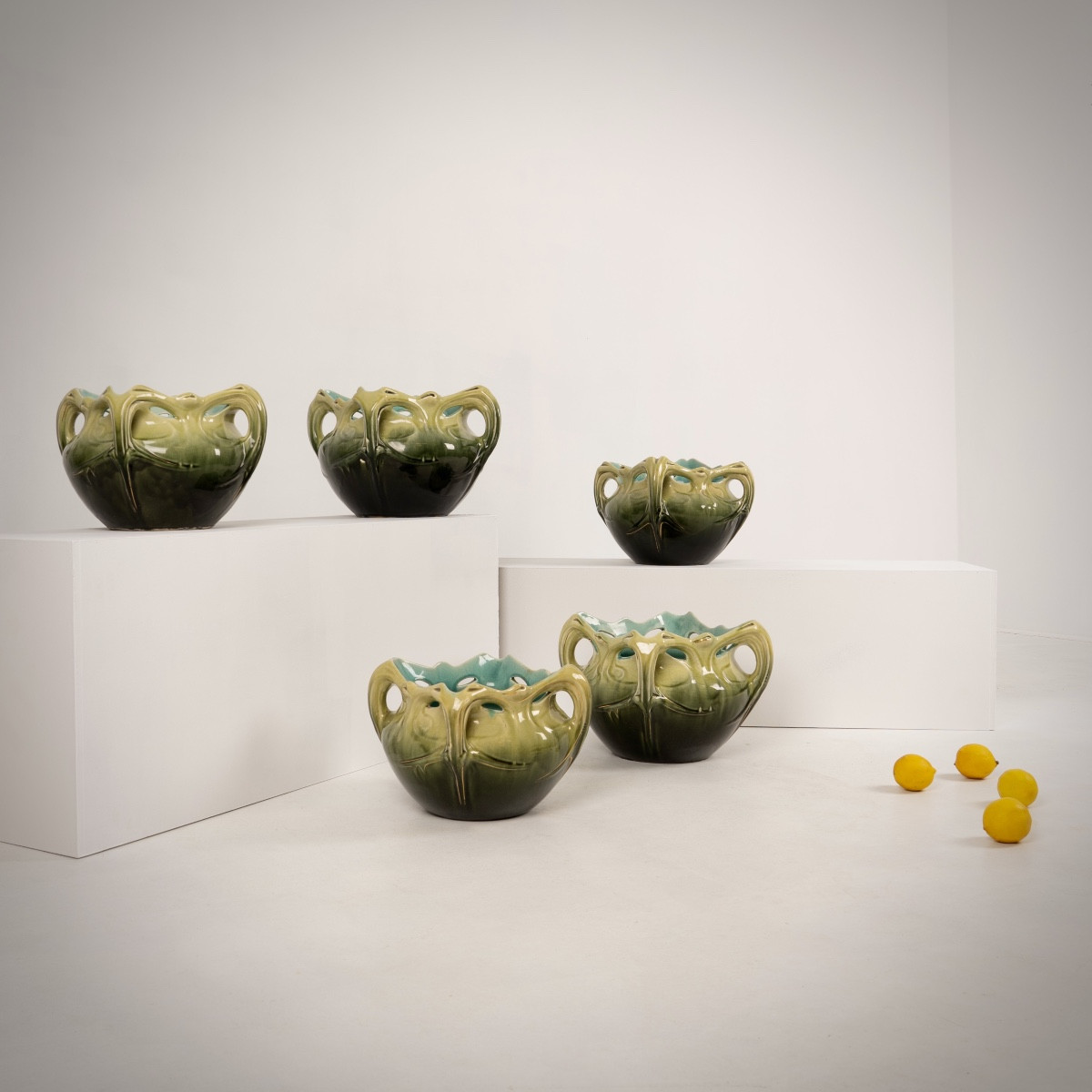
Rare set of five Cache-pot dit De Chalmont, faïencerie De Bruyn, circa 1890/1900
In earthenware with shouldered oval body and four detached handles
Shaded green enamel enhanced with gilding and blue on the inside
Larg. 28 x H. 23 cm
Condition report: a few chips under the base
References: In the 18th century, Jean Bernard De Bruyn was already running an earthenware factory in Leuven, Belgium. After his death in 1805, his son Martin De Bruyn ran the factory, which was then passed on to his son Denis De Bruyn.
Denis' son Antoine Gustave De Bruyn moved to Fives in 1864. Initially based on rue de Juliers, he moved to rue de Malakoff, before taking up residence on rue de l'Espérance at n°22. It was at this address that the earthenware factory was built. From 1887 onwards, the first "barbotines décorées" from the De Bruyn faience factory in Fives-Lille appeared: planters, jugs and tobacco pots, as well as jardinières and vases, mantelpieces and umbrella stands.
And in 1889, De Bruyn was awarded a medal at the Paris Universal Exhibition. In 1917, a fire ravaged the factory, severely disrupting production. At the beginning of the 20th century, the earthenware factory employed some 150 workers and covered an area of around 1.4 hectares; by the outbreak of the First World War, the workforce had risen to 400. Sold in the 1950s, the factory continued to produce until it was finally closed in 1962.
Rare set of five Cache-pot dit De Chalmont, faïencerie De Bruyn, circa 1890/1900
In earthenware with shouldered oval body and four detached handles
Shaded green enamel enhanced with gilding and blue on the inside
Larg. 28 x H. 23 cm
Condition report: a few chips under the base
References: In the 18th century, Jean Bernard De Bruyn was already running an earthenware factory in Leuven, Belgium. After his death in 1805, his son Martin De Bruyn ran the factory, which was then passed on to his son Denis De Bruyn.
Denis' son Antoine Gustave De Bruyn moved to Fives in 1864. Initially based on rue de Juliers, he moved to rue de Malakoff, before taking up residence on rue de l'Espérance at n°22. It was at this address that the earthenware factory was built. From 1887 onwards, the first "barbotines décorées" from the De Bruyn faience factory in Fives-Lille appeared: planters, jugs and tobacco pots, as well as jardinières and vases, mantelpieces and umbrella stands.
And in 1889, De Bruyn was awarded a medal at the Paris Universal Exhibition. In 1917, a fire ravaged the factory, severely disrupting production. At the beginning of the 20th century, the earthenware factory employed some 150 workers and covered an area of around 1.4 hectares; by the outbreak of the First World War, the workforce had risen to 400. Sold in the 1950s, the factory continued to produce until it was finally closed in 1962.
Explore similar pieces and discover your ideal find:
Planters, Cachepots