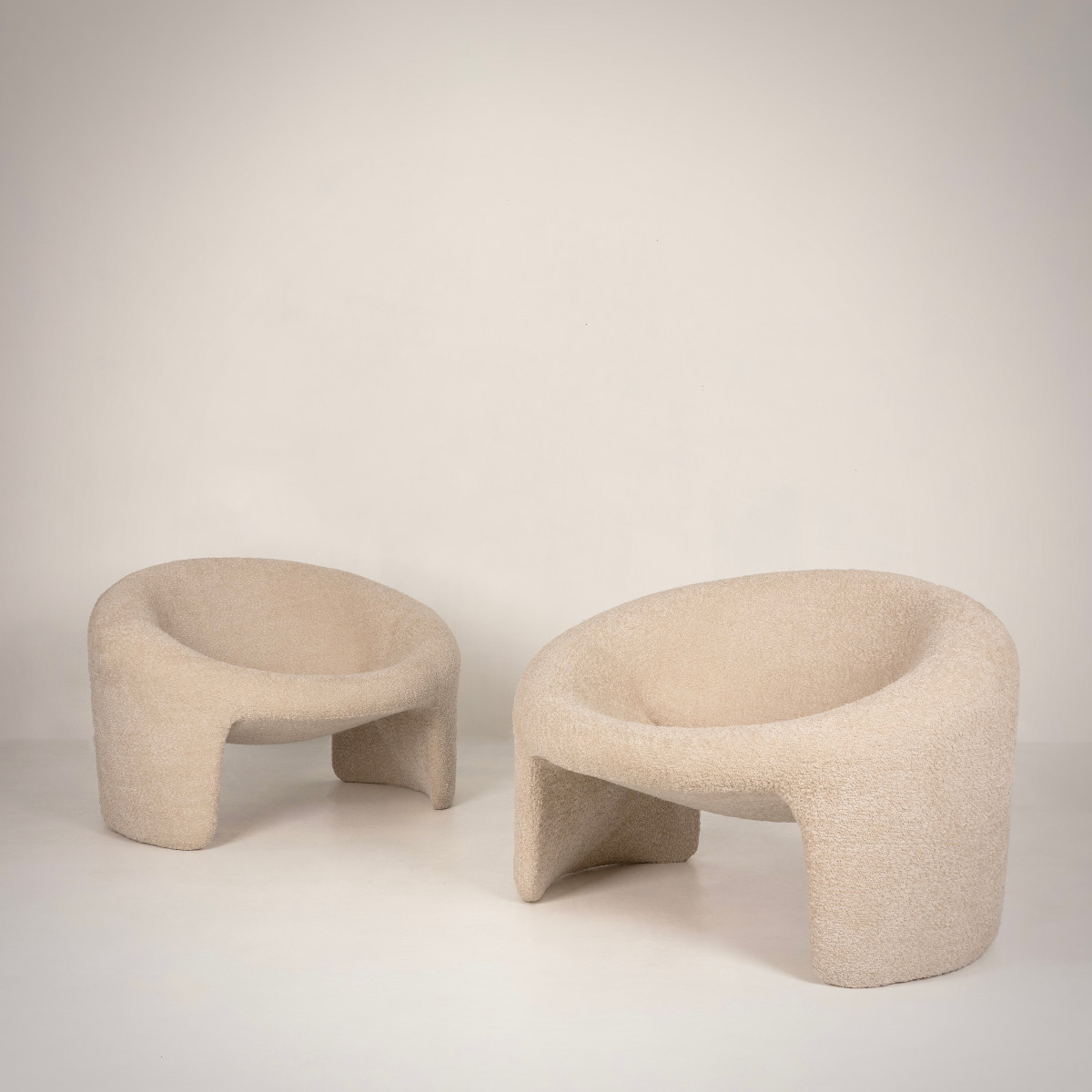
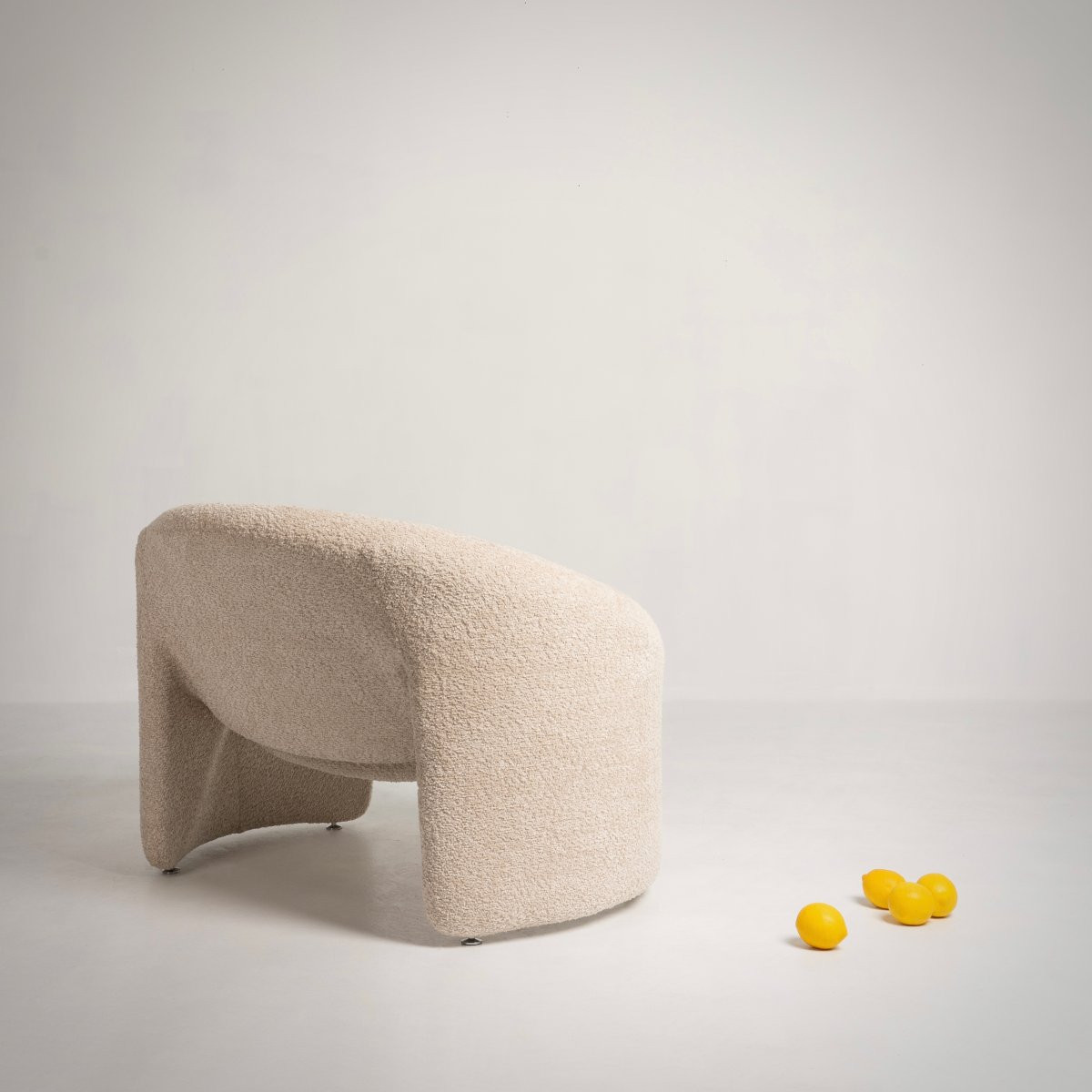
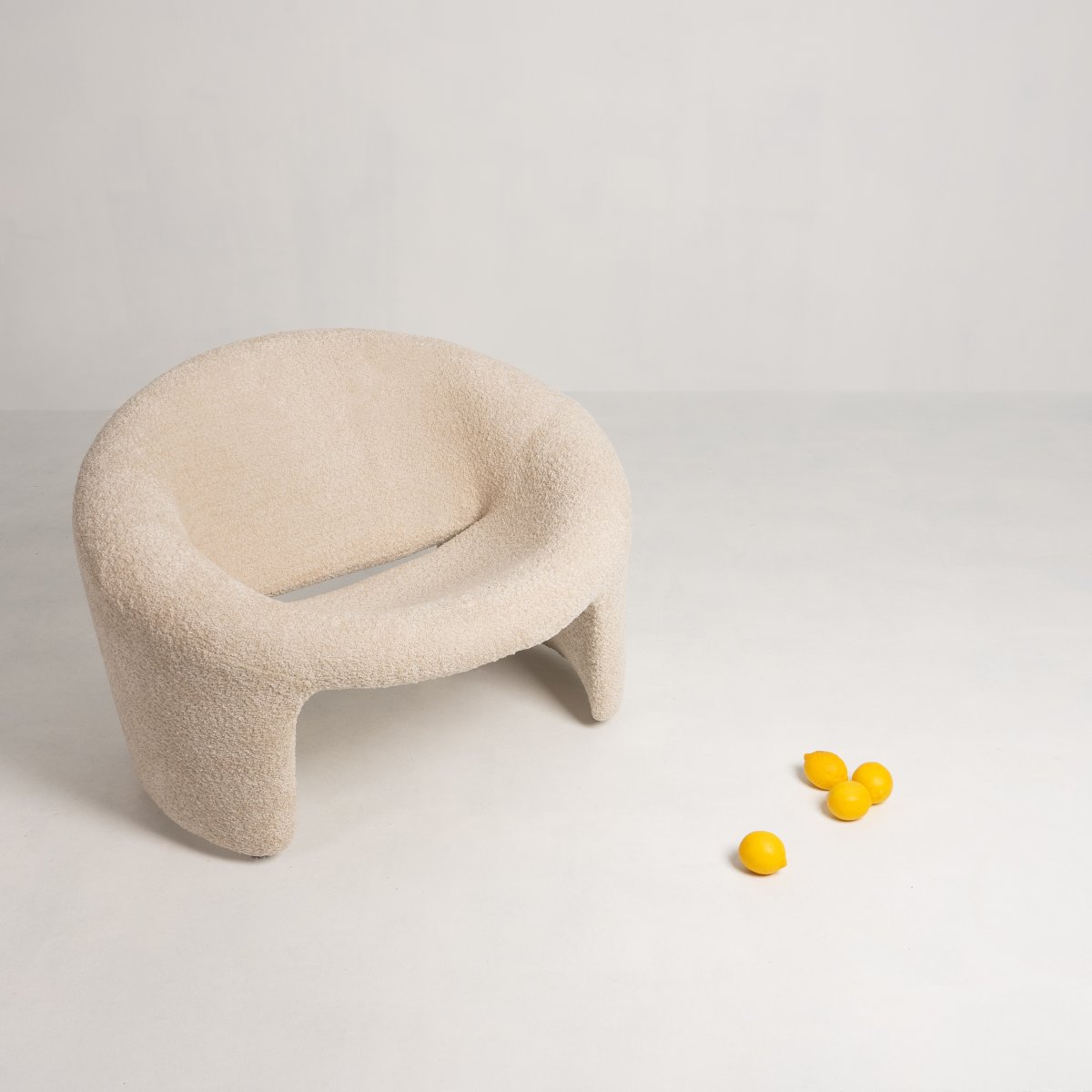
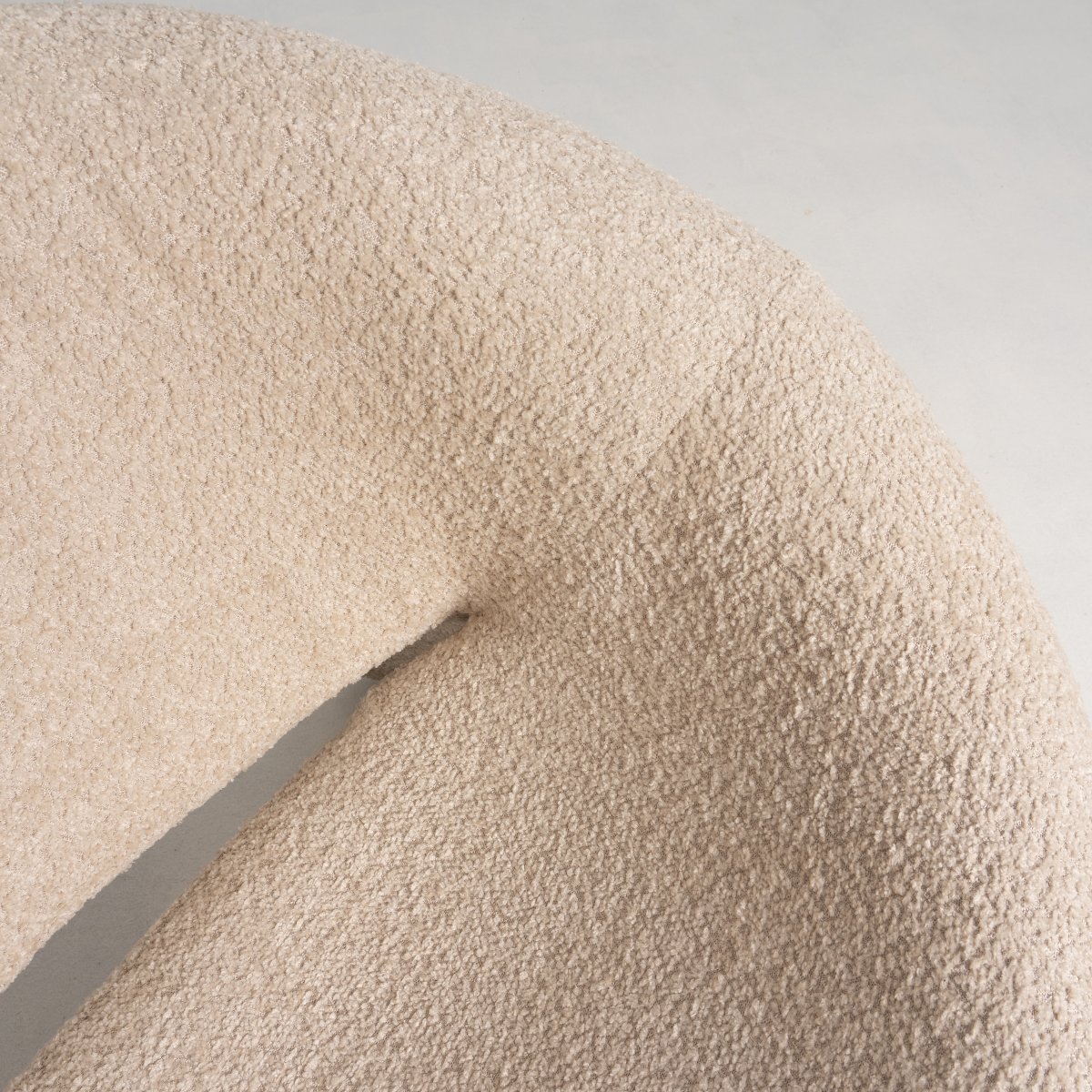
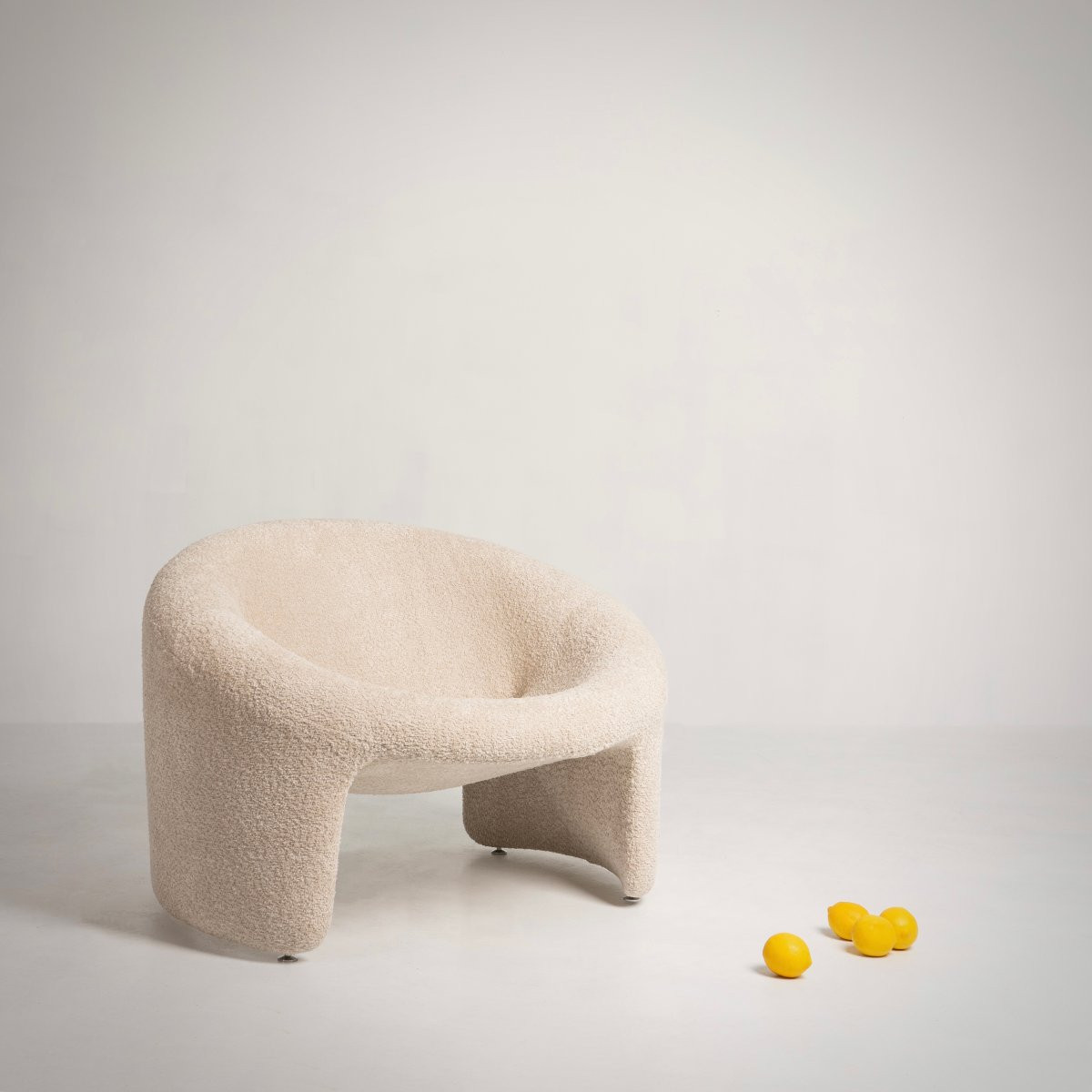
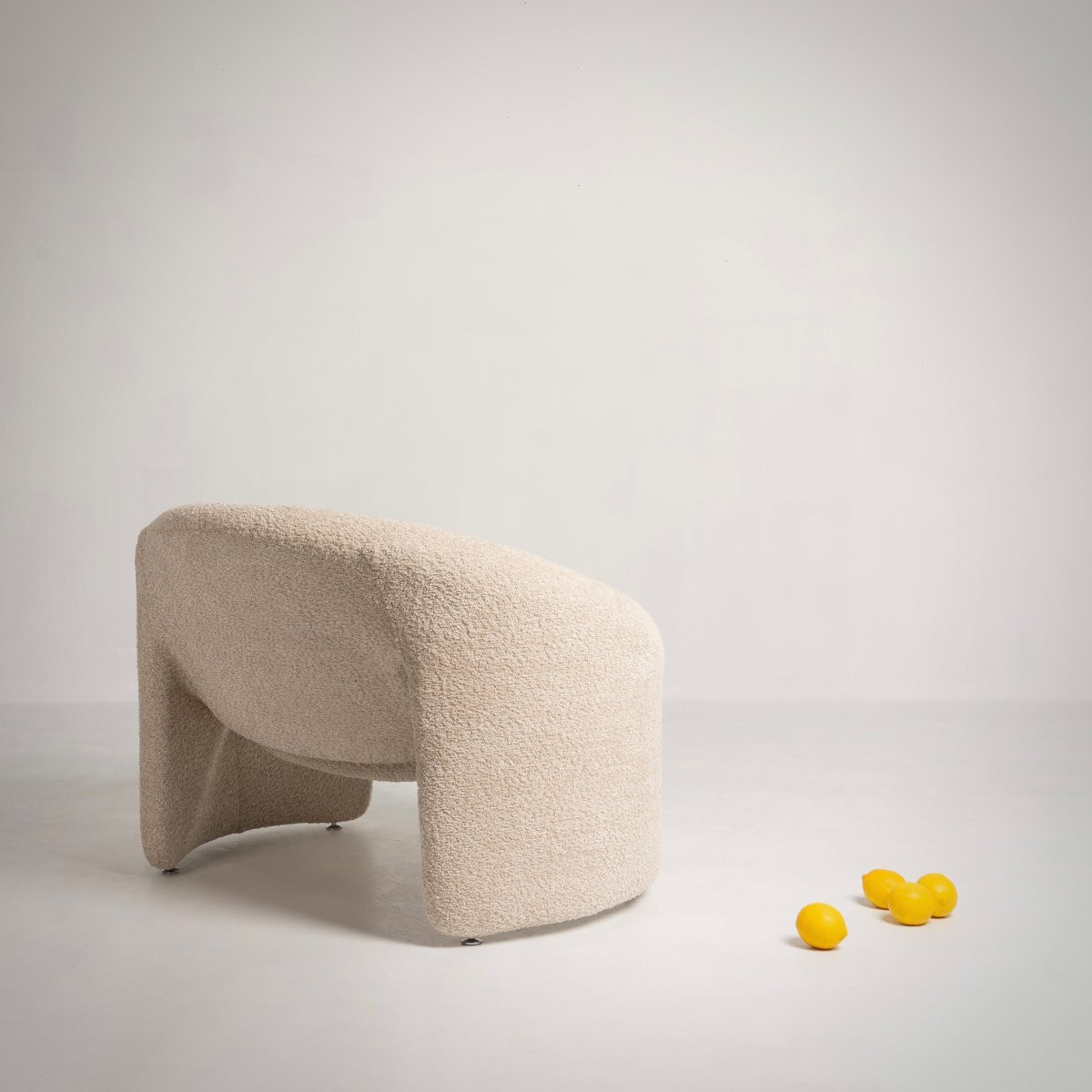
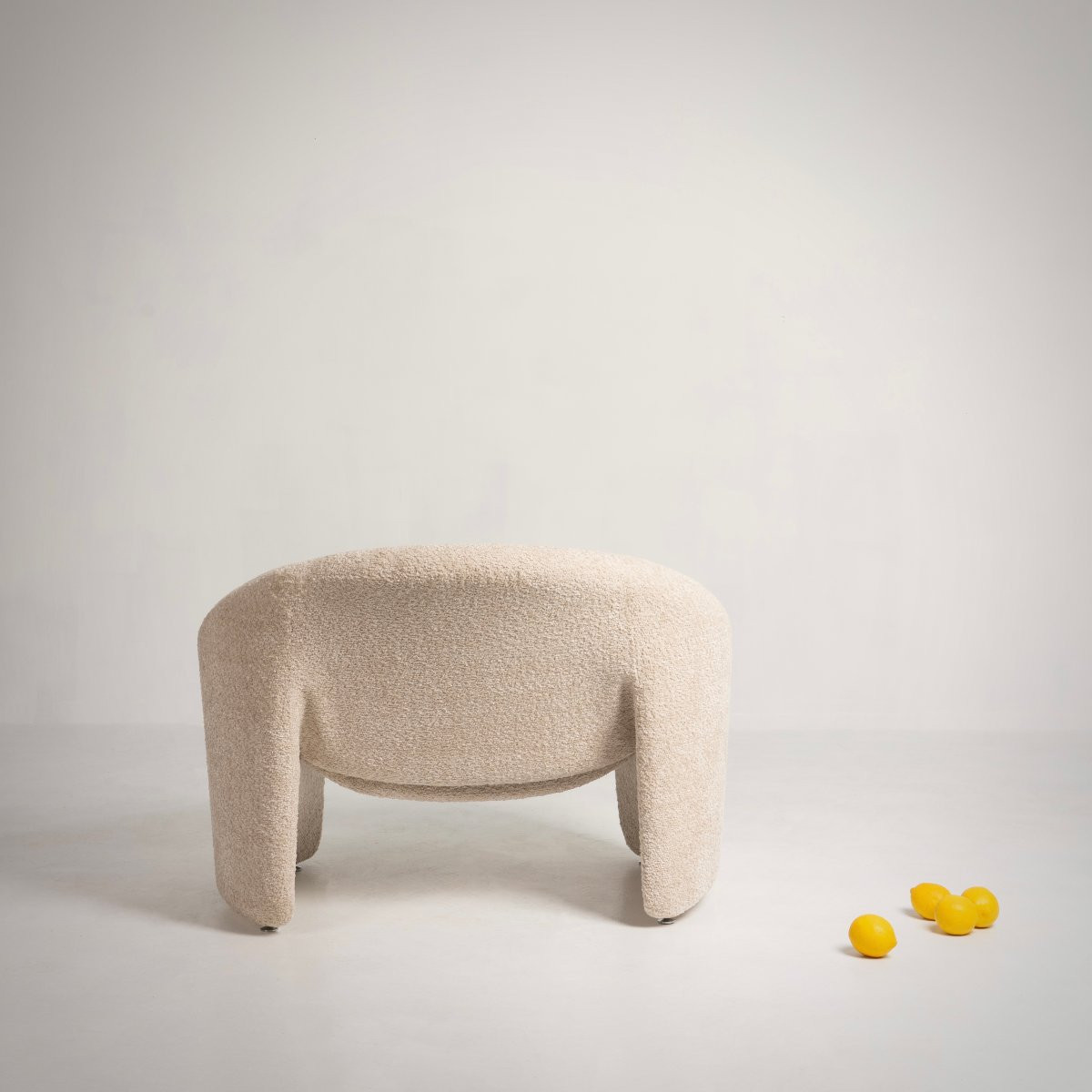
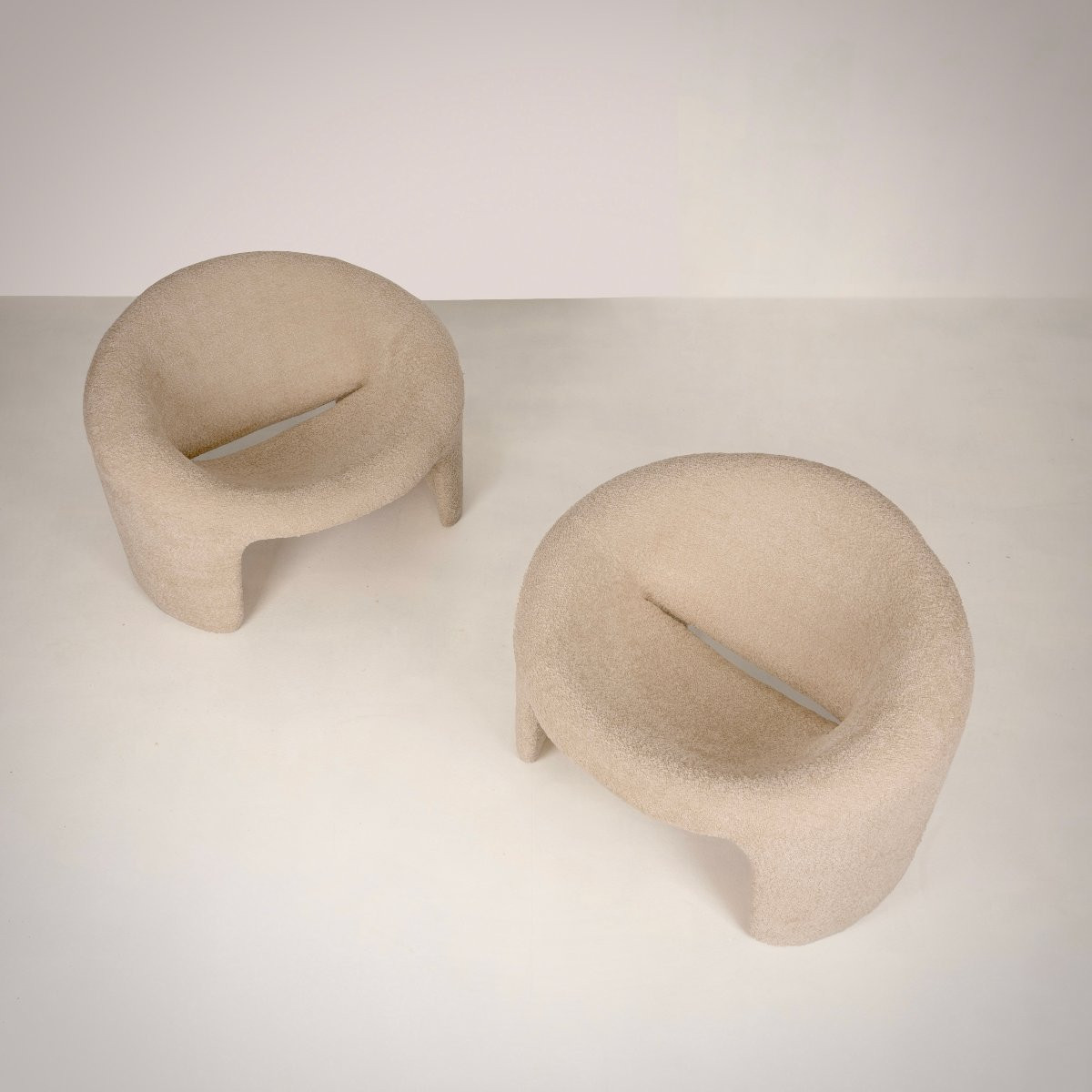
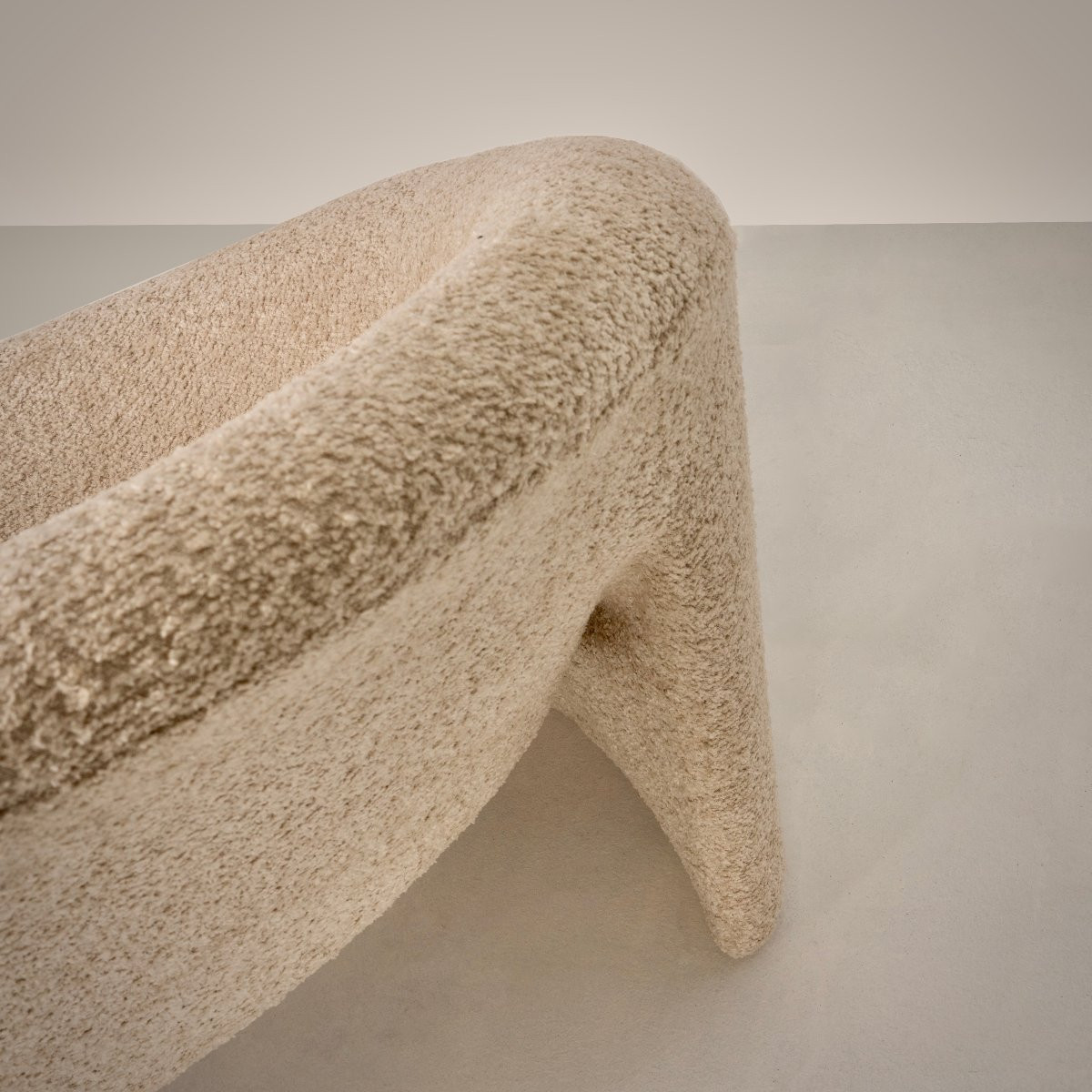


Olivier Mourgue, Armchairs Montreal, Airborne Ed., 1967
Artist: Olivier Mourgue
Olivier Mourgue (1939-)
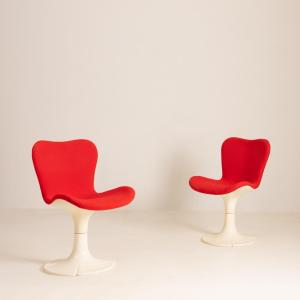
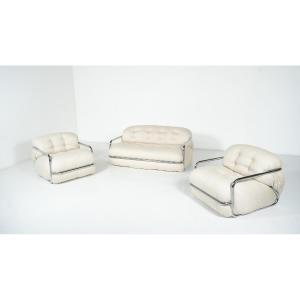
Pair of armchairs Montreal Mobilier National-Atelier de recherche et création, Airborne publisher, France, 1967
Fiberglass structure, foam and Mohair velvet from Maison Misia (fabric of your choice), chromed metal glides
Height 65 (38 cm) x Depth 63 x Width 87 cm
References:
ARC-Mobilier National Collection, inventory number GMT-22591-014
Commissioned by the Mobilier National for the French pavilion at the 1967 World's Fair Olivier Mourgue's collaboration with the Mobilier National dates back to the 1967 Montreal World's Fair for which he created a set of chairs and tables intended to furnish the main hall of the French pavilion.
The contract (May 9, 1967) stipulated that the designer must provide a project including full-scale plans, a report on materials and upholstery, as well as a study of the overall decor of the living room.
The prototypes studied and produced by the ARC based on Mourgue's designs led to a first edition, commissioned from the Airborne company, of thirty armchairs, ten poufs, and six coffee tables bearing the "Mobilier national" label.
The internal structure of the seats, made of molded polyester, forms a shell that is covered with foam and upholstered in a fully removable red jersey slipcover.
Bibliography:
- Furniture and Decor, No. 840, August-September 1968 - Airborne Trade Catalog, 1970
- Japan Interior Design, Special Issue, 1971
- Catalog "National Furniture 1964-2004, 40 Years of Creation"
Biography:
Winner of the First International Design Award and the Grand Prix National de la Création Industrielle (National Grand Prize for Industrial Design), Olivier Mourgue graduated from the École Boulle. He enrolled at the École Nationale Supérieure des Arts Décoratifs (National School of Decorative Arts) in Paris and, while still a student, designed the Joker seating range in 1959 for the manufacturer Airborne, with whom he would collaborate for nearly 20 years. In 1964, continuing in the same vein, he conceived the Whist range in steel blades and black leather, of which we are offering here a rare silver leather chaise longue accompanied by its matching armchair and ottoman.
The following year, he innovated with the Djinn range, which met with great public success. The designs were even selected by Stanley Kubrick to furnish the space station in his film 2001: A Space Odyssey, and are now part of the permanent collection of the Museum of Modern Art (MoMA) in New York. The collaboration with the company provided him with unprecedented industrial support. He became the symbol of the Airborne brand. After developing the "Joker," "Whist," "Djinn," and "Montreal" series, he sought a creation that would allow him to apply his research into nomadism and living close to the ground. It was in this spirit that he designed the anthropomorphic "Bouloum" chaise longue in 1968, in two versions: an exterior in fiberglass and an interior covered in fabric.
Close to Jean Coural, administrator of the Mobilier National (National Furniture Collection), he was commissioned by the institution's Research and Creation Workshop that same year to design, with the assistance of Pierre Paulin, the cafeteria of the Rennes cultural center. He designed a "Cafeteria unit" and the famous Caddie chair, which was produced in small batches by Erbos solely for the project, without being mass-produced.
Pair of armchairs Montreal Mobilier National-Atelier de recherche et création, Airborne publisher, France, 1967
Fiberglass structure, foam and Mohair velvet from Maison Misia (fabric of your choice), chromed metal glides
Height 65 (38 cm) x Depth 63 x Width 87 cm
References:
ARC-Mobilier National Collection, inventory number GMT-22591-014
Commissioned by the Mobilier National for the French pavilion at the 1967 World's Fair Olivier Mourgue's collaboration with the Mobilier National dates back to the 1967 Montreal World's Fair for which he created a set of chairs and tables intended to furnish the main hall of the French pavilion.
The contract (May 9, 1967) stipulated that the designer must provide a project including full-scale plans, a report on materials and upholstery, as well as a study of the overall decor of the living room.
The prototypes studied and produced by the ARC based on Mourgue's designs led to a first edition, commissioned from the Airborne company, of thirty armchairs, ten poufs, and six coffee tables bearing the "Mobilier national" label.
The internal structure of the seats, made of molded polyester, forms a shell that is covered with foam and upholstered in a fully removable red jersey slipcover.
Bibliography:
- Furniture and Decor, No. 840, August-September 1968 - Airborne Trade Catalog, 1970
- Japan Interior Design, Special Issue, 1971
- Catalog "National Furniture 1964-2004, 40 Years of Creation"
Biography:
Winner of the First International Design Award and the Grand Prix National de la Création Industrielle (National Grand Prize for Industrial Design), Olivier Mourgue graduated from the École Boulle. He enrolled at the École Nationale Supérieure des Arts Décoratifs (National School of Decorative Arts) in Paris and, while still a student, designed the Joker seating range in 1959 for the manufacturer Airborne, with whom he would collaborate for nearly 20 years. In 1964, continuing in the same vein, he conceived the Whist range in steel blades and black leather, of which we are offering here a rare silver leather chaise longue accompanied by its matching armchair and ottoman.
The following year, he innovated with the Djinn range, which met with great public success. The designs were even selected by Stanley Kubrick to furnish the space station in his film 2001: A Space Odyssey, and are now part of the permanent collection of the Museum of Modern Art (MoMA) in New York. The collaboration with the company provided him with unprecedented industrial support. He became the symbol of the Airborne brand. After developing the "Joker," "Whist," "Djinn," and "Montreal" series, he sought a creation that would allow him to apply his research into nomadism and living close to the ground. It was in this spirit that he designed the anthropomorphic "Bouloum" chaise longue in 1968, in two versions: an exterior in fiberglass and an interior covered in fabric.
Close to Jean Coural, administrator of the Mobilier National (National Furniture Collection), he was commissioned by the institution's Research and Creation Workshop that same year to design, with the assistance of Pierre Paulin, the cafeteria of the Rennes cultural center. He designed a "Cafeteria unit" and the famous Caddie chair, which was produced in small batches by Erbos solely for the project, without being mass-produced.
9 500 €
Period: 20th century
Style: Design 50's and 60's
Condition: Good condition
Width: 87
Height: 65
Depth: 63
Reference (ID): 1719138
Availability: In stock
Print