


Spain. Antique Plug Bayonet With Blade By Tomás De Ayala. 17th–19th Century
Artist: Tomás De Ayala
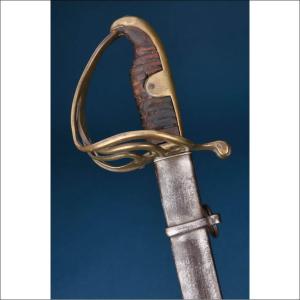
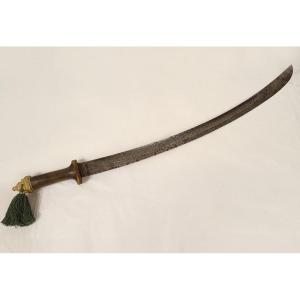
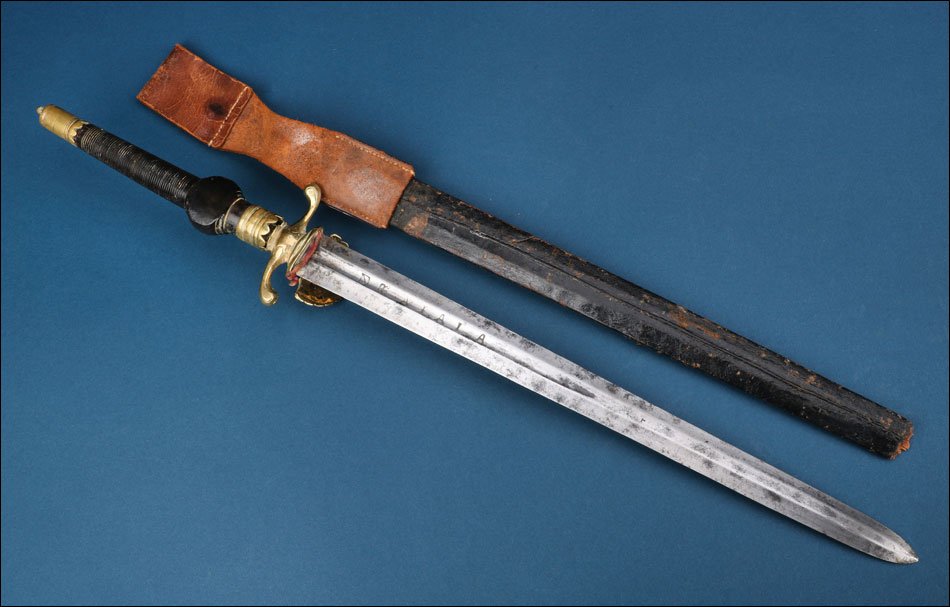
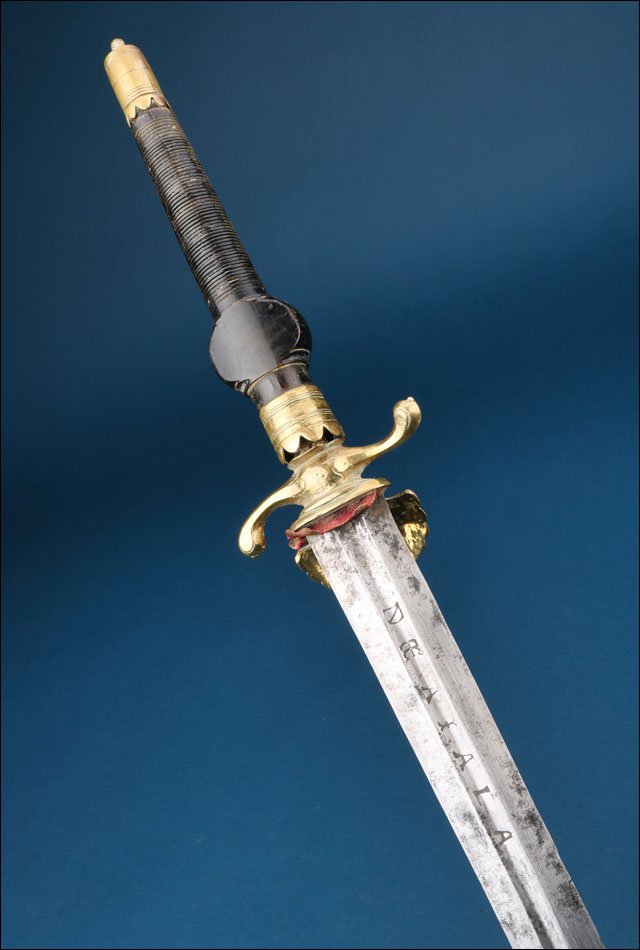
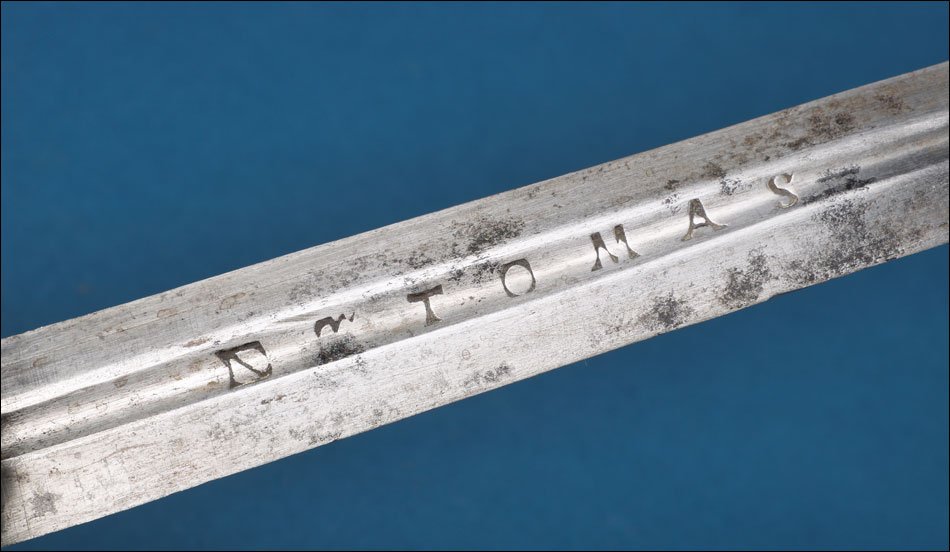
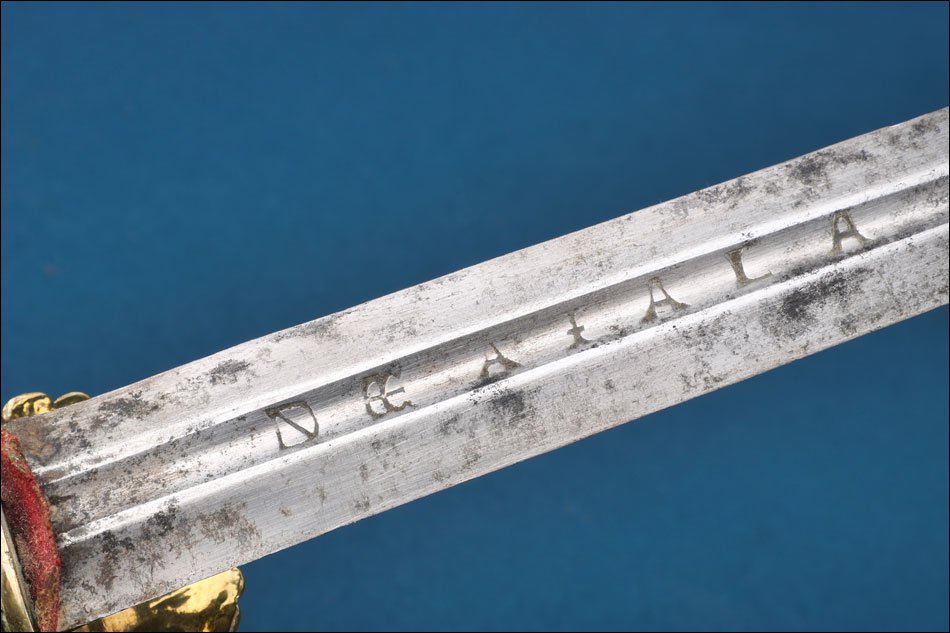
Antique, interesting and rather unusual Spanish socket bayonet made in the late 18th or early 19th century, circa 1780 to 1820, using the blade of a 17th century sword signed by the prestigious Toledo swordsmith Tomás de Ayala, active around 1625.
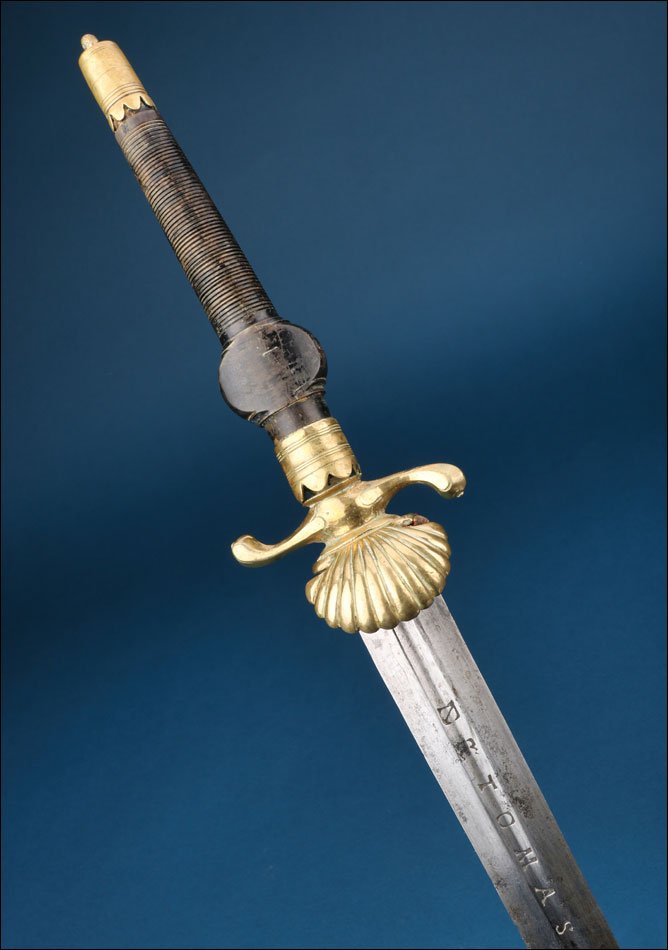
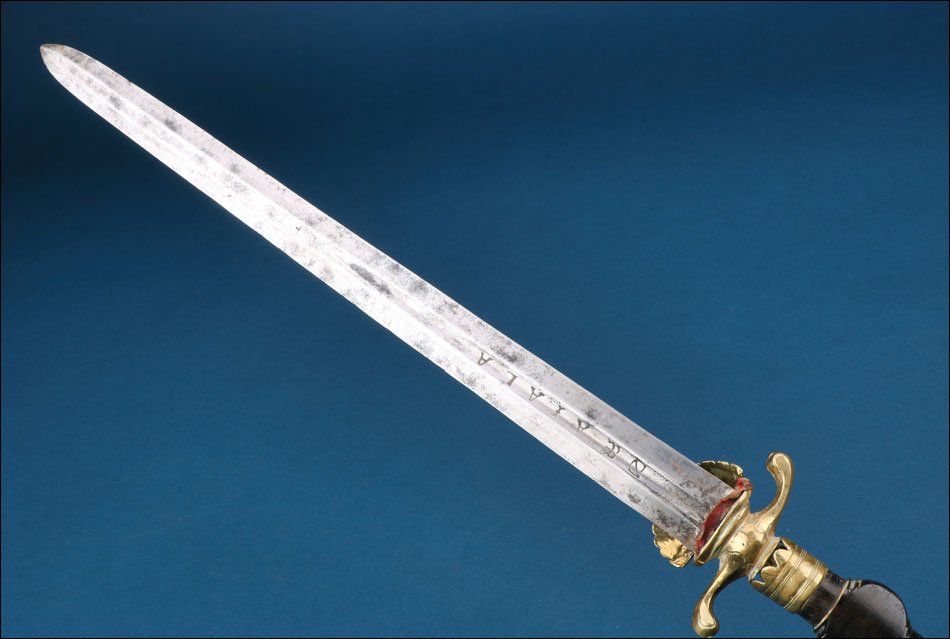
The blade is straight, of flat section with a slight central ridge, and retains the inscription of the master swordsmith visible along the longitudinal fuller. Its workmanship clearly corresponds to the standards of the 17th-century Toledo school, renowned for the quality of its steel and the sobriety of its forms. The surface shows very good preservation, with a light patina and wear consistent with its age, without signs of aggressive cleaning or modern intervention.
The hilt features a characteristic shell-shaped guard. The grip is made of natural horn, providing a firm hold and creating a very attractive chromatic contrast with the gilt metal elements.
The bayonet retains its scabbard corresponding to the 19th-century configuration. It is structurally complete, although it lacks the terminal metal tip. Overall, the general condition is very good, maintaining notable material integrity considering the complex constructional history of the piece.
This type of composite weapon reflects a common historical practice. The reuse of old blades of high quality when their technical value justified it. The presence of a blade attributed to Tomás de Ayala adds exceptional interest, placing the piece within a historical framework spanning from the Toledo sword-making tradition of the 17th century to the armament adaptations of the 19th century.
It is a particularly interesting piece due to the combination of chronologies and the presence of a blade signed by one of the most recognised swordsmiths of Toledo. Its typological rarity and good state of preservation make it a highly attractive example for collectors specialising in historical edged weapons.
Measurements. 55.3 cm, 21.8 in. Blade. 36 cm, 14.2 in.
History of Tomás de Ayala
Tomás de Ayala was one of the swordsmiths active in Toledo during the first third of the 17th century, at a time when the city maintained its international prestige as a centre for the production of high-quality steel. Toledo master swordsmiths enjoyed great reputation across Europe, and their blades were valued both for their strength and their balance.
During this period, technical traditions inherited from the Renaissance coexisted with new requirements derived from the evolution of firearms and changes in military tactics. Blades produced by these masters continued to be used for generations, and their reuse in later weapons was common when their quality justified it.
Swordsmith marks constituted a guarantee of origin and quality. In the case of Tomás de Ayala, his name is associated with blades of great solidity and sober execution, representative of the continuity of the Toledo school during a period of historical transition. Today, weapons that preserve blades signed by these masters are considered pieces of special interest within specialised collecting.
The blade is straight, of flat section with a slight central ridge, and retains the inscription of the master swordsmith visible along the longitudinal fuller. Its workmanship clearly corresponds to the standards of the 17th-century Toledo school, renowned for the quality of its steel and the sobriety of its forms. The surface shows very good preservation, with a light patina and wear consistent with its age, without signs of aggressive cleaning or modern intervention.
The hilt features a characteristic shell-shaped guard. The grip is made of natural horn, providing a firm hold and creating a very attractive chromatic contrast with the gilt metal elements.
The bayonet retains its scabbard corresponding to the 19th-century configuration. It is structurally complete, although it lacks the terminal metal tip. Overall, the general condition is very good, maintaining notable material integrity considering the complex constructional history of the piece.
This type of composite weapon reflects a common historical practice. The reuse of old blades of high quality when their technical value justified it. The presence of a blade attributed to Tomás de Ayala adds exceptional interest, placing the piece within a historical framework spanning from the Toledo sword-making tradition of the 17th century to the armament adaptations of the 19th century.
It is a particularly interesting piece due to the combination of chronologies and the presence of a blade signed by one of the most recognised swordsmiths of Toledo. Its typological rarity and good state of preservation make it a highly attractive example for collectors specialising in historical edged weapons.
Measurements. 55.3 cm, 21.8 in. Blade. 36 cm, 14.2 in.
History of Tomás de Ayala
Tomás de Ayala was one of the swordsmiths active in Toledo during the first third of the 17th century, at a time when the city maintained its international prestige as a centre for the production of high-quality steel. Toledo master swordsmiths enjoyed great reputation across Europe, and their blades were valued both for their strength and their balance.
During this period, technical traditions inherited from the Renaissance coexisted with new requirements derived from the evolution of firearms and changes in military tactics. Blades produced by these masters continued to be used for generations, and their reuse in later weapons was common when their quality justified it.
Swordsmith marks constituted a guarantee of origin and quality. In the case of Tomás de Ayala, his name is associated with blades of great solidity and sober execution, representative of the continuity of the Toledo school during a period of historical transition. Today, weapons that preserve blades signed by these masters are considered pieces of special interest within specialised collecting.
1 200 €
Period: 17th century
Style: Other Style
Condition: Good condition
Length: 55,3 cm
Reference (ID): 1737808
Availability: In stock
Print