

Switzerland. Antique Pioneer Short Sword Or Sidearm Model 1878. Complete
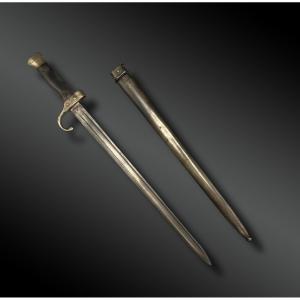
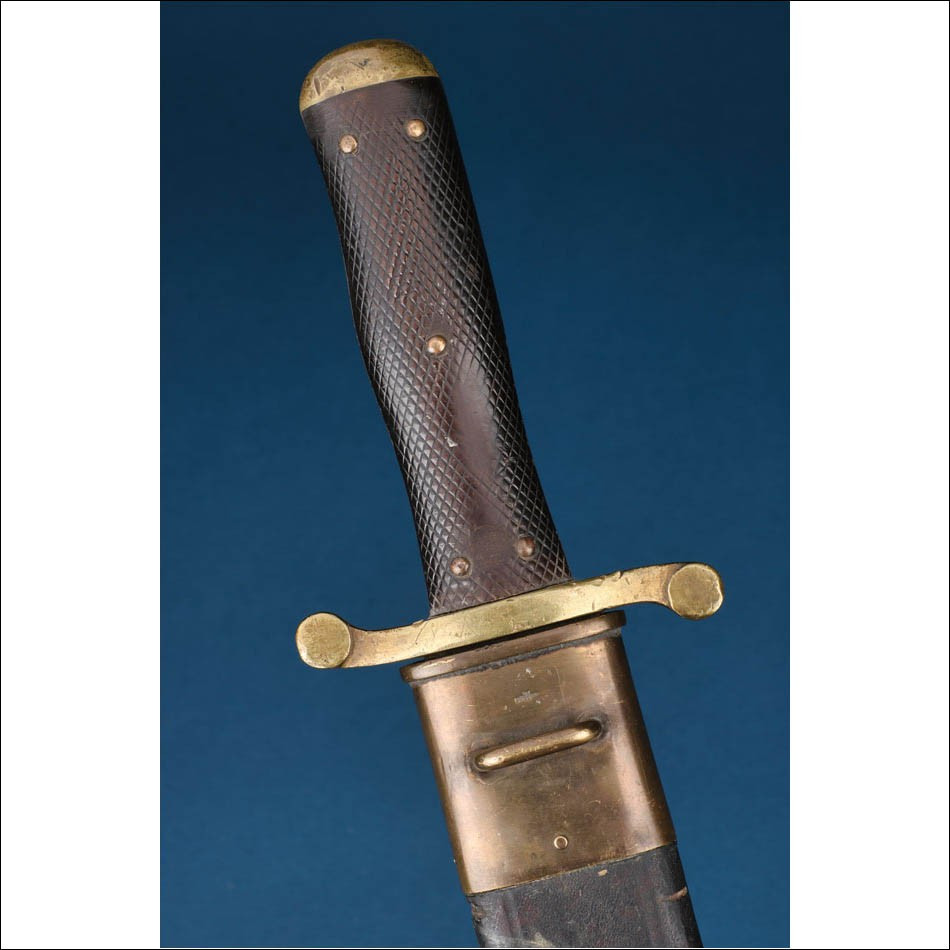
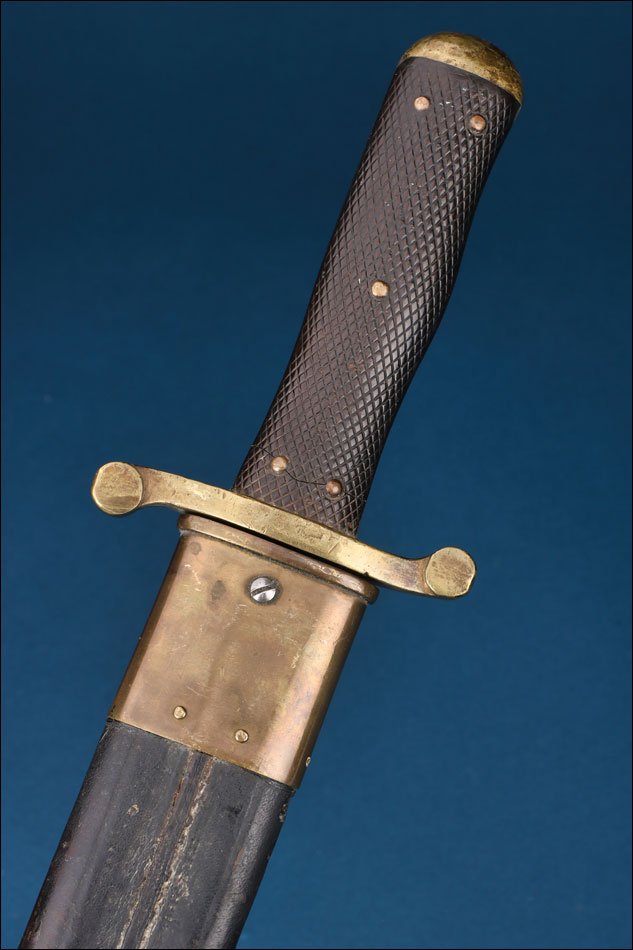
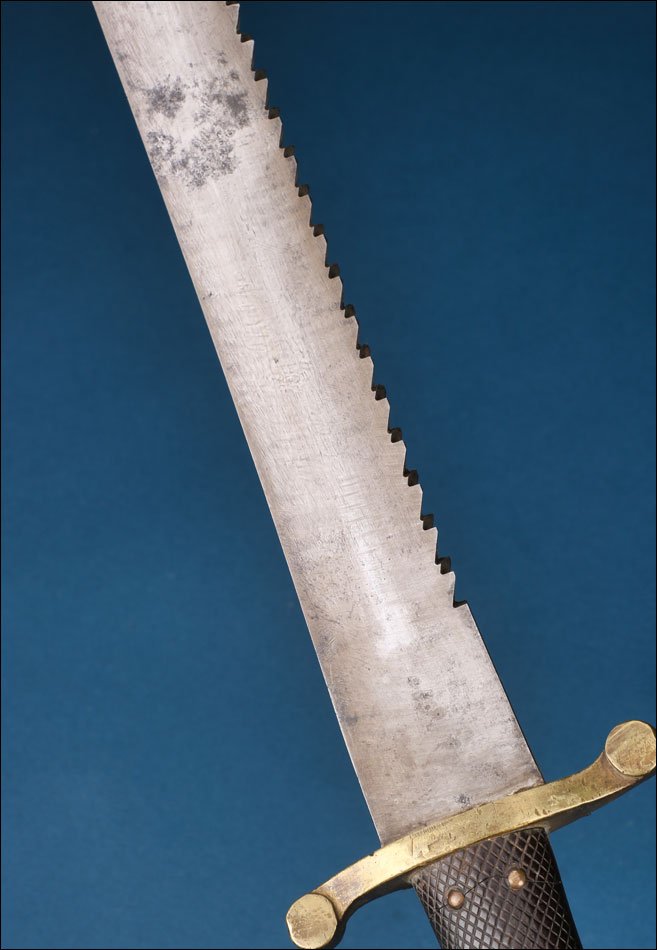
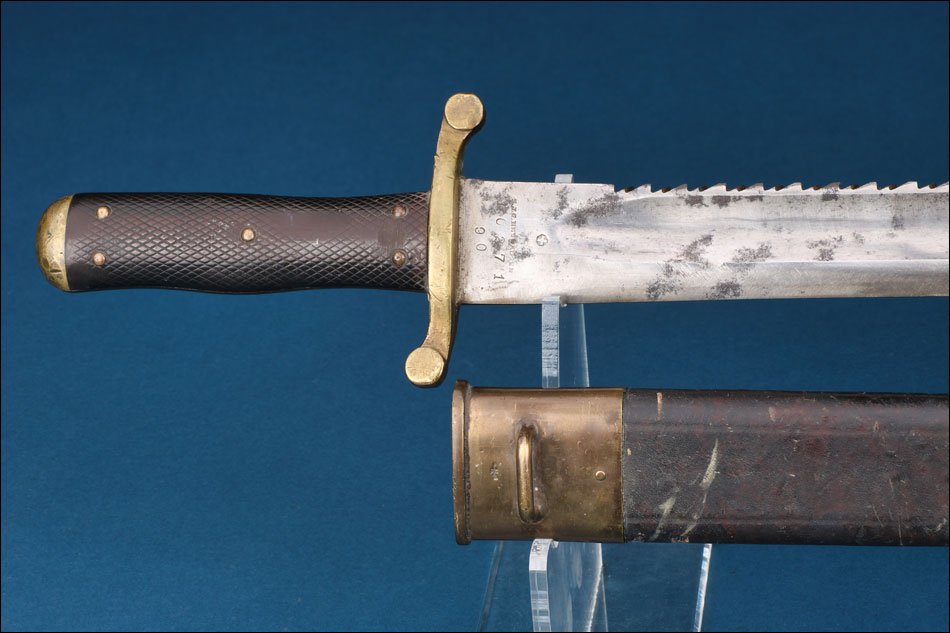
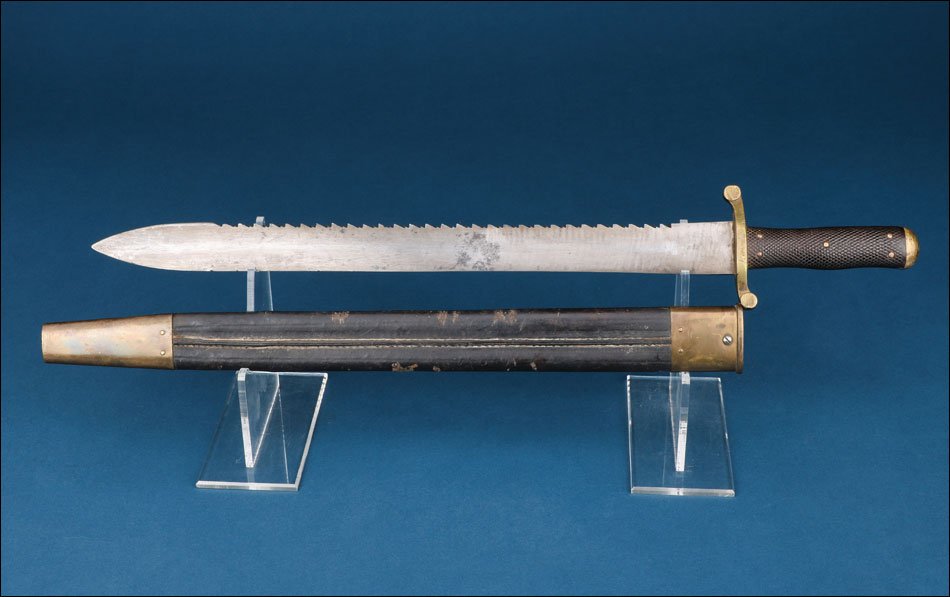
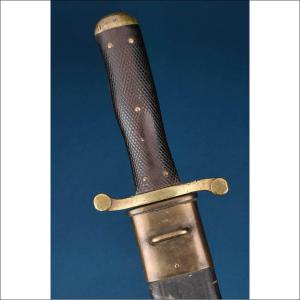
Antique Swiss regulation pioneer short sword or sidearm, Model 1878, a military piece from the late 19th century. This is a representative example of military engineer equipment, designed both for field work and tactical use. The hilt features chequered grip scales secured with brass rivets, reinforcing the solidity of the whole. The pommel and fittings are made of brass, a material that provides both visual contrast and structural strength. The crossguard has a characteristic S shape.
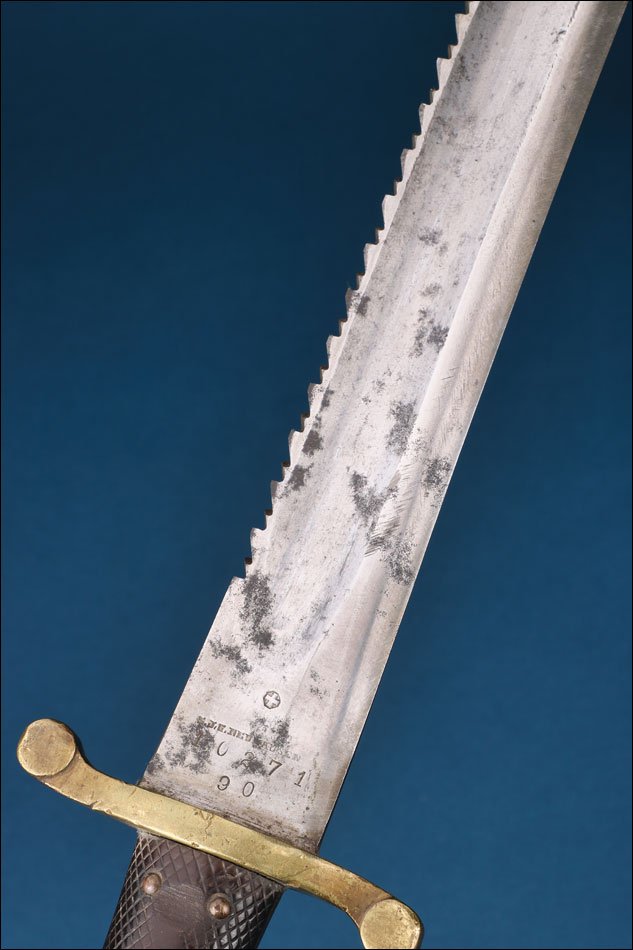
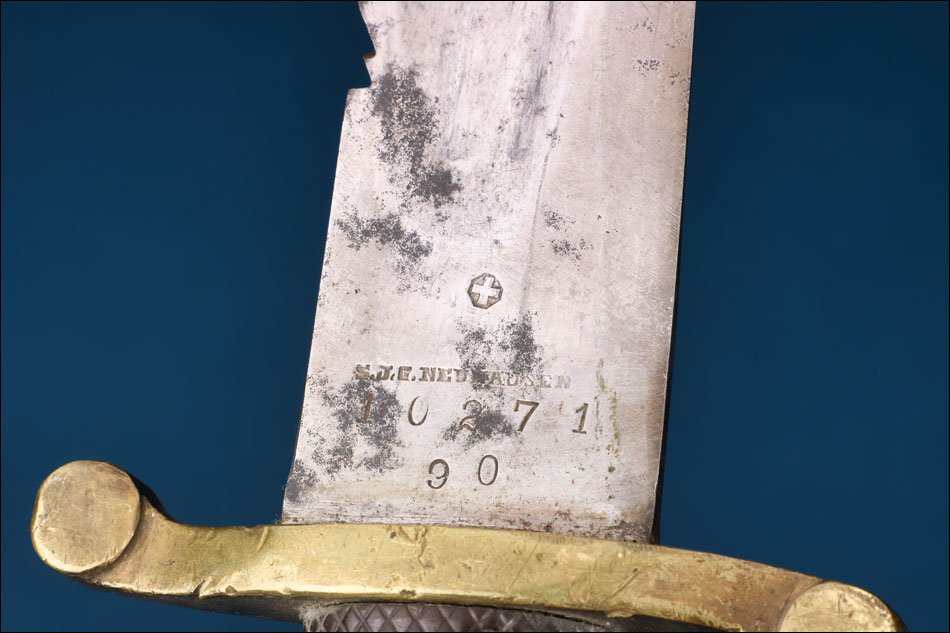
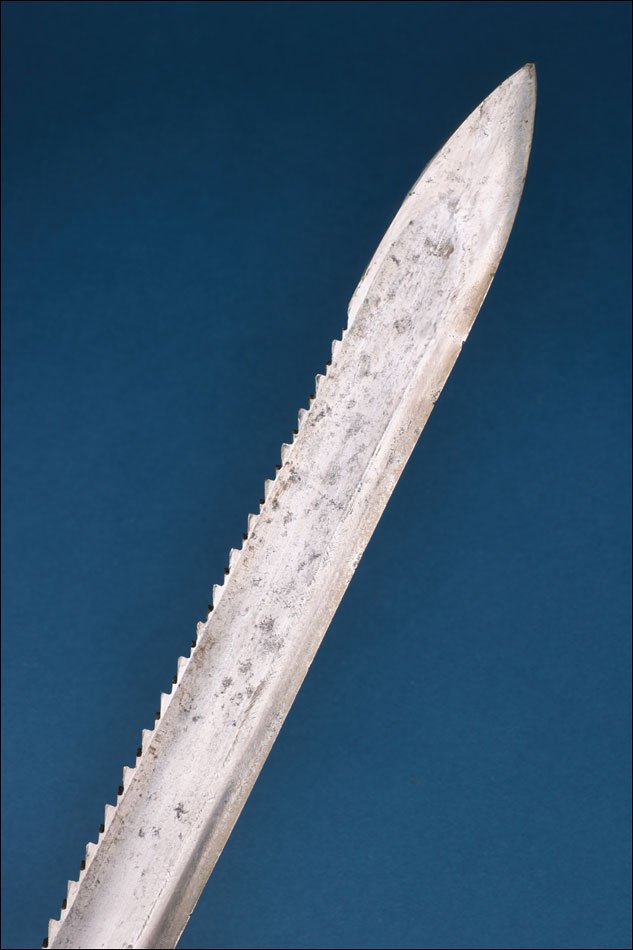
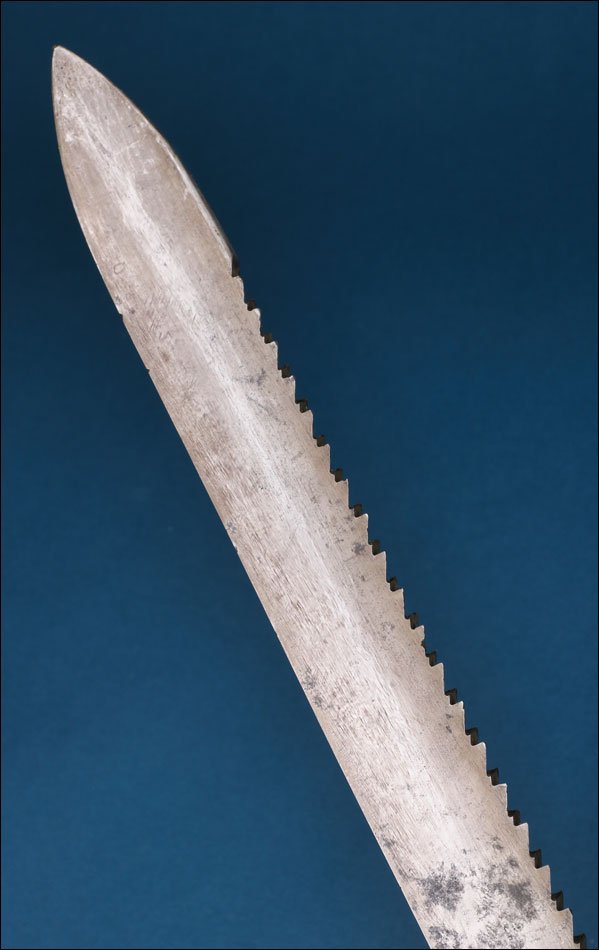
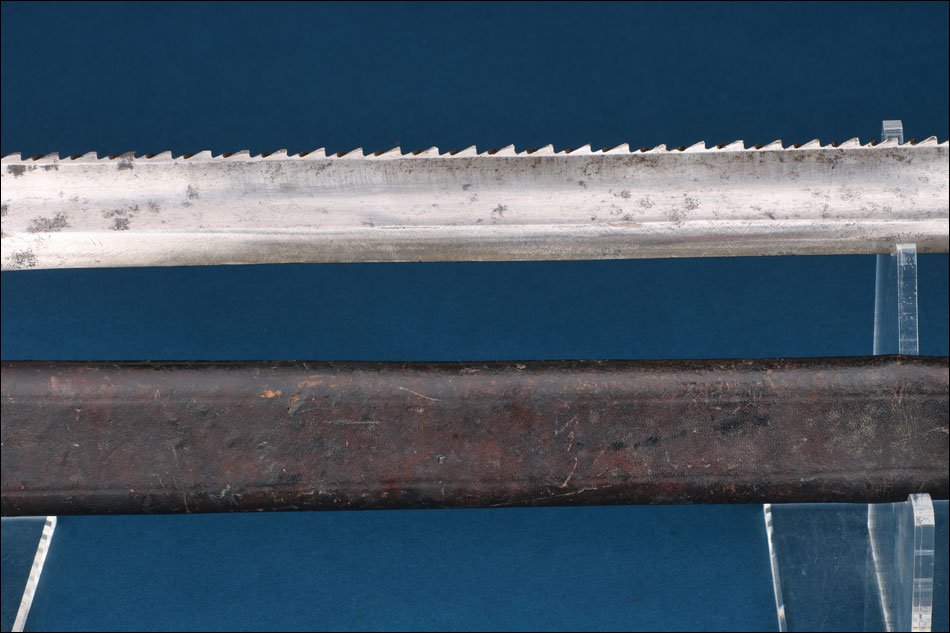
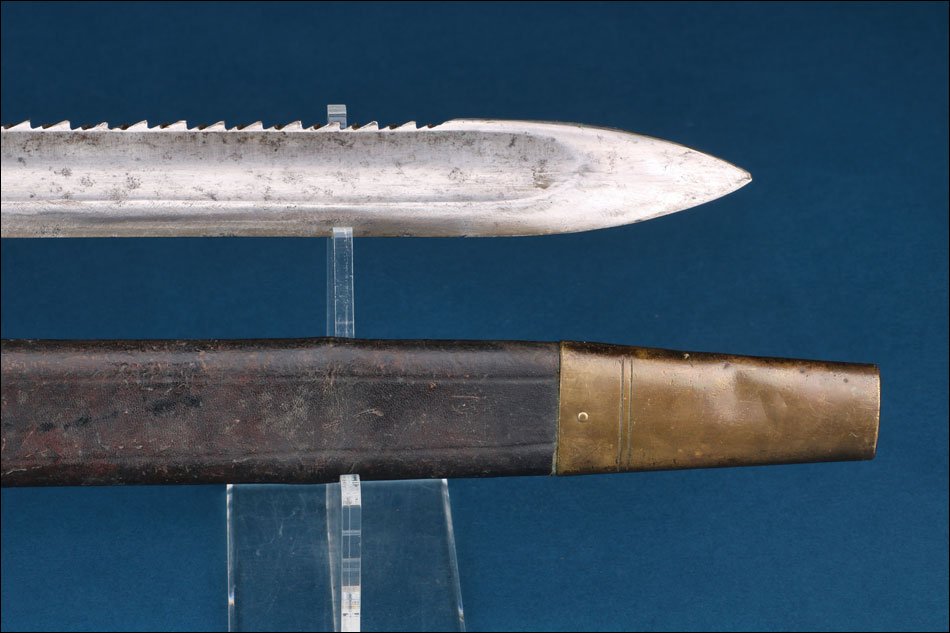
The blade is straight and large, with longitudinal fullers that lighten its weight without compromising its strength. Along the spine are pronounced saw teeth, typical of pioneer weapons intended for clearing work and engineering tasks in the field. The markings with the Swiss cross remain visible, as does the signature of the maker S.J.G. Neuhausen and the regulation number, elements that reinforce the authenticity of the piece. The surface of the blade shows patina, stains, and superficial wear consistent with use and the passage of time.
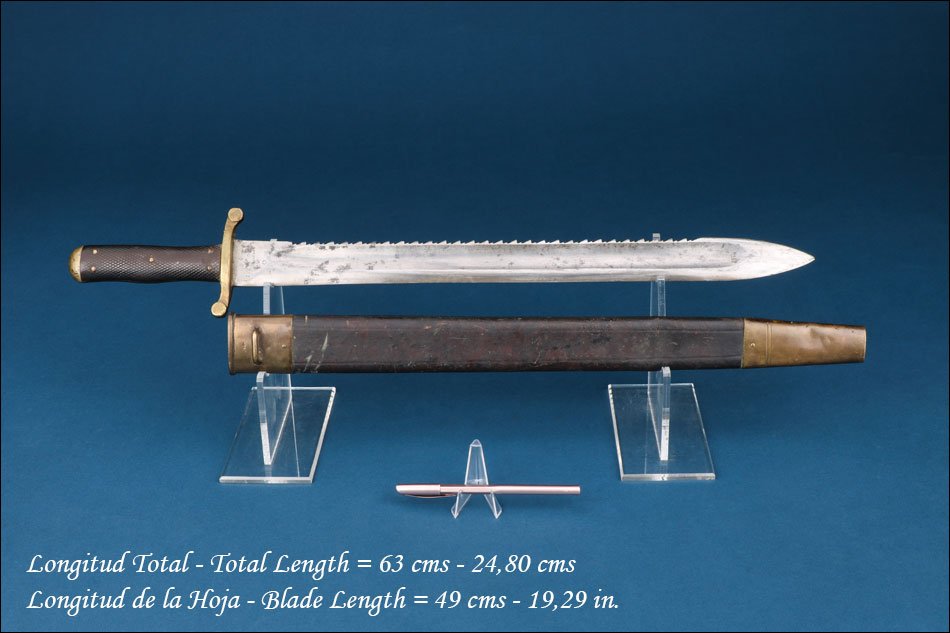
The piece is complete and comes with its original leather scabbard. The scabbard remains aesthetically coherent with the weapon, showing normal signs of use and age, without affecting its structural integrity. The overall condition is good, with normal signs of use consistent with its age. Its general preservation and the presence of visible markings increase its historical interest. The complete set with original scabbard makes it an attractive piece for specialised collections.
Measurements: Total length 63 cm (24.80 in). Blade length 49 cm (19.29 in).
History of pioneer short swords or sidearms
Pioneer short swords or sidearms emerged as specialised military tools intended for engineer units, also known as pioneers, whose main mission was to facilitate the advance of troops through technical work in the field. These units were responsible for opening roads, clearing obstacles, building fortifications, erecting bridges, and carrying out demolition tasks, so they required robust, versatile and effective instruments, both as working tools and as defensive weapons.
From the mid 19th century and throughout much of the 20th century, different European and American armies developed their own models of pioneer weapons adapted to their tactical needs and to the geographical conditions of their campaigns. Their design combined the features of an edged weapon with the practical characteristics of a field engineering tool. These pieces therefore had long, strong blades capable of intensive use in clearing work, light cutting, and the preparation of defensive positions.
One of the most characteristic features of many pioneer weapons is the presence of saw teeth along the spine of the blade. This saw allowed the cutting of branches, small trunks, and wooden elements needed for the construction of parapets, palisades, or temporary structures. It was also useful for opening paths in wooded or densely vegetated terrain, a frequent task in military operations. The integration of this saw into the blade itself responded to the need to reduce the number of tools the soldier had to carry, concentrating several functions in a single instrument.
In terms of construction, pioneer weapons usually had sturdy hilts, with scales of wood, leather, or composite materials, secured by rivets or screws. The metal fittings, often made of brass or steel, protected the hand and reinforced the durability of the whole. The scabbards, generally made of leather or metal, were designed to withstand harsh field conditions and to allow the safe carrying of the weapon.
These instruments remained in service for decades and reflect the evolution of military engineering and the operational needs of modern armies. Today, pioneer short swords or sidearms are highly valued by collectors and students of militaria, not only for their distinctive multifunctional design, but also for their close relationship with the history of military campaigns and the technical development of engineer units.
The blade is straight and large, with longitudinal fullers that lighten its weight without compromising its strength. Along the spine are pronounced saw teeth, typical of pioneer weapons intended for clearing work and engineering tasks in the field. The markings with the Swiss cross remain visible, as does the signature of the maker S.J.G. Neuhausen and the regulation number, elements that reinforce the authenticity of the piece. The surface of the blade shows patina, stains, and superficial wear consistent with use and the passage of time.
The piece is complete and comes with its original leather scabbard. The scabbard remains aesthetically coherent with the weapon, showing normal signs of use and age, without affecting its structural integrity. The overall condition is good, with normal signs of use consistent with its age. Its general preservation and the presence of visible markings increase its historical interest. The complete set with original scabbard makes it an attractive piece for specialised collections.
Measurements: Total length 63 cm (24.80 in). Blade length 49 cm (19.29 in).
History of pioneer short swords or sidearms
Pioneer short swords or sidearms emerged as specialised military tools intended for engineer units, also known as pioneers, whose main mission was to facilitate the advance of troops through technical work in the field. These units were responsible for opening roads, clearing obstacles, building fortifications, erecting bridges, and carrying out demolition tasks, so they required robust, versatile and effective instruments, both as working tools and as defensive weapons.
From the mid 19th century and throughout much of the 20th century, different European and American armies developed their own models of pioneer weapons adapted to their tactical needs and to the geographical conditions of their campaigns. Their design combined the features of an edged weapon with the practical characteristics of a field engineering tool. These pieces therefore had long, strong blades capable of intensive use in clearing work, light cutting, and the preparation of defensive positions.
One of the most characteristic features of many pioneer weapons is the presence of saw teeth along the spine of the blade. This saw allowed the cutting of branches, small trunks, and wooden elements needed for the construction of parapets, palisades, or temporary structures. It was also useful for opening paths in wooded or densely vegetated terrain, a frequent task in military operations. The integration of this saw into the blade itself responded to the need to reduce the number of tools the soldier had to carry, concentrating several functions in a single instrument.
In terms of construction, pioneer weapons usually had sturdy hilts, with scales of wood, leather, or composite materials, secured by rivets or screws. The metal fittings, often made of brass or steel, protected the hand and reinforced the durability of the whole. The scabbards, generally made of leather or metal, were designed to withstand harsh field conditions and to allow the safe carrying of the weapon.
These instruments remained in service for decades and reflect the evolution of military engineering and the operational needs of modern armies. Today, pioneer short swords or sidearms are highly valued by collectors and students of militaria, not only for their distinctive multifunctional design, but also for their close relationship with the history of military campaigns and the technical development of engineer units.
570 €
Period: 19th century
Style: Other Style
Condition: Good condition
Length: 63 cm (24,80 in)
Reference (ID): 1738018
Availability: In stock
Print