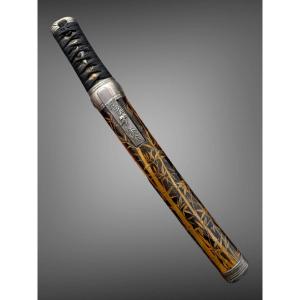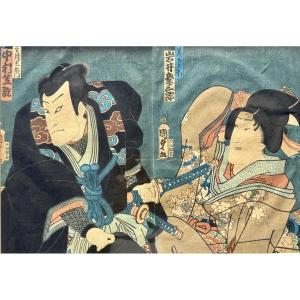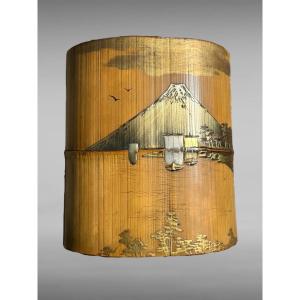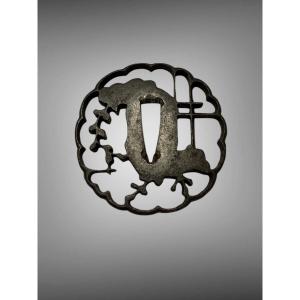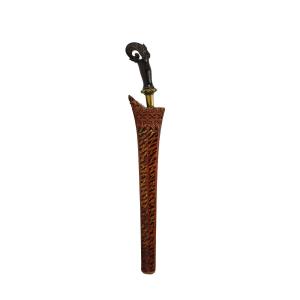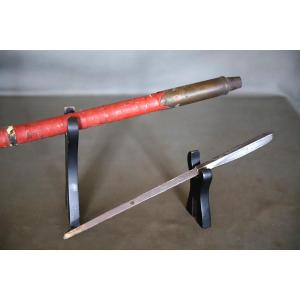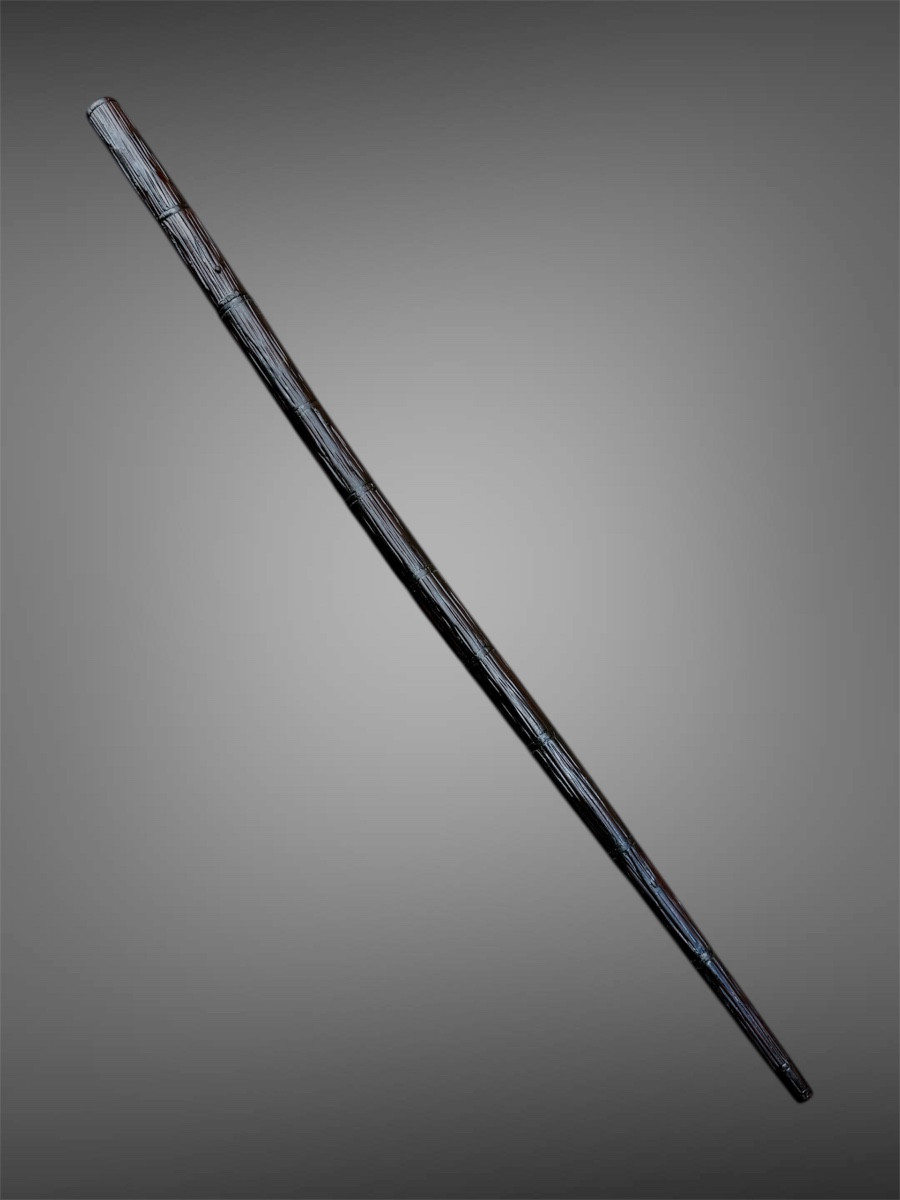
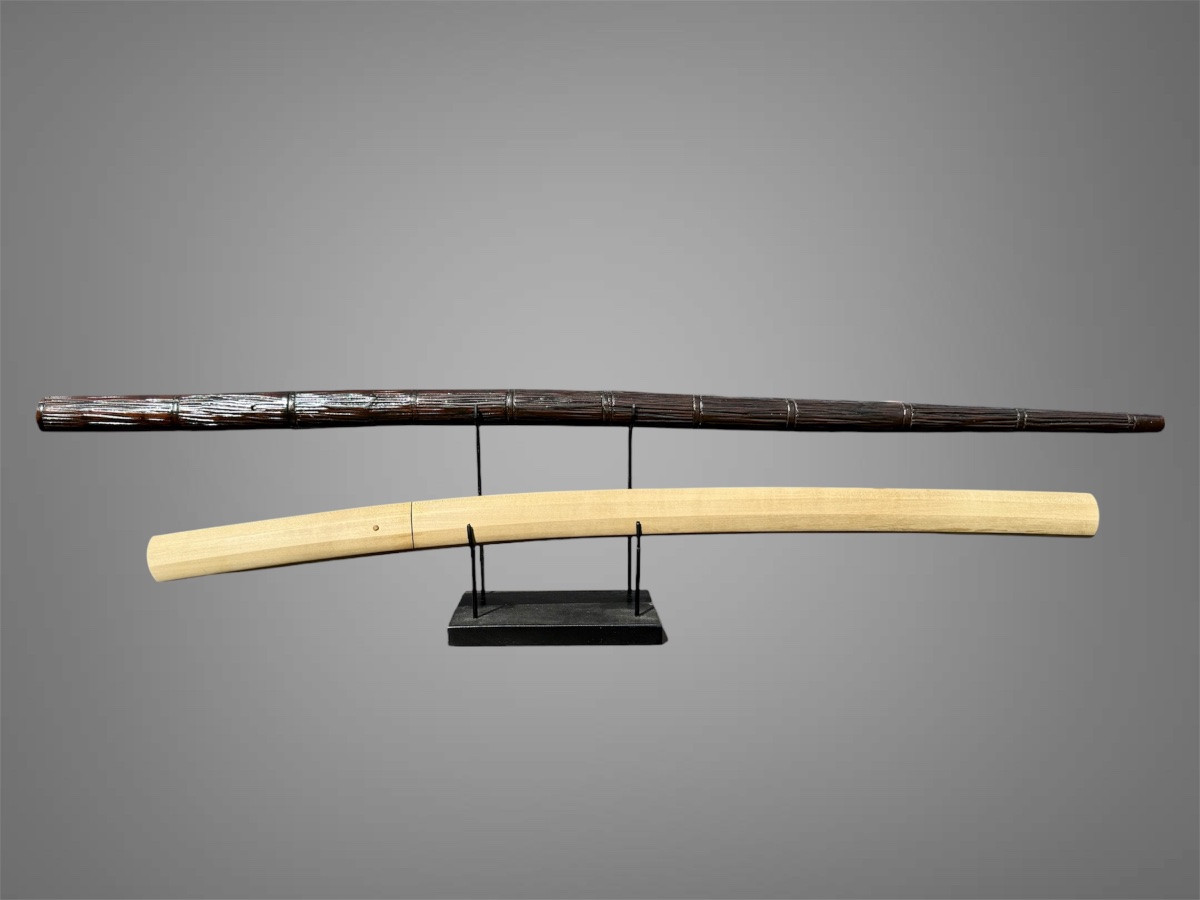
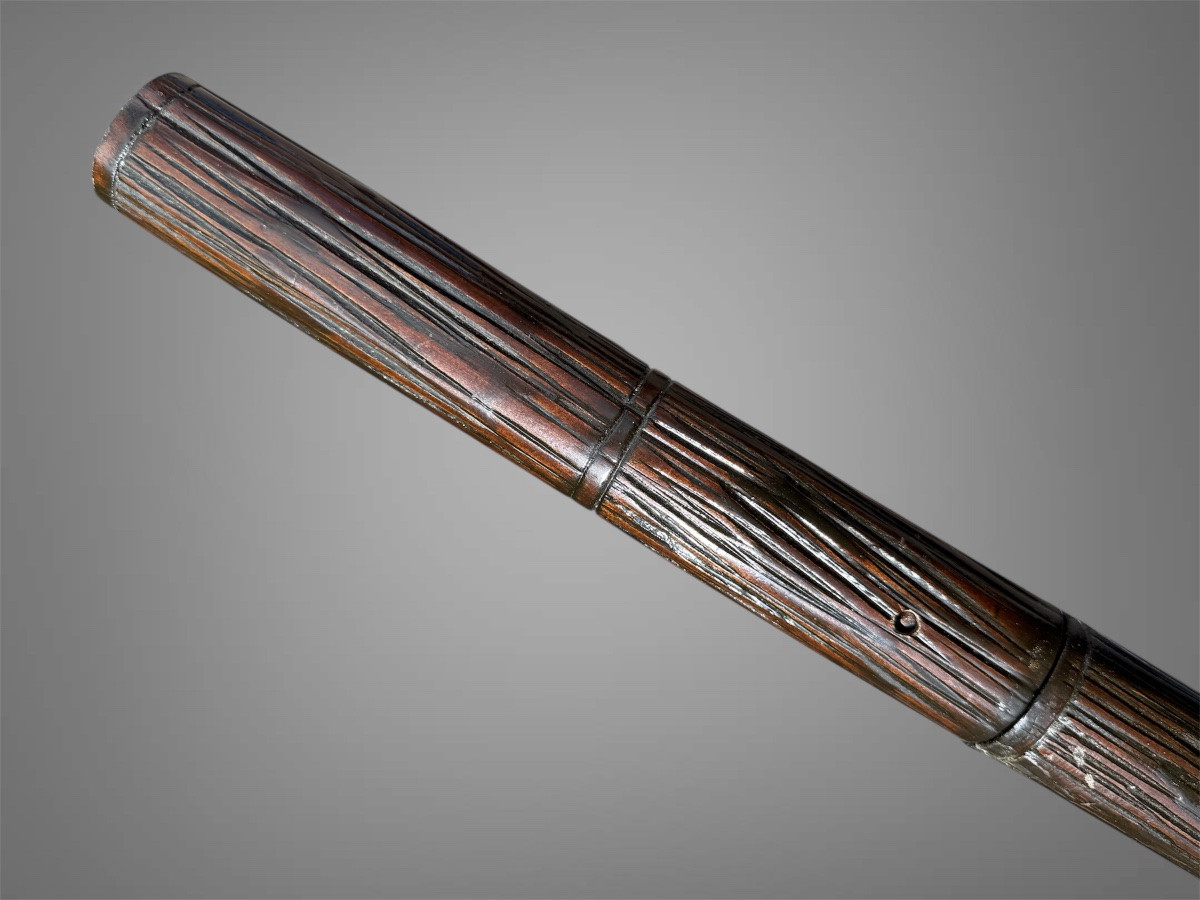
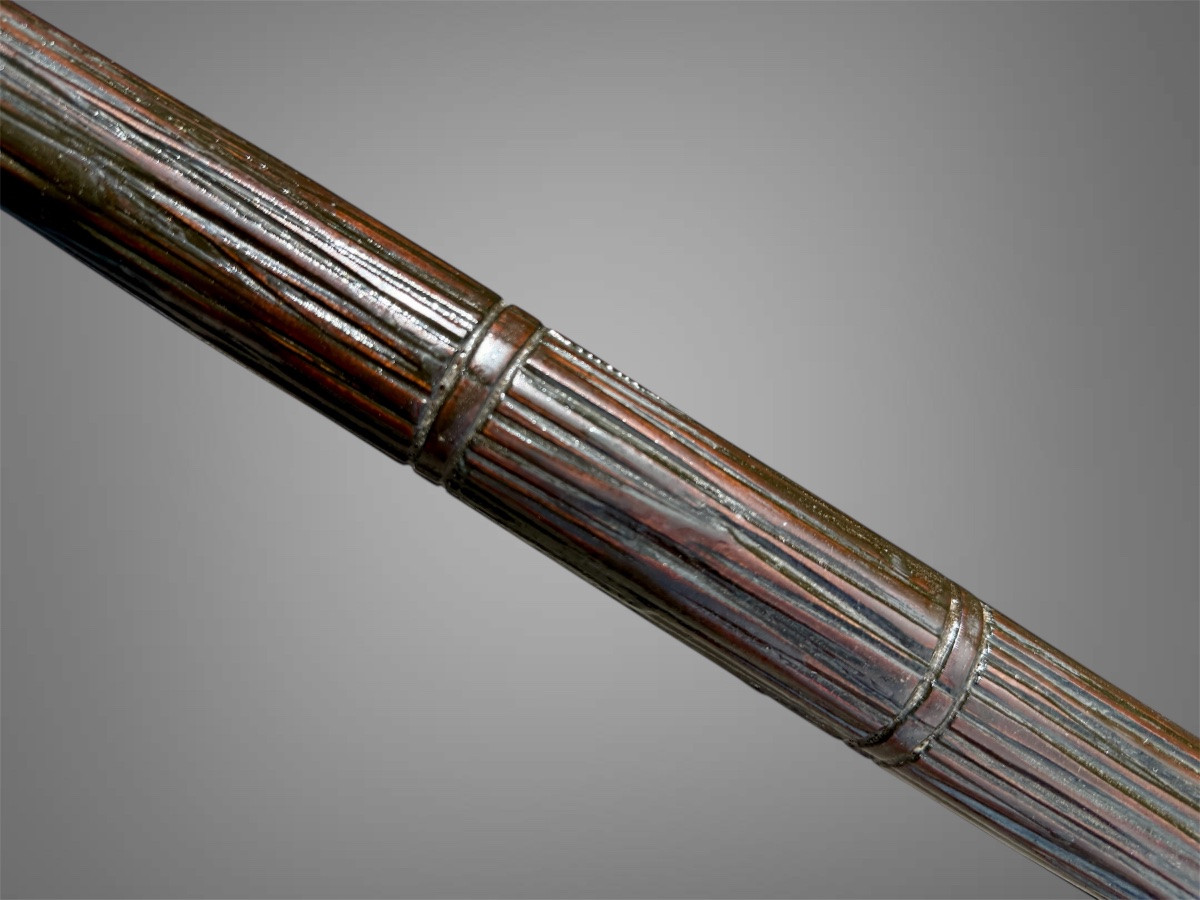
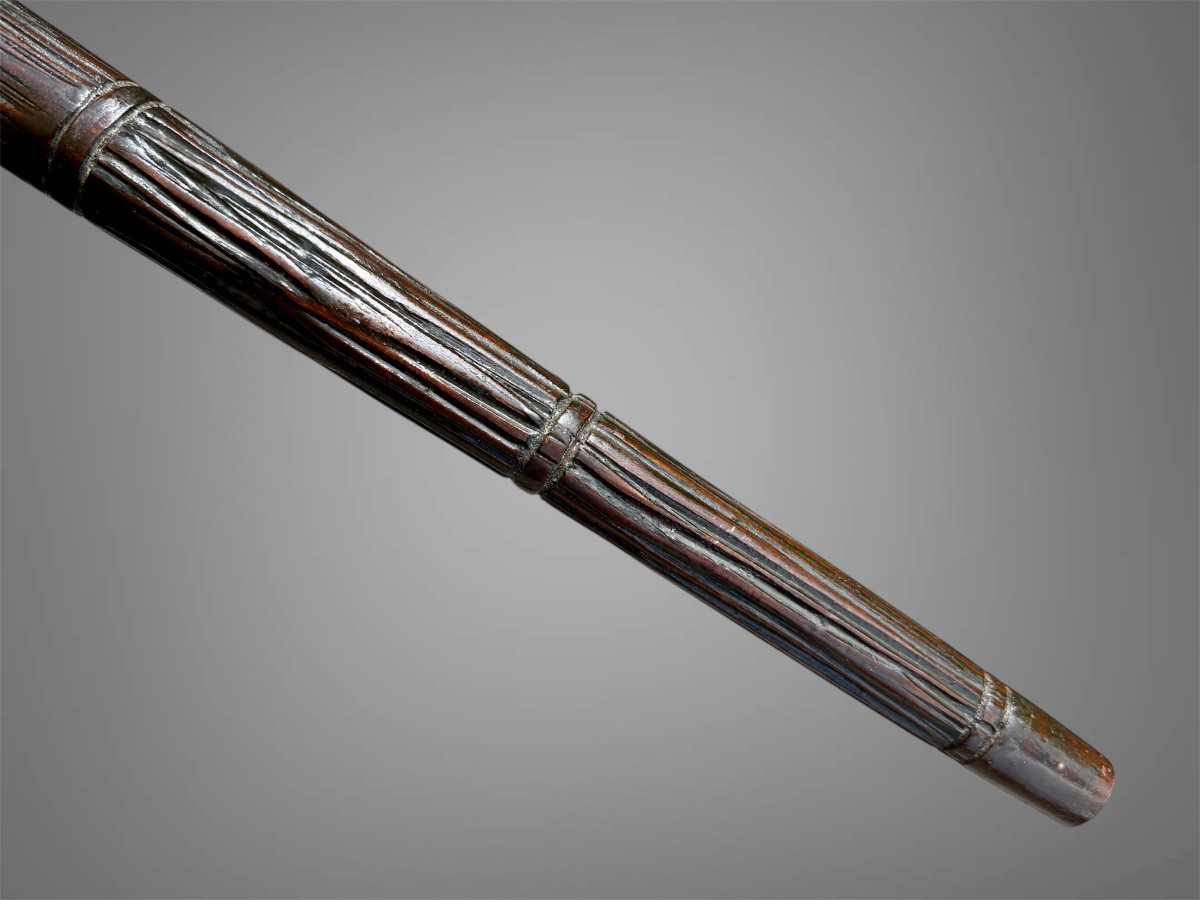
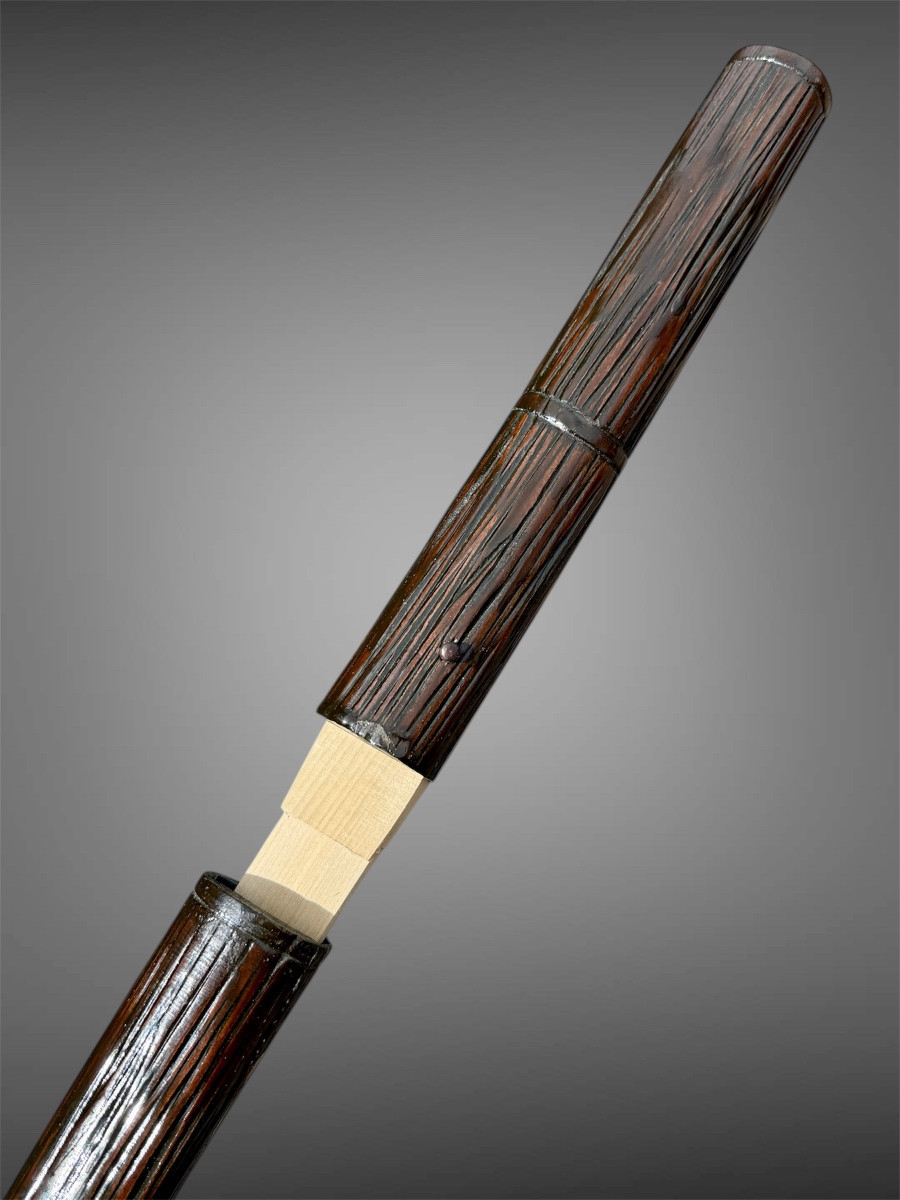
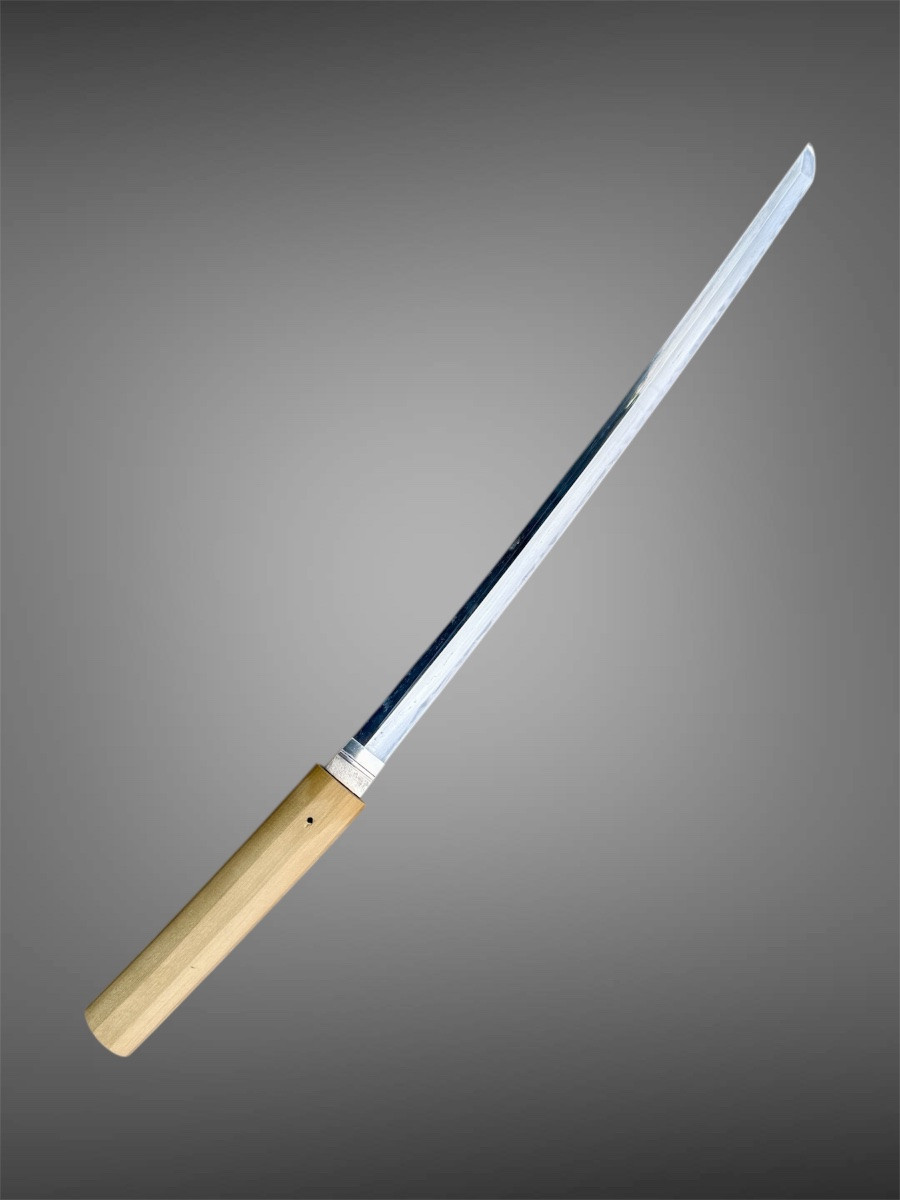


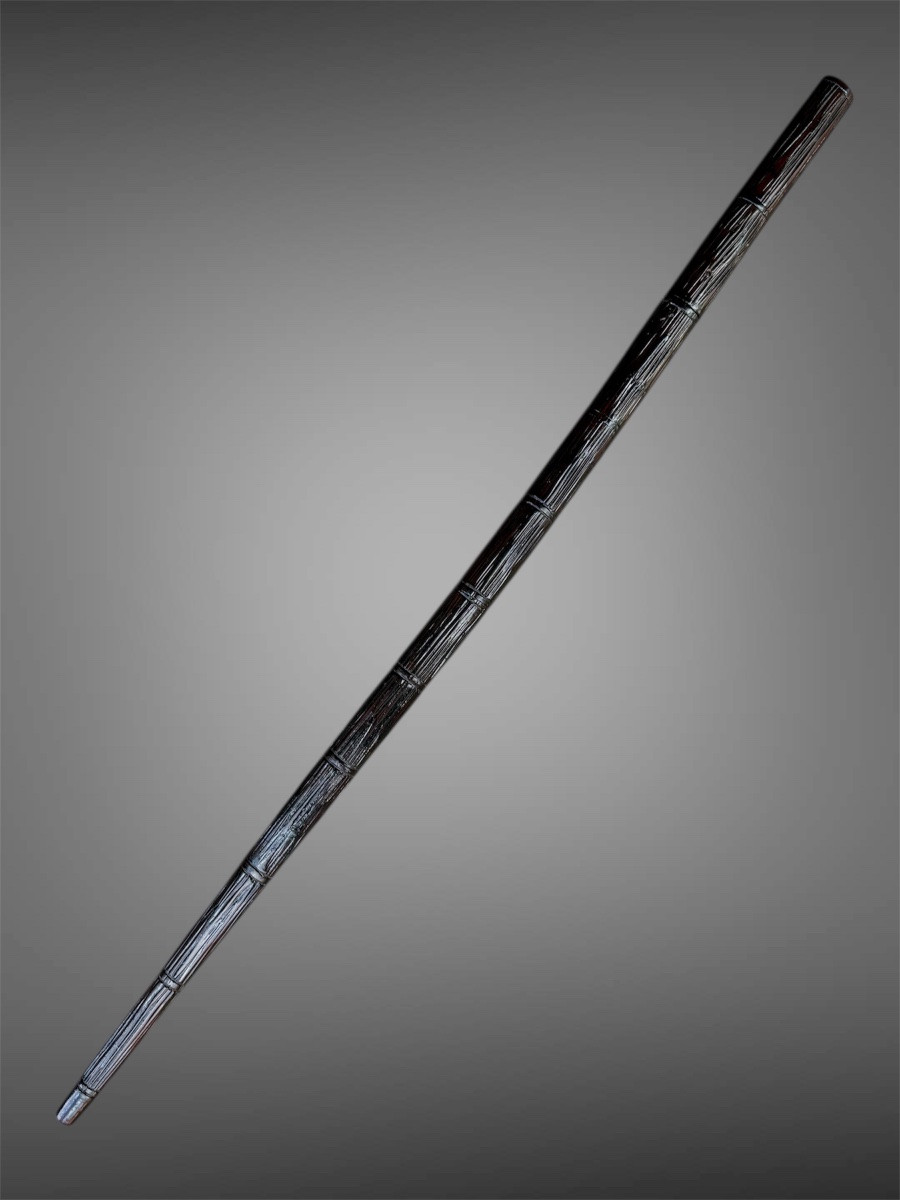
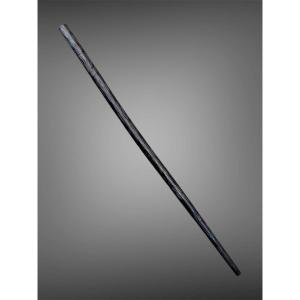


“shikomi-zue” - Wakizashi Concealed In A Cane, Mounted In Shirasaya - Kabun Era (c. 1661-1673).
JAPAN - Edo period (1603 - 1868), Kabun Era (circa 1661-1673).
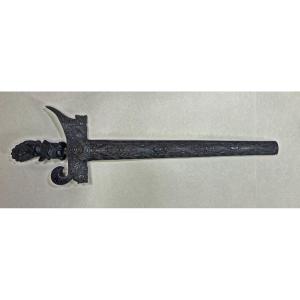
Wakizashi mounted in shikoku-zue in imitation of a simple carved and lacquered wooden cane with a concealed assembly system.
The blade is mounted in shirasaya.
Habaki simple in copper adorned with oblique striations.
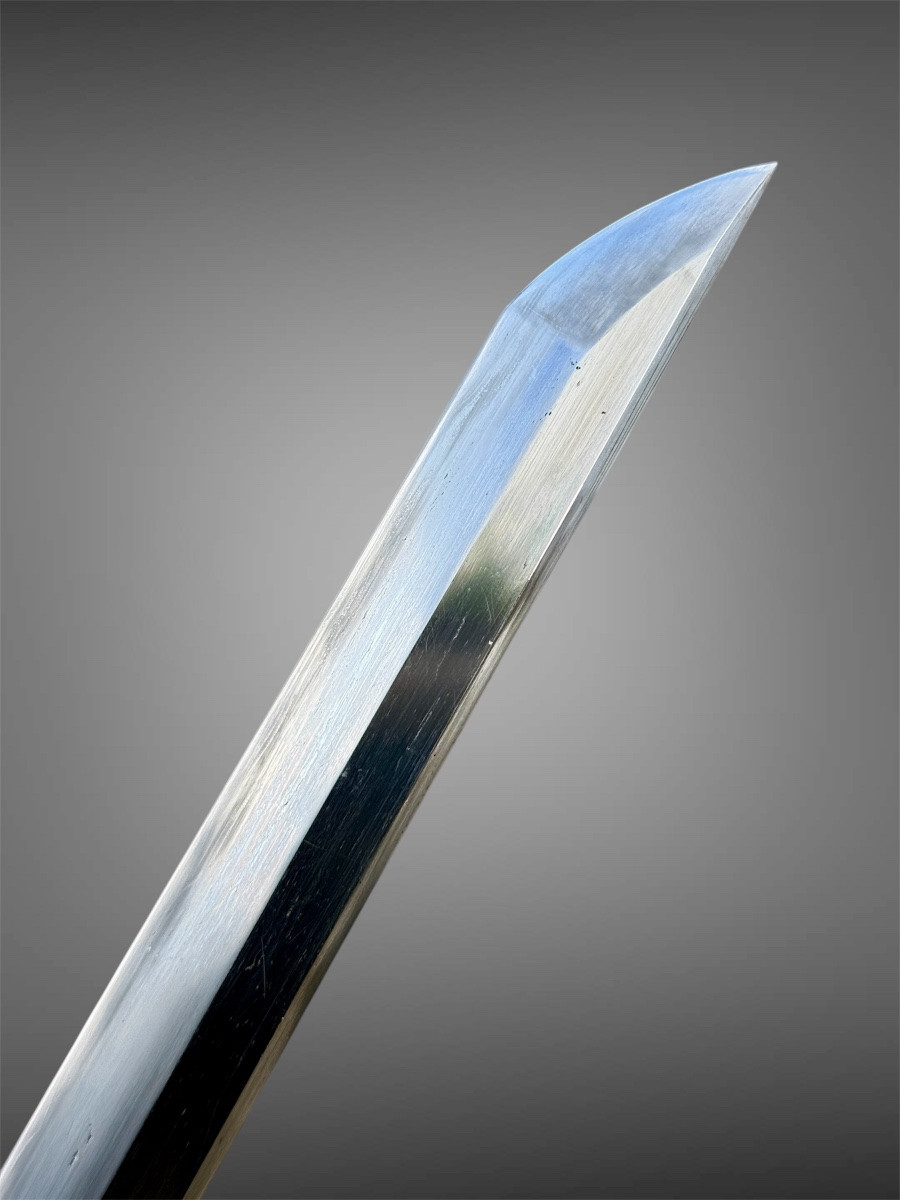
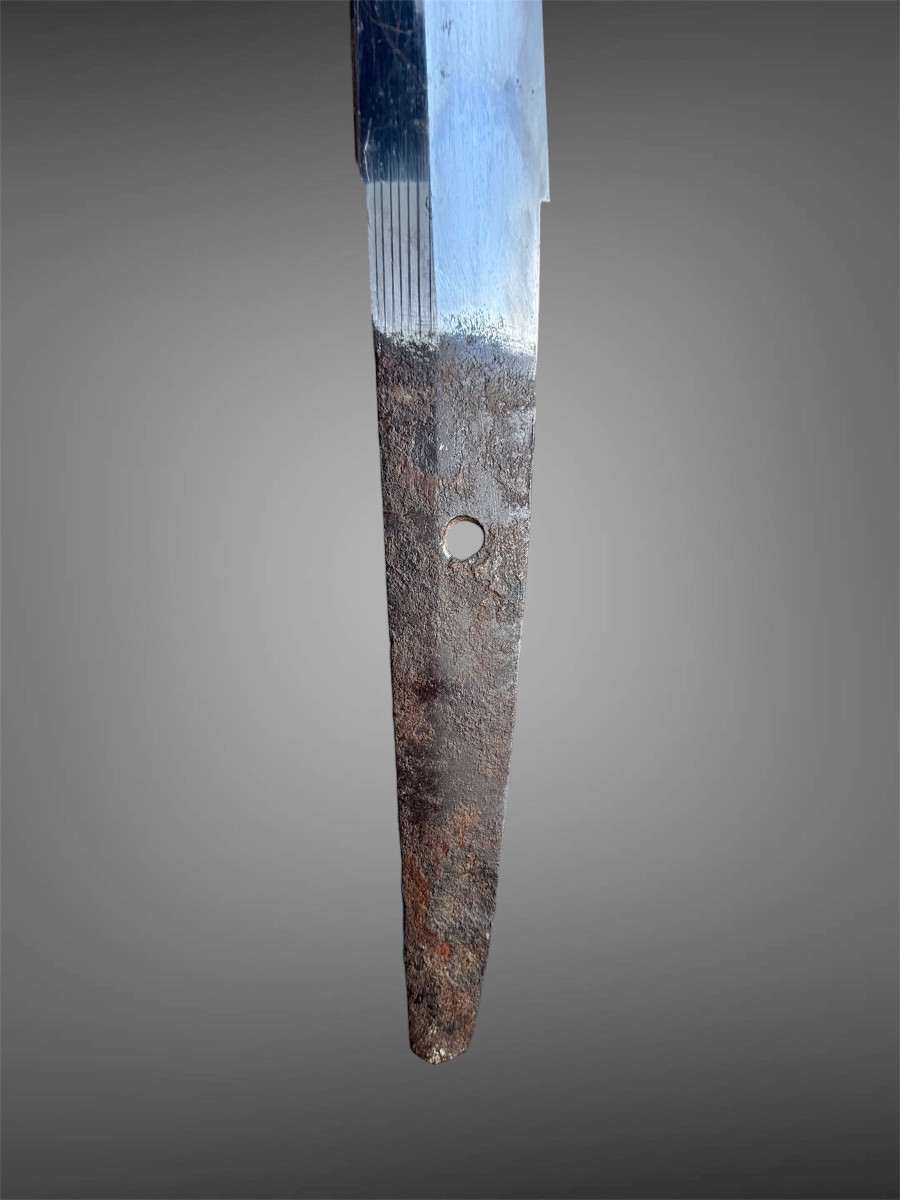
Straight blade, regular hamon, straight and well marked, the tang holed once, unsigned.
Dimensions : 4 x 104 x 3 cm.
Blade length : 52.9 cm.
Sori (curvature) : 0.7 cm.
Weight : 425 g.
Notes: After the Haitörei (1876) forbidding the carrying of swords in the Meiji era, shikomi-zue became popular as concealed weapons. However, this blade is early (Edo), and was probably later reassembled as a shikomi-zue.
The overall characteristics (Kanbun shape, active hamon in nie-deki) suggest production in Seki (Mino), early Edo. Seki was a major production center during Muromachi and then Edo, with blades that were often functional and robust.
Period: 17th century
Style: Asian art
Condition: Good condition
Material: Wrought iron
Length: 104 cm.
Height: 4 cm.
Depth: 3 cm.
Reference (ID): 1734592
Availability: In stock