

A Solid Silver Thimble Adorned With Three Patriotic Cartouches Depicting Three Different Scenes
Artist: Firmin-pierre Lasserre (1870-1943).
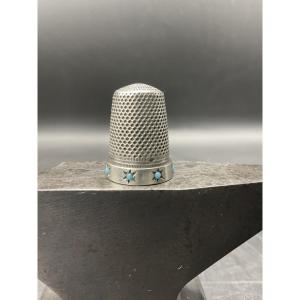
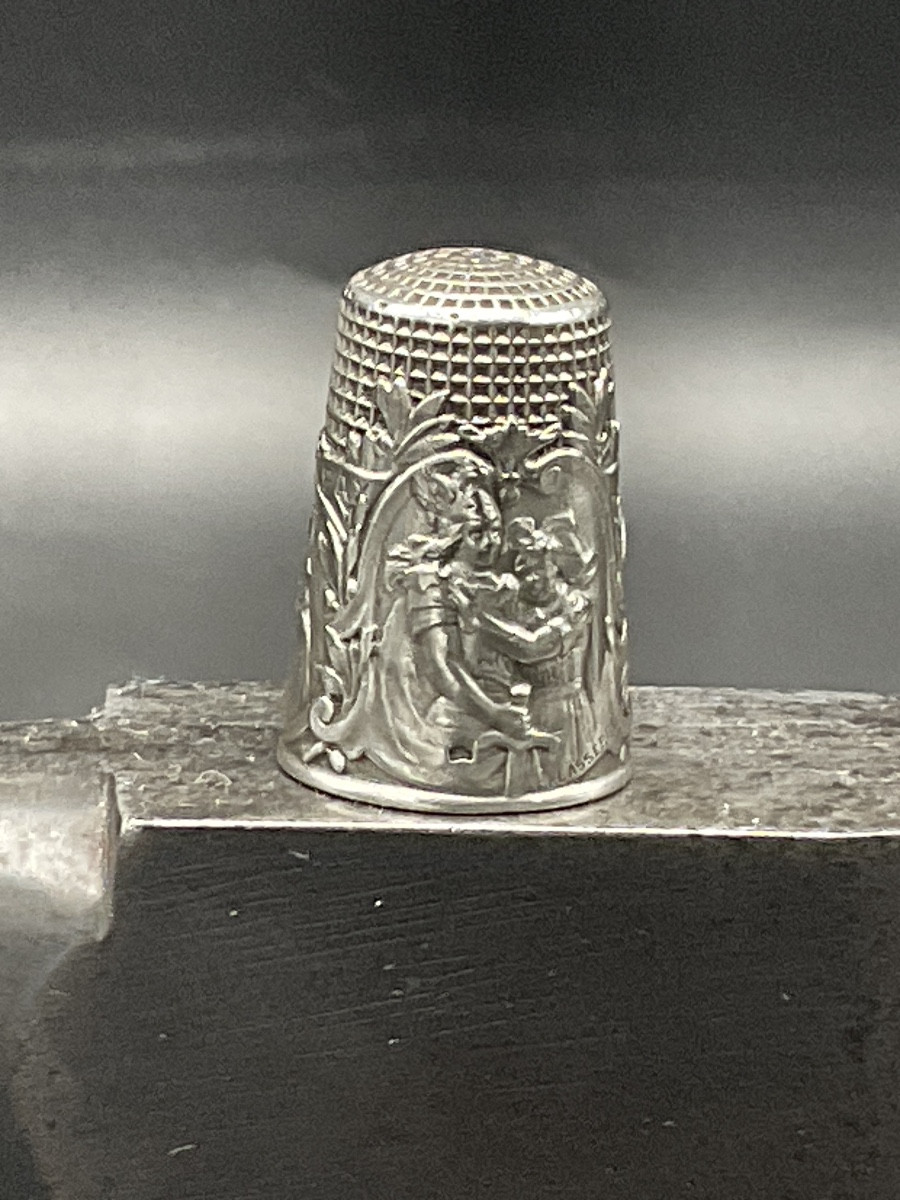
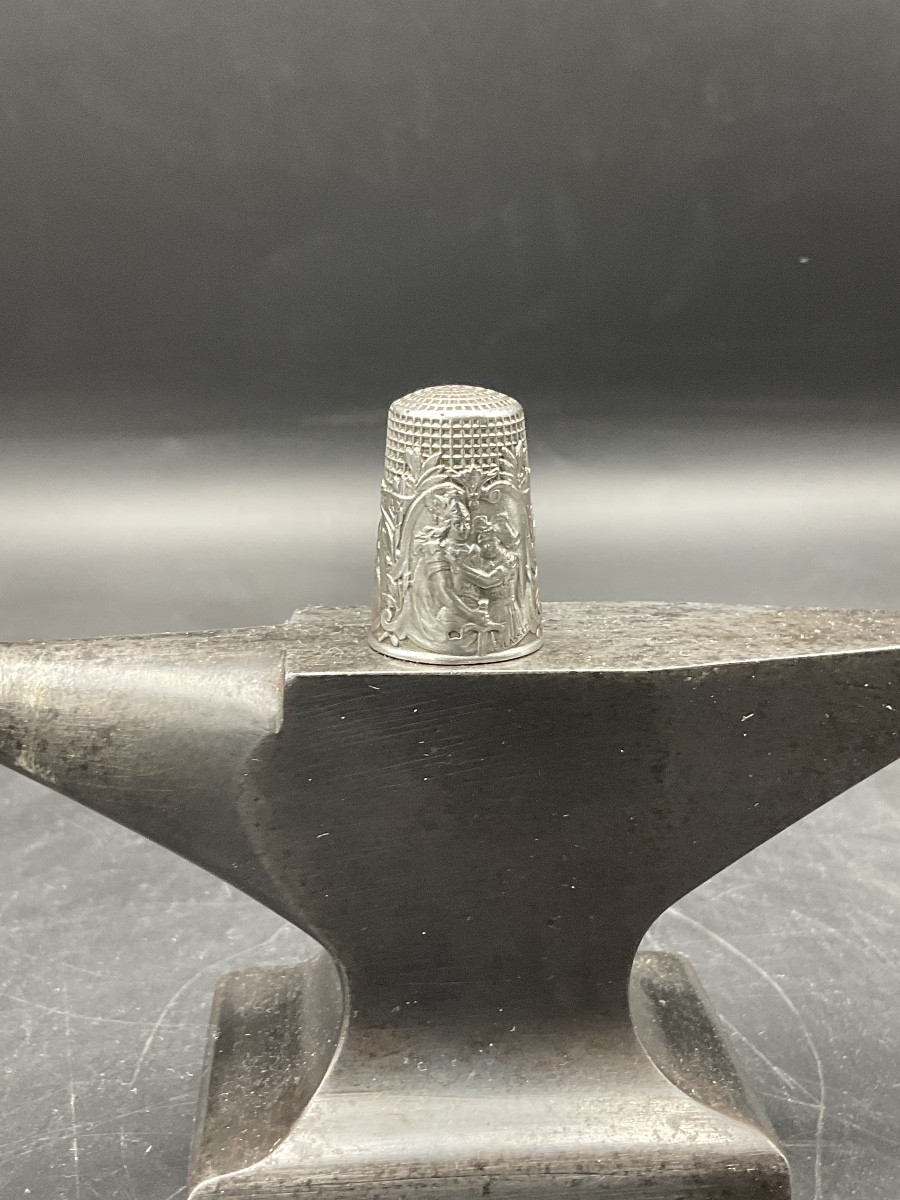
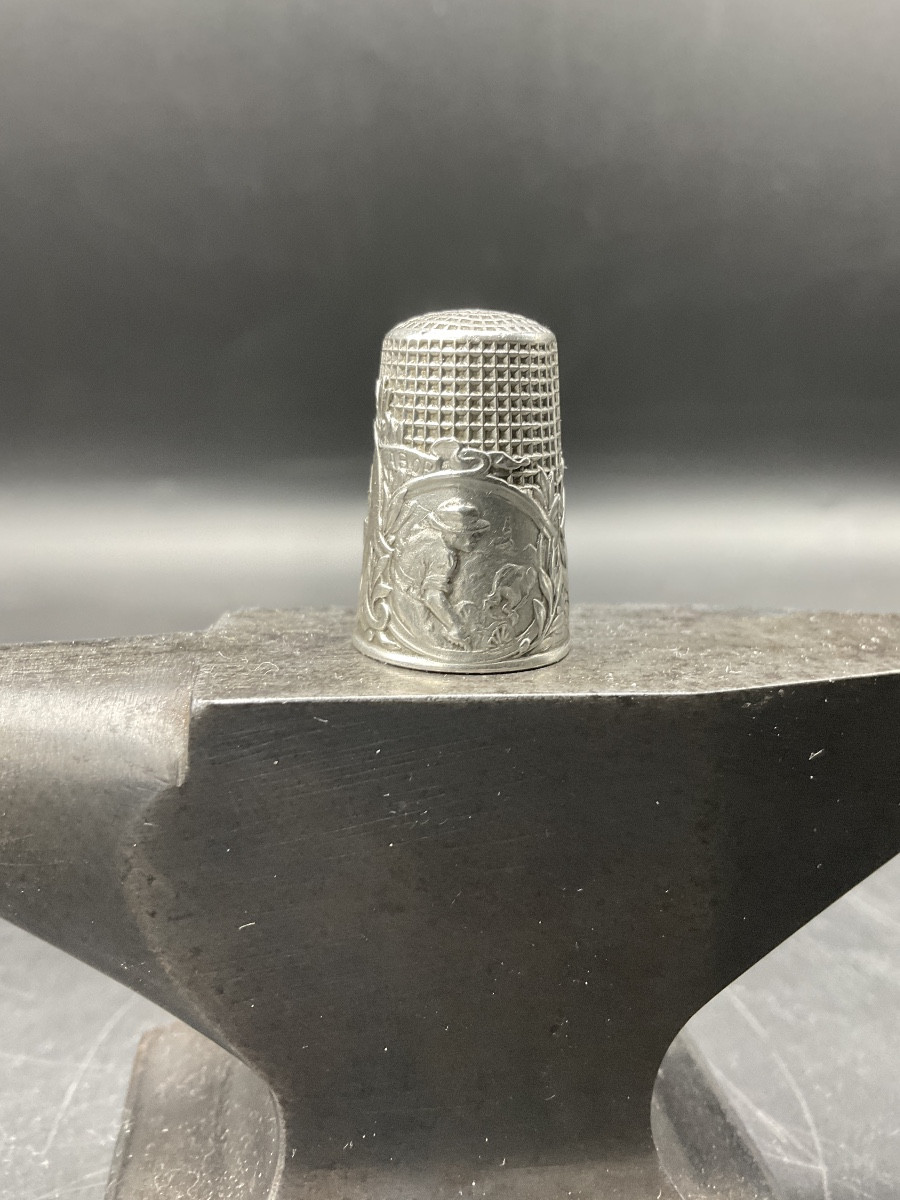
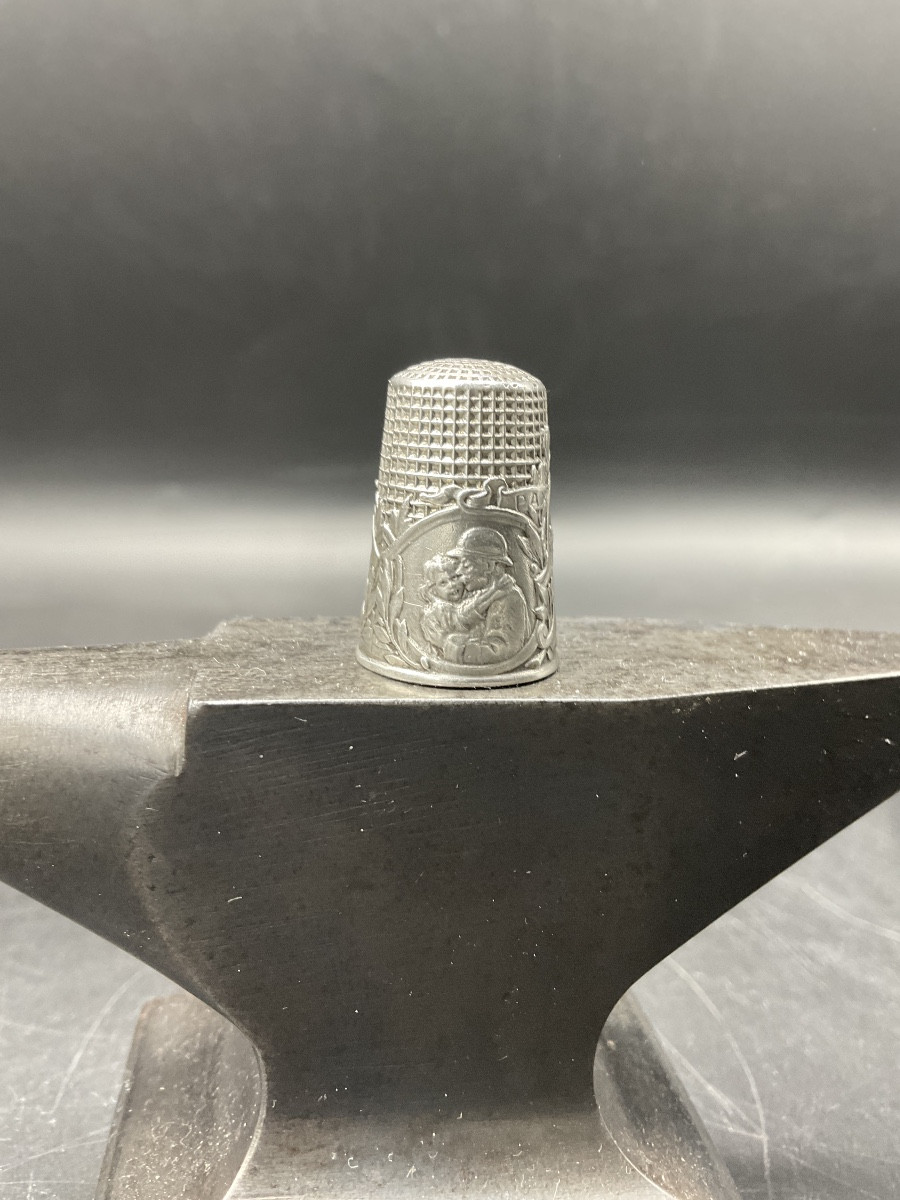
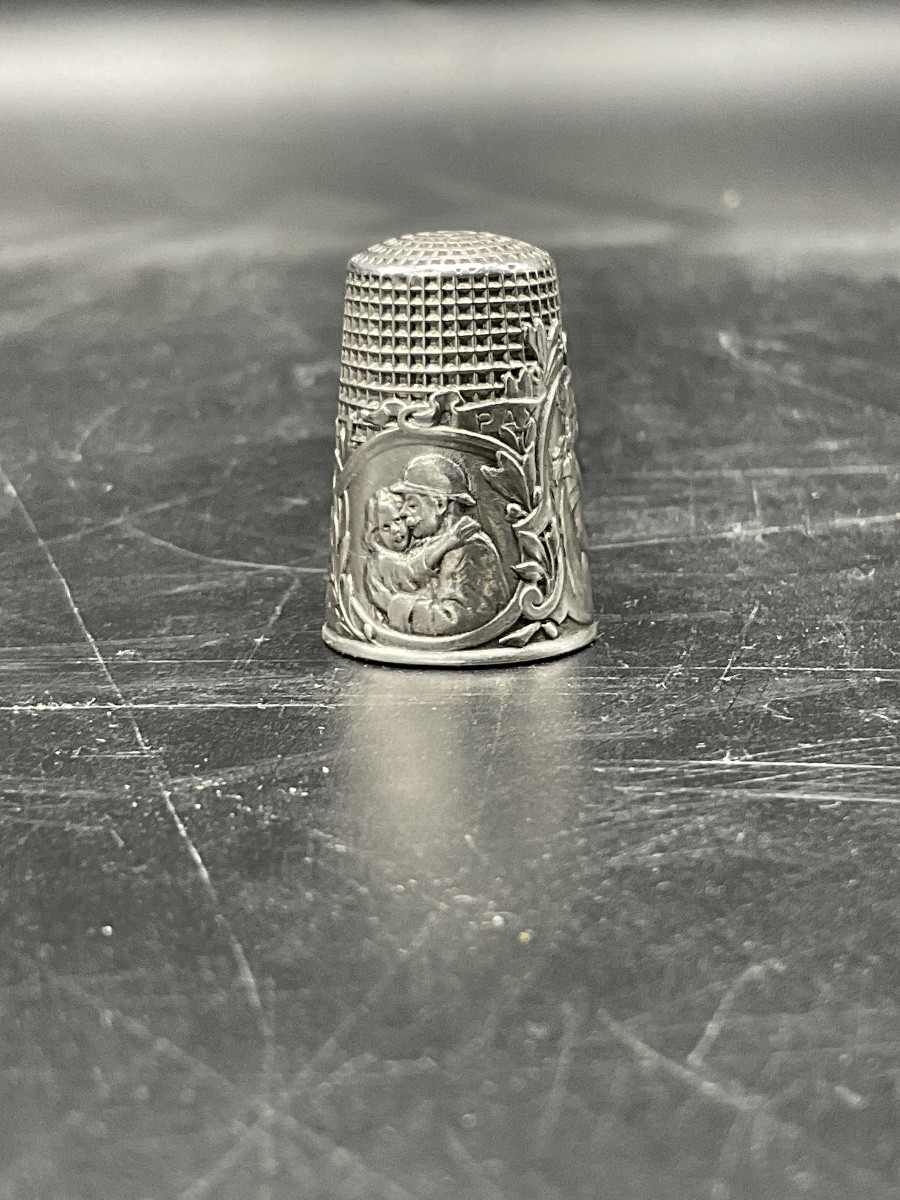
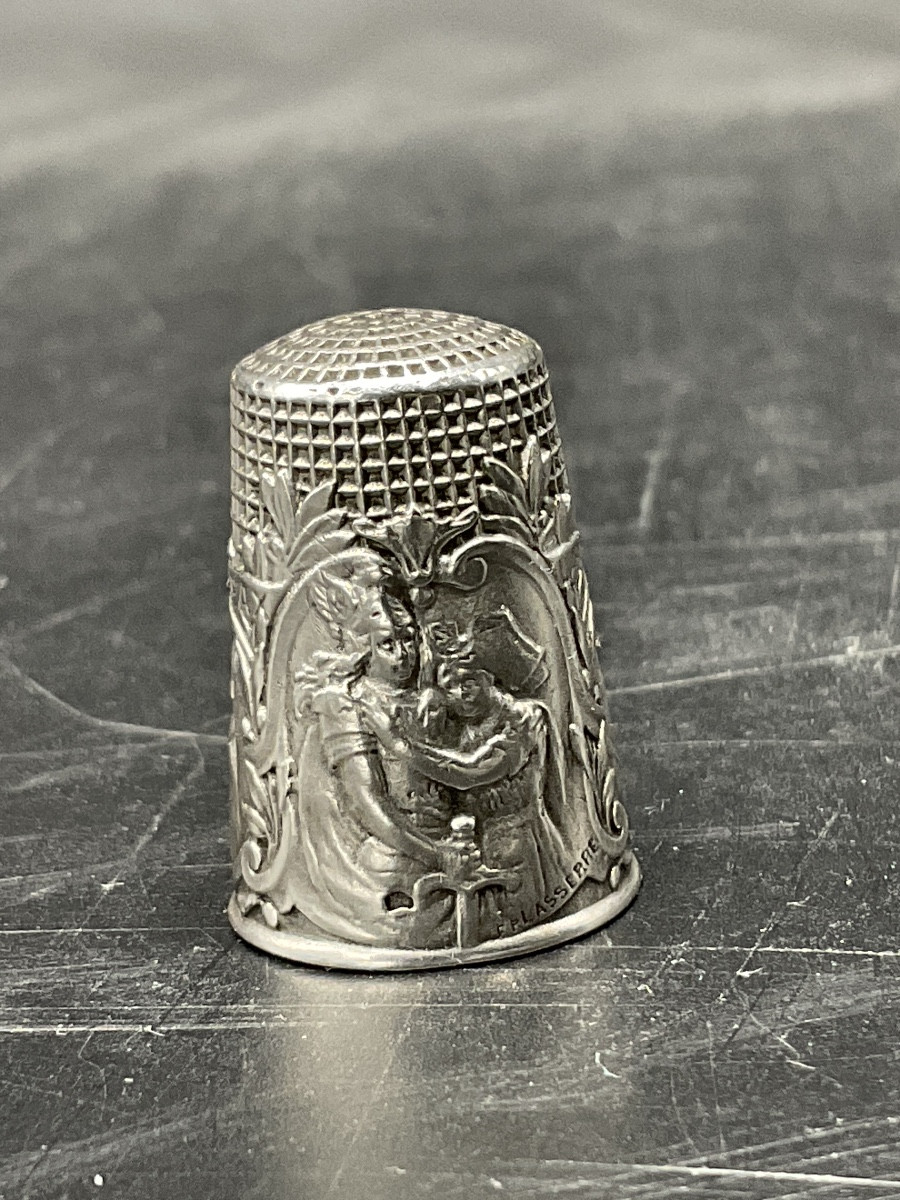
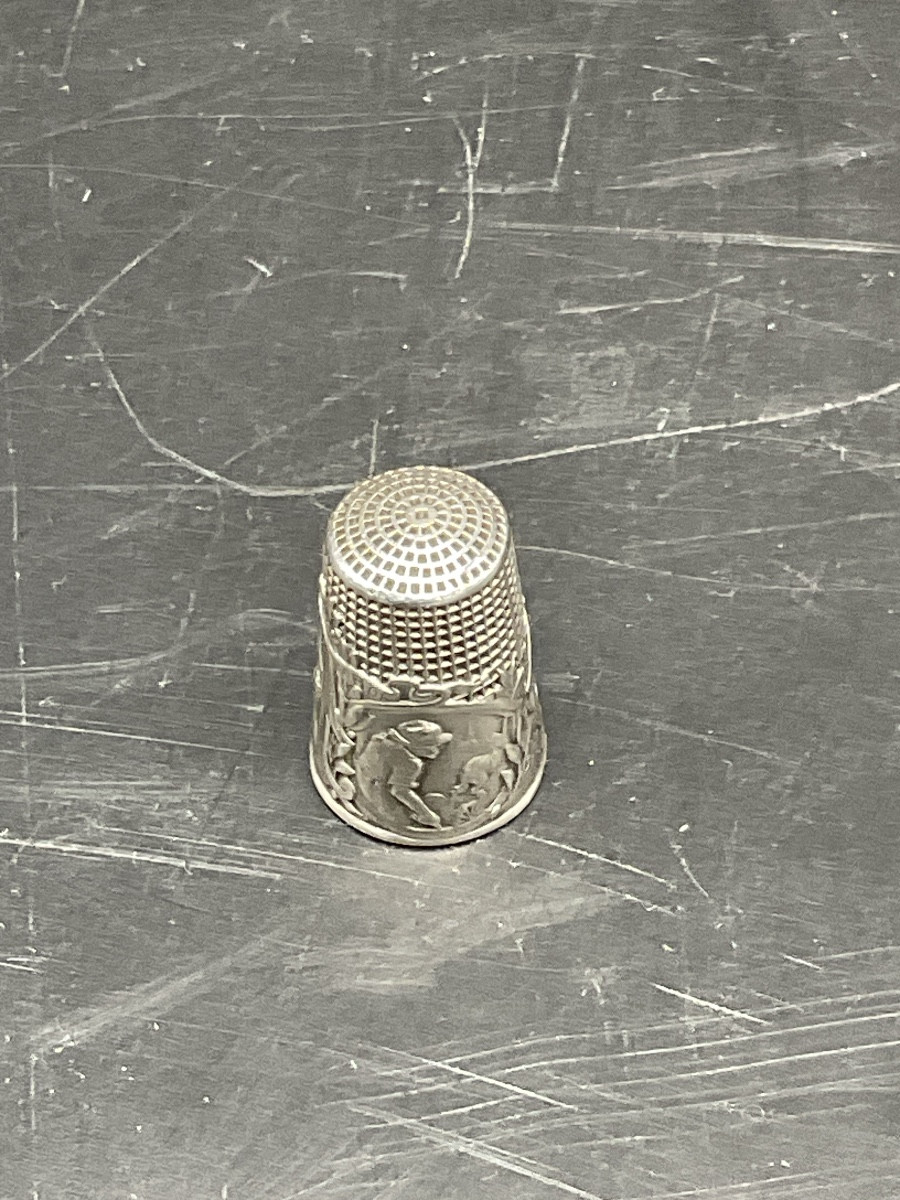
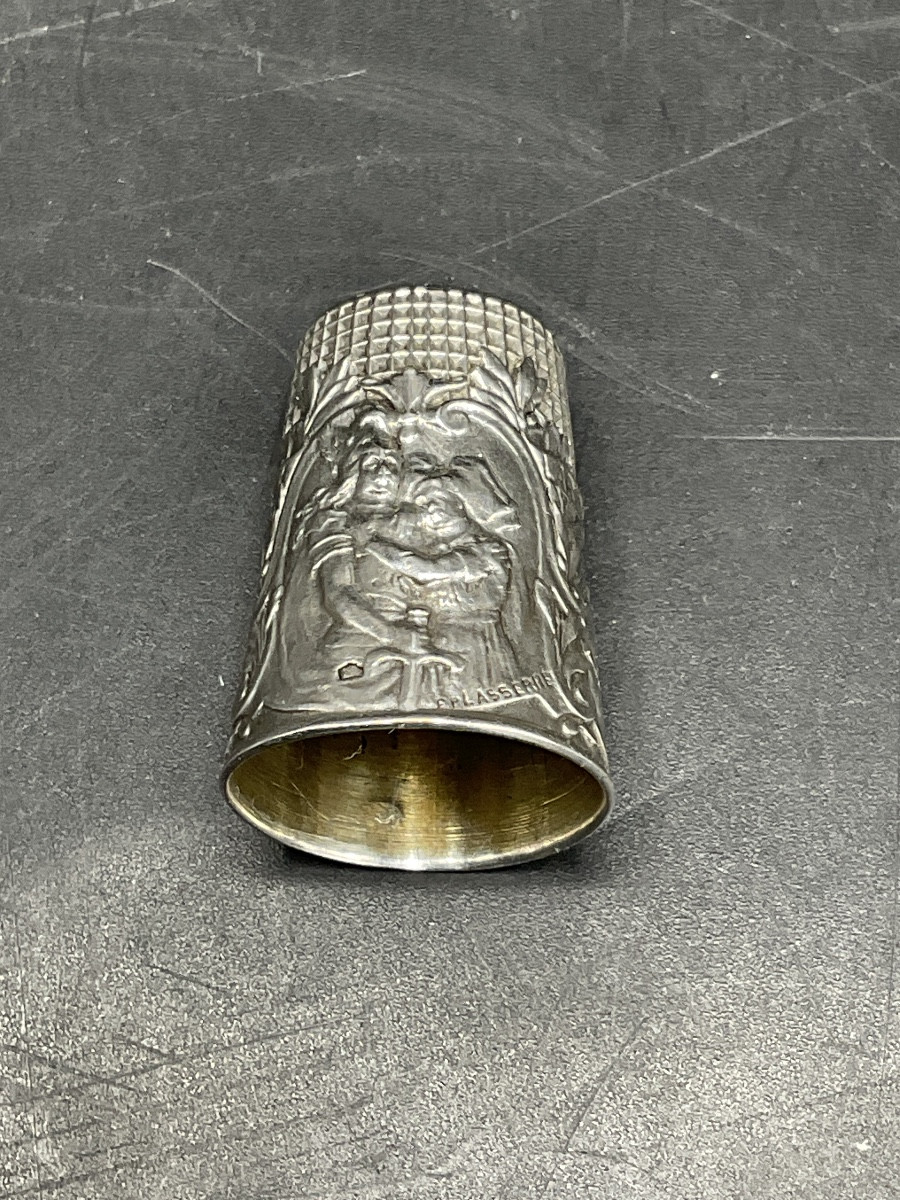
A solid silver thimble adorned with three patriotic cartouches depicting three different scenes. The first scene represents:
Vercingetorix and an Alsatian woman with a laurel wreath around the scene, a symbol of resistance against the Prussian Empire
and the defeat of France in 1871, which resulted in the annexation of Alsace and Moselle, used in a spirit of
revenge against the Germans upon the return of Alsace and Moselle to France in 1918.
- The first scene is signed in relief by the medalist and engraver Firmin-Pierre Lasserre (1870-1940) on the hem of the Alsatian woman's dress.
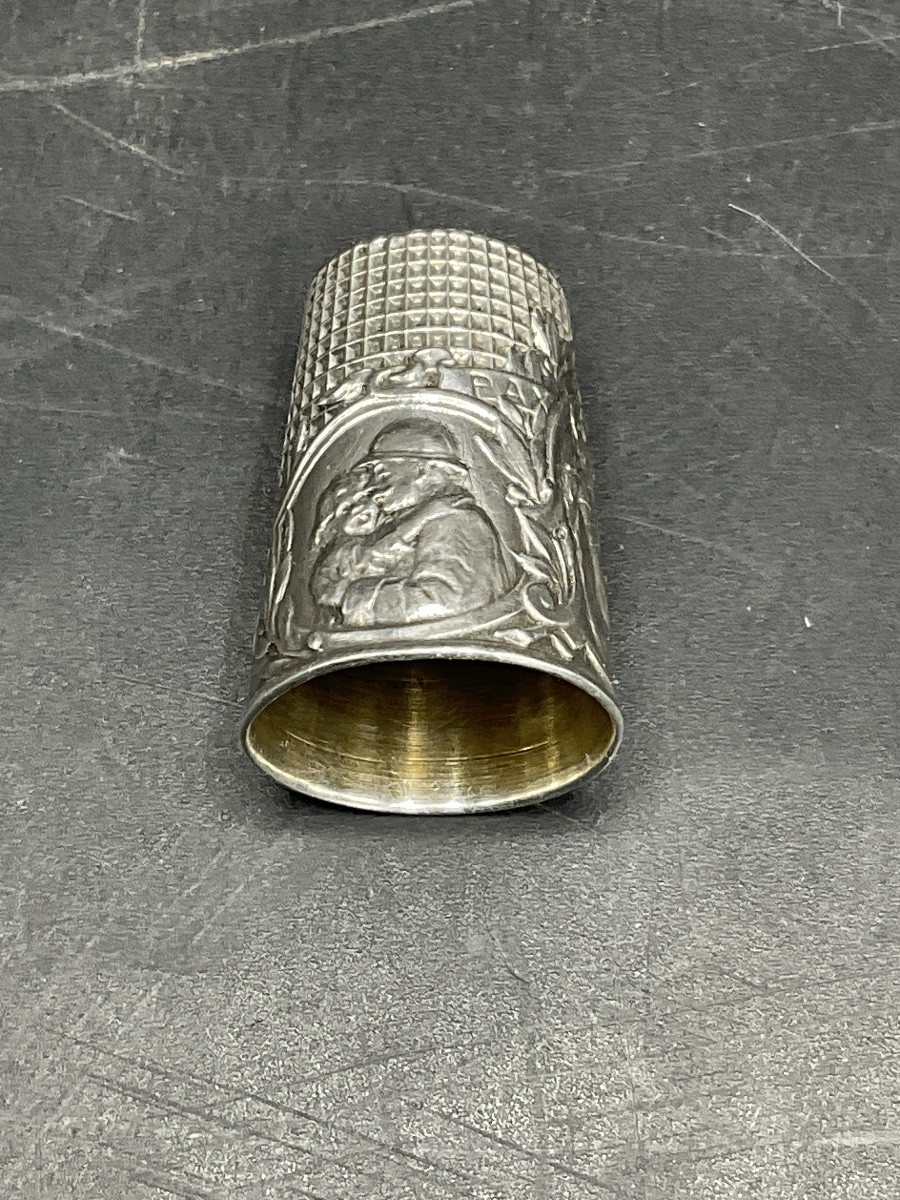
- The second scene depicts a French soldier holding a little girl, surrounded by a laurel wreath,
a symbol of family: the soldier who went to fight on the front and is thinking of his family back home.
- The Latin word "pax" (peace) is inscribed at the top of the laurel wreath.
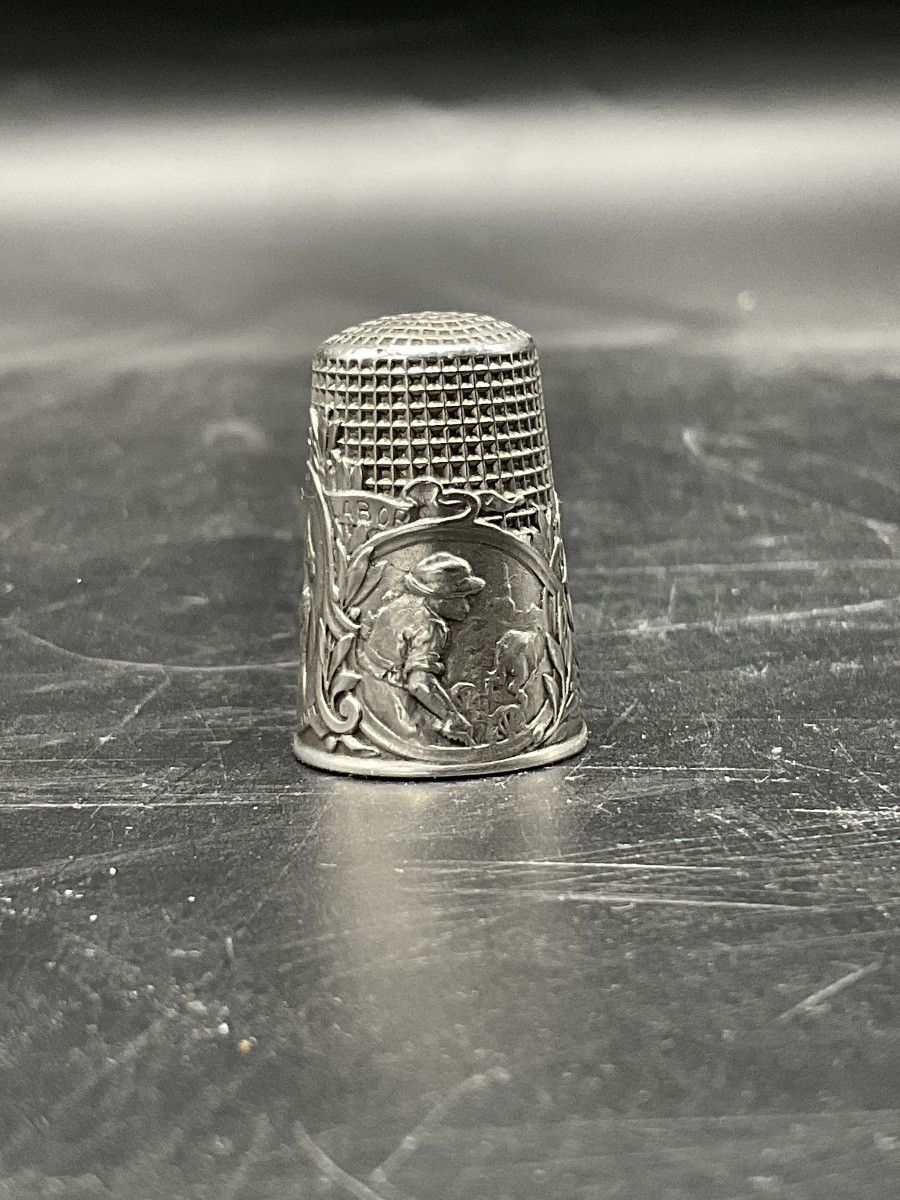
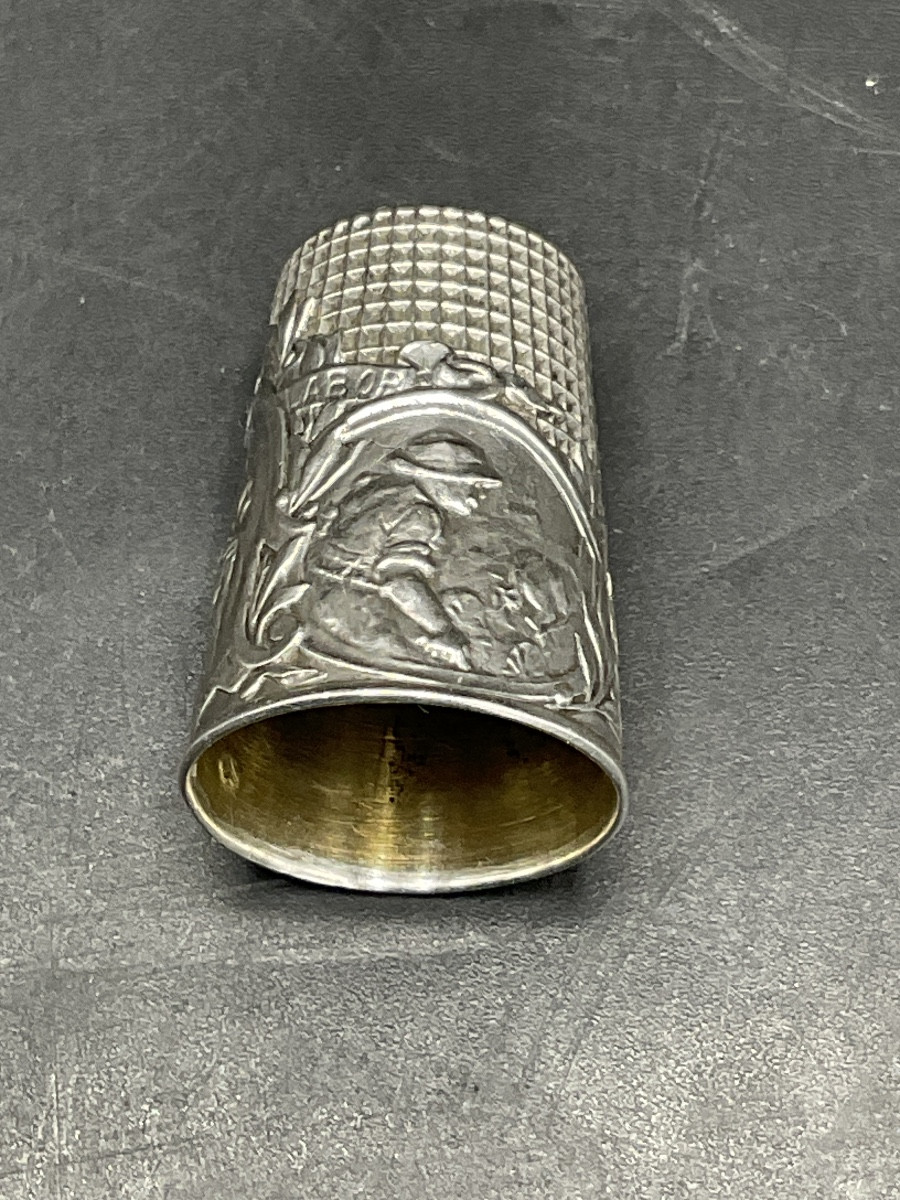
- The third scene depicts a peasant plowing his field with an ox, surrounded by a laurel wreath,
a symbol of labor. The Latin word "labor" (work) is inscribed at the top of the laurel wreath.
- French hallmark, a boar's head (800/1000), used in France from 1838 to 1962, is present at the bottom of the die on the scene
of Vercingetorix and the Alsatian woman.
- Illegible lozenge-shaped maker's mark to the right of the laurel branch at the bottom of the thimble, between the two scenes of the soldier and the peasant.
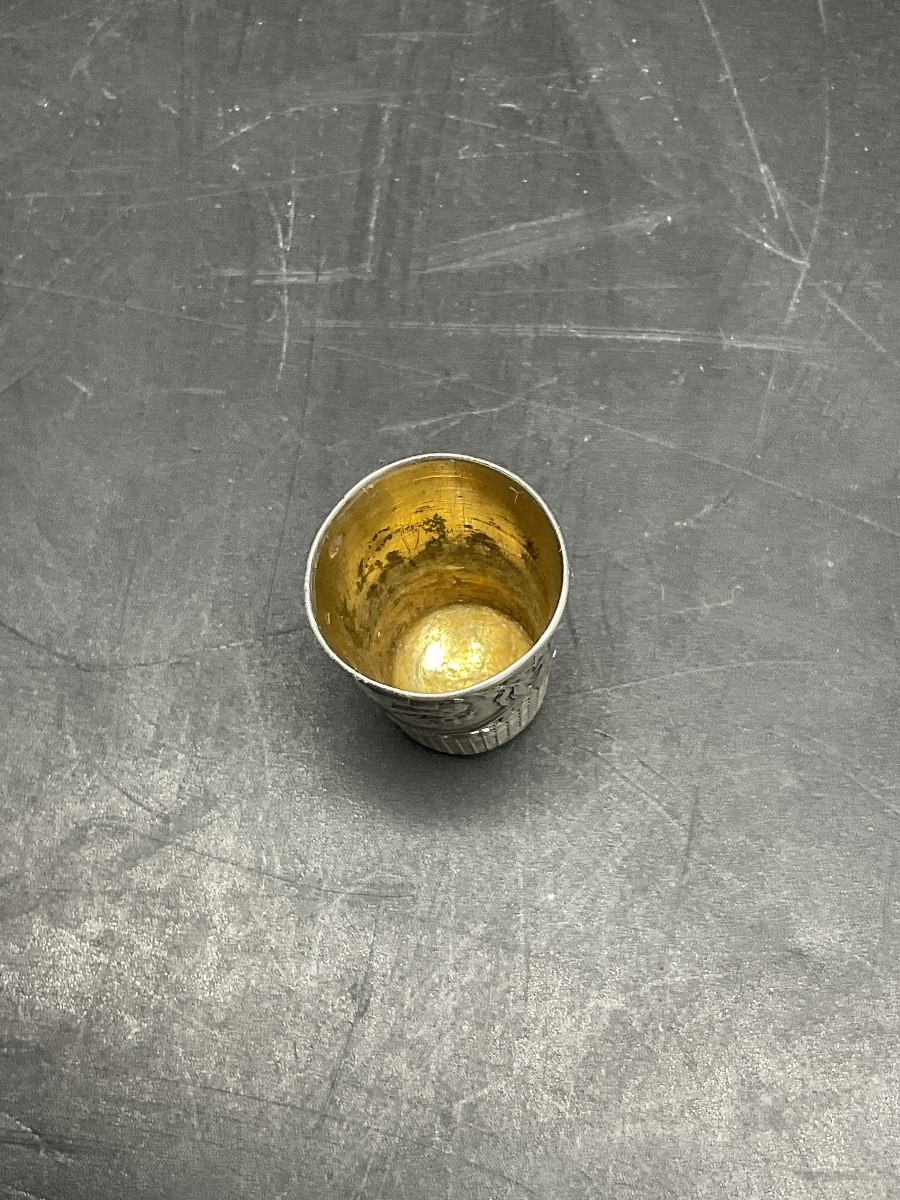
The interior of the thimble is gilt silver. These patriotic thimbles were produced after the First World War.
- Period: First quarter of the 20th century, circa 1918-1920. Net weight: 5.73g.
- Reminder to buyers regarding the right of withdrawal for online sales via my Proantic store.
- Must be read before purchasing from my sales site hosted by Proantic.
- The right of withdrawal applies to sales made through my Proantic store.
- The withdrawal period is 14 days following the buyer's receipt of the item or goods.
- The buyer must notify me via email or registered letter—without needing to provide a reason or justification—within the 14-day statutory period following receipt of the parcel or item.
- The buyer has the right to change their mind and benefits from the 14-day statutory cooling-off period; I respect this right.
- Once this period has elapsed, the sale will be considered final and binding.
- Return shipping costs (via postal service or carrier) are the buyer's responsibility in the event of withdrawal.
- The buyer is required to return the item or goods within 14 days of receipt, in the same condition as received (free from breakage or damage) and in the original packaging. The return must use a shipping method with insurance coverage equal to the sale price on my Proantic site (matching the level of insurance originally arranged by the seller). The buyer must also email me the proof of posting/drop-off receipt issued by the postal service or the shipping slip issued by the carrier. - All sales made via my Proantic site are covered by insurance purchased from La Poste at the time of shipping; this covers loss or theft up to the purchase price paid by the buyer.
- La Poste does not provide insurance against breakage or damage to the item or object; coverage for parcel transport is limited to theft and loss.
- Additional insurance covering breakage or damage—up to the price paid by the buyer on my Proantic site—is always purchased from the carrier when a third-party carrier is used.
- The buyer risks legal penalties if they fail to return the item or object within the 14-day period and in good condition.
- Refunds for the item or object will be issued within 14 days of the seller receiving the item or parcel and verifying its condition.
- If the item or object is found not to match its original condition at the time of dispatch, the sale will be considered final and non-refundable; the right of withdrawal will not apply.
- Refunds for the item or object will be issued using the same payment method (check, bank transfer, PayPal) used by the buyer for the original purchase on my Proantic site.
- If payment was made via PayPal, the buyer is responsible for initiating the refund process—specifically, by navigating to the "Dispute" section and opening a dispute case involving themselves, PayPal, and the seller.
- This notice regarding sales on my Proantic site is addressed to individuals prone to litigation or acting in bad faith. - I advise anyone prone to litigation or acting in bad faith not to purchase anything from my Proantic shop; this will save me from wasting time and money on legal proceedings.
- Fortunately, my sales on Proantic generally go very smoothly, as the customers are usually pleasant, agreeable, and acting in good faith.
- Best regards,
- Mr. Pineaud.
Vercingetorix and an Alsatian woman with a laurel wreath around the scene, a symbol of resistance against the Prussian Empire
and the defeat of France in 1871, which resulted in the annexation of Alsace and Moselle, used in a spirit of
revenge against the Germans upon the return of Alsace and Moselle to France in 1918.
- The first scene is signed in relief by the medalist and engraver Firmin-Pierre Lasserre (1870-1940) on the hem of the Alsatian woman's dress.
- The second scene depicts a French soldier holding a little girl, surrounded by a laurel wreath,
a symbol of family: the soldier who went to fight on the front and is thinking of his family back home.
- The Latin word "pax" (peace) is inscribed at the top of the laurel wreath.
- The third scene depicts a peasant plowing his field with an ox, surrounded by a laurel wreath,
a symbol of labor. The Latin word "labor" (work) is inscribed at the top of the laurel wreath.
- French hallmark, a boar's head (800/1000), used in France from 1838 to 1962, is present at the bottom of the die on the scene
of Vercingetorix and the Alsatian woman.
- Illegible lozenge-shaped maker's mark to the right of the laurel branch at the bottom of the thimble, between the two scenes of the soldier and the peasant.
The interior of the thimble is gilt silver. These patriotic thimbles were produced after the First World War.
- Period: First quarter of the 20th century, circa 1918-1920. Net weight: 5.73g.
- Reminder to buyers regarding the right of withdrawal for online sales via my Proantic store.
- Must be read before purchasing from my sales site hosted by Proantic.
- The right of withdrawal applies to sales made through my Proantic store.
- The withdrawal period is 14 days following the buyer's receipt of the item or goods.
- The buyer must notify me via email or registered letter—without needing to provide a reason or justification—within the 14-day statutory period following receipt of the parcel or item.
- The buyer has the right to change their mind and benefits from the 14-day statutory cooling-off period; I respect this right.
- Once this period has elapsed, the sale will be considered final and binding.
- Return shipping costs (via postal service or carrier) are the buyer's responsibility in the event of withdrawal.
- The buyer is required to return the item or goods within 14 days of receipt, in the same condition as received (free from breakage or damage) and in the original packaging. The return must use a shipping method with insurance coverage equal to the sale price on my Proantic site (matching the level of insurance originally arranged by the seller). The buyer must also email me the proof of posting/drop-off receipt issued by the postal service or the shipping slip issued by the carrier. - All sales made via my Proantic site are covered by insurance purchased from La Poste at the time of shipping; this covers loss or theft up to the purchase price paid by the buyer.
- La Poste does not provide insurance against breakage or damage to the item or object; coverage for parcel transport is limited to theft and loss.
- Additional insurance covering breakage or damage—up to the price paid by the buyer on my Proantic site—is always purchased from the carrier when a third-party carrier is used.
- The buyer risks legal penalties if they fail to return the item or object within the 14-day period and in good condition.
- Refunds for the item or object will be issued within 14 days of the seller receiving the item or parcel and verifying its condition.
- If the item or object is found not to match its original condition at the time of dispatch, the sale will be considered final and non-refundable; the right of withdrawal will not apply.
- Refunds for the item or object will be issued using the same payment method (check, bank transfer, PayPal) used by the buyer for the original purchase on my Proantic site.
- If payment was made via PayPal, the buyer is responsible for initiating the refund process—specifically, by navigating to the "Dispute" section and opening a dispute case involving themselves, PayPal, and the seller.
- This notice regarding sales on my Proantic site is addressed to individuals prone to litigation or acting in bad faith. - I advise anyone prone to litigation or acting in bad faith not to purchase anything from my Proantic shop; this will save me from wasting time and money on legal proceedings.
- Fortunately, my sales on Proantic generally go very smoothly, as the customers are usually pleasant, agreeable, and acting in good faith.
- Best regards,
- Mr. Pineaud.
160 €
Period: 20th century
Style: Art Nouveau
Condition: Excellent condition
Material: Sterling silver
Diameter: à la base du dé: 1,6 cm. du haut du poussoir: 1,3 cm.
Height: 2,5 cm.
Depth: 1,6 cm.
Reference (ID): 1731939
Availability: In stock
Print