





Archaeology Roman Period: Delicate & Very Lightweight Glassware With Openwork Handle
ARCHAEOLOGY
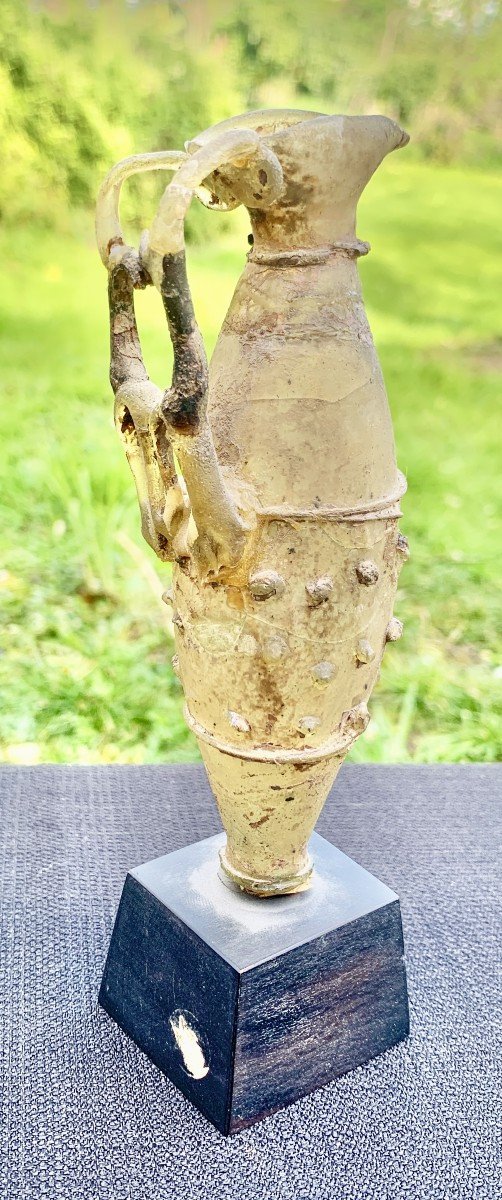
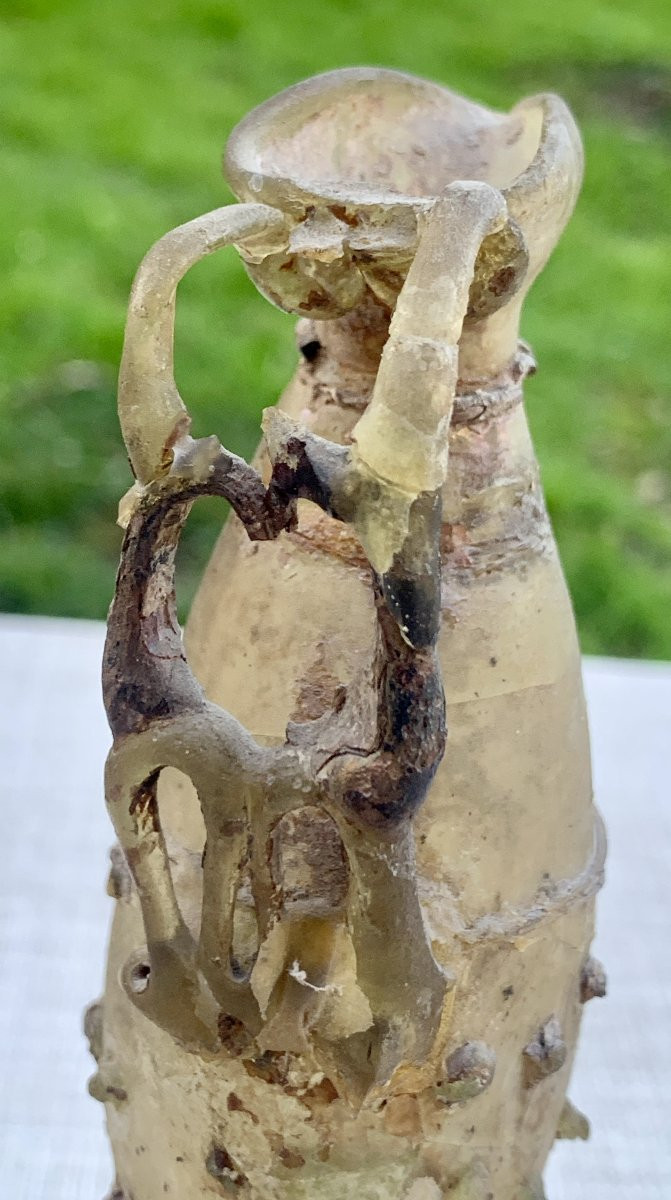
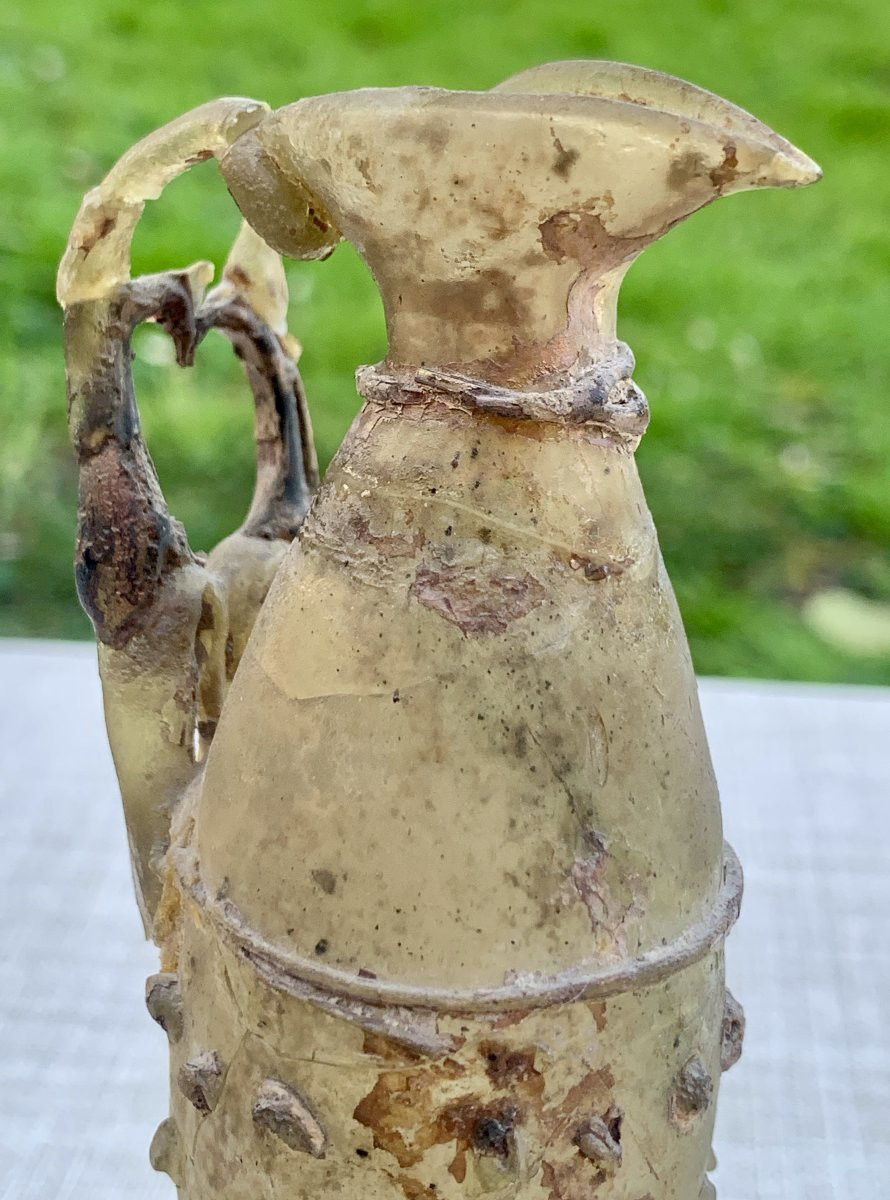
Delicate and light flask with handle in iridescent glass from the Roman period (1st century BC to 2nd century AD)
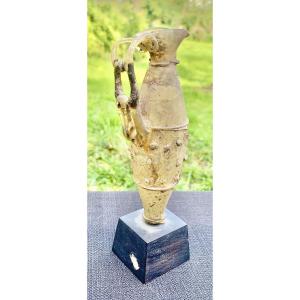
The blown glass piece is extremely thin and has been mounted on a small trapezoidal base in blackened wood;
Slight traces of iridescence on a matte glaze.
This type of bottle was often used to hold precious liquids (oils, perfumes, wine) but could also sometimes have a funerary use (offerings, secondary funerary deposit).
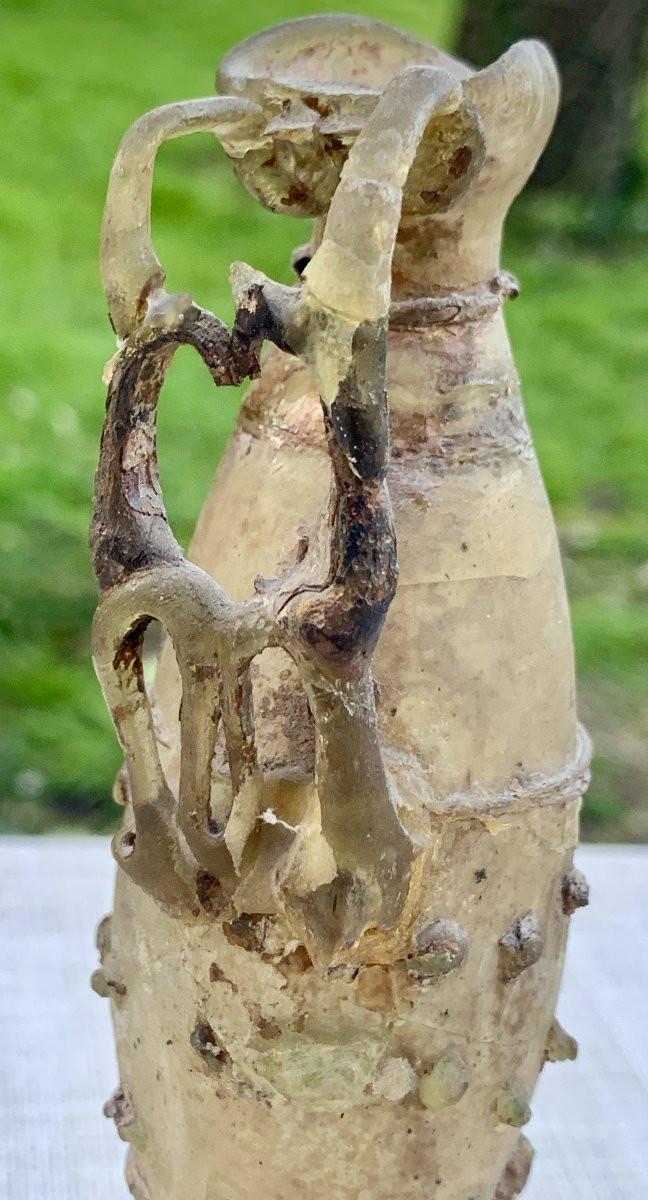
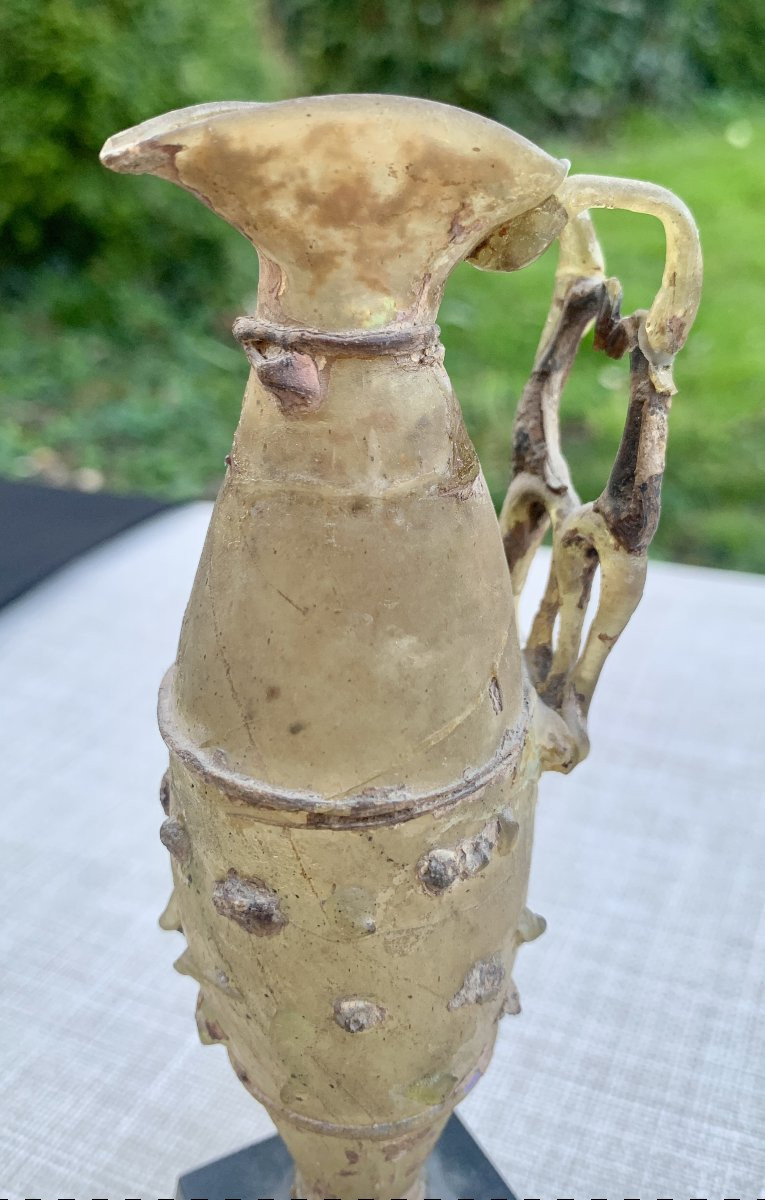
The fusiform bottle has an elongated and swollen body, and a pointed base, with:
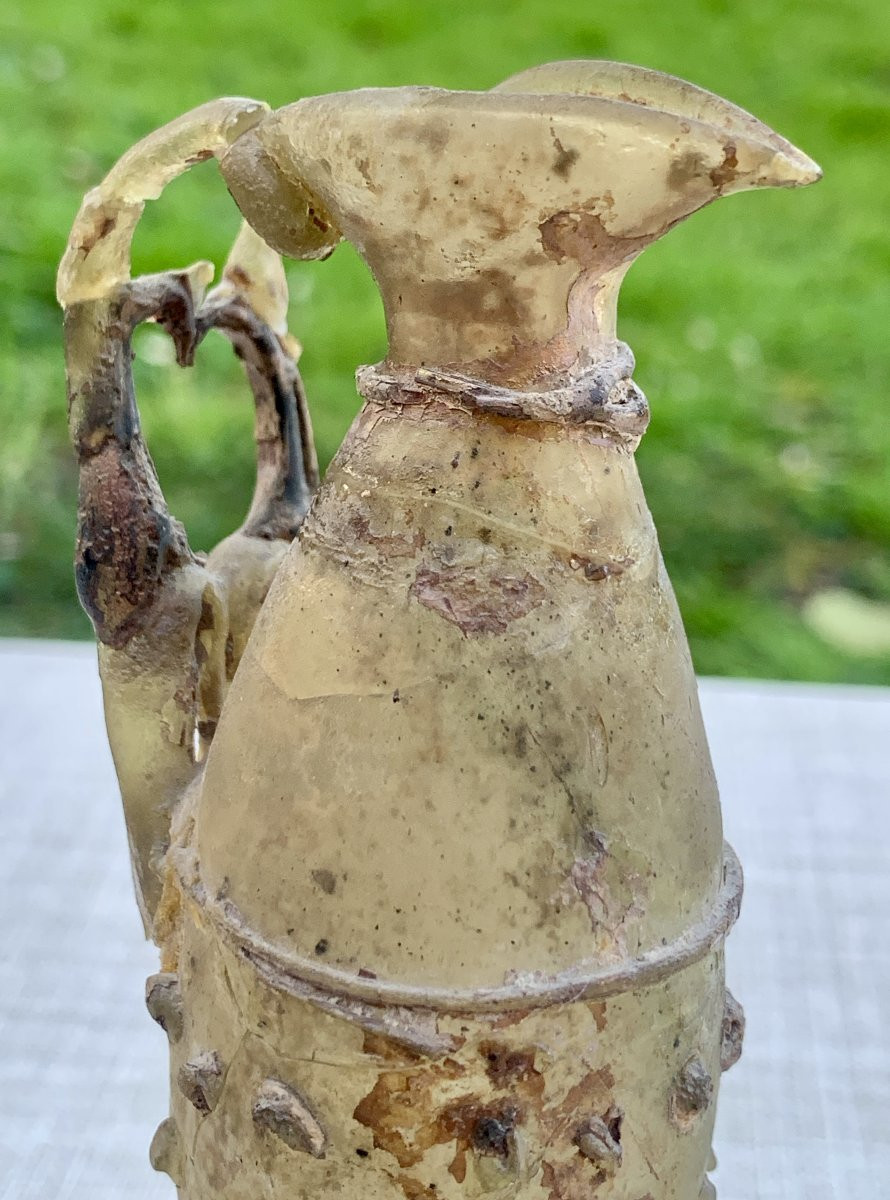
* a narrow neck and flared lip
* applied horizontal cords or threads in relief
* small applied pellets or decorative beads in relief (prunts); they can also serve to improve the grip if the vessel contained moist or greasy/oily materials
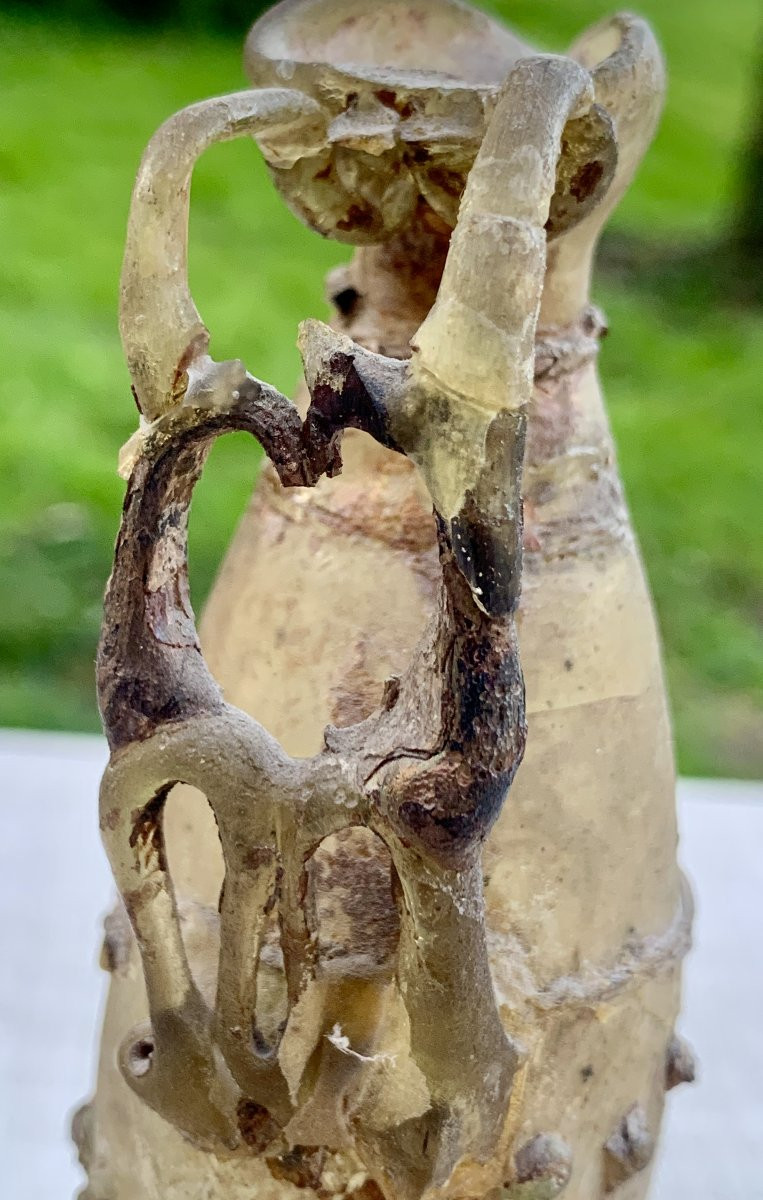
* a complex applied handle
These elements correspond to a production from the eastern Roman world: Syria or Palestine. These regions were major centers of glass production in antiquity, particularly around the eastern Mediterranean.
But it s indeed the handle that is the most exceptional in its composition, made of several tiered threads (3 levels) in curves resting on each other.
Ancient restorations and gluing have blackened, understandable given the lightness and fineness of the glassware (please check detailed photos), but no additional or added parts.
Dimensions:
5cm in diameter without the handle and 6.5cm with;
14.5cm high alone and 18cm with the base
Please check my other listings for another very beautiful Roman-era glass, from same collection.
Delicate and light flask with handle in iridescent glass from the Roman period (1st century BC to 2nd century AD)
The blown glass piece is extremely thin and has been mounted on a small trapezoidal base in blackened wood;
Slight traces of iridescence on a matte glaze.
This type of bottle was often used to hold precious liquids (oils, perfumes, wine) but could also sometimes have a funerary use (offerings, secondary funerary deposit).
The fusiform bottle has an elongated and swollen body, and a pointed base, with:
* a narrow neck and flared lip
* applied horizontal cords or threads in relief
* small applied pellets or decorative beads in relief (prunts); they can also serve to improve the grip if the vessel contained moist or greasy/oily materials
* a complex applied handle
These elements correspond to a production from the eastern Roman world: Syria or Palestine. These regions were major centers of glass production in antiquity, particularly around the eastern Mediterranean.
But it s indeed the handle that is the most exceptional in its composition, made of several tiered threads (3 levels) in curves resting on each other.
Ancient restorations and gluing have blackened, understandable given the lightness and fineness of the glassware (please check detailed photos), but no additional or added parts.
Dimensions:
5cm in diameter without the handle and 6.5cm with;
14.5cm high alone and 18cm with the base
Please check my other listings for another very beautiful Roman-era glass, from same collection.
850 €
Period: Before 16th century
Style: Rome and Antic Greece
Condition: Fully restored
Material: Glass
Diameter: 5cm et 6,5cm avec l'anse
Height: 14,5cm verrerie seule, 18cm avec le socle
Reference (ID): 1731394
Availability: In stock
Print